


Local businesses have a problem that did not exist 15 years ago, being good at what you do is no longer enough to keep customers coming through the door. Today, if someone needs a dentist, a plumber, a law firm, or a restaurant, they open Google. They type a few words, and they click one of the first three results, and if your business is not sitting somewhere in that window, you simply do not exist for that customer.
This is not a small thing, around 46% of all Google searches have local intent, meaning the person searching is looking for something near them. And 78% of local mobile searches result in an offline purchase within 24 hours. The opportunity is there, the question is whether your business is positioned to capture it.
That is what a competent SEO agency does, not just rankings for the sake of rankings, but a deliberate, technically grounded strategy that puts your business in front of people who are already looking for exactly what you offer. At IR Solutions, our local SEO services for small business owners are designed to build that kind of visibility that converts.
What Local SEO Actually Means (And What It Does Not)
Local SEO is the process of optimising your online presence so your business appears prominently when people in your area search for your services. It covers your Google Business Profile, your website's on-page signals, the consistency of your name and address across the web, the quality and quantity of your reviews, and how your site performs technically on mobile. It is not just about getting traffic, it is about getting the right traffic people in your city, in your catchment area, who are close to making a buying decision.
What local SEO is not, buying followers, running Facebook ads (though those have their place), and publishing generic blog posts that no one in your target area will ever find. A lot of businesses spend money on those things and wonder why they are not getting more customers, the reason is that none of it is targeted to search intent.
Why Most Local Businesses Get SEO Wrong
Before looking at what a professional SEO agency does, it is worth understanding why so many local businesses struggle with search visibility in the first place. The most common mistake is treating SEO as a one-time task. A business builds a website, adds some keywords to the homepage, and waits. When nothing happens, they conclude that SEO does not work, What actually did not work was an incomplete effort applied once and then ignored.
A second common mistake is targeting the wrong keywords. Ranking for "best restaurant" is not a useful goal. Ranking for "best restaurant in Houston" or "affordable family restaurant in Texas" is local SEO that lives in specificity. The businesses that win are the ones that understand exactly how their customers describe their problems when they type into Google.
The third issue is technical, a website can have great content and still rank poorly because the site is slow, not mobile-optimised, has duplicate content issues, or has broken internal linking that prevents Google from crawling it properly, these are not marketing problems. They are development problems, and fixing them requires someone who understands both disciplines, which is why IR Solutions positions its SEO teams to work alongside its technical development capability rather than separating the two.
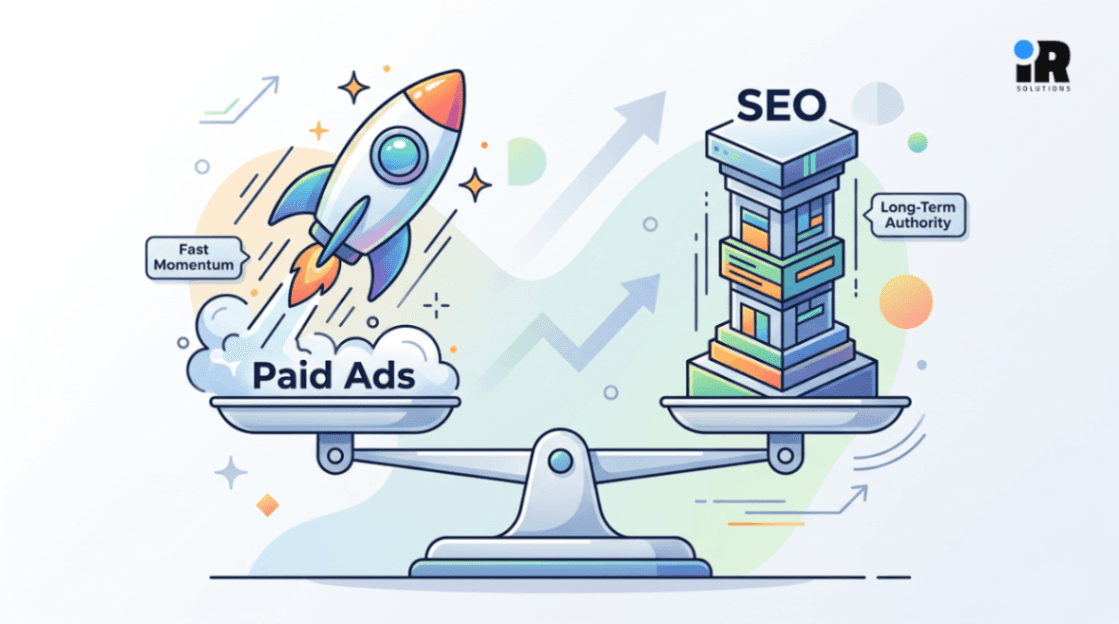
Not sure whether to choose paid ads or organic growth? Read: Should you spend money on Google Ads or SEO first? An honest breakdown
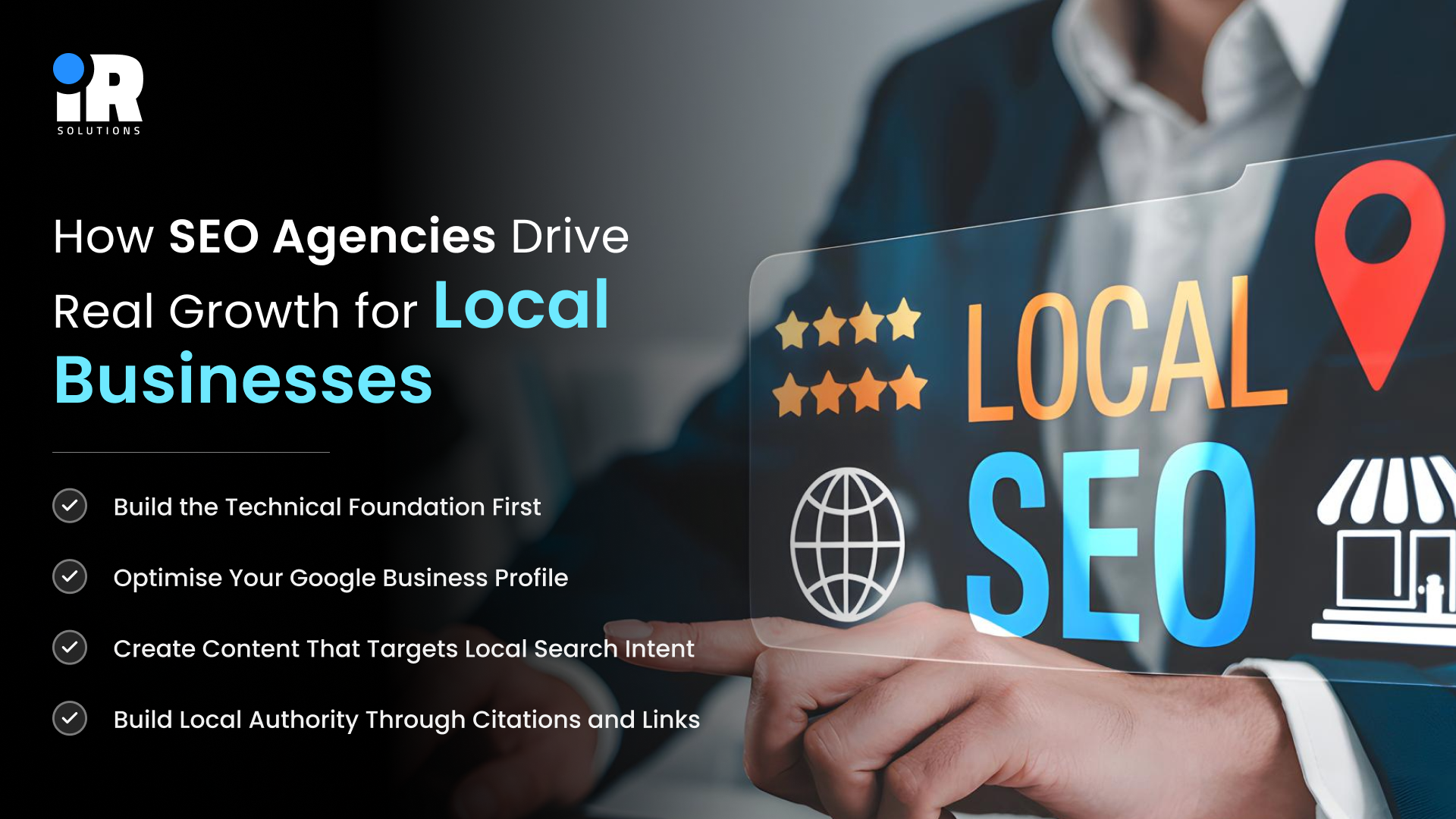 How SEO Agencies Drive Real Growth for Local Businesses
1. Build the Technical Foundation First
Before any content strategy or link building makes sense, the website needs to be technically sound. An SEO agency worth working with will start with a site audit that examines page speed, mobile usability, crawlability, indexation, structured data markup, and site architecture.
For local businesses, structured data is particularly important, Schema markup for local businesses tells Google exactly who you are, where you are, what your hours are, and what services you offer. Without it, you are leaving signal strength on the table that your competitors may already be using.
Page speed is another non-negotiable, Google uses Core Web Vitals as a ranking factor, and mobile load time directly affects both rankings and conversion. A page that takes four seconds to load on a phone loses a significant portion of visitors before they even see your content.
2. Optimise Your Google Business Profile
For most local searches, the Google Business Profile (GBP) is the first thing a potential customer sees before they ever reach your website. An optimised GBP includes complete and accurate business information, the right categories selected, a keyword-informed business description, regular posts, photo updates, and active management of the Q&A section.
Review management is part of this, not just accumulating reviews, but responding to them in a way that signals engagement to both Google and prospective customers. A business with 80 reviews and active responses will consistently outperform a competitor with 200 reviews and no engagement. Most local businesses set up their GBP once and leave it, an SEO agency actively manages it as a live asset.
3. Create Content That Targets Local Search Intent
Local content strategy is different from general content marketing, it is not about publishing thought leadership pieces for a national audience. It is about creating pages and posts that answer the specific questions your local customers are typing into Google.
That means location-specific service pages, If you run a law firm with three practice areas across two cities, you need separate, well-structured pages for each combination, not one generic page that mentions everything loosely. It means the FAQ content that reflects the actual language your clients use. It means blog content that addresses local events, local regulations, or local comparisons that someone in your area would actually search for.
This kind of content compounds, a page you publish today can bring in qualified traffic for years. It is the opposite of paid advertising, where visibility stops the moment you stop spending.
Our digital marketing experts at IR Solutions approach content this way with keyword research grounded in actual local search behaviour, not just generic volume data.
4. Build Local Authority Through Citations and Links
Google uses signals from across the web to determine how trustworthy and relevant a business is for local searches. Two of the most important signals are citations (mentions of your business name, address, and phone number on other websites) and backlinks (links from other sites pointing to yours).
Citations matter for local SEO in a specific way, consistency is key. If your business name appears slightly differently across Google, Yelp, Facebook, local directories, and your website, those inconsistencies dilute your authority signal. An SEO agency audits this, cleans it up, and builds out new citations on relevant, high-quality directories.
Local link building is harder and more valuable, getting a link from a local news site, a regional business association, a university in your area, or a complementary local business sends a strong geographical relevance signal to Google. These links cannot be bought from a generic link farm, they require actual relationship building and content worth linking to.
Why SEO Works Best for Certain Types of Businesses
SEO is not equally valuable for every type of business, it is particularly high-return for businesses where: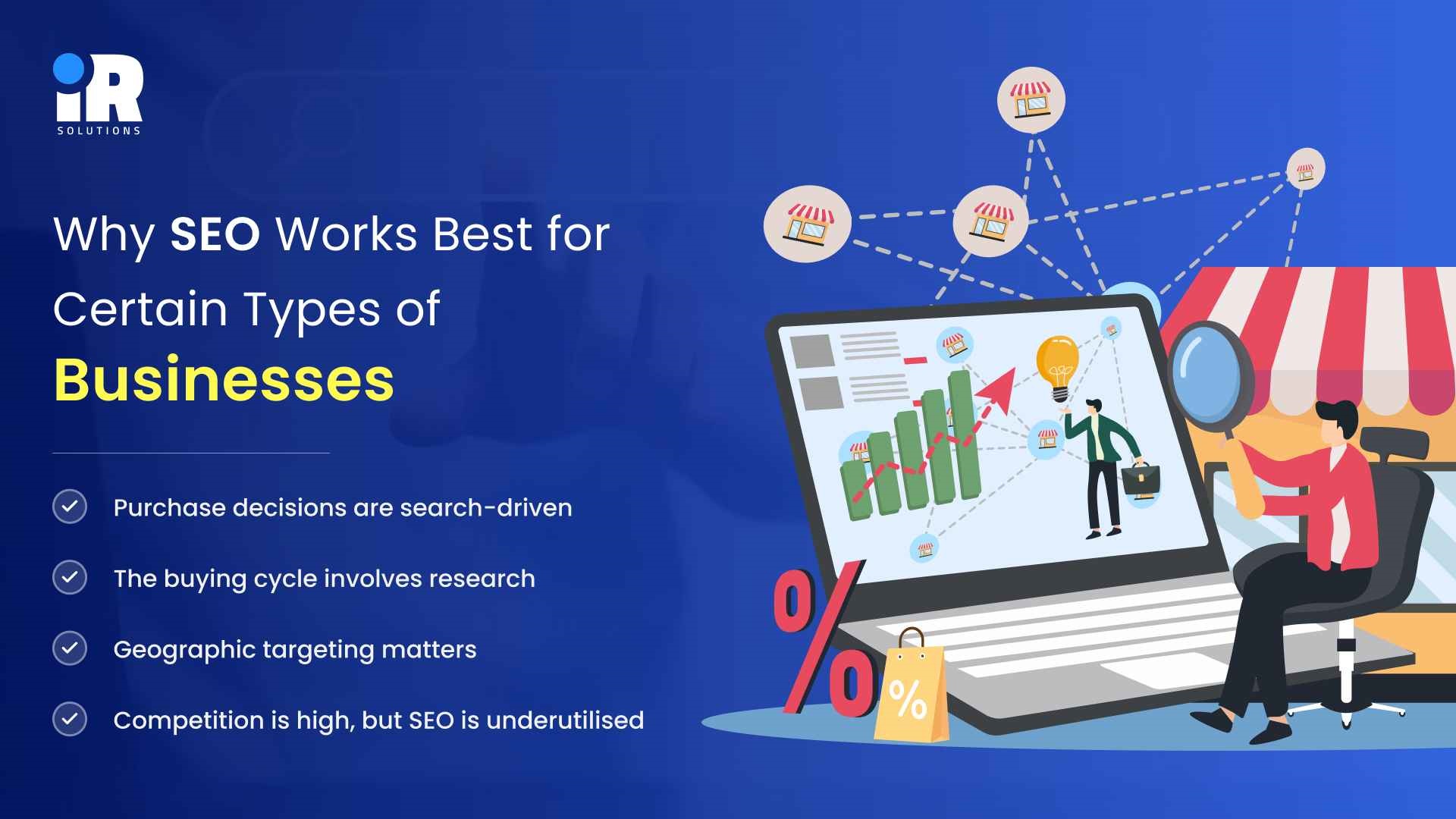 Purchase decisions are search-driven. If your customers' first move when they need your service is to Google it, you need to be there. Healthcare providers, legal services, home services, restaurants, and education providers all fall into this category.
The buying cycle involves research. The more expensive or considered the purchase, the more a customer will research before committing. Real estate, financial services, and professional services all involve multiple touchpoints, and organic search keeps your business visible across that entire journey.
Geographic targeting matters. If you serve a specific city, neighbourhood, or region, local SEO lets you concentrate your visibility exactly where your customers are, rather than paying for broad digital advertising that reaches people who will never visit you.
Competition is high, but SEO is underutilised. In many local markets, competitors are not doing SEO seriously. That gap is an opportunity for businesses that invest early in local search visibility to build an advantage, that is genuinely hard for competitors to close quickly.
What to Look for in an SEO Agency as a Local Business
Not every SEO agency is equipped to handle local businesses well, some agencies focus purely on national or e-commerce SEO and apply the same approach to a local plumber or a regional law firm, which does not work.
When evaluating an SEO partner, the questions worth asking include:
- Do they start with a technical audit, or do they go straight to content?
- Can they show you examples of local SEO work with measurable outcomes?
- Do they fix technical issues in-house or just report them?
- How do they handle Google Business Profile management?
- What does monthly reporting actually look like?
At IR Solutions, our approach to local SEO is built around these specifics. Our digital marketing team works directly with our development team, so the technical side of SEO site speed, structured data, crawl optimisation, and mobile performance gets handled as part of the same engagement, there is no gap between the audit and the fix.
Want clarity on where SEO stands today? Check out: Is SEO dead? What Google's AI changes actually mean for your business.
How Long Does Local SEO Take to Show Results?
This is the question most business owners ask first, and the honest answer is that it depends on several factors, how competitive your local market is, how well your current website is built, how long your site has been live, and how aggressively your competitors are investing in SEO.
For most local businesses starting from a weak baseline, meaningful ranking improvements in lower-competition keywords typically appear within three to four months. More competitive terms in highly saturated markets can take six to twelve months to move significantly.
What business owners need to understand is that this is not a reason to delay starting. The businesses ranking on page one of Google for your target keywords today started their SEO work months or years ago. Every month you wait, the gap gets slightly harder to close.
How SEO and GEO Work Side by Side for Local Businesses
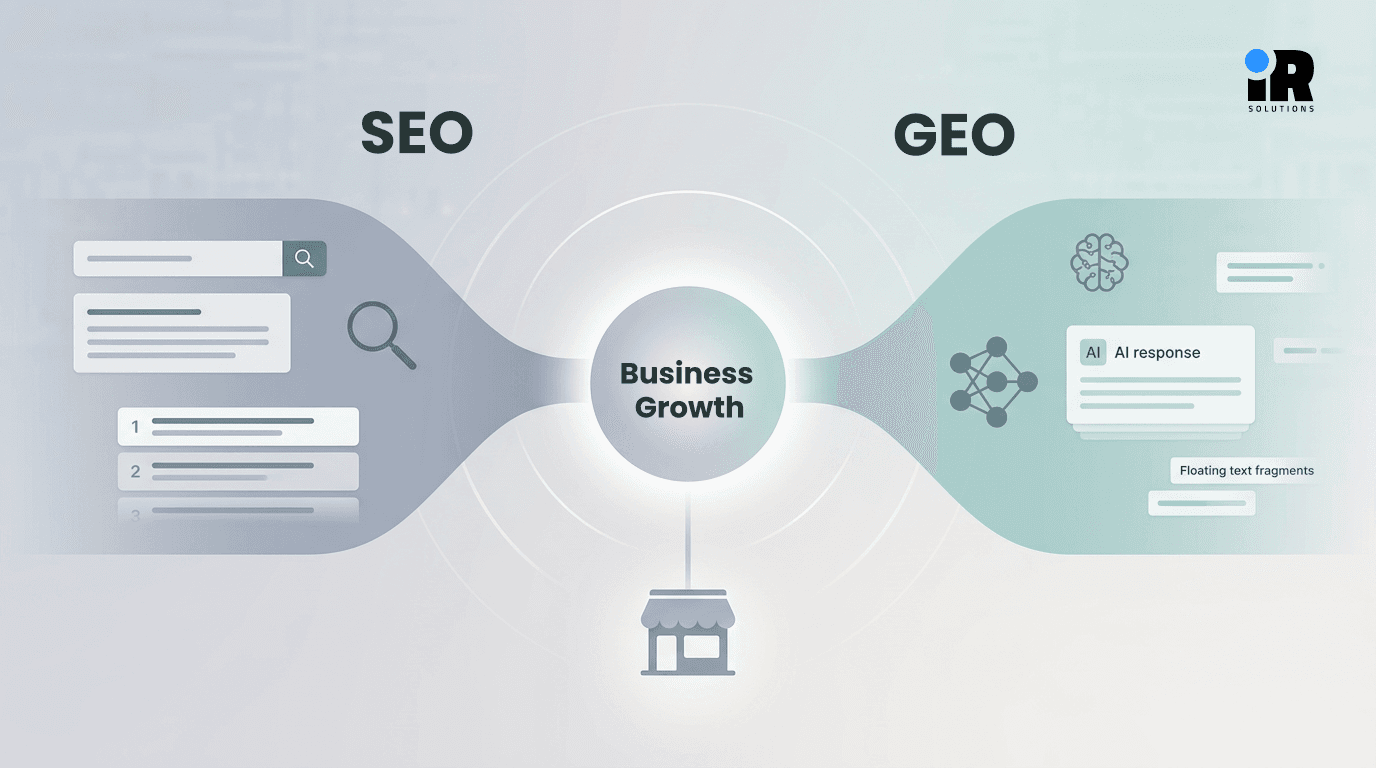
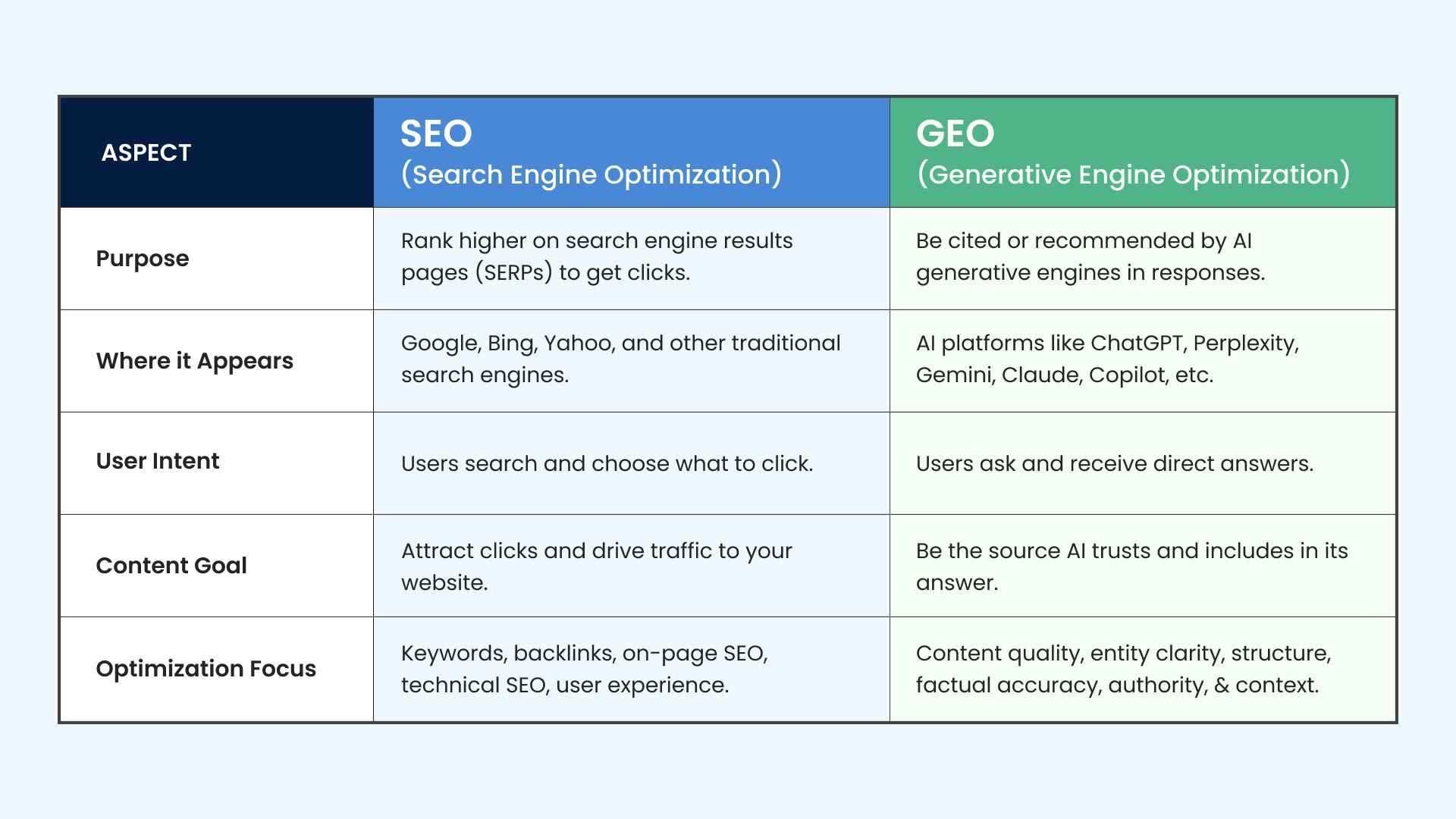
SEO helps local businesses appear in traditional search results when customers actively look for services on Google and other search engines. GEO focuses on making your business visible in AI-generated answers where users ask for recommendations and instant solutions. Together, they ensure you are discoverable both in search engines and in AI-driven platforms, maximizing overall visibility.
Conclusion
Local SEO is one of the few marketing channels where the investment compounds over time rather than disappearing when you stop paying. A well-optimised local presence keeps bringing in customers long after the initial work is done. Paid ads stop the moment the budget runs out. SEO does not work that way.
For local businesses serious about sustainable growth, working with an SEO agency that understands both the search side and the technical web side is the difference between a strategy that moves and one that stalls.
If you want to understand what that looks like for your specific business and market, our digital marketing experts at IR Solutions are the right starting point. Get in touch, and our team will look at where you currently stand and what it would take to move you where you need to be.
Frequently Asked Questions
Is local SEO different from regular SEO?
Yes, local SEO targets geographically specific searches and involves signals like Google Business Profile, local citations, and location-based keywords that general SEO does not prioritise.
How much does local SEO cost for a small business?
It varies by market competitiveness and scope, but local SEO is generally more cost-effective than paid advertising because results persist after the work is done, rather than stopping when spending stops.
Can I do local SEO myself?
Basic optimisations like setting up your Google Business Profile are manageable solo, but technical SEO, content strategy, and link building require specialist knowledge to do effectively.
How do reviews affect local SEO rankings?
Google treats review volume, recency, and owner responses as relevance and trust signals. Businesses with active, well-managed reviews consistently rank higher in local results.
Does my website need to change for local SEO to work?
Often, site speed, mobile performance, structured data, and page structure all affect local rankings, which is why our web development and digital marketing teams work together.
How do I know if my current SEO agency is doing a good job?
Track organic traffic from local searches, Google Business Profile actions (calls and direction requests), and keyword rankings for location-specific terms, not just general traffic numbers.