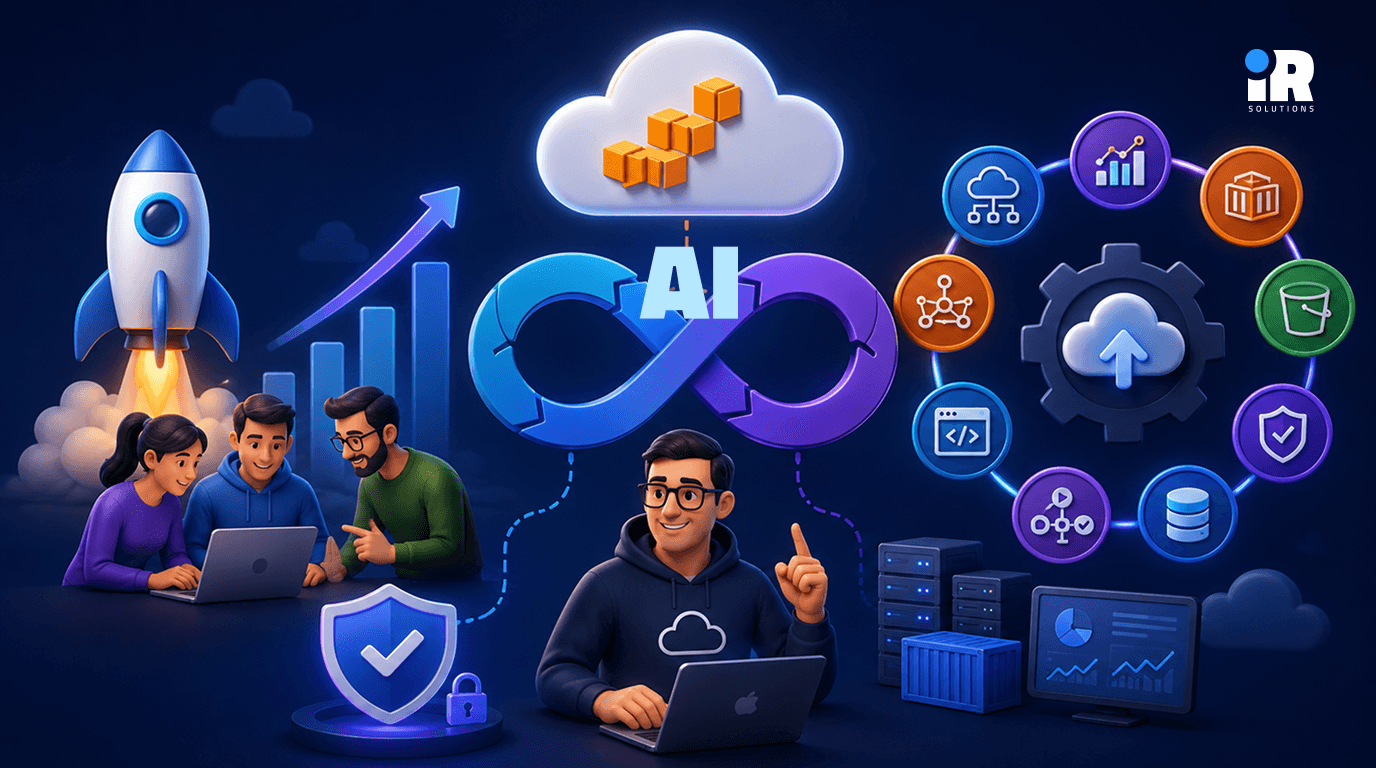



Increasing application complexity and higher user demands are driving organizations to adopt AWS, Azure, and GCP in combination. All the cloud offers unique capabilities that help businesses balance performance, scalability, and cost. However, managing development and operations across multiple clouds creates new challenges. Teams struggle with disconnected processes, poor visibility, and delayed releases. The cross-cloud DevOps platform solves these difficulties by offering one way of designing, developing, and running applications across clouds. It can be used to make teams stay consistent, increase reliability, and accelerate releases when used properly. To operate these strategies effectively, many organizations use DevOps services and allow their organizations to operate smoothly and contribute to long-term growth without affecting innovation.
What Is Cross Cloud DevOps and Why Is It Important
The concept of cross-cloud DevOps is operating and developing software in more than two cloud environments, which include AWS, Azure, and GCP. This approach enables organizations to deploy workloads on the platforms where they perform best, rather than being limited to a single cloud provider. This leads to better flexibility of business, cost and performance optimization, and much lower risk of vendor lock-in.
By sharing applications among various cloud platforms, organizations will enhance the resiliency and availability of systems. In case a cloud provider is down or there are service disruptions, the applications can still run on a different platform with minimal effect. Global scalability is also supported by this strategy because it enables the services to be used near the end user, which improves performance and also reduces the latency. In the long run, implementing this model can assist organizations to react more promptly to the change in the market, scale efficiently and be creative without redesigning or rebuilding the entire infrastructure.
Which Features Are Essential for an Effective Cross-Cloud DevOps Solution
An effective cross-cloud DevOps approach requires key capabilities to streamline workflows and boost overall productivity.
- Centralised Visibility: The teams must have a centralised platform where they can track deployments, logs, and the general performance of the systems. The centralised dashboard offers a real-time view of AWS, Azure, and GCP, allowing for faster detection of issues and making better decisions.
- Configuration Control: Maintaining uniform configurations across clouds ensures aligned environments, reduces deployment errors, and simplifies troubleshooting, preventing performance disruptions.
- Automation: Automating infrastructure provisioning, CI/CD pipelines, and deployment processes minimizes human error and accelerates release cycles. With automation, teams are able to be more efficient and reliable as they can concentrate on innovation instead of manual work.
- Scalability: A robust cross-cloud architecture should be able to scale smoothly with the increase in traffic, team size, and applications. Scalable architectures allow businesses to expand without necessarily manual intervention or reengineering.
- Unified Security Controls: The security should be unified and uniform across every cloud. Unified security policies defend workloads, data and applications so that they comply and reduce risk.
These capabilities collectively reduce operational friction, enabling DevOps teams to focus on delivering business value and innovation rather than troubleshooting complex multi-cloud workflows.
How Do AWS, Azure, and GCP Native Services Support Cross-Cloud DevOps
All cloud providers offer specialized services to support DevOps practices, but achieving benefits across multiple clouds requires careful coordination, especillay when relying on deveops vendors native integration with aws, azure and gcp.
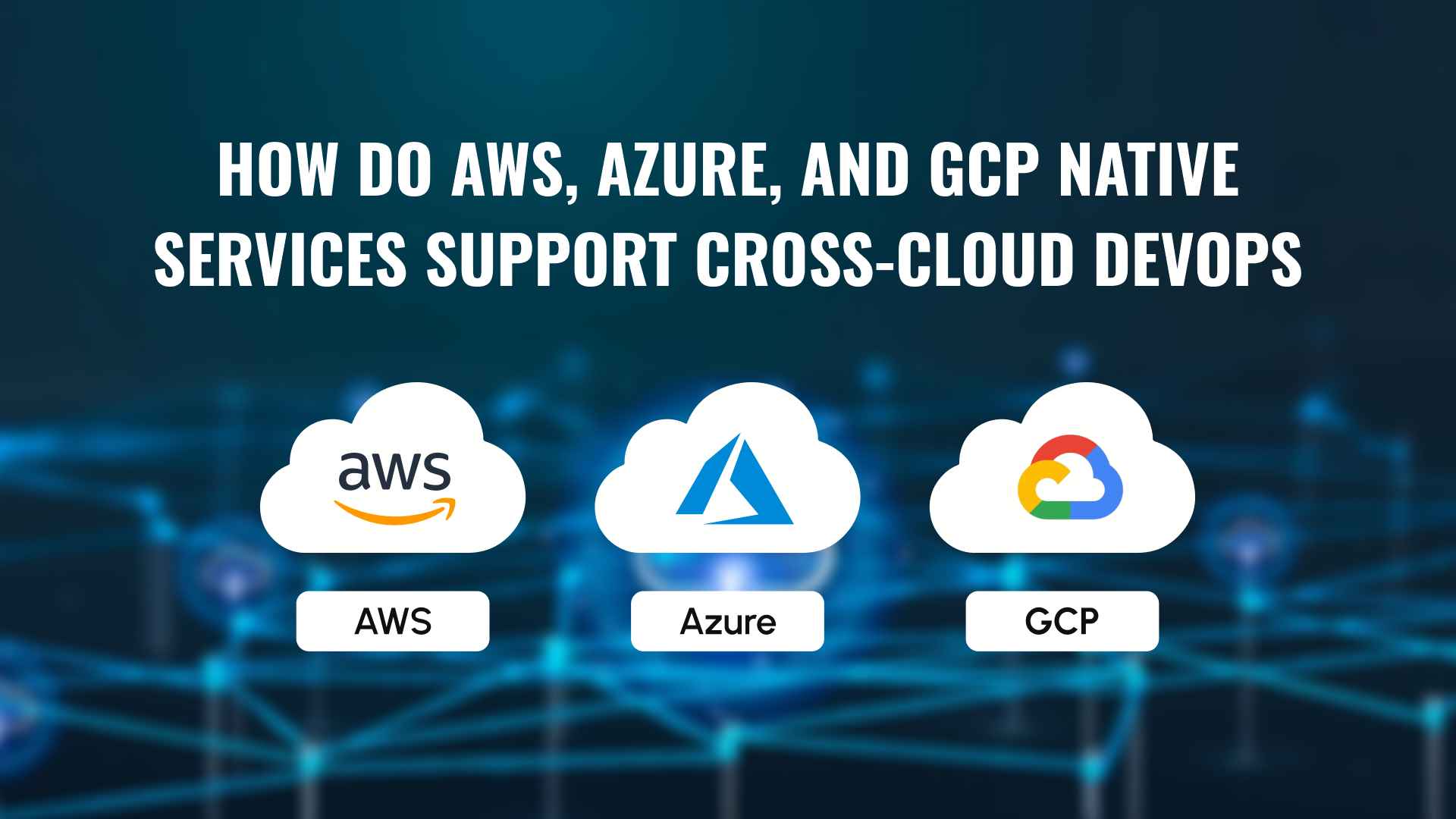
- AWS: It offers extensive DevOps solutions to develop, test, launch, and manage applications. These services are extremely dependable and have been broadly utilized to create production loads, which provide excellent scalability and automation support.
- Azure: Provides comprehensive access controls with enterprise identity and access controls, which simplifies governance, compliance, and policy enforcement in large companies. CI/CD, testing and release management are also supported by Azure DevOps services.
- GCP: Focuses on modern development workflows, particularly for containerized and data-driven applications. Its tools streamline cloud-native development and support efficient orchestration across microservices and serverless architectures.
Cloud services are powerful individually, but multi-cloud DevOps works best with coordination. Fully integrated workflows, automation and centralization minimize errors, accelerate deployments and maintain consistency of performance across AWS, Azure, and GCP.
How Can DevOps Processes Be Automated and Managed Across Multiple Clouds
Cross-cloud DevOps relies on automation. Without it, teams face delays, errors, and inconsistent deployments that slow development and affect software quality. Automating infrastructure and CI/CD pipelines ensures consistent environments across AWS, Azure, and GCP, making cross cloud platform management more efficient while reducing manual effort. This results in faster, more dependable releases while allowing teams to focus on innovation rather than routine work.
Automation benefits go beyond speed and consistency. It minimizes human errors in multi-cloud processes, creates unified workflows, and improves teamwork. Many organizations turn to DevOps development services to design and implement automation strategies aligned with their processes, tools, and business goals. This simplifies management and operations, enabling teams to create value more effectively.
What Are the Best Practices for Building Seamless Cross-Cloud CI/CD Pipelines
Practical methods to keep CI/CD pipelines consistent, secure, and efficient across AWS, Azure, and GCP, reducing deployment errors and operational friction.
- Single Version Control: Maintains an entire record of all code changes, ensuring traceability, accountability, and easy reset.
- Environment Parity: Development, testing, and production will be consistent, minimizing the deployment problems and enhancing the reliability of applications.
- Automated Security Checks: Implements security into pipelines, securing workloads without slowing down release.
- Monitoring & Feedback: Provides real-time insights into performance and errors, allowing teams to respond quickly.
- Clear Documentation: Processes are guided, onboarding is supported, and teams are scaled to work effectively.
Above approaches make cross cloud deployment predictable, secure, and efficient across multiple cloud platforms.
How Can Security and Compliance Be Ensured in Cross-Cloud DevOps
Protecting applications and data is essential in cross-cloud DevOps. Maintain reliable access controls across AWS, Azure, and GCP, secure secrets outside code, and use automated compliance and logging for quick visibility and response.
- Centralised Identity Management: Maintain centralised access controls across all cloud platforms to minimize security gaps.
- Secure Credential Storage: Managed secret services help to secure sensitive data and prevent the use of secret codes to store it.
- Automated Compliance Audits: Integrate checks into pipelines to make sure that there is compliance with industry regulations.
- Monitoring and Logging: Track all activities to detect issues, troubleshoot problems, and keep operational control.
The practices minimize risk, enhance security across several clouds, and maintain DevOps operations efficient and consistent.
DevOps Services for Cross Cloud Environments
Managing applications across multiple cloud platforms quickly becomes complex without the right structure and operational consistency. It enables companies to remove this complexity by developing simple workflows, automating the repetitive process, and aligning CI/CD pipelines across AWS, Azure, and GCP. This is why businesses increasingly rely on DevOps platforms that support multiple cloud providers to ensure seamless integration and performance. Through established DevOps practices and automation tools, teams reduce guesswork and avoid costly trial-and-error implementations. It also makes sure that technical implementation remains well aligned to overall business objectives and delivery timescales.
The Impact of DevOps Services on Modern Teams
- Faster adoption of proven industry practices without extended experimentation or setup delays
- Reduced operational risks through structured automation and repeatable deployment processes
- Better alignment between engineering teams and changing business priorities
- Improved system reliability, performance, and uptime of the cloud platforms
- Greater consistency and visibility across cross-cloud development and deployment workflows.
Internal links to the AWS DevOps and related service pages guide readers toward practical solutions and real-world implementation strategies.
Why Is DevOps Automation Essential for Long-Term Scalability?
DevOps automation enables teams to manage growing systems without adding operational burden. Automated provisioning, deployment, and monitoring reduce manual effort and errors.
Automation also supports faster recovery during incidents and smooth scaling during spikes. It transforms DevOps into a proactive strategy, ensuring consistent performance across AWS, Azure, and GCP.
Long-term benefits of automation include:
- Greater system reliability
- Improved developer productivity
- Faster response to operational incidents
- Enhanced ability to scale efficiently
Conclusion
An effective cross-cloud DevOps solution across AWS, Azure, and GCP requires more than just leveraging individual cloud services. Success relies on centralized visibility, consistent configuration control, robust automation, unified security, and scalable architectures that operate seamlessly across platforms. These capabilities reduce complexity, improve reliability, and accelerate software delivery. Companies looking to implement such strategies can benefit greatly if they hire a DevOps Engineer to design, manage, and optimize multi-cloud workflows. With the right expertise, tools, and best practices in place, companies gain flexibility, scale efficiently, respond quickly to change, and drive innovation without being confined to a single cloud environment.
Frequently Asked Questions
What is cross-cloud DevOps?
Cross-cloud DevOps manages development, deployment, and operations across multiple cloud platforms like AWS, Azure, and GCP, ensuring consistency and efficiency across environments.
Why do businesses adopt cross-cloud DevOps?
Businesses choose cross-cloud DevOps to increase flexibility, avoid reliance on one cloud provider, and strengthen system resilience while balancing performance and costs.
How does DevOps automation help in multi-cloud environments?
DevOps automation enables consistent deployments, faster releases, and smoother scalability across cloud platforms by reducing manual effort and errors.
Are AWS DevOps services useful for cross-cloud strategies?
Yes, AWS DevOps services offer a strong automation and monitoring foundation that integrates well with Azure and GCP in cross-cloud workflows.
Does cross-cloud DevOps simplify cloud management?
Yes, it centralizes control across multiple cloud environments, improving visibility, consistency, and coordination for development and operations teams.
What are the best ideas for AWS, Azure, and GCP deployment across platforms?
We use a multi-cloud approach with Docker and Kubernetes for consistent deployments. We manage infrastructure with Terraform, build microservices, maintain unified security, and use centralized monitoring to ensure reliable performance across all platforms.
Which CI/CD tools have native AWS, Azure, and GCP integrations?
We use tools like Jenkins, GitHub Actions, GitLab CI CD, and Azure DevOps. These help us automate builds, testing, and deployments, ensuring smooth integration and delivery across AWS, Azure, and GCP.