


Most startups treat infrastructure as something to figure out later, and later always arrives at the worst possible time. A sudden traffic spike, a failed deployment, a security gap that should have been caught months ago. These are not bad luck, they are the direct result of building without a proper foundation underneath the product. AWS gives startups the infrastructure to scale without those painful surprises, but only when it is set up and managed the right way from the start. Professional DevOps development services handle everything from architecture design to deployment automation, so your engineering team spends its time shipping features instead of chasing down problems that should never have existed in the first place.
Why Startups Need AWS DevOps Consulting Early On
Startups that skip DevOps investment in the early stages almost always pay a far steeper price for that decision later on. The longer you delay building proper infrastructure, the harder and more expensive it becomes to fix without disrupting your live product. A DevOps development company removes technical noise so your engineering team can focus on building features instead of fighting fires every day. The difference between a startup that scales smoothly and one that constantly struggles is usually the quality of infrastructure decisions made right at the very beginning. Many startups also choose to hire DevOps engineers to strengthen their infrastructure without delaying product development or expanding their in-house team.
Here is what early DevOps investment actually delivers for your startup over time:
- Your deployment process stops being a nerve-wracking manual event that terrifies the whole team every single time.
- Engineers spend their valuable time shipping product features rather than firefighting and managing broken infrastructure daily.
- Investors and enterprise clients see a product that looks, performs, and behaves professionally when it matters most.
- Incidents get detected and resolved much faster because monitoring and alerting are built in from the very first day.
- Your whole team gains confidence knowing that the system handles unexpected traffic spikes without completely falling apart.
Cloud Infrastructure Setup and Architecture on AWS
Building on AWS without a proper architectural plan leads to cracks under real usage pressure. An AWS consulting team designs your infrastructure for growth from the start, not as an emergency fix after scaling problems hit. Organizations that need specialized cloud expertise often hire AWS engineers to design scalable architectures and implement AWS best practices from the outset.
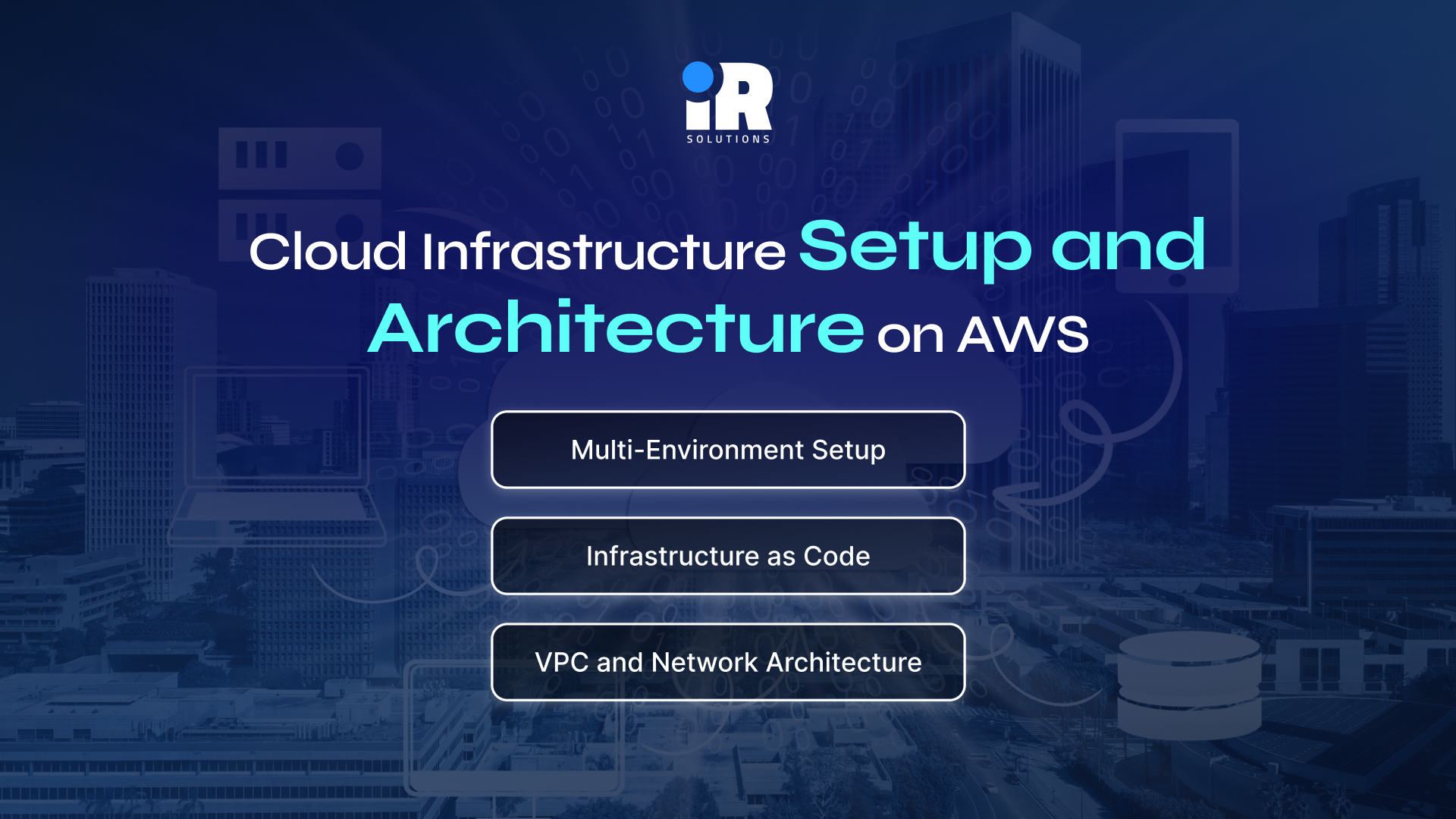
Multi-Environment Setup
Running everything in one environment is one of the most expensive mistakes early-stage startups make. A proper setup separates development, staging, and production with clear, enforced boundaries between every layer.
- Engineers experiment freely in the dev environment without risking anything that real users will ever touch.
- Staging mirrors production exactly, catching integration issues long before they reach any paying customer.
- Production stays locked down, monitored around the clock, and updated only through tested deployment pipelines.
Infrastructure as Code
Every AWS resource gets defined in code using Terraform or CloudFormation instead of manual console clicks. This turns your infrastructure from scattered manual steps into something version-controlled, reviewable, and fully reproducible by anyone on the team.
- Every infrastructure change goes through a proper code review before touching any live environment whatsoever.
- Your full infrastructure history lives in version control right alongside your application source code.
- New engineers understand your entire setup by reading code, not by digging through the AWS console.
VPC and Network Architecture
Your VPC design controls how securely and efficiently your services talk to each other and to the outside world. A poorly planned network creates security gaps and performance issues that are very hard to fix later without planned downtime.
- Public and private subnets cleanly separate internet-facing services from internal backend components and databases.
- Security groups enforce strict, explicit traffic rules between every individual service across your entire AWS environment.
- NAT gateways, peering connections, and route tables all get configured correctly from your very first day.
CI/CD Pipeline Design and Automation
Manual deployments are one of the highest hidden costs for startups that haven't invested in automation yet. CI/CD pipelines move code from a developer's machine to production automatically, with safety checks built in at every step.
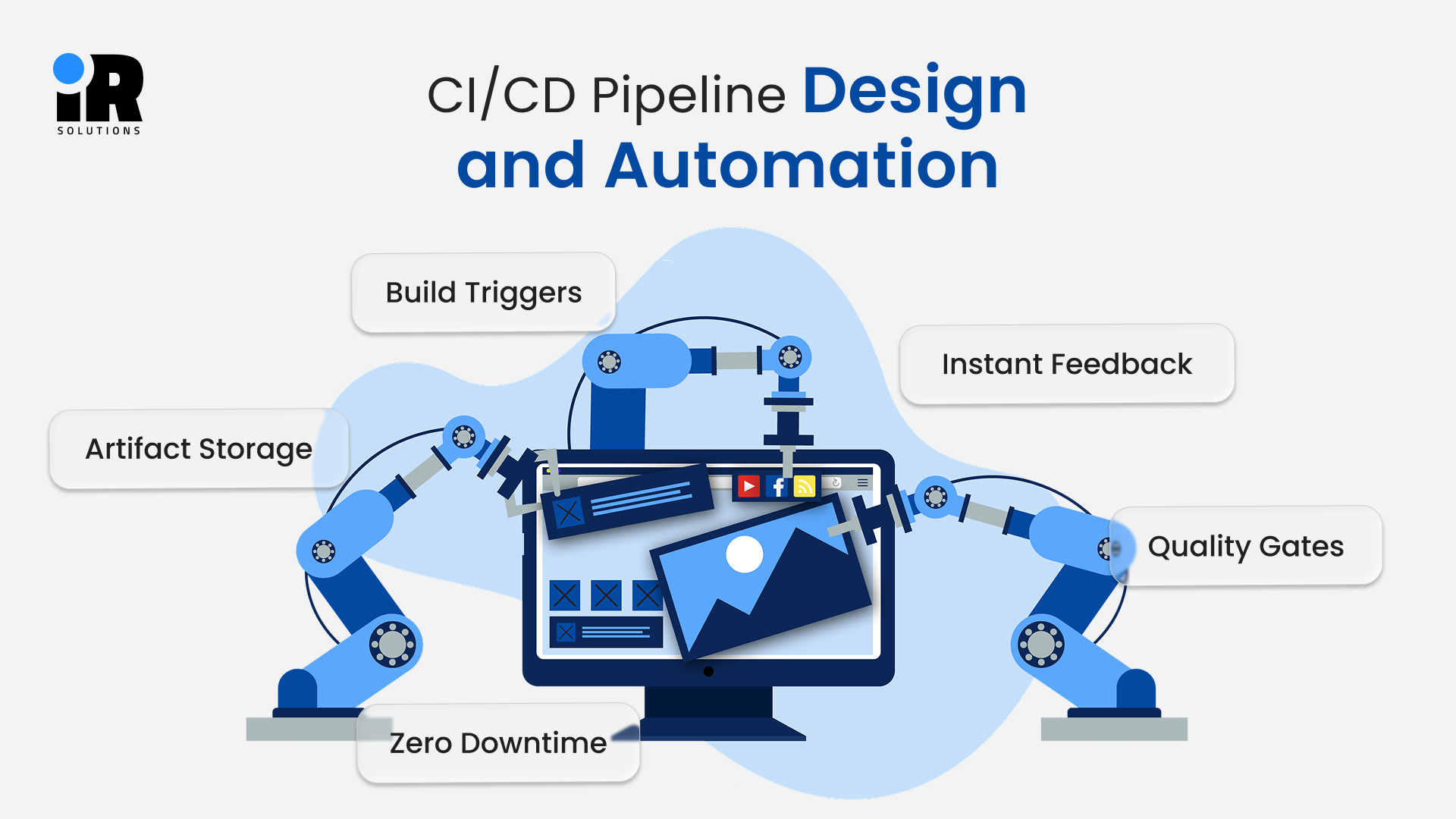
- Build Triggers: GitHub Actions or AWS CodePipeline kicks off an automated build on every single code push.
- Artifact Storage: Build artifacts get versioned and stored securely so any previous release can be rolled back instantly.
- Instant Feedback: Failed builds notify the responsible developer within seconds, with specific and actionable error details included.
- Quality Gates: Code that fails defined quality standards gets blocked automatically before it progresses any further through the pipeline.
- Zero Downtime: Blue-green deployments switch live traffic between two identical environments without users experiencing any interruption whatsoever.
As infrastructure expands beyond a single provider, What Is the Best Solution to Build Cross-Cloud DevOps on AWS, Azure, and GCP? provides a practical framework for creating reliable multi-cloud pipelines.
Why Monitoring and Observability Matter on AWS
Most startups find out something broke when a customer tweets about it. A proper observability stack built on AWS means your team sees problems forming before any user notices, covering logs, metrics, traces, and alert routing across every layer of your infrastructure.
CloudWatch Setup and Custom Dashboards
Without deliberate CloudWatch configuration, you're essentially flying blind across your entire AWS account. Custom dashboards pull together error rates, latency, and resource usage in one place, metric alarms fire the moment something crosses a threshold, and log groups stay organized by service with retention policies that keep costs from spiraling.
Distributed Tracing Across Services
When a request touches five services before returning a response, knowing which one slowed it down is nearly impossible without tracing. AWS X-Ray or Datadog follows each request through your entire system, flags error traces automatically, and builds dependency maps that show exactly where latency is piling up.
Incident Alerting and On-Call Routing
Knowing something broke only helps if the right person finds out in time to act. PagerDuty, OpsGenie, or AWS SNS routes alerts directly to the on-call engineer who owns that service, escalation policies make sure nothing critical sits ignored, and attached runbooks tell them exactly what to check first.
Security and Compliance on AWS for Startups
Security is one of those areas startups plan to address later, and then later transforms into a breach, a failed compliance audit, or a lost enterprise deal that would have changed the business trajectory. A DevOps-focused AWS consulting company builds security practices into the infrastructure from day one.
IAM Roles and Access Control
Identity and Access Management governs what every person, service, and automated system is permitted to do inside your AWS environment. Misconfigured IAM permissions remain the single most common root cause of cloud security incidents across companies of every size and industry.
- Every IAM role and user gets the minimum permissions required to perform their specific function and absolutely nothing beyond that.
- Application services authenticate to AWS using assigned IAM roles rather than hardcoded access keys stored anywhere in code.
- Multi-factor authentication gets enforced as a requirement for every human user accessing the AWS management console directly.
Secrets Management
Database credentials, third-party API keys, and SSL certificates should never live inside code repositories or plaintext environment variables that can be accidentally logged or exposed during debugging. AWS Secrets Manager and Parameter Store provide secure, encrypted, and fully auditable storage for every sensitive configuration value.
- Secrets rotate automatically on a defined schedule or trigger an immediate rotation after any suspected exposure event occurs.
- Applications retrieve secrets at runtime through IAM-controlled API calls rather than reading them from any static configuration files.
- Every single access to a stored secret gets logged with the requesting caller identity, the exact timestamp, and the secret name accessed.
Continuous Security Monitoring
AWS Security Hub, Config, and GuardDuty run continuously in the background across your entire AWS environment, watching actively for misconfigurations, suspicious access patterns, and deviations from your established security baseline.
- Security Hub aggregates findings from multiple AWS security services into one prioritized, actionable view for your security team.
- Config rules alert immediately whenever any resource configuration drifts away from the approved baseline your team has defined.
- GuardDuty detects behavioral anomalies such as unusual API call volumes, unrecognized geographic access patterns, or unexpected data transfers.
Database Management and AWS Data Services
Your application's data layer deserves the same level of care and deliberate design as your compute and networking layers receive. Poorly configured databases cause cascading performance problems, data loss risks, and compliance issues that become exponentially more expensive to address over time.
Backup Strategy and Disaster Recovery Planning
Backups that nobody has ever tested restoring from are not a real recovery strategy, they are just a false sense of security that disappears precisely when you need it most. A complete disaster recovery strategy includes both automated backup processes and regularly tested restore procedures completed before any incident ever occurs.
- Automated snapshot schedules align specifically to your recovery point objectives so the maximum acceptable data loss stays within bounds.
- Cross-region backup copies protect against AWS region-level service disruptions that would affect all resources in a single region.
- Restore drills run on a regular schedule to verify that backed-up data is valid and that restoration completes within the required time targets.
Cloud Migration to AWS From Any Existing Platform
Most startups do not plan to outgrow their hosting setup. It just happens, usually right when traffic picks up, and the cracks start showing. At that point, moving to AWS is not a nice-to-have anymore, it is the only move that makes sense. Professional DevOps development services handle that migration from the first audit to the final cutover, so your product stays live, and your users never feel the disruption happening behind the scenes.
Pre-Migration Environment Assessment
Before moving any code, configuration, or data, the consulting team audits your current environment carefully to understand service dependencies, data volumes, performance baselines, and potential failure points that all need mitigation plans prepared in advance.
- Application and service inventories document every running component, its external dependencies, and current performance characteristics.
- Data volume estimates and AWS transfer cost calculations are completed thoroughly before any actual migration work begins.
- Risk assessments identify the highest-risk migration steps and define clear contingency plans and rollback procedures for each one.
Migration Strategy and Phased Execution
Not every workload needs to be redesigned before it moves to AWS, and forcing unnecessary rewrites slows migration timelines significantly without always delivering proportional value to the business. A skilled consulting team helps you decide which approach fits each specific component in your current environment.
- Stable, simple services move to EC2 or ECS containers without requiring any code changes for the initial migration phase.
- Legacy monolithic applications get assessed for decomposition opportunities that the migration timeline can accommodate in future phases.
- The full migration executes in carefully planned phases, so your team can validate each completed phase before moving to the next.
If you are ready to stop letting infrastructure slow your startup down, book a call with our team, and we will walk through your current environment together and map out a clear path forward.
Conclusion
Most startups wait until something breaks badly before they take infrastructure seriously enough to fix it. By that point, the cost is not just money but lost customers, missed deals, and a team running on pure stress. The startups that scale without constant chaos are not luckier than the ones that struggle; they simply made better infrastructure decisions earlier. Every engineering team deserves to spend its time building products that drive growth, not patching systems that should have been designed correctly from the start. Working with an experienced AWS consulting company helps build a secure, scalable cloud foundation that supports long-term growth instead of creating future bottlenecks. If your cloud environment is not where it needs to be, now is the right time to make that change.
Frequently Asked Questions
What does a DevOps AWS consulting company actually do?
It designs, builds, and automates cloud infrastructure so startups can scale reliably and ship features faster.
How much does AWS DevOps consulting cost for startups?
Pricing varies by scope and ranges from fixed project fees to flexible ongoing monthly retainer arrangements.
When should a startup hire an AWS DevOps consultant?
The earlier the better waiting until problems occur makes fixes far more expensive and disruptive.
What is the time required for an initial setup of AWS infrastructure?
The typical foundation set up can be finished in 2-6 weeks, depending on complexity and size.
Does AWS consulting save us money each month on our cloud bill?
Absolutely, the right sizing, the savings plans and serverless approaches are often saving 30% or more on bills.
What is Infrastructure as Code, and why is it important?
It stores all the information about your cloud environment in version-controlled files, so that environments can be reproduced and fully audited.
How do we know we need professional assistance with our AWS setup?
The top indicators are slow deployments, frequent outages, unexplained cost changes, and manual processes.