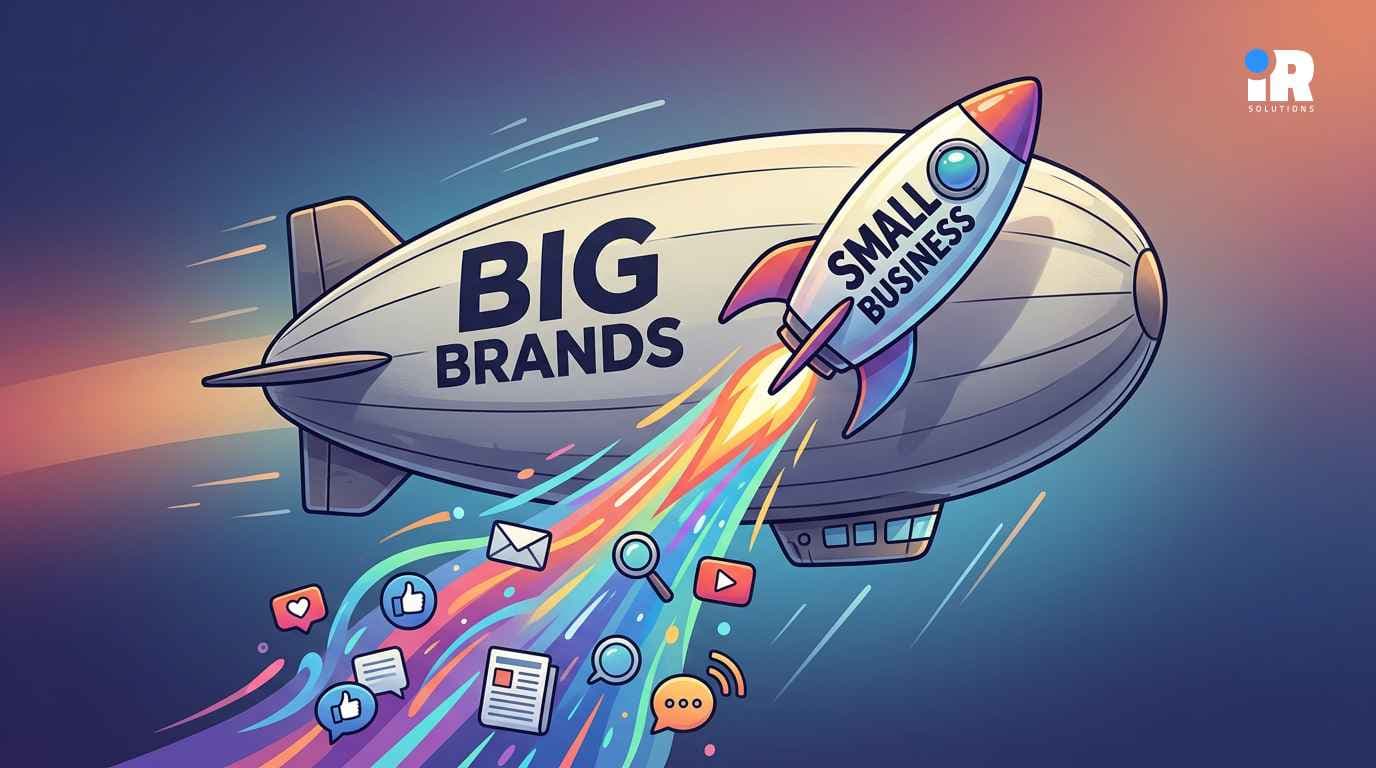




Right now, most businesses are spending money on marketing but still struggling to see real growth. The issue is not a lack of effort but a lack of connection between content marketing and digital advertising systems. IR Solutions specializes in aligning content marketing and digital advertising so both systems work together instead of operating separately. One side builds trust through content while the other drives immediate traffic through ads, and both often operate without shared data or strategy. This gap creates inconsistent results, higher acquisition costs, and missed opportunities that quietly compound over time.
Why Content Marketing and Digital Advertising Work Better Together
Businesses often try one or the other, pour money into ads and wonder why nobody sticks around, or spend months building content and wonder why nobody shows up. It makes sense on the surface, both feel like marketing, so picking one seems logical. But the reality is they solve different problems, and running only one means leaving the other problem completely unaddressed.
Ads get eyes on you fast, but content gives those people a reason to care once they arrive. Think about how people actually make buying decisions they see an ad, maybe click it, then immediately go look you up. They read your pages, check your blog, scroll through what you've put out. If nothing there builds any trust or credibility, they leave without converting. Content is what does that work. Without it behind your ads, you're essentially paying to send strangers to a blank wall and hoping a few of them stick anyway.
There's also a performance angle that doesn't get talked about enough. Your best-performing articles and videos tell you exactly what your audience responds to, which directly sharpens your ad targeting and creative. Retargeting people who've already read or watched something of yours consistently outperforms cold traffic because by the time they see the ad, some trust is already there. Running content and ads in separate silos means that data never gets used, and both channels end up weaker than they should be.
How Content Marketing Builds Something That Lasts
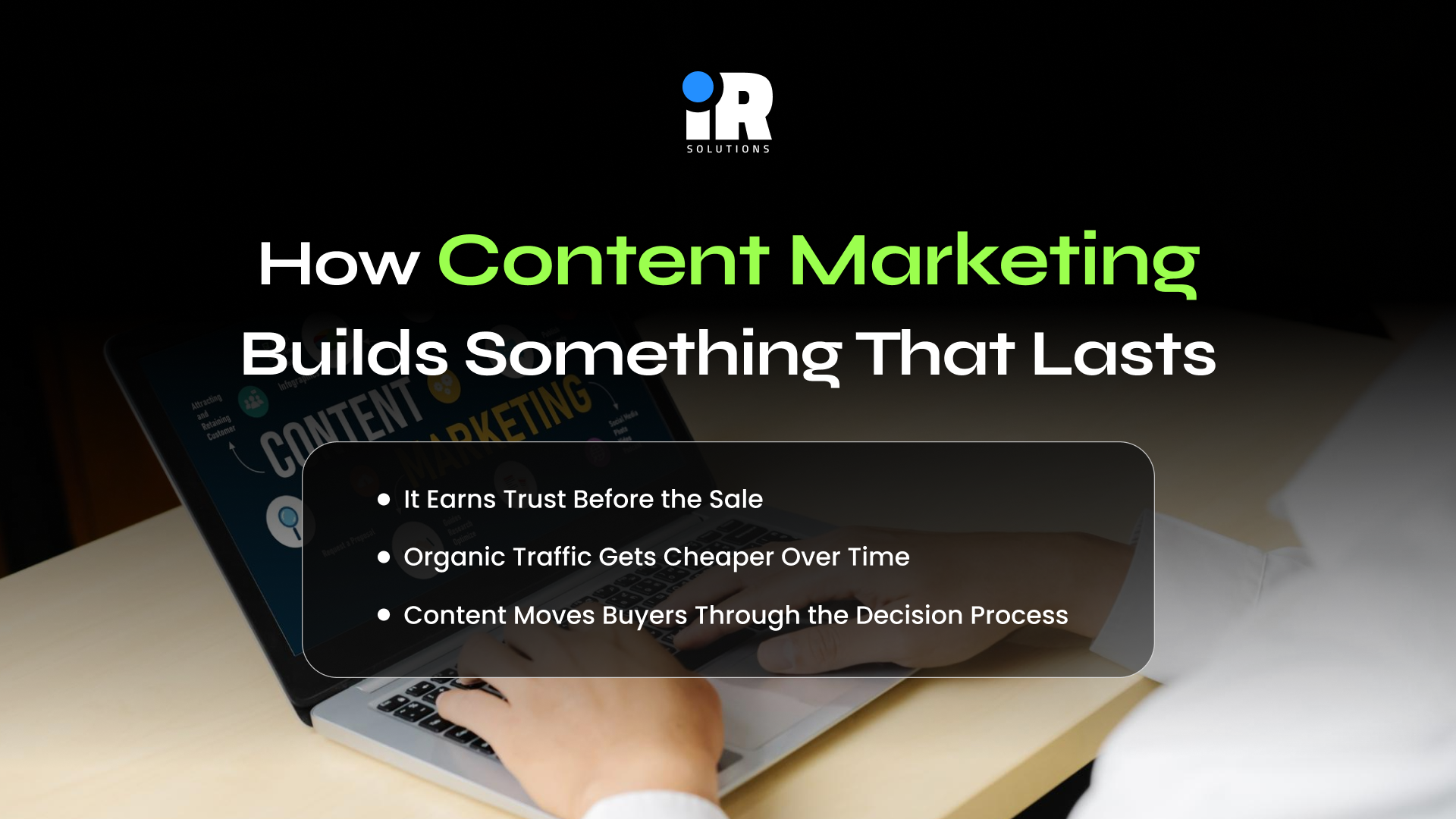
It Earns Trust Before the Sale
- Buyers research extensively before contacting suppliers. Content puts you in front of them as a helpful resource, not a sales pitch.
- Consistent, niche-focused content turns your brand into a go-to learning destination, not just another competitor.
- Trust-building content is specific, takes bold positions, and uses real data/client results, not recycled industry talking points.
Many businesses work with experienced content writers to create authoritative content that supports long-term organic growth.
Organic Traffic Gets Cheaper Over Time
- Unlike most channels, well-optimized content compounds over time, pulling in qualified visitors for years with no added spend.
- Target intent-driven, specific keywords (not broad terms), they convert far better and face less competition.
- Depth matters: comprehensive content ranks better because it answers more questions, earns more links, and holds attention longer.
- Maintenance is essential, old posts need fresh data, new examples, and updated structure to hold their rankings.
Content Moves Buyers Through the Decision Process
- Top-of-funnel educational content (blogs, videos, reports) attracts people just discovering their problem, driving volume.
- Middle-of-funnel-specific content (case studies, comparison guides, webinars) builds credibility with people actively evaluating solutions.
- Bottom-of-funnel testimonials, pricing pages, and free consultations give ready buyers the final nudge, but most businesses underinvest here.
- Businesses that deliberately map content to each buyer stage see meaningfully better conversion rates over time.
To understand this shift better, read: How Social Media Is Becoming a Branding Game, Not a Marketing Channel.
How Paid Advertising Fills the Pipeline Right Now
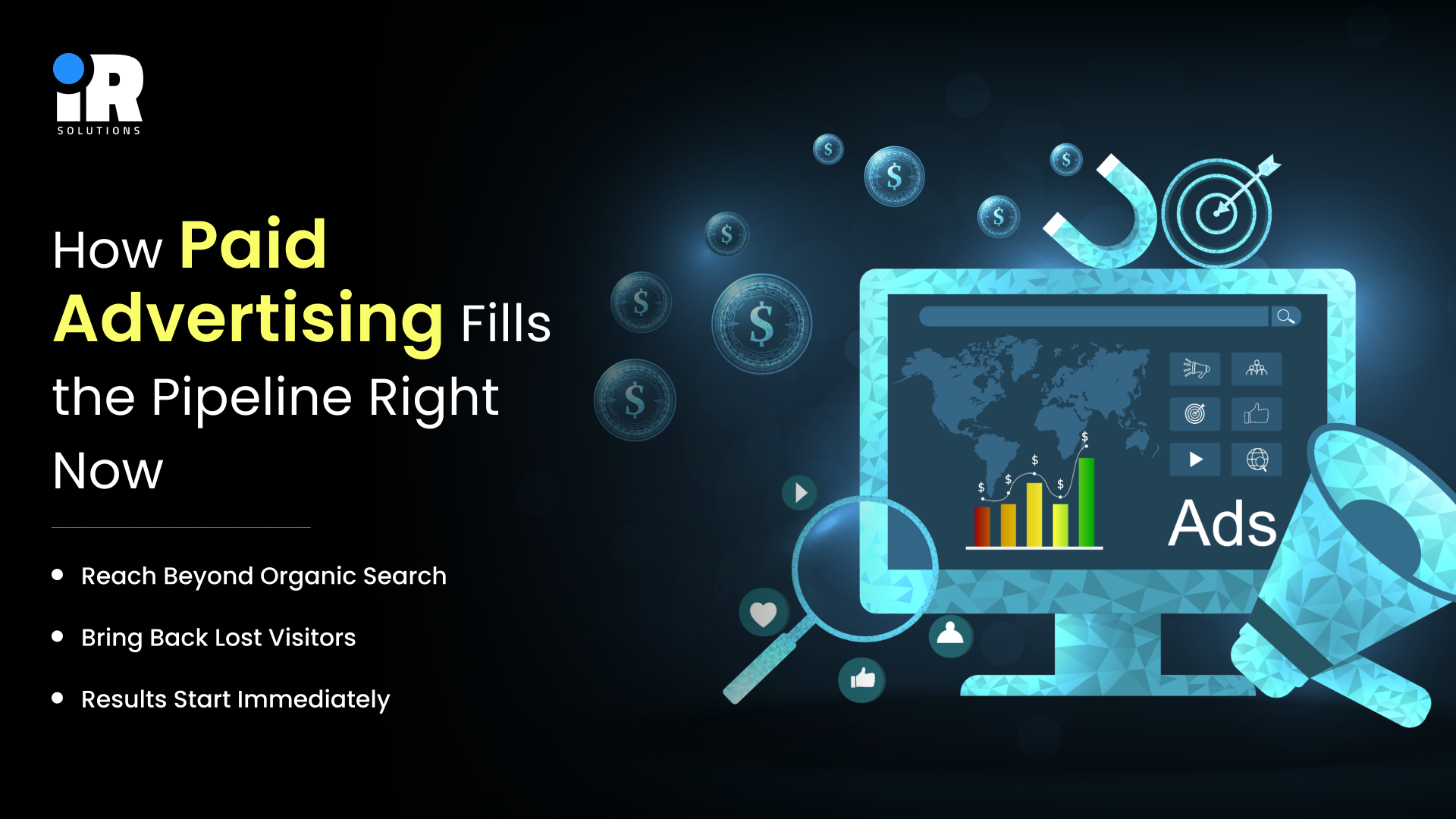
Reach Beyond Organic Search
Paid ads find people who are not actively searching for you yet, which is something content alone cannot do. Google Ads capture high-intent buyers already in the market, Meta Ads reach cold audiences based on behavior and interests, and LinkedIn Ads let you filter by job title, company size, and industry, making each platform useful for a different stage and audience type, as long as the creative matches where that person is in the decision process. Brands that advertise consistently across platforms often work with social media specialists who understand audience behavior, creative performance, and campaign management across different channels.
Bring Back Lost Visitors
The majority of people who visit your site leave without taking any action, and without retargeting you have almost certainly lost them for good but showing a tailored ad to someone who spent four minutes reading your case study, or visited your pricing page without submitting a form, costs a fraction of what it takes to find a new cold prospect and converts at a significantly higher rate because that person already knows who you are.
Results Start Immediately
Unlike content, which takes months to gain traction, a well-structured ad campaign can generate qualified leads within days of launching. Working with skilled PPC specialists helps businesses improve targeting, control costs, and generate higher-quality leads. Making paid advertising the right lever for businesses that need pipeline now, though the economics only work when the targeting is tight, the offer is clear, and the landing page gives visitors a compelling reason to take the next step rather than bouncing.
How Businesses Can Avoid Slow Growth With the Right Marketing Strategy
Slow growth usually isn't a budget problem, it's a strategy problem. Chasing every new platform, running ads without a clear funnel, and posting content without a distribution plan all quietly drain resources without delivering results. Being deliberate about where the effort goes changes everything. A few things that genuinely move the needle:
- Vague targeting wastes money, the more specific your customer profile, the better everything performs.
- Go deep on one or two platforms before spreading yourself thin across all of them.
- Someone clicking your ad for the first time needs a different message than a repeat visitor.
- If something isn't converting, change it if it's working, put more budget behind it.
- A business showing up consistently every week beats one doing big pushes and going quiet.
- Markets shift, and platforms change, so revisit what's actually working every quarter.
How AI Changes Content Teams Without Replacing Human Insight
AI tools have changed how content teams operate. The businesses that use them thoughtfully are faster and more productive. The ones that treat AI output as finished content end up publishing articles that are technically correct, structurally predictable, and memorable to nobody.
AI is good at generating outlines quickly, summarizing research across multiple sources, identifying trending topics, and producing first drafts that give an editor something to work with, which is real-time savings.
AI is not good at understanding your specific client's pain points from six months of sales conversations. It cannot build a brand voice that readers recognize in three paragraphs. It cannot make the argument that requires actual industry experience to make credibly. It does not know which client story would land perfectly in this particular piece.
The best content teams use AI to accelerate the parts of the process where speed matters and apply human judgment to the parts where it does not. That is the distinction between content that ranks and content that converts. Both require different things, and neither is fully served by automated production.
How Data Flow Between Content and Ads Improves Conversion Performance
Most teams are already sitting on more useful data than they will ever fully realize. Ad platforms know exactly which headlines stopped someone mid-scroll on a busy feed. Analytics tools know which blog posts people read right before submitting a contact form. CRM data shows which content pieces appear most in sales cycles that actually close deals.
When you finally create that habit of sharing data, a few things start happening quickly. You find out which topics your audience genuinely cares about versus which ones feel important internally. You learn which ad formats drive awareness versus which ones work for audiences already familiar with your brand. You discover that your highest-converting landing page shares a specific angle with an underperforming blog.
The technical setup is honestly far less complicated than most marketing people tend to assume. You do not need a custom data warehouse or expensive software tools on day one. You need a shared spreadsheet, a weekly review, and two people asking the same question. What is the data telling us that we have not acted on yet?
When you are ready to connect your content performance with real ad results, schedule a free call.
Measuring Real Business Impact Beyond Traffic and Impressions
Traffic metrics look impressive in reports, but they rarely tell the full story of business growth. When you shift focus to what actually drives revenue, the picture changes fast, and so does your strategy.
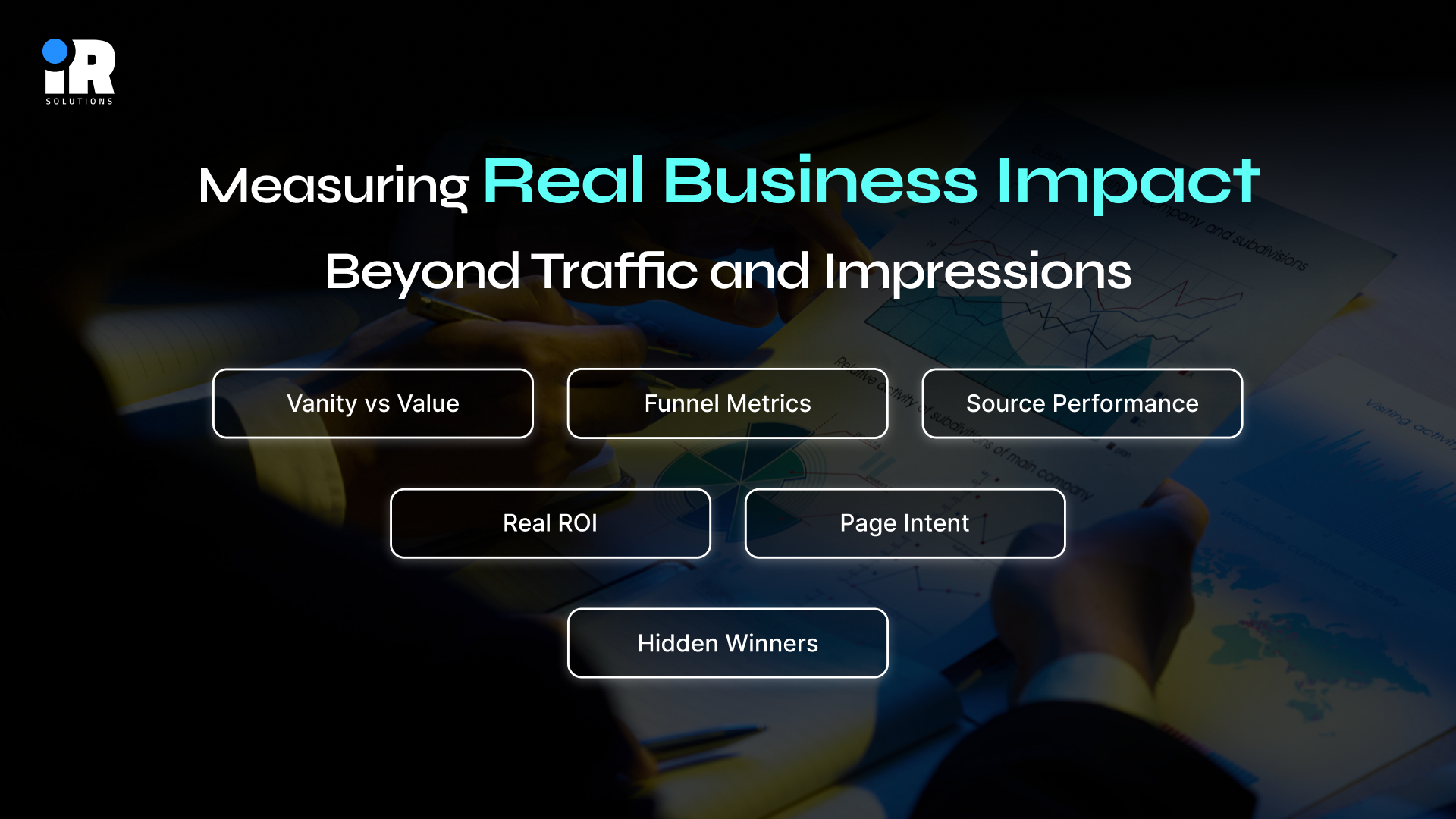
- Vanity vs Value: Traffic without conversion is just noise your business keeps paying for unnecessarily.
- Funnel Metrics: Cost per qualified lead tells you more than any monthly traffic report ever will.
- Source Performance: Lead-to-close rate by channel shows exactly which sources earn their budget.
- Real ROI: Customer acquisition cost vs lifetime value is what leadership actually cares about most.
- Page Intent: Stop chasing page views and start tracking which pages drive real form fills.
- Hidden Winners: Retargeting and bottom-funnel content often quietly outperform your most celebrated channels.
When businesses move from surface-level metrics to revenue-focused decision-making, they often realize they need guidance to connect all the moving parts of their marketing system. This is where working with digital marketing experts becomes valuable, helping align strategy, execution, and performance tracking across content, ads, and analytics so that every channel contributes directly to growth.
Conclusion
Content marketing and digital advertising are not separate strategies because they work together as one growth system. Content builds the trust that makes ads more effective. Ads drive the traffic that gives content a real audience. Data from both tells you what to do next. When all three work together, growth stops feeling like a guessing game and starts becoming predictable. The businesses that figure this out early move faster, spend smarter, and build something that compounds over time instead of resetting every quarter. Stop running content and ads in separate units and start building a strategy that actually connects the dots between effort and revenue. Contact us if you want a clearer picture of what's holding your marketing back or where your funnel is losing people.
Frequently Asked Questions
How long before content marketing starts generating real leads?
Most businesses see meaningful organic traction between four and eight months, depending on competition, publishing consistency, and how well content targets actual buyer intent rather than broad topics.
Should small businesses run ads before content is established?
Yes, if the pipeline is the immediate priority. Ads generate leads now while content builds over time. Running both from the start, even at a small budget, gives you faster feedback and better data.
What is the biggest mistake businesses make with paid advertising?
Sending ad traffic to a weak landing page. The targeting can be perfect, and the creative can be great, but if the page does not match the ad and give visitors a clear next step, the budget goes to waste.
How do content and paid media teams actually start sharing data?
A shared spreadsheet, a weekly thirty-minute review, and one recurring question: what is the data showing that we have not acted on yet? No expensive tools required at the beginning.
Which metrics should replace traffic as the primary success measure?
Cost per qualified lead, lead-to-close rate by channel, and customer acquisition cost compared to lifetime value. These numbers tell you what is actually working and what is quietly draining the budget.
Can AI-generated content affect search rankings?
Generic AI content that adds nothing new to a topic can absolutely hurt performance. Search engines reward depth, original perspective, and real usefulness. AI can support the process, but human judgment has to shape the final output.
How does retargeting fit into a content and ads strategy?
Retargeting connects the two channels directly. Someone reads your content, leaves without converting, and then sees a paid ad built around exactly what they were researching. It costs far less than cold prospecting and converts at a significantly higher rate.