


Digital design has entered a decisive phase. In 2026, UI/UX will no longer be a supporting element of digital products. It is a primary driver of user trust, engagement, and business performance. Users can now rate brands in a few seconds, depending on the ease, speed, and customization of their online experiences. As competition increases across every industry, businesses must move beyond visually appealing interfaces.
It requires a modern design to address actual user issues, adapt to behavior, and be available on devices and in various contexts. This trend towards intelligent, human-oriented experiences is seen in the latest 2026 design trends. In practice, design often starts with an initial layout based on the Statement of Work (SOW), and AI can assist by generating these layouts quickly. AI enhances the overall experience, making interfaces more intuitive and user-centered.
Experience-First Design Becomes a Business Priority
In the modern digital world, success is not measured by features alone. Users are concerned about the way a product would make them feel. Experience-first design puts the user at the centre of the design thinking about their needs and eliminating friction through all the steps. Each interaction, whether it is the smallest click or the most intricate workflow is designed to be easy, smooth, and satisfying. A product that is easy to use helps the user remain longer, interact more and gain trust in the brand.
The impact of experience-first design goes far beyond usability. Significant UI/UX enhances the conversion rates, customer retention, and brand perception. By focusing on meaningful experiences rather than just adding features, companies build lasting relationships with their users and encourage loyalty that grows over time. Design is no longer a matter of appearances. It determines the business results, contributes to its development, and outlines the long-term success of the company.
Minimal and Purpose-Driven Interfaces Define Modern UI
Minimalism is the primary trend in UI design, though it no longer has the same role. Modern minimal visual layout emphasises clarity, intent, and functional efficiency, ensuring every element serves a meaningful role rather than existing purely for visual appeal.
Clear Structure and Intentional Layouts
Purpose-driven layouts will only show what users require at any given time. Unnecessary elements are eliminated to minimize confusion. A clear structure helps users understand actions instantly. This reduces errors and improves task completion.
Faster Interaction and Improved Performance
Simple interfaces load faster and respond more smoothly. Performance directly impacts user satisfaction, especially on mobile devices. Clean UI reduces visual processing time. Users move through products with less effort.
Stronger Brand Credibility
Minimal interfaces feel professional and trustworthy. Clean design is linked to quality by the users. Businesses that hire UI/UX designers skilled in purposeful minimalism create products that feel refined, modern, and user-focused.
Accessibility-Driven Design for Inclusive Digital Products
Accessibility is no longer treated as an optional enhancement. In 2026, it is a core design principle that improves usability for everyone.
Designing for Diverse Abilities and Contexts
The interfaces are easily navigated with a keyboard, readable typography and a good contrast. These features help users with disabilities and those in challenging environments. Simple designs and uniform navigation are beneficial to anyone. Accessibility enhances the quality of the user experience.
Building Trust Through Inclusive Experiences
Users trust brands that demonstrate inclusivity. Accessible products reflect responsibility and professionalism. Inclusive design expands audience reach. It also strengthens brand reputation and credibility.
Long-Term Design Sustainability
Accessibility reduces future redesign costs. Designing inclusively from the start prevents technical debt. Accessible systems scale better and remain usable over time. It also ensures compliance with evolving standards while improving overall user satisfaction.
AI-Powered Design Enhances Modern UI/UX Capabilities
Artificial intelligence is revolutionizing the design, optimization, and user experience of digital products. In 2026, AI is embedded directly into UI/UX workflows, enabling smarter interfaces and more adaptive design systems.
Intelligent Interface Adaptation
AI interprets user behavior, preferences, and context to dynamically adjust layouts in real-time. Interfaces can reorganize content, emphasize relevant actions, and simplify complex workflows automatically. This adaptive behavior reduces friction and improves usability without manual customization.
AI-Enhanced Design Features
AI-powered systems improve typography selection, spacing consistency, and color contrast automatically. These enhancements support accessibility and visual clarity across devices. AI-powered design systems are consistent and scalable.
Smarter Onboarding and User Guidance
AI-driven onboarding adapts to user behavior and skill level. New users receive contextual guidance without overwhelming instructions. This results in higher retention and faster product adoption.
Following AI Trends in UI/UX Design
AI is transforming UI/UX design. Tools like Figma AI and Google Stitch help create layouts, flows, and code, while giving UX and UI suggestions. This makes design faster, smarter, and keeps products updated with user requirements.
For more insights, read our blog: What are the Benefits of Using Custom App Development for Enterprise-Level Processes?
Micro-Interactions Create Emotional Connections in UI/UX
Micro-interactions are small design details that shape how a layout feels. In 2026, they will play a major role in user satisfaction.
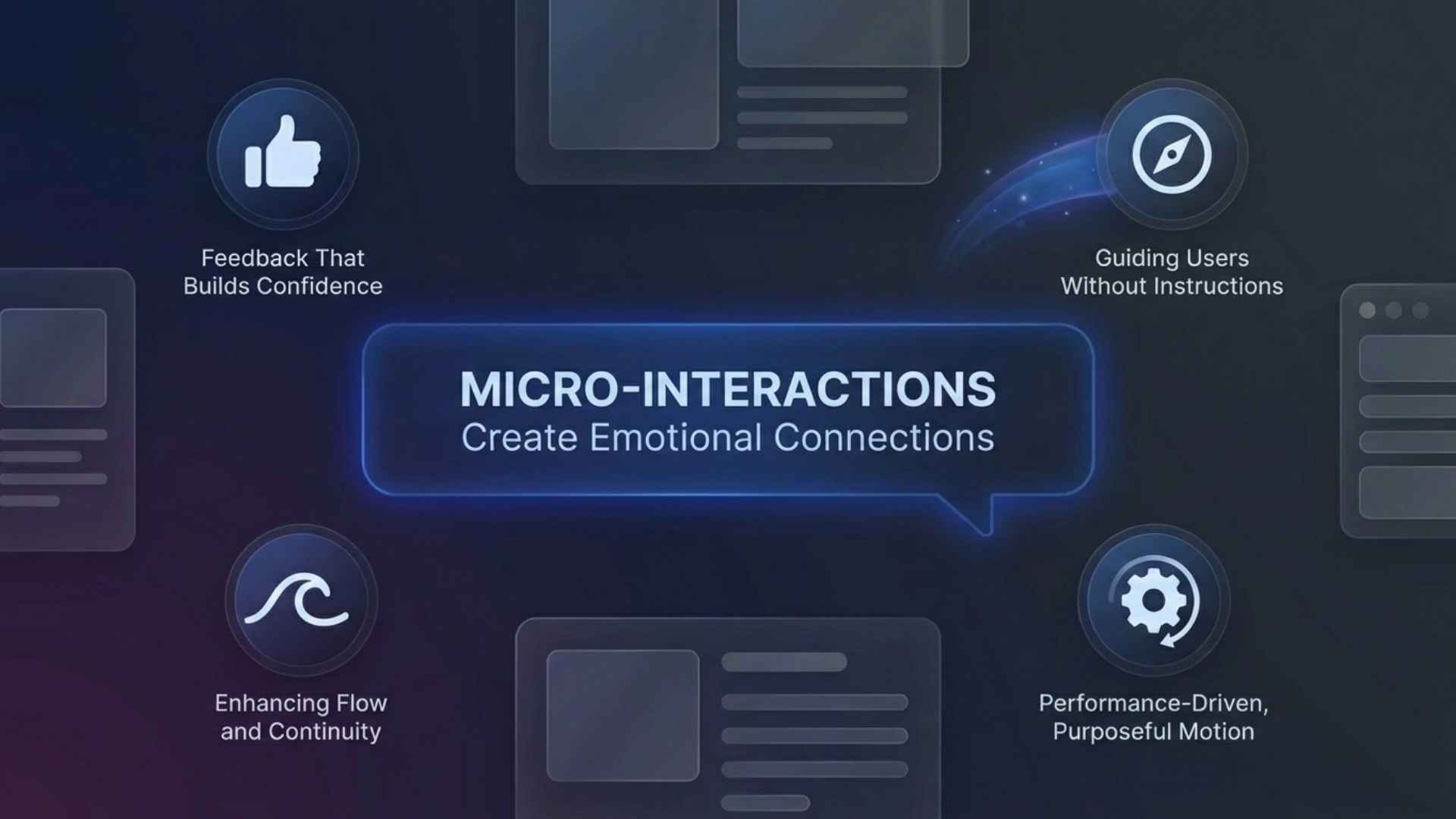
Feedback That Builds Confidence
Animations confirm actions such as clicks or submissions, letting users know their input has been received and reducing uncertainty and frustration. At the same time, clear visual feedback reassures users that the system is responsive and reliable.
Guiding Users Without Instructions
Animation smoothly guides attention to important actions and helps users understand what to do without any instructions. Micro-interactions replace cluttered explanations with visual clarity, creating intuitive journeys that feel effortless and self-explanatory.
Enhancing Flow and Continuity
Smooth transitions connect screens and actions naturally, making navigation predictable and easy to follow. These details help create refined, human experiences, while regular movement keeps users oriented and engaged throughout interactions.
Performance-Driven, Purposeful Motion
Modern UI/UX balances creativity with efficiency, Micro-interactions must be lightweight and purposeful, heavy or excessive animations can disrupt flow and slow down experiences. Optimized motion enhances usability, maintains responsiveness, and ensures the interface feels polished and professional.
Data-Driven UX Shapes Smarter Design Decisions
Design decisions in 2026 rely heavily on user data. Analytics guide improvements and reduce guesswork.
Understanding Real User Behaviour
Tracking interactions reveals friction points and opportunities, allowing designers to refine experiences based on evidence. This approach results in better layouts and smoother flows for users.
Optimizing Engagement and Conversions
Data-backed changes improve engagement metrics and help interfaces perform better across key business goals. Optimized UX also increases sign-ups, retention, and revenue for the business.
Reducing Risk Through Validation
Testing helps validate design assumptions before full implementation, reducing the chance of costly mistakes. By using real data, organisations can make informed decisions and create efficient, measurable, and user-centred products.
Conclusion
UI/UX design in 2026 is defined by intelligence, clarity, and inclusivity. Minimal interfaces, accessibility, personalization, micro-interactions, advanced inputs, and data-driven decisions shape modern digital products. Businesses that align with these trends create experiences that feel intuitive and trustworthy. Strong UI/UX design supports engagement, loyalty, and sustainable growth. With IR Solutions, you can hire UI/UX designers to create modern, user-friendly digital experiences that boost engagement and drive meaningful results. Investing in experience-driven design today ensures digital products remain competitive in a rapidly evolving digital landscape.
Frequently Asked Questions
What makes UI/UX design critical for businesses in 2026?
UI/UX shapes how users perceive and interact with a product, building trust, engagement, higher conversions, and a strong, lasting brand reputation across digital platforms.
Which UI/UX trend has the biggest impact on user engagement?
AI-powered personalization delivers experiences tailored to each user, keeping them consistently engaged with relevant content, features, and adaptive interface adjustments.
Why is accessibility essential in modern UI/UX design?
Accessibility makes products usable for everyone, significantly expanding reach while building credibility, inclusivity, and long-term user loyalty.
How do micro-interactions improve digital experiences?
Micro-interactions guide user actions, provide instant feedback, and make interfaces feel much smoother, more interactive, and naturally engaging.
Why should businesses adopt data-driven UX strategies?
Data-driven UX uses real user insights to reduce risk, improve overall performance, and align design decisions closely with actual user behavior patterns.