




Key Takeaways
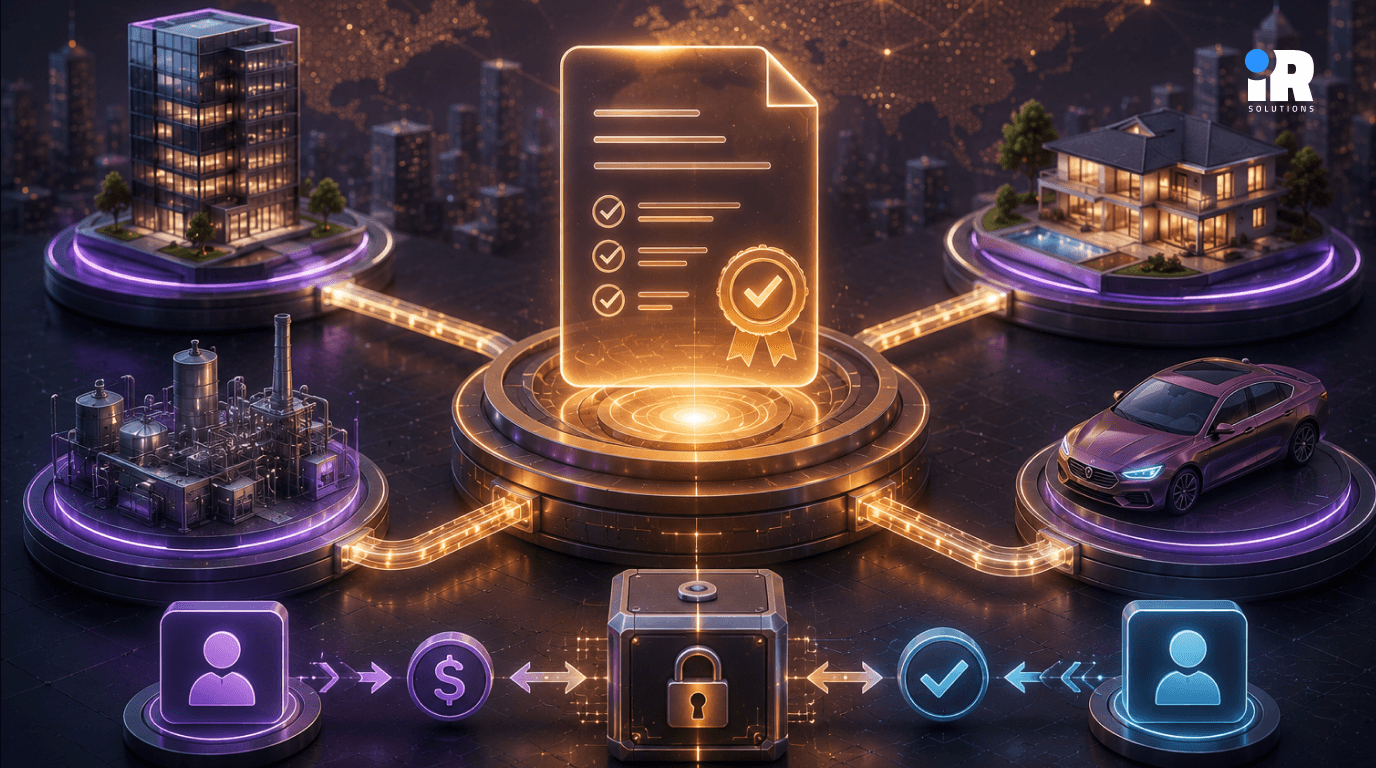
- Smart contracts can provide the programmable enforcement layer for RWA transactions, automating functions such as issuance, compliance, income distribution, and settlement where these processes are implemented on-chain.
- They govern token issuance, compliance checking, income distribution, fractional ownership, and atomic settlement across the full asset lifecycle.
- RWA tokens are not standard ERC-20 tokens. They require compliance-aware standards like ERC-3643 or ERC-1400 that restrict transfers based on investor identity and jurisdiction.
- Smart contracts cannot create legal ownership, verify physical assets, replace custodians, or resolve legal disputes. Those functions still require off-chain infrastructure.
- Independent auditing of smart contract code is not optional for any platform handling real investor capital at any scale.
Smart contracts are the operational infrastructure that makes RWA tokenization function as something more than a record-keeping exercise on a blockchain. They issue tokens against verified reserves, enforce who can hold and transfer those tokens, distribute income automatically, and settle transactions in minutes rather than days. Without them, a tokenized asset is just a database entry with no automated enforcement of the rules that make it commercially and legally meaningful to the investors holding it.
The scale of what these contracts now govern is significant and worth stating plainly. RWA.xyz tracks approximately $36 billion in distributed tokenized value as of July 2026, against a much larger represented figure that includes assets on-chain but not yet fully transferable. The tokenized RWA market has surpassed $32 billion in 2026, with BlackRock, JPMorgan, and Franklin Templeton all actively participating in the space. Understanding what these contracts do, how they are structured, and where their genuine limitations sit is not a technical detail for developers. It is foundational knowledge for anyone building or investing in tokenized assets in 2026.
5 Key Roles of Smart Contracts in RWA Transactions
Smart contracts in RWA tokenization are not single-function tools. They perform five distinct jobs simultaneously across the asset lifecycle, each of which would require separate intermediaries in a traditional financial system.
Issuing Tokens Against Verified Reserves
The first job is token issuance, which only happens when the underlying asset has been verified and legally wrapped in a structure that gives the token holder a genuine claim on it. A token contract does not inherently need an oracle-triggered custody confirmation before minting. The issuer may use different off-chain verification and issuance workflows.
If you want to understand the full process that precedes this step, our guide on how to tokenize assets covers the legal and technical preparation required before the first token is minted.
Enforcing Compliance Before Every Transfer
The second job runs on every single transfer attempt rather than only at issuance. Before a token moves from one wallet to another, the smart contract checks the identity registry, validates jurisdiction eligibility, confirms the investor meets accreditation requirements, and verifies that any holding period restrictions have been satisfied. If any of these checks fail, the transfer reverts automatically without any manual intervention from the issuer or a compliance officer.
Managing Fractional Ownership
The third job is fractional ownership management, which is one of the primary value propositions of tokenization for assets that were previously accessible only to large institutional investors. A single property worth five million dollars can be divided into fifty thousand tokens, with the smart contract maintaining an on-chain ownership ledger that records the token balance of each holder.
Automating Income Distribution
The fourth job is income distribution, which the smart contract handles without any manual reconciliation between payment periods. When rental income, bond coupon payments, or dividend proceeds arrive in the treasury contract, the distribution contract calculates each token holder's proportional share and each eligible holder's proportional entitlement and can automate payments through batch or claim-based mechanisms, depending on the platform architecture. This replaces the manual distribution process that in traditional finance involves transfer agents, clearing houses, and multiple settlement windows.
Settling Transactions Atomically
The fifth job is atomic settlement, which means the transfer of tokens and the transfer of payment happen in a single blockchain transaction that either completes entirely or reverts entirely. There is no settlement window during which one party holds the asset and the other holds the cash without either being at risk. This can reduce settlement and counterparty risks associated with multi-step traditional settlement processes. In the U.S., most securities transactions now settle on a T+1 cycle, although settlement timelines vary by asset class and jurisdiction. Because settlement and registry update happen in the same transaction, the ownership record reflects the trade instantly, there's no separate reconciliation step where the blockchain ledger and the "official" record could temporarily disagree.
What Is a Smart Contract in an RWA Transaction?
A smart contract is a piece of code deployed on a blockchain that executes automatically when predefined conditions are met, without requiring any party to manually approve or process each action it performs.
Smart Contracts vs Traditional Contracts
Traditional contracts rely on trust in the parties and the institutions enforcing the agreement. Smart contracts rely on trust in the code, which is why auditing that code before deployment is the single most important risk management step in any RWA tokenization project, and why the initial build should come from dedicated smart contract developers rather than general blockchain generalists.
Why an RWA Token Is Not a Standard ERC-20 Token
A standard ERC-20 token can be transferred to any wallet address without restriction. That permissionless transferability is what makes most crypto assets liquid and accessible, but it is precisely what makes ERC-20 unsuitable for tokenized securities and regulated real-world assets. An RWA token must be able to refuse a transfer to a wallet whose owner has not completed KYC verification, is located in a restricted jurisdiction, or does not meet the accreditation requirements the issuer has established for the asset. Standard ERC-20 has no mechanism for any of these checks, which is why compliance-aware token standards were developed specifically for this use case.
Lifecycle of a Smart Contract in Asset Tokenization
Understanding the complete lifecycle reveals how many separate smart contract functions coordinate across the full life of a tokenized asset from creation to redemption.

Each stage in this lifecycle involves at least one smart contract function. Asset verification connects the off-chain reality to on-chain representation through oracle data. The legal wrapper gives the token legal standing by establishing the SPV or trust that holds the underlying asset. Custody confirmation triggers the initial token mint.
Investor onboarding populates the identity registry that every subsequent transfer checks against. Secondary market trading enforces compliance on every transfer without any manual review. Income distribution automates payment across all holders simultaneously. Redemption burns tokens as the underlying asset value is returned to the holder, maintaining the integrity of the reserve-to-token ratio throughout.
Smart Contract Architecture in an RWA Platform
Most competitor content describes what smart contracts do without explaining how the different contracts in an RWA platform interact with each other. A production RWA platform may use several interconnected smart contracts, with the exact architecture depending on the asset class, regulatory model, and settlement design. One reference architecture can include the following components.

Token Contract
The token contract holds the core ownership ledger and defines the total supply, individual balances, and the transfer function that every movement of tokens passes through. It is the contract that most investors interact with directly through their wallets.
Identity Registry
The identity registry is a separate contract that stores verified investor identities linked to their wallet addresses. When a transfer is attempted, the token contract queries the identity registry to confirm that both the sender and the receiver have valid, current verification before allowing the movement to proceed.
Compliance Engine
The compliance engine sits between the token contract and the identity registry and applies the rule set that the issuer has defined for the specific asset. It checks jurisdiction, holding period, investor eligibility, and transaction volume limits and returns an approval or rejection signal to the token contract for every transfer request it receives.
Oracle Layer
The oracle layer connects the smart contract system to real-world data that the contracts need to function accurately. Price feeds for asset valuation, custody confirmations for proof of reserve, and regulatory data feeds for compliance updates all flow into the system through oracle connections provided by services like Chainlink, API3, or custom oracle implementations.
Treasury Contract
The treasury contract holds the income generated by the underlying asset before it is distributed to token holders. Rental payments, bond coupons, and fund dividends flow into the treasury contract and wait for the distribution trigger rather than flowing directly to individual wallets, which would create significant gas cost and timing complexity at scale.
Distribution Contract
The distribution contract reads the token contract's ownership ledger and the treasury contract's balance and calculates each holder's proportional share when a distribution event is triggered. It then executes payment to all eligible wallets in a single coordinated transaction rather than as a series of manual individual payments.
Governance Contract
The governance contract manages token holder voting rights and proposal execution for decisions that the issuer has delegated to the investor base. Property management decisions in real estate tokens, fund strategy changes in tokenized funds, and platform upgrade approvals in decentralised structures all flow through the governance contract.
Upgrade Proxy
The upgrade proxy allows the logic layer of the smart contract system to be updated without changing the token contract address that investors hold in their wallets. It is one of the most technically sensitive components in the architecture because a misconfigured proxy creates a single point of control that could allow an attacker or a malicious administrator to change the contract behaviour after investor capital has been committed.
What Happens During a Single RWA Transfer?
See how a tokenized RWA transfer moves from the initial request through identity and compliance checks to final on-chain settlement or transaction reversal.

This entire process executes within a single blockchain transaction that completes in seconds on modern networks. Once the required identity and compliance data is available to the smart contract, the transfer can be approved or rejected automatically without requiring manual review for every transaction. The code either approves it or reverts it based on the rule set the issuer encoded at deployment time.
Token Standards That Make Compliance Possible
The token standard is the technical foundation that determines whether a platform can enforce the compliance rules an RWA offering requires or is structurally incapable of doing so regardless of what other systems are built around it.

ERC-20 was designed for utility tokens with no compliance requirements. It has no native mechanism for restricting transfers based on identity, jurisdiction, or eligibility. Using it for regulated RWA tokens requires external wrappers that add complexity and create gaps between the token's behaviour and the compliance system's requirements.
ERC-1400 provides a framework for security tokens with features such as transfer restrictions, partitions, and transfer validation mechanisms. It is widely used for securities tokenization but applies compliance rules at the contract level rather than through a dynamic identity registry, which limits how it adapts to changes in investor status or regulatory requirements after deployment.
ERC-3643 is a prominent standard for permissioned and compliance-aware tokenization, combining on-chain identity with configurable compliance modules.It incorporates a dynamic identity registry that links wallet addresses to verified investor profiles and enforces compliance checks on every transfer against that registry in real time, which means changes to an investor's eligibility status propagate to transfer restrictions without requiring a contract upgrade.
ERC-7943 is a newer universal RWA interface standard designed to provide cross-ecosystem compatibility for tokenized assets that need to operate across multiple blockchain networks and DeFi protocols without losing their compliance properties in the process.
ERC-4626 and ERC-7540 are vault standards used primarily for yield-bearing tokenized products like money market funds and Treasury token products. They optimise for deposit and withdrawal mechanics rather than compliance enforcement, which means they are typically used in combination with ERC-3643 or ERC-1400 rather than as standalone standards for regulated RWA issuance.
Traditional Assets vs Tokenized Assets
The operational difference between traditional and tokenised asset processes is not marginal. It is structural across every stage of the asset lifecycle from initial transfer to income distribution.
In a traditional settlement process, a transfer agent receives the instruction, validates it against a paper or database record, and queues the transaction for processing within a settlement window that typically takes two to five business days to finalise. Manual reconciliation between the buyer's custodian, the seller's custodian, the clearing house, and the transfer agent adds cost and introduces error at each handoff between systems that do not share a common ledger.
In a smart contract settlement, the token contract receives the transfer request, the compliance engine validates it in the same transaction, and the ownership record updates atomically on the shared blockchain ledger in minutes. All parties see the same final state simultaneously without any reconciliation required between separate systems that each maintained their own version of the ownership record.
Income distribution in traditional finance involves the issuer calculating each holder's entitlement, instructing a paying agent, processing payments through correspondent banking networks, and reconciling exceptions that arise from the gap between the distribution calculation date and the payment settlement date. Smart contracts replace every one of those steps with a single executed transaction that distributes proportional income to all eligible wallets simultaneously from the treasury contract at the moment the distribution event triggers.
What Smart Contracts Cannot Do
Understanding the genuine limitations of smart contracts is as important as understanding what they can do, and most content in this space significantly overstates their scope. At IR Solutions, this is exactly the kind of gap we help clients close between marketing claims and what a platform can actually deliver.
Smart Contracts Cannot Create Legal Ownership
A smart contract can record a token balance on a blockchain and enforce transfer rules around that token, but it cannot by itself create legal ownership of the underlying asset. Legal ownership requires a properly structured legal entity, documented transfer of title under applicable law, and recognition by the relevant courts and regulatory authorities in the jurisdictions where the asset exists and where the investors are located.
Smart Contracts Cannot Verify Physical Assets
Smart contracts can read data from oracle systems that report on physical asset status, but they cannot independently verify that the physical asset exists, is in the condition claimed, or is held by the custodian the oracle confirms. The oracle connection introduces a trusted data source that requires its own independent verification and audit processes separate from the smart contract audit.
Smart Contracts Cannot Replace Custodians
Physical assets require regulated custodians to hold them safely and provide the legal and operational infrastructure that connects the off-chain asset to the on-chain token. Smart contracts govern the token side of that relationship but have no direct authority over or interaction with the physical asset in custody. If the custodian fails, the smart contract continues operating without any awareness that the reserve it represents may no longer exist in the form it was verified to hold.
Smart Contracts Cannot Resolve Legal Disputes
When disputes arise between token holders, between issuers and investors, or between the tokenization platform and regulators, those disputes are resolved through legal processes in the relevant jurisdictions rather than through smart contract execution. The immutability of the blockchain record can serve as evidence in a dispute, but it does not itself constitute a legal resolution of the conflict that the dispute represents.
Risks and Best Practices
Smart contract risk in RWA platforms is not theoretical. The concentration of significant asset value in contract code that cannot be easily changed after deployment makes these systems high-value targets for both technical exploits and governance failures.

Upgradeable Contracts
Upgradeable contracts provide flexibility to respond to regulatory changes and fix discovered vulnerabilities, but they also introduce a privileged admin role that can change the contract's behaviour after investor capital is committed. The upgrade mechanism must be governed by a multi-signature arrangement that prevents any single party from modifying the contract unilaterally.
Proxy Admin Risks
The proxy admin key controls whether and how the contract logic can be upgraded. If this key is held by a single individual or stored without adequate security measures, it represents a single point of failure that could allow the entire contract system to be compromised without triggering any on-chain alert that investors would observe before the damage is done.
Oracle Failures
Oracle failures occur when the data feed that the smart contract depends on becomes unavailable, corrupted, or manipulated. A contract that relies on an oracle for proof of reserve, asset valuation, or compliance status needs fallback mechanisms that define what happens when the oracle data is late, inconsistent, or from a source that has been compromised.
Forced Transfers
Well-designed RWA smart contracts include a forced transfer mechanism that allows regulators or courts to compel a token transfer in response to a legal order without requiring the token holder's private key. This mechanism must itself be carefully controlled to prevent abuse, which typically means requiring multi-signature approval and a documented legal basis before it can be executed.
Collateral Monitoring
For RWA products backed by collateral, tokenized private credit or margin-based lending structures, smart contracts take on an additional function beyond the five core jobs covered earlier: continuous collateral monitoring. Price oracles feed live valuation data into the contract, which compares the current collateral value against the required threshold on an ongoing basis rather than at fixed intervals. When collateral value drops below the maintenance threshold, the contract can trigger a margin call automatically, notify the borrower, or in more automated structures, initiate a partial liquidation to restore the required ratio, all without a human risk desk monitoring positions manually.
Emergency Pause Functions
An emergency pause function allows all transfers to be suspended temporarily in response to a discovered vulnerability, a regulatory action, or evidence of fraudulent activity within the token ecosystem. The pause function must be governable by a sufficiently distributed set of authorised parties to prevent a single compromised key from triggering a platform-wide freeze.
Audit Frequency
Smart contract audits should be conducted by independent firms with specific RWA tokenization experience before initial deployment and again whenever significant changes are made to the contract logic, new compliance modules are added, or the platform integrates with new external systems. For high-value production platforms, independent audits should be considered before deployment and after significant changes to contract logic, with additional reviews based on the system's complexity, upgrade frequency, and risk exposure.
Thinking through what this means for your own tokenization project? Schedule a call with our experts to talk through the architecture and standards your asset class needs.
Conclusion
Smart contracts are not a supporting feature of RWA tokenization. They are the operational core that determines whether a tokenized asset functions as a genuinely new financial instrument or simply replicates the inefficiencies of traditional finance with additional blockchain complexity layered on top. They issue tokens only against verified reserves, enforce compliance on every transfer without human oversight, distribute income automatically to all holders, and settle transactions in minutes rather than days. Their limitations are real and require off-chain infrastructure to address, but within those boundaries, their role in replacing manual intermediaries with auditable, automated, on-chain logic is what makes the current growth in tokenized asset value possible at the scale it is already operating. If you're evaluating how this applies to your own project, our RWA tokenization services can walk through the architecture your specific asset class needs.
Frequently Asked Questions
What role do smart contracts play in RWA tokenization?
Smart contracts are the automated enforcement layer that governs token issuance, transfer compliance, income distribution, fractional ownership management, and atomic settlement across the full RWA asset lifecycle without manual intermediary involvement at each step.
Which token standard is best for RWA tokenization?
ERC-3643 is the most widely used standard for institutional regulated RWA tokenization in 2026 because it incorporates a dynamic identity registry and enforces compliance checks on every transfer in real time rather than applying static restrictions defined only at deployment.
Can smart contracts legally own real-world assets?
No. Smart contracts record and enforce token ownership on-chain but cannot themselves hold legal title to physical or financial assets. Legal ownership requires a properly structured entity such as an SPV or trust that holds the underlying asset and is recognised by the relevant legal authorities in the applicable jurisdictions.
What is Proof of Reserve?
Proof of Reserve is a mechanism by which a smart contract, typically through an oracle connection, verifies that the physical or financial assets backing a tokenized offering actually exist in the custody arrangement the issuer has represented to investors. It provides on-chain confirmation that the reserve-to-token ratio remains intact at the time of verification.
How do smart contracts distribute dividends?
A treasury contract receives income generated by the underlying asset and holds it until a distribution event is triggered. A distribution contract then reads the ownership ledger from the token contract, calculates each holder's proportional share, and executes payment to all eligible wallets in a single coordinated transaction without any manual reconciliation.
Can smart contracts prevent unauthorized transfers?
Yes. The compliance engine and identity registry components of an RWA smart contract architecture check every transfer against the issuer's defined eligibility rules before the transfer is executed. Transfers that fail any check are automatically reverted without any manual review required from the issuer or a compliance team.
How often should an RWA smart contract be audited?
At minimum, before initial deployment, before any significant logic upgrade, and annually during the operational life of the platform. Platforms handling institutional-scale asset values should additionally audit any new module or integration added to the contract system rather than treating the initial deployment audit as covering all subsequent additions.
What happens if a smart contract fails?
A smart contract failure can range from a transaction revert that simply fails without state change to a critical vulnerability that allows funds or ownership records to be manipulated by an attacker. Platforms should maintain emergency pause functions, a rollback plan, and insurance coverage for smart contract failures as standard operational infrastructure rather than as contingency planning for unlikely events.
Can RWA smart contracts be upgraded?
Yes, through upgrade proxy patterns that allow the logic layer to be changed without altering the token contract address. The upgrade mechanism must be governed by a multi-signature arrangement to prevent unilateral changes and should be subject to a new security audit before any upgraded logic is deployed to a production environment with live investor assets.
How do smart contracts support fractional ownership?
The token contract maintains accurate balances for every token holder across a potentially unlimited number of fractional positions simultaneously. Distribution contracts calculate proportional income entitlements from these balances automatically, and compliance engines apply the same transfer rules to fractional token holders as to whole-unit holders, making fractional participation operationally identical to full-unit ownership from a compliance and income perspective.


