


Key Takeaways
- Asset tokenization converts real-world ownership into blockchain-based digital tokens that can be traded globally.
- Almost any asset with measurable value can be tokenized, including real estate, equity, commodities, and intellectual property.
- Smart contracts automate ownership rules, payments, and compliance without requiring manual intermediary involvement at each transaction stage.
- The process requires legal preparation, technical development, security auditing, and ongoing investor management after token launch.
Asset tokenization is changing how businesses own, fund, and trade valuable assets. Instead of relying on traditional financial systems that often involve high entry barriers, lengthy settlement times, and limited liquidity, organizations can represent ownership rights as digital tokens on a blockchain. These tokens can be transferred securely, divided into fractional ownership, and managed through smart contracts that automate transactions and compliance.
The growing adoption of tokenization reflects its practical value rather than future potential. Businesses across real estate, private equity, commodities, infrastructure, and financial services are using blockchain to improve liquidity, expand investor access, and simplify asset management. Institutional adoption has accelerated rapidly as blockchain infrastructure matures and regulatory frameworks continue to evolve.
Whether you are tokenizing commercial property, investment funds, commodities, or intellectual property, understanding the complete process is essential before development begins. This guide explains how asset tokenization works, the technologies involved, the legal and technical requirements, common challenges, costs, timelines, and the step-by-step process required to successfully launch a tokenized asset.
What Is Asset Tokenization?
Asset tokenization is the process of converting ownership rights in a real-world asset, such as property, equity, a commodity, or a revenue stream, into digital tokens on a blockchain. Each token carries the legal and economic rights tied to that ownership, such as rental income, company equity, or a share of a commodity's value.
The blockchain provides the settlement layer. Smart contracts enforce the rules. And the token itself is the ownership record that can be bought, sold, or transferred without the friction of traditional financial intermediaries managing each transaction in the chain.
Businesses planning to tokenize real-world assets often rely on RWA tokenization services to manage the technical development, regulatory considerations, and deployment process from start to finish.
Which Assets Can Be Tokenized?
Almost any asset with a verifiable value and a transferable ownership structure can be converted into digital tokens on a blockchain network.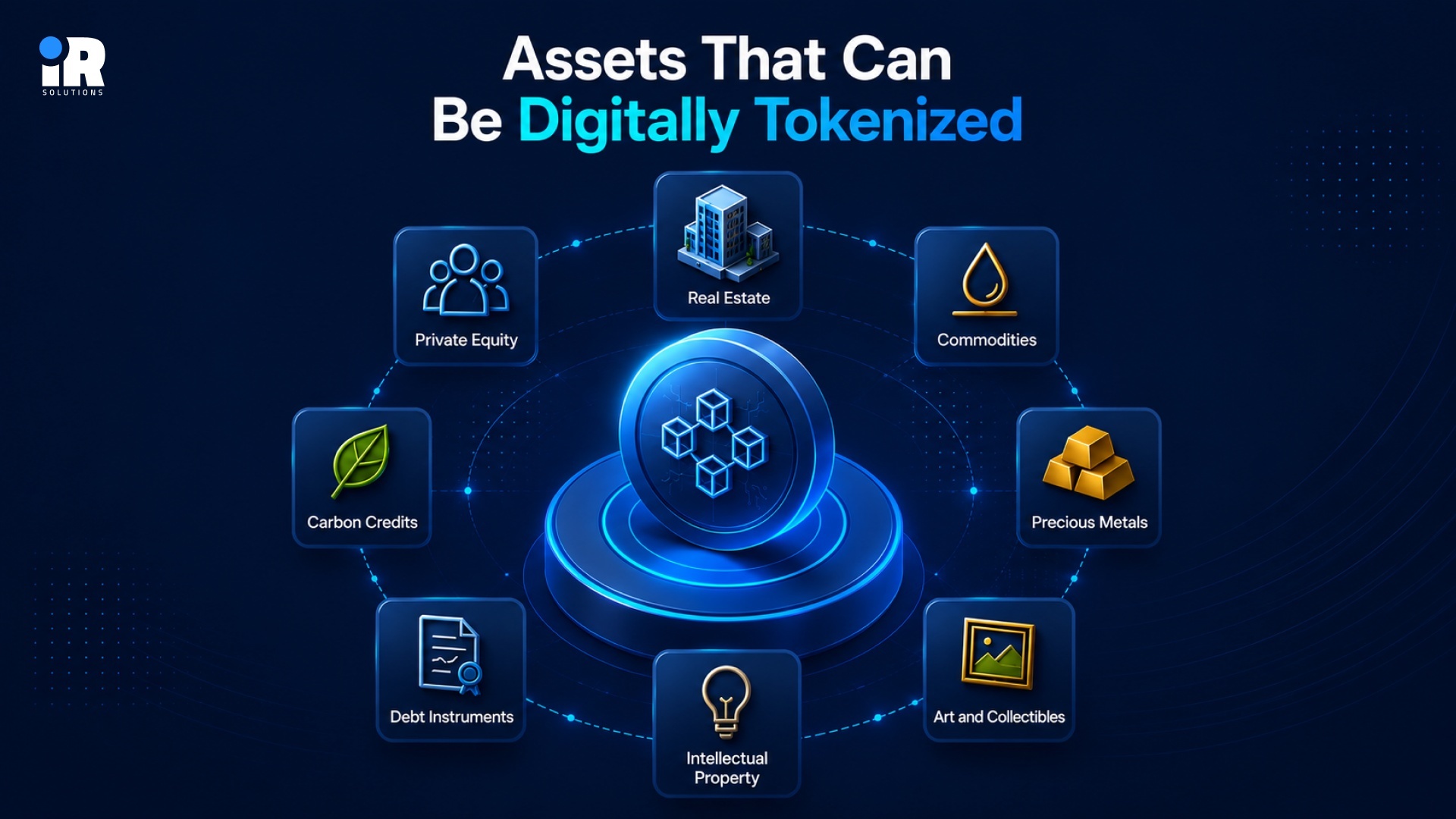
Real Estate
Commercial and residential property can be divided into fractional tokens that allow smaller investors to access high-value real estate without purchasing an entire asset outright at full market price.
Private Equity
Company shares and fund interests that are traditionally restricted to accredited investors can be tokenized to widen access and improve the secondary market liquidity that private equity typically lacks entirely.
Commodities
Oil, agricultural products, and industrial metals can be tokenized to allow fractional investment in physical commodity holdings without the complexity of direct commodity market participation.
Precious Metals
Gold and silver-backed tokens give investors direct exposure to physical metal holdings with on-chain proof of reserve that traditional gold certificates have never been able to provide transparently.
Art and Collectibles
High-value artworks and collectibles can be fractionalized so that multiple investors share ownership and the appreciation in value without any single buyer needing to acquire the piece at its full market valuation.
Intellectual Property
Patents, royalty streams, and licensing agreements carry real financial value that can be tokenized and sold to investors seeking yield from income-generating intellectual property assets in specific industries.
Debt Instruments
Bonds, loans, and receivables can be tokenized to reach a broader investor base and automate coupon payments through smart contracts that distribute income without manual processing at each payment date.
Carbon Credits
Environmental assets, including verified carbon credits, are being tokenized to improve market transparency and liquidity in trading systems that have historically been opaque and difficult to access for smaller market participants.
For a deeper understanding of how tokenization applies to equity structures specifically, this guide on asset tokenization platform development for equity systems covers the specific considerations that equity-based tokenization projects need to address from the architecture stage.
Why Businesses Are Tokenizing Assets
Businesses are adopting tokenization because it solves real problems in how assets are funded, traded, and managed across traditional financial infrastructure. The business case is backed by rapid market growth: the value of tokenized real-world assets on public blockchains reached $27.4 billion in March 2026, up from $6.7 billion a year earlier. Tokenized U.S. Treasuries alone accounted for $13.53 billion, a sign that institutional investors and regulated financial markets are no longer just experimenting with blockchain, they're allocating real capital to it.
Increase Liquidity
Illiquid assets become tradeable on secondary markets when represented as tokens, which allows investors to exit positions without requiring the underlying asset to be sold.
Enable Fractional Ownership
A single high-value asset can be divided into thousands of tokens, lowering the entry threshold for investors who could not participate in the traditional market at the minimum commitment level.
Expand Global Investor Access
Token offerings can reach investors in any jurisdiction where the offering is legally compliant, which removes the geographic constraints that traditional private placements impose on capital raising.
Reduce Transaction Costs
Removing intermediaries from settlement, custody, and transfer processes reduces the transaction cost of each ownership change from several percent to a small fraction of that in a properly built token system.
Improve Transparency
Every transaction, ownership change, and income distribution is recorded permanently on the blockchain and readable by all parties without requiring a third party to confirm what the ledger shows.
Automate Transactions With Smart Contracts
Income distributions, ownership transfers, and compliance checks all execute automatically when predefined conditions are met, which eliminates manual processing from the operational layer of the asset.
Prerequisites Before Tokenizing an Asset
Before development begins, several foundational requirements must be confirmed to ensure the tokenization is legally sound and technically viable from the outset.
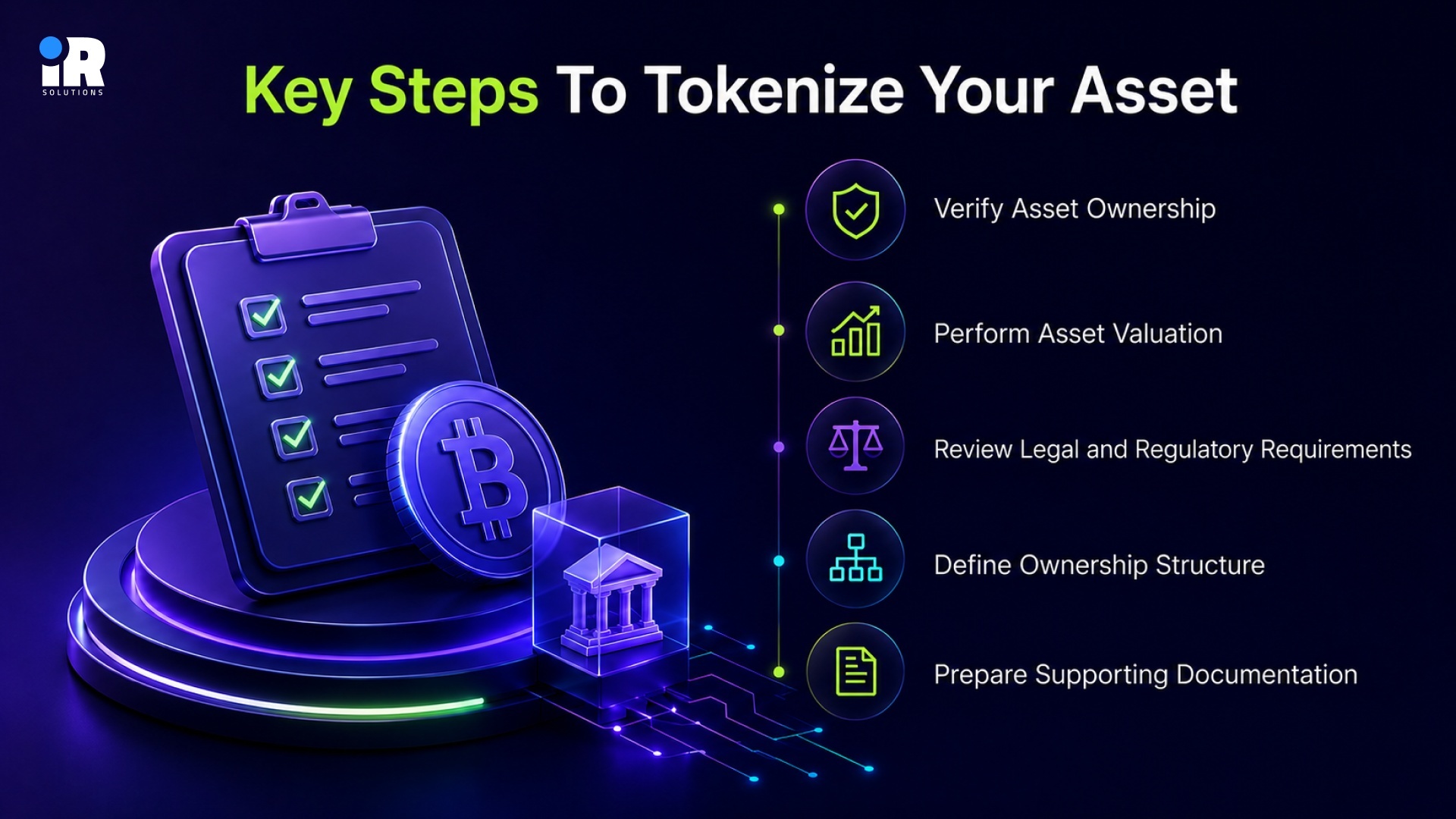
Verify Asset Ownership
Legal ownership of the asset must be confirmed and documented before any token representing a claim on it can be issued. Disputed or unclear ownership creates legal liability that invalidates the token offering entirely.
Perform Asset Valuation
An independent valuation establishes the baseline price from which token pricing, fractional unit sizing, and investor return projections are all calculated throughout the offering preparation process.
Review Legal and Regulatory Requirements
The regulatory framework governing the asset class and the jurisdictions where the offering will be made must be reviewed by legal counsel with specific tokenized asset experience before any technical work begins.
Define Ownership Structure
The relationship between token holders and the underlying asset, including voting rights, income entitlement, and redemption terms, must be legally defined before the smart contract architecture is designed.
Prepare Supporting Documentation
Offering documents, investor disclosures, custody agreements, and legal opinions are all required before a token offering can be presented to investors with the transparency they expect and regulators require.
Asset Tokenization Process: Step by Step
The tokenization process follows a defined sequence that moves from asset selection through to ongoing post-launch management.
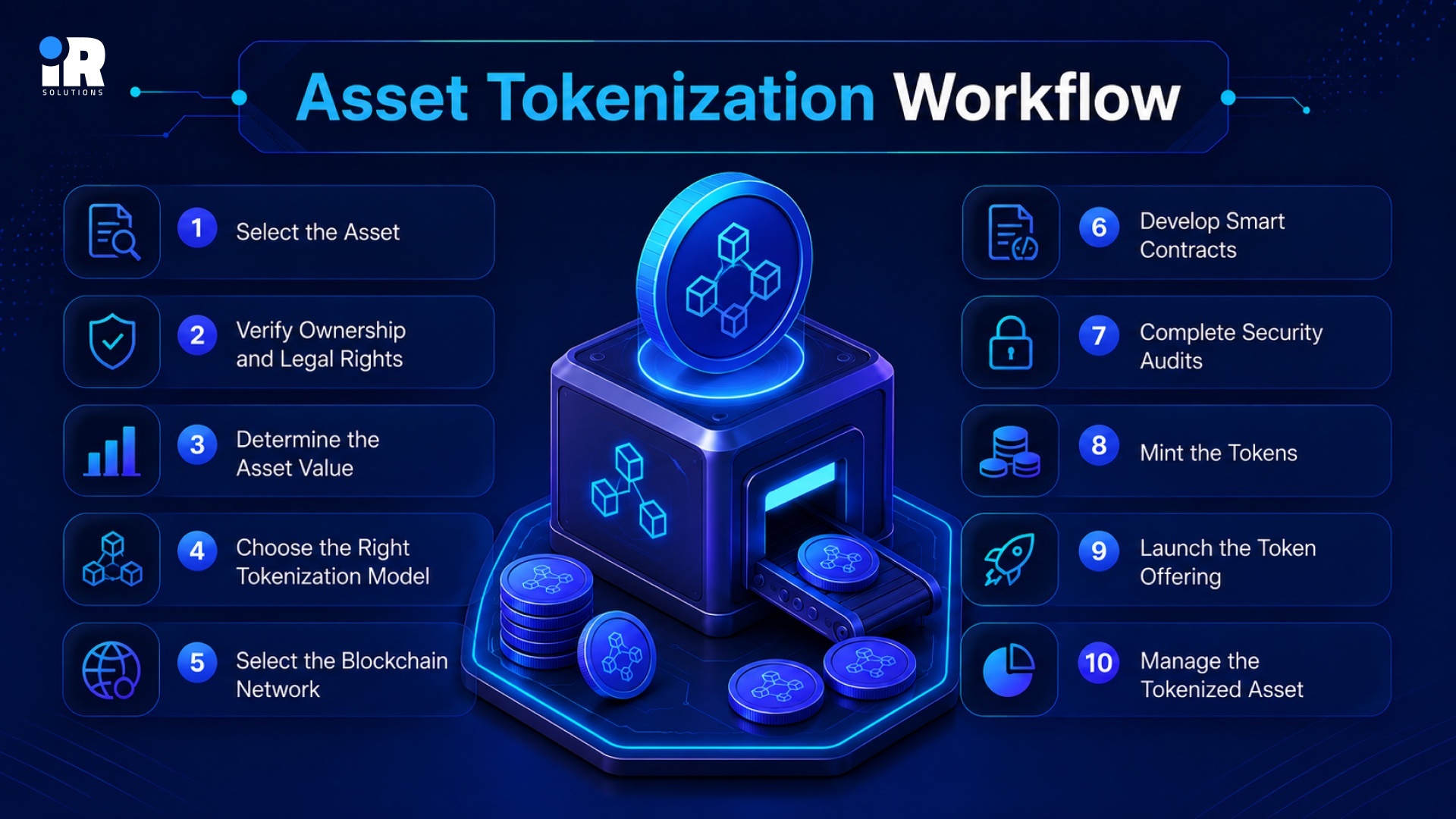
Step 1: Select the Asset
The asset must have a clear, measurable value, a verifiable ownership structure, and sufficient investor demand to justify the development cost and regulatory overhead that tokenization requires before any return can be generated.
Step 2: Verify Ownership and Legal Rights
Ownership verification, due diligence on encumbrances or competing claims, and a full regulatory review of the asset and the planned offering structure are completed before any further development work begins.
Step 3: Determine the Asset Value
An independent valuation firm establishes the asset's current market value. Fractional pricing is then calculated from that valuation to determine the per-token price at the point of initial offering.
Step 4: Choose the Right Tokenization Model
- Fractional Ownership: Multiple investors hold proportional stakes in a single asset through tokens representing their percentage of the total asset value at issuance.
- Full Ownership: A single token represents complete ownership of the asset and can be transferred between parties without fractionalization.
- Equity Tokens: Represent shareholder rights in a company, including voting rights and profit participation tied to the business performance over time.
- Debt Tokens: Represent a loan or bond with defined repayment terms and interest distributions automated through the smart contract.
- Revenue Sharing Tokens: Entitle holders to a percentage of income generated by the asset rather than ownership of the asset itself as a capital holding.
Step 5: Select the Blockchain Network
- Ethereum: The most widely supported network for institutional tokenization with deep ecosystem integration and the strongest compliance tooling available across any public blockchain.
- Polygon: Lower transaction costs than Ethereum mainnet with full EVM compatibility, making it suitable for high-volume or retail-facing token offerings.
- Solana: High transaction throughput and low fees suited to offerings expecting frequent secondary market trading activity at significant volume.
- Avalanche: Subnet architecture allows custom compliance rules to be enforced at the network layer rather than only within the smart contract code itself.
Step 6: Develop Smart Contracts
Smart contracts encode ownership logic, investor rights, automated payment schedules, and compliance rules that execute without manual intervention once the contract is deployed to the blockchain.
For a detailed explanation of why smart contracts are the critical infrastructure layer for any RWA tokenization project, this resource on why smart contracts are essential for RWA tokenization covers the specific functions that smart contracts perform across the tokenization lifecycle.
Step 7: Complete Security Audits
An independent security firm audits smart contract code before deployment. Penetration testing identifies vulnerabilities at the application layer. Compliance checks confirm that the contract logic reflects the regulatory requirements established during the legal preparation phase.
Step 8: Mint the Tokens
Token minting is the process by which the smart contract creates the defined number of digital tokens on the chosen blockchain, each carrying the ownership rights and compliance parameters established during the design phase.
Step 9: Launch the Token Offering
- Private sale: Initial offering to institutional investors or accredited individuals before the public offering window opens to broader investor participation.
- Public sale: Broader availability to retail investors in jurisdictions where the offering is legally compliant and properly registered under applicable securities regulations.
- Marketplace listing: Tokens are listed on secondary market platforms where investors can buy, sell, and transfer their holdings without the underlying asset needing to change hands.
Step 10: Manage the Tokenized Asset
Post-launch management includes investor communication, compliance reporting, income distribution through the smart contract, governance processes for token holder decisions, and ongoing maintenance of the technical infrastructure supporting the token's operation.
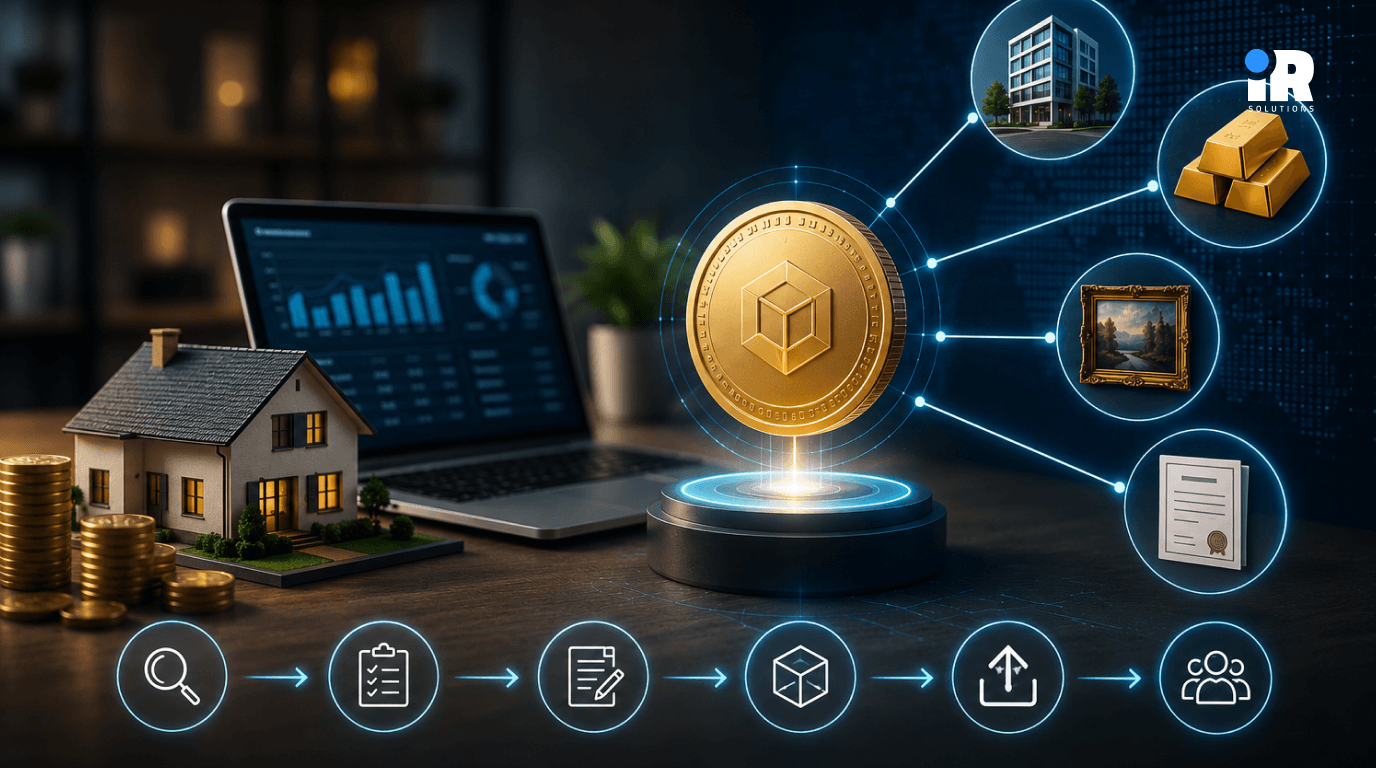
Asset Tokenization Workflow
The complete tokenization process moves through ten sequential stages from initial selection to post-launch management: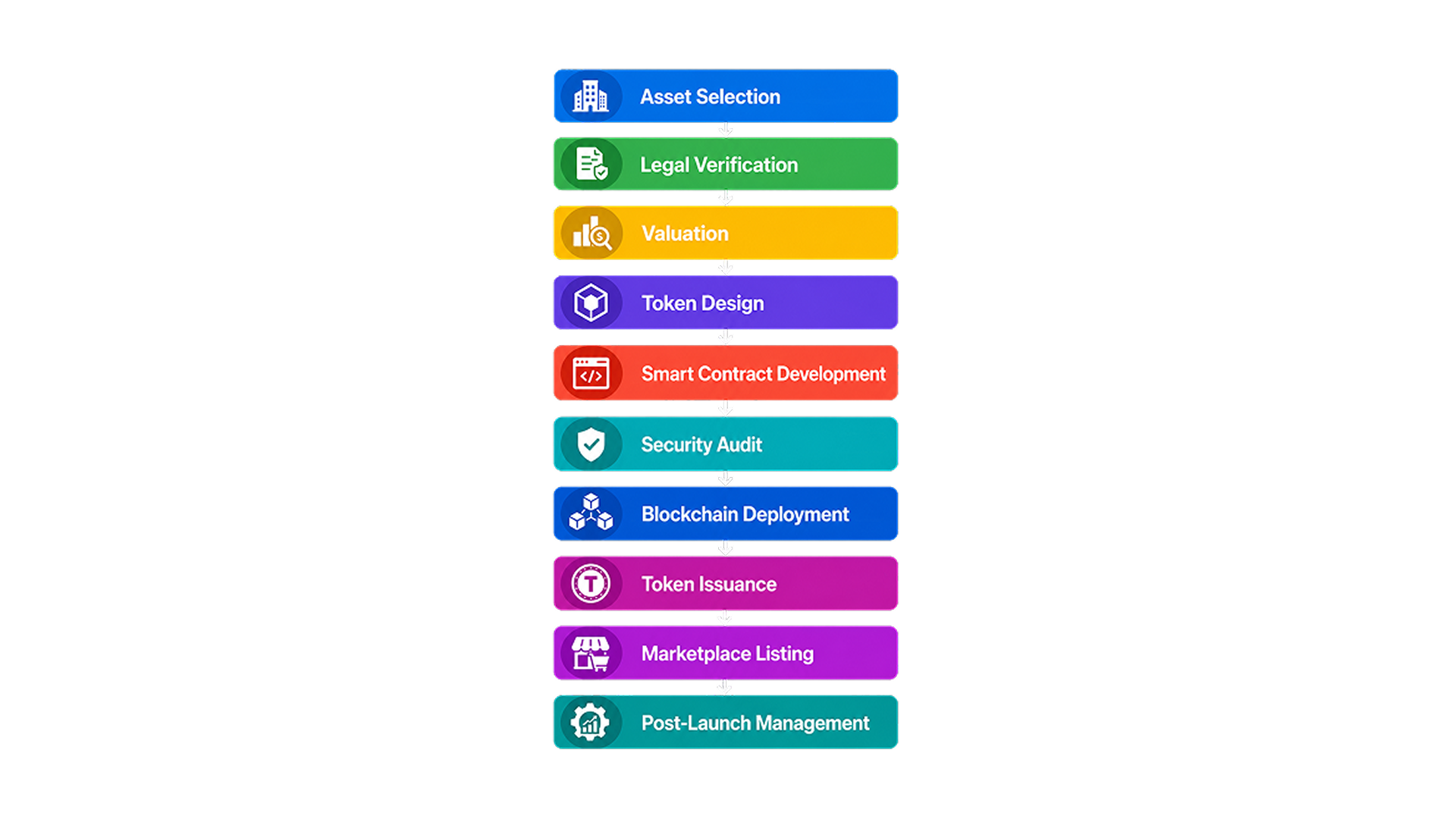
Each stage must be completed before the next begins. Skipping or compressing any stage introduces legal, technical, or commercial risk that compounds into larger problems after the token has already been issued to investors.
Ready to Build Your Asset Tokenization Platform?
Whether you're tokenizing real estate, private equity, commodities, or other real-world assets, book your call with our blockchain experts to discuss a secure, scalable tokenization solution tailored to your business goals.
Technologies Used for Asset Tokenization
The technical infrastructure that supports a tokenized asset involves multiple layers working together to deliver a secure, compliant, and liquid investment product. Building this infrastructure requires end-to-end blockchain development services that cover smart contracts, decentralized applications, wallet integration, and blockchain network implementation.
Blockchain Networks
The settlement layer where all ownership records, transactions, and smart contract logic are stored and executed permanently without centralized control.
Smart Contracts
Self-executing code that enforces ownership rules, automates distributions, and applies compliance logic at the transaction level without requiring manual processing.
Digital Wallets
Investor-side infrastructure for holding, receiving, and transferring tokens with private key security that the investor controls independently of the issuing platform.
Custody Solutions
Institutional custody providers hold tokens on behalf of investors who require regulated third-party safeguarding of their digital asset holdings for compliance or risk management purposes.
Identity Verification
KYC and AML verification systems confirm investor eligibility before tokens can be received or transferred, with verification status readable at the wallet level within the smart contract.
Token Standards
ERC-20 for fungible tokens, ERC-721 for unique asset representations, and ERC-1400 for regulated securities tokens are the primary standards used in real-world asset tokenization projects.
Common Challenges in Asset Tokenization
Understanding the obstacles that tokenization projects commonly encounter helps businesses prepare more effectively before committing development resources to the build.
Regulatory Uncertainty
Token classification varies by jurisdiction and asset class. A structure that is compliant in one market may require significant modification to meet the legal standards of another market where the offering will be distributed.
Security Risks
Smart contract vulnerabilities can expose the asset and investor funds to exploitation. Production deployments without independent audits carry risk that the issuer cannot fully mitigate through technical precautions alone.
Liquidity Challenges
Secondary market liquidity for tokenized assets is improving but remains thinner than traditional financial markets in most asset categories. Issuers should plan market-making arrangements before launch rather than assuming organic liquidity will develop.
Technical Complexity
Building a production-ready tokenization system requires expertise across blockchain architecture, smart contract development, custody integration, and compliance systems simultaneously rather than sequentially.
Cross-Border Compliance
Offerings that reach investors across multiple jurisdictions must comply with each market's securities regulations independently, which requires legal preparation that goes well beyond a single-jurisdiction compliance review.
Investor Trust
Retail and institutional investors unfamiliar with blockchain-based ownership need clear communication about how tokens work, how they are secured, and what rights they actually carry before they are likely to commit capital.
Best Practices for Successful Asset Tokenization
Following established best practices reduces the risk of the most common tokenization project failures that occur when foundational decisions are made without sufficient expertise or planning.
Choose the Right Blockchain
Match the blockchain to the specific requirements of the asset class, the expected transaction volume, the investor community's existing infrastructure, and the regulatory environment governing the offering.
Ensure Regulatory Compliance
Legal structure should be built before technical development begins rather than retrofitted after the smart contracts have already been written around assumptions that the legal review subsequently requires to change.
Use Audited Smart Contracts
Independent security audits from firms with specific real-world asset tokenization experience are the only reliable way to confirm that the contract code does what the legal documentation says it should do.
Build Investor Trust
Clear, plain-language documentation about how the token works, how income is distributed, and what rights the token holder actually has reduces friction at the investor onboarding stage significantly.
Plan Liquidity Before Launch
Secondary market partnerships, market-making arrangements, and exchange listings should be confirmed before the token offering closes rather than pursued as a post-launch priority after investors are already holding tokens.
Partner with an Experienced Development Company
Working with a development team that has built tokenization systems before shortens the timeline, reduces the risk of costly technical errors, and provides regulatory pattern recognition that internal teams building for the first time do not possess.
Real-World Examples of Asset Tokenization
Real tokenization is happening across multiple industries at institutional scale, and the examples below reflect production deployments rather than pilot programs.
Tokenized Real Estate
Platforms including RealT and Lofty have tokenized residential properties in the United States, allowing investors globally to hold fractional ownership and receive rental income distributions automatically through smart contracts.
Tokenized Gold
PAX Gold and Tether Gold represent physical gold held in vaults as on-chain tokens, giving investors direct exposure to metal prices with on-chain proof of reserve verifiable at any time.
Tokenized Private Equity
Hamilton Lane and KKR have tokenized portions of their private equity funds on public blockchains, lowering minimum investment thresholds and improving access for a broader class of qualified investors.
Tokenized Government Bonds
The World Bank and European Investment Bank have issued blockchain-based bonds, demonstrating that sovereign debt instruments can be tokenized within existing regulatory frameworks at institutional scale.
How Much Does It Cost to Tokenize an Asset?
Tokenization costs vary significantly based on the asset class, the blockchain network chosen, the complexity of the smart contract architecture, the jurisdictions where the offering will be distributed, and the experience level of the development team executing the build.
A simple single-jurisdiction tokenization with straightforward ownership logic and a small investor base typically costs between $50,000 to $150,000. A multi-jurisdiction offering with complex compliance requirements, custom blockchain infrastructure, and institutional-grade custody integration can extend well above $500,000 before the token offering launches.
Legal preparation and smart contract auditing represent the two cost areas that most first-time issuers underestimate when building their initial project budget, and both are areas where cutting costs consistently produces problems that cost more to fix after launch than they would have cost to address correctly before it.
For a full breakdown of what drives these costs stage by stage, our detailed cost guide covers pricing across asset types, blockchain networks, and compliance jurisdictions in depth.
How Long Does Asset Tokenization Take?
The timeline for asset tokenization varies based on project complexity, compliance requirements, and the chosen blockchain platform. Below is a typical development timeline for most custom projects.
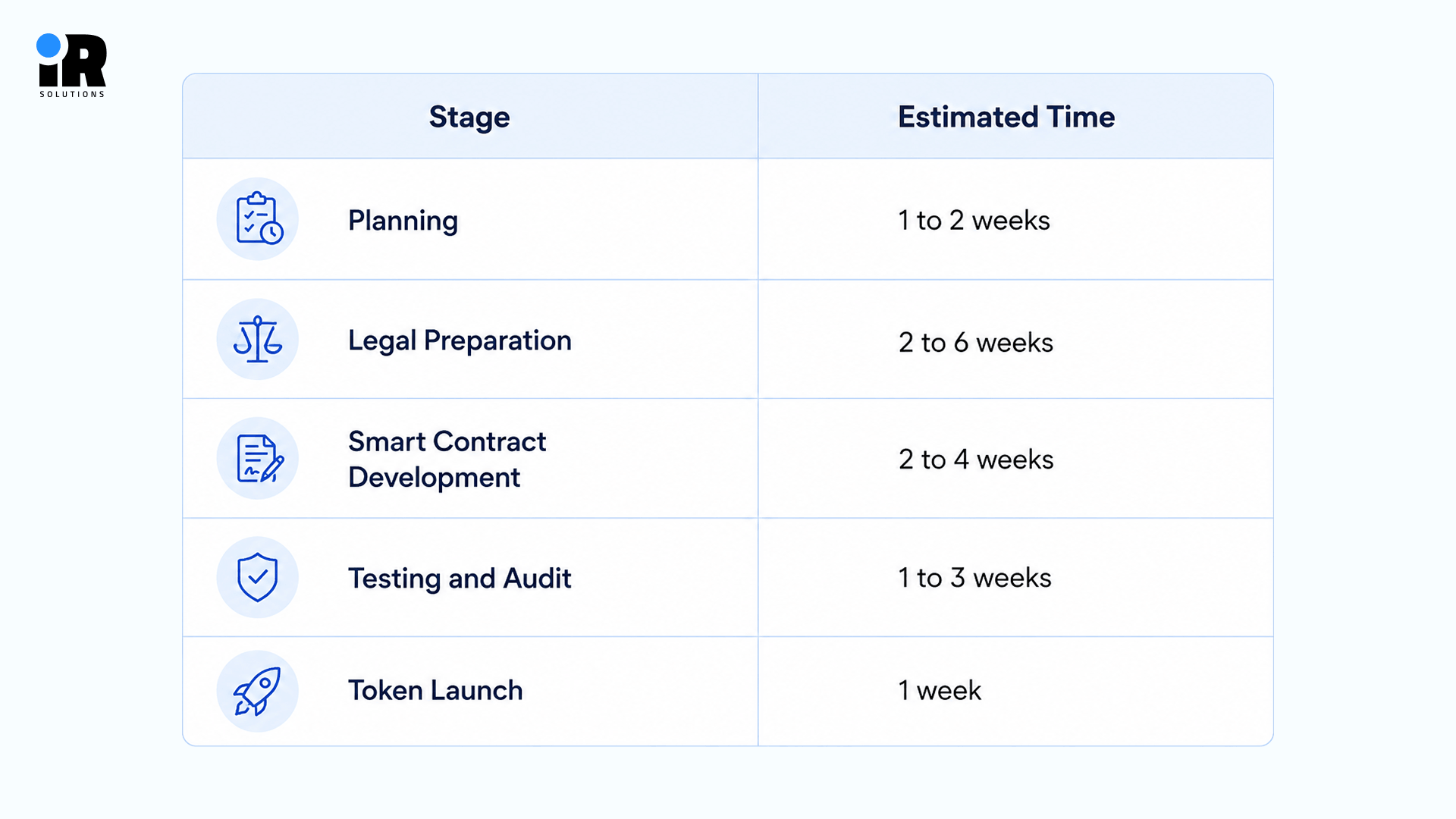
The actual timeline may vary depending on asset type, regulatory requirements, technical complexity, and the level of customization required for your tokenization project.
Mistakes to Avoid When Tokenizing Assets
Avoiding the most common tokenization mistakes is as important as following the correct process steps throughout the build.
Ignoring Regulations
Launching a token offering without proper legal structure exposes the issuer to regulatory enforcement that can shut down the offering and require expensive remediation after investor capital has already been received.
Choosing the Wrong Blockchain
A blockchain chosen for cost or familiarity rather than fit for the specific asset class and compliance requirements creates integration problems that are expensive to resolve after the smart contracts are already deployed.
Skipping Smart Contract Audits
Unaudited smart contracts that go to production with undiscovered vulnerabilities create security risks that have resulted in significant financial losses across multiple tokenization projects that skipped this step.
Poor Liquidity Planning
Tokens that launch without secondary market arrangements leave investors unable to exit their positions, which damages trust in the issuer and reduces appetite for future offerings from the same platform.
Weak Security
Insufficient attention to wallet security, key management, and access controls at the platform level creates attack surfaces that professional security teams would have identified and closed before the system went live.
Lack of Investor Education
Investors who do not understand how their tokens work, how income is distributed, or how to custody their holdings correctly create ongoing support overhead that scales with the size of the investor base.
Why Work With an RWA Tokenization Development Company?
Building a tokenization system internally without prior experience in blockchain infrastructure, smart contract development, and digital securities compliance requires a team to learn everything the hard way across a live project where mistakes have real financial and legal consequences for the investors involved.
At IR Solutions, we help businesses accelerate this process by combining proven blockchain expertise with pre-built frameworks, regulatory knowledge across multiple jurisdictions, and production-ready smart contract development. Our team delivers secure, scalable asset tokenization solutions that reduce development time, minimize technical risk, and support a smooth path from planning to deployment.
The cost of working with an experienced development partner is almost always lower than the combined cost of the delays, rework, and remediation that internal teams without prior tokenization experience consistently accumulate across a first-time build without that specialist knowledge base to draw from throughout the project.
Conclusion
Asset tokenization is transforming how businesses manage, finance, and transfer ownership of valuable assets. By combining blockchain technology with smart contracts, organizations can improve liquidity, enable fractional ownership, increase transparency, and automate processes that traditionally relied on multiple intermediaries. However, successful tokenization requires more than deploying smart contracts. Legal compliance, security audits, blockchain selection, and a well-planned technical architecture all play a critical role in delivering a secure and scalable solution. Whether you are tokenizing real estate, equity, commodities, or other real-world assets, partnering with an experienced development team helps reduce risk and accelerate deployment. With the right strategy and technology, asset tokenization can unlock new investment opportunities and support long-term business growth.
Frequently Asked Questions
What assets can be tokenized?
Any asset with a verifiable value and a transferable ownership structure can be tokenized, including real estate, equity, commodities, precious metals, art, intellectual property, debt instruments, and environmental credits.
Is asset tokenization legal?
Asset tokenization is legal in most jurisdictions when properly structured under applicable securities regulations. The legal requirements vary significantly by asset class and the markets where the offering will be distributed to investors.
How much does it cost to tokenize an asset?
Costs range from $50,000 to $500,000 or more depending on the complexity of the legal structure, the blockchain infrastructure required, and the number of jurisdictions the offering covers simultaneously.
How long does tokenization take?
A straightforward tokenization project takes between 7 to 16 weeks from initial planning through to token launch, with legal preparation and smart contract auditing representing the longest stages in most project timelines.
Which blockchain is best for asset tokenization?
Ethereum is the most widely used for institutional tokenization. Polygon, Solana, and Avalanche offer lower transaction costs and specific technical advantages that make them suitable for specific asset classes and offering structures.
Can physical assets be tokenized?
Yes. Physical assets including real estate, gold, commodities, and art are among the most actively tokenized asset classes currently available on established blockchain tokenization platforms.
What is the difference between asset tokenization and RWA tokenization?
RWA tokenization is a subset of asset tokenization that specifically refers to real-world assets being brought onto blockchain infrastructure. All RWA tokenization is asset tokenization, but not all asset tokenization involves physical real-world assets.
What industries benefit most from asset tokenization?
Real estate, private equity, commodities, financial services, and environmental markets are the industries currently seeing the strongest adoption of tokenization as a capital-raising and asset management tool.