


Key Takeaways
- Real estate tokenization converts property ownership into blockchain-based digital tokens that can be traded globally by investors.
- Any property with verifiable ownership and a clear legal structure can be tokenized across residential, commercial, and industrial categories.
- Smart contracts automate rental income distributions, ownership transfers, and compliance checks without manual intermediary processing at each stage.
- The process requires legal preparation, independent valuation, blockchain selection, smart contract development, and ongoing investor management after launch.
- Tokenization unlocks liquidity from assets that traditional real estate markets make extremely difficult to exit quickly at fair value.
Real estate has always been one of the most reliable stores of wealth and one of the least accessible investment classes for the majority of investors who want exposure to it. A commercial building worth $10,000,000 requires a buyer who can commit that entire amount or navigate co-investment structures that have historically been available only to institutional players with the right relationships and minimum capital thresholds most people cannot meet.
That exclusivity is not a feature of real estate as an asset class. It is a limitation of the infrastructure surrounding it, and it has stayed in place largely because nobody had a better alternative until recently. Real estate tokenization is not a theoretical improvement. Platforms are already doing it, investors are already receiving rental income through smart contracts, and properties that would have taken 18 months to recapitalise through traditional channels are raising capital in weeks.
What Is Real Estate Tokenization?
Real estate tokenization is the process of converting property ownership rights into digital tokens on a blockchain. Each token carries a defined economic and legal interest in the underlying asset, whether that is a proportional claim on rental income, a share of the property's capital value, or both.
The blockchain holds the ownership record. Smart contracts enforce the rules. The token itself can be bought, sold, or transferred without a solicitor, a clearing house, or a 5-day settlement window sitting between the transaction and the outcome.
Getting a property tokenized is one part of a much bigger shift, tokenization is redefining what ownership itself means for real estate. For the wider context, our breakdown of how tokenization is changing property ownership models is worth reading.
Why Businesses Are Tokenizing Real Estate
The reasons property owners and developers are moving toward tokenization are not philosophical. They are practical problems that traditional real estate finance handles badly and consistently.
Unlock Liquidity from High-Value Assets
A tokenized property can be partially sold to investors in fractional units without listing the entire asset and waiting months for a single buyer to complete due diligence, secure financing, and get to exchange.
Enable Fractional Property Ownership
A property worth $5,000,000 can be divided into 50,000 tokens at $100 each. Investors with modest capital can participate in real estate markets that previously required minimum commitments most of them could not meet.
Attract Global Investors
Token offerings can reach investors in any jurisdiction where the offering is legally compliant. The geographic limitation that restricts most property capital raising to the developer's existing domestic network disappears when the offering is digital and borderless.
Reduce Transaction Costs
Removing intermediaries from settlement, custody, and transfer processes cuts transaction costs from several percent of asset value to a small fraction of that in a properly built token system. Those savings compound across every ownership change over the asset's life.
Improve Transparency and Security
Every ownership change, income distribution, and compliance event is recorded permanently on the blockchain. All authorised parties can read it without asking a third party to confirm what happened or when.
Which Types of Real Estate Can Be Tokenized?
Most property with verifiable value and a clear ownership structure can be tokenized. The category matters less than the quality of the legal preparation and the income profile of the specific asset.
Residential Properties
Single-family homes, apartment buildings, and multi-unit residential developments are the most active tokenization category by volume, with platforms already distributing rental income to fractional token holders every week.
Commercial Buildings
Office towers, retail centres, and commercial properties with long-term institutional tenants produce stable, predictable income that suits yield-focused token structures with defined distribution schedules investors can actually plan around.
Hotels and Resorts
Hospitality assets can be tokenized on revenue-sharing models that distribute a proportion of operating income to token holders rather than requiring the property to be sold before any return is generated.
Industrial and Logistics Facilities
Warehouses and distribution centres with long-term lease agreements provide income certainty that supports debt or equity token structures with defined return profiles that are straightforward for investors to underwrite.
Mixed-Use Developments
Properties combining residential, commercial, and retail components can issue multiple token classes reflecting the different income streams and risk profiles associated with each element of the development rather than collapsing everything into a single token type.
Land and Development Projects
Undeveloped land and projects under construction can be tokenized to raise development capital, with investors receiving equity or revenue participation rights upon completion rather than waiting for a traditional exit event.
Real estate follows the same core tokenization mechanics as any other asset class. If you want that broader framework first, our complete guide to how asset tokenization works covers the end-to-end process before this guide narrows into property specifically.
Who Can Benefit from Real Estate Tokenization?
Tokenization creates value for multiple participants across the property investment ecosystem, not just for the party issuing.
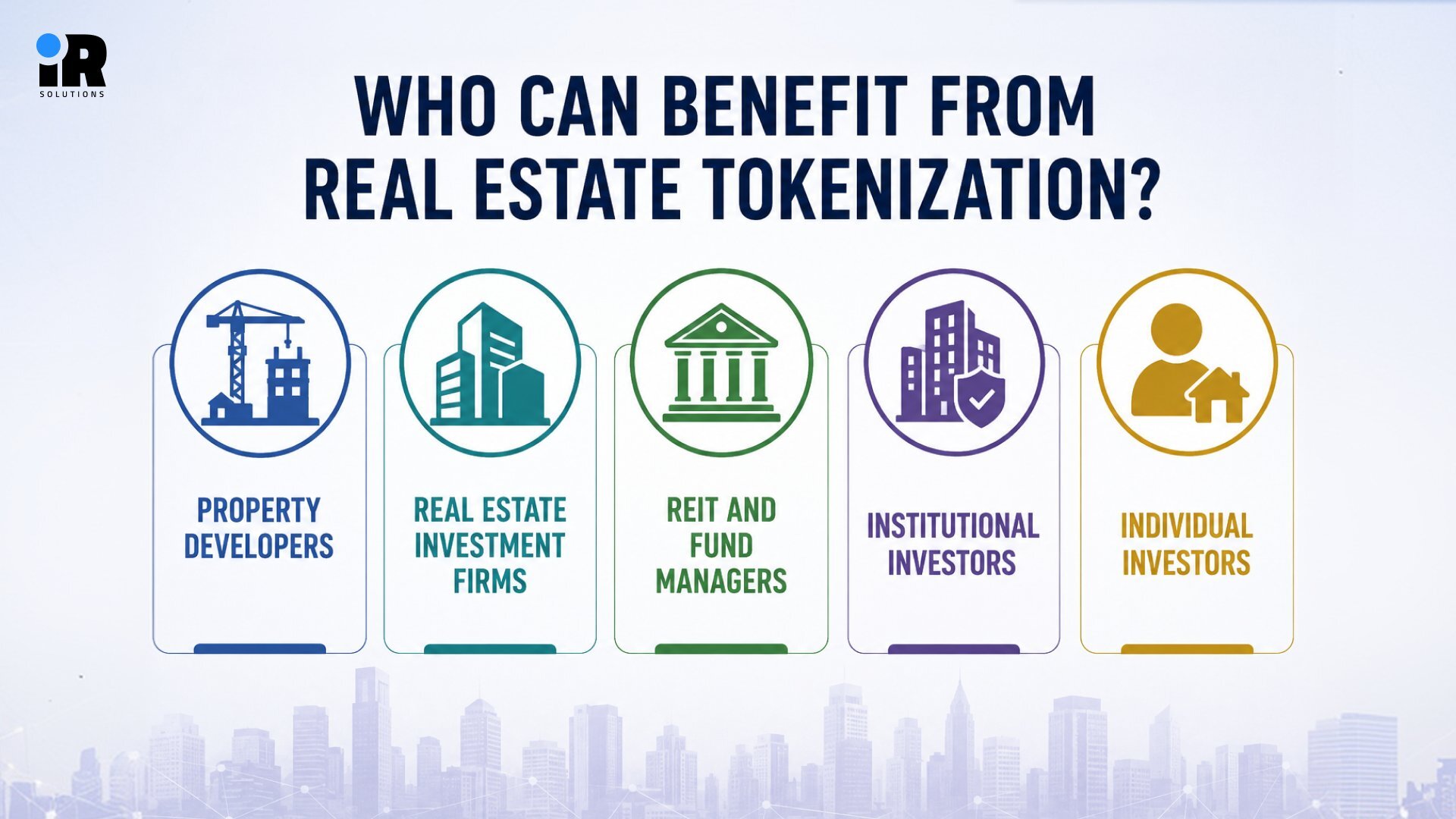
Property Developers
Access to a global investor base without the cost and complexity of traditional institutional fundraising, combined with faster capital formation that keeps development timelines on track without dependence on a single funding relationship.
Real Estate Investment Firms
The ability to offer fractional participation in portfolio properties to a broader range of investors, which improves capital efficiency and reduces the concentration risk that comes with a small number of large investors in each asset.
REIT and Fund Managers
Tokenization allows fund structures to offer genuinely improved secondary market liquidity to investors who have historically been locked into defined redemption windows that do not align with individual needs.
Institutional Investors
Access to a more liquid, more transparent form of real estate exposure with on-chain proof of reserve and automated compliance checks that reduce the due diligence burden of traditional private market investment.
Individual Investors
The ability to participate in commercial and residential property markets at genuinely accessible investment levels, without the minimum capital thresholds that have historically excluded retail investors from direct property ownership outside of listed REITs.
Real estate is one entry point into a much larger shift toward tokenized assets. If you're evaluating this as an investor rather than an issuer, our guide to investing in real-world assets walks through what to look for across asset classes before committing capital.
Legal and Financial Preparation Before Tokenization
The legal and financial groundwork determines whether a real estate tokenization project holds up to regulatory scrutiny and investor due diligence. This is the stage most first-time issuers underinvest in, and it is the stage where most post-launch problems originate. Property owners weighing this route often start with a structured RWA tokenization service that handles the legal, technical, and compliance work as one process rather than three separate vendors.
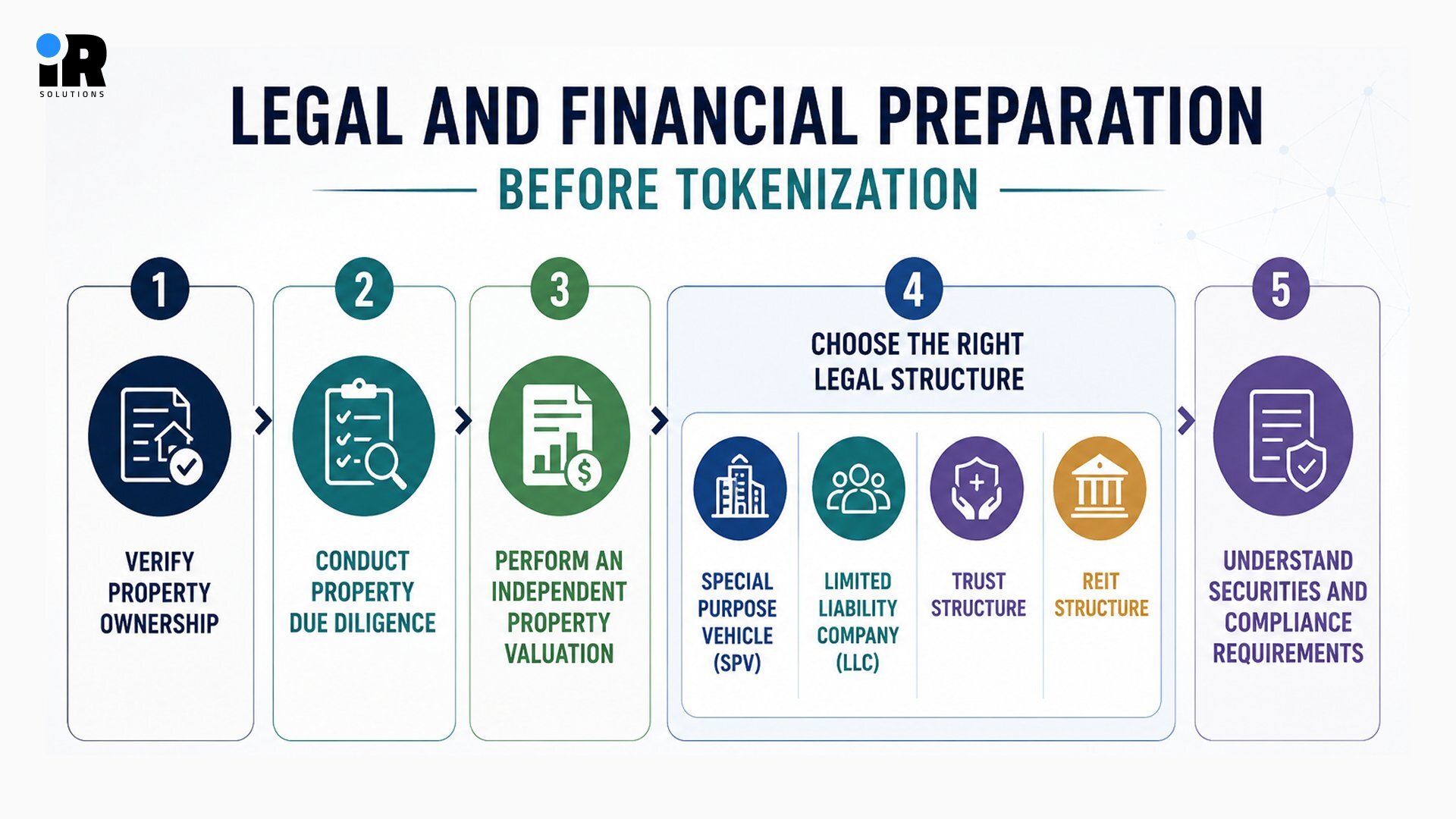
Verify Property Ownership
Clear, unencumbered legal title must be confirmed and documented before any token is issued representing a claim on the asset. Title disputes or competing claims do not become less serious because the ownership is recorded on a blockchain.
Conduct Property Due Diligence
A full due diligence process covering environmental assessments, structural surveys, planning permissions, existing tenancy agreements, and outstanding liabilities is required before the asset can be presented to investors with accurate disclosure.
Perform an Independent Property Valuation
An independent valuation from a qualified firm establishes the baseline value from which token pricing, fractional unit sizing, and projected investor returns are all calculated. Starting without this produces projections that do not hold up when investors ask the obvious questions.
Choose the Right Legal Structure
The legal wrapper that holds the property and issues tokens determines the tax treatment, investor rights, and regulatory classification of the offering in each jurisdiction where it will be distributed.
- Special Purpose Vehicle (SPV): A dedicated legal entity created to hold the property asset and issue tokens, isolating liability and simplifying the ownership structure for investors and regulators reviewing the offering.
- Limited Liability Company (LLC): Flexible ownership structure with pass-through tax treatment that suits multi-investor property holdings in many common law jurisdictions where this structure is well understood by both investors and regulators.
- Trust Structure: Separates legal ownership from beneficial interest in a way that protects investor rights and provides a familiar regulatory framework in jurisdictions with established trust law and investor familiarity with trust-based property vehicles.
- REIT Structure: A regulated, tax-efficient vehicle that investors understand and regulators have established clear frameworks for across most major markets globally, which reduces the investor education burden at the point of offering.
Understand Securities and Compliance Requirements
Real estate tokens representing an ownership interest or income participation right are almost certainly securities in most jurisdictions. The offering must comply with securities law disclosure, registration, and investor eligibility requirements before any capital is raised, not after.
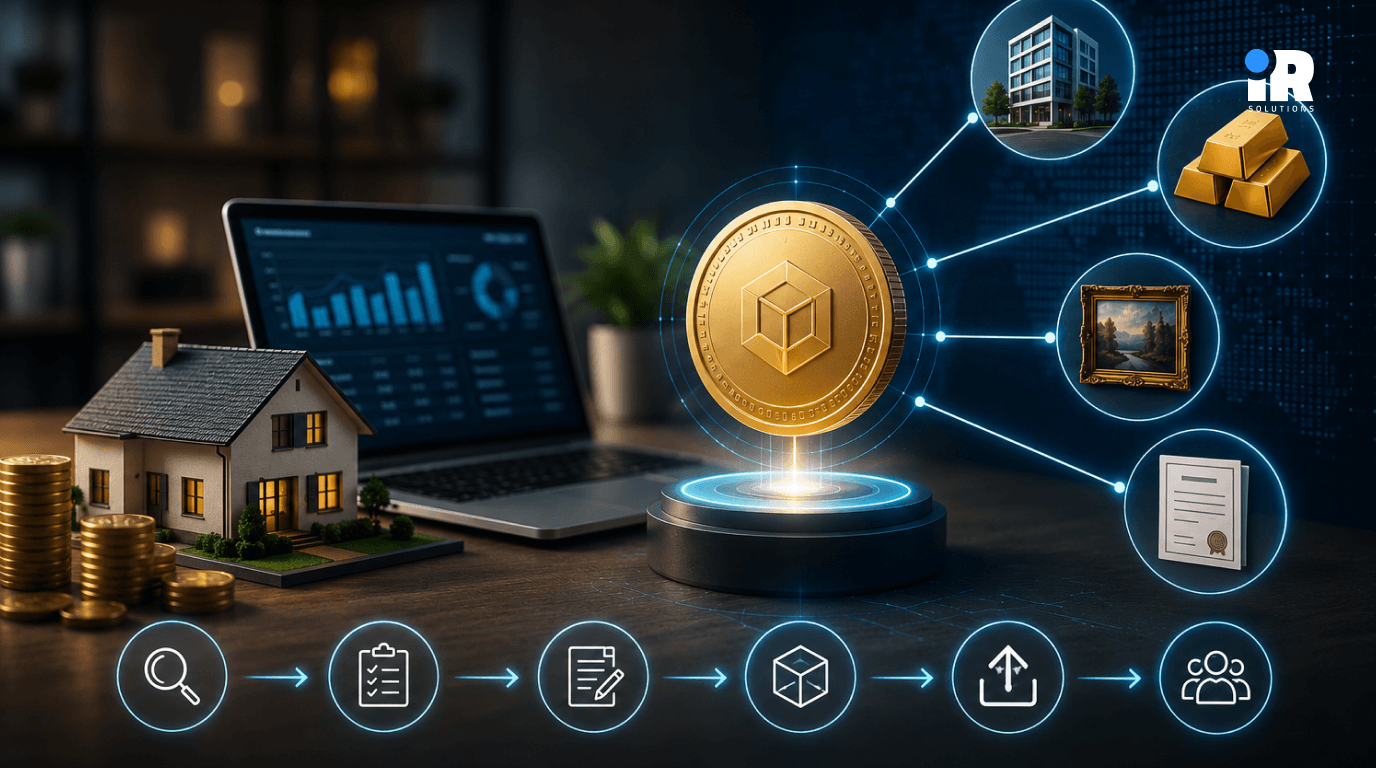
How to Tokenize Real Estate Step by Step
The tokenization process follows a defined sequence that must be completed in order. Compressing or skipping stages creates problems that cost more to fix after the token is issued than they would have cost to prevent before it was.
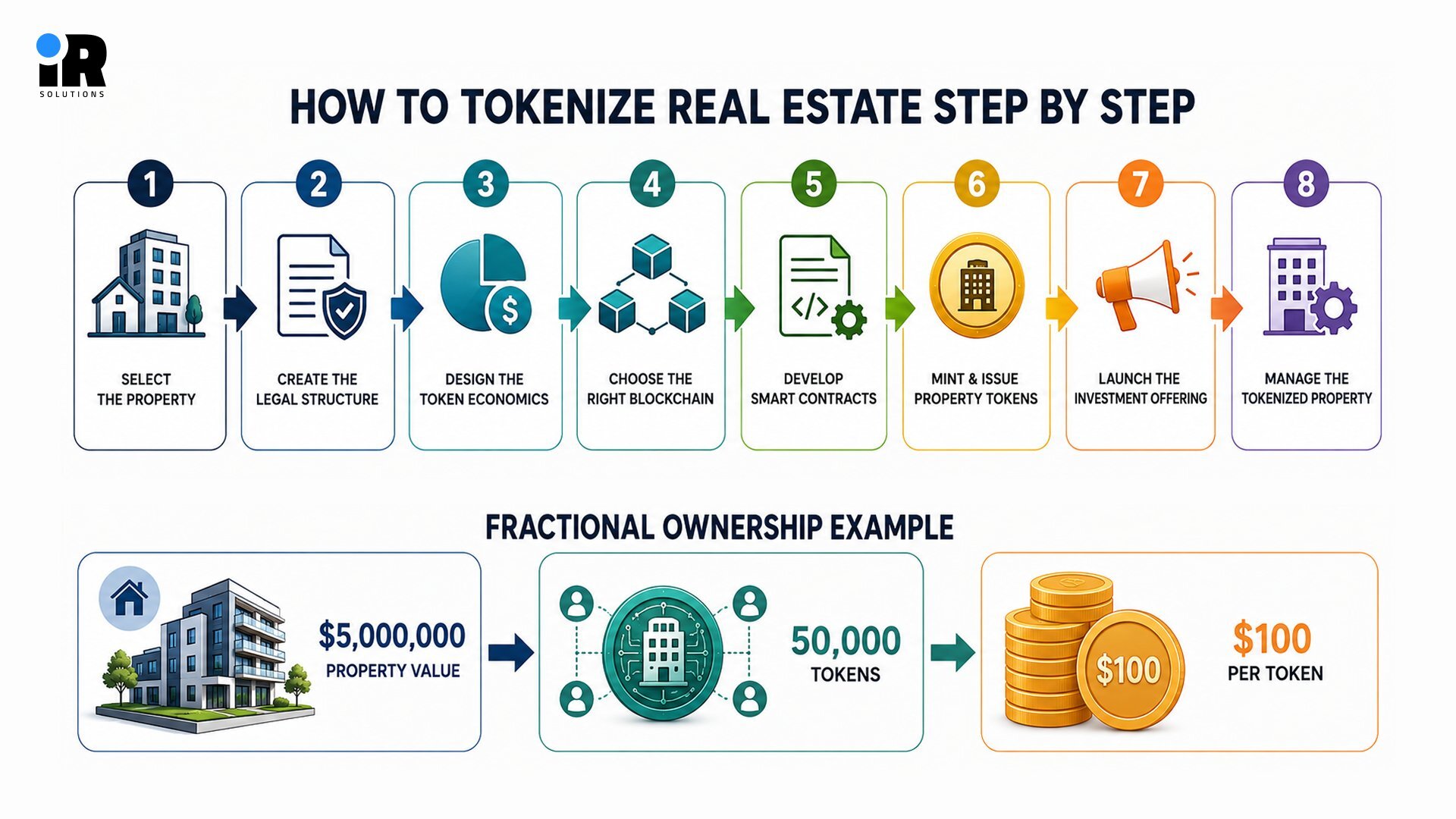
Step 1: Select the Property
The property must have a clear ownership structure, a verifiable income stream or capital value, and sufficient investor demand to justify the legal and technical cost of the process. Not every property passes this test, and that is fine.
Step 2: Create the Legal Structure
An SPV, LLC, trust, or REIT is established to hold the property and issue tokens. The legal documentation governing investor rights, income distribution, governance, and exit mechanisms is prepared by qualified legal counsel with specific tokenized asset experience rather than a general property law background.
Step 3: Design the Token Economics
The total token supply, per-token price, income distribution schedule, minimum investment threshold, and the rights attached to each token class are defined before any technical development begins. Changes at this stage are cheap. Changes after the smart contract is written are not.
Step 4: Choose the Right Blockchain
The blockchain network must match the regulatory compatibility, transaction cost, ecosystem depth, and investor familiarity that the specific property type and investor audience requires. Ethereum, Polygon, and Avalanche are the most commonly used for real estate tokenization at institutional and retail scale. Getting this choice right typically depends on the specific asset and investor base rather than a default preference, which is where dedicated blockchain development services make the difference between a scalable system and one that needs rebuilding within a year.
Step 5: Develop Smart Contracts
Smart contracts encode the ownership logic, income distribution schedules, compliance transfer restrictions, and governance mechanisms that the legal documentation establishes. The code must accurately reflect the legal rights of token holders in every scenario the contract will encounter during the asset's life, not just the straightforward ones.
Step 6: Mint and Issue Property Tokens
Token minting creates the defined number of digital tokens on the chosen blockchain, each carrying the ownership parameters and compliance restrictions established in the smart contract. Tokens are issued to investors upon payment confirmation within the offering window.
Step 7: Launch the Investment Offering
The offering is made available through a private placement, public offering, or institutional distribution depending on the regulatory structure and the capital-raising target. Which route is appropriate depends on the legal work completed in earlier stages, not on preference.
Step 8: Manage the Tokenized Property
Post-launch management includes investor reporting, income distribution through the smart contract, governance processes for investor decisions, compliance monitoring, and maintenance of the technical infrastructure. This does not run itself.
How Investors Generate Returns from Tokenized Real Estate
Tokenized real estate offers investors multiple return pathways that reflect different value creation mechanisms across different property types and token structures.
Rental Income Distribution
Smart contracts distribute rental income to token holders automatically in proportion to their holding, removing the manual processing and delay that traditional real estate income distribution involves at each payment cycle.
Property Value Appreciation
Token holders benefit from increases in the underlying property value over the holding period, with appreciation reflected in the secondary market price of their tokens rather than requiring a full asset sale to realise the gain.
Secondary Market Trading
Investors can exit their token positions on secondary markets without the underlying property changing hands. That is a different kind of liquidity from anything traditional real estate investment offers within a comparable timeframe.
Revenue Sharing Models
Hospitality and commercial properties with direct operating revenue can issue tokens tied to a percentage of gross revenue instead of net rental income. That's a different risk and return profile from standard property investment.
Technology Behind Real Estate Tokenization
The technical infrastructure required to support a tokenized real estate offering spans multiple components that must work together reliably from day one.
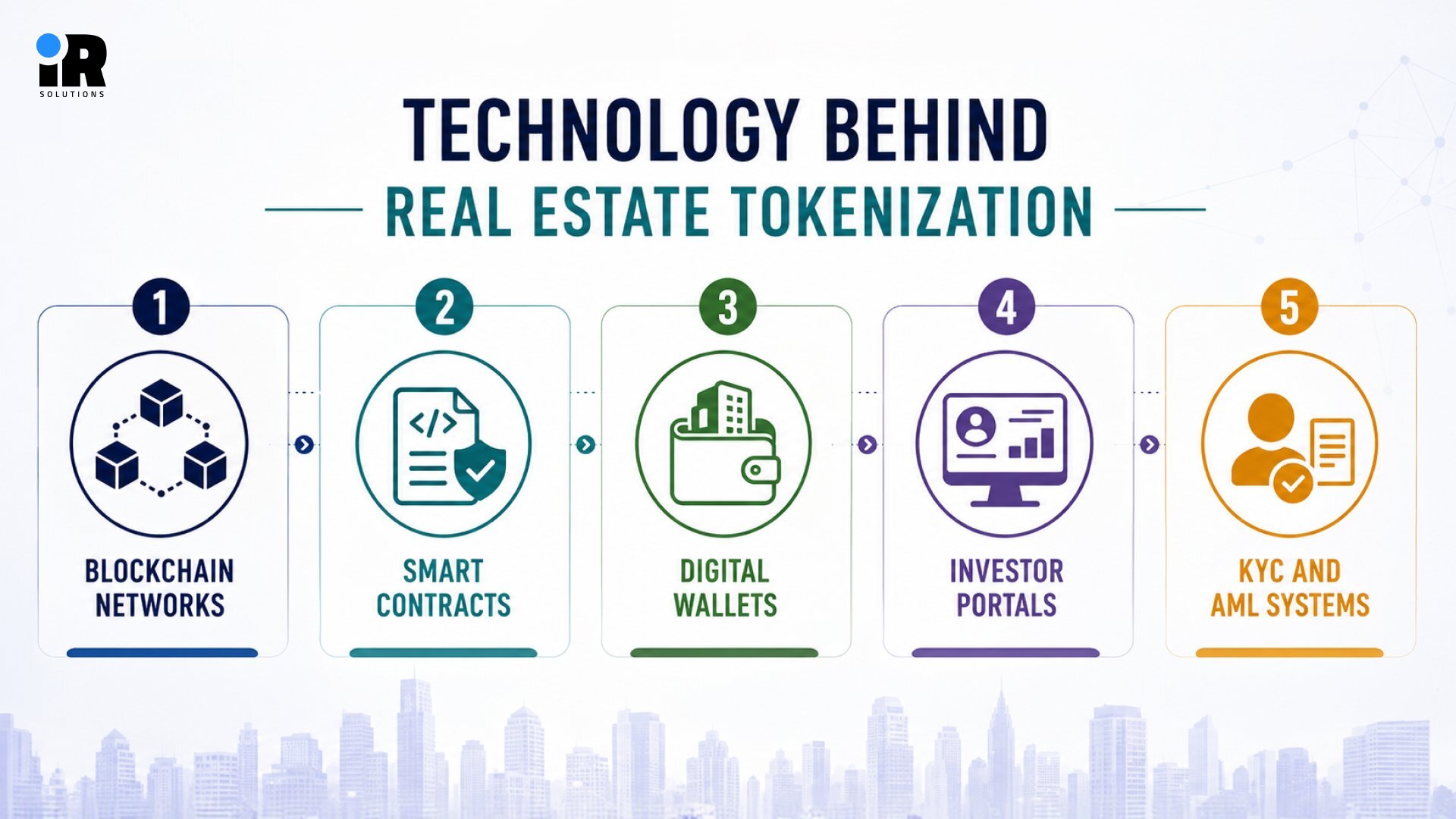
Blockchain Networks
The settlement and record layer where ownership changes, income distributions, and compliance events are recorded permanently without centralised control or intermediary confirmation required after the fact.
Smart Contracts
The automated execution layer that enforces ownership rules, distributes income, applies transfer restrictions, and records governance decisions without manual processing at each event trigger.
Digital Wallets
Investor-side infrastructure for receiving, holding, and transferring property tokens with private key security that each investor controls independently of the issuing platform or property manager.
Investor Portals
Web-based interfaces that allow investors to view their token holdings, track income distributions, access property performance reports, and participate in governance votes without requiring direct blockchain interaction for each action.
KYC and AML Systems
Identity verification infrastructure that confirms investor eligibility before tokens can be received or transferred, with verification status readable within the smart contract to enforce transfer restrictions automatically without manual review at each transaction.
Risks and Mistakes to Avoid
It is worth being honest about the obstacles here rather than presenting tokenization as a solved problem. Some of these are market conditions every issuer has to work around. Others are avoidable errors that come down to how the project is built.
It is worth being honest about the obstacles here rather than presenting tokenization as a solved problem. Some of these are market conditions every issuer has to work around. Others are avoidable errors that come down to how the project is built.
Regulatory Uncertainty
The regulatory treatment of real estate tokens varies significantly across jurisdictions and continues to evolve. Launching an offering without proper securities law compliance exposes the issuer to regulatory enforcement, investor litigation, and forced remediation — and that consistently costs more to resolve than building the compliance programme correctly before the first token is issued.
Limited Secondary Market Liquidity
Secondary market liquidity for tokenized real estate is improving but remains thinner than public equity markets. Tokens that launch without a secondary market plan leave investors with no exit pathway, a problem that is entirely predictable if nobody planned for it before launch.
Smart Contract Security
Smart contract vulnerabilities can expose investor funds to exploitation. This is not theoretical; it has happened across the industry on multiple occasions, which is exactly what independent security auditing before deployment is designed to prevent.
Weak Token Economics
Token pricing and distribution schedules that are not grounded in verified property income and realistic appreciation assumptions erode investor trust, and that damage extends to every future offering from the same issuer, not just the current one.
Wrong Ownership Structure
An SPV, LLC, or trust that is not correctly matched to the regulatory environment and tax implications of the offering creates legal and tax problems that are expensive to restructure once investors have already committed capital.
Investor Adoption and Communication
Many investors unfamiliar with blockchain technology need education about how tokens work and how income is distributed before they're comfortable committing capital. That education has to continue after launch, too investors who don't receive regular, accurate reporting on performance and distributions lose confidence quickly, and that confidence is hard to rebuild once it's gone.
Best Practices for a Successful Real Estate Tokenization Project
These are not aspirational guidelines. They are the practices that consistently separate tokenization projects that work from those that create expensive problems after launch.
Build a Strong Legal Framework
Legal structure should be established and reviewed by qualified counsel before technical development begins. Building smart contracts around assumptions that the legal review subsequently requires to change is an expensive sequence of events that is entirely avoidable.
Use Audited Smart Contracts
Independent security audits from firms with specific real estate tokenization experience are the only reliable way to confirm that the contract code does what the legal documentation says it should. This step is non-negotiable if real investor capital is involved. The code has to reflect every legal right the documentation establishes, not just the straightforward cases, which is usually why property owners choose to hire a blockchain developer with specific tokenization experience rather than a general smart contract background.
Select a Scalable Blockchain
The blockchain must support the transaction volume, compliance requirements, and investor ecosystem that the offering needs both at launch and as the investor base grows. Migrating a live token system to a different blockchain after launch is not straightforward.
Design Sustainable Token Economics
Token pricing and distribution schedules must reflect the actual economics of the underlying property. Projections built around optimistic assumptions rather than verified property performance data create investor relations problems that persist long after the initial offering closes.
Create a Long-Term Liquidity Strategy
Secondary market access, exchange listings, and market-making partnerships need to be confirmed as part of the launch plan. Treating liquidity as something that develops organically after the tokens are already in investor hands is one of the most consistent ways to damage confidence in an offering.
Real-World Examples of Tokenized Real Estate
These are not pilot programmes or proofs of concept. They are live deployments with real investor capital and verifiable performance records.
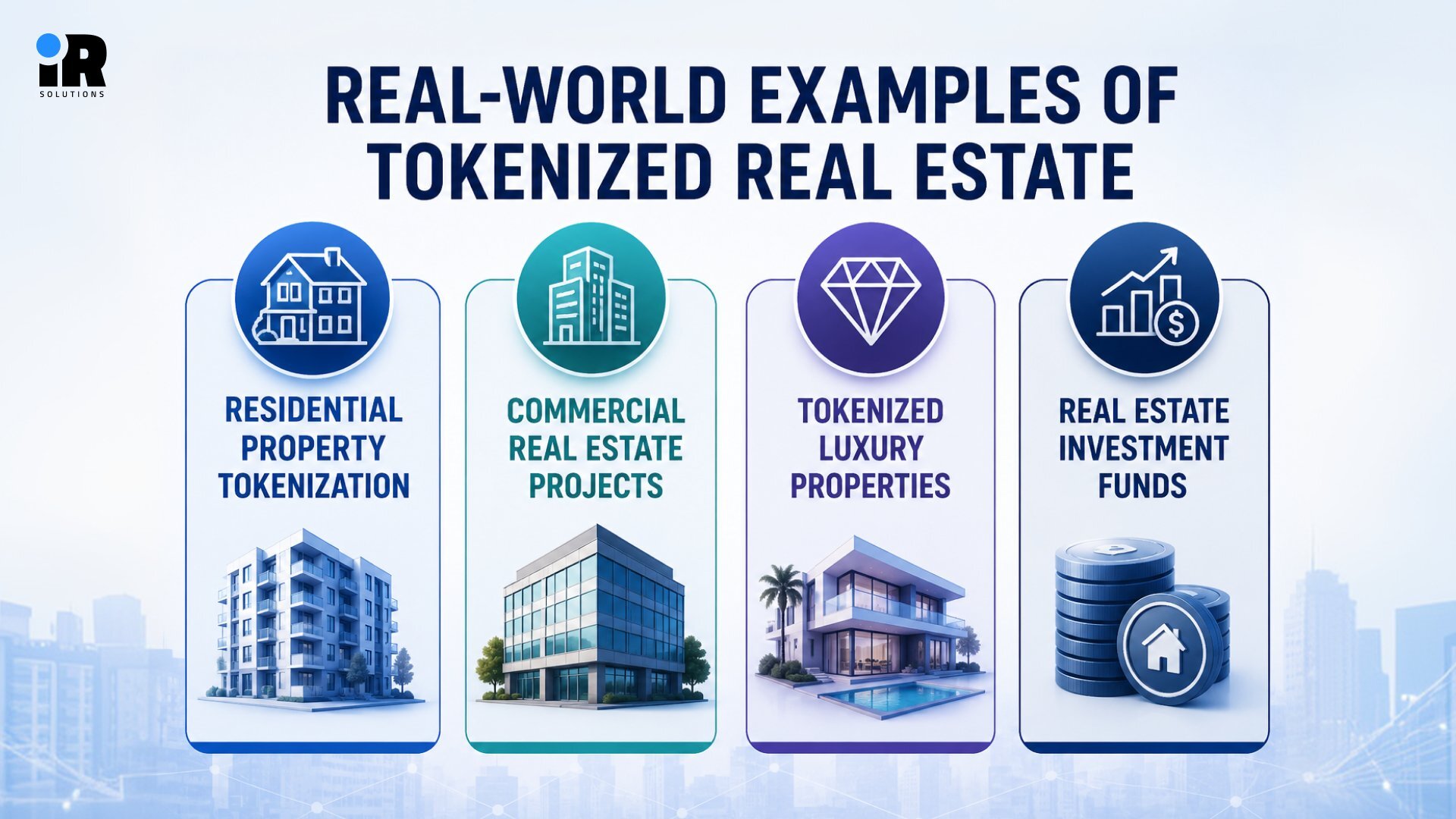
Residential Property Tokenization
RealT has tokenized hundreds of residential rental properties in the United States, with global investors receiving rental income in stablecoin distributions automatically through smart contracts every week. The minimum investment on some properties is $50.
Commercial Real Estate Projects
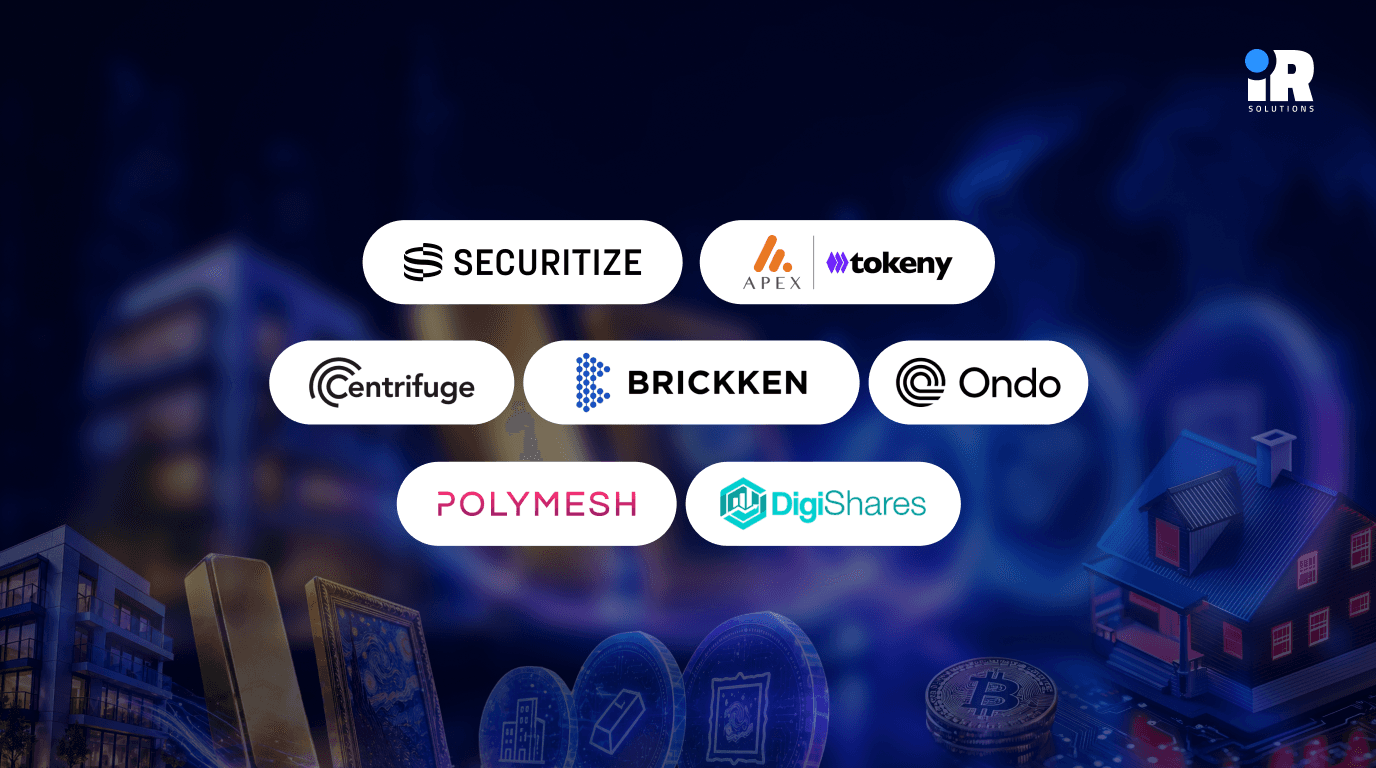
Institutional platforms including Securitize and tZERO have facilitated tokenized commercial property offerings where accredited investors received digital security tokens representing ownership interests in income-generating office and retail assets in the United States.
Tokenized Luxury Properties
High-value residential properties in Monaco, Dubai, and New York have been tokenized to offer fractional ownership of assets that would otherwise require the full acquisition price from a single buyer who could afford to commit it.
Real Estate Investment Funds
Fund managers including Hamilton Lane have tokenized portions of their real estate fund interests on public blockchains, reducing the minimum investment threshold and offering improved secondary market liquidity compared to traditional closed-end fund structures with fixed redemption windows.
Ready to tokenize your property? Book a call with our team to discuss legal structure, blockchain selection, and smart contract development tailored to your asset.
Future of Real Estate Tokenization
The direction is clear even if the exact pace is not. More institutional capital is moving toward tokenized real estate. More regulatory frameworks are being established. More platforms are building the secondary market infrastructure that early tokenization projects lacked.
Institutional Adoption
Major asset managers and institutional investors are actively evaluating tokenized real estate as a complement to traditional property allocations, and their participation at scale will increase the total capital in tokenized property markets faster than retail adoption alone.
Cross-Border Property Investment
Tokenization removes a significant amount of friction from cross-border real estate investment by providing a standardised digital ownership format that works across jurisdictions without requiring separate legal structures for each country where investors are located.
Tokenized Real Estate Funds
Fund structures that issue tokens rather than traditional limited partnership interests will allow fund managers to reach a broader investor base, offer better liquidity terms, and automate distributions at a lower operational cost than traditional fund administration currently requires.
AI and Automation in Property Management
AI-driven property management systems that connect directly with smart contract infrastructure will automate maintenance scheduling, tenant communication, and compliance reporting in ways that reduce operating costs and improve the accuracy of income distributions to token holders over time.
Conclusion
Real estate tokenization is already working at scale. IR Solutions works with property owners and developers to build tokenization projects on the kind of foundation that holds up when investors start asking hard questions. The question for property owners and investors is not whether it is viable but whether the specific project they are evaluating has been built on foundations strong enough to hold up when investors start asking hard questions about legal structure, liquidity, and security. The projects that build that foundation properly before development begins are the ones that generate the kind of investor trust that carries into subsequent offerings. The ones that treat legal preparation and smart contract auditing as optional or secondary to the technical build tend to discover why those things matter at the worst possible moment, which is after investor capital is already committed and the problems are no longer hypothetical.
Frequently Asked Questions
What is real estate tokenization?
It is the process of converting property ownership rights into digital tokens on a blockchain that investors can buy, sell, and hold as fractional interests in the underlying physical asset.
Is real estate tokenization legal?
In most jurisdictions, yes, when properly structured under applicable securities regulations. The specific requirements vary significantly by country and by the type of token being issued, which is why legal counsel with tokenized asset experience matters more than general property lawyers here.
Can any property be tokenized?
Most properties with verifiable ownership, clear legal title, and a measurable income stream or capital value can be tokenized. The legal structure required varies by property type, jurisdiction, and intended investor audience, which means not every property is equally straightforward to tokenize even if it is technically eligible.
What is an SPV in real estate tokenization?
A Special Purpose Vehicle is a dedicated legal entity created to hold a property asset and issue tokens to investors. It provides liability isolation and a clean ownership structure that simplifies investor due diligence and regulatory review compared to issuing tokens directly from an operating company.
How much does it cost to tokenize real estate?
Costs typically range from $75,000 to $300,000 or more depending on legal structure complexity, blockchain infrastructure, and the number of jurisdictions where the offering will be distributed. Legal preparation and smart contract auditing are the two areas most first-time issuers underestimate when building their initial project budget.
Which blockchain is best for real estate tokenization?
Ethereum is the most widely used for institutional projects. Polygon and Avalanche offer lower transaction costs and specific compliance features that suit retail-facing or high-volume property token offerings. The right choice depends on the specific offering rather than general preference for any particular network.
Can investors sell their real estate tokens?
Yes, on secondary markets and digital asset exchanges where eligible investors can buy and sell their holdings without the underlying property changing hands. Liquidity varies by platform and asset, which is why secondary market planning before launch matters as much as the initial offering structure.
How are rental income payments distributed?
Smart contracts calculate each token holder's proportional entitlement and execute the payment automatically on the schedule defined in the offering documentation, typically monthly or quarterly. No manual processing is required at each payment cycle once the contract is correctly deployed.
What are the risks of tokenized real estate?
Regulatory uncertainty across jurisdictions, smart contract security vulnerabilities, limited secondary market liquidity in some asset categories, property valuation challenges, and the technology adoption barrier that affects some investor segments unfamiliar with blockchain-based ownership. These are real risks that a well-structured project manages rather than ignores.
How long does the tokenization process take?
A straightforward single-jurisdiction project typically takes between 10 and 20 weeks from initial legal preparation through to live token offering. Legal structure and smart contract auditing represent the longest stages in most timelines, which is why starting those in parallel rather than sequentially matters for projects with time pressure.