


Five years ago, a business could operate without a dedicated app and still compete effectively in most markets. That window has closed, customers now expect to interact with businesses the same way they interact with everything else in their lives through a screen they already carry everywhere. The shift toward app-driven models is not a technology trend driven by Silicon Valley enthusiasm. It is a structural change in how businesses acquire, retain, and serve customers across every industry operating today. Mobile app development services have helped businesses across fintech, healthcare, retail, and real estate make this transition without losing momentum in their core operations.
This Is What Modern Business Looks Like Now
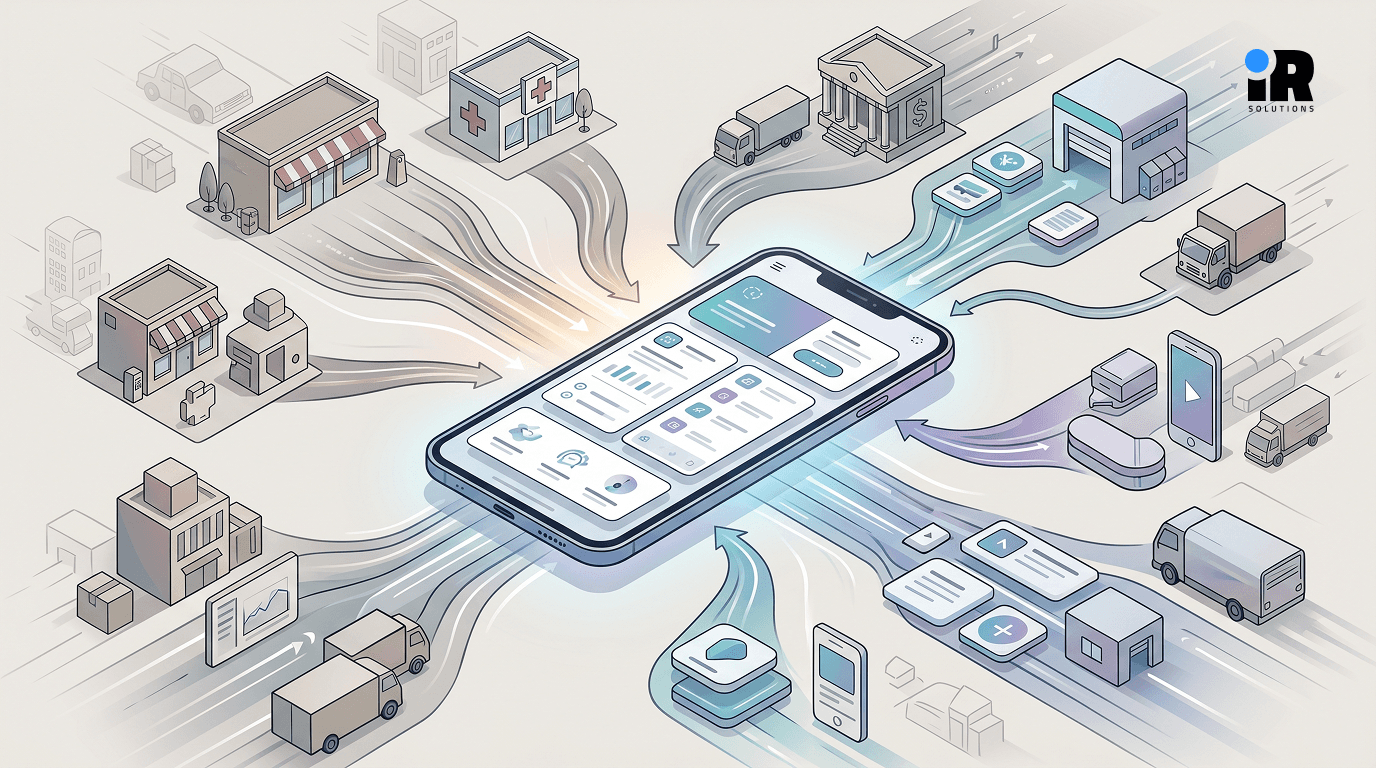
Restaurants, banks, clinics, logistics companies, and real estate agencies are all running app-first operations today. The industries driving this shift are not ones historically associated with technology adoption. That is precisely the point. When a local pharmacy builds a repeat prescription app and a regional logistics firm gives drivers a route management tool, the shift has moved well past early adopters.
1. Have Customer Expectations Already Moved Past You?
Expectations Have Shifted
Customer expectations do not stay still, and they have not stayed still for several years now. People who book a taxi through apps do not want to call a number and wait on hold for a restaurant reservation. People who check their bank balance on a phone do not want to visit a branch to update their address. The benchmark for acceptable service has been reset by consumer apps, and every business now competes against that benchmark regardless of industry.
The businesses that recognise this are building apps that match or exceed what customers already experience in their personal lives. The ones that do not are watching customers leave for competitors who did.
How Customer Expectations Have Changed
Customer expectations have shifted from fragmented, manual interactions to fully digital, real-time experiences where convenience, transparency, and control are the baseline across every industry.
Retail Shift: Customers expect to browse, purchase, track, and return without speaking to anyone at all
Healthcare Access: patients expect appointment booking, prescription management, and test results in one place
Financial Services: Customers expect real-time balance alerts, instant transfers, and spending breakdowns on demand
Logistics Visibility: Clients expect live shipment tracking with status updates pushed to their phone automatically
2. What Happens to Your Data When Your Businesses Don't Have an App?
An app is not just a customer interface, It is a structured data collection system that runs continuously without additional operational cost. Every interaction a user has inside your app tells you something about their behaviour preferences and intent that a website visit or in-store transaction never could.
A retail business with an app knows which products a customer browsed before buying and which ones they abandoned. A healthcare platform knows which appointment types see the most last-minute cancellations and can intervene before the slot is lost. A fintech product knows which features drive daily engagement and which ones users open once and never return to.
This data compounds over time, the longer an app runs, the more accurately it models customer behaviour, and the better the business decisions built on top of it become. Businesses without apps are not just missing a channel. They are missing the data infrastructure that increasingly drives competitive decisions across every market they operate in.
Read our blog on How you can maximize ROI with Custom mobile development, which covers how purpose-built applications outperform generic tools across key business metrics in detail.
3. Operational Efficiency Improves Across Every Function
Beyond Customer Facing
Most conversations about app-driven models focus on customer-facing benefits. The operational gains inside the business are just as significant and often more immediate in their impact on cost and productivity across teams.
Field service companies using mobile workforce management apps cut job completion times by removing paper-based processes from the middle of every job. Warehouse operations using app-based inventory tools reduce stock discrepancies because counts happen in real time on the floor rather than in batches at the end of a shift. Healthcare providers using staff-facing apps built through healthcare app development reduce administrative overhead because documentation happens at the point of care rather than retrospectively after the fact.
Where Efficiency Gains Become Visible in Operations
Operational improvements become most evident when manual, disconnected processes are replaced with real-time, system-driven workflows that reduce delays, errors, and dependency on human coordination.
- Scheduling and dispatch operations become faster when coordinators and field staff share the same live system
- Approval workflows that previously required physical sign-off move to in-app authorisation with a full audit trail
- Inventory and stock management become more accurate when updates happen at the point of transaction
- Customer service teams handle higher volumes when common queries are resolved through in-app self-service tools
4. Why Do App Users Stay Longer Than Any Other Channel?
A customer who downloads your app is fundamentally different from one who visits your website. They have given you space on their phone, which is a more deliberate commitment than bookmarking a URL. They have accepted push notifications, which gives you a direct communication channel that does not depend on them choosing to open a browser. They have created an account, which means they have invested something in the relationship before a single transaction takes place.
App retention rates consistently outperform web and email across almost every industry. A customer using a retail app makes purchases more frequently than one using a mobile website for the same retailer. A financial services customer using a banking app logs in more often and uses more product features than one managing their account through a browser tab.
The mechanics are straightforward. An app reduces friction at every interaction point. Returning takes one tap. Returning to a website requires remembering a URL, logging back in, and navigating from scratch. Friction is where customers drop off, and apps remove most of it before the customer has a chance to reconsider.
5. New Revenue Streams Open Up Inside the App
Beyond the Core Product
An app does not have to mirror your existing product. It can extend it in ways that generate revenue streams that did not exist before the app launched. This is one of the most underestimated advantages of app-driven models and one of the strongest business cases for building sooner rather than later.
A gym chain that builds a fitness app can monetise workout content independently of gym membership. A property management business that builds a tenant app can offer premium maintenance response tiers as an in-app upsell. A logistics company that builds a client-facing tracking app can offer premium analytics dashboards to high-volume clients at an additional subscription tier that costs nothing extra to deliver.
Revenue Models That Apps Enable
With the right app strategy, businesses can unlock continuous revenue streams across users, partners, and data.
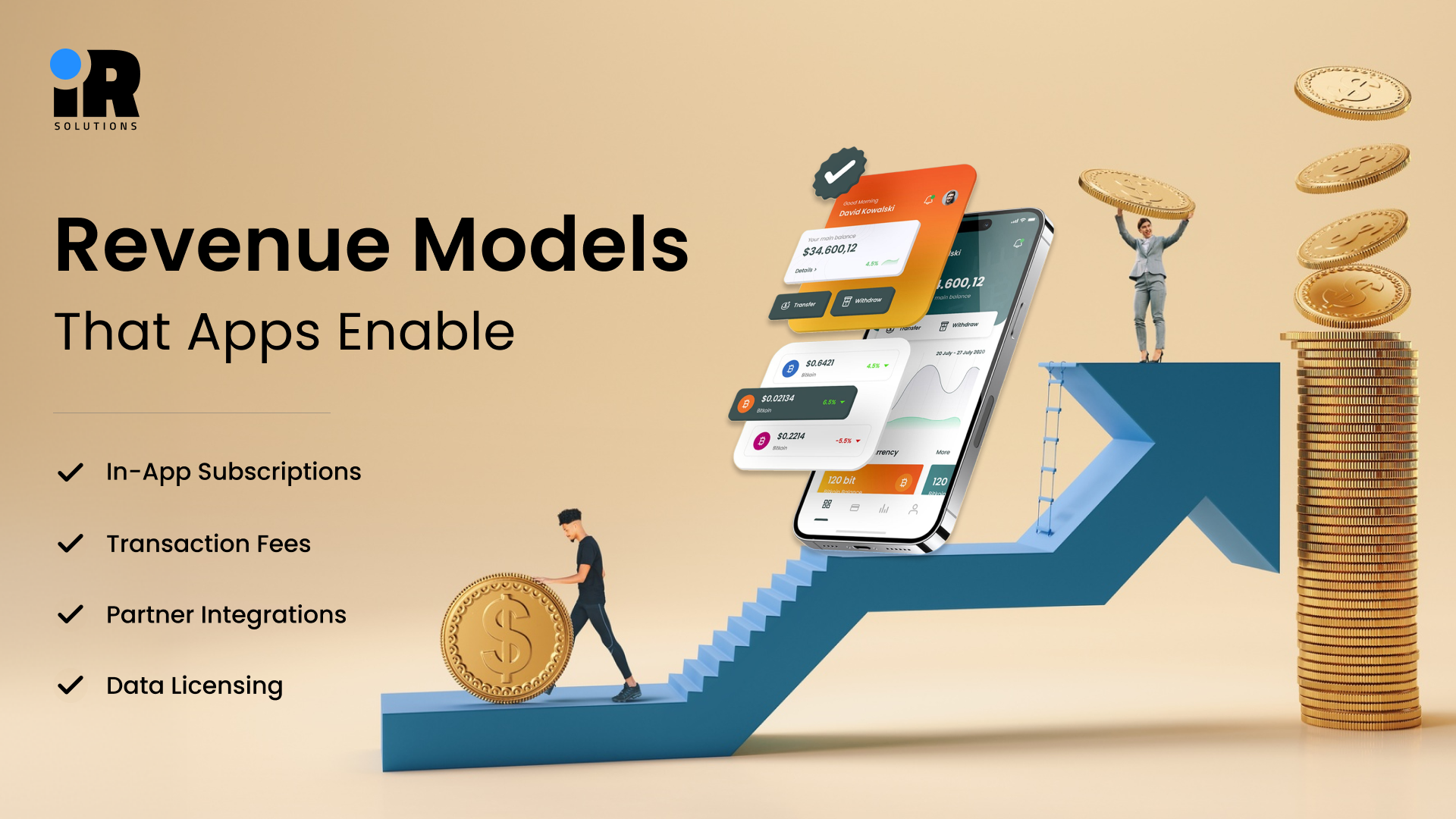
In-App Subscriptions: Premium features or content delivered on a recurring monthly or annual basis directly inside the app
Transaction Fees: A margin on bookings, purchases or payments the business processes on the customer's behalf inside the app
Partner Integrations: Third-party services pay for placement or access to an established and engaged user base already on the platform
Data Licensing: Anonymised aggregated usage data has real commercial value to industry partners and researchers in your sector.
Ready to build the app your business needs to compete in 2026? Book a call with us.
6. Can an App Expand Your Market Without Expanding Your Costs?
Scaling a physical operation costs money at every step. A new store requires rent, staff fit-out, and local marketing before it generates a single transaction. A new app feature reaches every existing user the moment it deploys and can reach new users in markets the business has never physically entered before.
This asymmetry is particularly valuable for businesses in industries where geographic expansion has historically required significant capital commitment upfront. A regional insurance broker can serve customers in a new city through an app without opening a branch office. A local restaurant group can build a loyalty and ordering app that serves customers across multiple postcodes without additional front-of-house staff, proportional to the growth in users.
A cross-platform development approach ensures apps reach iOS and Android users simultaneously, so no segment of your potential market is excluded from day one of launch.
7. Are Generic Tools Holding Your Business Back?
The Generic Problem
Off-the-shelf software was the practical answer for most businesses a decade ago because building custom software was expensive, slow, and required specialist internal knowledge to maintain. That calculation has changed, the cost of building a purpose-built app has come down significantly, while the cost of working around the limitations of generic software has gone up as businesses scale and their requirements become more specific over time.
A healthcare provider using a generic appointment booking system cannot enforce the specific triage logic their clinical workflow requires. A logistics company using an off-the-shelf route optimisation tool cannot integrate the proprietary constraints that reflect how their drivers actually operate on the ground every day. A fintech startup using a generic payment platform cannot offer the specific product features that differentiate its offering from the incumbents it is trying to displace in a crowded market.
Why Custom Applications Fit Business Processes Better
Custom apps are built around the specific workflows, data structures, and compliance requirements of the business using them. They do not require users to adapt their processes to fit the software. The software adapts to the process, and that difference shows up in adoption rates, productivity gains, and the quality of data the system generates over time.
Find out more in What are the benefits of using custom app development for enterprise-level processes?
Conclusion
The shift toward app-driven models is not something businesses can observe from the side and join later without cost. Every industry covered in this blog has already seen the competitive landscape change because of it. The businesses pulling ahead are not necessarily the ones with the largest budgets. They are the ones who identified what their customers needed from a mobile experience and built it before waiting for certainty that turned out to be irrelevant. Data retention, operational efficiency, market reach, and new revenue models are not abstract benefits. They are measurable outcomes that compound every month an app is live, and every month a competitor's is not.
Frequently Asked Questions
Why are app-driven models replacing traditional business operations across industries?
Apps reduce friction in every customer interaction, collect continuous behavioural data, and create retention advantages that websites and physical channels cannot replicate at the same cost.
How does a mobile app generate revenue beyond the core product or service?
Apps enable in-app subscription transaction fees, partner integrations, and data licensing models that create revenue streams that did not exist before the app launched.
Is building a custom app worth it for a small or mid-sized business?
Yes, because the cost of building purpose-built software has reduced significantly while the cost of working around generic tools grows as business requirements become more specific over time.
How long does it take IR Solutions to build and launch a mobile app?
Most focused mobile applications move from discovery through to launch in twelve to twenty weeks, depending on complexity, platform requirements, and the maturity of the underlying business logic.
What is the difference between a native app and a cross-platform app?
Native apps are built separately for iOS and Android, while cross-platform apps use a single codebase that deploys to both platforms, reducing development time and ongoing maintenance costs significantly.
How does an app improve customer retention compared to a website or email channel?
An app sits on the customer's phone, reduces login friction, enables push notifications, and builds habitual usage patterns that email and browser-based channels structurally cannot replicate at scale.
Which industries benefit most from shifting to app-driven models right now?
Retail healthcare, financial services, logistics, real estate, and education are all seeing measurable competitive advantages shift toward businesses that have built strong app-driven customer experiences.