



Companies today work under multiple demands such as public trust and security standards along with honesty-building plans. Business organizations have operational problems including slow processes and financial issues plus inadequate reporting standards. Companies update their business operations using the decentralized blockchain system which produces an immutable record system. By implementing blockchain systems our businesses make their operations completely open and free from unethical financial activities. Our exploration shows blockchain technology’s positive effects on business sectors since it helps organizations achieve their core organizational targets.
Why Blockchain is a Game-Changer for Modern Businesses?
Blockchain is no longer just a technological buzzword infact it’s becoming a critical tool for modern businesses striving to stay competitive. By enabling transparent and secure operations, blockchain reduces inefficiencies, enhances accountability, and cuts costs associated with manual processes. Companies can track every transaction, product movement, or data change in real time, ensuring operations are faster and more accurate. With the help of top blockchain developers, businesses can implement tailored solutions that fit their operational needs, creating a foundation of trust and innovation that sets them apart in competitive markets.
How Can Blockchain Help SMEs and Startups Grow?
Small and medium-sized enterprises (SMEs) and startups can also benefit significantly from blockchain technology. Cloud-based blockchain services and SaaS solutions make it accessible without the need for huge infrastructure investments. From tokenization to decentralized finance tools, even smaller organizations can implement solutions that improve transparency, streamline operations, and create competitive advantages. With guidance from our top blockchain developers, startups can adopt blockchain efficiently, ensuring they are prepared for growth while maintaining trust with partners and customers.
How Does Blockchain Enhance Transparency in Business?
Blockchain enhances transparency by creating tamper-proof records and enabling real-time visibility across business operations. Through decentralized systems, organizations can track transactions, verify data authenticity, and ensure accountability without relying on intermediaries.
1- Immutable Records and Auditability
The blockchain system performs best because of its permanent data protection feature. Once(Transaction) gets recorded to the blockchain its data stays unchanged because users cannot modify the records resulting in an irreversible and protected transaction history. When businesses check transactions in real time, they lower accounting mistakes plus make staff more accountable for their tasks.
2- Real-Time Tracking in Supply Chain Management
The blockchain system lets users track items in their supply chain instantly. All product life stages, until delivery arrival, gain secure authentication and quality verification through blockchain documentation.
3- Transparent Financial Transactions
Smaller and larger financial operations need several middle entities to handle transactions. This
increases costs and makes all processes slower. The system works without third parties because it divides finance control across several connected servers.
How Blockchain Builds Trust in Business Operations
Blockchain strengthens trust by ensuring data integrity, security, and transparency across business processes. By removing intermediaries, securing digital identities, and protecting sensitive data, blockchain enables organizations to operate with greater confidence, fairness, and accountability.
Enhanced Security and Data Integrity: Blockchain security methods create protection systems that keep unauthorized users out and fight off cyber threats. None of the servers in the decentralized blockchain network can be hacked which makes blockchain data protection stronger than single-point systems.
Eliminating Middlemen and Reducing Fraud: Standard business deals need financial institutions to work with brokerage and government groups leading to budget costs and security risks. With blockchain technology, organizations can remove their need for broker services, lowering the chance of fraudulent transactions. Parties create trust through blockchain systems to ensure that all business deals happen fairly between them.
Trust in Digital Identity Verification: As identity theft problems grow larger, the digital environment faces more issues. Blockchain verifies business users quickly and protects their data from hackers. The digital identities store permanently in an unalterable database protect businesses from identity theft by letting only authorized users access their services.
How Is Blockchain Transforming Real-World Business Operations?
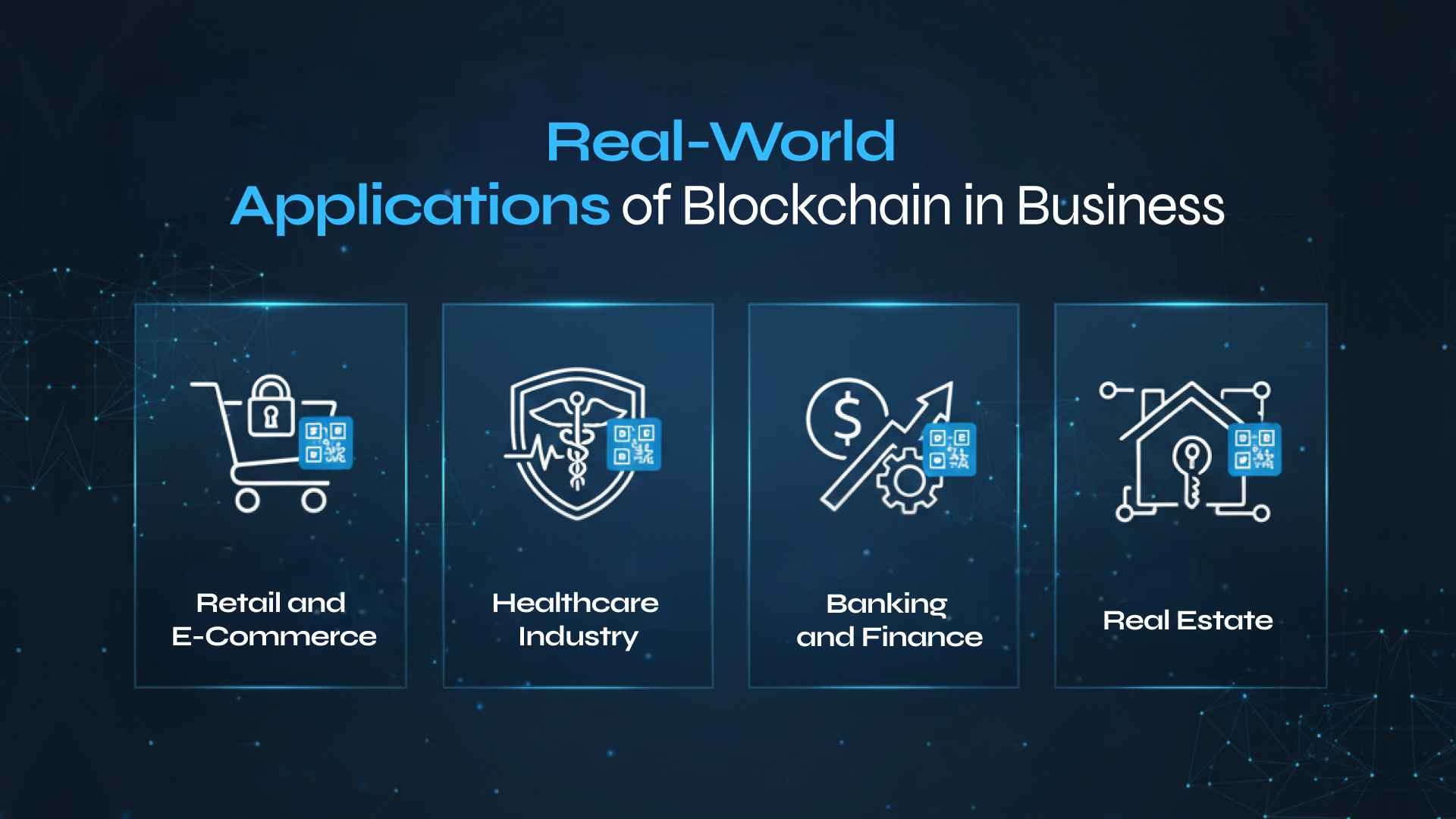
Blockchain is transforming industries by enabling secure, transparent, and efficient operations. From retail and healthcare to finance and real estate, businesses are leveraging blockchain to reduce fraud, streamline processes, and build trust with customers and partners. These real-world applications demonstrate how blockchain drives innovation while improving operational efficiency.
Retail and E-Commerce
Blockchain helps the retail market by identifying genuine products and fighting against fakes while boosting its supply chain processes. Walmart, along with other businesses tracks food products and uses blockchain to maintain food quality and protect customer health.
Healthcare Industry
Blockchain technology provides healthcare with trustworthy patient record storage and secure medical institution data sharing to build trust throughout the healthcare system. The system enables drug authenticity verification to decrease the number of fake medications present in commerce.
Banking and Finance
Companies use Blockchain technology to process international payments in a simplified manner while decreasing costs and improving the speed of transactions. Financial organizations JPMorgan and Visa employ blockchain technology to boost existing bank transaction safety and through increased transparency.
Real Estate
In real estate, blockchain enables secure digital records, smart contracts, and RWA tokenization. Transparent ownership and property histories reduce fraud, while tokenization allows fractional ownership, improved liquidity, faster transactions, lower costs, and greater trust among buyers, sellers, investors, and managers.
Make your business more transparent with blockchain: Hiring a Certified Blockchain Developer vs. Freelancers - Which Is Right for Your Business?
Regulatory Compliance and Blockchain
Meeting regulatory standards is a growing concern for businesses globally. Blockchain technology simplifies compliance by creating immutable records and transparent audit trails, helping organizations adhere to regulations such as KYC, GDPR, and financial reporting standards. Businesses no longer have to rely on manual reporting or third-party verification, reducing the risk of errors and potential penalties. Blockchain ensures that data remains secure and tamper-proof, making compliance faster, more accurate, and cost-effective an essential advantage in highly regulated industries like finance and healthcare.
Challenges and Future Prospects
While blockchain offers numerous benefits, businesses still face several challenges:
- Network Scalability: Current blockchain networks can struggle with high transaction volumes, limiting speed and efficiency for large-scale applications.
- Regulatory and Government Oversight: Varying regulations across countries create uncertainty, slowing adoption and increasing compliance complexity.
- Energy and Power Demands: Some blockchain networks consume significant energy, raising sustainability concerns.
- Integration Complexity: Implementing blockchain into existing systems can be costly and technically challenging.
- Talent Shortage: Skilled professionals, including top blockchain developers, are in high demand, making recruitment difficult.
Despite these challenges, ongoing technological advancements and global industry interest indicate that blockchain adoption is expected to grow rapidly in the coming years, unlocking new opportunities for businesses worldwide.
Conclusion
Blockchain is transforming business operations by improving transparency, security, and trust. From supply chain visibility and financial accuracy to regulatory compliance and secure digital identities, blockchain helps organizations operate more efficiently and ethically. As adoption grows and technology evolves, businesses that embrace blockchain early gain stronger customer trust and long-term competitive advantages. Hire blockchain developer from IR Solutions to access expert blockchain services that help businesses adopt innovative technology. Whether it’s smart contracts, secure data management, or decentralized applications, our team delivers tailored solutions to enhance efficiency, transparency, and trust.
Frequently Asked Questions
How does blockchain improve transparency in business operations?
Blockchain creates immutable and tamper-proof records that allow businesses to track transactions, data changes, and processes in real time. This reduces errors, prevents manipulation, and improves accountability across operations.
How does blockchain help businesses build trust?
Blockchain enhances trust through secure data storage, decentralized networks, and transparent verification processes. By eliminating intermediaries and reducing fraud, businesses can ensure fair, reliable, and verifiable transactions.
Can small businesses and startups benefit from blockchain technology?
Yes, blockchain is accessible to SMEs and startups through cloud-based and SaaS solutions. It helps smaller businesses improve transparency, streamline operations, reduce costs, and compete more effectively in digital markets.
Which industries benefit the most from blockchain technology?
Industries such as retail, healthcare, banking, finance, real estate, and supply chain management benefit significantly from blockchain by improving security, efficiency, compliance, and trust across their operations.
How does blockchain support regulatory compliance?
Blockchain simplifies compliance by maintaining transparent audit trails and immutable records. It helps businesses meet regulations like KYC, GDPR, and financial reporting requirements while reducing manual work and compliance risks.