



Small businesses often struggle to manage online stores, attract customers, and keep up with fast-changing trends. Many owners still struggle to compete with big brands online. What if smart tools could make their work easier and faster? Artificial Intelligence is quietly changing how small businesses use Shopify. It helps store owners save time, predict trends, and better understand customers. With AI, even a small store can work like a big company.
How Shopify Uses AI to Improve Online Store Performance
Shopify uses AI to study customer behavior and helps store owners understand what shoppers want. AI tools indicate better product listings, improve search results, and personalize shopping experiences. Store owners can see which products perform best and modify prices or promotions quickly.
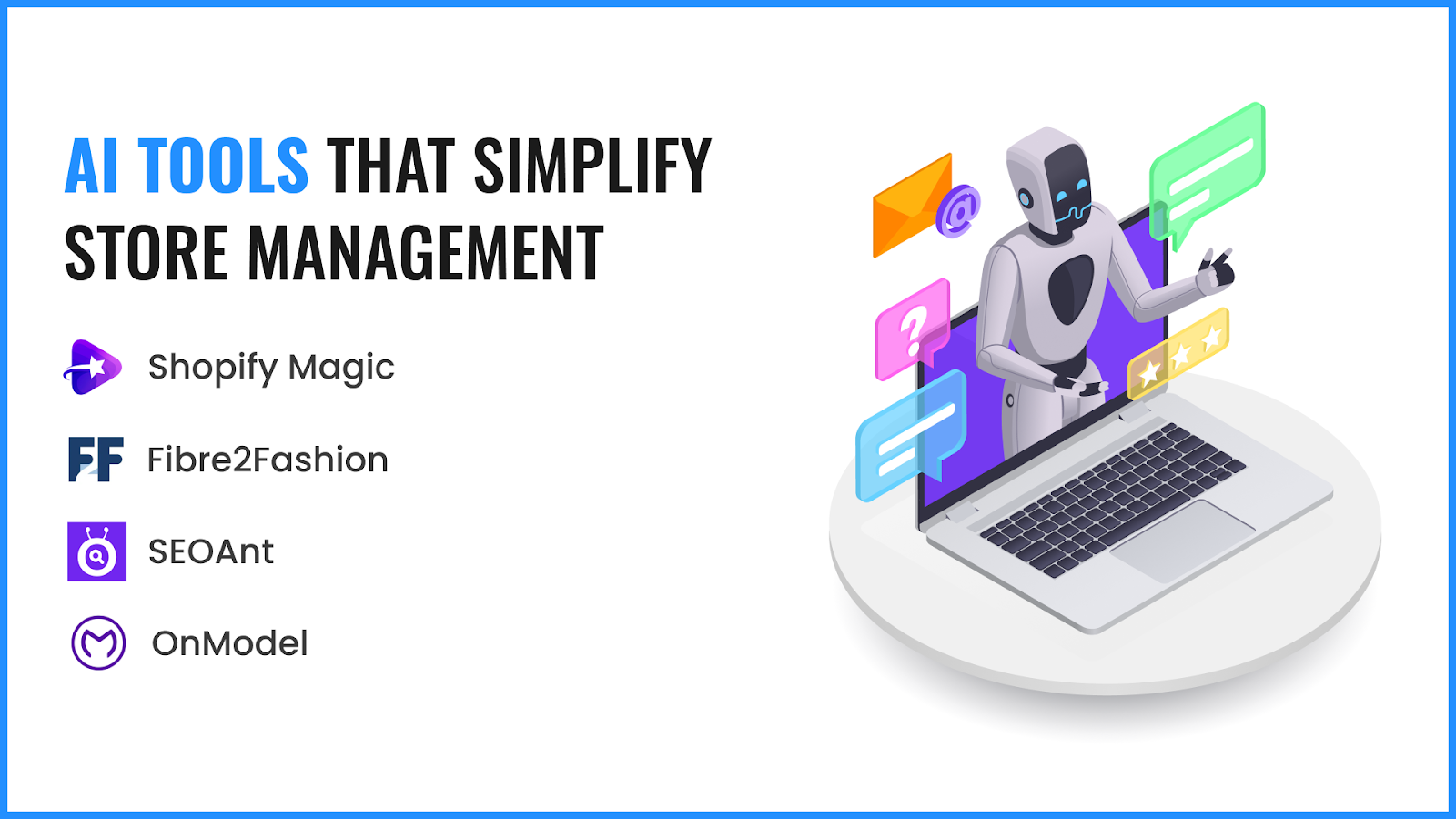
AI Tools that Simplify Store Management
AI makes it easier for small business owners to run their Shopify stores. It helps with daily tasks like managing inventory, tracking sales, and personalizing marketing. AI tools save time, reduce human error, and improve efficiency. Shopify store owners can use the following tools to make smarter business decisions and keep Shopify stores optimized.
1. Shopify Magic
Shopify Magic automatically generates product descriptions for store owners. It uses AI to write clear and attractive text for listings. Merchants can adjust tone, length, or keywords for SEO. It reduces writing time and keeps product pages consistent. Shopify Magic is built into the Shopify admin panel for easy use.
2. Fibre2Fashion
The Fibre2Fashion is a Bulk Listing Tool that lets users upload many products at once. It connects with Shopify and updates all listings quickly. Store owners can edit titles, prices, and images in bulk. It saves time and avoids errors in manual uploads. The tool is helpful for clothing and textile businesses managing large inventories.
3. SEOAnt
SEOAnt helps improve search rankings for Shopify stores. It analyzes store performance and suggests keyword and link improvements. The tool fixes SEO issues like broken links and missing meta tags. It also tracks opponents to find new ranking opportunities. SEOAnt helps small businesses attract more traffic and build online visibility.
4. OnModel
If you run an online clothing store, OnModel is an essential AI tool for Shopify. It generates realistic model photos in seconds. You can swap clothing models to show your apparel in different poses. The tool lets you change skin tones and body types without extra photoshoots. This saves time and money while giving customers a personalized shopping experience.
How AI Improves Ad Targeting on Shopify
AI helps Shopify stores reach the right customers by studying online shopping behaviors. It looks at what people buy, search for, and add to carts. From this, it predicts what they will likely purchase next. Shopify uses this data to show ads that match customer interests. This reduces wasted ad spend and advances sales. As a result, small businesses get better results from each campaign.
1. Smarter Ad Recommendations
Shopify’s system studies user actions in real time and updates ad targeting fast.
- It identifies high-value shoppers based on buying patterns.
- It removes audiences who are not likely to buy.
- It suggests new customer segments for better reach.
- It refines keywords and ad placement to improve conversions.
- It lowers the cost per click while improving overall ad performance.
2. Predicting Buyer Behavior
Machine learning studies each visitor’s browsing activity to predict their next move. It helps store owners plan more focused promotions and escape random spending. This makes ad campaigns more personal and less repetitive, helping small businesses grow faster on Shopify.
AI pricing tools helping small businesses stay competitive
Smart pricing tools on Shopify use machine learning to help small businesses set fair prices and stay useful. These systems study market trends, customer behavior, and competitor activity to guide better pricing choices. They update prices in real time, keeping stores competitive without consistent manual work.
1. Using data-driven insights for better pricing
These tools collect large amounts of data to understand demand standards and customer preferences. The insights help businesses make smart pricing decisions based on facts, not guesses.
2. Supporting personalized pricing strategies
Shop owners can adjust prices for different products, times, or audiences. Personalized offers improve customer satisfaction and boost repeat purchases.
3. Simplifying competitor price monitoring
The tools automatically track competitor pricing and alert businesses about changes. This keeps stores informed and ready to respond quickly.
Related blog: How Shopify is Powering eCommerce Growth for Small Businesses Worldwide
Smarter Fraud Prevention for Shopify Stores
Shopify uses smart systems to spot fraud before it harms small businesses. These tools track orders, customer behavior, and payments to catch rare activity. Fraud detection runs quietly in the background so store owners can concentrate on growth. It helps reduce chargebacks and keeps customer trust strong. Shopify’s fraud tools work with both built-in features and trusted third-party apps.
1. Shopify Protect Transactions Safe
Shopify Protect covers appropriate orders automatically and helps merchants avoid chargebacks on approved payments. It offers security without extra work.
2. Shopify’s Built-in Fraud Filters
Shopify includes smart filters that flag doubtful orders. Merchants can review alerts, check order details, and stop fraud early.
3. Trusted Third-Party Apps for Extra Protection
Apps like Signifyd and FraudLabs Pro add another layer of safety. They analyze orders using customer data and machine learning.
AI-Based Inventory Tracking for Small Store Owners
AI helps Shopify stores manage inventory with accuracy and less trouble. It tracks products and predicts stock needs. Small business owners can see real-time stock levels and plan reorders before items run out.
1. Predicting Demand and Optimising Stock
Using historical sales data, trend analysis, and product popularity, smart systems forecast future demand. These forecasts guide when to reorder, what to restock, and which items may slow down.
2. Real-Time Stock Updates Across Channels
Whether selling on Shopify, social media, or marketplaces, inventory updates instantly. This avoids stockouts and reduces manual update work. Multi-channel synchronization supports smooth sales.
3. AI Apps That Simplify Inventory Work
Some popular Shopify Inventory apps use AI to manage stock and simplify daily work.
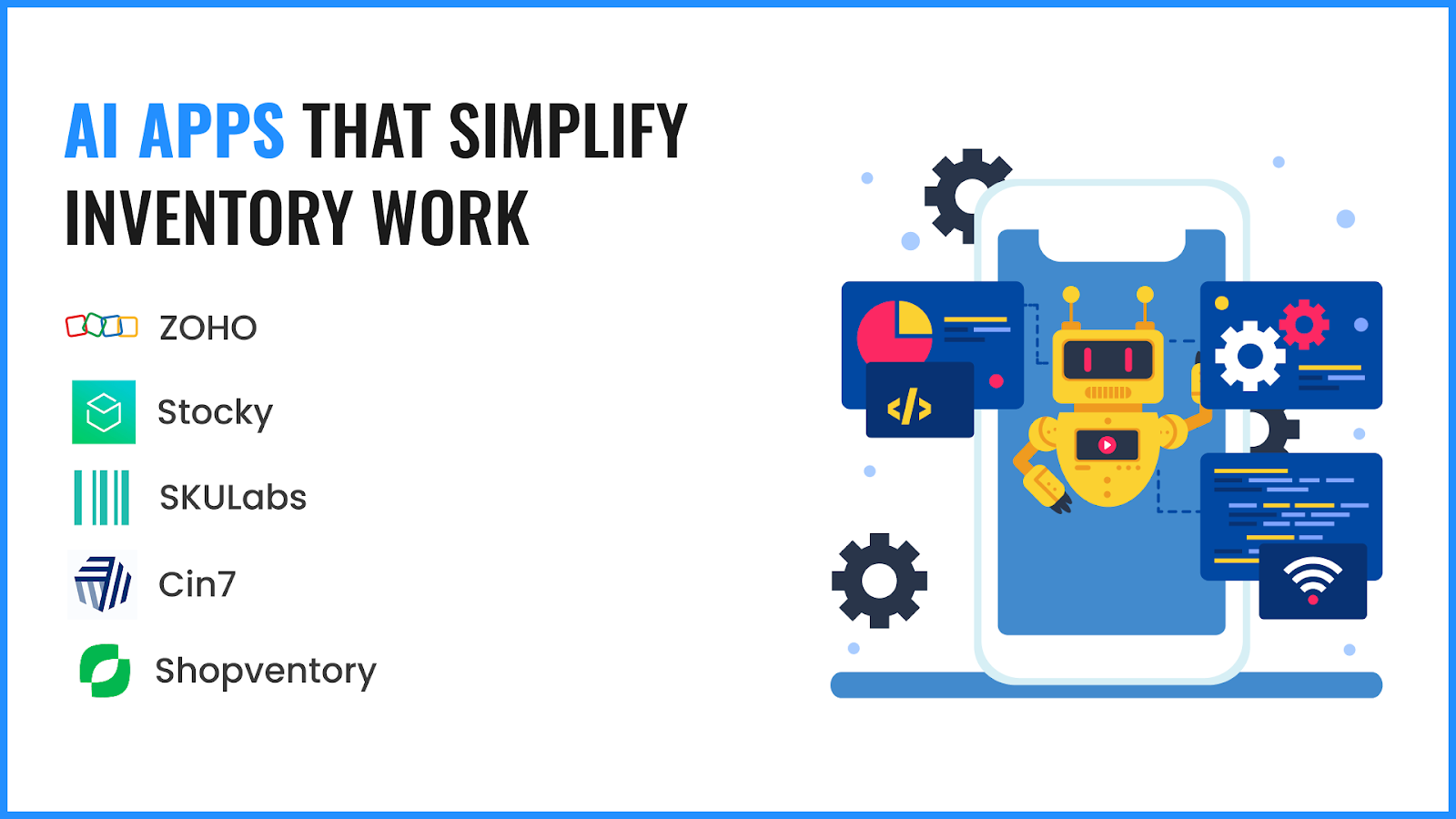
- Zoho Inventory tracks stock and orders across sales channels.
- Stocky predicts demand and suggests reorder levels using AI data.
- SKULabs syncs inventory across stores and avoids overselling.
- Cin7 connects sales, purchasing, and accounting to avoid stockouts.
- Shopventory helps small stores manage multi-channel inventory in real time.
4. Choosing the Right Inventory Tool
Pick a tool that fits your size, budget, and sales complexity. Check for Shopify integration, ease of use, pricing transparency, and support. Try free trials before engaging.
Image Recognition Helping Shopify Stores Manage Visuals
AI image recognition is changing how people shop online. It lets customers find products by uploading a simple photo. The system quickly determines similar items, making shopping faster and more enjoyable. For Shopify store owners, image recognition makes products easier to discover. Customers can take a picture of something they like and instantly find related products in the store.
Retailers can get the best results by
a) Using high-quality product photos from different angles
b) Maintaining image backgrounds consistently
c) Assuring photos are clear and detailed
d) Adding AI-powered image recognition tools to their stores
Conclusion
AI is helping small businesses automate complicated tasks and improve store performance. From managing inventory to detecting fraud, AI tools bring better control and efficiency to every step of online selling. At IR Solutions, you can hire shopify experts for professional Shopify store development services tailored to your brand’s identity and business objectives. Our team also provides custom Shopify app development to enhance engagement, automate operations, and drive sustainable e-commerce growth.
Frequently Asked Questions
How do I choose the right AI app for my Shopify store?
Look for apps that match your business goals, integrate smoothly with Shopify, and offer clear reports on performance and savings.
Does AI help in reducing marketing costs for small businesses?
Yes. AI tools track performance and optimize ads automatically, helping small businesses reduce costs while improving conversion rates.
What is the benefit of using custom Shopify apps for small businesses?
Custom apps handle unique business needs, from product tracking to automated marketing. They speed up operations and reduce manual work.
Can I automate my Shopify store without technical knowledge?
Yes. IR Solutions offers Shopify app development services that help automate daily tasks, like inventory updates and order tracking, without coding.
How does AI support long-term growth for small Shopify stores?
AI predicts sales trends, automates marketing, and improves product visibility. This helps small stores stay competitive and expand steadily.