


An email list has limited value on its own unless it is actively guided toward conversions. Without automation, most lists sit idle, receiving occasional campaigns that rarely reflect real customer intent or timing. Email automation changes this by turning disconnected contacts into a structured system that reacts to behavior in real time. Every signup, click, product view, or abandoned cart becomes a trigger for a relevant, well-timed message that moves subscribers closer to action.
Instead of relying on manual campaigns, businesses build a self-running revenue system that works continuously in the background. Businesses that commit to this approach see stronger retention, higher lifetime value, and measurable revenue growth over time. To build and manage this kind of system effectively, the smartest step is to hire a Klaviyo expert who understands both the platform and the strategy behind it.
Why Businesses With Email Automation Always Pull Ahead
Businesses still relying on manual email blasts are quietly losing ground to competitors every single week. The market has changed, and customers now expect timely, relevant messages that speak directly to their situation. A generic newsletter sent to your entire list with the same message rarely drives anyone toward a purchase. Automated emails respond to real user behavior, purchase history, and engagement signals in real time. This approach makes every message feel like a direct conversation rather than a company-wide generic announcement.
The companies growing fastest right now share one common habit: a structured and intentional email automation strategy. They do not send emails simply because they have something to say to their audience. They send emails because their system detected that a specific customer is ready to take the next step. That single distinction separates scattered, inconsistent marketing from predictable revenue that compounds itself every single month.
This is part of the bigger email growth framework covered in Klaviyo Email Marketing Strategy 2026: Complete Guide to Automation, Flows, Open Rates & ROI.
The Mistakes Quietly Killing Your Email Revenue
Most companies set up a basic welcome email and consider their email automation strategy complete. That single sequence barely touches the surface of what automation can actually do for revenue.
Here is where most businesses make the same mistakes that quietly stall their automation results:
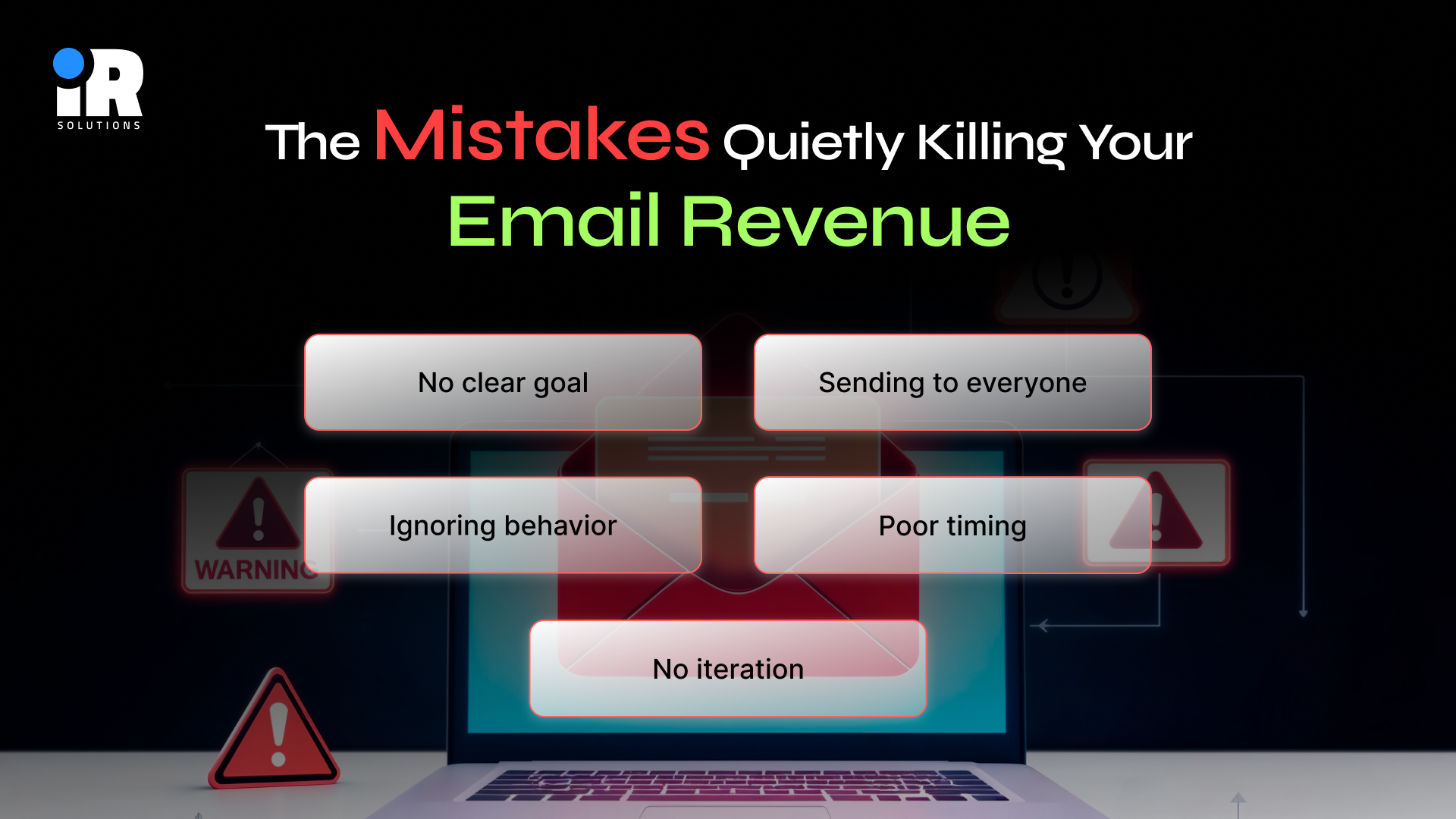
- No clear goal: Every sequence needs a defined purpose; automation without direction quickly becomes inbox noise.
- Sending to everyone: Blasting your full list ignores the very different needs of each subscriber segment.
- Ignoring behavior: Most businesses never trigger emails based on what subscribers actually clicked or visited.
- Poor timing: Emails sent at the wrong moment get buried under everything else sitting in the inbox.
- No iteration: They send, forget, and never look at data to understand what actually drove any results.
These are not technical problems that demand expensive solutions; they are strategic gaps any good partner can close.
Your List Quality Determines Everything That Follows
Automation only works when it has a quality audience to talk to every single time. Many businesses focus on growing their list and forget to focus on growing the right list. A big list of unqualified subscribers will cost you more in platform fees than it generates in revenue.
- Lead magnets: Offer something genuinely useful, like a free audit, template, or short guide to attract the right people.
- Targeted landing pages: Use focused pages with one clear offer and a single call-to-action designed specifically for each campaign.
- Smart entry points: Capture emails during checkout, sign-up flows, and behavior-triggered website pop-ups at exactly the right moments.
- Double opt-in: Confirm every new subscriber to protect your deliverability and keep your list genuinely clean over time.
When your list is built right, every automation you deploy has a much higher chance of converting subscribers into customers.
The Five Email Sequences That Drive the Most Revenue
Not every email sequence delivers revenue in the same way or on the same timeline. Some drive immediate purchases while others build a long-term relationship that makes future purchases possible. These five sequences form the backbone of any strong email automation strategy that businesses should build first.
Welcome Series
First impressions set the tone for everything that comes after, and most businesses waste theirs. A single welcome email is not a strategy; it is a missed opportunity to establish trust and momentum. A proper series runs three to five emails over the first two weeks after someone subscribes. Each email builds on the last and nudges subscribers toward a specific, clear next action in a natural way.
Abandoned Cart
For e-commerce businesses, this is often the single highest-revenue automation you will ever build and deploy. A subscriber adds items to their cart, leaves without buying, and your system sends a reminder within the first hour. Follow-up emails go out at 24 hours and again at 72 hours, recovering sales that would otherwise disappear permanently. Done well, this sequence can recover 15 to 20 percent of abandoned carts entirely without manual work.
Lead Nurture
Not every new subscriber is ready to buy right away, and that is completely fine and completely expected. A nurture sequence keeps your brand visible during the gap between a subscriber's first interest and their purchase decision. These emails provide genuine value and answer the most common objections your sales team regularly encounters in conversations. They build the trust required before a prospect is willing to spend real money with your business. The goal is to stay relevant without being pushy, and the best sequences do that with real precision.
Post-Purchase
The sale is not the finish line; it is the starting line for a longer and more valuable customer relationship. Most businesses go completely silent the moment a transaction is complete, and that silence is a huge missed opportunity. A post-purchase sequence asks for reviews, introduces complementary products, and keeps customers engaged long after the first sale. This is where repeat revenue, higher lifetime value, and word-of-mouth referrals come from when done correctly.
Re-Engagement
Every list accumulates subscribers who have stopped opening, clicking, or engaging with your emails entirely. A re-engagement sequence sends them a direct message asking whether they still want to hear from your business. Those who respond get retained as active subscribers, giving your list a fresh and engaged segment to work with. Those who stay unresponsive get removed to protect your sender reputation and maintain healthy deliverability scores.
Segmentation: The Fastest Way to Fasten Your Result
Most businesses send the same email to every single person on their list, and they wonder why results are flat. Segmentation means dividing your list into groups based on behavior, demographics, or purchase history so messages stay relevant.
Here is how to segment your list effectively without making your entire system too complicated to manage:
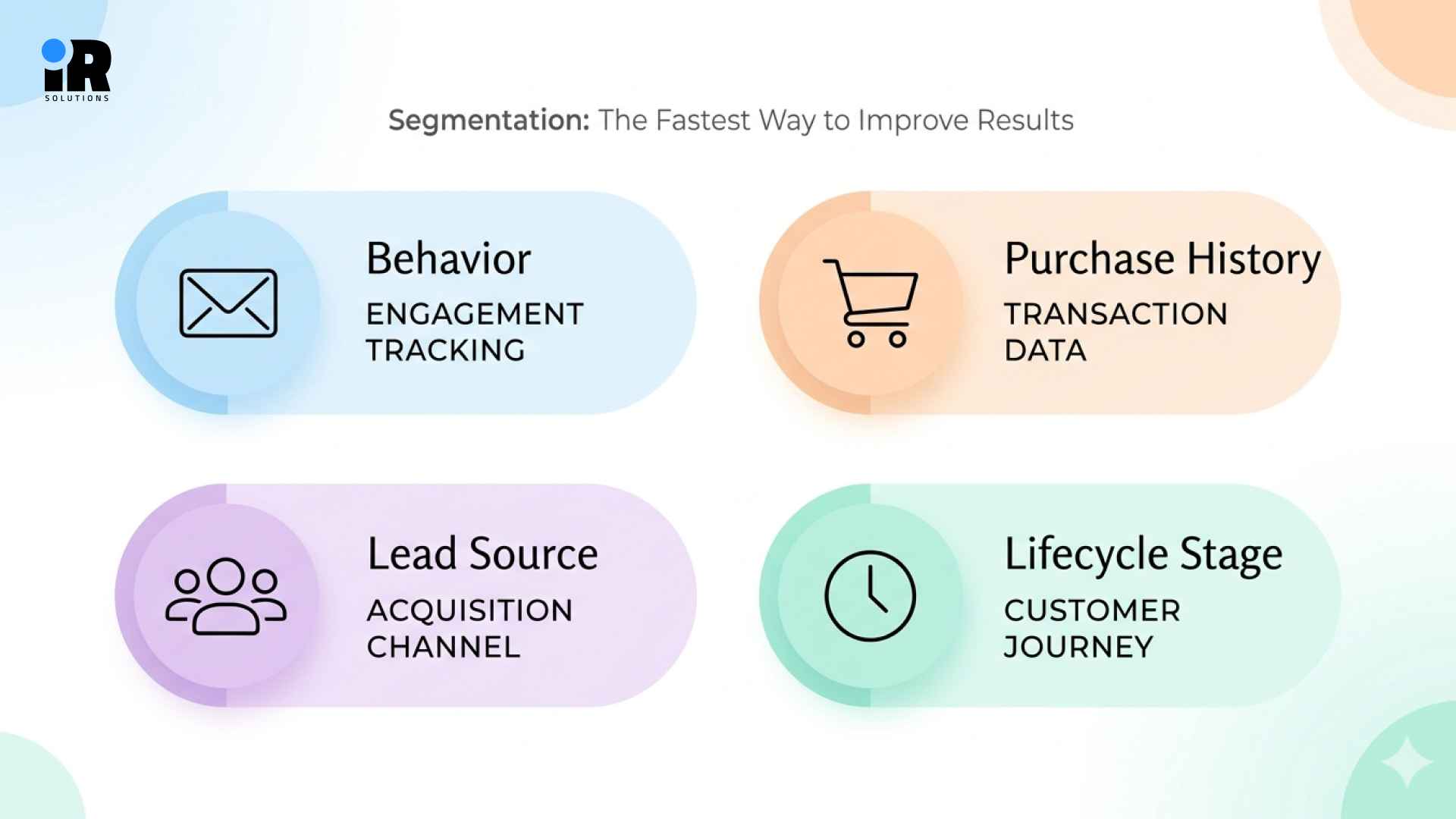
- Behavior: Did they open last month, click a specific link, or visit your product page recently?
- Purchase history: What did they buy, how much did they spend, and when did they last purchase?
- Lead source: Paid traffic, organic visitors, and referral leads tend to have very different intent and readiness levels.
- Lifecycle stage: Are they a new subscriber, an active buyer, or someone who has not purchased in six months?
A segmented list often outperforms an unsegmented one by two to three times across every key metric you track.
For a deeper breakdown, see Why Digital Marketing Is No Longer a Channel but a Full Ecommerce Business Growth System.
Personalization That Actually Changes Subscriber Behavior
Dropping a subscriber's first name into a subject line is not personalization; it stopped feeling personal years ago. Real personalization means the offer, the message angle, and the timing reflect what that subscriber has actually done. If someone visited your pricing page repeatedly but never converted, your automation should detect that behavioral signal. It should then automatically send a targeted email that speaks directly to the hesitation behind that behavior.
If a customer bought six months ago and has not returned, your system should flag that gap automatically.
This level of automation separates businesses that grow on autopilot from those stuck at the same revenue ceiling. Our team helps businesses configure intelligent automation that uses real behavior data to drive actual outcomes.
How to Write Emails That Demand Attention and Drive Action
The most technically perfect automation fails if the emails themselves are not compelling enough to act on. Here is what separates emails that drive revenue from emails that get deleted before they even open:
- Subject lines: Keep them short, clear, and specific; curiosity-based subject lines almost always outperform anything vague or clever.
- Preview text: Most readers scan this before deciding to open, so use it to extend the subject line's story naturally.
- Opening line: Skip pleasantries entirely and start immediately with the one thing your reader actually cares about.
- Body copy: Write one idea per email, use short paragraphs, and stick to plain language that reads naturally out loud.
- Call-to-action: Use one button and one clear direction multiple CTAs always split attention and reduce your conversion rate.
Mobile optimization is not optional since more than 60 percent of emails now get opened on smartphones rather than desktops.
Five Numbers That Reveal If Your Automation Is Earning Its Keep
Email automation gives you a level of data visibility that most other marketing channels simply cannot match.
- Open rate: Shows whether your subject line and sender name are earning real attention in a crowded inbox.
- Click-through rate: Shows whether your content and call-to-action are convincing enough to move readers toward action.
- Conversion rate: Tracks how many email clicks turn into purchases, sign-ups, or other completed actions you care about.
- Revenue per email: This is the clearest signal of whether your automation is moving real money into your business.
- Deliverability rate: Shows what percentage of your emails actually reach real inboxes rather than disappearing into spam.
Most businesses only check open rates and miss the metrics that directly point to where revenue is being left behind.
Which Email Platform Actually Fits Your Business Type
The email platform you choose will either support or limit your automation as your business grows over time. Here is a practical breakdown of the email platforms that work best for most business types:
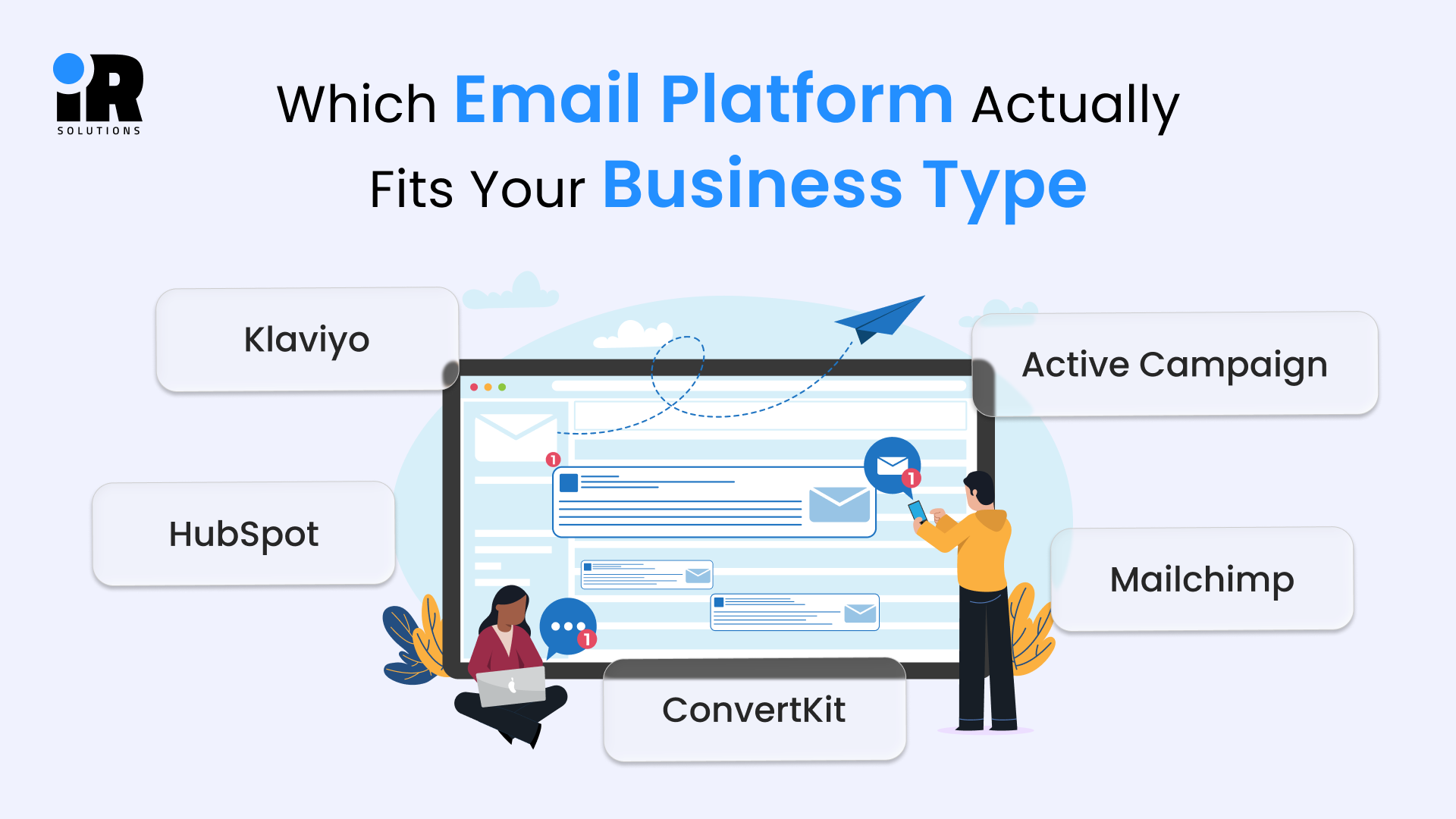
- Klaviyo: Built specifically for e-commerce with deep segmentation and revenue attribution built directly into the platform.
- ActiveCampaign: Strong for service businesses that need CRM and automation logic working tightly together in one place.
- HubSpot: Enterprise-level platform that connects email, your CRM, and sales tools into one tightly integrated system.
- Mailchimp: A solid entry point for small lists that becomes very limiting once your automation strategy grows complex.
- ConvertKit: Designed for creators and coaches who need simple, effective automation without needing a technical background.
The right choice depends entirely on your business model, your team's comfort level, and your long-term growth goals.
See how experts actually scale e-commerce revenue in How a Klaviyo Expert Can Boost Your E-commerce Sales Through Email Marketing?
If you want clarity on what automation can do for your business, book a free strategy session with us today. We will walk you through exactly where automation starts adding real, measurable revenue to your pipeline.
The ROI Case for Email Automation Is Hard to Argue With
Email consistently ranks as the highest-return marketing channel across nearly every industry category and business size. For every dollar invested in email marketing, the average return lands somewhere between 36 and 42 dollars with proper setup. That number increases significantly when automation is layered in, because it reaches the right person at the right moment. Businesses treating email automation as a core revenue engine see compounding results that grow every month without adding ad spend. Those treating it as an afterthought keep wondering why their email list never converts the way it should.
Compare that to paid advertising, where every click costs money and results stop when your budget runs out. Email automation builds an asset your business owns, keeping revenue flowing long after the initial setup investment is recovered. A well-designed abandoned cart sequence recovers sales for years without anyone on your team ever needing to touch it again.
The return on email automation is measurable and traceable from the very first email your system sends out. Businesses that track carefully can see which sequences drive revenue and which subject lines produce the best open rates. That level of data makes every optimization decision straightforward because you are working from real numbers rather than gut instinct. When re-engagement emails outperform newsletters by three to one, you know exactly where to focus your effort next.
Conclusion
Email automation is one of the few investments that genuinely compounds over time without requiring proportional increases in budget. The businesses winning right now are doing smarter marketing, and email automation sits at the center of that approach. A well-built system can recover lost sales, onboard new customers, re-engage cold leads, and drive repeat purchases simultaneously. The opportunity is real and accessible for businesses of every size operating across virtually every industry today.
The real question is not whether email automation works, because the data consistently proves that it does. The question is whether your system is built well enough to capture the revenue it should be generating. If you are ready to build a strategy that compounds instead of resetting each month, now is the time. Working with the right development partner can help you turn your email system into a consistent revenue engine that grows over time.
Frequently Asked Questions
Is email automation only suitable for large businesses with big budgets?
Email automation works for businesses of any size and consistently delivers the highest ROI for smaller, leaner teams.
How many emails should a typical automated sequence contain?
Most effective sequences run between three and seven emails, spread across days or weeks, depending on the specific goal.
Which email platform is best for setting up automation as a beginner?
Mailchimp works for basic needs, but ActiveCampaign or Klaviyo are stronger choices as automation complexity grows.
Can email automation replace a marketing team or significantly reduce headcount?
Automation handles repetitive tasks well but works best when paired with strategic oversight from a real human being.
What happens to subscribers who never open any of my automated emails?
A re-engagement sequence targets inactive subscribers, and those who remain unresponsive get removed from the active list.
How important is list segmentation when setting up email automation properly?
Segmentation is critical segmented lists typically outperform unsegmented ones by two to three times across every key metric.
What is the difference between email automation and a regular broadcast campaign?
Campaigns are sent manually and automation sends emails automatically based on individual subscriber behavior and triggers.
How do I know if my email automation strategy is actually working for my business?
Track open rate, click-through rate, conversion rate, and revenue per email as your core performance indicators consistently.