

Key Takeaways
- Automated emails make up few sends but can bring a large share of email revenue.
- Fashion shoppers care about fit, style, and stock, so your emails should answer those questions.
- Start with welcome, abandoned cart, and back-in-stock emails before trying the other campaigns.
- Group customers by what they buy and browse, then show them products they actually want.
- Plan campaigns around your stock, and never promote items that have already sold out.
- Judge results by orders and profit after discounts, not by open rates alone.
A customer adds a jacket to the cart, thinks about it for a moment, and leaves without placing an order. Another customer buys from your brand once, loves the fit but never hears from you again. Your latest collection email reaches thousands of inboxes yet very few subscribers buy.
These are common challenges for fashion brands and sending more promotional emails won't necessarily solve them.
According to Omnisend's 2026 ecommerce report, automated emails accounted for just 2% of email sends but generated 30% of email revenue. The data covers general ecommerce merchants in 2025 not just fashion brands but it shows how much well-timed emails can contribute to sales.
Fashion email marketing is about reaching customers with the right message at the right time whether they're browsing a new collection, leaving items in their cart, or ready to shop again.
Below you'll find 12 fashion email campaigns worth trying, tips to improve their performance, and a simple 30-day plan to help you get started.
What Is Fashion Email Marketing?
Fashion email marketing is how clothing and accessory brands promote their products and stay in touch with customers through email. It contains new collection announcements, styling tips, restock notifications, abandoned cart recovery emails, and post-purchase emails.
Scheduled campaigns are sent on a specific date, such as a collection date or a weekend sale. Automated emails are sent when a shopper interacts, like subscribing to your list, abandoning a cart, or making a purchase. Most clothing stores need both, because campaigns create demand and automation catches interest that already exists.
Why Fashion Brands Need a Different Email Marketing Approach
Fashion customers consider more than price before buying. They look at style, size, fit, fabric, and whether a piece works with what they already own. Your emails should help answer these questions while keeping up with changing collections and seasonal demand.
- Seasonal Pace: Collections change every few months so your emails must keep up with launches, drops, and end-of-season clearances.
- Shifting Stock: Sizes and colors sell out quickly so an email can send shoppers to a product they cannot buy.
- Visual Identity: Shoppers judge style at a glance so photos, colors, and tone must match the look of your brand.
- Fit Worries: Many buyers fear poor fit, weak quality, or hard returns, and your emails can answer those worries early.
- Repeat Buying: Loyal customers keep a brand alive so you need reasons to bring them back without constant discounts.
Understanding these shopping habits can help you plan Email marketing campaigns that match what your customers actually need.
12 Fashion Email Marketing Campaigns That Drive Sales
Not every email campaign works for every customer. Some are better for attracting first-time buyers, while others help bring previous customers back.
1. Welcome Emails That Introduce Your Brand
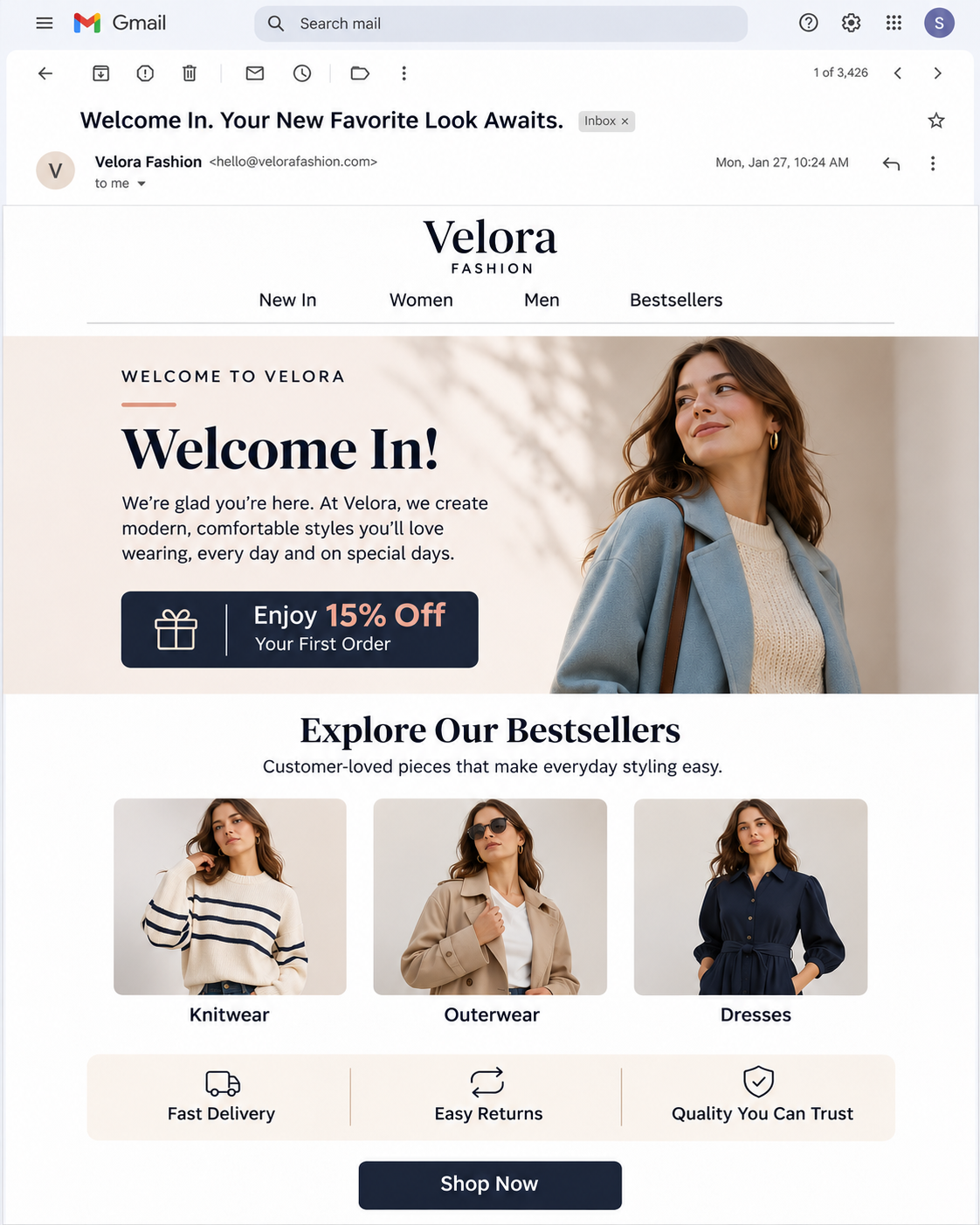
A welcome email reaches new subscribers at their peak interest so use it to guide them toward a first purchase. Share your brand story in a few warm lines then show bestselling pieces with clear photos.
You can offer a first-order discount but don't make it the only reason to sign up. Give new subscribers a chance to explore your bestsellers and learn what makes your clothing different.
Start with a three-email series introduce your brand, share popular products, and follow up with a reminder about the welcome offer.
Example subject line: "Welcome In. Your New Favorite Look Awaits."
2. New Collection Launch Emails
A new collection gives you a reason to reconnect with shoppers who already like your brand. Start with a preview showing a few standout pieces, then offer early access to loyal customers.
You can also send different collection emails based on customers past purchases. Someone who regularly buys dresses may be more interested in your latest dress collection than a general storewide announcement.
3. Style Guides and Outfit Inspiration Emails
Shoppers often know what they like but not how to wear it and a style email fills that gap. Send it to engaged subscribers or to shoppers who recently bought a single piece from your store.
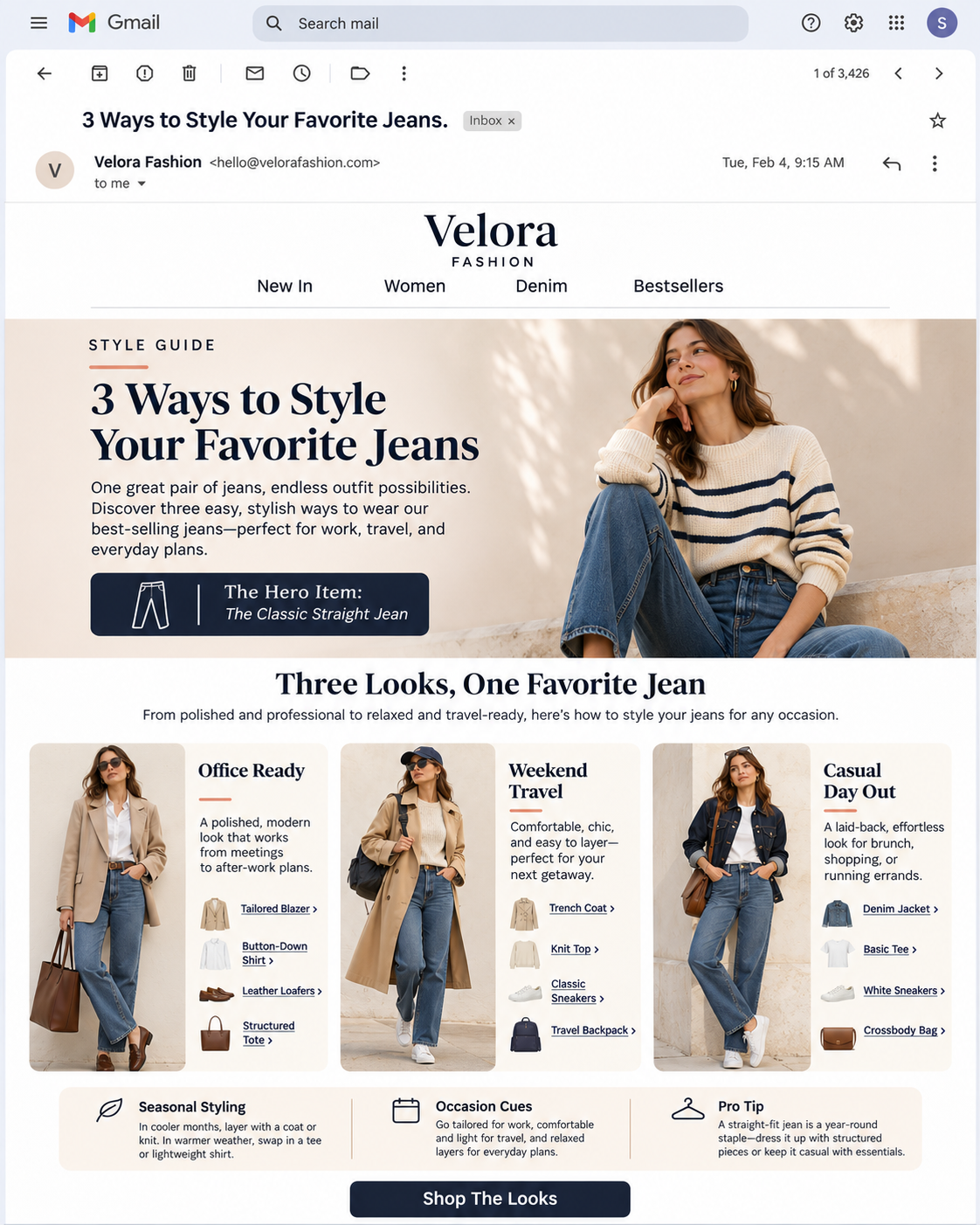
Show three complete looks built around one hero item, and link every product underneath each look. Seasonal tips and occasion ideas like office wear or weekend travel make the email feel useful.
Example subject line: "3 Ways to Style Your Favorite Jeans."
4. Back-in-Stock and Size Restock Alerts
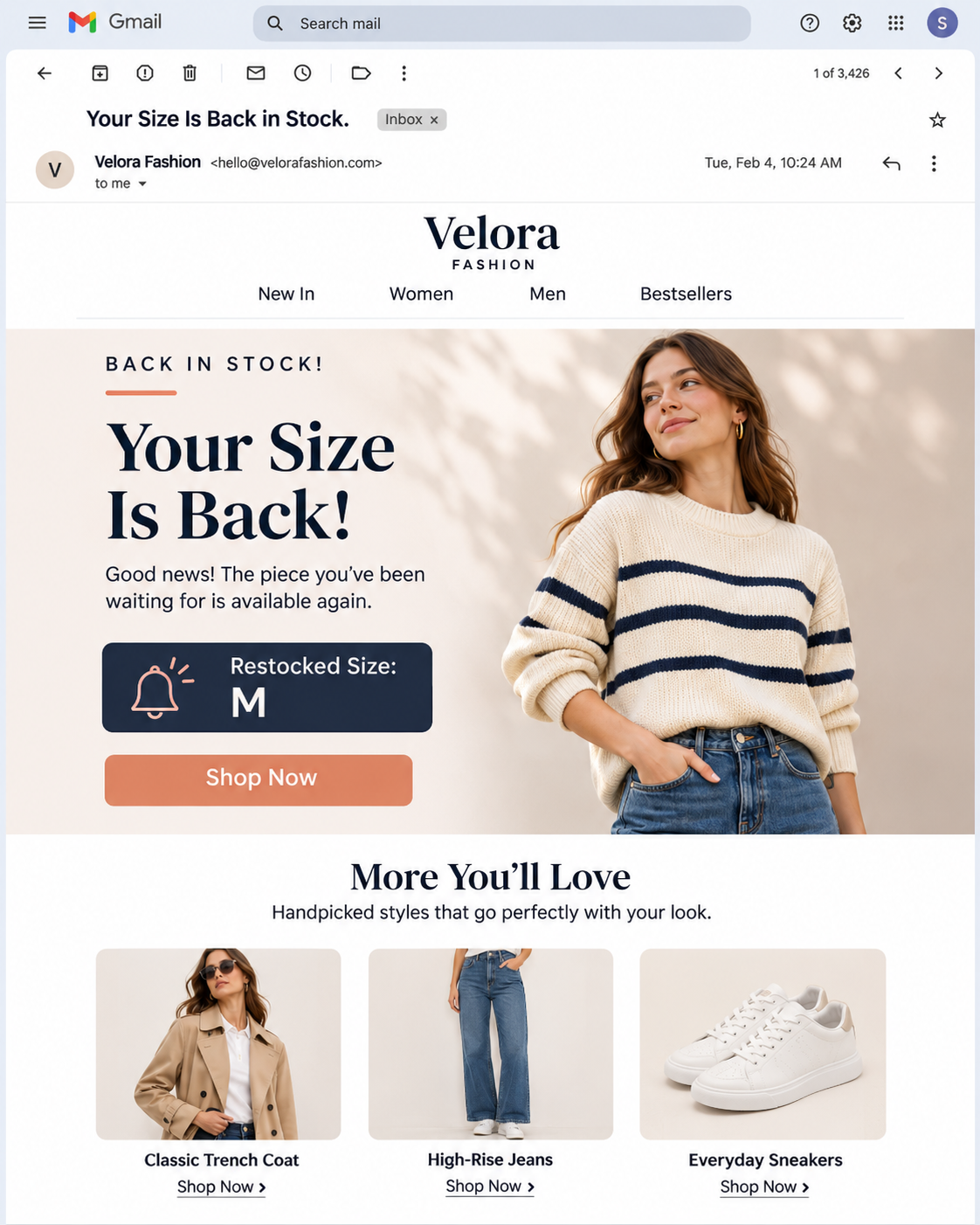
Few emails feel more helpful than telling someone their missing size has finally come back. Send it to people who joined a waitlist for that exact product, size, or color.
Show a clear photo, name the restocked size, and link directly to the product page. Stock can vanish within hours so send the alert fast and keep your stock count accurate.
Example subject line: "Your Size Is Back in Stock."
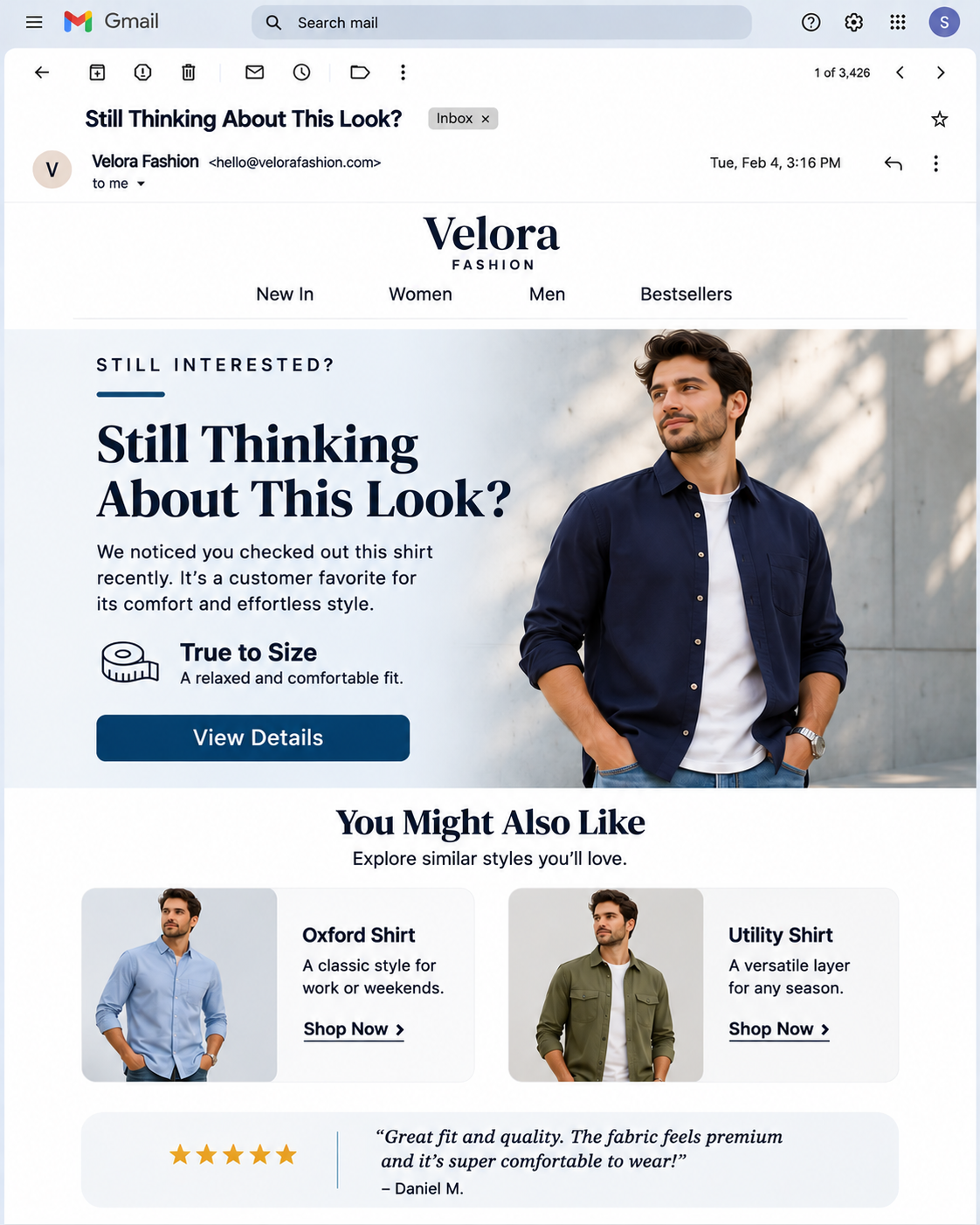
5. Browse Abandonment Emails
A shopper might view the same dress several times without adding it to their cart. A browse abandonment email can remind them about the product and help them decide whether to buy.
Show the item they viewed include a useful sizing detail and suggest one or two similar styles. Send these reminders only to eligible, identifiable subscribers, and avoid emailing someone after every product view.
A short review or a fit note can ease doubts, so skip heavy discounts at this early stage. Send one message a few hours after the visit to known subscribers, and stop if they buy.
Example subject line: "Still Thinking About This Look?"
6. Abandoned Cart Emails That Address Buying Concerns
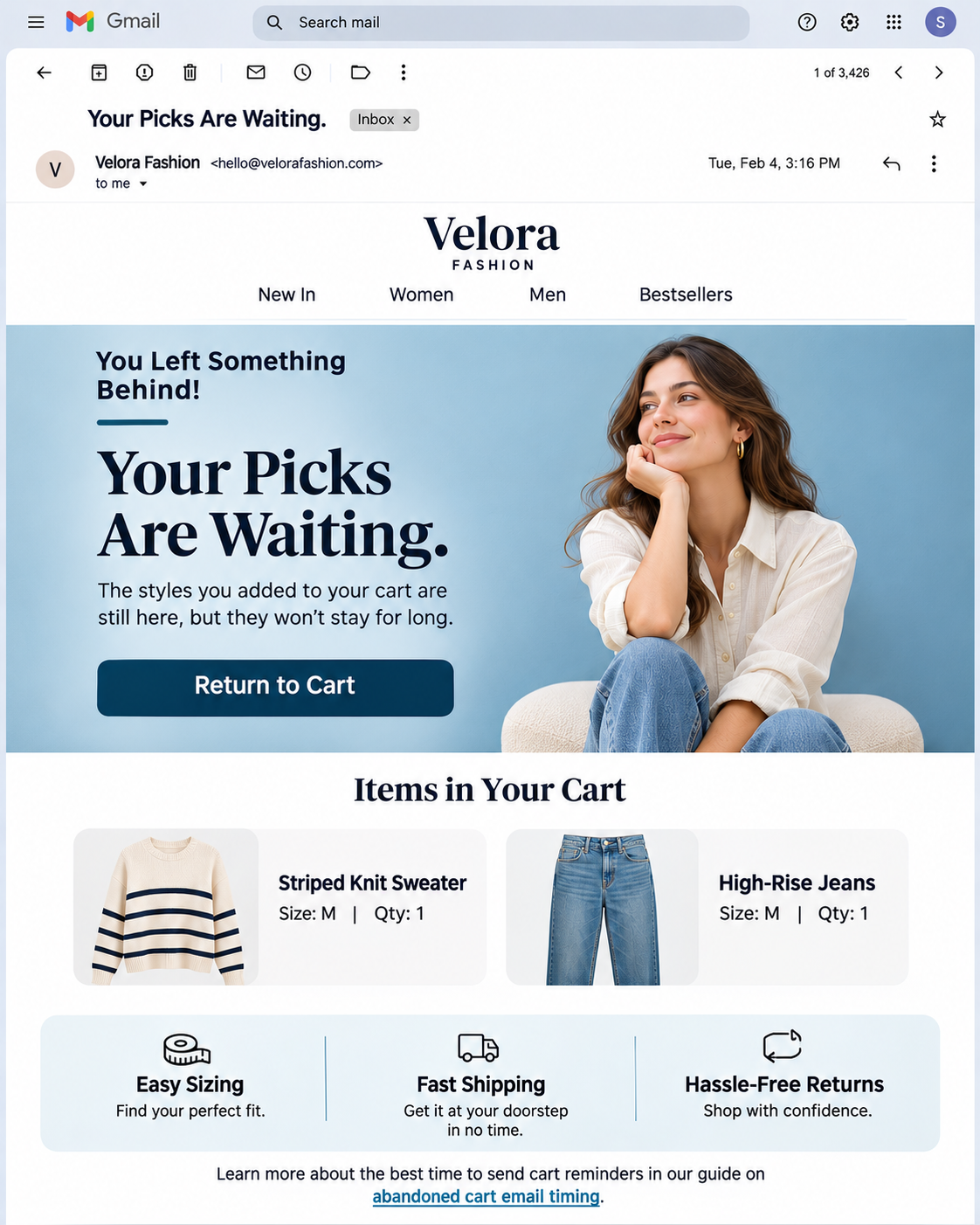
Shoppers usually leave a full cart over sizing doubts, shipping costs, unclear return rules, or quality worries. Build a short sequence of two or three emails, and let each one answer a single concern.
Start with a reminder showing the products left behind. Your second email can answer questions about sizing, shipping costs, and returns. If the customer still hasn't purchased, consider a small offer in the final email.
You can begin with a reminder after one hour, another after 24 hours, and a final email after 48–72 hours. These are starting points so adjust them based on your customers buying habits.
For more details, read our guide on Abandoned cart email timing.
Example subject line: "Your Picks Are Waiting."
7. Seasonal Sales and Holiday Campaigns
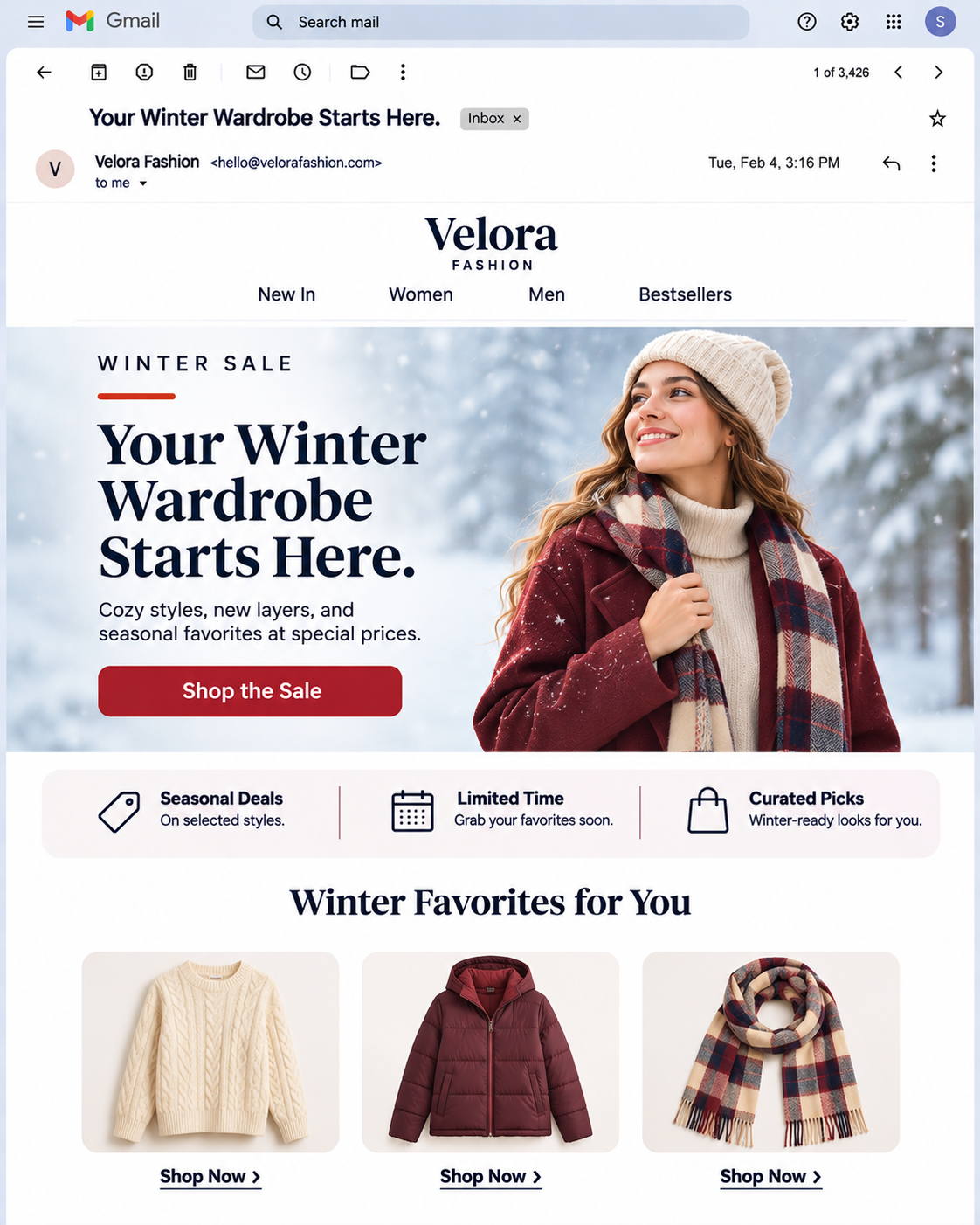
Big sale moments bring heavy competition, so choose your products and audiences before you send. Black Friday, Cyber Monday, end-of-season clearances, and back-to-school shopping are the key moments to plan for.
Do not discount everything because deep cuts on bestsellers hurt profit and train shoppers to wait. Pick slower items and match each offer to a segment, then say clearly when the offer ends.
Example subject line: "Your Winter Wardrobe Starts Here."
8. VIP and Early-Access Emails
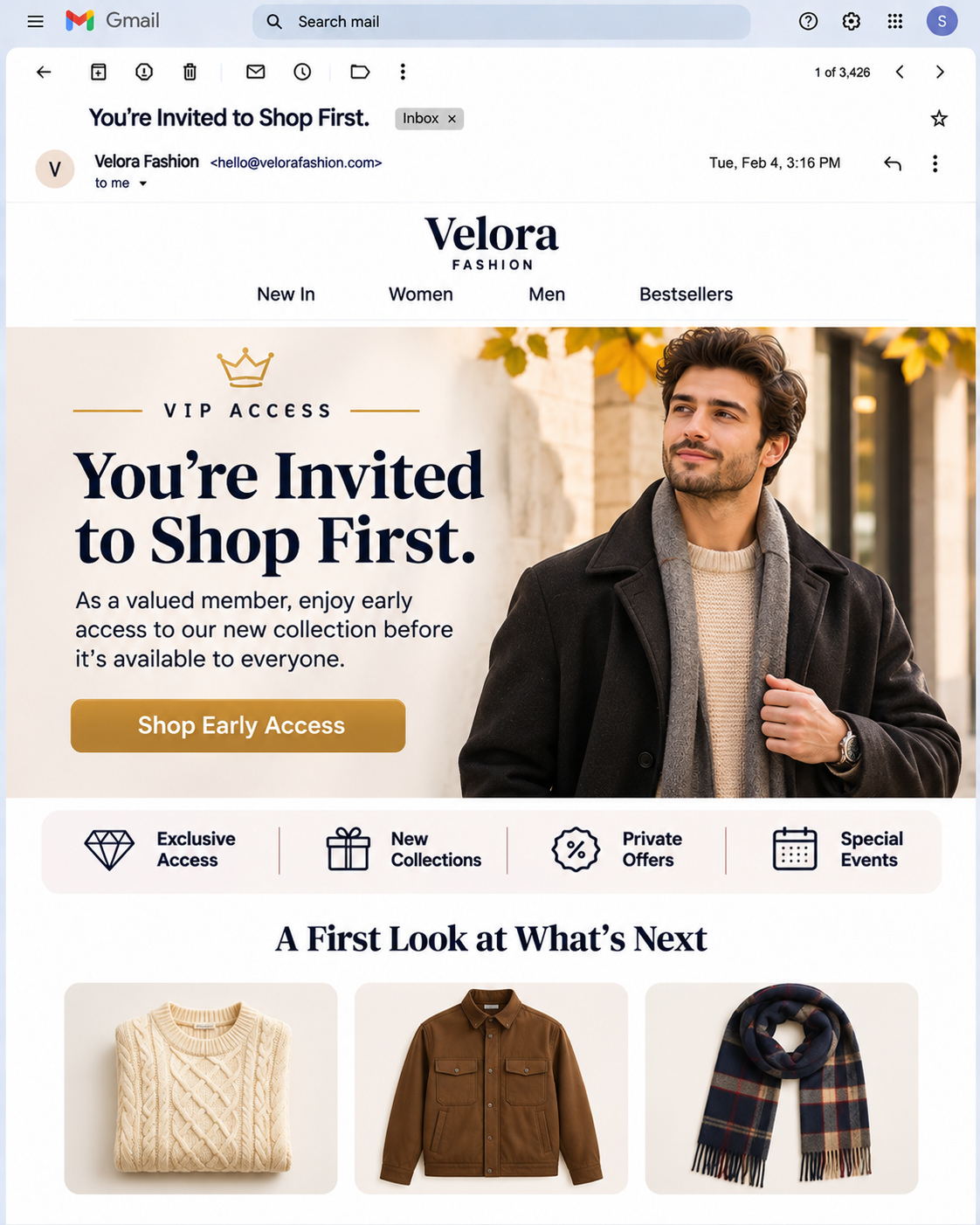
Your best customers deserve to feel noticed, and early access is a simple way to show it. Reward people who buy often spend more or join your loyalty program using clear rules you can track.
Offer a first look at new collections, private sale hours, or invitations to small shopping events. Keep the tone personal and thank them by name so it never feels like a mass blast.
Example subject line: "You're Invited to Shop First."
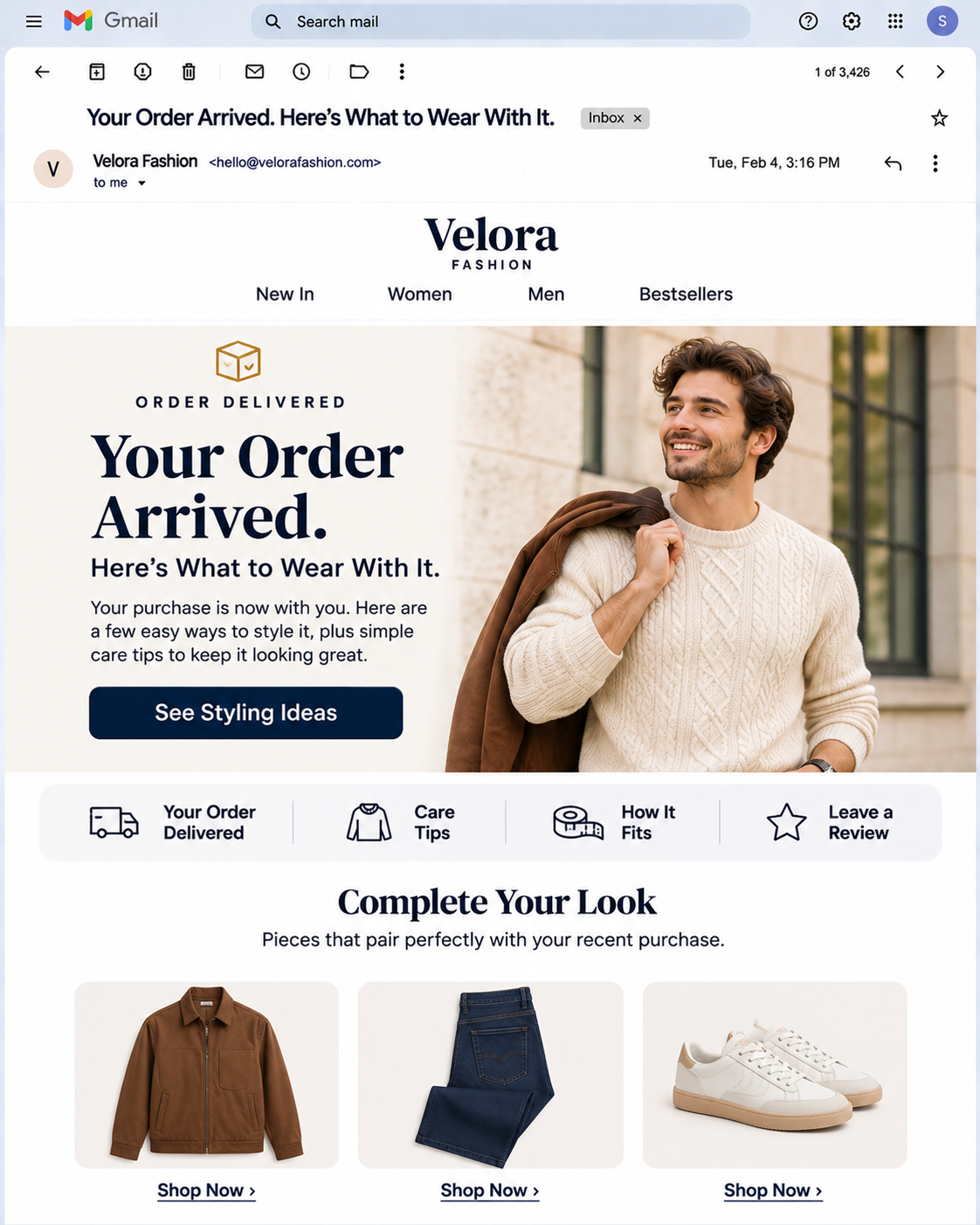
9. Post-Purchase Emails That Encourage Another Order
The sale is not the end of the stor, because the next few weeks decide whether someone returns. Send an order confirmation and shipping update, then follow up once the package arrives with simple care tips.
Ask how the size fit, since that feedback improves future picks and can help reduce returns. A few days later invite a review and suggest pieces that pair well with their order.
Example subject line: "Your Order Arrived. Here's What to Wear With It."
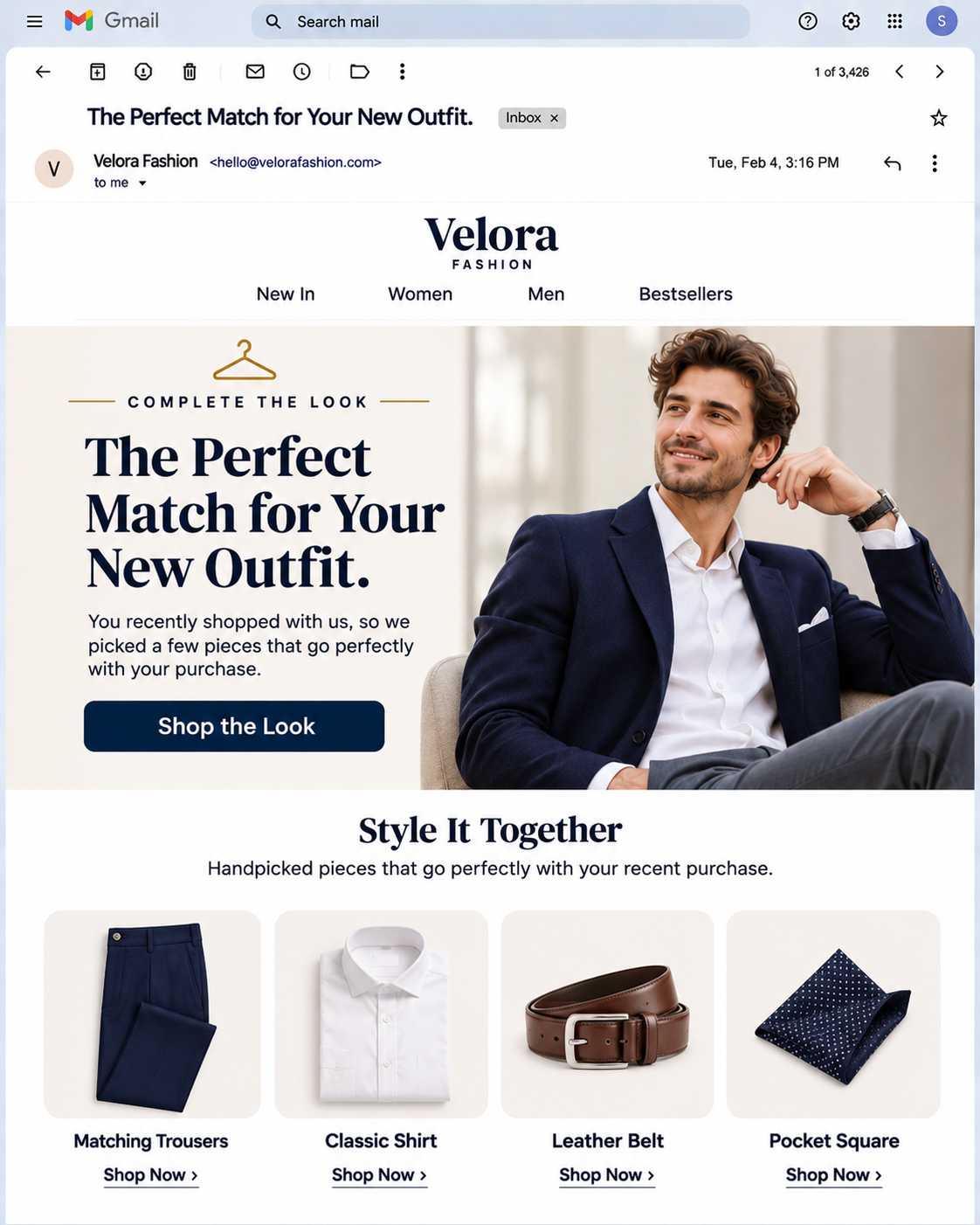
10. Cross-Sell and Complete-the-Look Emails
Customers who have already bought from your store may be interested in products that go with their purchase.
For example, someone who buys a blazer might appreciate suggestions for matching trousers shirts or accessories. Use their previous orders to recommend items that work together rather than showing them unrelated products.
Check color, season, and fit first, so every recommendation makes real sense to the buyer. Send it one to two weeks after delivery, and keep the choices to a few strong picks.
Example subject line: "The Perfect Match for Your New Outfit."
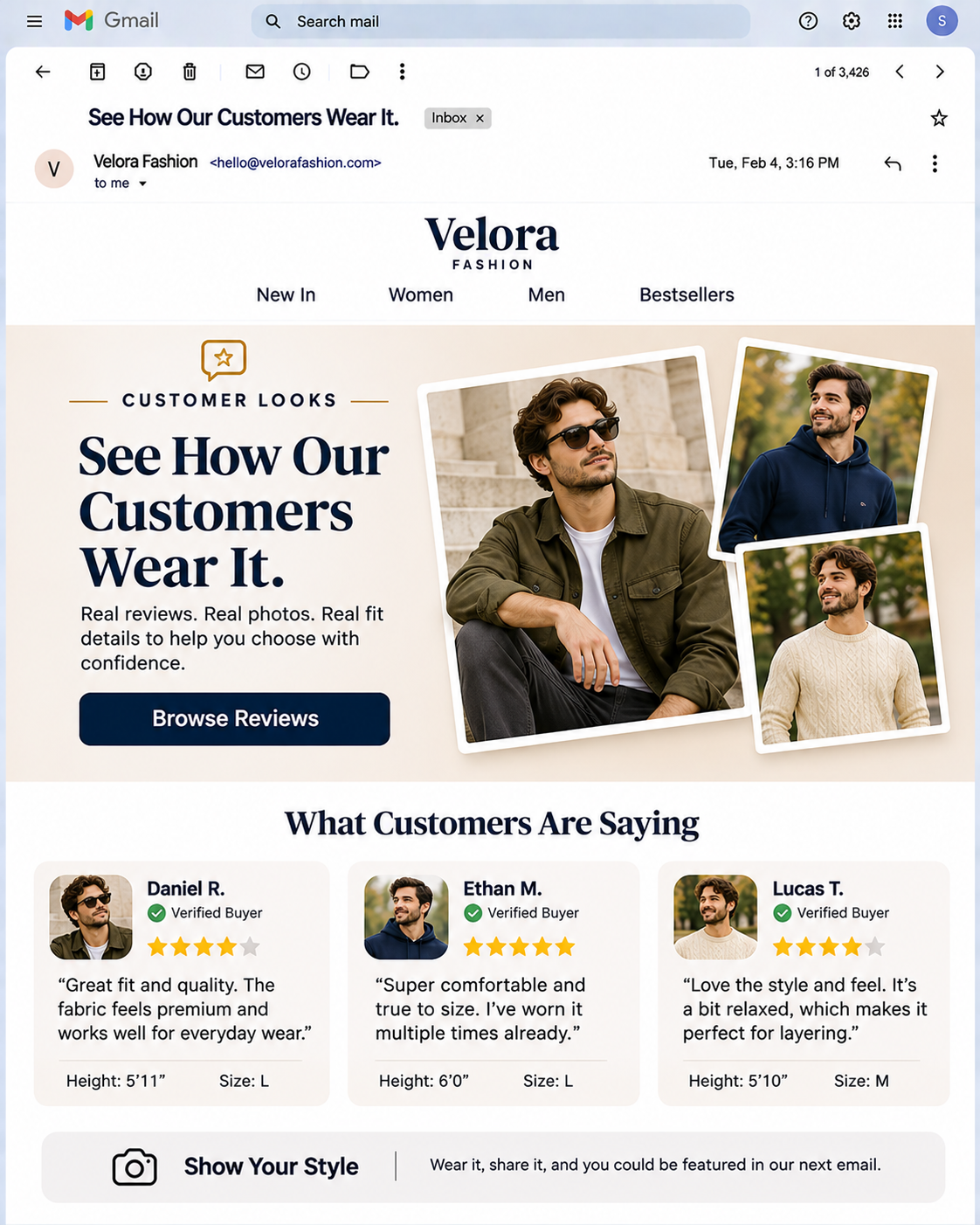
11. Customer Reviews and User-Generated Content Emails
Real people wearing your clothes can answer fit questions that studio photos cannot always settle. Feature genuine reviews and customer photos ideally with helpful details like the height and size worn.
Always ask permission before using anyone's photo, and give them clear credit in the email itself. Choose honest feedback including balanced comments because shoppers trust reviews that do not sound perfect.
Example subject line: "See How Our Customers Wear It."
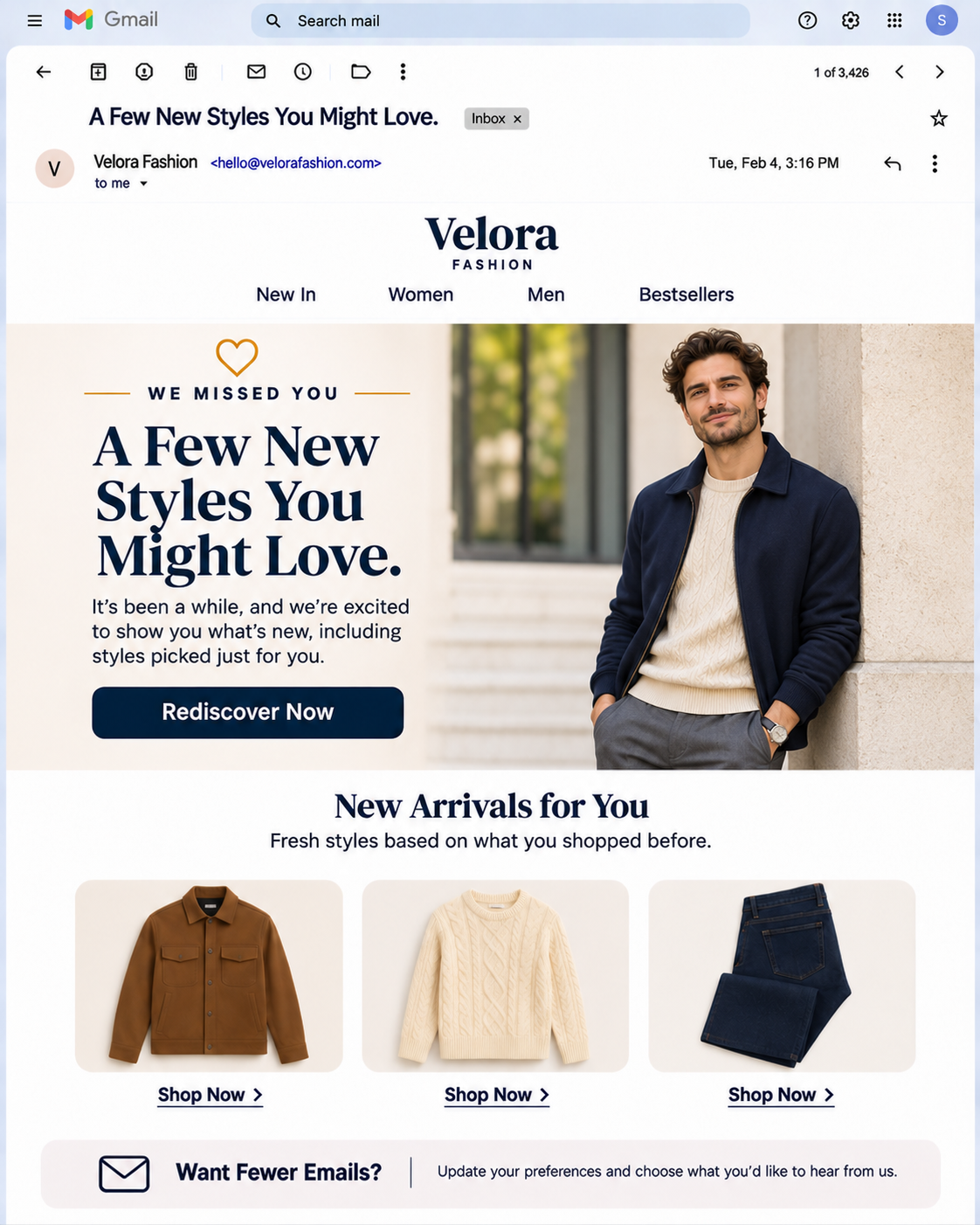
12. Win-Back Emails for Inactive Customers
Some customers drift away quietly, and a thoughtful message can remind them why they liked you. Define inactive customers by your own buying cycle then show what is new and suggest products based on past orders.
Keep incentives selective and offer a preference link so people can choose fewer emails instead of leaving. Build this as an automated sequence using Ecommerce email marketing flows that start when a customer goes quiet.
Example subject line: "A Few New Styles You Might Love."
Fashion Email Marketing Strategies That Make Campaigns More Effective
An effective email campaign can fail if it's not delivered to the right people or it's delivered to the wrong people with the wrong products. Pay attention to how you segment the customers select the products create the email designs, and evaluate the results prior to sending your next campaign.
Segment Customers by Shopping Behavior and Product Interests
Not every customer shops for the same clothes. Someone interested in formal wear may ignore emails about gym outfits even if they like your brand. Use browsing activity past purchases and preferences for products to segment customers further. This is useful when you're trying to suggest clothes they will want to wear.
- Purchase History: Separate first-time buyers from repeat customers because each group needs different messages, timing, and offers.
- Category Interest: Send dress lovers new dresses men's footwear fans new shoes, and activewear shoppers your latest training pieces.
- Browsing Activity: Recent product views and clicks show current interest which is often a better guide than old purchases.
- Order Value: Group buyers by average spend so premium shoppers see premium pieces and budget shoppers see better value.
- Size Data: Use size details only when customers share them willingly and explain how this helps them shop faster.
Tools such as Klaviyo segmentation for ecommerce make these groups easy to build and update automatically.
Personalize Product Recommendations
Using a customer's first name can make an email feel friendly but the products you recommend matter more.
If someone regularly buys women's activewear show them relevant new arrivals instead of sending the same collection to everyone. You can also use past orders and browsing history to suggest products that match their interests.
If a customer just picked up running shoes send them socks and training shorts, not formal dresses.
Many email platforms let you show different products to different customers within the same campaign. Check these recommendations regularly to make sure they're relevant, available in stock, and linked to the correct product pages. Customers are less likely to click if your emails repeatedly suggest things they don't want.
Create Mobile-Friendly Fashion Email Designs
Most people check email on a phone so your design must work well on a small screen.
- Photo Quality: Use sharp product photos that show fabric and fit but compress them so the email loads quickly.
- Readable Text: Choose a clear font size and short lines so people can read without pinching or zooming.
- Clear Buttons: Make each call to action large enough to tap with a thumb and easy to spot.
- Alt Text: Add descriptive alt text to every image so the message still makes sense when pictures are blocked.
Good fashion email templates keep this structure simple so your team can reuse them without breaking the layout.
Keep Your Email Campaigns Consistent With Your Brand
Your emails should be recognizable before anyone reads the sender name. That comes from using the same photos, colors, fonts, and tone that shoppers already see on your site. A luxury label might go with quiet layouts plenty of white space, and a few calm well-chosen words. A streetwear brand can lean on bold images, playful language, and short, punchy headlines that sound like its community.
Either style works as long as it stays true to the brand and doesn’t change from one email to the next. That sameness also builds trust which matters a lot in apparel where shoppers can’t touch the product before they buy.
Use Email Automation to Reach Customers at the Right Time
You don't need to send every email manually. Automation lets you follow up when someone subscribes, views a product, leaves a cart, or completes an order. For fashion stores welcome emails, abandoned cart reminders, restock alerts, and post-purchase follow-ups are good places to start.
- Accurate Triggers: Test every trigger so emails start only when the shopper action truly happens on your store.
- Smart Exclusions: Exclude recent buyers unsubscribed contacts and people already inside another sequence to avoid awkward or repeated messages.
- Exit Rules: Remove shoppers from a sequence the moment they buy so nobody gets a cart reminder after checkout.
- Overlap Control: Set priority rules so one person never receives three automated emails on the same day.
Plan Campaigns Around Seasons and Inventory
Build your calendar around what you actually have in stock. Before each quarter starts put launches restock dates, and seasonal demand on one shared calendar. Keep talking to your inventory team so marketing knows what’s plentiful and what’s almost gone.
Never send an urgent offer for something that has sold out. It annoys customers and wastes your best audience. If you can connect your store data so sold-out items drop out of product blocks on their own.
Test Campaigns Without Sacrificing Profit
You may think a bigger discount will bring more sales but that isn't always the case. Testing different versions of an email helps you see what customers actually respond to.
Start with one change such as the subject line, product image, or offer. Compare the results using clicks, orders, and revenue rather than relying only on open rates.
If you're testing discounts check your profit too. An email that brings more orders isn't necessarily better if each sale earns you less money.
Look at real orders and profit after discounts instead. A bigger offer can get more clicks and still lose money. Give each test enough time to gather a fair sample before you make any lasting change.
How to Build a 30-Day Fashion Email Marketing Calendar
A simple monthly plan keeps your team organized, and you can adapt it to your own collections. The table below shows one practical example of how campaigns can sit across four weeks.
Week | Campaign | Target audience | Goal |
Week 1 | New collection launch | Interested subscribers | Generate product discovery and sales |
Week 2 | Outfit styling guide | Engaged subscribers | Encourage product consideration |
Week 3 | Customer reviews and styling inspiration | Relevant product shoppers | Build confidence |
Week 4 | VIP early-access campaign | Loyal customers | Reward repeat shoppers |
Week 4 | Targeted seasonal promotion | Relevant engaged segments | Move appropriate seasonal inventory |
Welcome emails, abandoned cart reminders, and back-in-stock alerts should run automatically based on customer actions. Unlike scheduled campaigns, these emails don't need a fixed date. They can run throughout the month while you focus on collection launches, styling ideas, and seasonal promotions.
Here's how to organize your scheduled campaigns over four weeks.
- Week One: Pair a collection launch with a welcome series so new subscribers meet your newest products immediately.
- Week Two: Shift toward helping people choose using a styling guide and restock alerts for people with waiting interest.
- Week Three: Build confidence with reviews and customer photos while recent buyers receive complete-the-look suggestions that raise order value.
- Week Four: Reward loyal shoppers with early access then close the month with a targeted promotion for relevant segments.
How to Measure Fashion Email Marketing Success
Getting people to open your emails is useful, but it doesn't tell you whether your campaigns are making money. A clothing store might get hundreds of clicks on a new collection email without generating many orders. That's why you need to track purchase revenue and repeat customers alongside engagement.
Metric | What it tells a fashion brand |
Click rate | Whether recipients engage with the content |
Placed order rate | How many delivered emails lead to purchases |
Revenue per recipient | Revenue generated relative to delivered emails |
Average order value | Whether buyers are purchasing more per order |
Repeat purchase rate | Whether existing customers are returning |
Revenue by campaign and flow | Which types of emails are contributing sales |
Unsubscribe and complaint rates | Whether emails are too frequent or irrelevant |
Profit after discounts | Whether promotional campaigns are financially worthwhile |
Keep your attribution settings consistent so you can compare performance across campaigns. If you have enough customers consider testing with a small group that doesn't receive a campaign to see whether the email generates additional sales.
Revenue per recipient is another useful metric. You can calculate it by dividing the revenue attributed to an email by the number of successfully delivered emails. For example, $500 in revenue from 1,000 delivered emails gives you $0.50 per recipient.
You can learn more from Klaviyo's guide to calculating revenue per recipient.
Check these numbers monthly by campaign and flow since averages can hide a weak email. Watch profit after discounts too and write down what you learn after each campaign so your team stops repeating guesses.
Conclusion
Fashion email marketing works best when your emails match what customers want how they shop and what encourages them to buy. Sending more emails isn't always the answer. What matters is making every message useful and relevant to the people receiving it.
You don't need to run all 12 campaigns at once. Start with welcome emails, abandoned cart reminders, and new collection announcements. As you learn more about your customers introduce personalized recommendations, styling tips, and follow-up emails to encourage repeat purchases.
Focus on campaigns that generate sales, products that attract interest, and areas where customers lose interest. If you need help improving your campaigns, IR Solutions email marketing services can help you build a stronger strategy reach interested shoppers and encourage long-term customer loyalty.
Frequently Asked Questions
What is fashion email marketing?
It is the practice of sending clothing and accessory shoppers timely emails that encourage purchases and repeat orders. It combines scheduled campaigns, such as launches, with automated emails triggered by shopper actions like cart abandonment. Done well, it supports every stage of the customer journey, from first visit to loyal repeat buyer.
What are the best email marketing campaigns for fashion brands?
Welcome emails, abandoned cart emails, back-in-stock emails, post-purchase emails, and new collection launches that's a start! These campaigns are typically aligned with a clear customer intent and therefore are able to deliver quicker results than regular newsletters.
How often should a fashion brand send marketing emails?
There is no correct or complete number, because the optimum frequency will depend on your list, products, and customer response. Most brands begin with one or two campaigns per week and scale according to the metrics of unsubscribe rate, complaints, and revenue per recipient. Always offer subscribers the option to select their preferences, because relevance has more value than the sheer volume of e-mail messages.
How can clothing brands increase sales through email marketing?
Stick to the relevancy categorize customers, customize products, and send automated flows for carts, browsing, and post-purchase. Then test offers carefully and measure profit after discounts, so growth does not come at the cost of margin.
What should a fashion welcome email include?
Your welcome email should have your brand story, bestselling products, shipping and return information, and a simple next step. A small incentive and a short preference question are available to be used to direct future emails.
How can fashion brands improve abandoned cart emails?
Address common concerns directly size, shipping, return policy, and quality, in addition to a discount. Send 2 – 3 emails, display the specific products, and end the sequence when the customer purchases.
What are some creative fashion email marketing ideas?
Try outfit guides, customer photo features, restock alerts by size, VIP previews, and care tips sent after delivery. Each idea gives shoppers something useful, which keeps your emails interesting beyond sales and product announcements.
Which email marketing platform is best for a fashion brand?
There is no single platform that works for everybody, so you need to do the comparisons depending on the store system, the size of the list, and your budget. Look for strong ecommerce integration, flexible segmentation, reliable automation, product recommendation blocks, and clear revenue reporting. Try a free trial first, and ensure that support and deliverability are up to scratch for your team.
How do you measure the ROI of fashion email marketing?
Compare the revenue attributed to email with your costs, including software, creative work, discounts, and team time. Track revenue per recipient, placed order rate, and repeat purchase rate, and use consistent attribution settings every month. Remember that email also supports repeat buying, so look at long-term customer value as well as single campaigns.