


Key Takeaways
- AI shopping agents can now research, compare, and sometimes buy products for shoppers.
- Some product discovery happens off your site, so you may lose browsing signals.
- Your first direct contact with an agent-referred buyer may come after the order.
- Post-purchase emails, consent, and first-party data matter more when agents bring in new customers.
- Track repeat orders and lifetime value by source, not just first-order revenue.
Imagine someone wants to buy a new pair of running shoes. Instead of checking different online stores, they ask an AI assistant to find the best option within their budget. The assistant compares products, checks reviews, and suggests what to buy. In some cases, it can even help complete the purchase.
This is where agentic commerce starts to affect email marketing.
Online stores usually learn about shoppers through website visits, product views, and abandoned carts. These actions help businesses send emails based on what customers are interested in. But what happens when an AI assistant does most of the research outside your website?
You may get a new customer without knowing much about what they looked at before buying. That doesn't mean email marketing becomes less useful. It means businesses may need to pay more attention to what happens after the first purchase.
In this article, we'll explain how agentic commerce could affect email marketing and what ecommerce brands can do to keep customers coming back.
What Is Agentic Commerce?
Agentic commerce is ecommerce where an AI agent handles parts of the buying process for a shopper. Stripe and IBM describe agents that research products, compare retailers, check prices and reviews, and may complete the transaction.
The shopper no longer has to click through every single step of the purchase by hand. Still, not every agentic purchase is fully autonomous, since many shoppers approve the final order themselves.
How Is Agentic Commerce Different From Traditional Ecommerce?
The easiest way to see the difference is to compare each step side by side.
Traditional Ecommerce | Agentic Commerce |
Shopper searches | Agent interprets shopper intent |
Shopper compares products | Agent compares options |
Shopper visits product pages | Agent may query product data directly |
Shopper builds cart | Agent may assemble the purchase |
Shopper checks out | Agent may facilitate or complete checkout |
Brand sees much of the browsing journey | Some discovery may happen outside brand-owned channels |
The biggest gap is visibility, because your brand may see far less of the browsing journey. Some discovery now happens outside your website, your ads, and every other channel your team owns.
Agentic Commerce vs Generative AI Shopping
Readers often mix these two ideas, so it helps to separate them clearly and simply.
- Generative Help: In generative AI shopping, the assistant helps a customer research products or compare a few options.
- Agentic Action: In agentic buying, the AI can also take real steps toward completing the transaction for the customer.
The real difference is action and autonomy, not simply answering product questions in a chat window.
How Agentic Commerce Changes the Ecommerce Customer Journey
To understand what agentic commerce means for email marketing, we first need to look at how people shop online.
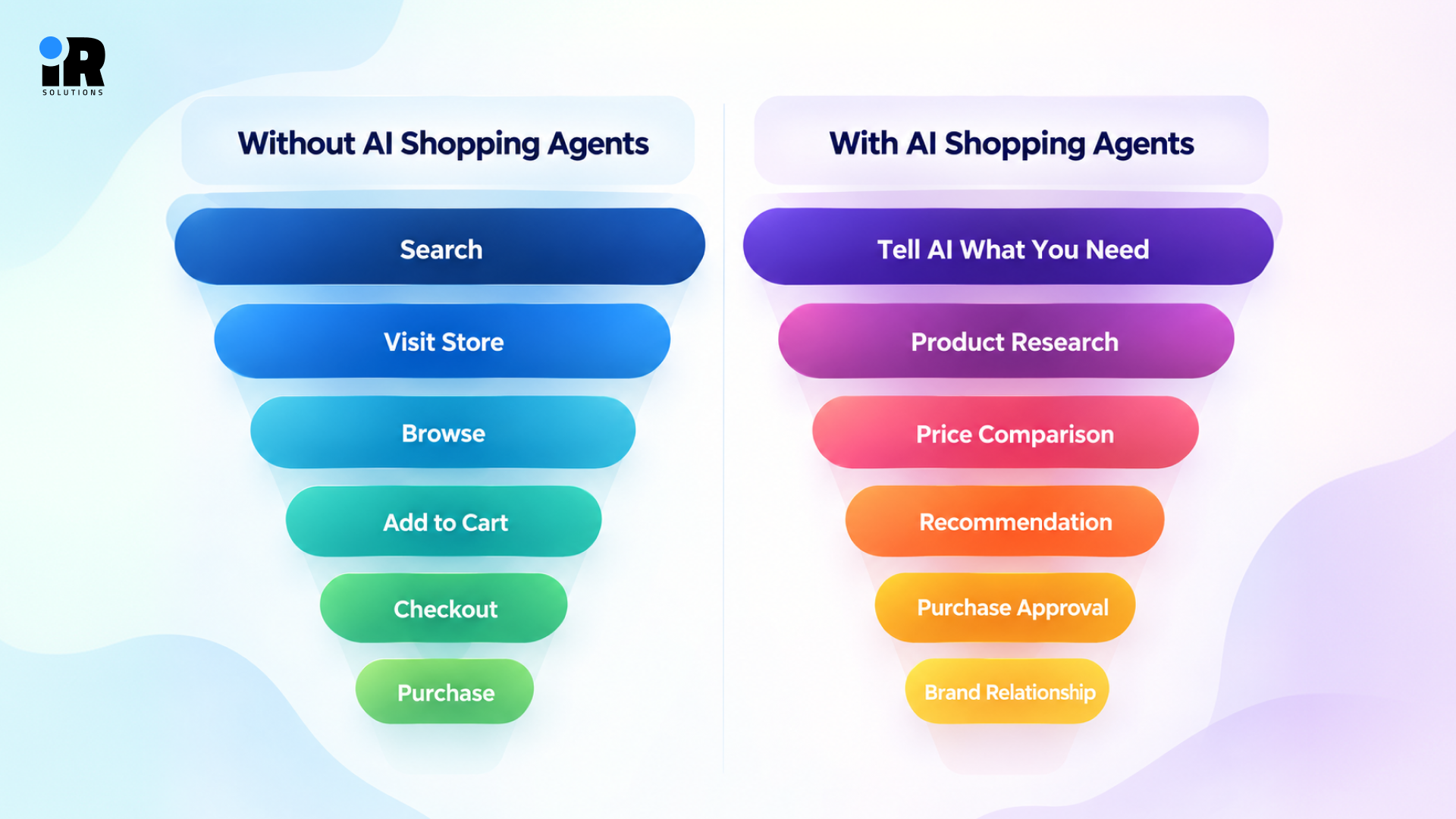
Here is what happens at each stage:
- Tell AI: The shopper states a need in plain words, such as a budget, a deadline, and a style.
- Agent Research: The agent scans catalogs, reviews, and store data without the shopper opening a single page.
- Agent Comparison: It weighs price, delivery, ratings, and product details against the rules the shopper already gave.
- Recommendation: The agent suggests one product or a short list, often with a clear reason attached.
- Approval: The shopper approves the order, or in some setups the agent completes the purchase directly.
- Brand Relationship: Your first real chance to connect with the buyer often arrives after the order, not before it.
For ecommerce businesses, the biggest difference is how much they know about customers before a sale.
When someone shops on your website, you may see which products they viewed, what they added to their cart, and where they left. But when an AI assistant handles the research, some of that information may never reach your store.
This makes it harder to understand what interested the customer before they bought something.
Does Agentic Commerce Make Email Marketing Less Important?
The short answer is no, but email may become valuable in different places than before. Email already supports almost every stage of the customer lifecycle, from the first visit to the final win-back. Here is a quick look at where email does most of its work for online stores today.
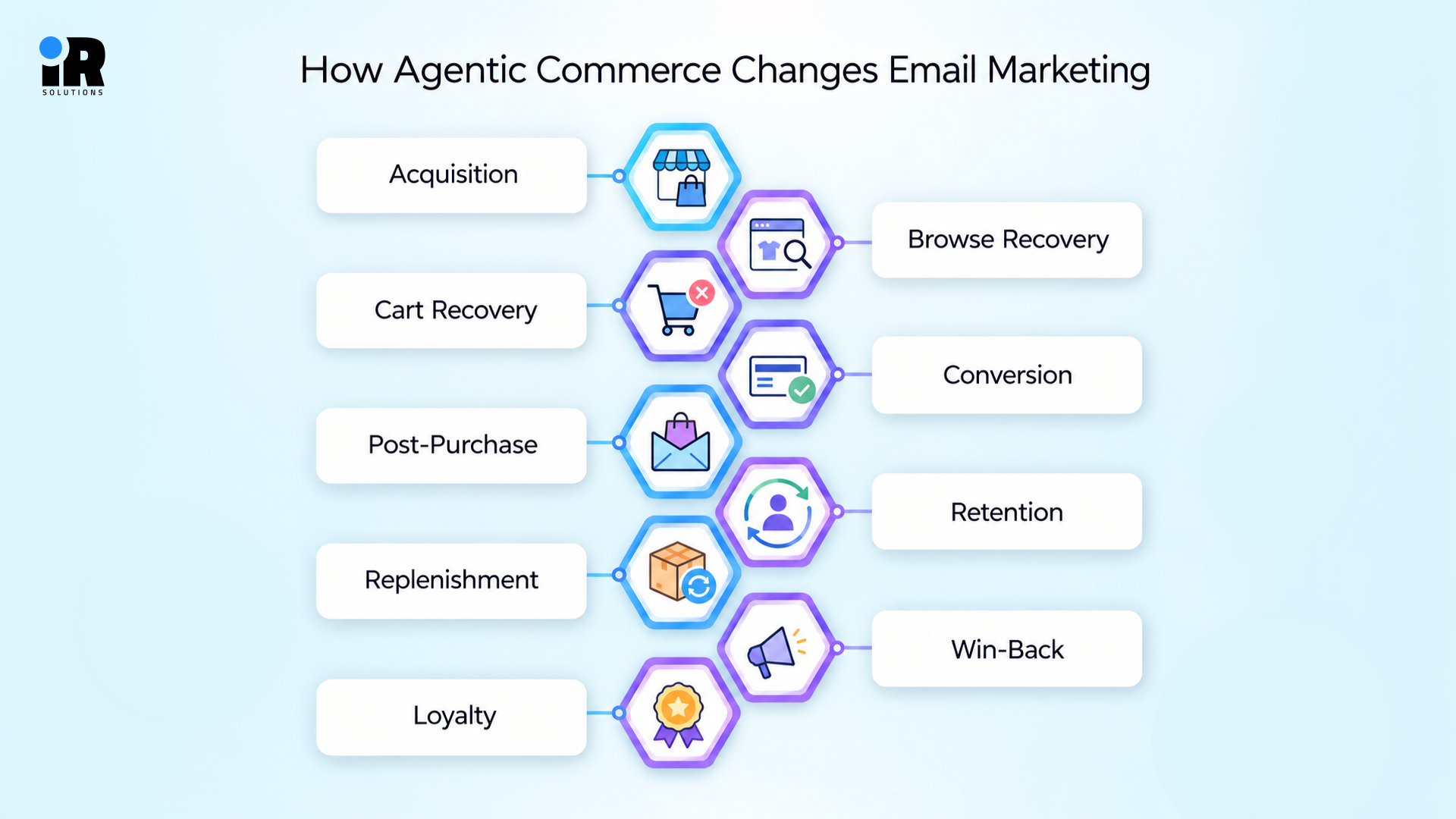
- Acquisition: Welcome messages turn new subscribers into first-time buyers with a clear introduction to your brand.
- Browse Recovery: Triggered emails bring back visitors who looked at products but left without adding anything.
- Cart Recovery: Reminders help shoppers finish the purchases they started but never completed, often with helpful product details attached.
- Conversion: Timely campaigns nudge interested subscribers to buy at the moment they feel most ready.
- Post-Purchase: Order follow-ups share product tips, support details, and reasons to come back again soon.
- Retention: Regular messages keep customers engaged and remind them why they chose your brand over every alternative.
- Replenishment: Reminders arrive just before a customer is likely to run out of a product.
- Win-Back: Special messages try to reconnect with buyers who have gone quiet for a long time.
- Loyalty: Reward and VIP emails make repeat customers feel noticed and valued by the brand.
Agentic commerce marketing may change some of the pre-purchase signals that feed these flows, especially around browsing behavior. The direct relationship after the purchase becomes especially important, and that is exactly where email can do its best work.
7 Ways Agentic Commerce Could Change Ecommerce Email Marketing
Each change below comes with a plain explanation and a clear action for your email team.
1. Some Product Discovery May Happen Before the Shopper Reaches Your Site
Many shoppers now let an AI agent research products before they ever reach your website. Your email tool may never see those visits, so some of the signals you rely on can go missing. That gap is the first big change email teams need to understand and plan around.
What Changes?
Your email platform normally captures product views, category browsing, on-site searches, and add-to-cart events from each visitor. AI shopping assistants can find product information through online catalogs, connected shopping platforms, and other sources without opening every product page. A shopper might ask an agent for a waterproof backpack, and your analytics never record one visit. The order still arrives, but your data shows nothing about how that shopper found you.
What It Means for Email Marketers
Do not assume every high-intent shopper will create the behavior events your email program expects. These flows do not disappear, but you should learn which journeys still produce these events. Four areas of your program may feel the change first, as the list below shows.
- Browse Abandonment: Fewer product views may mean fewer shoppers entering your browse recovery flow each week.
- Segmentation: Product-view segments may miss shoppers who showed interest through an agent rather than your website.
- Behavior Scoring: Onsite scoring may overlook shoppers who researched your products outside your website.
- Retargeting: Website-based audience lists may leave out interested buyers who never visited your store.
2. The First Direct Brand Relationship May Start Later
This may be the most important shift for anyone who owns lifecycle email and customer retention. A shopper may now find your brand through ChatGPT, Gemini, another AI shopping assistant, or a retailer's own agent. In AI commerce, the first real chat with a customer may begin only after the order is placed.
Post-Purchase Email Becomes More Important
A first-time customer sent by an agent may know very little about your brand or your range. Shopify notes that merchants remain responsible for the customer relationship and post-purchase experience after agentic orders. The list below shows what that new buyer may still be missing about your brand and your products.
- Brand Story: They may not know what your company stands for or why your products exist in the first place.
- Other Products: They may not realize you sell related items that pair well with their first purchase.
- Loyalty Perks: They may not know that rewards, VIP tiers, or member benefits are waiting for them.
- Product Care: They may not understand how to use, clean, or maintain what they just bought.
- Differentiation: They may not see what makes your brand different from the many similar sellers they could choose.
A good post-purchase email can turn that first order into a direct relationship and a repeat customer.
3. Email List Building May Shift Further Down the Funnel
Many ecommerce stores build their email lists by using popups on their website, signup forms, and discount offers. But if a person buys via an AI shopping assistant and never visits your website, they might never see those signup forms.
Once customers have made a purchase, businesses may need to give them more opportunities to subscribe. This could be loyalty program invitations, account sign up pages or a separate sign up option after checkout. Customers should always know what they are signing up for, and businesses must follow the rules that apply to them in email marketing.
Why Traditional List Capture Could Change
Most online stores collect emails through website popups, exit-intent forms, product-page forms, and browsing sessions. If fewer shoppers visit your site before buying, those signup moments may shrink for agent-driven customers. In agentic ecommerce, list growth may need to move further down the funnel, after the purchase happens.
Where Direct Permission Can Come From Instead
Several options remain open, and most of them already fit inside a normal ecommerce program. An agent-driven order does not automatically permit you, so follow the consent rules in your market. AI shopping email marketing works best when every subscriber has clearly chosen to hear from you.
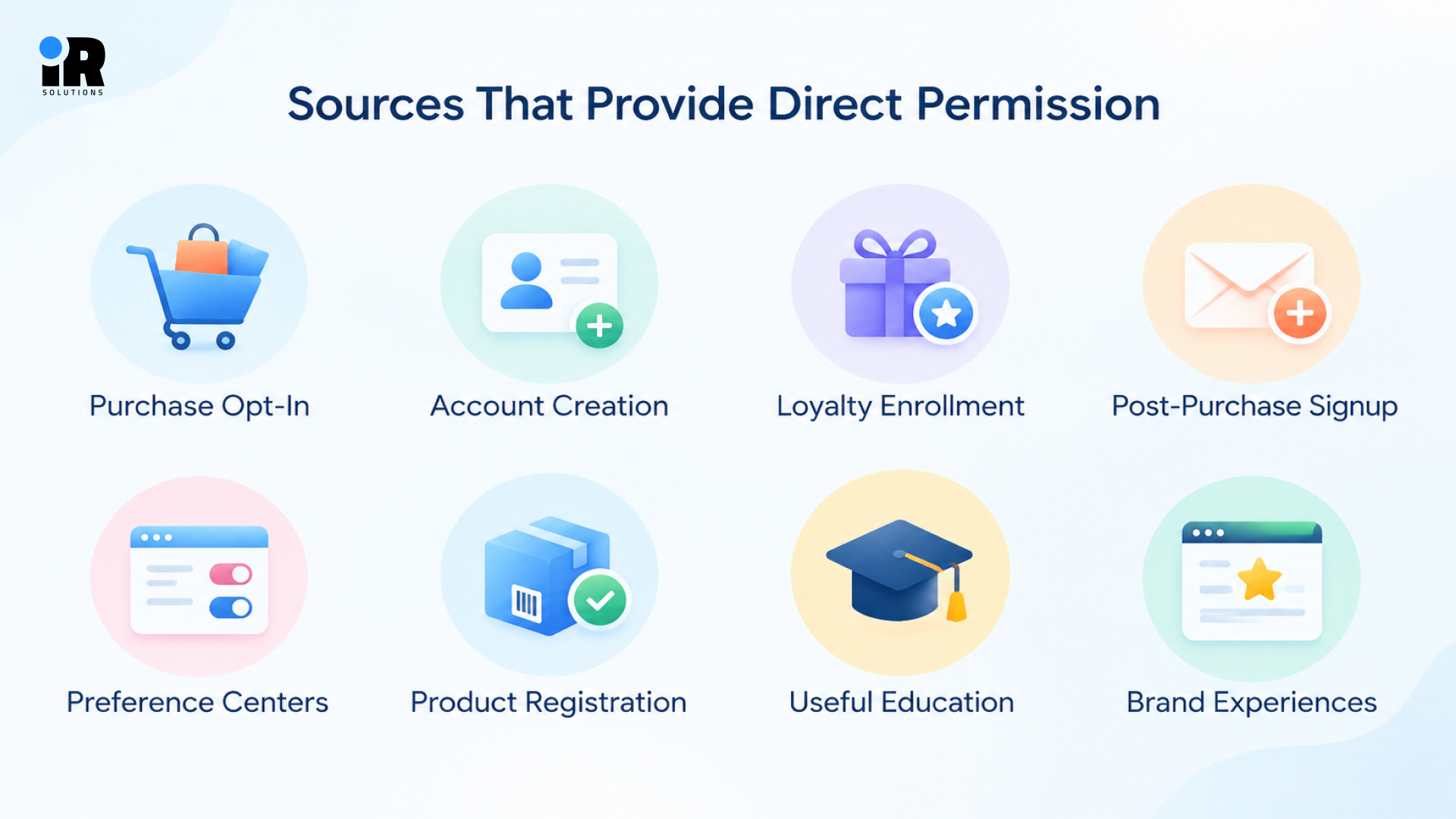
- Purchase Opt-In: Offer marketing signup as part of an eligible purchase journey, where the platform allows it.
- Account Creation: Invite customers to create an account so they can track orders and save preferences.
- Loyalty Enrollment: A rewards program gives shoppers a clear reason to share their email address with you.
- Post-Purchase Signup: Place a simple signup invitation inside order confirmations and delivery updates so new customers can join easily.
- Preference Centers: Let customers choose which topics and how often they want to hear from your brand.
- Product Registration: Warranty or product registration pages create a natural moment to ask for contact details.
- Useful Education: Helpful guides and setup tips give customers a reason to subscribe after their first order.
- Brand Experiences: Direct experiences, such as quizzes or member pages, can build trust before any email arrives.
4. First-Party Customer Data Becomes More Valuable
Customers might not see what they are looking for or comparing when they shop with AI assistants. However, purchase history, order details, and customer preferences can still assist you in sending targeted emails, recommending helpful merchandise, and encouraging brand-new purchases.
Why Your Own Customer Data Matters More
Third-party AI agents can recognize what shoppers wanted, what they considered, and what restrictions they placed. The merchant may not be able to get all of that context from the outside platform/agent. That's why all email teams should take a closer look at the data of their agentic commerce customers. Brands must use the customer information they have earned just look at the list below to see how.
- Purchase History: Past orders show what each customer bought, when they bought it, and how much they spent.
- Email Engagement: Opens, clicks, and replies show which topics and offers each person really cares about right now.
- Product Ownership: Knowing what someone owns helps you suggest accessories, refills, and upgrades that actually fit.
- Repeat Purchases: Repeat orders reveal your most loyal customers and the timing of their natural buying cycle.
- Stated Preferences: Declared interests and preferences tell you directly what a customer wants, without any guessing on your side.
- Loyalty Status: A customer's tier or points balance shows how deeply they already connect with your brand.
- Support History: Past service conversations reveal common problems and help you avoid sending the wrong message at the wrong time.
Build a Unified Customer Profile
Your email team should recognize who purchased, what they bought, where they came from, and what happens next. This matters more when the first discovery happens somewhere else, far outside your own channels. Strong agentic commerce first-party data practices help you recognize each customer, even when the introduction happened elsewhere.
5. Personalization Needs to Reflect Actual Customer Behavior
Customers are more likely to find emails useful when they match their interests and previous purchases. According to a 2026 Bloomreach report, 48.8% of respondents want brand emails and texts to reflect their previous purchases, while 30.6% want messages to reflect their preferences, behavior, and purchase history.
For ecommerce stores, this means personalization should go beyond adding a customer's first name. If someone regularly buys skincare products, for example, recommending a refill or a related item may be more useful than sending the same sale email to everyone.
Move Beyond First-Name Personalization
A first name in the subject line no longer feels very personal to most customers. Use the points below to make each email feel more relevant to the person reading it.
- Past Purchases: Reference what the customer already bought so every message feels connected to their real history.
- Lifecycle Stage: Speak differently to new buyers, repeat buyers, loyal fans, and customers who have drifted away.
- Repeat Behavior: Use reorder timing to send helpful reminders at the moment they are most welcome.
- Declared Preferences: Use the interests customers shared with you instead of guessing what they might like.
6. Email Attribution Gets More Complicated
If AI agents are assisting customers to discover and purchase products, it can be challenging to determine which channel is to be credited with that sale.
A customer could get recommended to your product by an AI algorithm, order it via an agent, and then come back after reading an email.
AI Recommendation → Agent Purchase → Email → Repeat Purchase
In this case, the AI agent helped bring in the customer, while email encouraged another purchase. Giving all the credit to one channel would not show the full picture.
Look Beyond Last-Click Revenue
Instead of relying only on last-click reports, track how customers behave after their first purchase.
Focus on a few useful metrics:
- Email Opt-In Rate: How many agent-referred customers subscribe to your emails?
- Repeat Purchases: How many return to buy again?
- Email Revenue: How much revenue comes from emails sent after their first order?
- Customer Lifetime Value: How much do these customers spend over time?
- Customer Retention: How many continue buying from your store?
Track these numbers separately for customers whose agent-led source can be identified.
Compare Different Customer Groups
Measure the performance of AI agents compared to paid ads, organic search, and social media. Review their email sign-ups, repeat customers, and their lifetime value. This will enable you to know how to make money with channels that create repeat customers.
Use your own store data rather than relying on industry averages. The idea is not to claim all of the credit for the one channel, but to understand the role of each channel in driving sales and keeping customers.
7. Retention and Loyalty Become a Bigger Competitive Advantage
An AI shopping agent can compare price, shipping, reviews, product specifications, and availability within a few seconds. If another product fits the shopper's rules better, it may quietly switch its recommendation to that one instead. Accenture describes this new world as one where brands have two audiences, the person and the agent.
Why Loyalty Matters More
When customers have no strong direct bond with your brand, an agent can make alternatives easier to consider. The link between AI agents and customer loyalty is simple: a strong bond gives shoppers reasons to stay. Agentic commerce retention work should reinforce the areas below in every single email that you send.
- Product Value: Remind customers why the product is worth what they paid and how to get the most from it.
- Loyalty Rewards: Offer points and perks that make repeat purchases feel more rewarding than starting over elsewhere.
- VIP Benefits: Give your best customers early access and special treatment that no competitor can easily copy.
- Differentiation: Show what makes your brand different so customers see more than a simple price tag.
Don't Rely on Discounts for Loyalty
Discounts can encourage customers to buy, but they shouldn't be the only reason people choose your store. If customers only shop with you when prices are low, they may switch to another business offering a better deal. Use your emails to remind customers about product quality, good service, loyalty benefits, and other reasons to shop with you again. Your email should help create reasons for customers to prefer your brand beyond the price alone.
What Happens to Existing Ecommerce Email Flows?
Your current automations still matter, though each one may need a small adjustment as buying habits change.
Flow | What Agentic Commerce Could Change |
Welcome | May happen later if signup occurs after an agent-assisted purchase |
Browse abandonment | Some agent research may not generate traditional web browsing signals |
Cart abandonment | Could change where checkout occurs |
Post-purchase | Becomes especially important for building a direct relationship |
Review request | Helps generate social proof agents may use |
Replenishment | Could compete with automated agent reordering |
Win-back | Still useful, but agents may also compare competitor options |
VIP/Loyalty | More important for direct customer preference |
If you want to improve your existing email automations, our guide to ecommerce email marketing flows explains how welcome, abandoned cart, post-purchase, and loyalty emails can help bring customers back.
Product Data Is Now Part of the Email Marketing Conversation
Product data sounds like a job for the SEO or operations team, but it reaches your inbox too. The same details decide which shoppers agents send your way and what they buy once they arrive. They also feed your post-purchase emails, product recommendation blocks, cross-sell ideas, and inventory-based messages sent to customers.
AI Agents Need Clear Product Information
Agents can only recommend what they understand, so your catalog must be clear and accurate.
- Basic Details: Clear product names and accurate categories help agents match your items to the right shopper requests.
- Specifications: Size, materials, and technical details let agents confirm that a product fits strict shopper rules.
- Price Accuracy: Current prices and inventory levels prevent agents from recommending items that customers cannot actually buy.
- Shipping Terms: Delivery times and costs often decide which store an agent ultimately chooses for the shopper.
- Return Policies: Clear return rules reduce doubt and make your offer easier for agents to compare fairly.
- Customer Reviews: Reviews add real-world proof that supports both agent evaluation and the trust of human shoppers reading them.
Email Teams Should Care About Product-Feed Quality Too
The same product information often feeds your email recommendation blocks, so its quality matters in two places. Poor product information can hurt both AI discovery and email personalization at the same time. That connection is the reason this topic belongs in every AI agent's email marketing discussion. Your role is to flag errors early and work closely with your ecommerce and merchandising teams.
Keeping product information accurate across your website, product feeds, and emails is important for a smooth shopping experience. If your store needs technical improvements, our ecommerce development services can help you improve your website and create a better experience for customers.
Will Traditional Email Persuasion Still Work on AI Agents?
AI shopping assistants and human customers may look for different things when choosing products. A customer might be drawn to an attractive product photo, a good offer, or an interesting email subject line. An AI shopping assistant may focus more on product details, pricing, availability, delivery options, and reviews.
For ecommerce businesses, this means product information should be clear and accurate, while marketing emails should still be written for real customers. The rise of ecommerce marketing AI agents will force teams to separate what persuades people from what informs software.
Email Still Needs to Persuade Humans
Do not start writing your marketing emails for robots, because people still read every message. Product feeds and structured data help agents choose between products, while email copy does a different job entirely. Email copy helps people understand, trust, enjoy, and remain loyal to your brand for the long term. So make the underlying product data accurate for agents, and keep every email useful and persuasive for people. For help with the human side, read our email copywriting guide before your next campaign.
How Agentic Commerce Could Change Email Segmentation
Email segmentation helps you send different messages to different groups of customers based on their interests, purchases, and shopping habits. As more people use AI assistants to find products, businesses may also want to understand which customers discovered their store through these tools. If your ecommerce platform provides that information, you can create a separate group for customers who purchased through an AI shopping channel.
Add Acquisition Source as a Useful Signal
Knowing how a customer found you gives your team valuable context for every later message. If your platform data allows it, consider building the following segments inside your email program for better targeting.
- Direct Store: These customers found your website on their own and bought from it without any outside help.
- Agent-Referred: These customers placed their first order after an AI assistant or shopping agent recommended your product.
- Marketplace Buyers: These customers bought through a third-party marketplace and may know your brand only by product name.
- Paid Social: Customers who arrived through paid ads on platforms such as Facebook, Instagram, or TikTok.
- Organic Search: Customers who found your store through unpaid search engine results.
Only build these segments if your platform makes this acquisition data available to your team.
Segment Agent-Referred First-Time Buyers Differently
Their path to your brand was shorter and quieter, so their needs may be different. Because their pre-purchase relationship with your brand may have been limited, they could need extra guidance.
- Brand Introduction: Share your story and values so the buyer knows who stands behind the product.
- Product Education: Give simple setup tips and usage ideas that help the product deliver real value.
- Trust Building: Show reviews, guarantees, and clear support options that reduce any doubt after the purchase.
- Loyalty Enrollment: Explain the rewards waiting for them so a second order feels natural and easy.
Continue Using Lifecycle and Purchase Behavior
Do not rebuild your whole segmentation model around AI because your existing data still works well. Keep using the data that helps guide your best campaigns, such as the examples below.
- Buyer Type: Separate new buyers from repeat buyers, because their needs and expectations are very different from each other.
- Product Category: Group customers by the product categories they buy so every recommendation stays relevant and believable.
- Order History: Use order value and purchase frequency to find your best customers and your biggest growth opportunities.
- Engagement: Opens and clicks show who is paying attention and who needs a different approach.
- VIP Status: Treat your top customers with special content that reflects their loyalty to your brand.
- Inactivity: Spot customers who have gone quiet and send win-back messages before they leave completely.
How Should Email Marketers Prepare for Agentic Commerce?
Your strategy doesn’t have to be perfect on day one, but it does need a starting point. These eight steps cover the basics, from checking your data and consent to improving your product information and tracking what customers do after their first order.
1. Identify Where AI-Referred Orders Appear in Your Data
Start by checking whether your ecommerce platform shows which channels bring customers to your store. Some platforms can identify orders that come through supported AI shopping channels. If this information is available, see whether you can also use it in your email marketing reports. This will help you compare AI-referred customers with buyers coming from search engines, paid ads, and other sources.
2. Review Post-Purchase Flows
New customers deserve a good experience, even if they never visited your site or read a product page. Make sure every buyer gets a helpful message after purchase, with a short intro to your brand and clear next steps.
3. Check Marketing Consent
Permission is the base of any email program, and it needs extra care with agent-placed orders. A purchase made through an agent doesn’t automatically mean the customer agreed to marketing emails. Check how consent is collected and stored, and fix any gaps before you send.
4. Improve Product Data
Clean data helps your emails and your discovery results at the same time. Work with your ecommerce and merchandising teams to keep attributes, stock counts, prices, and descriptions accurate and consistent across your site, feed, and emails.
5. Strengthen Product Reviews
Reviews help in several ways, so they deserve steady attention every month. They give real shoppers the confidence to buy, they show new visitors that others trust you, and they may help AI systems decide whether to recommend your product.
6. Improve First-Party Customer Profiles
Better profiles help you recognize customers and write to them in a way that feels relevant. Bring together purchase history, preferences, engagement, and loyalty data, as long as your privacy rules allow it.
7. Personalize Lifecycle Communication
Personal messages matter most when a customer is deciding whether to stay or drift away. Start with the first purchase, post-purchase follow-ups, cross-sell, replenishment, loyalty, and win-back emails.
8. Track Repeat Behavior by Acquisition Source
The true value of a new customer shows up months after the first order. Don’t judge this shift by first-order revenue alone. Look at repeat orders, email revenue, loyalty activity, and long-term customer value for each source.
What Email Marketing Fundamentals Do Not Change?
This shift is real, but the basic rules of good email still apply. Agents may change how people find and buy from you, yet customers still expect messages that are useful, timely, and sent with their permission. The fundamentals below matter as much as ever.
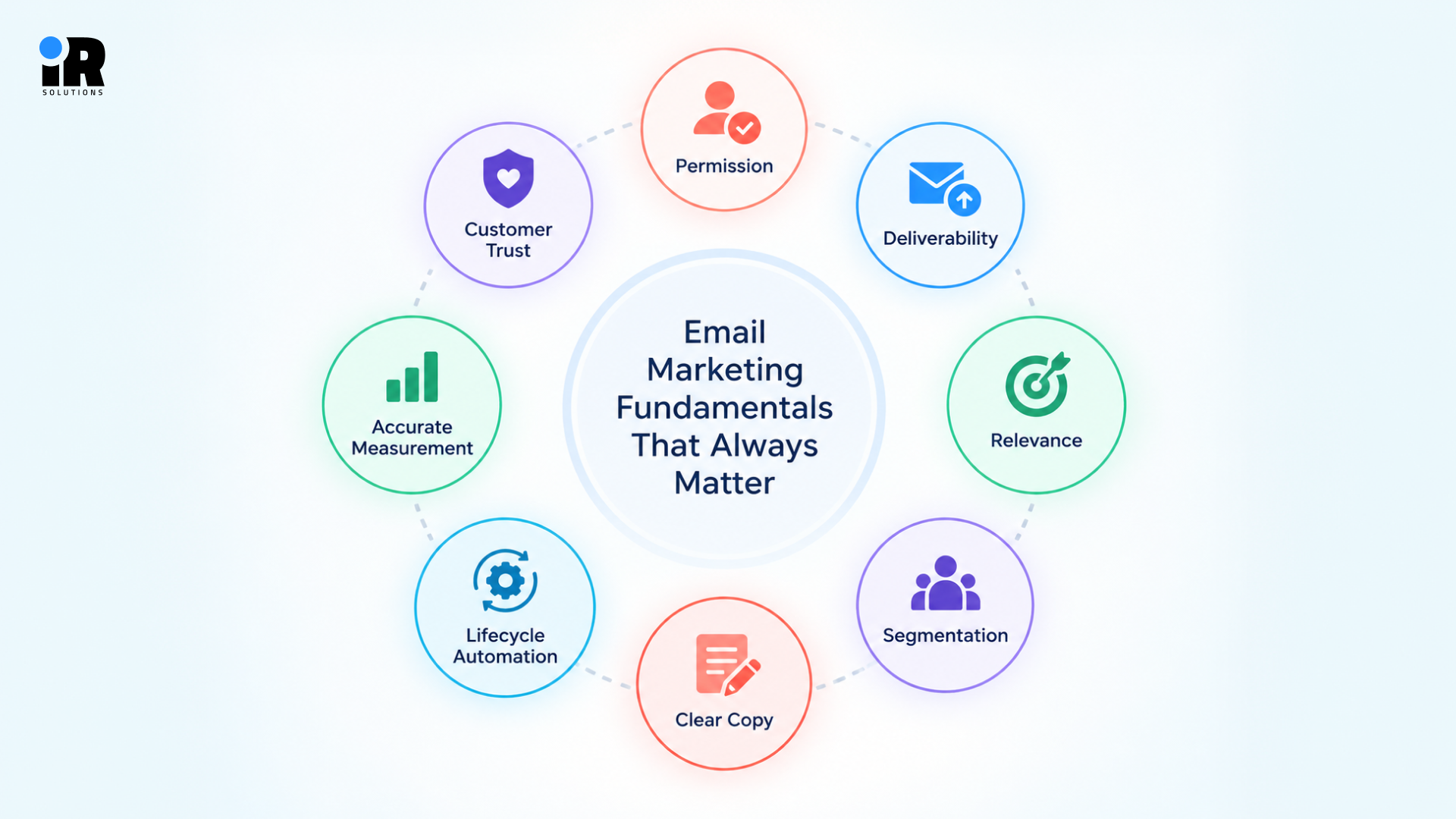
- Permission: Subscribers should always choose to hear from you, and you should record that choice carefully.
- Deliverability: Emails still need to reach the inbox, which depends on sender reputation and list quality.
- Relevance: Messages must match the needs of each reader, or they will quickly be ignored.
- Segmentation: Good segmentation still helps you send the right message to the right customer at the right time.
- Clear Copy: Simple, honest writing still beats clever wording that confuses readers or hides what you are actually offering.
- Lifecycle Automation: Automated flows still save time and deliver helpful messages to customers at exactly the right moments.
- Accurate Measurement: Reliable reporting still tells you what works, what fails, and where to improve next.
- Customer Trust: Respectful and transparent communication still protects the long-term relationship that you worked so hard to earn.
The buying interface may change, but the need to communicate responsibly and usefully stays the same. Even with these basics in place, small mistakes can affect your results. Our guide to common ecommerce email marketing mistakes explains what businesses often get wrong and how to avoid losing potential sales.
Metrics Email Marketers Should Watch as Agentic Commerce Grows
A small dashboard of the right numbers will show you what is working and what is not.
Metric | Why It Matters |
AI/agent-referred orders | Shows new acquisition volume |
Marketing opt-in rate | Shows how many agent-acquired customers become addressable |
Second purchase rate | Measures relationship after acquisition |
Repeat purchase rate | Measures retention |
Revenue per recipient | Email commercial performance |
Post-purchase flow revenue | Value after first order |
Loyalty enrollment | Direct relationship strength |
Review generation | Social proof and product-data quality |
Customer lifetime value | Long-term acquisition quality |
Unsubscribe rate | Relevance of ongoing messaging |
Review these numbers monthly and compare each customer source, so patterns become clear before they become problems.
What Does Agentic Commerce Mean for the Future of Email Marketing?
As AI shopping assistants become more common, businesses may have less contact with customers before they buy. Helpful post-purchase emails, relevant product suggestions, and loyalty rewards can encourage repeat purchases and build stronger customer relationships.
- Recognize Customers: Know who each buyer is, what they bought, and how they arrived at your store.
- Build Relationships: Turn every first order into a direct, permission-based connection with a real person who values your brand.
- Create Reasons: Give customers clear reasons to stay that go well beyond price, speed, or convenience alone.
The acquisition journey may become more automated, yet the relationship still needs to be earned.
Conclusion
Agentic commerce is changing how some customers discover and buy products online. Instead of visiting several websites, shoppers can now use AI assistants to compare options, check prices, and find products that match their needs. For ecommerce businesses, this may mean having less information about what customers do before placing an order.
However, email marketing will still play an important role in keeping customers connected to your business. You don't need to change everything at once. Start by reviewing your post-purchase emails, checking your marketing consent process, and making sure your customer information is accurate. Look at how many customers come back after their first purchase and which emails encourage them to shop again.
It is also worth checking whether your ecommerce platform can identify orders coming from AI shopping channels. This can help you understand how these customers behave compared with buyers from other sources. As shopping habits change, the goal remains the same give customers a good experience and a reason to return. If you want to improve your customer retention and encourage more repeat purchases, explore our email marketing services. We can help you improve your automated email flows, customer segmentation, and campaigns to generate more sales.
Frequently Asked Questions
What is agentic commerce?
Agentic commerce is online shopping where an AI agent handles parts of the buying process for the customer. It can research products, compare options, build the cart, and sometimes complete the checkout step.
What is an AI shopping agent?
An AI shopping agent is software that acts for a shopper to find, compare, and sometimes buy products. The shopper usually sets the rules, such as budget, size, delivery date, and any preferred brands or materials.
How does agentic commerce affect email marketing?
It can reduce some onsite behavior signals and move the first brand contact to after the purchase. Post-purchase, loyalty, and first-party data work become more important because the direct relationship starts later.
Will AI shopping agents replace email marketing?
No, they will not replace email, but they may change where email creates the most value. Email remains a key direct channel for building a lasting relationship with a customer after the sale.
Will browsing abandonment emails still work?
Yes, it will still work for shoppers who visit your website and leave without buying. It may reach fewer people if agents handle more of the early research away from your site.
Does an agentic purchase automatically add someone to an email list?
No, an agent-driven order does not automatically give you consent to send marketing emails to that buyer. You still need a valid opt-in and must follow the consent rules that apply to your business.
How will agentic commerce affect email attribution?
It can be a bit tricky to attribute since an AI agent, an order, and subsequent emails can all get the credit. Focus on a more holistic view of the customer, including metrics such as first purchase source, repeat purchases and lifetime value, rather than just last click revenue.
Which email flows matter most in agentic commerce?
Post-purchase flows matter most because they build the first direct relationship with an agent-referred customer. Review requests, loyalty, replenishment, and win-back flows also deserve close attention as this trend grows.
How can ecommerce brands prepare for agentic commerce?
Clean up your product data, review post-purchase flows, check consent and identify agent-referred orders first. Next, enhance your reviews, improve your customer profiles, and monitor repeat purchase by acquisition over time.