

Key Takeaways
- Aim to attract people who might buy rather than collecting the biggest pile of addresses.
- Tell shoppers exactly what they will gain instead of simply asking them to join a newsletter.
- Use several relevant signup spots across the shopping journey so every visitor sees a fitting option.
- Discounts grow a list fast, but free shipping, early access, and guides deserve a test too.
- Checkout, waitlists, and back-in-stock alerts often bring subscribers who are much closer to making a purchase.
- Measure first purchases and revenue by signup source, not just the number of new signups.
A shopper spends ten minutes browsing your store, finds a jacket they love, and leaves without buying. You paid to bring them to your website, but once they close the tab, getting them back becomes much harder.
When a shopper joins your email list, you have a way to stay in touch. You can tell them about new arrivals, share special offers, or recommend products they might like. This gives you more chances to bring them back without paying for another ad.
This guide covers ten practical ways to grow your ecommerce email list with people who are genuinely interested in your products. You will also learn how to measure your results and turn new subscribers into sales. Once someone joins your list, a welcome email is a good place to start. Our guide on 6 Key Email Marketing Flows for Ecommerce Growth explains which emails to send next.
You don't need expensive tools or a large budget to get started. Even small changes to your signup forms and offers can help you attract more subscribers who are interested in your products.
What Does Building a Store Email List Mean?
Building a store list involves converting visitors, followers, shoppers, and previous customers into email subscribers. Your goal is to attract people who are passionate about what you sell.
An email list is only as good as the people who want your products, special offers, or new product launches. By signing up, people can stay connected to your store even if they’re not ready to buy. You can then get back to them later with products or offers that match their interests.
Why Your Store Needs a List
Paid advertising can be costly and social reach can be inconsistent. An email list is a way to connect with people who have shown interest in your business. You can share new products, special offers and updates and not have to pay to reach them through ads every time.
Email List Size vs List Quality
A big list with weak buying intent does not automatically produce strong revenue for your store. Ten thousand people who joined for a free prize may never open a single product email. Good ecommerce email subscribers open your messages, click through to products, and come back to buy again. Mailchimp also advises building a permission-based list instead of buying or renting contacts, and it puts quality ahead of size.
What Should You Set Up Before Growing Your List?
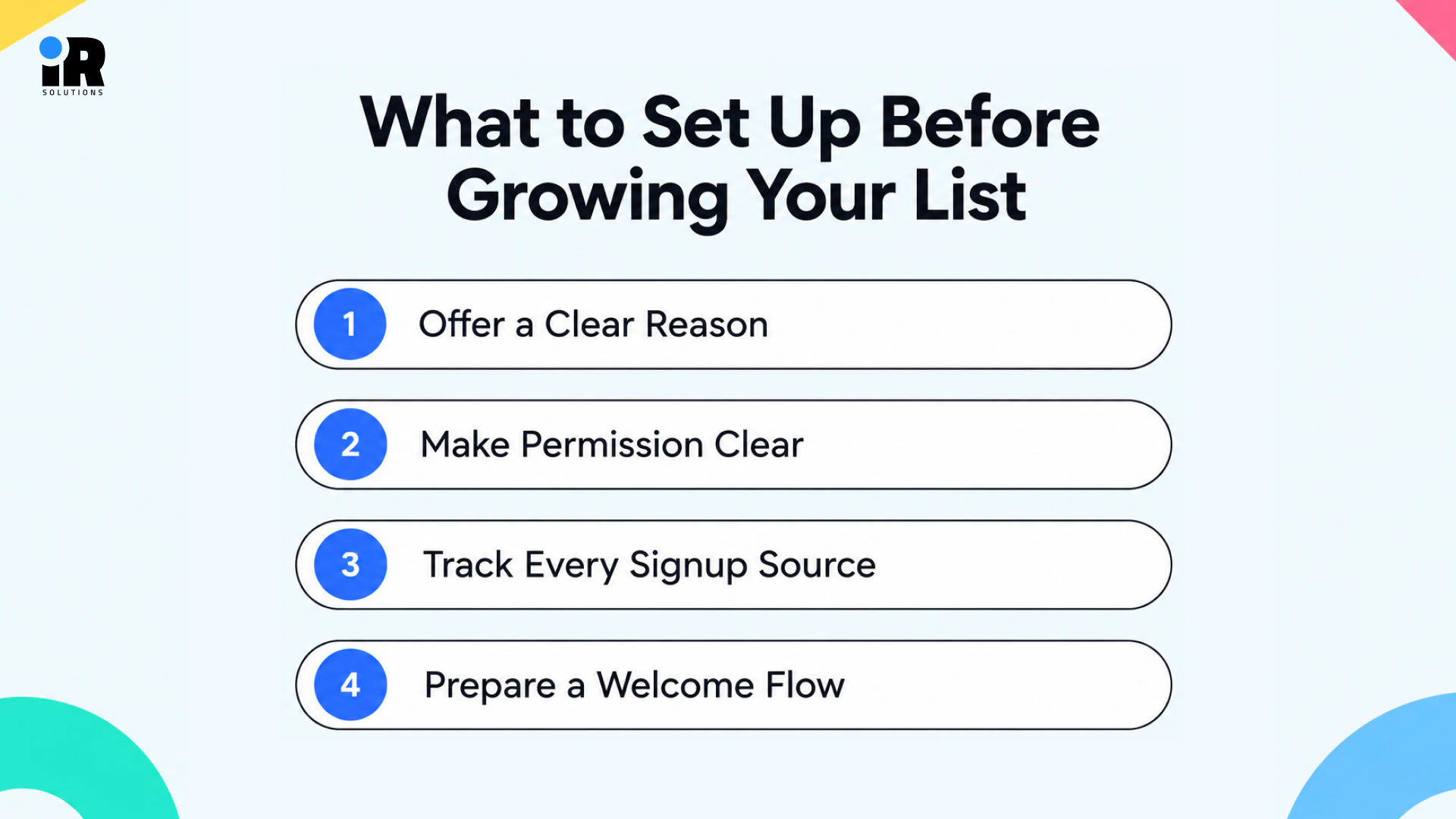
A little preparation now saves you from wasting traffic, budget, and effort once signups begin arriving. Email list building for ecommerce works best when your offer, permission, tracking, and welcome flow are ready.
Offer a Clear Reason
Every signup needs a clear reason that matters to the shopper. Try offering a first-order discount, free shipping, early access, or a helpful product guide. Shopify also recommends giving visitors a clear incentive to subscribe. Its guide on how to build an email list explains how signup offers and simple forms can help stores attract more subscribers.
Make Permission Clear
Tell shoppers what they’re getting into and what type of emails they can expect. Make it obvious that you want people to sign up and do not add people to your marketing list without a valid legal basis. Follow the email marketing and privacy laws that govern your customers and make it simple for subscribers to opt out.
Track Every Signup Source
Tag each sign-up by source: popup, product page, checkout, social media, giveaway, quiz, or back-in-stock alert. Sources matter, subscribers from different places often behave very differently regarding a buying
Prepare a Welcome Flow
When someone joins your list, send a welcome email soon after. If you promised a discount or free guide, deliver it first. You can then introduce your store and recommend products that match their interests.
10 Strategies That Work to Grow Your Store’s List
These ten strategies show how to grow your ecommerce email list through onsite, offsite, and post-purchase touchpoints. Start with two or three that suit your customers, then add more as you track the results.
1. Use Targeted Popups Instead of One Generic Signup Form
Popups work with the traffic you already have, so they are often the fastest way to start. A good popup speaks to the right visitor at the right moment, without getting in their way.
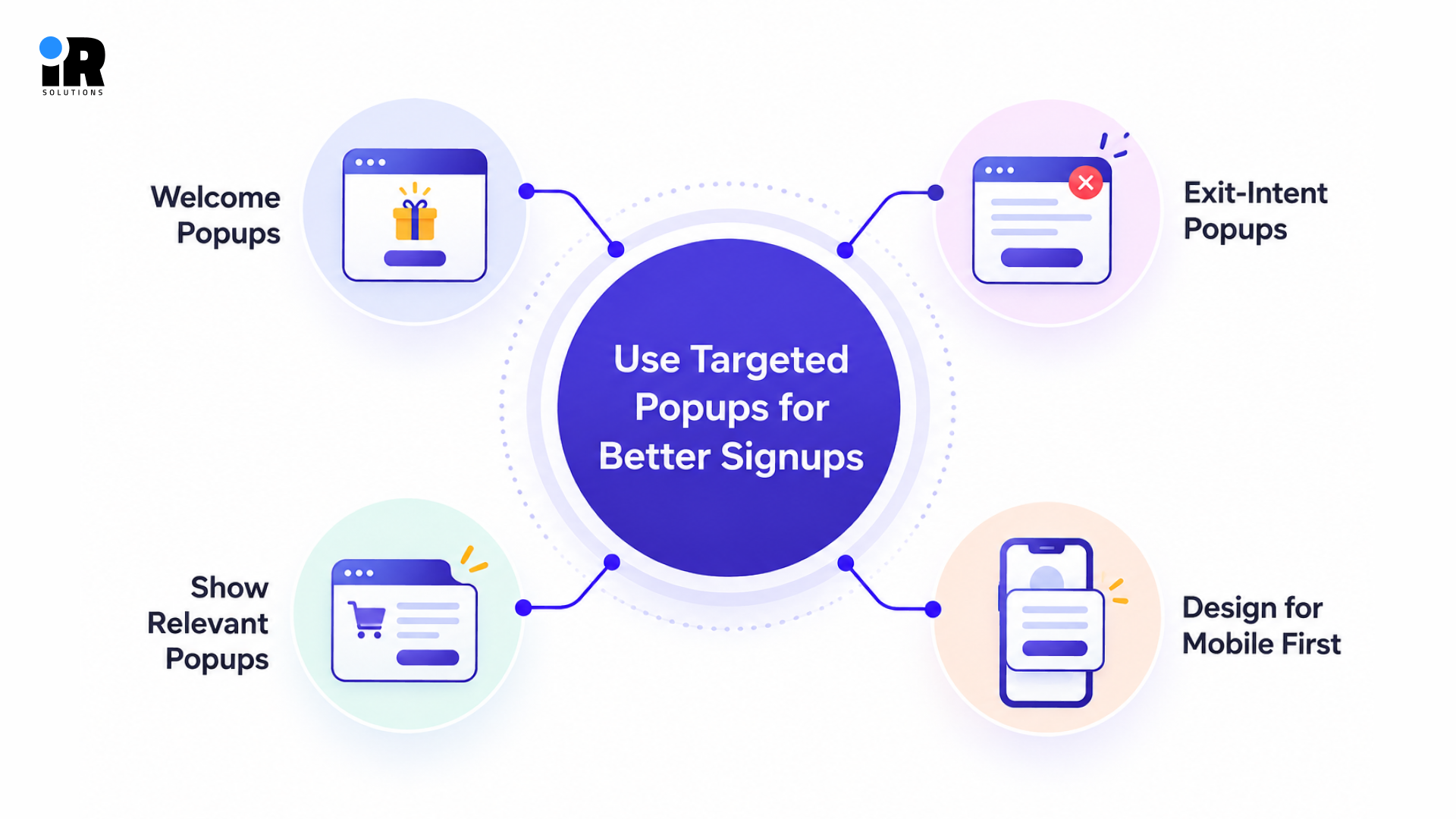
Welcome Popups
Welcome popups show visitors an offer when they arrive at your store. Keep the message short and give shoppers a reason to subscribe, such as a first-order discount or free shipping. Avoid showing the popup before visitors have had a chance to look around.
Exit-Intent Popups
Exit-intent popups appear when someone shows signs of leaving your website. You can use them to offer a discount, free shipping, or a product guide before the visitor leaves. Make sure the offer relates to what they were viewing.
Show Relevant Popups
Don't show the same popup to everyone. Someone browsing skincare products might be interested in a skincare guide, while someone with items in their cart might prefer a shipping offer. You can also hide signup popups from people who have already subscribed.
Design for Mobile First
Do not simply copy your desktop popup onto a phone screen and hope that it works. Use sensible timing, a short form, and an easy-to-tap close icon, and test on real phones before launch.
2. Give Shoppers a Real Reason to Subscribe
The offer matters as much as the form, because people join when they can see what they gain. Choose a reward that fits your products and your margins, then compare it with a few other options.
First-Order Discounts
A discount works well for price-sensitive products and new visitors, especially when a first purchase builds trust. Set a minimum order or limit it to first purchases, because constant deals teach shoppers to wait.
Free Shipping
If shipping costs are stopping customers from completing their orders, try offering free shipping to new subscribers. You can also set a minimum order amount to encourage larger purchases without cutting too much into your profit.
Early Access
Early access lets you grow your list without cutting into your margin right from the start. Try it for new collections, limited drops, seasonal launches, and sale previews that feel exclusive to members.
Subscriber-Only Benefits
Klaviyo advises stating the subscriber value clearly, and these three perks are easy to add.
- Exclusive Products: Offer items that only subscribers can buy, which makes joining feel like a real privilege.
- Loyalty Perks: Give points, birthday treats, or special pricing to people who choose to stay on your list.
- Product Education: Share tips and how-to guides that help customers get more value from what they bought.
Test the Incentive
Run a split test, such as ten percent off against free shipping, on the same page. Judge each version by signup rate and customer quality, and let the test run long enough to trust the data.
3. Use Product Quizzes and Helpful Guides
Helpful guides give visitors a reason to share their email address by answering questions, offering useful advice, and helping them choose the right products before buying.
Product Recommendation Quizzes
A product quiz helps shoppers find items that suit their needs. Once they finish the quiz, you can invite them to enter their email address to save their results or receive product recommendations.
- Skincare Routine: Ask about skin type and goals, then suggest a simple routine built from your products.
- Perfect Size: Help shoppers find their right fit and ask for an email to save the result.
- Coffee Match: Let people pick flavors and brewing habits, then recommend the beans they will probably enjoy.
Ask for an email address before sharing personalized results. Their answers can also help you send more relevant emails later.
Buying Guides
Size guides, gift guides, comparison charts, and buyer checklists all give shoppers real help with decisions. Tie each resource closely to something the customer might eventually buy from your online store.
Avoid Generic Lead Magnets
Choose a free guide that relates to your products. For example, a pet food store could offer a feeding guide, while a clothing store could share a size or styling guide. These resources are more likely to attract shoppers who are interested in what you sell.
4. Add Embedded Forms to Pages Where Interest Is High
Not everyone wants to sign up through a popup. Adding signup forms to your website gives visitors another way to join your email list. You can place these forms on product pages, blog posts, and other pages where shoppers are already interested in your content.
Smart Placements
Place signup forms where visitors are most likely to notice them and find them useful. Match each form to the page content so joining your email list feels natural rather than pushy.
- Homepage: Place a short form where new visitors first look, so they can join without any pressure.
- Product Pages: Offer restock news or product updates, since these visitors are already looking at specific items.
- Collection Pages: Invite shoppers to hear about new arrivals in the exact category that they are browsing right now.
- Blog Posts: Add a related buying guide to articles, which gives readers a natural reason to subscribe.
- Footer Area: Keep a simple signup box in your footer and on your about page for curious visitors.
Match the Offer to the Page
A form on a blog article should offer a guide that relates to that specific article. This works better than showing the same generic newsletter box on every page of your site. A short line of copy above the form can explain exactly what the visitor will receive.
Keep Forms Simple
Keep your signup form short. In most cases, an email address is enough to get started. If you need more information, such as product preferences, you can ask for it later. Long forms take more time to complete, especially on mobile devices. If your store needs better signup forms, mobile-friendly pages, or improvements to the shopping experience, explore our ecommerce website development services to see how we can help improve your online store.
5. Collect Email Permission at Checkout
Checkout is where shoppers finish deciding, so asking for email permission here feels natural and fair. People who say yes at this stage tend to stay interested long after the first order ships.
Why Checkout Subscribers Matter
Mailchimp, Omnisend, and Klaviyo all name checkout as a useful point to ask for permission. These shoppers are already buying, creating accounts, and entering their details, so trust is usually high.
- Post-Purchase: Send helpful order follow-ups that make the whole buying experience feel smooth and personal for them.
- Repeat Orders: Remind customers when it is time to restock items that they tend to use up regularly.
- Loyalty Growth: Invite happy buyers into your rewards program so that they return more often over time.
- New Launches: Tell past buyers first when a fresh product arrives that matches what they bought before.
Order Emails Are Not Marketing Permission
Customers need order confirmations and shipping updates, but that doesn't automatically mean they want promotional emails. Keep marketing signups separate from order notifications. Explain what customers will receive and follow the consent rules that apply in their location. An unchecked signup box is one clear way to collect permission.
6. Turn Product Demand Into Email Signups
A shopper who wants a product you cannot sell today is still telling you exactly what they want. Asking for an email at that moment can turn a missed sale into a future one.
Back-in-Stock Alerts
When a product is out of stock, add a "Notify Me" option to the product page. Shoppers can enter their email address to get an alert when the item is available again. This helps you reach people who are already interested in buying that product.
Product Waitlists
Waitlists suit new launches, limited drops, upcoming collections, and pre-launch products that people are excited about. Early-access lists work the same way for seasonal launches and items that come in limited numbers.
Wishlist Alerts
If your platform supports wishlists, they can save product interest that you can use for relevant messages later. Each signup type needs its own clear permission wording, so shoppers know what they agreed to.
7. Build Dedicated Signup Landing Pages
A landing page gives your signup one clear job, so visitors know exactly what to do. To grow Shopify email list totals, these pages are quick to build and easy to share anywhere.
Keep One Main Offer
Skip the extra categories, promotions, and buttons, and keep the flow simple: value, email, one clear button. Wisepops lists personalized landing pages among its capture methods, and Shopify urges owners to promote their list. Removing the main menu and adding a line of proof, like a review, helps too.
Match the Page to the Traffic
For example, a creator promotes your skincare range in a short video on Instagram this week. The page should say, " Get the skincare routine mentioned in the video, instead of " Join our newsletter.
8. Promote Your List Through Social Media, Creators, and Paid Traffic
Your best audience may not visit your site yet, so go to where they already spend time. Social channels are a fast way to build Shopify email list momentum beyond your own website traffic.
Add Signup Links Everywhere
Put your signup link in your Instagram bio, TikTok profile, YouTube descriptions, and other active profiles. Update it whenever you launch a new offer, so the link always matches what you are promoting.
Share Subscriber-Only Value
Mention early access, guides, launch alerts, and exclusive drops inside your regular posts and stories. Behind-the-scenes content can also point people to your list for deeper stories and early news.
Work With Creators
Instead of sending creator clicks to a broad homepage, test a landing page with a reason to subscribe. Creators should use their own words, because honest recommendations convince audiences far better than scripted adverts.
Use Paid Traffic Carefully
Treat ecommerce lead generation through ads with care, since a cheap lead that never buys is not good acquisition.
- First Purchase: Check how many paid subscribers actually place an order within the first few weeks of joining.
- Total Revenue: Compare the money earned from those subscribers against what you spent to acquire each of them.
- Second Order: Look at whether those first-time buyers come back for a second purchase a few months later.
- Subscriber Quality: Watch opens, clicks, and unsubscribes to see if the audience matches your ideal customer closely.
9. Use Referral and Loyalty Programs to Grow Your List
Your happy customers already know your brand, and they can bring friends who trust their opinion. Rewards give them a reason to share, which helps you grow email subscribers without paying for more ads.
Referral Programs
Customers invite friends or family, and everyone involved gets a reward, such as a give-and-get offer. Omnisend lists referral and loyalty programs among its medium-term and long-term growth tactics for online stores. Make the referral link easy to find in order emails and inside the customer account area.
Loyalty Membership
Give shoppers a reason to join through points, early access, member benefits, and exclusive products. Members feel valued, and valued customers tend to buy more often and stay with your brand longer.
Look Beyond Discounts
Rewards do not have to be discounts, and the right one should fit customer value and your profit margin.
- Store Credit: Store credit keeps money inside your business and encourages another visit to your shop soon.
- Free Product: A small free item can delight loyal customers while costing you very little to produce or ship.
- Exclusive Access: Let referrers preview new products before anyone else gets the chance to buy them online.
10. Use Giveaways and Partnerships Without Hurting List Quality
Giveaways can bring in subscribers fast, but the wrong prize fills your list with people who never buy. A smart giveaway, ideally run with a partner, keeps the quality of your list high.
Pick a Relevant Prize
Wisepops and Sleeknote both recommend giveaways as a quick way to build a list, but the prize matters. For example, a clothing store could give away a selection of its own products instead of an expensive phone. This is more likely to attract people who are interested in the clothes it sells.
Partner With Complementary Brands
Look for businesses that share your audience without competing against you directly for the same sales.
- Fitness Pairing: Pair a clothing brand with a fitness accessory company that sells to the same crowd.
- Coffee Pairing: A coffee seller can team up with a brand that makes stylish mugs and drinkware.
- Beauty Pairing: A skincare label can partner with a company that sells brushes, sponges, and other beauty tools.
Track Giveaway Subscribers Separately
Measure engagement, first purchases, unsubscribe rate, and revenue from giveaway subscribers after the campaign ends. Do not judge success by one headline number like ten thousand new subscribers alone, because quality matters more.
What Should Happen Right After Someone Subscribes?
What happens after someone subscribes is just as important as getting them to sign up. Send a welcome email while your store is still fresh in their mind, and make sure they receive whatever you promised.
Deliver What You Promised
Send the discount, guide, quiz result, or early-access confirmation straight away while interest is high. A late delivery feels like a broken promise, and it weakens trust before you have even started.
Start the Welcome Flow
Start by welcoming new subscribers and delivering any offer they signed up for. In the next few emails, introduce your brand, share useful product information, and show customer reviews. You can also offer a first-purchase discount if it makes sense for your store.
Use Signup Source to Improve Relevance
Someone who joined through a back-in-stock alert may be ready to buy, while someone who entered a giveaway might only be interested in the prize. Use this information to send emails that match their interests instead of sending the same message to everyone. Sending irrelevant emails can lead to fewer clicks and more unsubscribes. Read our guide on 10 ecommerce email marketing mistakes that cost sales to learn what to avoid when communicating with new subscribers.
How to Improve Your Email Signup Forms
You don't need to redesign your website to improve email signups. Start by checking whether your forms are easy to find, simple to complete, and clear about what subscribers will receive.
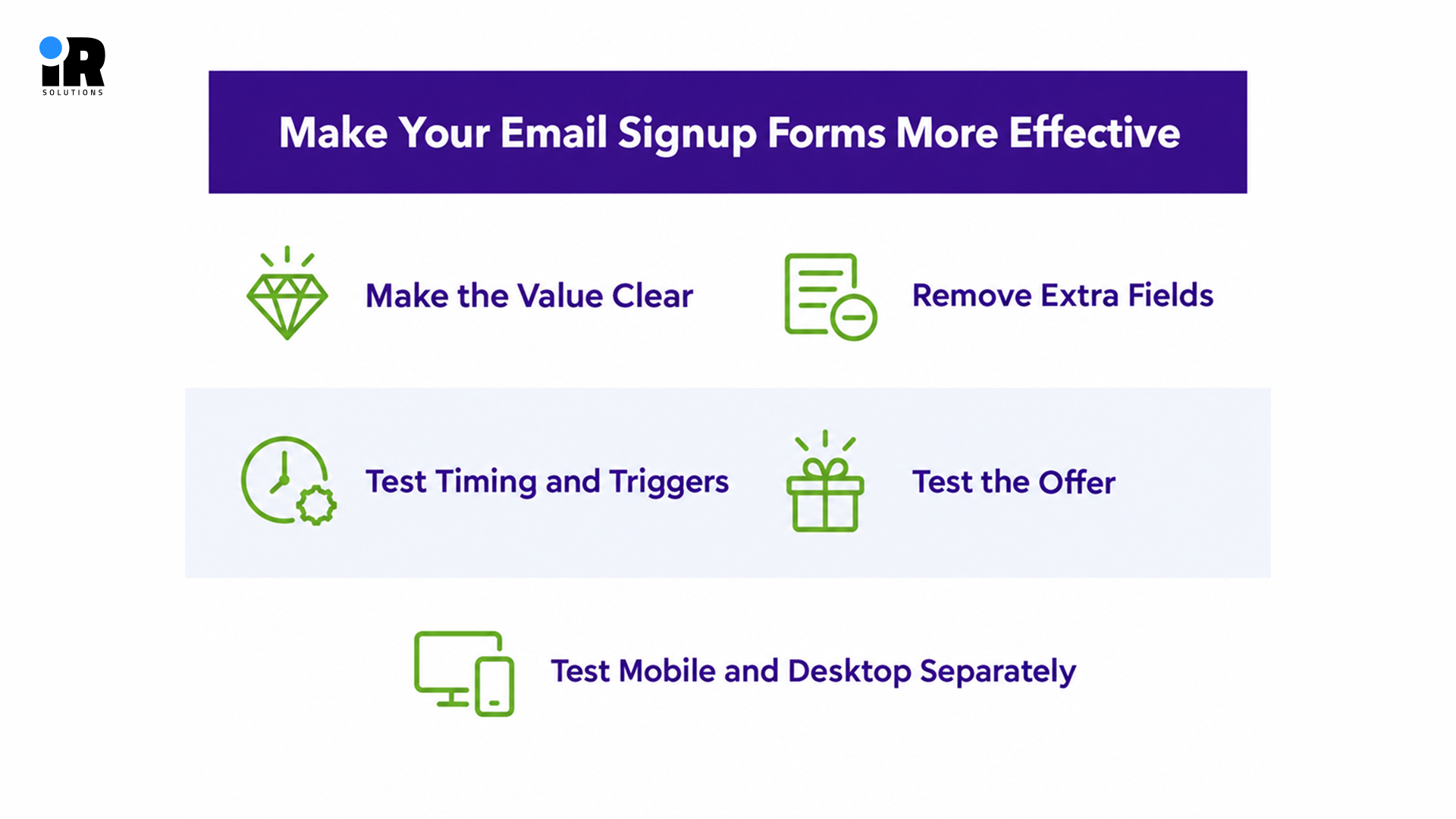
Make the Value Clear
“Join our newsletter” tells people nothing. “Get early access to drops” tells them exactly what they’re signing up for. Say what they get, and say it up front.
Remove Extra Fields
Ask only for what you’ll actually use. Email alone is often enough. Each extra box is one more reason for someone to close the tab.
Test Timing and Triggers
Try the form right away, after a delay, after a scroll, on exit, or after a few pages. No single timing works for every store, so run the tests and go with what your own numbers show.
Test the Offer
Try testing a percentage discount against free shipping, early access, or a product guide to see which offer brings more subscribers. Change only one thing at a time so you can understand what affects the results. You can also read our guide on, ecommerce email a/b testing to learn how to compare different offers, messages, and email campaigns.
Test Mobile and Desktop Separately
People shop differently on a phone than on a laptop. A popup that works well on desktop can be annoying or even unusable on mobile, so check each one on its own
Which Strategies Should You Start With First?
You do not need all ten ideas on day one, so begin with the easiest wins. Smart ecommerce list building strategies follow a simple order, starting with traffic you already own.
Start With Existing Traffic
First, add a targeted popup, a strong offer, embedded forms, and a checkout opt-in to your store. These steps need no new traffic source, so you can launch them quickly and learn fast.
Capture High Product Intent
Then, add back-in-stock alerts, waitlists, and product quizzes or guides that attract more serious shoppers to your list.
Expand Beyond Your Website
Once you have your website sign-up forms working well, you can try to grow your email list with social media, creator partnerships, referrals, and giveaways. Work on a small budget and focus on the ways to get subscribers that later become customers.
Conclusion
Building an ecommerce email list is a good way to stay connected with shoppers and encourage them to return to your store. It doesn't take much to get started, and you don't need a lot of expensive tools. First, provide one reason to sign up for the newsletter, whether it's the first order discount, free shipping, getting a first look at new products, or exclusive buying guides.
Make your sign-ups simple and easy to find. Test various placements, offers, and pop-up delay times to determine the most effective ones for your customers. After the initial sign-up, send them a welcome e-mail and continue to deliver material that is relevant to them.
Keep in mind that increased subscribers do not necessarily translate to increased sales.
Target the right customers who are interested in your products. See where your signups are coming from, how your subscribers interact with your emails, and how many signups are making a purchase. Reflect and continue to refine your approach.
Frequently Asked Questions
What Does List Building Mean for an Online Store?
It means collecting permission-based subscribers from shoppers and potential customers so you can keep talking with them. Each person on the list agreed to hear from you, which makes your emails far more welcome. Over time, that steady contact turns casual browsers into repeat buyers who trust your brand.
How Do I Start a List From Scratch?
To build ecommerce email list results from nothing, start with one signup form and one clear incentive. Add a popup, a checkout opt-in, and a welcome flow, then expand into other acquisition sources. Keep the first setup small, so you can see what works before you spend more time or money.
What Is the Fastest Way to Grow a List?
Onsite forms and popups usually launch quickly because they use traffic your store already receives every day. You do not need new ads or new channels to see your first signups arrive. No one can promise a universal growth rate, so test and track your own results carefully.
Should Online Stores Use Popups?
Yes, when they are well targeted and designed so they do not disrupt the shopping experience. Show them to the right visitors at the right time, and keep the close button easy to find. A popup that feels helpful earns signups, while one that blocks the page simply drives visitors away.
Do I Need to Offer a Discount?
No, because free shipping, early access, product guides, quizzes, restock alerts, and loyalty benefits can all attract subscribers. Many shoppers join happily when the benefit matches what they want to buy, even without money off. Test a few options, and keep the one that brings customers who actually place orders.
Where Should I Collect Email Addresses?
Collect them through popups, embedded forms, product pages, checkout, landing pages, social profiles, back-in-stock signups, and waitlists. Start with the places that get the most traffic, then add more as you learn. Tag each spot so you can see which one brings the best customers over time.
Should I Buy an Email List?
No, build a permission-based list from people who genuinely want to hear from your brand. Bought contacts never asked for your emails, so they ignore them, complain, or mark them as spam. That hurts your sender reputation and can push even your good emails into the spam folder.
How Do I Know My List Is Growing Well?
Track net list growth, signup conversion, first purchases, customer conversion, revenue by source, and unsubscribes, not raw counts alone. A list that grows slowly but brings steady orders is healthier than a big list that stays silent. Look at these numbers each month, and adjust your plan based on what they tell you.
What Should I Send New Subscribers?
Start with a welcome email that delivers the promised benefit and points toward a helpful next step. Introduce your brand in a few friendly lines, and show products that match why they joined. Then follow with a short series that builds trust before you ask for a first order.