


Key Takeaways
- Flows send emails on their own, based on what shoppers do or where they are.
- Welcome and abandonment flows turn early interest into a first purchase with little daily effort.
- Post-purchase emails help bring buyers back, earn honest reviews, and build a stronger bond.
- Win-back emails reconnect with customers who stopped buying and give them a reason to return.
- VIP and loyalty messages keep your best repeat customers happy and coming back for more.
- Judge every flow by sales, repeat orders, and customer value, not by opens alone.
Someone visits your store, browses a few products, adds one to their cart, and leaves without buying. Another customer makes their first purchase but never comes back. These are common situations for ecommerce businesses, and both are opportunities that email automation can help address.
Ecommerce email flows allow stores to follow up with customers based on their actions. Whether a person subscribes, sees a product, leaves checkout, or makes an order, an automated email can get to them at the right time without your team having to send each email manually.
In this guide, we’ll walk you through six key ecommerce email flows, when to use them, what to include, and how to measure their success. You'll also learn which flows to set up first so you can concentrate on the ones that are most important to your store.
What Are Ecommerce Email Flows?
An ecommerce email flow is a series of automated email messages that are sent based on specific customer actions or lifecycle stages. It is comparable to a shop assistant who is always available and consistently ensures that tasks are completed. Once you set the rules, the flow runs by itself for all customers that match the conditions.
Common triggers include signing up for your list, viewing a product, adding a product to cart, and starting checkout. Other things include buying something, being silent for too long, being a repeat customer or a VIP. That’s why ecommerce automation flows are time savers that still feel personal to each shopper.
Email Flows vs Email Campaigns
Email flows and campaigns both help stores reach customers, but the main difference is how and when they're sent.
A flow is triggered automatically by shopper behavior or by the stage a customer has reached. Welcome emails, abandoned cart reminders, and post-purchase messages are all very common examples of flows.
A campaign is sent at a planned time to an audience that you choose yourself. Black Friday sales, product launches, and monthly newsletters are the usual examples of email campaigns.
Most stores need both, because flows handle daily behavior while campaigns drive planned moments of attention. If you want help with the planned side, read our guide to email marketing campaigns.
Why Email Flows Matter for Ecommerce Growth
Strong ecommerce email marketing flows meet each shopper at the right moment, with a message that actually fits. Here is why that kind of timing matters so much for your sales and your customer relationships.
Respond to Shopper Behavior
A shopper who is only browsing needs different words than one who already added the item to the cart. Flows match each email to what the person wants right now, and that is how relevant messages build trust.
Follow Up Automatically
Once a flow is live, it follows up when customers subscribe, browse, abandon a cart, buy, or go quiet. Good ecommerce email automation cuts repeat sending for your team and gives every customer a faster reply.
Cover the Full Customer Journey
Customers don't all follow the same path. Some subscribe before buying, others purchase on their first visit, and some return months later. Email flows help you stay connected at these different stages, from the first interaction to repeat purchases.
Generate Revenue With Fewer Sends
According to Omnisend's 2025 ecommerce research, automated emails generated 30% of email revenue while accounting for just 2% of email sends. The findings show how valuable timely, behavior-based emails can be, although results will vary depending on the store and its customers.
6 Key Email Marketing Flows for Ecommerce
Here is a quick overview of all six flows before we look at each one in detail.
Flow | Main Trigger | Primary Goal |
Welcome | New subscriber | First purchase |
Browse abandonment | Product viewed | Bring shopper back |
Cart/checkout abandonment | Cart or checkout abandoned | Recover purchase |
Post-purchase | Order placed | Repeat purchase and retention |
Win-back | Customer becomes inactive | Reactivate customer |
VIP/Loyalty | Repeat/high-value customer | Retain valuable customers |
Use this table as a map, and come back to it whenever you plan your next build.
1. Welcome Flow
The welcome flow is often a store's first real chance to turn a new subscriber into a buyer. It starts when someone joins your list and runs while their interest in your brand is still high. A strong start here sets the tone for every email and every order that comes after it.
What Triggers a Welcome Flow?
A welcome flow typically begins when someone subscribes to your email list via a signup form, popup, or other opt-in method. They’re still getting to know your brand, so your first couple of emails should be about your products and giving them a reason to check out your store.
What Is the Goal of a Welcome Flow?
The main goal is to turn a subscriber into a first-time buyer, and everything else is done to support that goal. Introduce your brand, show your value, build trust, and deliver the offer you promised along the way.
What Should the Welcome Sequence Include?
A simple series starts with a welcome and your promised offer, then shares brand value and popular products. Next come reviews, answers to common buying questions, and one last friendly reason to buy now. Five emails is only an example, so let your own products decide how long the series runs.
Welcome Flow Best Practices
Send the promised offer right away, prioritise value over discounts, and match products to signup source. Keep a single, clear call to action in each email, and stop sending first-purchase messages once the subscriber has purchased.
Now imagine Sara joins after reading a skincare guide, gets the guide and a small offer, and buys by day five.
2. Browse Abandonment Flow
A browse abandonment flow reminds shoppers who viewed products but didn’t add to cart or purchase. These emails go to known visitors, whose product activity can be tracked. Browsing does not always mean someone’s ready to buy, so the message should sound more like a friendly nudge than a sales pitch.
What Triggers Browse Abandonment?
This flow is triggered when an identifiable visitor views a product without completing a purchase. The store needs product-view tracking, and the flow should exclude shoppers who have already bought the item or entered the cart or checkout sequence.
What Is the Goal?
You aim to bring the shopper back to the product or category they already explored. They showed interest once, so a gentle reminder can help them pick up where they stopped. You are not pushing a sale yet, only keeping your product fresh in their mind.
What Should the Flow Include?
Send a simple reminder with the product image and one button, then a second email with benefits or reviews. You can add related products or similar alternatives if the shopper may want other choices.
Browse Abandonment Best Practices
Show the exact product the shopper viewed, and keep the tone lighter than your cart recovery emails. Exclude buyers, adjust the flow if they add to cart, and skip the discount in the first message.
3. Cart and Checkout Abandonment Flow
Cart and checkout abandonment flows target shoppers who showed interest in buying but left before completing their order. These emails give you a chance to recover missed purchases by reminding customers what they left behind and addressing concerns that may have stopped them from checking out.
Cart Abandonment vs Checkout Abandonment
Cart abandonment means a shopper added something but left before checkout, while checkout abandonment means they started paying and stopped. Checkout abandonment generally shows stronger intent, since the shopper already shared details and moved closer to paying.
What Is the Goal?
Your goal is to recover a purchase that was already very close to being completed by the shopper. The abandoned cart email flow works best when each message adds something new for the reader.
What Should the Flow Include?
Start with a simple reminder that shows the abandoned items and links back to the cart. Then answer worries about shipping, returns, and trust, and offer an incentive last, only if margins allow. Skip any fixed ten percent rule, because the right incentive depends on your own business and margins.
When Should the Flow Stop?
Make sure the flow stops when a shopper completes their purchase. Otherwise, they might receive an abandoned cart reminder after placing an order, which can confuse customers and make your store appear disorganized.
Cart Recovery Best Practices
Show the abandoned items, link back to the cart, use one clear button, and keep any urgency honest. Test an incentive against none, and keep several recovery flows from reaching the same shopper.
For a full step-by-step setup guide, see how teams recover abandoned carts with Klaviyo today.
4. Post-Purchase Flow
The sale is not the finish line, because the weeks after an order shape the next one. This flow starts once an order is placed and focuses on care, trust, and repeat buying. Done well, it turns one order into a relationship that keeps paying off for your store.
What Triggers a Post-Purchase Flow?
Your post-purchase email flow starts when a customer completes an order, and that moment opens a new chapter. It focuses on a good experience, retention, and future purchases rather than on quick selling.
What Is the Goal?
A good series helps customers feel cared for, learn how to use the product, and leave honest reviews. It can also encourage repeat orders and suggest products that truly pair with the first purchase.
What Should the Post-Purchase Flow Include?
A good sequence thanks the customer, shares care tips, suggests one fitting product, and asks for a review. Add a refill reminder where it fits, and let your product decide how long the sequence runs.
Review Request Emails
Wait until the customer has had time to use the product, then ask for honest feedback in a short email. Make the review link easy to find, and build a standalone automation if reviews matter a lot.
First-Time vs Repeat Customers
New buyers may need reassurance, simple education, and a warm introduction to your brand story. Repeat buyers suit loyalty messages, cross-sell ideas, referral invitations, and VIP recognition much better than onboarding.
Don't Turn Every Post-Purchase Email Into an Upsell
Not every email needs to sell something. Product care tips, helpful guides, and honest review requests can improve the customer experience and give people more reasons to return.
5. Win-Back Flow
Not every customer returns after their first purchase. Some forget about your store, while others find alternatives or simply don't need the product again right away. A win-back flow helps you reconnect with these customers when they haven't purchased for longer than expected.
What Triggers a Win-Back Flow?
A win-back email flow starts when a previous customer goes longer than expected without buying again. The right timeframe depends on your product, so avoid any universal rule like sixty, ninety, or one hundred eighty days. Coffee may be reordered within weeks, while furniture or electronics can take years between purchases.
What Is the Goal?
The goal is to encourage past customers to shop again. You can do this by highlighting new products, recommending items based on previous purchases, or sharing an offer when it makes sense.
What Should the Win-Back Flow Include?
Open with a warm hello and share what is new, then show products that match past orders. Add reviews or fresh reasons to return, and keep any incentive for the last email only.
Win-Back Best Practices
Use the previous purchase to improve relevance, and time the flow around the usual buying cycle. Do not lead with a discount, stop messaging people who stay inactive, and let them update their preferences.
6. VIP and Loyalty Flow
Your best customers deserve more than silence, and a thoughtful flow can show that you notice them. A VIP email flow starts when a customer meets the standard that you set for your brand. The goal is loyalty without giving away margin, so recognition matters more than constant discounts.
What Triggers a VIP Flow?
Define VIP with rules that fit your business, such as order count, total spend, order frequency, or lifetime value. Loyalty program status can work too, but no single threshold will fit every store out there.
What Is the Goal?
The goal is to keep your most valuable customers engaged and give them reasons to continue choosing your store. Exclusive perks, personalized recommendations, and meaningful rewards can help strengthen that relationship.
What Should VIP Emails Include?
Offer early access, exclusive launches, loyalty rewards, private events, and sincere thank-you notes that feel personal. You can also share fitting product picks, referral invites, and milestone moments that make customers feel seen.
Don't Make VIP Mean Constant Discounts
Special treatment does not have to mean lower prices, and that protects your profit margin. Recognition, early access, exclusive content, and faster support can all feel generous without ever cutting prices.
How the 6 Flows Work Across the Ecommerce Customer Journey
Seen together, the six flows cover every stage of the path from stranger to loyal fan.
Customer Stage | Recommended Flow |
New subscriber | Welcome |
Interested browser | Browse abandonment |
High-intent shopper | Cart/checkout abandonment |
New customer | Post-purchase |
Inactive customer | Win-back |
Repeat/high-value customer | VIP/Loyalty |
Customers may qualify for different flows as their behavior changes. Set clear entry and exit conditions so they receive relevant emails without getting reminders from multiple flows at the same time.
Which Ecommerce Email Flows Should You Build First?
Building every flow at once is hard, so it helps to know which ones to set up first. The order below starts with the flows that capture the most interest and revenue for most stores. Treat it as a good starting point, not a rule, because every store is different.
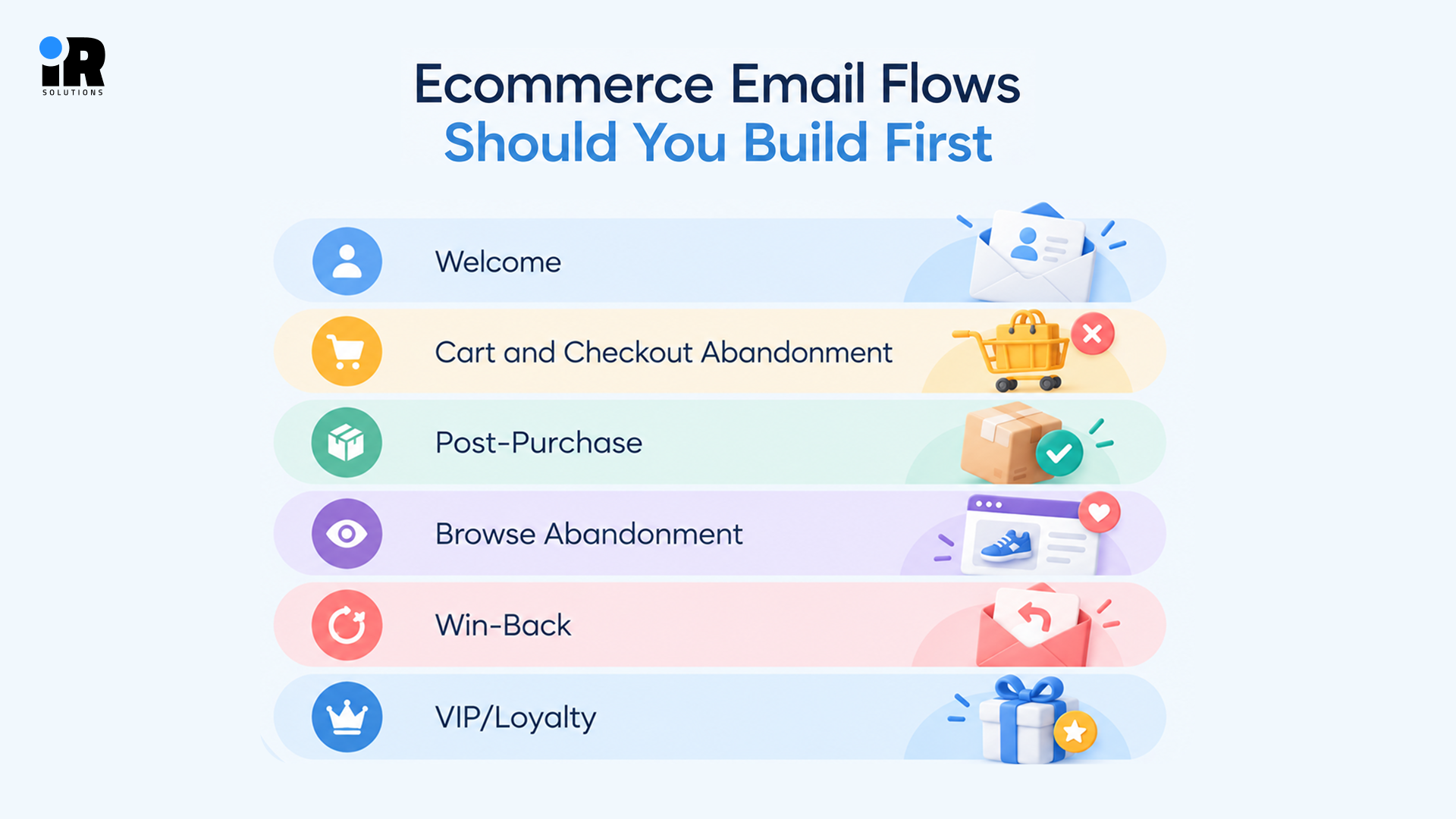
1. Welcome
Start here to capture the intent of new subscribers while their interest in your brand is highest. A strong first impression sets the tone for everything that follows in the relationship with your brand.
2. Cart and Checkout Abandonment
Next, recover the high-intent shoppers who were only a few clicks away from completing a purchase. These sales are closest to the finish line, so the return on your effort is usually strong.
3. Post-Purchase
Third, improve retention after conversion so one order has a real chance to become many. Happy customers cost far less to sell to than strangers who have never heard of you.
4. Browse Abandonment
Fourth, recover the earlier product interest that your cart and welcome flows will not always catch. This flow needs good tracking, so build it once your data setup feels solid and reliable.
5. Win-Back
Fifth, bring previous customers back once you have enough order history to time messages well. Without that history, your timing would only be a guess, and guesses tend to waste good sends.
6. VIP/Loyalty
Sixth, retain your highest-value customers once you can clearly identify who they are in your data. A small group of loyal buyers can often drive a large share of your long-term revenue.
The exact order can vary depending on store traffic, cart abandonment, repeat purchase rate, product type, and lifecycle. Treat this sequence as a suggestion, since your own data should always have the final say.
Whichever order you choose, these essential ecommerce email flows form the base of a healthy store.
How to Make Ecommerce Email Flows More Effective
Setting up email flows is only the beginning. To get better results, you need to make sure the right messages reach the right people without overwhelming them. These eight practices can help you improve your flows over time.
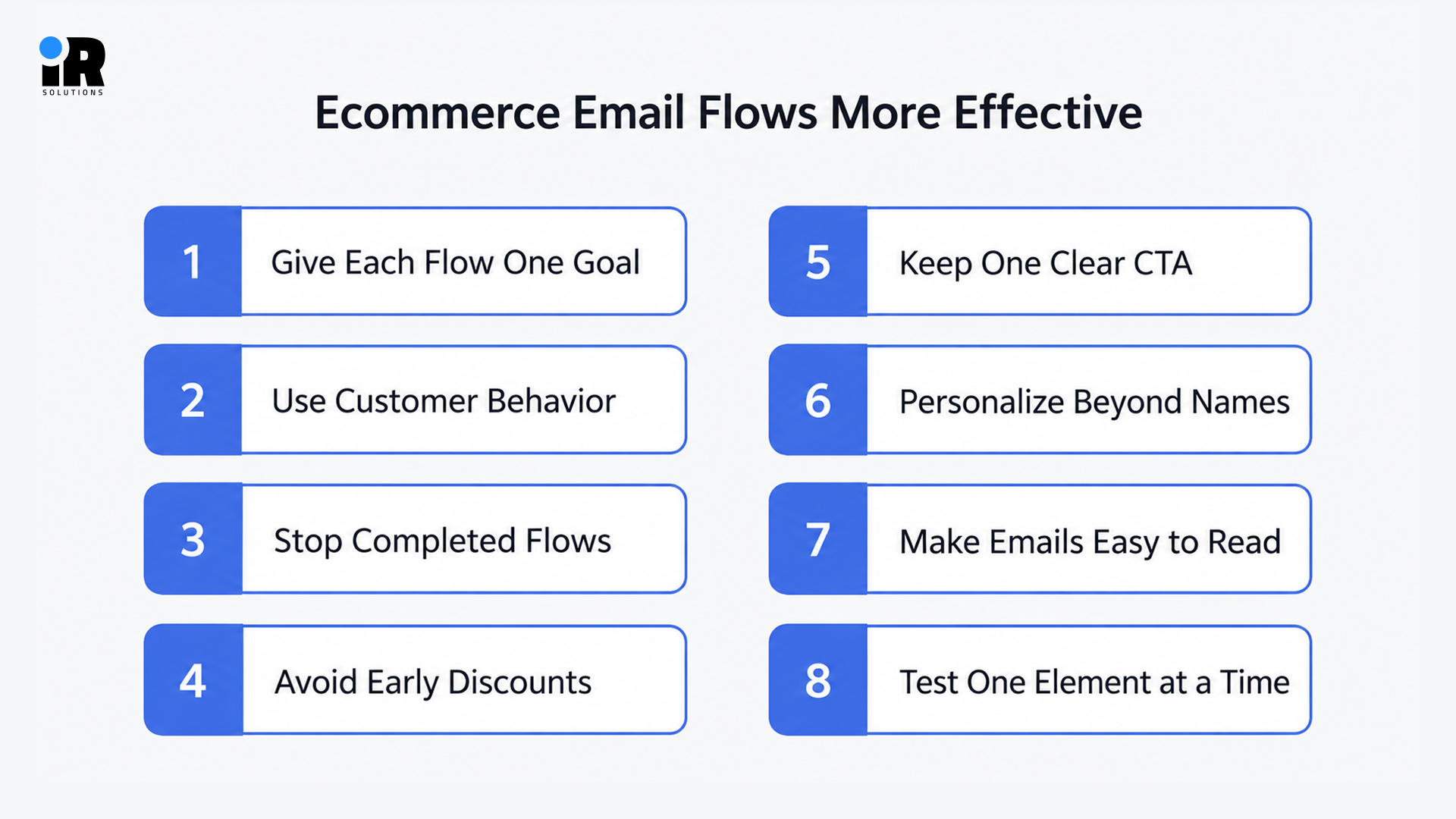
Give Each Flow One Goal
Give each flow one job, such as a first purchase, a return to the product, or a finished checkout. Strong ecommerce email sequences stay short and clear, and post-purchase, win-back, and VIP flows follow the same rule.
Use Customer Behavior
Use what shoppers do, such as product views, cart adds, past purchases, and order patterns, to shape each email.
Stop Completed Flows
Stop each flow when its goal is done, such as ending cart reminders after a purchase. Move new buyers into post-purchase care, and let returning win-back customers rejoin the normal journey.
Avoid Early Discounts
Constant discounts cut into profit, teach customers to wait, and make every email look the same. Use incentives selectively, and save them for moments when a small push truly changes the outcome.
Keep One Clear CTA
Give every email one clear action, such as Shop now, Complete checkout, View product, Buy again, or Explore VIP benefits. For stronger wording, read our email copywriting guide before you write the next message in any flow.
Personalize Beyond Names
A first name is a small touch, so use product views, categories, purchase history, and customer status as well.
Make Emails Easy to Read
Shoppers often read on their phones in busy moments, so use a mobile-friendly layout and short copy. Add sharp product photos and consistent branding, so every email feels familiar and easy to trust.
Test One Element at a Time
Change only one thing at a time, such as the subject line, call to action, offer, or send timing. Judge results by conversion rate and purchases, because the best ecommerce email flows grow through steady testing.
How to Measure Ecommerce Email Flow Performance
Numbers show whether a flow truly works, so pick a few clear measures and track them often.
Metric | What It Shows |
Conversion rate | Recipients completing the goal |
Revenue per recipient | Value produced per recipient |
Flow revenue | Revenue attributed to the flow |
First-purchase rate | Welcome-flow performance |
Cart recovery rate | Recovered purchases |
Repeat purchase rate | Post-purchase performance |
Review submissions | Review-request performance |
Reactivation rate | Win-back performance |
Customer lifetime value | Longer-term customer value |
Unsubscribe rate | Relevance/frequency |
Spam complaints | Sending risk |
Review these figures by flow, not only across your whole program, so weak spots become easy to see.
Don't Optimize Only for Opens
Open rates can help you understand engagement, but they don't tell the whole story. Privacy features can also make open tracking less reliable. Look at conversions, revenue per recipient, repeat purchases, and recovery rates to understand how each flow contributes to your business.
When Should You Add More Ecommerce Email Flows?
Once your core flows are running well, you can introduce additional automations based on your products and customer behavior. For example, stores selling skincare or supplements may benefit from replenishment reminders, while fashion brands might get more value from back-in-stock alerts.
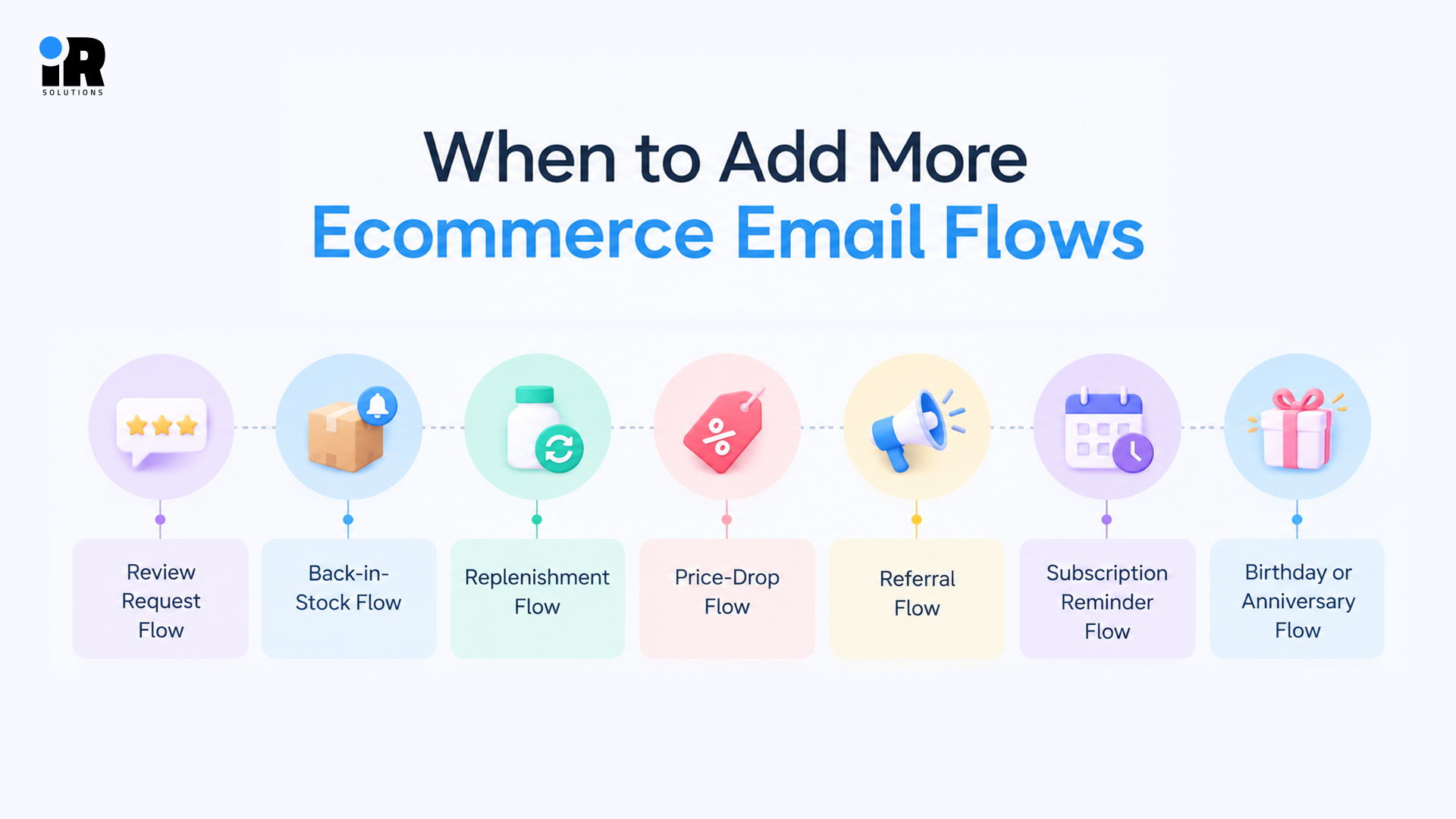
Review Request Flow
Use this flow when customer reviews are a major growth channel and you want a steady supply. It asks buyers for feedback at the right time, so new shoppers see real opinions before they buy.
Back-in-Stock Flow
This one helps when popular products sell out often and shoppers want to know when they return. A quick alert can turn a missed sale into an order the moment the item is back.
Replenishment Flow
It suits consumable or repeat-use products, where customers run out and need a gentle reminder to reorder. Good timing here keeps customers from running out and then shopping somewhere else instead of with you.
Price-Drop Flow
Price-sensitive shoppers respond well when you tell them that an item they watched is now cheaper. It works best for items people viewed or saved, and it should be used with care.
Referral Flow
Choose this when customer referrals matter and your happy buyers are willing to tell their friends. A simple invite after a good order can bring in new customers who already trust you.
Subscription Reminder Flow
This flow is relevant for subscription businesses that need to remind customers about renewals, shipments, and changes. Clear reminders prevent unpleasant surprises, which keeps customers happy and helps them stay subscribed for longer.
Birthday or Anniversary Flow
Brands with meaningful customer milestones can use these dates to send warm and personal messages. A small, thoughtful note on a special day can make a customer feel truly remembered.
These flows are not universal, which is why they sit outside the six foundational ones. Add them one at a time, and let your own business needs decide which ones come first.
Final Thoughts
Ecommerce email flows help you stay connected with customers without having to manage every follow-up manually. From welcoming new subscribers to recovering abandoned carts and encouraging repeat purchases, each flow serves a different purpose.
You don't need to build everything at once. Start with the flows that address your store's biggest opportunities, track their performance, and make improvements as you learn what works for your customers.
If you need help planning, building, or improving your automations, our email marketing services can help you create a better strategy that supports your sales and retention goals.
Frequently Asked Questions
What is an ecommerce email flow?
An ecommerce email flow is an automated message, or series, that sends when shoppers take a specific action. It can also start from a lifecycle stage, such as becoming inactive or reaching VIP status.
What email flows should every ecommerce store have?
Most stores should start with welcome, browse abandonment, cart and checkout abandonment, post-purchase, win-back, and VIP flows. Your own product type and customer base can change how soon each one becomes useful.
Which ecommerce email flow should I build first?
Most stores begin with the welcome flow, followed by cart and checkout abandonment, then post-purchase. Traffic, abandonment levels, repeat purchase rate, and product type can reorder this list for you.
What is the difference between an email campaign and a flow?
A flow sends automatically when a shopper behavior or lifecycle stage triggers it for that person. A campaign goes out at a planned time to an audience that you select in advance.
How many emails should be in an ecommerce flow?
There is no perfect number, because length depends on your product, price, and buying cycle. A low-cost item may need two messages, while a high-value item may need four or more.
How long should I wait between flow emails?
Timing should match intent, so cart reminders usually go out sooner than win-back or review messages. Test different gaps between emails over time, and let your own results guide the final schedule.
Do ecommerce email flows increase revenue?
They can, because they reach shoppers at moments of real interest with relevant and timely messages. Results vary by store, so measure conversions and revenue instead of relying on general claims.
Should every ecommerce email flow include a discount?
No, not every flow needs a discount, and early discounts can reduce margin and train customers to wait. Use incentives selectively, and test them against no incentive before you make them a regular habit.
Should review requests be a separate email flow?
It can sit inside the post-purchase flow or run on its own, depending on your review goals. Stores that rely heavily on reviews often benefit from building a separate and dedicated automation.
What metrics should ecommerce stores track for flows?
Track conversion rate, revenue per recipient, flow revenue, and the goal metric that fits each flow. Also watch unsubscribe rate and spam complaints, since they warn you about relevance and sending risk.