


Key Takeaways
- Email keeps the appointment calendar active between visits, so patients remember you even when nothing hurts.
- Reminder and recall emails nudge patients to book or return for their routine check-ups and cleanings.
- Follow-up emails help patients revisit recommended care they have not scheduled yet, without any pressure.
- Reactivation campaigns reconnect you with patients who stopped visiting, often for reasons that have nothing to do with you.
- Educational emails and newsletters keep you helpful without turning every message into a sales pitch.
- Track booked appointments, returning patients, treatment enquiries, retention, reviews, and referrals instead of counting opens alone.
Empty appointment slots are a common challenge for dental practices. Some patients miss their routine cleanings, while others delay recommended treatments or forget to schedule their next visit. A timely email reminder can help bring these patients back without relying entirely on new patient inquiries.
Dental practices already have opportunities to stay connected with existing patients between appointments. Email marketing makes it easier to send reminders, share oral health advice, and follow up when patients are due for another visit. With a simple strategy and the right tools, even a small dental team can manage regular patient communication.
This guide explains which dental email campaigns to use, how to reach the right patients, and what to measure. It also covers automation and important privacy considerations to help your practice communicate responsibly.
What Is Email Marketing in a Dental Practice?
Email marketing for dental practices means using email to stay in touch with patients before, between, and after visits. It covers new-patient messages, appointment reminders, recalls, treatment follow-up, patient education, reactivation, newsletters, reviews, referrals, and treatment awareness. Think of it as a steady conversation with people who already trust you, not a loud sales pitch.
Good emails are not only promotions, because patients also want help remembering visits and understanding their care. If every message asks for money, people stop reading, and your useful reminders get ignored too. A clear dental email marketing strategy starts with one simple question about what each patient needs next. Our guide to email marketing campaigns explains how campaigns work in general, and this article applies those ideas to dentistry.
How Email Marketing Helps Dental Practices Grow
Email marketing helps dental practices maintain patient relationships, encourage repeat visits, and follow up on missed appointments. It also reduces some of the manual work involved in patient communication by automating reminders, recalls, and routine follow-ups.
Keep More Appointment Slots Filled
Empty chairs cost money, and a small nudge often helps patients remember what they meant to book. Email reminds people to schedule routine check-ups, cleanings, follow-up visits, unscheduled treatment, and consultations they have been putting off.
A simple, well-timed email to the right group of patients can help fill open appointment slots, encourage patients to return for needed care, and keep your calendar steady.
Reduce Missed Appointments
Forgotten visits hurt your schedule, your team's morale, and the patient's own oral health as well. A good reminder email shows the date, time, location, preparation notes, and an easy way to contact or reschedule.
Send the first reminder early enough for people to rearrange their week, and a short note closer to the day. Reminders can help cut no-shows, but no email can promise a fixed drop, so set honest expectations.
Bring Overdue Patients Back
Most patients do not avoid you on purpose, so a kind reminder usually lands better than guilt. People fall out of their routine because they forget, get busy, or keep delaying routine care until something starts to hurt.
Recall and reactivation emails follow a short path, from due patient to reminder to a clear booking button. Your tone matters here, so write as a helpful friend and not as a collector chasing a debt.
Follow Up on Unscheduled Treatment
Some patients hear a recommendation, acknowledge it politely, and then leave without booking anything at the front desk. A follow-up email can reinforce the recommendation, explain the treatment in simple terms, answer common questions, and outline the next steps.
Close with a booking or consultation button, and never pressure anyone, because trust matters more than one sale. Think of it as a gentle second conversation after the patient has had time to think.
Improve Patient Retention
Patients who hear from you between visits may start to see you as their regular dentist. Strong dental patient retention comes from oral-health tips, preventive reminders, practice news, seasonal advice, and follow-up that feels relevant.
Regular communication helps patients stay connected with your practice and makes it easier for them to schedule future visits. Helpful emails also give patients a reason to engage with your practice beyond appointment reminders.
Generate More Reviews and Referrals
Happy patients often say nice things at the desk but forget to share them online. After a good visit, ask for feedback, invite a review, and offer one simple way to refer a friend.
Make the review link a single click, because every extra step costs you a few kind words. Do not overuse these requests, because patients notice when every message ends with another request.
Get More From Existing Patients
Your database already holds years of trust, and most practices barely use it between appointments. Email helps you reconnect with existing patients, inactive patients, patients due for recall, and those with unscheduled treatment.
Think about how many patients you have seen in the last five years, then ask how many still visit. That means you depend less on paid ads and referrals alone to keep new faces coming through.
Which Patients Should Receive Dental Emails?
Not every patient needs every message, so sort your list before you write a single email. Smart dental patient email marketing starts with groups, because a new patient and an inactive patient need different words.
New Patients
First impressions form quickly, and a clear welcome message removes a lot of nervous guessing. They need confidence and information, so share what to expect, appointment details, and your contact information. A short welcome also tells people that your practice is organized, friendly, and ready for them.
Active Patients
These people already trust you, so your job is to stay useful rather than loud. Send helpful oral-health information, routine reminders, and practice updates that make their lives a little easier. Think of this group as your steady base, and treat them with regular care rather than constant sales.
Patients Due for Recall
A simple nudge works best here, because these patients usually just need a prompt to act. Give them a short reminder and a clear booking option, and avoid one universal recall period for everyone. Many of them will book straight away if the button is easy to find and the message is polite.
Patients With Unscheduled Treatment
Patients may delay recommended treatment because of cost, scheduling, or unanswered questions. A thoughtful follow-up can address general concerns, explain the next steps, and make it easier to contact the practice. Keep clinical details in secure patient communications rather than regular marketing emails.
Inactive Patients
People who have not visited in a while need a friendly reason to reconnect with you. Skip the guilt and offer something helpful, like an easy booking link or a quick preference update. Some moved house, some changed jobs, and some simply lost your number, so a warm hello costs very little.
Recent Treatment Patients
After a procedure, patients feel better when they know someone is thinking about their recovery. They may need general follow-up, aftercare information where appropriate, a follow-up appointment reminder, and clear contact instructions. A thoughtful check-in after a procedure often builds more loyalty than any advertisement could ever buy.
Happy Patients
Satisfied patients are your best source of reviews, referrals, and quiet word-of-mouth growth in the community. They need an easy next step, such as a review link or a simple referral option.
Email Campaigns Worth Setting Up
Strong dental email campaigns share one trait, which is a clear goal tied to a real patient need. If you want dental email marketing ideas, start with the campaigns below and add more as your team grows comfortable.
New Patient Welcome Emails
Send a welcome email after a first booking, registration, or website enquiry, so new patients arrive calm and prepared. Include a warm welcome, what to expect, appointment details, any forms, and your contact information. Keep it short, because a nervous new patient will not read three full screens of text. A subject line such as "Welcome, here is what happens on your first visit" sets the tone.
Appointment Reminder Emails
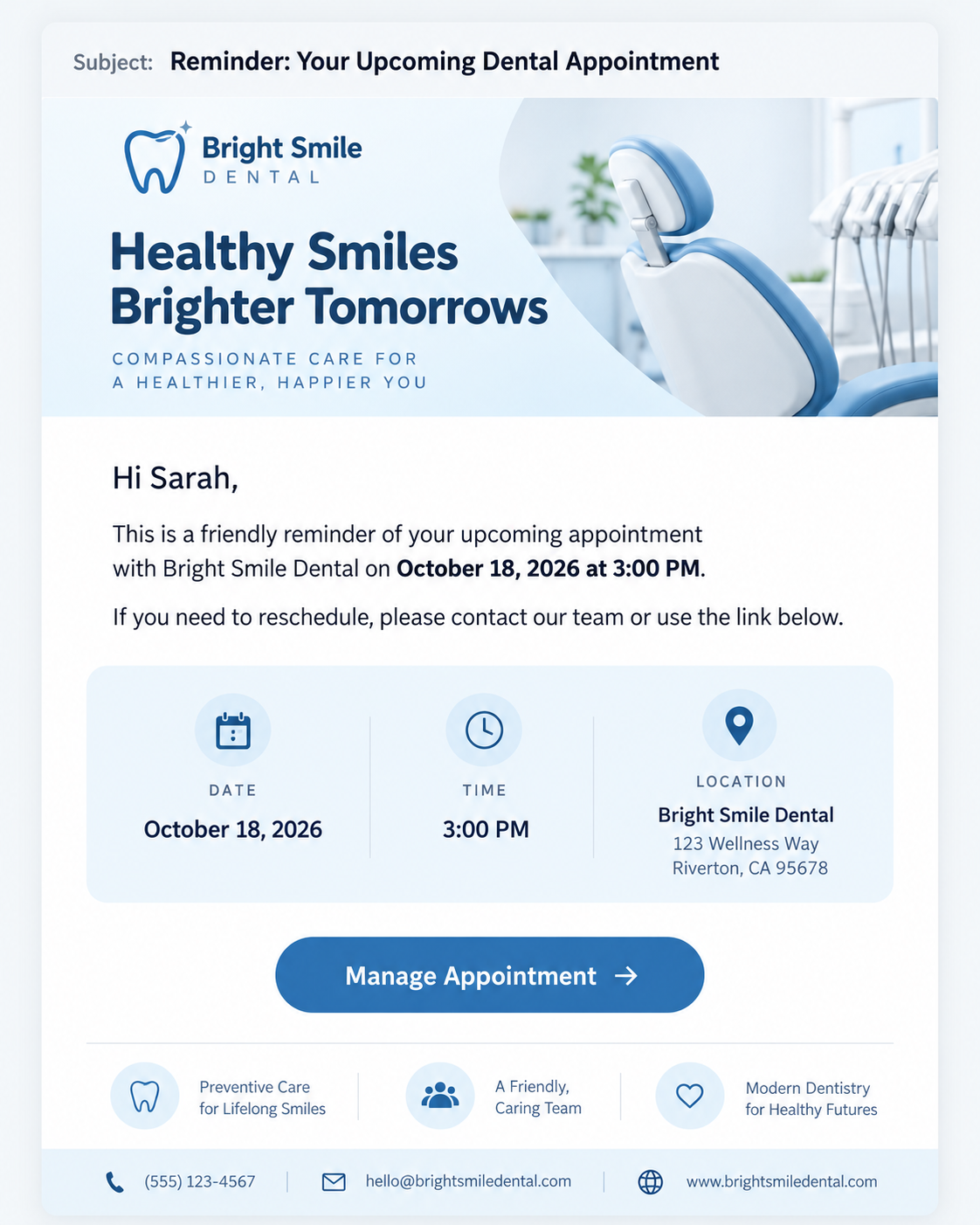
Well-written dental appointment reminder emails show the date, time, and location, plus preparation details if needed. Add a contact or reschedule option, and keep the layout easy to scan on a phone. A subject line like "Your appointment is on Thursday at 10:00" leaves no room for confusion. Some practices also send a second reminder a day before, which gives people one last chance to reschedule.
Dental Recall Emails
Recall emails bring patients back for routine care like check-ups, cleanings, and other preventive visits. Keep the message friendly, like it may be time for your next visit, with one Book Appointment button. Timing should follow each patient's own care needs, because six months does not suit everybody. A simple subject line such as "Time for your next check-up" works better than anything clever.
Treatment Plan Follow-Up Emails
Send dental treatment follow-up emails when treatment was discussed, the patient has not booked, or more information was requested. Explain the treatment simply, answer common questions, say why follow-up matters, and finish with a booking button. Never make it sound like aggressive sales, because patients can feel pressure through a screen.
Post-Treatment Follow-Up Emails
Where appropriate, share general aftercare guidance, contact information, a follow-up visit reminder, and when to call the practice. Keep sensitive or patient-specific health information protected, and never put private clinical details in a casual message. A short note from the dentist or hygienist, signed by name, feels far more caring than a generic template.
Patient Reactivation Emails
Good dental reactivation emails sound human, offer a clear way to book, and let patients update their preferences. A friendly opener such as "We haven't seen you recently" works well, followed by an easy booking link. Define inactivity in your own way instead of copying one fixed number from someone else.
Oral Health Education Emails
Good topics include brushing, flossing, gum health, children's oral health, preventive care, diet, and common dental questions. These emails can lift dental patient engagement when you explain things the way you would to a neighbor. One short tip with one friendly link is plenty, and patients will appreciate how easy it is to read.
Treatment Awareness Emails
Examples include Invisalign, implants, whitening, cosmetic dentistry, and any other service your practice provides to patients. Pick one service per email, explain what it is, answer common questions, and invite a consultation. Do not promise outcomes, because every mouth is different and results depend on the individual patient.
Seasonal and Timely Dental Emails
Send messages when they truly help, such as year-end benefit reminders, back-to-school checkups, and holiday opening hours. You can also share seasonal oral-health tips, or mention whitening before weddings and reunions if you offer it. Do not let discounts become the main strategy, because patients should come back for care, not coupons.
Dental Newsletter Emails
For dental newsletter ideas, try an oral-health tip, a practice update, team news, or seasonal advice. Add a mention of any new service, finish with one main call to action, and keep the layout regular. Avoid turning the newsletter into a long list of treatments, because readers will stop before the end.
Review Request Emails
After an appropriate visit, send a short thank-you email with a direct link to leave an honest review. Keep the request neutral and avoid asking only patients you expect to leave positive feedback. Make sure your review process follows the platform's policies and protects patient privacy.
Referral Emails
Keep the request simple, and explain the referral options clearly if your practice runs a referral program. A line such as "Know someone who would like a friendly dentist" feels natural and low pressure. Use these emails occasionally, not constantly, so the ask still feels like a friendly favor.
Dental Email Marketing Examples
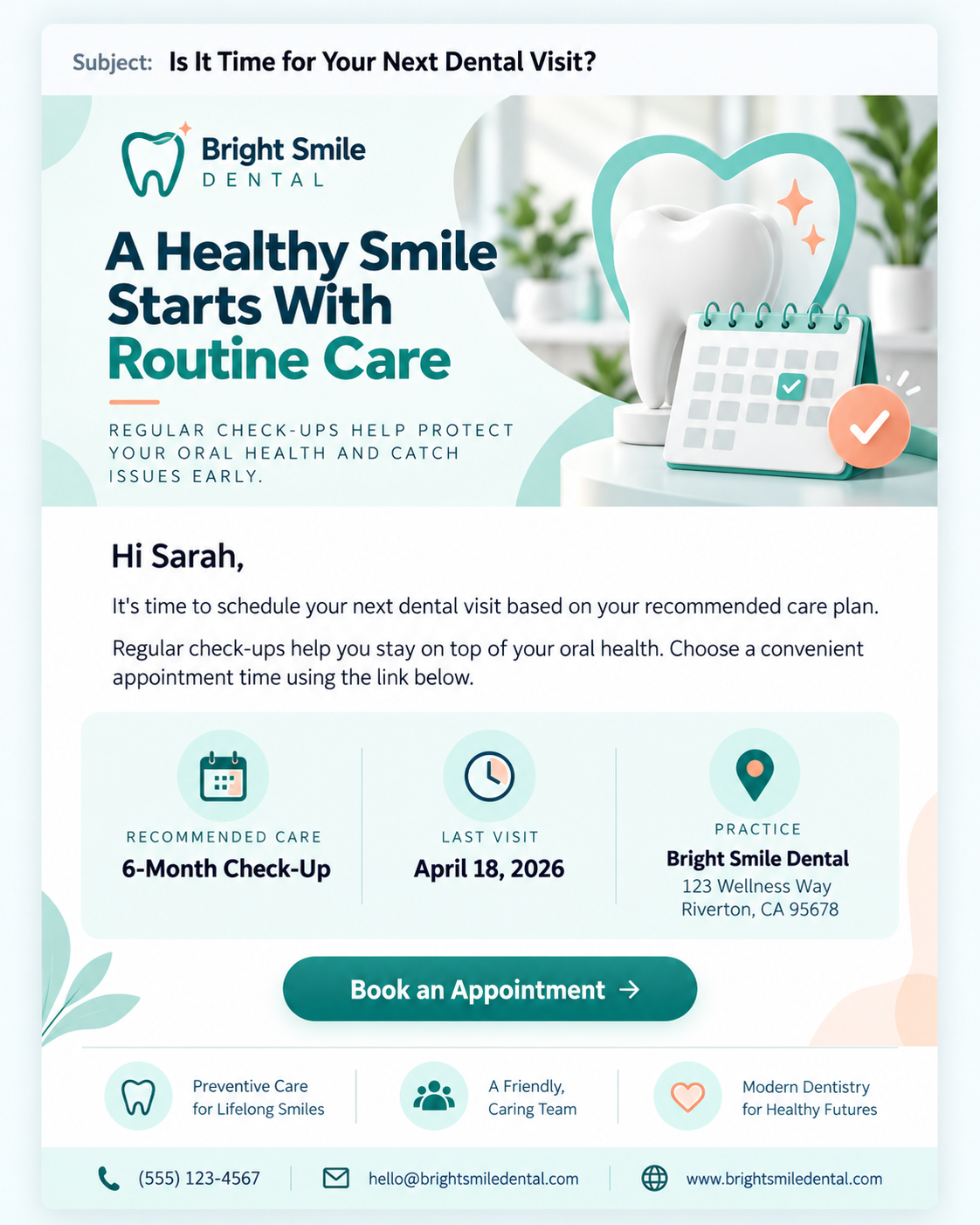
Here are three simple email examples that dental practices can adapt for their patients.
Example 1: Appointment Reminder
Example 2: Dental Recall Email
Example 3: Patient Reactivation Email
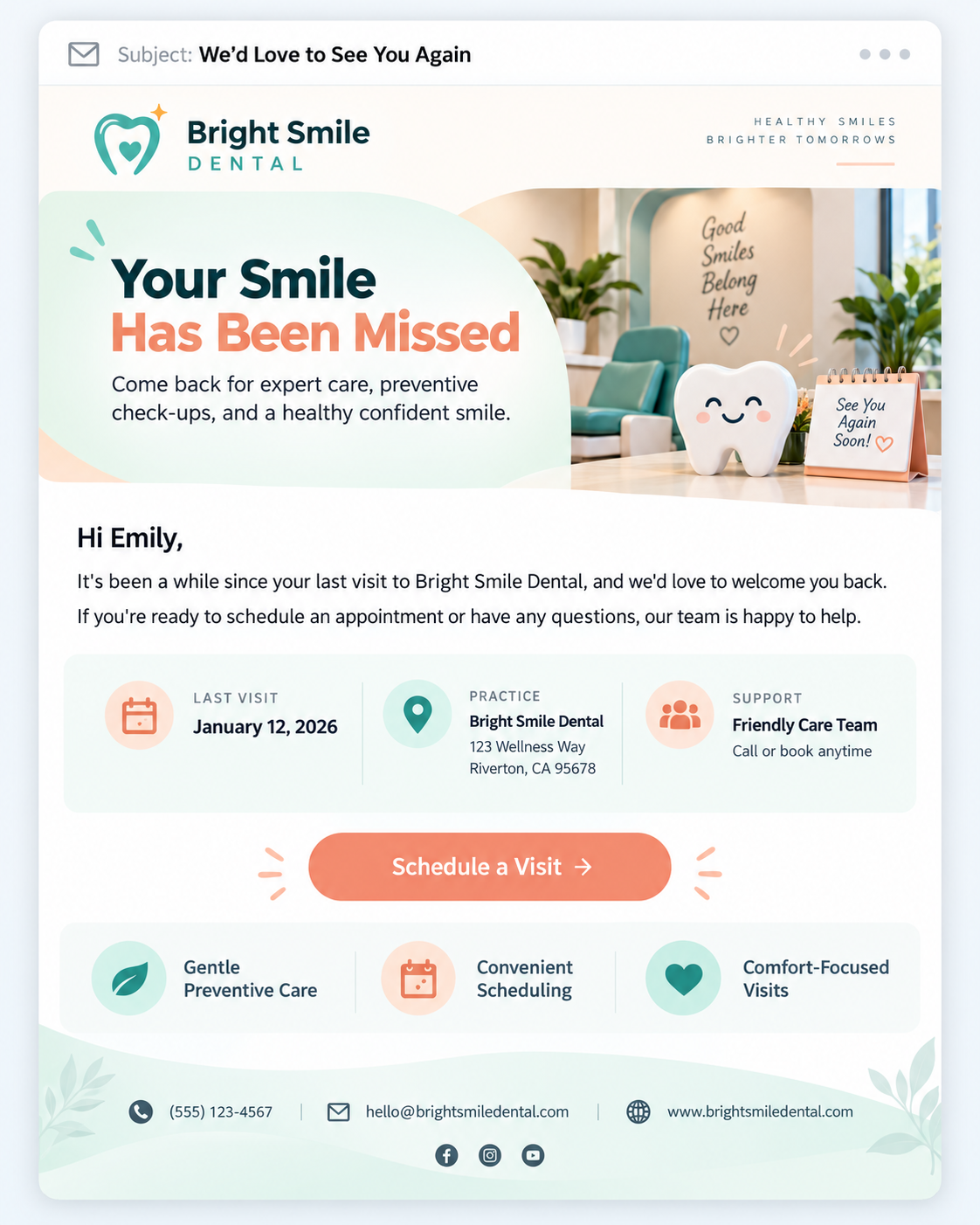
How Email Marketing Can Increase Dental Practice Revenue
Email marketing can support dental practice revenue by encouraging repeat appointments, reducing missed visits, and helping patients move forward with recommended care. Its financial value depends on how many patients book appointments and return for future visits.
Routine Care Returns
Recall emails put existing patients back into the appointment calendar without any extra advertising spend. Even a small increase in recall bookings each month can add up across a year of busy schedules.
Fewer Forgotten Appointments
Reminder emails support a more predictable schedule, which helps your team plan staff and supplies. Every kept appointment also protects available treatment time, and that time is something you cannot store.
More Treatment Follow-Up
Patients who have not yet scheduled recommended care stay connected to your practice instead of fading away. Often the recommendation was right, and the patient only needed a reminder and a little reassurance.
Inactive Patients Return
Reactivation campaigns can bring back people you already spent money to attract in the past. You earned their trust once, which makes winning them back easier than winning a stranger.
Patients Learn New Treatments
Treatment awareness campaigns can create consultations from people who already know and trust your practice. A patient who has trusted you for years is more open to hearing about a new service.
Retention Beats Acquisition
New-patient marketing still matters, but keeping current patients active also supports steady long-term growth for your practice. Smart dental practice marketing strategies pair new-patient outreach with steady communication with the people already visiting your practice. More recalls, stronger treatment follow-up, reactivation, and retention add up to a healthier appointment book over time.
How to Build a Dental Practice Email List
Start by collecting email addresses through patient registration forms, online bookings, and website signups. Explain which communications patients can expect and provide clear choices for promotional messages. Keep appointment-related communications separate from marketing campaigns, and follow the privacy and email rules that apply to your practice.
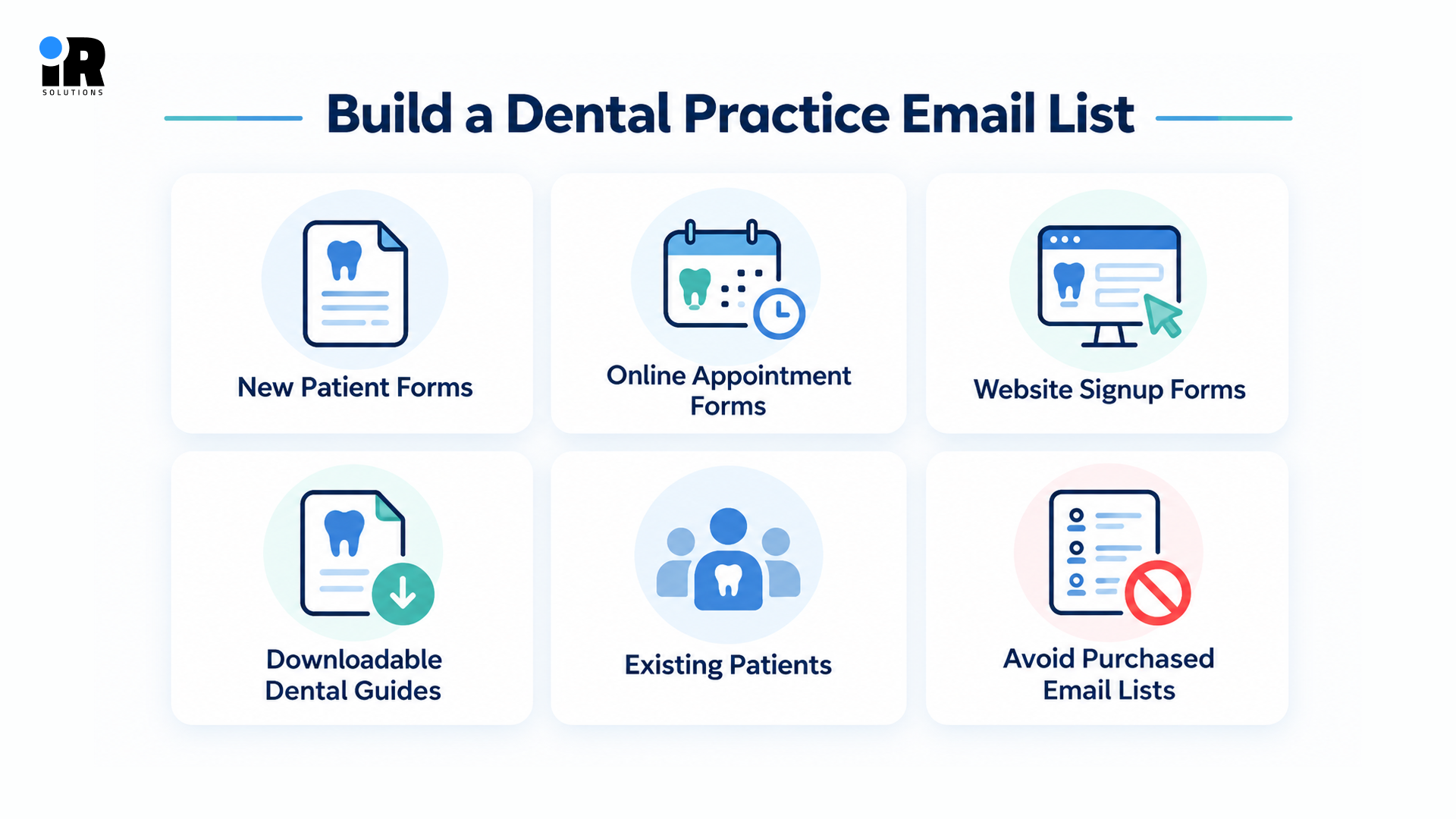
New Patient Forms
Registration is the easiest moment to ask how a patient would like to hear from you. Offer clear communication choices on the form, and record each answer so your team respects it later.
Online Appointment Forms
People booking online are already interested, so this is a natural place to ask for an email address. Let patients or prospective patients enter it while booking, and explain what messages they will receive.
Website Signup Forms
A short signup form on your website can catch visitors who are not ready to book yet. Give people a reason to join, such as practice updates, oral-health tips, or new-patient information.
Downloadable Dental Guides
A useful guide gives visitors a good reason to share their email address with your practice. Good ideas include a first-visit guide, a children's oral-health checklist, an implant information guide, and an Invisalign guide. Each one answers early questions, so nervous or curious people feel comfortable before they ever book.
Existing Patients
Your current records are valuable, but they do not automatically give you unlimited permission to send promotions. Check your consent rules and your practice policies before adding every patient record to a marketing list.
Avoid Purchased Email Lists
Buying an email list might seem like an easy way to reach more people, but it often does more harm than good. These contacts may not know your practice or want to hear from you, which makes them more likely to mark your emails as spam. Too many spam reports can affect email delivery, and contacting people without their consent may also violate privacy laws and damage your practice's reputation.
How Email Automation Helps Dental Practices
Dental email automation sends the right message on its own when a patient books, becomes due, or takes an action. It spares your front desk from repeating the same messages and keeps your timing consistent.
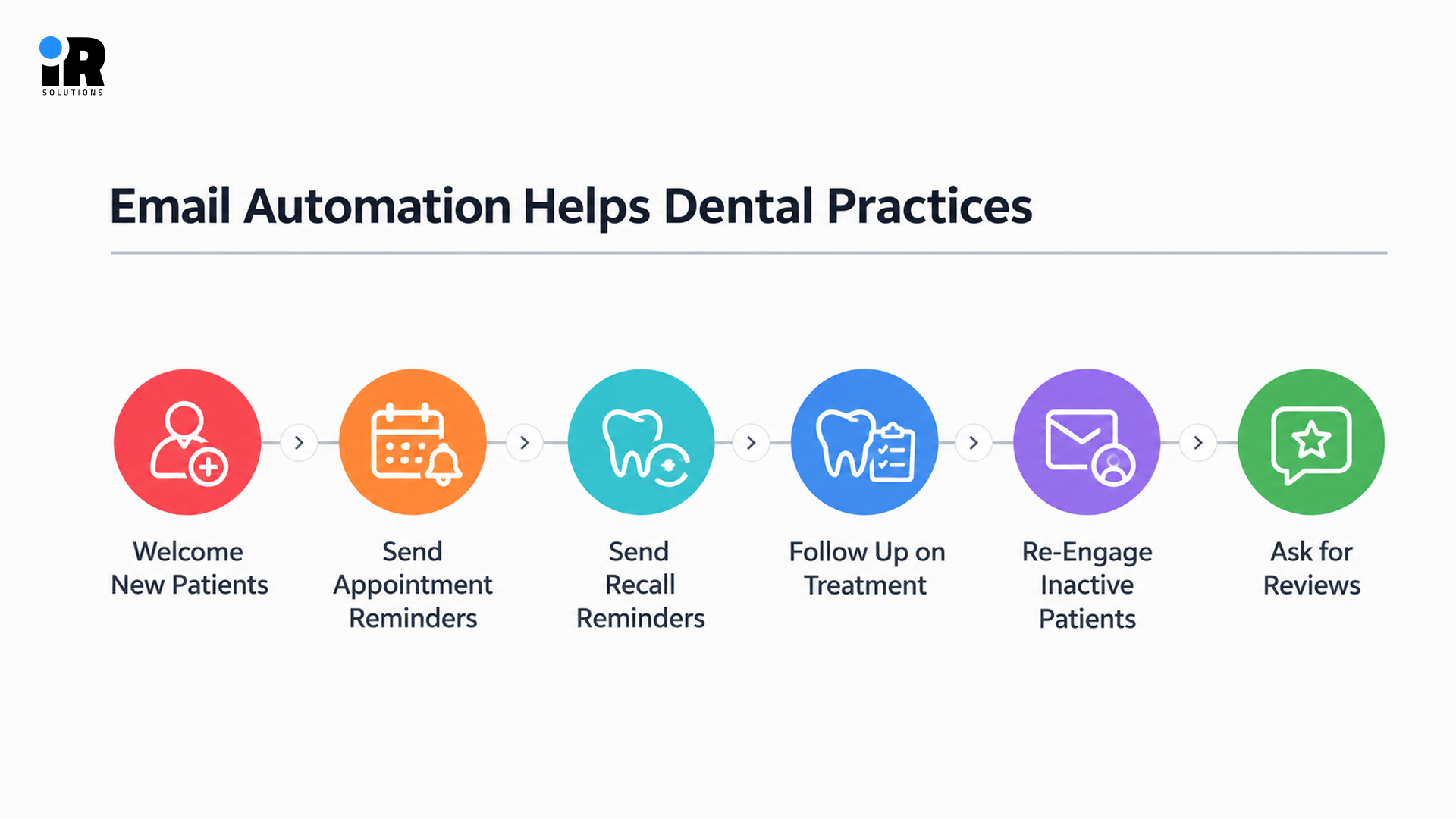
Welcome New Patients
A new booking triggers a welcome email, so every newcomer hears from you straight away. This first message sets the tone for the relationship. Keep it warm, brief, and clear about what to expect at the first visit.
Send Appointment Reminders
Once a visit is scheduled, the system sends a reminder at the time you choose. You can add a second reminder closer to the visit for patients who tend to forget.
Send Recall Reminders
An automated recall system can send reminders based on each patient's recommended appointment schedule. Your team should still review patient records, keep recall dates accurate, and follow up personally when needed.
Follow Up on Treatment
When treatment is discussed but not booked, a follow-up email can go out after a delay you choose. Stop the sequence as soon as the patient books, so nobody receives a reminder for something already done.
Re-Engage Inactive Patients
When a patient has no recent visit on record, a reactivation message can invite them back. Limit the sequence to two or three messages, then let the patient rest if there is no reply.
Ask for Reviews
After a completed visit, a feedback or review request can follow where that is appropriate. Wait a little after the visit, so the patient has time to enjoy the good experience first. Automation handles routine communication, while your dental team handles every clinical or sensitive conversation personally.
Read our guide on how to use email automation to scale marketing fast for setup ideas.
Best Practices That Make Emails Work
Good dental emails are short, personal, and easy for a busy patient to act on. They should sound like a real person wrote them, not like a brochure.
Give Every Campaign One Goal
A focused email is easier to write, easier to read, and easier to measure. Pick one aim, such as booking a check-up, finishing treatment, or leaving a review, and build the email around it.
Write Like a Patient, Not a Dentist
Patients don't use clinical terms in daily life, so your emails shouldn't either. Use plain words, and pick the phrases your patients actually say at the front desk.
Keep Emails Short and Clear
Readers decide in seconds whether an email matters, so put your main point near the top.
- Reason: Say in the first line why the patient is getting this message.
- Relevance: Tell them in one sentence why it matters to their health or schedule.
- Next step: End by showing what to do next, whether that's booking, calling, or replying.
Make Booking Easy
Every extra click loses a few patients, so keep the path to a booked visit short. Use a clear booking button or contact option, and test it on your own phone before you send.
Use One Main Call to Action
Two buttons competing for attention often leave the reader doing nothing. Choose one, such as Book Appointment, Request Consultation, Contact the Practice, or Leave a Review.
Make Emails Mobile-Friendly
Most patients read email on their phones, often while waiting in a queue or riding the bus.
- Short paragraphs: Keep them to two or three lines so the text doesn't look like a wall.
- Readable text: Use a font size that's easy to read without zooming.
- Clear buttons: Make buttons big enough to tap with a thumb, with space around them.
- Simple layout: Stick to a single column, since fancy designs often break on small screens.
Keep the Practice Recognizable
Patients should know right away that the email came from people they trust.
- Practice name: Show it clearly at the top of the email and in the sender field.
- Logo: Place it in the same spot every time so patients spot your messages quickly.
- Sender name: Use the same one each time, ideally a real person from your front desk.
- Contact details: Add your phone number and address at the bottom of every email.
Don't Send Every Email to Every Patient
Sending everything to everyone teaches patients to ignore your name. Send recall, treatment, and reactivation emails only to the groups who actually need them.
Our email copywriting guide can help you write each of these messages with more confidence.
How Often Should Dentists Send Emails?
The right email frequency depends on what patients need and why you are contacting them. Effective dentist email campaigns follow patient needs and appointment schedules rather than sticking to a fixed marketing calendar.
- Reminders: Appointment reminders depend entirely on when the visit is scheduled, so each patient gets their own timing.
- Recall: Recall messages follow each patient's recommended care timing rather than a single calendar date for all.
- Follow-up: Treatment follow-up depends on where the patient sits in their own journey from advice to booking.
- Reactivation: Reactivation depends on how your practice defines an inactive patient, and that definition can differ widely.
- Newsletters: Send newsletters now and then, and only when you have something genuinely useful to share.
- Promotions: Promote a treatment only when it is relevant to the specific patient receiving the message.
Patient need and timing should decide when each email goes out, not the marketing calendar alone.
Patient Privacy and Your Emails
Dental practices handle sensitive patient information, so email communication needs appropriate safeguards. The rules depend on your location, the type of message, and how patient information is used.
Understand the Difference Between Reminders and Marketing
Appointment reminders and treatment-related communications are generally treated differently from promotional campaigns under HIPAA. Some marketing uses of protected health information require patient authorization, while certain treatment and healthcare operations communications are excluded from HIPAA's marketing definition.
Review the HHS guidance on healthcare marketing before launching promotional campaigns.
Protect Patient Information
Avoid including unnecessary treatment details, diagnoses, or sensitive health information in routine promotional emails. When patient-specific information must be shared, use communication methods with appropriate safeguards and respect patients' communication preferences.
Choose a Secure Email Platform
Before connecting an email platform to patient records, check its security features, access controls, and data-handling policies. For US practices subject to HIPAA, a business associate agreement may be required when a service provider handles protected health information.
Follow Consent and Unsubscribe Requirements
Explain what patients are signing up to receive and respect their communication preferences. Marketing emails must follow applicable advertising and privacy laws. For US commercial emails, CAN-SPAM requirements include accurate sender information, a valid postal address, and a working opt-out mechanism.
Make it easy for patients to stop promotional messages without interfering with necessary appointment-related communication.
If you're unsure which requirements apply, consult a qualified healthcare privacy professional.
Which Email Metrics Matter?
Track more than email opens and clicks to measure the real impact of your dental email campaigns. Focus on appointments, returning patients, treatment enquiries, and revenue to see which emails bring patients back and encourage them to book.
- Bookings: Appointment bookings show how many patients took real action after reading your message this month.
- Recall bookings: Recall bookings show whether your routine patients are returning on a healthy schedule after each reminder.
- Treatment enquiries: Treatment enquiries show which patients are interested in the services you have been explaining to them.
- Treatment bookings: Treatment bookings show whether your follow-up emails actually helped patients move forward with the care they needed.
- Reactivated patients: Reactivated patients show how well your win-back campaigns bring lapsed patients back to the chair.
- Retention: Patient retention shows the long-term strength of your relationships, not just one month of activity.
- Reviews: Review activity shows how often happy patients share their experience after you ask them kindly.
- Referrals: Referral enquiries show whether your patients are actually recommending you to their friends and family members.
- Attributed revenue: Revenue attributed to email is the commercial result, so connect your booking data to your campaigns.
- Click rate: Click rate shows which topics interest your readers, but it never replaces actual booked appointments.
- Unsubscribes: Unsubscribe rate shows whether your content and frequency feel relevant to the patients on your list.
A Simple Plan to Start This Month
You don't need to build everything at once. This four-week plan lets your team start small and add one piece at a time.
- Week one: Clean your list, confirm consent, and choose one team member to own the whole email project.
- Week two: Set up the welcome email and the appointment reminder, then test both on a few phones.
- Week three: Launch the recall email for one patient group, and note how many people book afterward.
- Week four: Add a treatment follow-up email, review your numbers, and decide carefully what you want to build next.
Conclusion
Email marketing gives dental practices a practical way to stay connected with patients, encourage repeat appointments, and support long-term relationships. From simple appointment reminders to automated recall and reactivation campaigns, the right emails can make patient communication more consistent.
Start with the campaigns that address your practice's immediate needs. Track appointment bookings, returning patients, and treatment enquiries to understand what's working, while keeping patient privacy and communication preferences a priority.
If your team needs help setting up campaigns and automation, you can hire email marketing experts to build and manage the process.
Frequently Asked Questions
Does email marketing work for dentists?
Yes, it can work well when you send relevant messages to patients who already know your practice. Results depend on list quality, timing, and clear calls to action, so no outcome is guaranteed.
What emails should dentists send?
Start with welcome, appointment reminder, recall, and treatment follow-up emails, because they connect directly to bookings. Add reactivation, education, newsletter, review, and referral emails once your first few campaigns are running smoothly.
How can email marketing help a dental practice grow?
It keeps your calendar active by bringing back overdue patients, following up on treatment, and encouraging reviews. It also strengthens patient relationships, which lowers your reliance on constantly finding brand new patients elsewhere.
What is a dental recall email?
A recall email reminds a patient that routine care, such as a check-up or cleaning, is due. It includes a friendly message and a clear booking button, timed to the patient's care needs.
What is a dental reactivation email?
A reactivation email invites a patient who has not visited you recently to book a new appointment. Each practice decides what counts as inactive, then sends a helpful, pressure-free message to that group.
Can dentists automate follow-up emails?
Yes, most email platforms can send welcome, reminder, recall, follow-up, and review emails based on patient actions. Your team should still handle clinical or sensitive conversations personally, and check privacy settings first.
How often should dentists email patients?
There is no single rule, because frequency depends on the email type and the patient's situation. Reminders follow appointments, recalls follow care timing, and newsletters go out only when you have something useful.
Can dentists promote treatments by email?
Yes, as long as you follow the marketing and privacy rules that apply in your area. Keep the message educational, avoid promising outcomes, and send it only to patients who may find it relevant.
What metrics should dentists track?
Track booked appointments, recall bookings, treatment enquiries, reactivated patients, retention, reviews, referrals, and revenue linked to email. Click and unsubscribe rates help too, but they matter less than real appointments in your calendar.