




Key Takeaways
- Every campaign should start with one clear audience and one measurable goal before you write anything.
- Different campaign types fit different stages of the customer journey, from first signup to loyal repeat buyer.
- Scheduled campaigns and automated campaigns serve different purposes, so you need to plan each one separately.
- Segmentation and customer behavior should decide who receives each campaign, instead of sending everything to everyone.
- Measure success through clicks, conversions, revenue, leads, retention, and list health rather than opens alone.
- No single campaign type suits every business, so build a mix that matches your own customers.
Think about the last time you cleared your inbox. How many emails did you actually stop to read? Probably only a handful. Most messages get deleted or ignored within seconds, and your customers treat your emails the same way.
Email remains an important marketing channel, but relevance and timing make a major difference. Klaviyo’s 2026 benchmark data shows that automated flows generated nearly 41% of email revenue from just 5.3% of sends. Its consumer research also found that 74% of shoppers expect brands to provide more personalized experiences. The difference often comes down to what you send, who receives it, and when you send it.
A successful email campaign starts with a clear audience and one specific goal. Whether you want to promote a product, bring back inactive customers, or increase repeat purchases, having a purpose keeps your campaign focused and avoids unnecessary sends.
This guide covers ten types of email marketing campaigns, with practical examples and simple tips to help you plan each one. By the end, you’ll know what to send, who to target, and what result to aim for.
What Is an Email Marketing Campaign?
An email marketing campaign is a single email or a planned series sent to a specific audience. Each one has a clear goal, a main message, and one action you want readers to take. This structure separates real email marketing campaigns from random emails sent whenever someone remembers to hit send.
Brands run them to sell products, educate subscribers, recover carts, win back inactive readers, or collect feedback. Your goal decides almost every choice you make afterwards, so define it before you write anything.
Email Campaign vs Email Automation
An email campaign is sent at a specific time to a selected group of people. Newsletters, promotions, product launches, and seasonal offers are common examples. You decide when to send the email and who should receive it.
Email automation works differently. These emails are sent automatically when someone takes a specific action, such as signing up, making a purchase, or leaving items in their cart. Inactivity and anniversaries can also trigger automated emails, so you do not have to send each one yourself.
The names can vary depending on the platform you use. In Klaviyo, one-time emails are called campaigns, while automated email sequences are called flows.
For a closer look at triggers and automated workflows, read our email marketing automation guide.
10 Types of Email Marketing Campaigns
The ten types below cover many of the most common email marketing goals, from first signup to repeat sales.
Campaign Type | Main Goal | Typical Audience | Scheduled or Automated |
Welcome and onboarding | Build trust and drive a first action | New subscribers and customers | Automated |
Newsletter and content | Stay top of mind | Engaged subscribers | Scheduled |
Promotional and sales | Drive purchases | Segmented buyers and subscribers | Scheduled |
Product launch | Build awareness and demand | Waitlists, customers, interest segments | Scheduled sequence |
Seasonal and event | Capture event-driven demand | Relevant audience segments | Scheduled |
Abandoned cart | Recover lost sales | Shoppers who left | Automated |
Post-purchase and cross-sell | Encourage repeat purchases | Recent customers | Automated |
Lead nurture | Move leads toward a decision | Leads and trial users | Automated |
Re-engagement and win-back | Revive interest or purchases | Inactive subscribers and past customers | Mostly automated |
Feedback and survey | Gather reviews and insight | Recent customers and attendees | Usually automated |
1. Welcome and Onboarding Campaigns
Welcome and onboarding campaigns greet new subscribers or customers and show them what happens next. They cover subscriber welcome emails, customer onboarding emails, and product onboarding for software or service users. The goals are to set expectations, introduce your brand, and deliver any incentive or resource you promised.
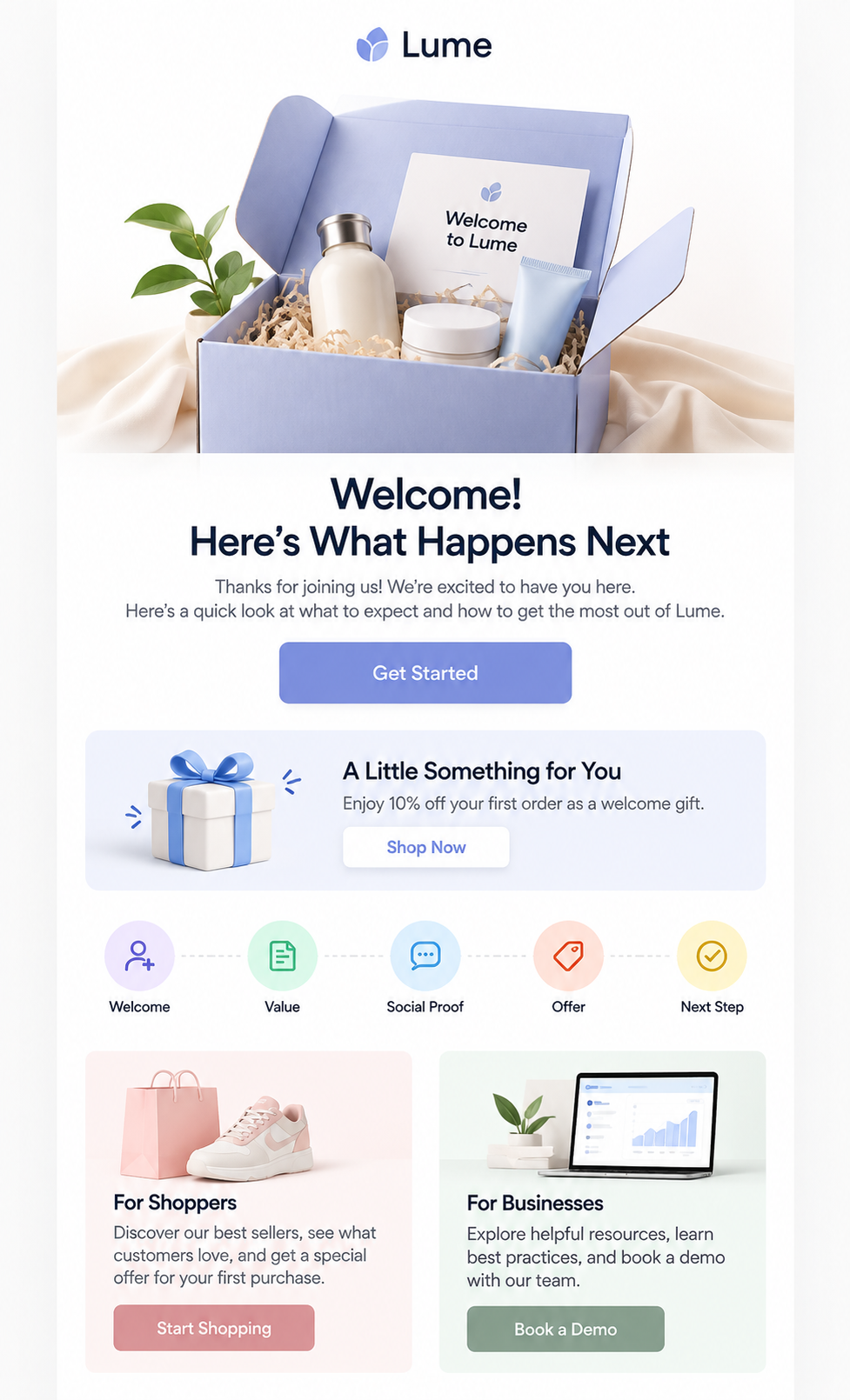
Send them the moment someone joins your list, buys for the first time, or starts a free trial. A welcome series can also continue into onboarding, which helps new users reach their first success quickly.
A sequence can look like this:
- Ecommerce: Signup, welcome, best sellers, social proof, then a first-purchase offer.
- B2B: Form submission, a resource, education, a case study, then a demo invitation.
- Each message builds on the previous one rather than repeating the same pitch.
As a best practice, keep the first email focused on the single most important next action you want the reader to take. Deliver the promised incentive or resource straight away, because early trust makes later emails far easier to sell.
2. Newsletter and Content Campaigns
Newsletters keep your brand familiar and give subscribers a steady reason to stay on your list. A newsletter is a recurring scheduled send that mixes useful content, company news, and one main call to action.
Choose a newsletter when you want regular contact with subscribers who are not ready to buy yet. It also builds familiarity, so people remember your brand when they finally need what you sell.
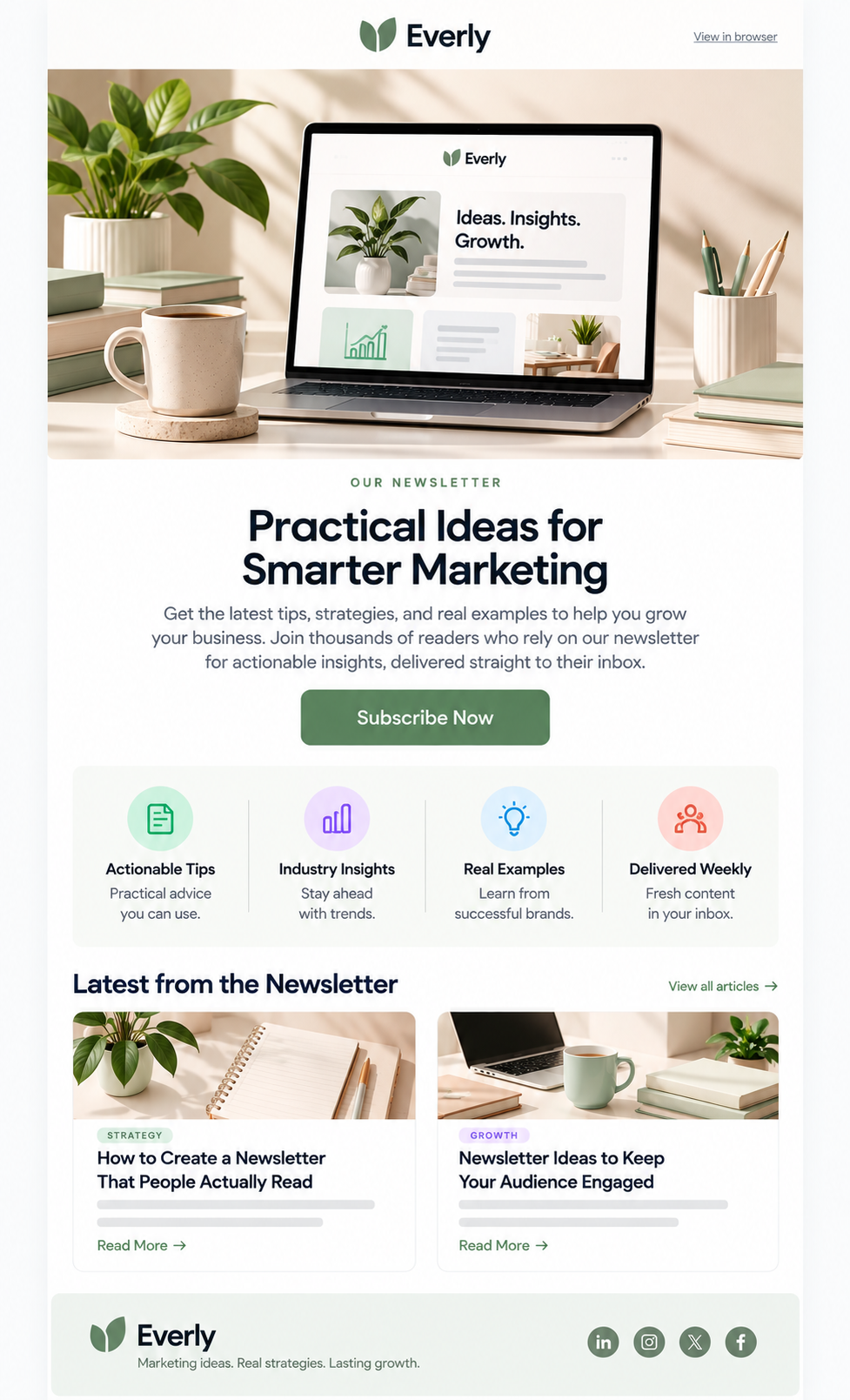
Typical content includes:
- Educational articles
- Industry insights
- Product ideas
- Customer stories
- New resources
- Carefully curated links
A monthly newsletter can share one useful guide, one product update, and one clear CTA, while keeping a consistent purpose and schedule with one main story per issue.
3. Promotional and Sales Campaigns
Promotional campaigns push a specific offer to drive purchases within a limited window of time.
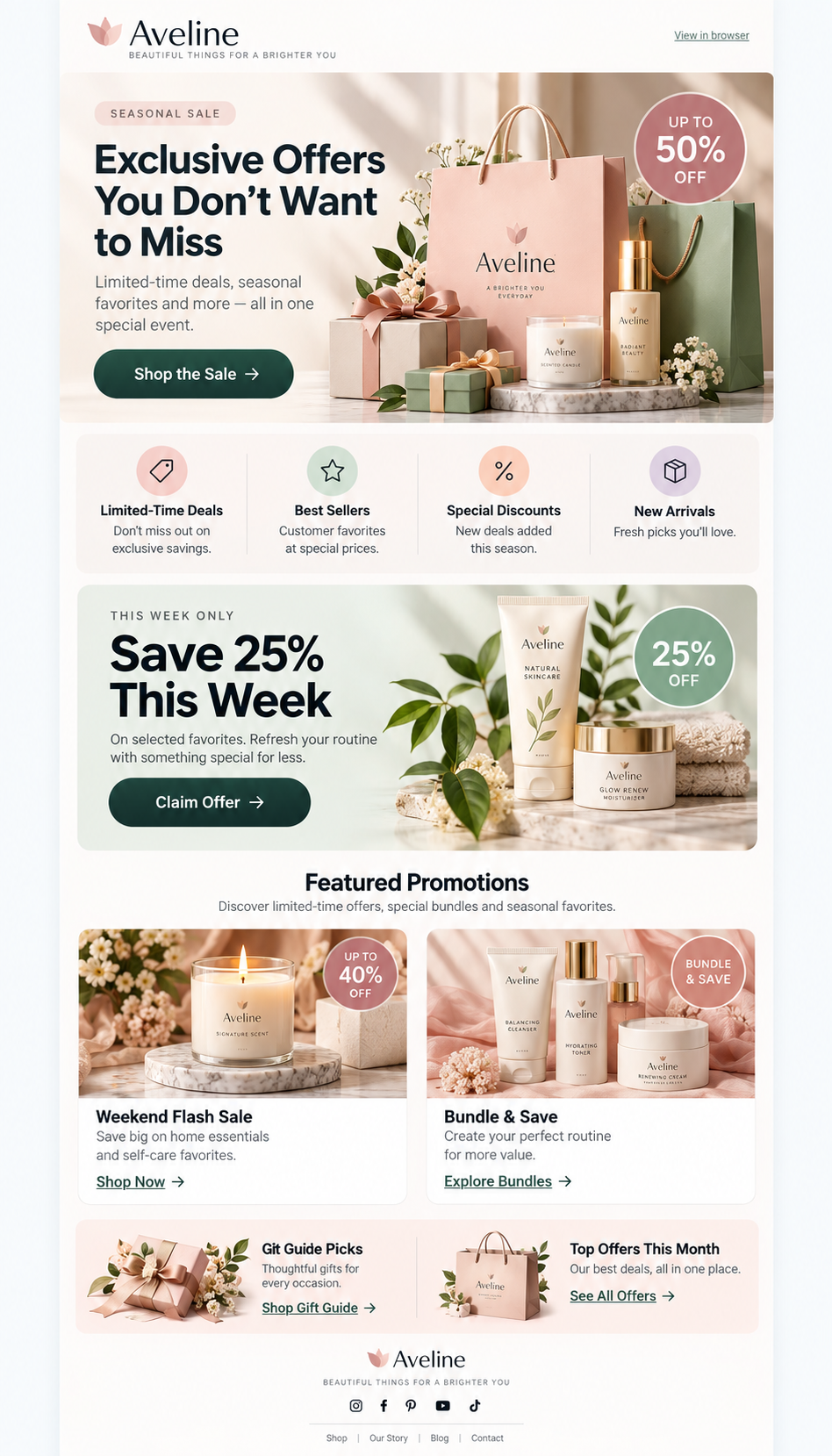
Use them when you have a real reason to buy now, such as stock clearance or a launch. Promotions should not always go to the entire list, because the offer, audience, timing, urgency, frequency, and margin all matter.
These campaigns include:
- Discounts and limited-time offers
- Bundles
- Free shipping
- Clearance sales
- Upsells
- VIP deals
For example, send a category-specific offer to customers who previously viewed or bought from that exact category. This feels more helpful than a blanket sale because the offer matches something the reader already liked.
Match the offer to your audience, use smaller incentives for loyal buyers, and only create urgency when the deadline is real.
Learn more in our guide to email segmentation strategies.
4. Product Launch and Announcement Campaigns
Launch campaigns introduce something new and build real excitement before, during, and right after release day.
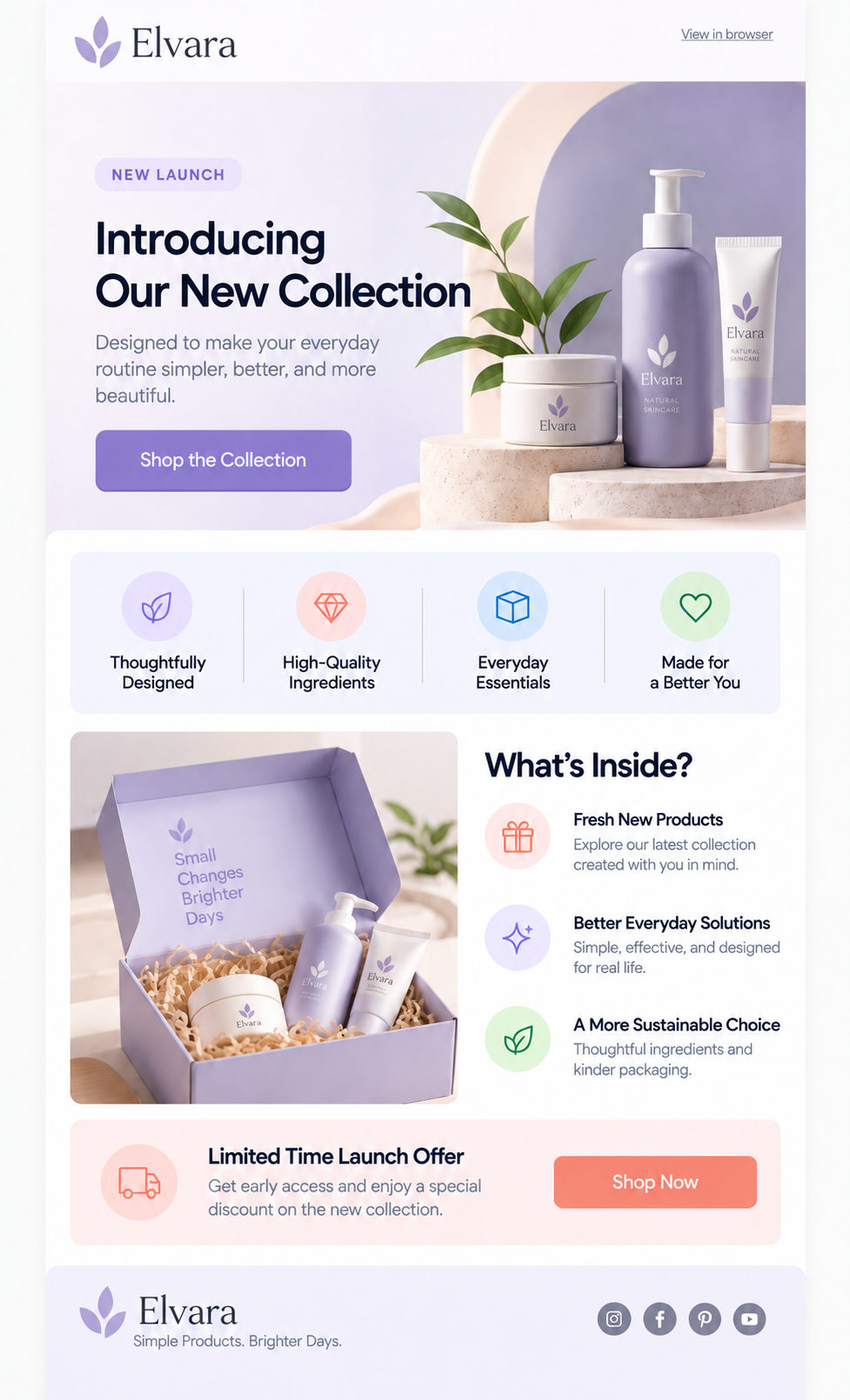
They announce new products, collections, features, services, or other major company news to the right people. For larger launches, a short sequence can build interest before release and give you more opportunities to explain the value after the announcement. Use a launch sequence whenever the news deserves more than a single email and a quick social post.
A launch can follow this order:
- Teaser
- Reveal
- Product education
- Launch email
- Reminder
As a best practice, offer early access to waitlists and existing customers, and target product-interest segments with one clear launch button. Keep the call to action the same across the sequence, so readers always know where to click.
5. Seasonal and Event-Based Campaigns
Seasonal and event campaigns connect your message to a moment your audience already cares about. Run them only when the event is relevant to your audience, because not every calendar date deserves an email.
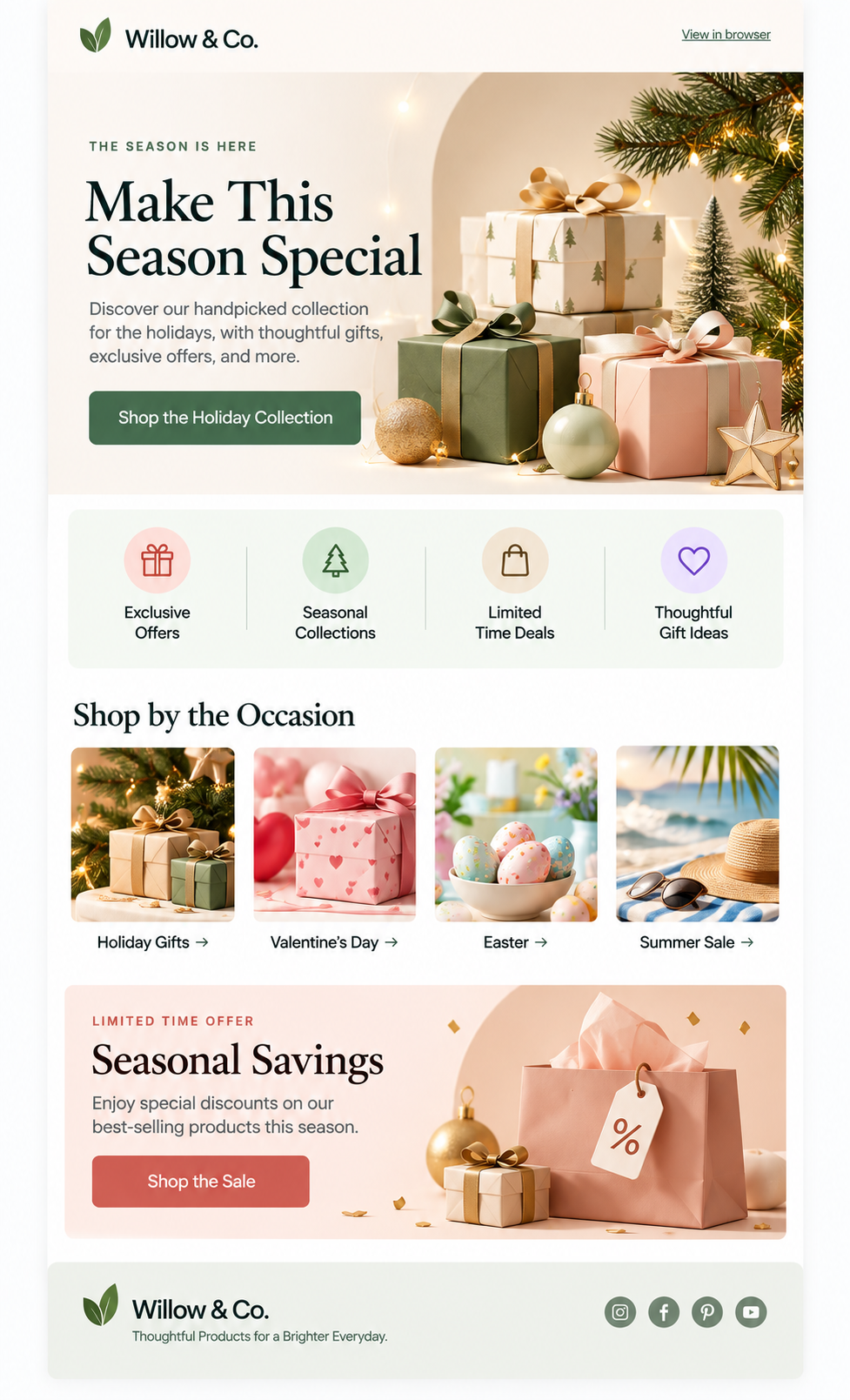
Examples include:
- Black Friday and Cyber Monday
- Holidays and Valentine's Day
- Back-to-school
- Conferences and webinars
- Company anniversaries
A sale sequence can move from early access to the main campaign, then a reminder, then final hours. Early access rewards your best subscribers, and the final-hours email gives hesitant buyers a reason to decide.
Avoid overlap between promotional sends and automated flows, and plan your calendar early so each campaign has a clear audience, offer, and timing.
6. Abandoned Cart and Recovery Campaigns
Recovery campaigns bring back shoppers who showed strong interest but left before finishing a purchase. These shoppers have already shown purchase intent, which makes cart recovery an important ecommerce automation to test. Klaviyo benchmark data has historically shown strong revenue per recipient for abandoned-cart flows, although actual results vary by industry, order value, audience, and setup.
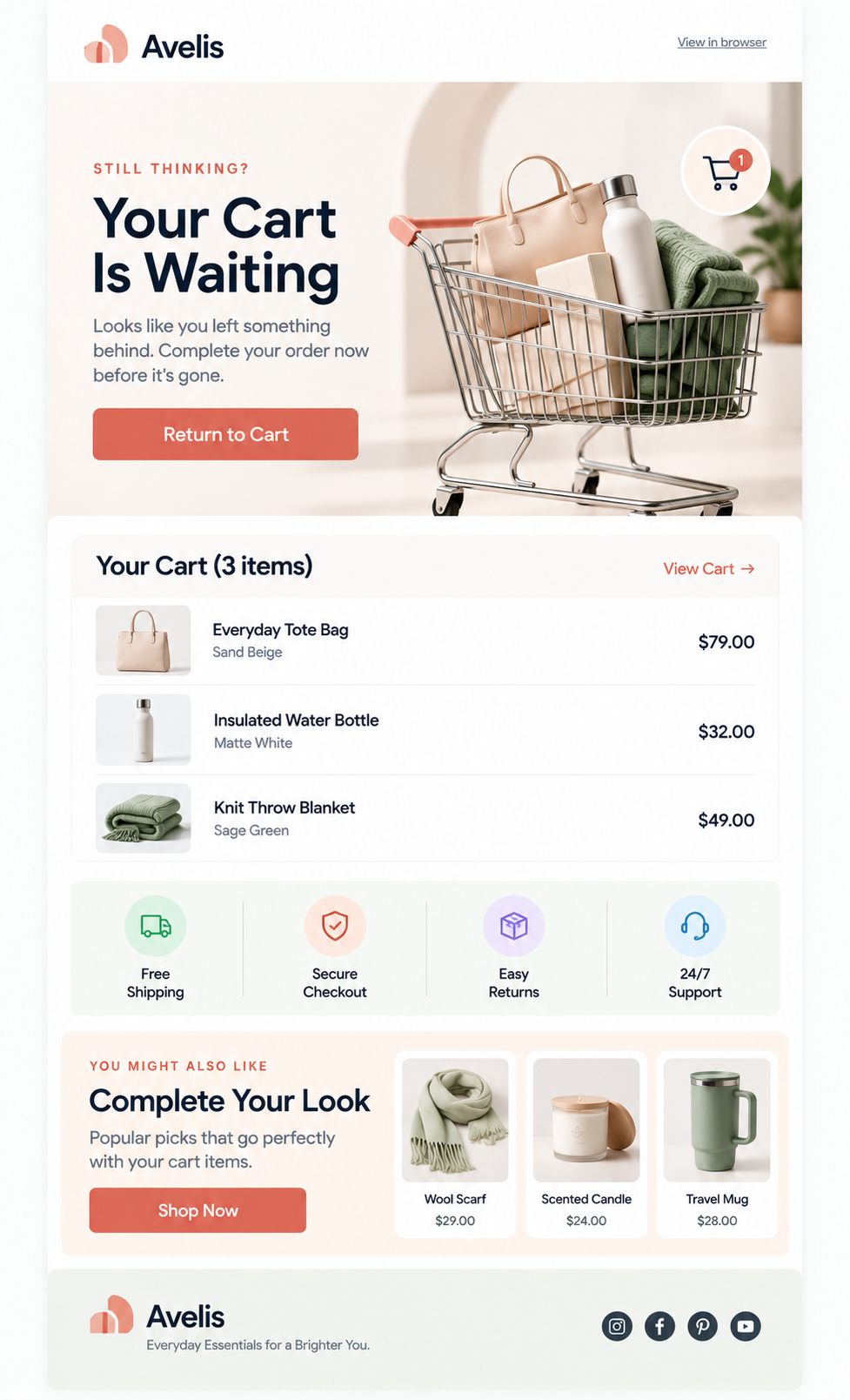
There are three main types:
- Browse abandonment: Targets people who viewed products.
- Cart abandonment: Targets those who added items but left.
- Checkout abandonment: Applies to shoppers who began paying and stopped before the order was complete.
Try a reminder first, then address objections and trust, and offer an incentive later only if needed. Timing matters too. Test when the first reminder should arrive and how far apart later messages should be based on your buying cycle, average order value, and customer behavior.
Use dynamic product content, exclude recent buyers, highlight shipping and returns, and add social proof while using discounts sparingly to avoid training shoppers to wait for offers.
Want to recover more lost orders? Check out our guide to abandoned cart recovery with Klaviyo.
7. Post-Purchase and Cross-Sell Campaigns
Post-purchase campaigns continue the conversation after checkout, when customers feel most curious about what they bought. Post-purchase campaigns can help customers get more value from what they bought, answer common questions, collect feedback, and create opportunities for relevant repeat purchases. Build the sequence around the product and customer journey rather than sending the same follow-up after every order.
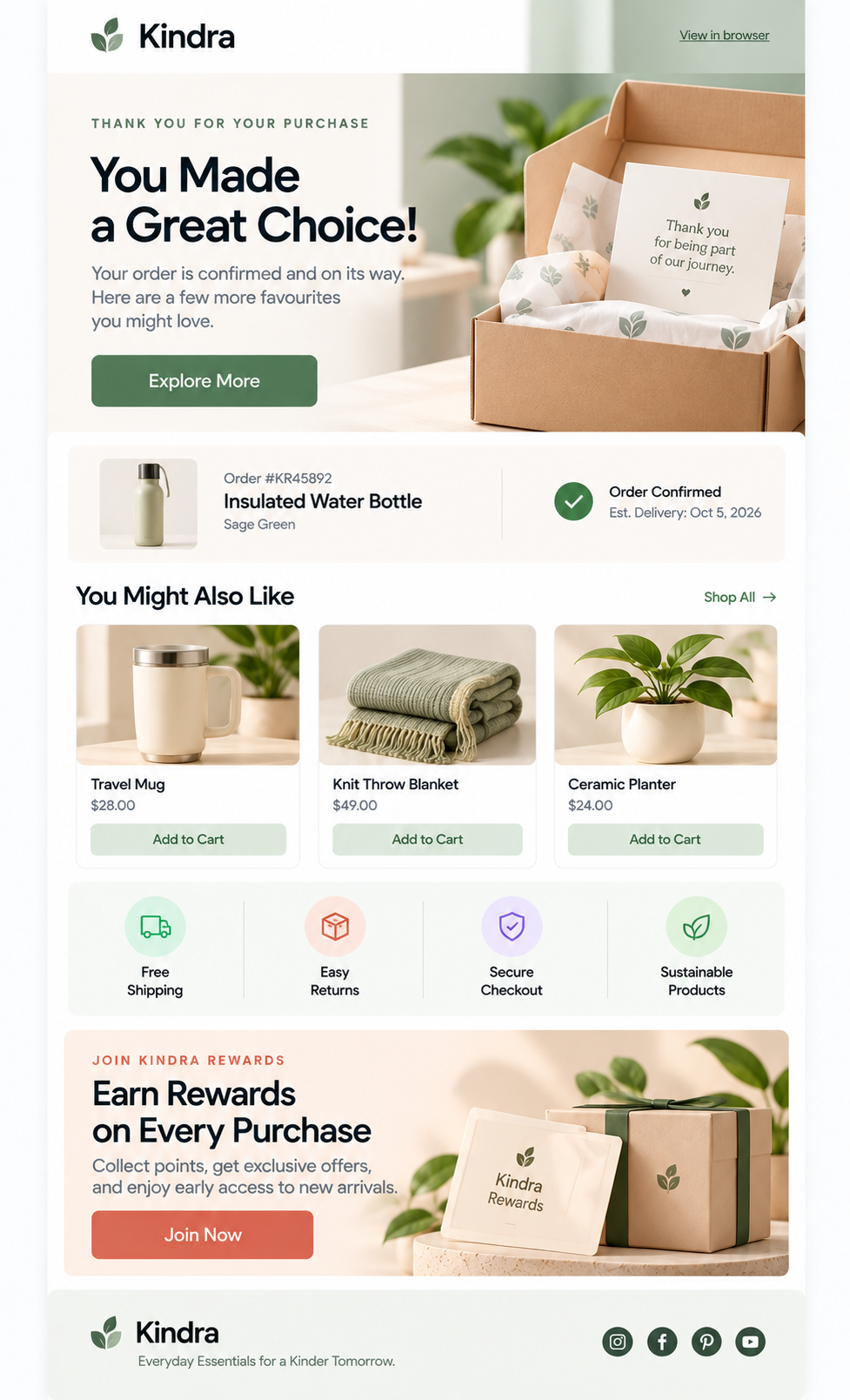
These emails include:
- Thank-yous
- Setup instructions
- Product education
- Complementary products
- Replenishment reminders
- Review requests
- Loyalty introductions
A sequence could move from purchase to product education, usage tips, a cross-sell, a review request, and replenishment.
Base your timing on actual customer behavior and cross-sell products that genuinely complement the original purchase, rather than relying on guesses or random items.
8. Lead Nurture and Educational Campaigns
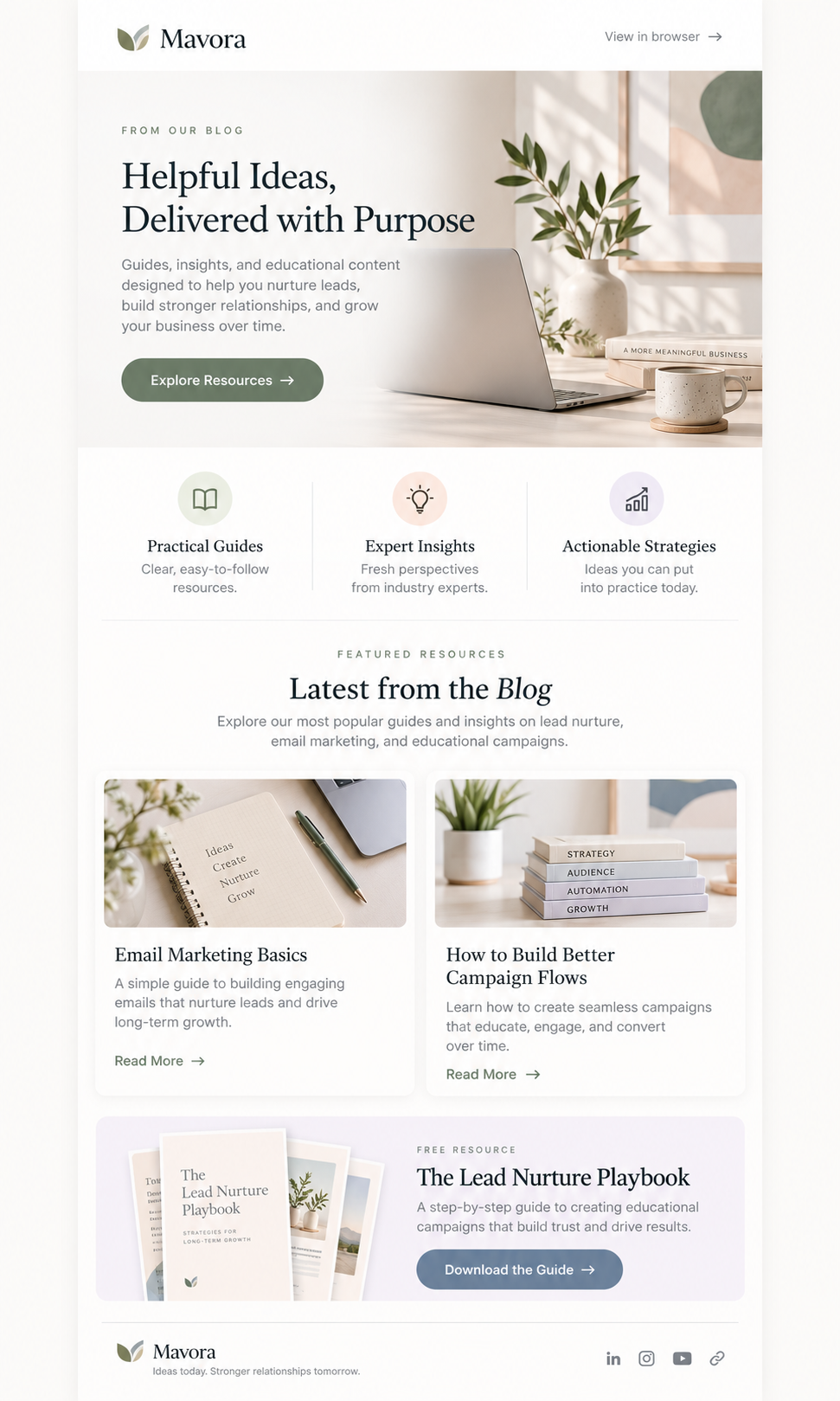
Nurture campaigns help interested prospects make a decision by answering their questions step by step. They work best when buyers need time, information, and trust before speaking with sales. For longer decisions, take things slowly and build confidence instead of pushing them toward a demo.
They suit:
- Lead magnet downloads
- Demo requests
- Webinar attendees
- Trial users
- Consultation leads
- Any long sales cycle
After a guide download, send an insight, a problem explanation, a case study, another resource, and then a demo invitation.
Answer questions step by step, make each email useful on its own, personalize the content, and pass engaged leads to sales promptly.
9. Re-Engagement and Win-Back Campaigns
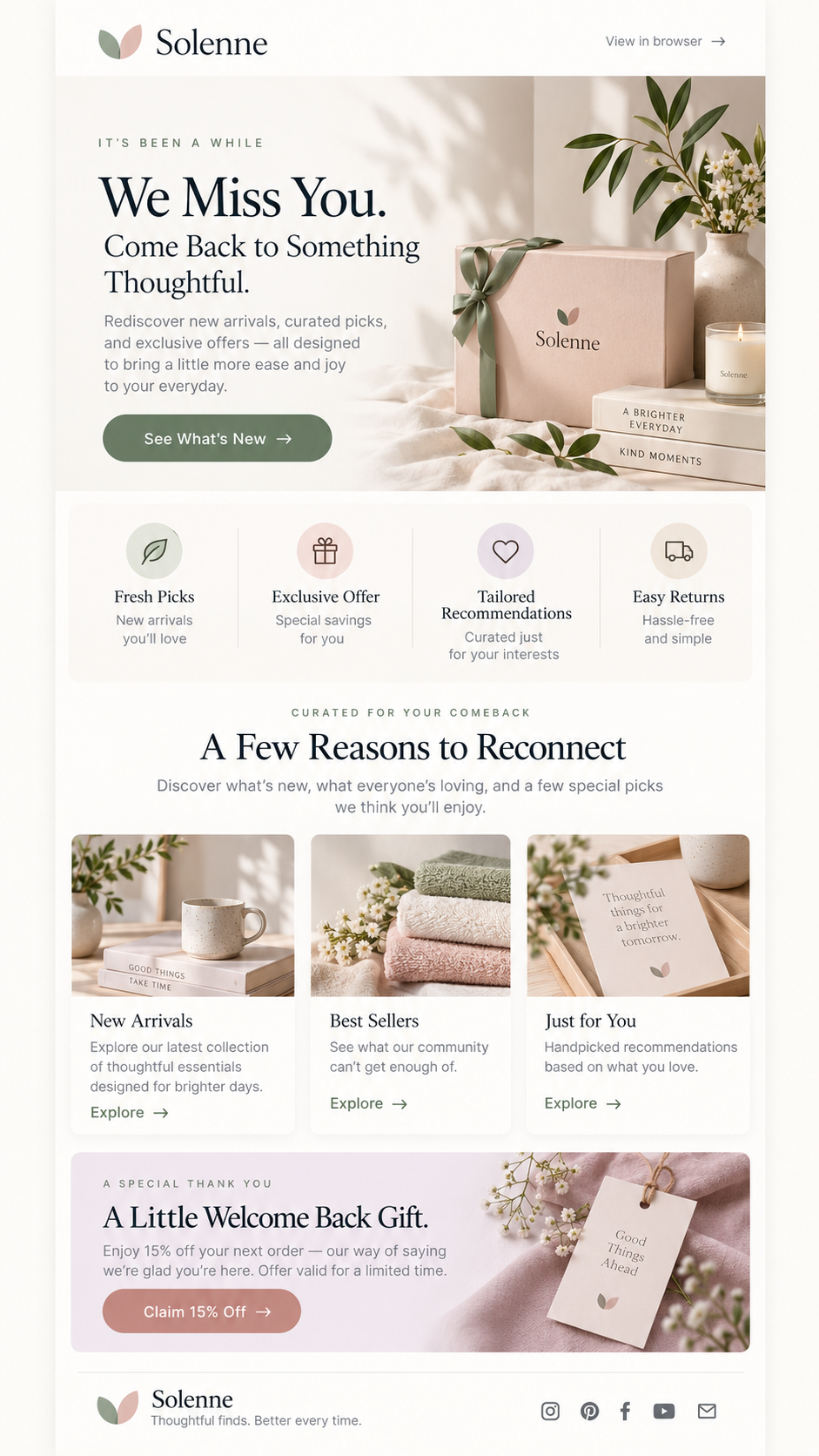
Re-engagement campaigns bring inactive subscribers back, while win-back campaigns encourage past customers to buy again. Define inactivity based on your normal buying cycle. Frequent-purchase brands may act sooner, while longer-cycle businesses may need more time
A sequence can include:
- A what's new email
- Product recommendations
- A preference update
- A benefits reminder
- A selective incentive
Focus on value, not guilt. A friendly reminder is more effective than apologizing for sending another email.
End with a final sunset email, then stop emailing non-responsive contacts to keep your list clean and protect your sender reputation.
10. Feedback, Review and Survey Campaigns
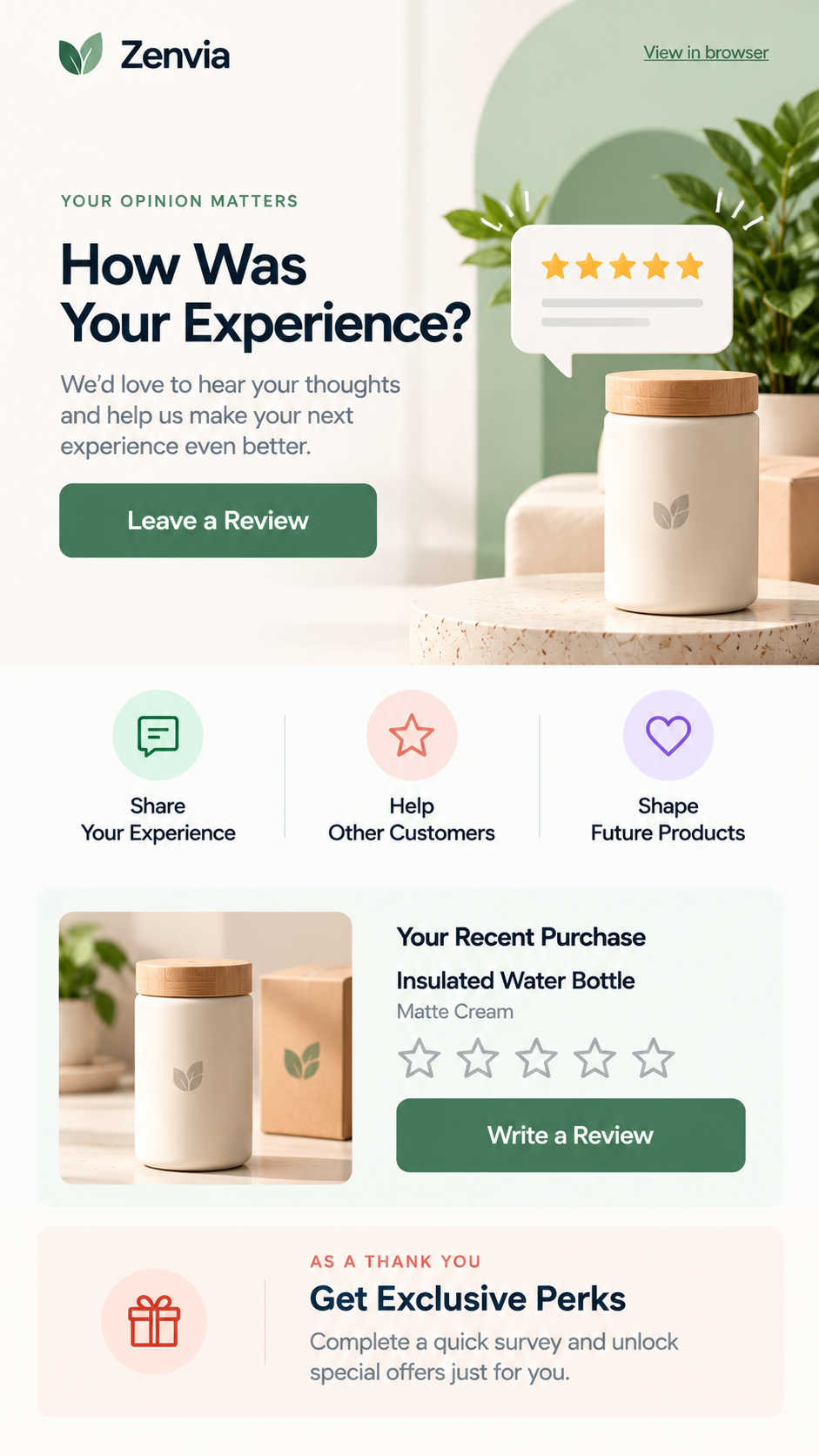
Feedback campaigns help you learn what customers think and give you useful ideas for future campaigns. Ask for reviews or feedback after a purchase, event, or support interaction, once they have had time to share their thoughts.
They collect:
- Product reviews
- Satisfaction scores
- NPS-style responses
- Event feedback
- Customer research
- Preference details
Request a review after enough days have passed for the customer to actually use the product. When your email platform supports it, a simple one-click rating can reduce the effort required to give initial feedback and can lead respondents into a longer survey if needed.
Keep surveys short, ask one clear question, and use the feedback to improve your targeting, messaging, and customer experience.
How Email Campaigns Support Each Stage of the Customer Journey
Customers move through different stages, from first signup to repeat purchase, and the message they need can change as that relationship develops.
The table below matches each campaign type to its stage, so you can quickly see which emails you already send. Any stage that has no matching campaign is a gap, so fix the most valuable one first.
Customer Stage | Campaign Types |
New lead or subscriber | Welcome, nurture |
Engaged prospect | Newsletter, launch, promotional |
High purchase intent | Promotion, seasonal, recovery |
New customer | Post-purchase, onboarding |
Existing customer | Cross-sell, newsletter, launches |
Loyal customer | VIP, early access, feedback |
Inactive customer | Re-engagement, win-back |
You do not need to run all ten types at the same time to see good results. The real goal is to spot gaps in the customer journey and fill the most valuable ones first.
For example, a store with strong promotions but no post-purchase emails is leaving repeat revenue untouched. A software company with a good newsletter but no onboarding emails may lose trial users quickly.
What Makes an Email Marketing Campaign Effective?
Strong campaigns share a few core habits, and each one is simple enough to apply this week.
Start With One Campaign Goal
Every campaign needs one main goal, like revenue, purchases, leads, bookings, product adoption, repeat purchases, reviews, or reactivation. If you pack several goals into one email, attention gets split and you can't tell what worked. One goal also makes the copy, design, and button easier to write. Write it down before you open the email builder.
Choose the Right Audience
Pick your audience based on lifecycle stage, purchase behavior, engagement, interests, customer value, or lead stage. Sending every campaign to your whole list lowers relevance over time. A small, well-chosen group usually beats a big list full of people who don't care. Think as much about who to leave out as who to include.
Match the Message to the Audience
Shape the message around what you know about the reader, such as product interest, purchase history, lead source, customer stage, and recent behavior. Relevant messages get more clicks, replies, and sales. A returning customer should read a different opening than a new subscriber, even if the offer is the same.
Write Around One Primary Action
A good email moves in a straight line: subject line, preview text, opening, value, proof, and button. The landing page should carry on the same promise so readers don't feel lost after they click. Cut anything that doesn't support the action, like extra links, long stories, and unrelated product blocks.
Need help writing better email copy? Our email copywriting guide covers the key elements to focus on.
Build for Mobile and Accessibility
Many people read email on their phones, so design for small screens first. Use short paragraphs, clear headings, readable fonts, tap-friendly buttons, descriptive alt text, and responsive layouts. These choices help everyone, including people who use screen readers. Test every email on a phone, since a layout that looks fine on a laptop can break there.
Protect Deliverability
A great campaign fails if it never reaches the inbox. Focus on proper authentication, a healthy sender reputation, a clean list, steady engagement, and responsible sending.
Inbox placement depends on factors such as sender reputation, authentication, list quality, complaints, bounces, engagement, and sending behavior. Relevant campaigns can support healthier engagement, but no single metric guarantees inbox placement.
For authentication, sender reputation, list hygiene, and inbox placement, see our email deliverability guide.
How to Plan an Email Marketing Campaign
A successful campaign starts with a few simple habits you can follow every time. Set a clear goal, know your audience, write a useful message, and send it at the right time to encourage clicks.
Define the Campaign Goal
Start with the business result you want from this campaign, such as sales, leads, or repeat orders. Make the goal measurable and tie it to your current baseline. For example, you might aim to improve recovered-order rate from its current level or generate a defined number of qualified demo bookings.
Define the Audience
Work out who should get the email, and who should be left out of the send. Exclude recent buyers, people already in a related automation, unsubscribed contacts, and anyone who has already completed the action.
Choose the Campaign Type
Pick one of the ten formats above that fits the customer's stage and your goal. A new subscriber needs a welcome series, while a lapsed buyer needs a win-back message instead.
Create the Message and Offer
Write down your main message, your value, any offer, and the proof that backs up your claims. Reviews, case studies, and ratings work well as proof, and a reader should understand your value within seconds.
Choose the Primary CTA
Name the one action you want every reader to take right after reading your email. Use button text that describes the result, such as shop now, book a demo, or leave a review.
Decide the Send Logic
Choose whether the campaign is scheduled, triggered, recurring, or part of a longer sequence of connected emails. For triggered sends, write down the trigger, delay, and exit rules so nothing surprises you later.
QA Before Launch
Check your audience, suppressions, links, tracking, personalization, mobile view, offer rules, landing page, and automation overlap. Send a test to yourself and a colleague, because fresh eyes catch mistakes you no longer notice.
Define the Measurement Plan
Set your main metric before you send, so the results cannot change what success means to you. Afterward, record the result next to your original goal and use it to plan your next send.
Which Email Campaign Metrics Should You Track?
Not every number in your email report deserves your attention, so track the ones that connect to your goal. These numbers show whether a campaign helped your business, not just whether people noticed it. The table below lists the metrics worth watching and explains what each one tells you about your campaign.
Metric | What It Tells You |
Delivery rate | Emails accepted by recipient mail servers. |
Click rate | The share of recipients who clicked a link |
Conversion rate | Recipients completing the desired conversion action |
Revenue | Total sales linked to the campaign |
Revenue per recipient | Average income from each person emailed |
Leads or bookings | Form fills, demos, or appointments generated |
Unsubscribe rate | The share of people who opted out after the send |
Spam complaint rate | The share of people who marked the email as spam |
Repeat purchase rate | The share of buyers who purchase again |
Retention | How long customers keep buying or subscribing |
Pick two or three of these numbers for each campaign instead of tracking everything at once. Revenue per recipient is especially useful because it lets you compare campaigns of very different sizes fairly.
What About Open Rate?
Open rate still gives a rough signal, but privacy features make it unreliable as your only success metric. Apple's privacy changes, for example, can count automatic activity as an open, which inflates the number. Focus more on clicks, conversions, revenue, leads, and retention, because those show real business results.
Common Email Marketing Campaign Mistakes
Even good marketers repeat the same few email mistakes, and most of them are cheap to fix. Check your own campaigns against the nine mistakes below, and fix the ones that apply to you first.
Sending Every Campaign to Everyone
Sending to your full list lowers relevance, which cuts clicks and can quietly hurt your deliverability. Segment by interest, behavior, or stage, and people are less likely to unsubscribe or report your emails.
Starting Without a Goal
Without a goal, you cannot judge success, so every result becomes a matter of opinion. Even a simple target, like ten extra demo bookings, gives your team a clear direction to follow.
Using the Same Strategy for Every Campaign
Newsletters, cart recovery, launches, and promotions each need different timing, tone, audiences, and calls to action. Build separate templates and rules for each type, then adjust them as you learn from results.
Overusing Discounts
Constant discounts shrink your margin and teach customers to wait for the next sale before buying. Save offers for moments when they truly change behavior, and test them against a version without any discount.
Adding Too Many CTAs
Competing buttons split attention, and readers who face too many choices often choose nothing at all. Keep one main action clear, and repeat that same action instead of adding new ones.
Ignoring Existing Automations
A campaign can overlap with a flow and send the same person two similar messages within hours. Check your active automations before scheduling anything, and use suppression rules to keep contacts from being flooded.
Focusing Only on Open Rate
Open rate shows curiosity, but it does not show whether anyone bought, booked, or stayed loyal. Conversions, revenue, and retention tell you whether a campaign truly worked, so judge your emails by those numbers.
Skipping Mobile and Link Testing
Broken links and messy mobile layouts create friction, and frustrated readers rarely give you a second chance. Click every link and preview the email on your phone before you press the send button.
Sending to Long-Term Inactive Contacts
Writing to people who never engage hurts list health and tells inbox providers your emails are unwanted. Remove contacts who stay unresponsive after a sunset sequence, and focus on subscribers who want to hear from you.
How to Build the Right Mix of Email Campaigns
The best mix depends on your business, so start by looking honestly at your own situation.
- Business Model: A product store and a service business need very different campaign mixes.
- Customer Journey: Map where customers join, hesitate, and buy, then assign campaigns to stages.
- Purchase Cycle: Quick buying cycles suit promotions, while longer cycles need education and trust.
- Sales Cycle: Longer B2B or considered-purchase journeys often need more education and nurturing before a sales decision.
- Audience Size and Data: Segment by meaningful behavior, interests, or lifecycle stage.
- Product Catalog: A wide catalog supports category campaigns, while a narrow one needs storytelling.
- Retention Goals: If repeat sales matter most, start with post-purchase and replenishment campaigns.
- Automation Capacity: Your tool and team time limit how many flows you can maintain.
Recommended Campaign Mix for Ecommerce
Online stores need scheduled sends plus automated flows, including promotions, launches, seasonal sends, newsletters, cart recovery, post-purchase flows, and win-back. Compare the best ecommerce email marketing platforms before you choose the tool that will manage them.
Recommended Campaign Mix for B2B and Service Businesses
Service businesses rely on trust, so mix welcome emails, newsletters, nurture, events, announcements, re-engagement, and feedback. Start with welcome and nurture emails, then add the rest as your list and team grow.
Conclusion
Email marketing campaigns work best when every send has a clear purpose, a defined audience, and one measurable goal. You now know the ten campaign types, where each one fits, and how to plan them step by step.
Do not try to launch everything at once, because steady progress beats a rushed and messy start. Look at your customer journey, find the biggest gap, and build one strong campaign to fill it. Then measure the result against your goal, learn from it, and move on to the next campaign.
Small improvements in targeting, timing, messaging, and measurement can compound as you learn what your audience responds to. Strong email programs depend on consistent execution and useful customer data, not simply sending more campaigns.
Pick your first campaign today, finish the plan this week, and send it with confidence. If you need help along the way, our email marketing experts can plan it with you.
Frequently Asked Questions
What is an email marketing campaign?
An email marketing campaign is one email or a planned series sent to a specific audience for one goal. It includes a clear message, a desired action, and a way to measure whether the effort worked. Common goals include selling products, nurturing leads, educating subscribers, recovering abandoned carts, retaining customers, and collecting honest feedback.
What are the main types of email marketing campaigns?
The ten types are welcome, newsletter, promotional, launch, seasonal, abandoned cart, post-purchase, lead nurture, re-engagement, and feedback campaigns. Each type serves a different stage of the customer journey, from first signup to loyal repeat purchase. Some are scheduled sends, while others run automatically after a customer takes a specific action. Most businesses only need a few of them at first, then add more over time.
What is an example of an email marketing campaign?
An ecommerce example is a category-specific offer sent to customers who previously viewed or bought from that category. The email shows relevant products, includes one clear button, and skips customers who already purchased that week. A B2B example is a guide download followed by education, a case study, and a demo invitation. Each message answers one question, which moves the lead closer to a confident buying decision.
How do I create an email marketing campaign?
Follow a simple path: set a goal, choose the audience, pick the campaign type, and write the message. Then add one clear call to action, run a quality check, send the email, and measure results. Start with the goal, because every later choice depends on what you want the email to achieve. After sending, compare the result with your original target and note what you would change next time.
What is the difference between an email campaign and email automation?
A campaign is usually scheduled, meaning you choose when it goes to a selected audience. Automation is triggered by behavior or lifecycle events, such as signups, purchases, abandoned carts, or inactivity. A newsletter is a campaign, while a welcome series that starts after signup is automation. Most healthy programs use both, because scheduled sends drive moments while automations support every customer around the clock.
How many email campaigns should you send per month?
No single number fits every business, because the right frequency depends on several connected factors. Consider your audience, business model, engagement levels, promotional calendar, and the volume of automated emails already running. Start modestly, watch your complaints and unsubscribes, and increase sending only when engagement stays healthy over time. A store with a large catalog may send more often than a consultancy sharing monthly insights. Remember that automated flows also count toward what each subscriber receives, so review the full picture.
What makes an email marketing campaign successful?
Success comes from relevance, good timing, careful audience selection, a clear message, and one focused call to action. Strong deliverability and a measurement plan chosen before sending complete the picture for any successful campaign. Relevance matters most, because people respond when an email reflects their interests, their stage, and their recent behavior. Timing and a focused button then make it easy for interested readers to act immediately.
Which email campaign metrics matter most?
Conversions, clicks, revenue or leads, spam complaints, unsubscribes, and retention matter most for judging whether a campaign worked. Conversions and revenue show business impact, while clicks show whether the message and offer interested readers. Complaints and unsubscribes act as warning signals, because rising numbers often point to poor targeting or too many sends. Retention shows whether customers keep buying, which tells you if your campaigns build lasting relationships.
Are newsletters considered email marketing campaigns?
Yes, newsletters are email marketing campaigns, specifically recurring scheduled campaigns sent to subscribers on a regular rhythm. They follow the same rules as any campaign, including a clear audience, a main message, and one goal. The only difference is that newsletters repeat on a schedule, such as weekly, fortnightly, or monthly. Treat each issue as its own campaign, and measure it against a goal you set beforehand.
Should every email campaign include a discount?
No, not every campaign needs a discount, and many of them actually work better without any offer. Newsletters, educational content, launches, review requests, onboarding, and post-purchase emails can all succeed without reducing your price. Constant discounts train customers to wait, so reserve them for moments when an incentive truly changes behavior. Value can also come from useful advice, early access, or helpful product tips instead of lower prices.


