


Key Takeaways
- Email keeps buyers and sellers close to you until they are ready to act.
- Send each group emails that match what they are looking for.
- Property updates, market news, and honest advice give leads reasons to keep reading.
- Regular follow-ups stop interested prospects from being forgotten after the first contact.
- Automated emails save time on simple follow-ups so agents can focus on serious buyers.
- Past clients can return as repeat customers or send referrals your way.
The buyer asks about a property, shows interest, and then disappears. If you don’t follow up in a timely manner they may go with another agent. Sometimes all it takes is a simple email to get the conversation going again.
Real estate email marketing helps you keep in touch with buyers, sellers, and past clients without calling them every few days. Share new listings, property updates, news about the market and helpful tips to give people a reason to remember you. Email marketing is a great way to reconnect with old clients who might be ready to buy, sell, or recommend your services.
But sending out random emails won’t get you very far. You need the right message, a smart sending schedule and follow-ups that match what each person is looking for. Discover what works for real estate email campaigns, how to automate follow ups and what numbers to track. These steps will help you to maintain contact with potential clients and also to convert more leads into business.
What Is Email Marketing for Real Estate?
Email marketing in real estate is the act of sending property information and building relationships with buyers, sellers, and clients via email. Agents, realtors and developers use it to reach buyers, investors, sellers, project inquirers, open house visitors and clients.
Real estate emails are most effective when they feel like a helpful conversation, not a constant sales pitch. They can assist buyers and sellers at various points along the way.
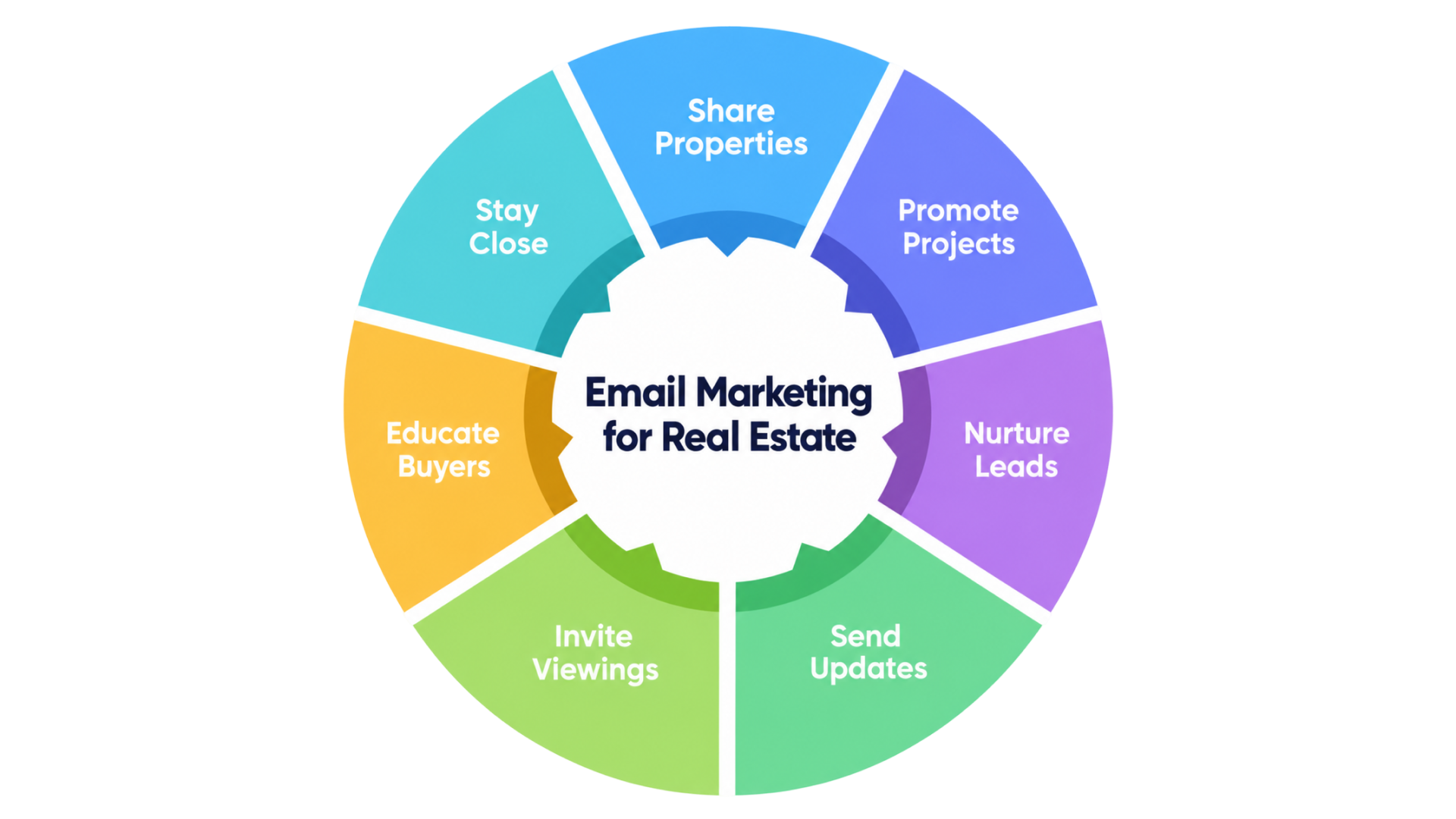
Emails can do many useful jobs for your business, below are the most common
- Share Properties: Send new listings and available units directly to people who already showed interest in buying.
- Promote Projects: Announce launches, new phases, and special offers so your development stays visible in the market.
- Nurture Leads: Reply quickly to inquiries and keep the conversation alive while the buyer is still researching options.
- Send Updates: Share market news and price changes that help people make smarter decisions about timing and budget.
- Invite Viewings: Invite leads to open houses and private tours with a simple booking link inside the message.
- Educate Buyers: Teach first-time buyers how the process works so they feel safe moving forward with you.
- Stay Close: Keep in touch after a sale so clients remember you when they need help again.
Why Should Real Estate Businesses Use Email Marketing?
Email lets you speak directly to people who have already shown interest in property, and it costs far less than most ads. It also gives you a steady way to stay in touch from the first inquiry to the final sale and beyond.
Stay in Touch With Buyers
Many people inquire about properties weeks or months before they're ready to buy. Helpful emails keep your business in mind while they compare options. Share relevant listings, market updates, or buying advice based on their interests, rather than following up just to stay visible.
Follow Up Without Endless Calls
Calling every lead regularly takes time away from property viewings and client meetings. Automated follow-ups help you stay in contact with prospects, while clicks and replies can help your team identify people who may be ready for a personal conversation.
Promote New Properties
Email lets you share new developments, fresh listings, and launch events with interested buyers before they appear on social media. Send listings that match each buyer’s budget and preferred area. For launches and open houses, include key details, dates, and a simple registration link.
Build Trust With Helpful Emails
Most people pick an agent or developer they trust, not just the one with the best price. Useful emails show you know the market and care about more than a quick sale. Buying tips, market updates, investment basics, project progress, and local area news all work well. Over time, these small messages make your business feel like a safe choice.
Win Repeat Clients and Referrals
Your relationship with a client shouldn't stop the day the deal closes. Happy buyers often sell, upgrade, or invest again, and they remember who treated them well. Staying in touch also makes it easy to ask for referrals when the moment is right. One satisfied client can bring in several new ones, and that costs a lot less than chasing strangers with ads.
Who Should Receive Your Real Estate Emails?
Simple groups make your emails more relevant, and these five groups cover most real estate lists. Different groups need different messages, which is exactly where personalized email marketing becomes a big help for you.
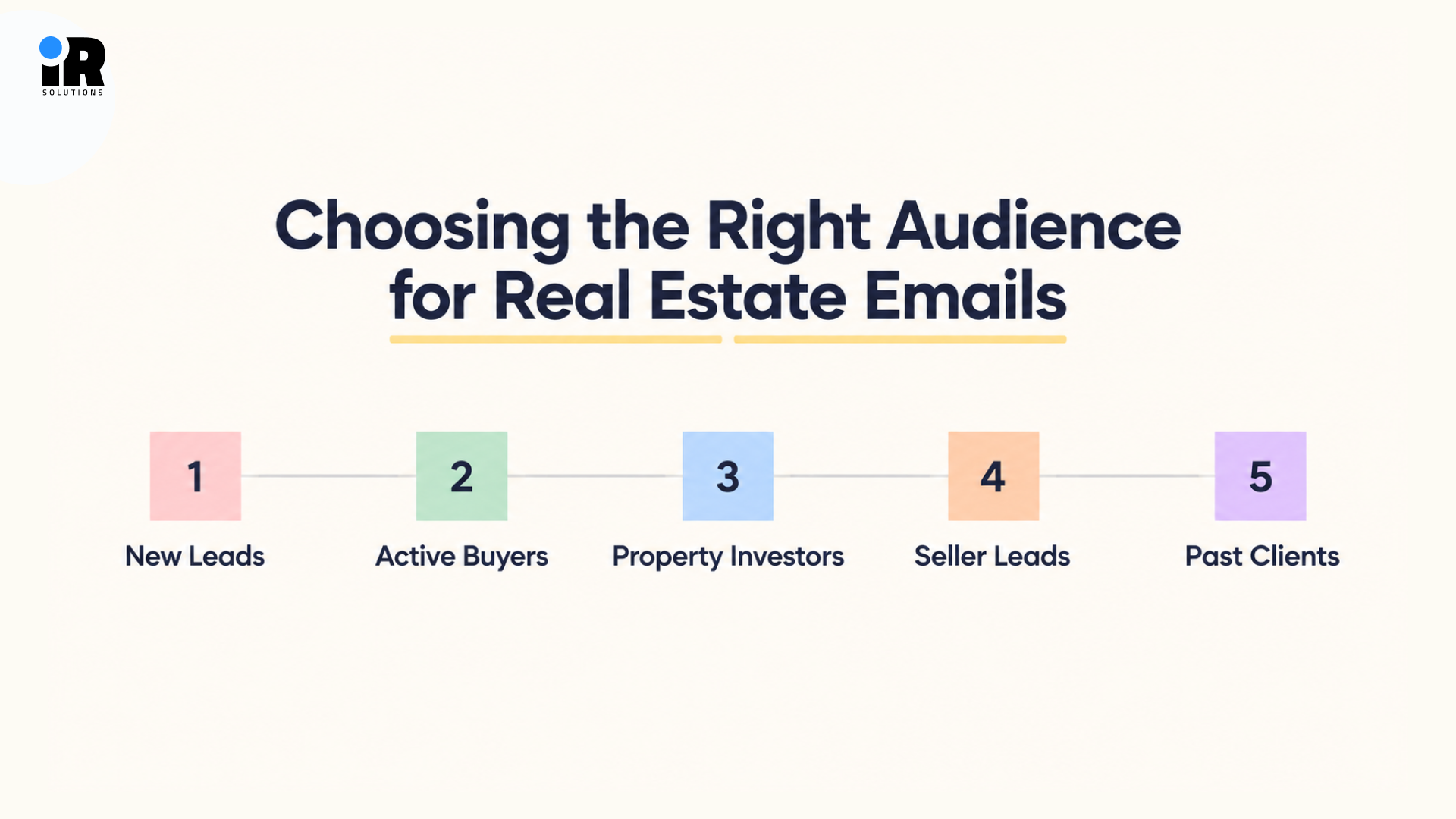
New Leads
These are people who recently submitted a form, asked about a property, downloaded a brochure, or called about a project. They know little about you yet, so send a warm welcome and the information they asked for. A good first impression here often decides whether the lead keeps reading your emails later.
Active Buyers
Active buyers are comparing properties, booking viewings, and moving closer to a final decision each week. Give them matching listings, viewing invitations, and quick answers, because timing matters a lot at this stage. Their interest is high today, so a late reply can easily cost you the sale.
Property Investors
Investors want clear information on pricing, rental potential, development timescales and local market conditions. Share relevant opportunities with supporting data, and differentiate between estimated and confirmed returns. Transparency enables investors to compare properties and to evaluate the risks involved.
Seller Leads
Seller leads are those people who are thinking about selling their property but have not chosen an agent yet. Provide shared valuation tips, recent sales and selling advice to show them you are the right choice. Sellers often speak with multiple agents, so quick and helpful contact can get you the listing.
Past Clients
Past clients are previous buyers or sellers who may come back again or recommend you to someone. A few helpful updates each year keep your name fresh without feeling pushy or needy. Email marketing for realtors works well here, since these contacts cost little to reach and often become warm leads.
Real Estate Email Campaigns You Can Send
Real estate emails should give people a reason to open, read, and take action. From sharing new property listings to following up with potential buyers, each campaign serves a different purpose. Here are eleven types of real estate email campaigns you can use to keep clients interested and stay in touch with leads.
You can also explore our guide to email marketing campaigns for more campaign ideas and strategies.
Welcome Emails
A welcome email is sent out right after someone asks for more information, downloads a brochure, signs up for your list or shows interest. Simplify things by thanking them, providing the information they asked for, giving an introduction to your business, and offering one clear next step. For a brief welcome series introducing your team and your top projects, save real estate email templates.
New Property Launch Email
Create property marketing emails to promote new residential projects, commercial developments, listings, phases and new units available. Every launch email should include a strong property image, location, main features and a starting price where appropriate. End with a clear call-to-action such as View Project, Download Brochure or Book a Viewing.
Property Update Emails
Send an update whenever something changes that buyers would want to know about right away. Good reasons include new units, price changes, construction milestones, new facilities, and the start of a new project phase. Email marketing for property developers works especially well here, because buyers like seeing real progress on a trusted project.
Open House and Property Viewing Emails
Before the event, share the property, date, time, location, and a link that makes booking easy. After the visit, thank guests, ask for feedback, share property details, and offer another viewing. You can also suggest similar properties, since visitors often like a home but need to compare more options.
Buyer Follow-Up Emails
Send these after someone requests details, downloads a brochure, views a property, or speaks with an agent. A simple sequence works well, inquiry, property details, similar options, viewing invitation, and then a personal follow-up. Once a buyer replies or books a viewing, your agent should take over the conversation personally.
Real Estate Newsletter Emails
Real estate newsletter ideas include new properties, market updates, project news, buying tips, investment information, and local area stories. Feature one property clearly instead of fitting every listing into a single crowded message. Keep newsletters useful first and promotional second, and readers will keep opening them month after month.
Property Investment Emails
These emails suit developers well, because investors want facts about opportunities before they speak with anyone on your team. Cover the project location, development progress, payment plans, expected completion, rental considerations, and relevant market data. Never promise guaranteed returns, because no property investment is certain and false promises destroy trust quickly.
Buyer Education Emails
Education emails help people feel confident, and confident buyers are far more likely to contact your sales team. Useful topics include how to choose a property, questions to ask, buying off-plan, payment plans, and viewing checklists. You can also warn readers about common buying mistakes, which shows you care about their success.
Seller Emails
Agencies that work with sellers can send emails about valuations, home preparation, market updates, and recent sales. Add practical selling tips and a friendly invitation to book a consultation with one of your agents. A free valuation offer is a simple way to turn a curious reader into a real conversation.
Re-Engagement Emails
Some leads go quiet, and a gentle check-in can bring them back into the conversation. Ask simple questions, such as whether they still want a property or whether their budget or location changed. Offer to show new options, and keep your tone helpful rather than pushy so nobody feels pressured.
Post-Sale and Referral Emails
After a transaction, send a thank-you, move-in information, project updates, and a polite request for a review. Check in a few weeks later, and then ask whether they know anyone who is looking to buy. Do not disappear right after closing, because that silence is how businesses lose repeat clients and referrals.
Real Estate Email Marketing Examples
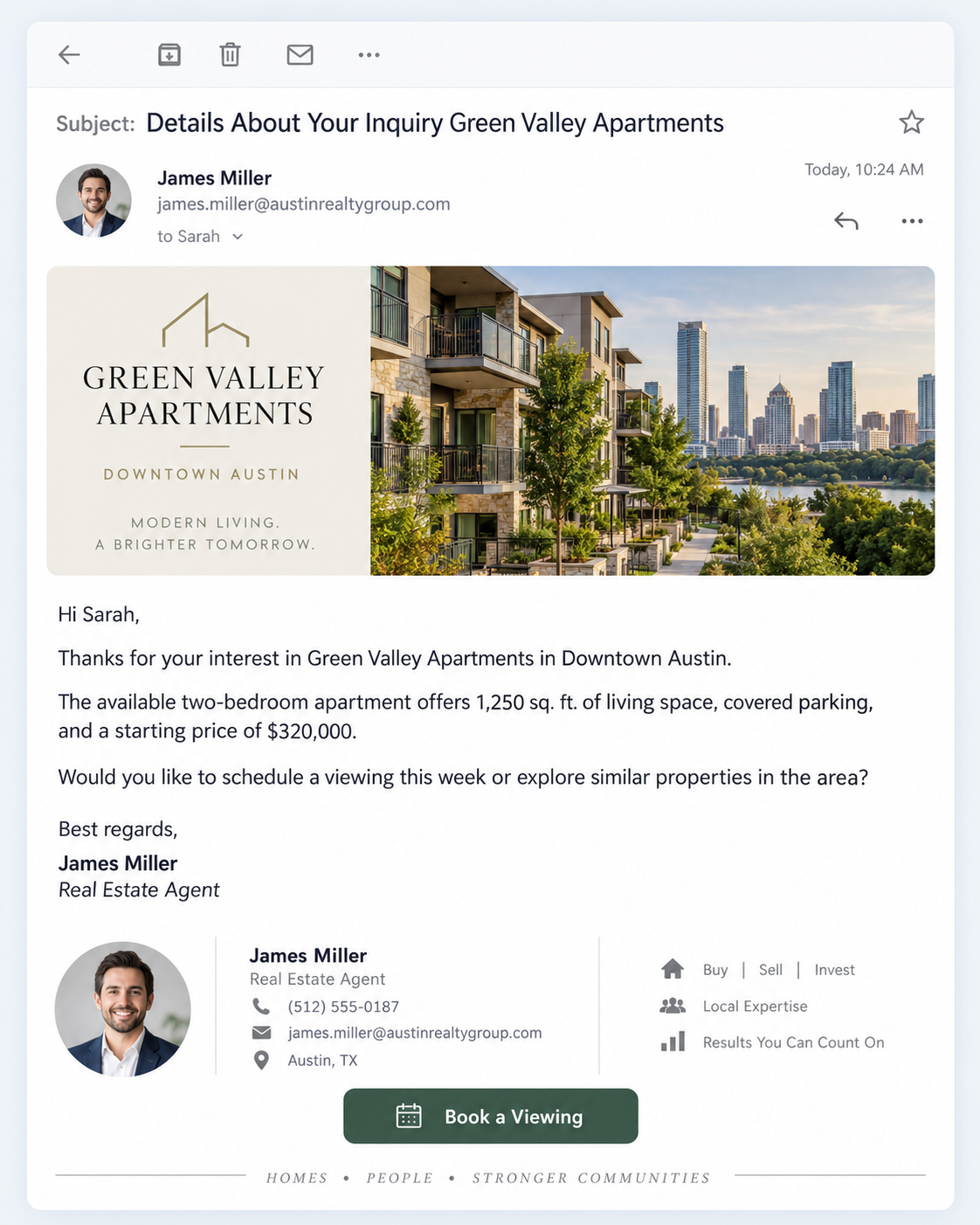
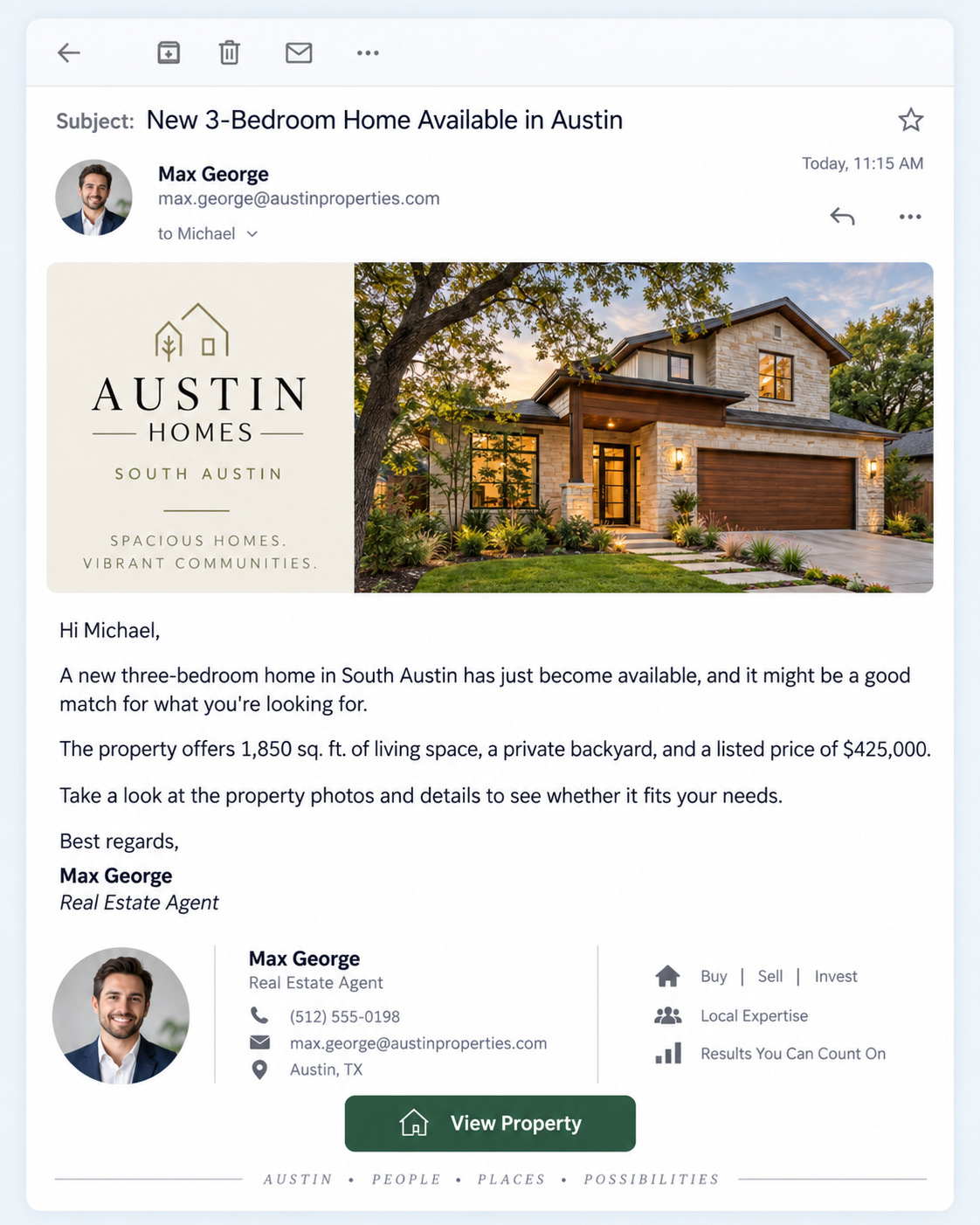
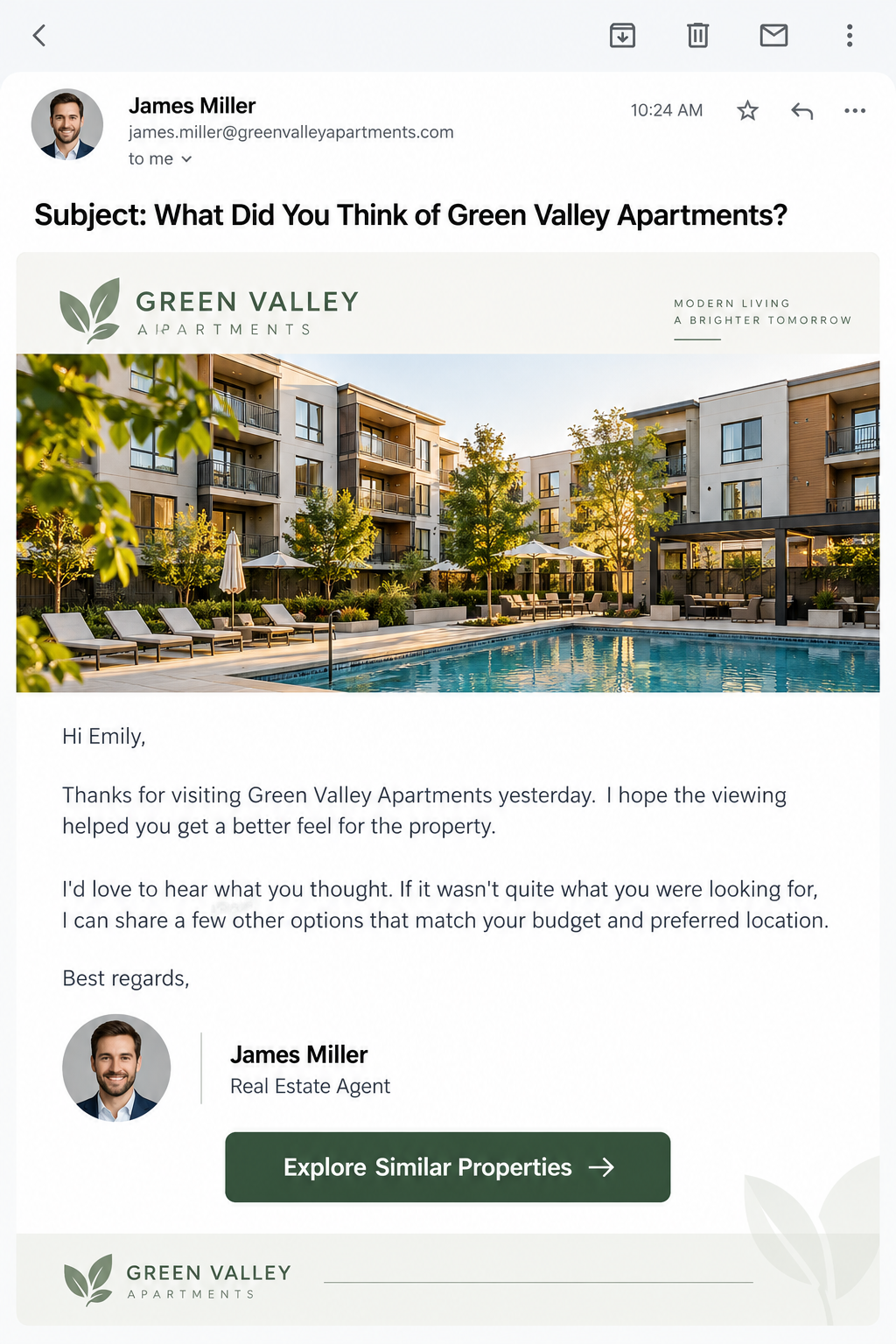
A good real estate email should feel personal, provide useful property information, and make the next step clear. Whether you're responding to a new inquiry, sharing a listing, or following up after a viewing, the message should match the buyer's interests. Here are three simple examples you can use as a reference for your campaigns.
Example 1: New Property Inquiry
Example 2: New Listing Alert
Example 3: Follow-Up After a Property Viewing
What Should You Include in a Real Estate Email?
A well-written property email should make it easy for readers to understand the offer and know what to do next. From the subject line to your contact details, every part should have a clear purpose. Keep the message simple, highlight the details buyers care about, and make the next step easy to follow.
A Clear Subject Line
Your subject line decides whether anyone opens the email, so make it specific and honest. Mention the property, location, project, or purpose, so readers know what is inside before they click.
Professional Property Images
Use clear, professional photos that show the property at its best without slowing down the email. Two or three strong images usually work better than ten small ones that crowd the page. Add short descriptive text to each image so the message still makes sense if photos fail.
Important Property Details
Include only the details the reader truly needs to decide whether the property deserves a closer look.
- Location: Name the area clearly, because location is usually the very first thing most buyers check.
- Property Type: State whether it is an apartment, villa, plot, or commercial unit so readers do not guess.
- Size Details: Share the area and number of bedrooms, since these two facts filter out many unsuitable buyers.
- Key Facilities: Mention the facilities that matter most, such as parking, security, a gym, or nearby schools.
- Price: Show the price or starting price where appropriate, because it helps serious buyers decide quickly.
A Clear Call to Action
Give each email one clear primary action. Depending on the campaign, this could be View Property, Book a Viewing, Download Brochure, Request Pricing, or Talk to an Agent. Keep the main button easy to find and use specific wording that tells readers what happens next.
Contact Information
Make it easy for readers to call, email, reply, or book an appointment without searching around. A visible phone number and a simple reply option often turn interest into a real conversation.
If you need help writing better subject lines, email messages, and calls to action, read our email copywriting guide for practical tips.
How to Build a Real Estate Email List
A real estate email list starts with people who want to hear from you. You can collect email addresses through your website, open houses, property inquiries, and other direct interactions with buyers and sellers. Here are seven simple ways to grow your list with people who are genuinely interested in your properties and services.
Make sure your signup forms explain what subscribers will receive. Keep records of consent where required, include a working unsubscribe link in promotional emails, and follow the email marketing laws that apply to your audience.
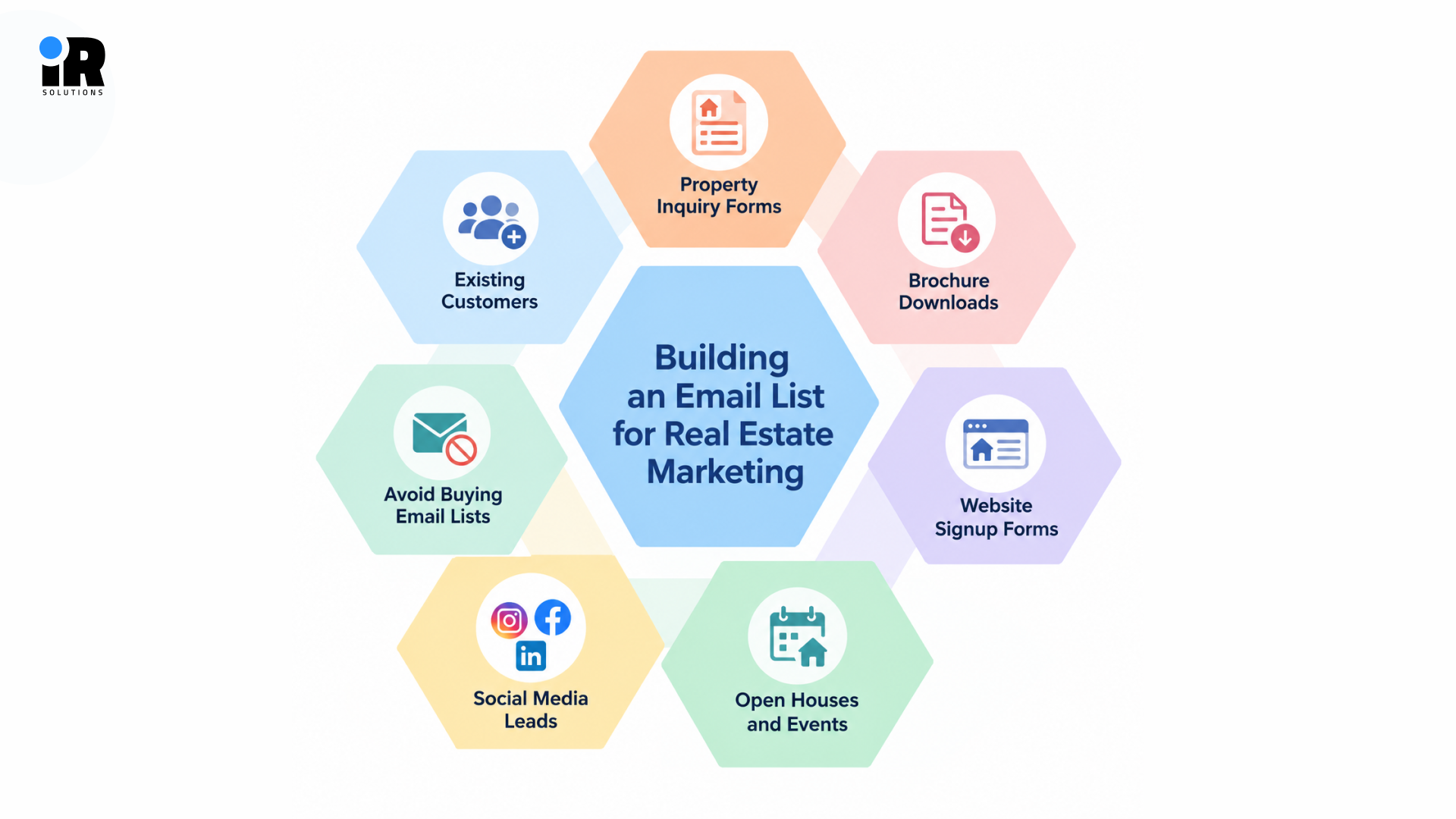
Property Inquiry Forms
Collect an email address whenever someone fills out a form to request information about a property. Keep the form short, because every extra field makes people less likely to finish it. Add a short line explaining what emails they will receive, so nobody feels surprised later.
Brochure Downloads
Offer your property or project brochure in exchange for a name and email address on a simple form. People who download a brochure have already shown real interest, so they make excellent leads.
Website Signup Forms
Let visitors subscribe to updates about new projects, property alerts, and market news from your team. Place the form where people already spend time, such as your listings pages and your blog.
Open Houses and Events
Ask visitors to register for open houses and property viewings using their name and email address. A sign-in sheet at the door also works well for guests who walk in without registering.
Social Media Leads
Move interested social media leads into your email follow-up process wherever their permission allows it. Invite them to join your list with a clear offer, such as early access to new projects.
Existing Customers
Invite past clients to receive useful property updates, market news, and homeowner tips. Before adding them to promotional campaigns, check that you have the appropriate permission to contact them. Keep your emails relevant so they have a reason to stay subscribed.
Avoid Buying Email Lists
Purchased lists usually contain people who never asked to hear from you, so relevance stays very low. They also create spam complaints and deliverability problems that can hurt every future email you send. A smaller list of truly interested people will always beat a huge list of cold strangers.
Before sending promotional emails, make sure your list-building practices follow the laws that apply to your audience. For businesses emailing customers in the United States, the FTC's CAN-SPAM compliance explains requirements such as accurate sender information, honest subject lines, and a working unsubscribe option.
How to Use Email Automation in Real Estate
Real estate email automation sends follow-up emails automatically after a lead takes a specific action on your website or form. You set the steps once, and the system handles the routine work for you every day. Here are four easy examples that almost any real estate business can set up quickly. If you want help getting started, explore our email marketing automation services for a ready-made setup.
After a Property Inquiry
Start with an immediate confirmation email containing the requested property details. Follow up with similar listings or answers to common questions if the buyer hasn't responded. After a few days, send a viewing invitation. Stop or adjust the sequence when someone replies or books an appointment, so they don't keep receiving unnecessary follow-ups.
After a Brochure Download
Start with the brochure, then explain project benefits, show available units, and invite them to speak with sales. Space the emails over about two weeks so the reader never feels buried in messages.
After a Property Viewing
Send a thank-you first, then ask for feedback, share similar properties, and let an agent follow up. Feedback tells you what the buyer liked, which makes your next property suggestion far more accurate.
For Leads Who Are Not Ready Yet
Share useful information first, then property updates, new opportunities, and a gentle check-in after a few weeks. Once someone becomes a serious lead, your sales team should take over and speak with them personally. Automation handles the early stages well, but people still buy homes from people they trust.
For longer follow-up sequences, email drip campaigns can help you plan messages around buyer interest and timing.
Real Estate Email Marketing Best Practices
Small changes can make your real estate emails more useful and help you get better results. From choosing the right audience to sending emails at the right time, these habits can help you plan your next campaign and keep readers interested.
Send Relevant Properties
Do not send every property to every contact, because irrelevant listings teach people to ignore you. Match each listing to the budget, location, and property type the reader has shown interest in.
Keep Emails Short and Clear
Property buyers usually want the important information quickly, so get to the point in the first lines. Short paragraphs, plain words, and one clear action make your message easy to read on any screen. Test your subject lines too, because small wording changes can noticeably improve how many people open them.
Use Good Images
Visual quality matters heavily in real estate, because buyers judge a property by its photos first. Bright, sharp, honest photos build trust, while dark or blurry pictures make people lose interest fast.
Make Emails Mobile-Friendly
Many leads will open your property emails on their phones while commuting or relaxing at home. Use a single column, large buttons, and images that load quickly, then test every email on a phone.
Don't Send Too Often
Constant property promotions overwhelm leads, and overwhelmed leads usually unsubscribe or mark your email as spam. Respect people's inboxes, and they will respect your brand with their attention and their time.
Mix Sales Emails With Useful Content
Balance your listings with advice, market updates, and project information so every email feels worth opening. A good rule is to give value in most emails and ask for action in some.
Follow Up Consistently
Do not stop after one email, because most buyers need several touches before they respond. A steady schedule of helpful messages keeps you present until the buyer is truly ready to move. Plan your sequences so follow-ups happen on time even during your busiest weeks.
How Often Should You Send Real Estate Emails?
No single schedule fits every business, but a few simple guidelines will help you decide.
- Active Buyers: People searching right now may enjoy frequent property alerts, even a few times each week.
- New Leads: A fresh lead usually needs a short follow-up series spread across the first two or three weeks.
- General Subscribers: People who simply follow your updates are best served by a newsletter once or twice a month.
- Past Clients: Former clients only need an occasional useful update, perhaps four times a year, plus special occasion greetings.
The main rule is easy to remember, send an email when you have something relevant to say. Watch your unsubscribe rate, because it quickly tells you when your schedule feels too heavy.
What Real Estate Email Marketing Metrics Should You Track?
You don't need complicated reports to measure real estate email marketing. Start with delivery rates, clicks, replies, property inquiries, and viewing bookings. These numbers help you understand whether your messages reach the right people and encourage meaningful action. Connect email activity with your CRM to track qualified leads and eventual sales.
- Clicks: Clicks show which people find your content interesting enough to explore further on your website.
- Replies: Replies show leads who feel comfortable starting a real conversation with your team or agent.
- Property Inquiries: Inquiries show which properties and messages create real interest among the people reading your emails.
- Brochure Downloads: Downloads show which projects attract attention, which helps you decide where to focus your marketing.
- Viewing Bookings: Track how many recipients schedule property visits after receiving your emails. Bookings can indicate stronger interest, although not every visitor is ready to buy.
- Consultation Requests: Requests show sales opportunities, especially from sellers and investors who want advice before making decisions.
- Qualified Leads: Qualified leads are serious prospects, and tracking them proves whether your emails reach the right people.
- Closed Sales: Sales and closings show the final business result, which is the number that matters most.
- Unsubscribes: A rising unsubscribe rate may signal a relevance or frequency problem that needs your attention soon.
- Bounce Rate: A high bounce rate may indicate outdated addresses or problems with your email list.
- Spam Complaints: Complaints can signal unwanted emails, irrelevant content, or problems with your signup process.
When Should You Outsource Real Estate Email Marketing?
Managing email marketing yourself may work when you have a small list and only a few campaigns to send. But as your business grows, keeping up with emails alongside property viewings, client calls, and sales can become difficult. If you're considering outside support, check outsourcing email marketing that explains the costs, benefits, and things to consider before hiring a partner.
You may need outside help if leads are not getting regular follow-ups, your email list has become difficult to manage, or campaigns keep getting delayed. Poor email design, weak copy, and sending the same message to every contact can also make it harder to keep people interested.
Another sign is when your team spends more time sending manual follow-ups than talking to potential buyers. And if you cannot tell which emails bring inquiries, you may be spending money without knowing what works.
If these problems sound familiar, you can hire email marketing experts to manage your campaigns. They can handle email copy, list management, automated follow-ups, and performance reports, giving your agents more time to work with clients and close deals.
Conclusion
Real estate email marketing keeps agents and developers connected with buyers, sellers and past clients throughout the property journey. Occasional enquiries can lead to ongoing conversations with relevant listings, timely follow-ups and useful market updates.
Not all buyers are ready to buy right away. That’s where staying in touch makes a difference. An effective and well-timed email can lead someone to come back and look at the property they were interested in, or to make an appointment to view it.
Start with a welcome email or a simple follow-up sequence and watch the clicks, replies and viewing bookings to see what works. Segmentation and automation can help you manage more leads without losing the human element as your list grows.
Frequently Asked Questions
Does email marketing work for real estate?
Yes. Email marketing can help real estate businesses nurture leads, promote listings, and stay connected with past clients. Its effectiveness depends on list quality, relevant content, follow-up timing, and how well campaigns support the sales process.
What emails should real estate businesses send?
Start with welcome emails, launch announcements, property updates, viewing invitations, buyer follow-ups, newsletters, and post-sale thank-you messages. Add education, investment, seller, and re-engagement emails to your list, and your confidence will slowly grow.
How often should real estate emails be sent?
Send when you have something relevant, with active buyers getting frequent alerts and past clients getting occasional updates. Most general subscribers are happy with one helpful newsletter every two to four weeks or so.
How can real estate developers get email subscribers?
Developers can collect subscribers through inquiry forms, brochure downloads, website signup forms, events, and open houses. Always ask for permission, and offer something useful in return, such as early access or project updates.
What should a real estate newsletter include?
A real estate newsletter should include new properties, market updates, project news, buying tips, investment information, and local area news. Feature one property clearly and fill the rest with useful content rather than endless listings.
Can real estate follow-up emails be automated?
Yes, follow-up emails can be automated after actions like inquiries, brochure downloads, and property viewings. Automation handles early follow-up, and your sales team should take over once a lead becomes serious.
What should a property marketing email include?
A property email needs a clear subject line, good images, key details, a call to action, and contact information. Keep everything short, honest, and focused on helping the reader take one simple next step.