


Key Takeaways
- Start with what the customer gains, because shoppers care about their own results before your excitement.
- Turn each key feature into a benefit that a busy reader can understand in seconds.
- Build anticipation before launch day instead of leaning on one single announcement to do everything.
- Write different messages for waitlist members, VIP buyers, past customers, and curious people who have not bought.
- Use proof, clear value, and honest urgency to calm doubts before you ask for the sale.
- Judge success by clicks, conversions, orders, and revenue instead of looking only at open rate.
You spent months developing a new product, but when you finally announced it through email, very few people clicked. Even fewer made a purchase.
This can happen when the email talks too much about the product and not enough about why customers should buy it. People want to know what the product does, how it can help them, and whether it's worth their money.
A good product launch email explains the main benefit, gives customers a reason to buy, and makes the next step clear.
In this guide, we'll cover how to write a product launch email, plan your email sequence, choose subject lines, and measure your results.
Strong product launch email marketing works best when it sits inside a wider plan for your whole business. Our guide to email marketing campaigns shows how every single message supports the bigger picture of your sales goals.
What Is a Product Launch Email?
A product launch email is an email sent to customers or subscribers to announce a new product, collection, service, or feature. Its purpose is to introduce what's new and encourage people to take action, such as joining a waitlist, placing a preorder, or making a purchase.
That action depends on your goal, such as joining a waitlist, getting early access, placing a preorder, or buying. Some launches ask for a demo or an upgrade, so do not treat each one as a plain sale.
Product Launch Email vs Product Launch Email Sequence
These two terms may sound similar, but they serve different purposes in a product launch.
A product launch email is a single message sent to announce or promote a new product. A product launch email sequence, on the other hand, includes several emails sent before, during, and after the launch.
A single email has limited space to cover everything. It cannot always introduce the product, explain its benefits, answer customer questions, and encourage people to buy. A sequence gives each message a clear purpose, allowing customers to learn about the product, get their questions answered, and make a buying decision without feeling rushed.
Why Product Launch Emails Fail to Convert
A product launch email may get plenty of opens but very few sales. Sometimes the message isn't clear, the offer isn't appealing, or customers simply aren't ready to buy. Here are some common mistakes that can affect your results.
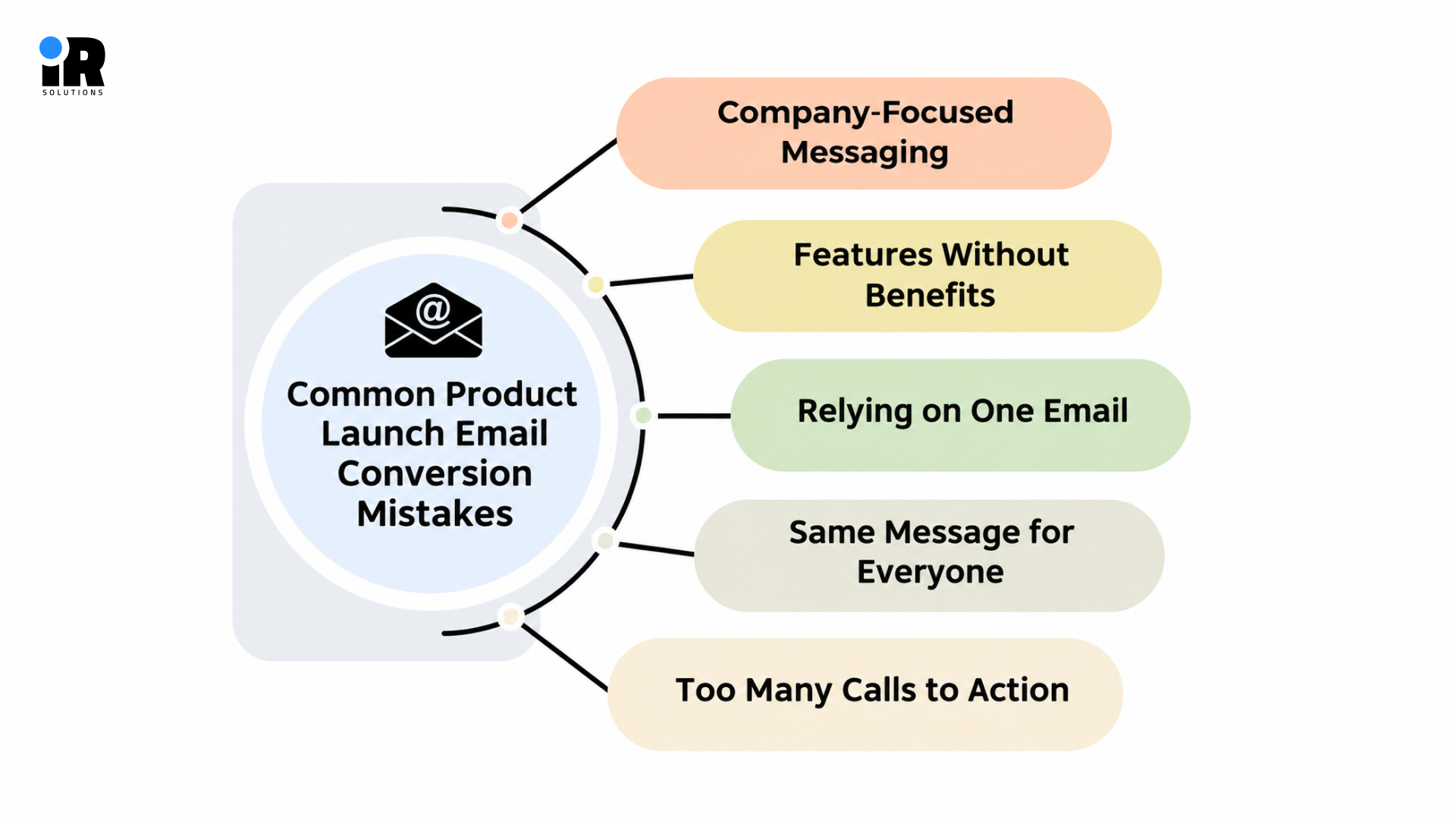
Company-Focused Messaging
Many brands start their launch emails with "We're excited to announce our new product." Every product announcement email should answer the reader’s first question, which is what is in it for me. Lead with their problem or goal, and bring in your news only after that point.
Features Without Benefits
A long list of specifications forces the customer to work out why each detail matters. Most people will not do that work, so they simply close the email and move on. Link every feature to a benefit and then to a real outcome in the customer’s daily life.
Relying on One Email
People miss emails, need more details, want proof, or simply need a little more time to decide. Some readers also carry one unanswered question that stops them from clicking the buy button. A planned series of messages gives you several chances to answer those questions and earn the order.
Same Message for Everyone
Waitlist subscribers and people who have never bought from you are in very different places. One group is ready to buy, while the other still needs a reason to trust your brand. Matching the message to the audience tends to lift clicks and also reduce unsubscribes over time.
Too Many Calls to Action
Asking people to shop, read a blog, follow social pages, watch a video, and join a community splits attention. When every choice looks equally important, many readers feel unsure and end up choosing nothing at all. Pick one main conversion goal for the message and let every other element quietly support it.
Prepare Your Audience Before the Product Launch
Don't wait until launch day to tell subscribers about your new product. If people know what's coming and why it might interest them, they'll have more reason to pay attention when you announce it.
Build Trust Before Launch
If your list has heard very little from you lately, a sudden burst of promotions may perform poorly. Before an important launch, restart useful communication and remind readers of the problem your product solves.
Share real customer needs, build some curiosity, and invite interested subscribers to join a waitlist for the release. There is no universal warm-up period, so judge the right length by how recently your list has heard from you.
Find Your Most Interested Buyers
A waitlist shows you which subscribers are most interested before the product is even available. These people often become your early-access customers and also your most likely first buyers on launch day. It also hands you a smaller, higher-intent group that you can message first, before the wider list.
Give Them a Preview
Teaser content works best when it teaches or interests readers instead of simply repeating that something is coming. You can share the problem behind the product, its development story, or a small sneak preview.
A customer-requested improvement or a behind-the-scenes detail can also spark real interest among your subscribers. The goal is to build curiosity without creating needless mystery, so readers should always have a clear idea of what you are working on.
Before You Write the Product Launch Email
Before writing your product launch email, take some time to plan what you want to say. Be clear about your goal, who you are writing to, and what makes the product worth buying. This will help you write a clear message without having to go back and change it several times.
Define the Customer Outcome
Before writing the email, think about what customers will get from the product. What problem does it solve? Does it save time, make something easier, or offer a better experience? Your answer will help you decide what to focus on in the email.
Identify the Main Customer Problem
Ask what problem the product solves, which frustration it removes, and which job it makes easier for buyers. Also ask which desired result the product supports once someone starts using it every day. Choose a problem your customers already recognize, rather than one you wish they cared about.
Explain Why the Problem Matters
Show the practical cost of leaving the problem unsolved, such as lost time, extra effort, or poor results. Depending on the product, it might also mean added cost, daily inconvenience, or a missed opportunity. Keep the tone honest, and never exaggerate the consequences just to create fear in the reader.
Define What Makes the Product Different
Your difference might be better design, stronger performance, an easier setup, a new material, or a better fit. It could also be a new use case, wider compatibility, or an improvement that customers asked for. Skip empty words like revolutionary, game-changing, and ground-breaking unless you have genuine evidence to back them up.
Decide What the Email Needs to Achieve
Choose one primary goal, such as a waitlist signup, early access, a preorder, a purchase, or a demo. If you sell software, the goal might instead be an upgrade or a trial of the new feature. Your call to action and every paragraph of copy should then support that single goal.
Gather Proof Before Writing
Collect real proof early, because a brand new product cannot borrow trust from a long review history.
- Beta Feedback: Comments from early users show how the product works in real homes, offices, and daily routines.
- Testing Results: Product tests and verified specifications give skeptical readers clear facts that they can check for themselves.
- Past Reviews: Reviews of the previous version help when the new release builds on a familiar and trusted product.
- Demand Signals: Waitlist numbers and customer research show that other people already want what you are about to release.
Never invent testimonials for a new product, because readers can sense fake praise and trust drops quickly.
11 Steps to Write a Product Launch Email That Drives Sales
These eleven steps take you from the opening line to the final button of a launch email. Follow them in order, and your message will read clearly and guide people toward a purchase.
1. Open With Something Familiar
Start with a problem, a desired outcome, a familiar frustration, a use case, or a relevant question. Readers should feel understood within the first two lines, long before they reach any mention of price. Do not spend your opening paragraph describing your own launch process, your team, or the internal timeline.
2. Introduce the Product
A new product announcement email works best when it names the product and its purpose immediately. Move smoothly from the customer’s need to your solution, and explain what the product is in one sentence. Say who the product is for and what it helps them do, using plain and simple words.
3. Lead With Benefit
A new product launch email should name its biggest benefit within the first few lines. Resist the urge to open with a long feature list, because it buries the strongest selling point. Then lead with that reason in your headline or first line, and let smaller details follow underneath.
4. Turn Features Into Benefits
Don't just tell customers what your product has. Explain how those features help them.
For example, instead of writing "Made with lightweight materials," you could say, "Lightweight materials help keep your feet comfortable throughout the day."
The second version gives customers a clearer reason to care.
5. Show the Product
Graphics can be a great asset for explaining a lot, particularly with products that come with ecommerce that are easy to envision. Consider a product-only picture, a picture of the product being used, a close-up of the product, or a short GIF image. Different colors, sizes, or side-by-side comparison with the previous version can be displayed as well..
6. Explain the Value Before Mentioning the Offer
Describe the changes to the customer and why the product should be considered before any discounts are offered. When the value is understood, the offer could be in a variety of forms, such as early access, a bundle, or free shipping. Consider the offer as a much more extensive deal than just the day-of-launch discount.
7. Answer the Biggest Doubt
Customers might be unsure about the price, size, shipping, or if it will function for them. It's not necessary to complete all the questions in a single email. Focus on the concern most likely to stop someone from buying and give a clear answer.
8. Add Credible Proof
Proof eliminates uncertainty, and it can be delivered through a review, an early user quote or Beta feedback. Confidence can also be established through a product demo, ratings, test results, or robust waitlists. If you have a totally new product, don't create the illusion of having more mature review data than you actually do.
9. Use Real Urgency
Real urgency comes from facts, such as a preorder deadline, an early-access window, or a limited first run. Avoid fake countdown timers, false stock warnings, and last-chance messages when nothing is actually ending. Readers notice false pressure quickly, and it damages trust in every future message you send.
10. End With One Clear CTA
A strong product launch email CTA is short, specific, and placed where reader interest is highest. Finish with a single action that matches your goal, and make the button text say exactly what happens next.
Pre-launch: Try Join the Waitlist, Get Early Access, or Reserve Yours when the product is not yet available.
Launch Day: Try Shop the New Product, Shop the Launch, or Get Yours once orders are open.
Software: Phrases like Try the New Feature or See It in Action work well for upgrades and demos.
Avoid a vague Learn More button where a specific action would give the reader much more clarity. For more help with wording, read our email copywriting guide before you write the button text.
11. Write the Subject Last
Once the main message is written, the strongest angle for your subject line becomes much easier to see. Base the line on customer benefit, newness, curiosity, early access, customer demand, or your main differentiator. Do not force a clever subject line before the actual launch message has become clear and focused.
How to Write Product Launch Email Subject Lines
Strong product launch email subject lines follow a few reliable angles, and each suits a different kind of launch. Pick the angle that fits your audience best, then test it against a second option to learn more.
Your subject line is important, but when you send the email also matters. According to Mailchimp's product launch email guide, businesses should consider factors such as the time of day, day of the week, and their audience's time zones when planning launch emails.
Direct Product Announcement
A line like Meet the New Everyday Runner works well when the product already draws strong interest. It is simple, honest, and quick to understand, which suits well-known brands and loyal audiences.
Benefit-Led Subject Line
For example, a brand launching a new travel bag could use "Pack More Without Carrying More." This tells customers what they can expect without making them guess what the email is about.
Curiosity-Led Subject Line
A line like Something New Is Coming creates interest, but it should be used with real care. The email itself must still explain the product clearly once the reader opens it, or trust will fade.
Customer-Demand Subject Line
You Asked. It’s Here. is a strong choice when the launch truly came from customer requests. Use it only when that is true, because customers remember what they actually asked you for.
Early-Access Subject Line
A line like You’re Getting First Access makes readers feel chosen and rewards their loyalty. It suits VIP customers, waitlist members, and loyal buyers who have earned an early look at the product.
Write Helpful Preview Text
Do not repeat the subject line, because the preview is a second chance to give the reader a reason. If the subject says Meet the New Everyday Runner, the preview could say Lighter cushioning designed for longer days. Together they tell a small story that earns the open without giving everything away too early.
A Simple Product Launch Email Structure
Once the ideas are clear, this simple frame helps you arrange them in an order readers can follow. Treat it as a flexible product launch email template, not a fixed rule about length.
- Subject Line: This gives the reader a clear reason to open the message in a crowded inbox.
- Preview Text: This adds extra context so the reader understands what waits inside before they ever open it.
- Opening: Introduce the product and explain why customers might need it.
- Main Benefit: This tells the reader why the product matters to them above everything else you could say.
- Supporting Features: These show how the product delivers the main benefit without drowning the reader in specifications.
- Visual: This shows the product clearly so that readers can picture owning it and using it themselves.
- Proof: This reduces uncertainty by showing that real people or real tests support the claims you are making.
- Offer Details: This explains availability and why the reader should act now rather than later in the week.
- Clear CTA: This gives one clear next step so the reader never wonders what to do after reading.
Remember that this is a framework, and the right email length depends on your product and audience.
Build a Product Launch Email Sequence Around the Customer Journey
Plan the sequence in stages rather than setting a fixed number of emails, as every customer moves through the journey at their own pace. A well-planned product launch email sequence follows the customer journey from first curiosity to final purchase. Blazon builds its launch plan around awareness, early or VIP access, the launch itself, and follow-up.
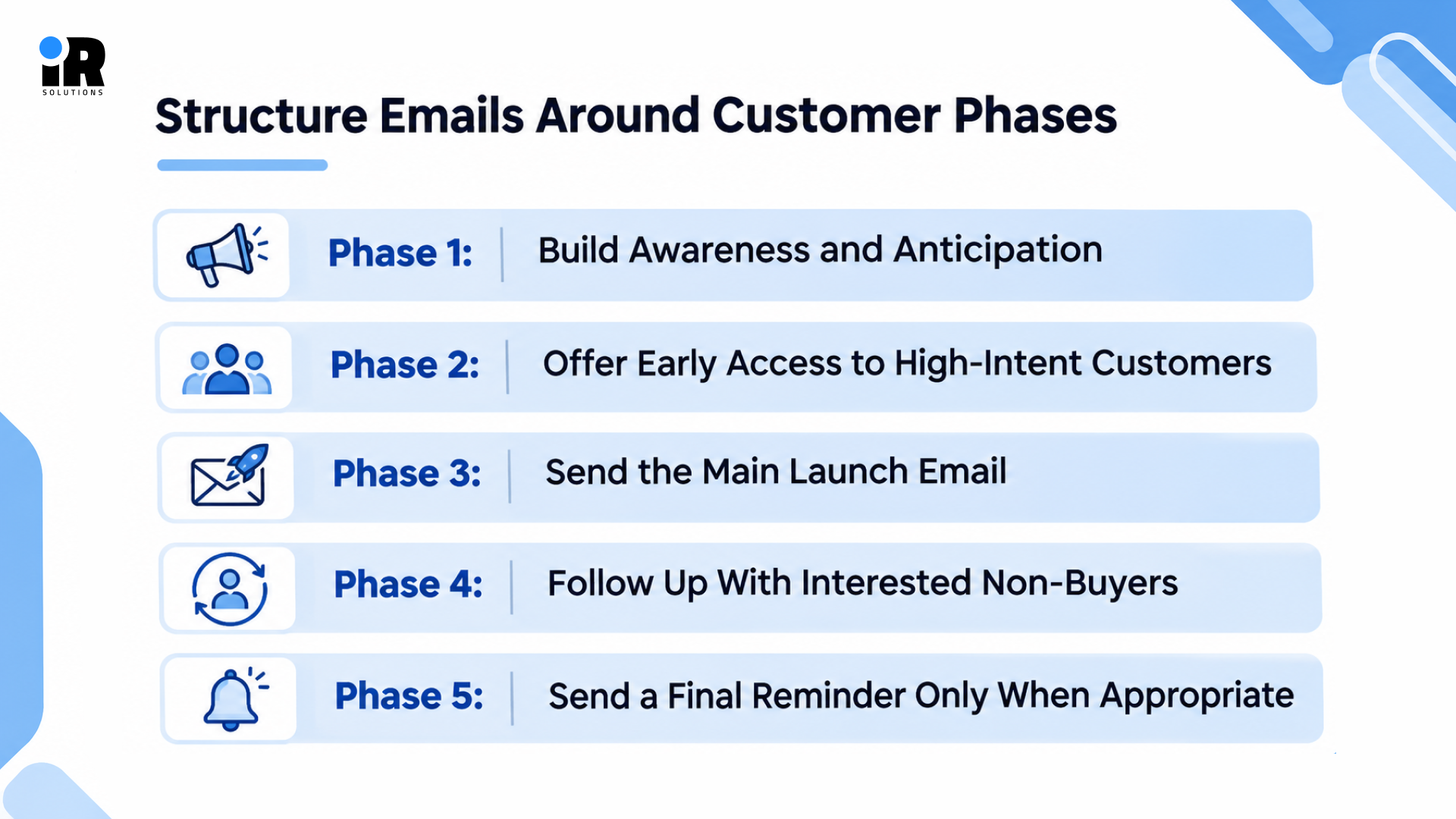
Phase 1: Build Awareness and Anticipation
The goal here is to create genuine interest well before the product becomes available to buy. Possible emails include a teaser, a customer problem story, a product story, or a behind-the-scenes look.
A waitlist invite fits here as well, but you should avoid revealing everything all at once. Each pre-launch email should leave readers a little more curious than they were before.
Phase 2: Offer Early Access to High-Intent Customers
This phase converts people who have already shown strong interest, so it is optional but powerful. Good audiences include waitlist members, VIP customers, repeat buyers, previous-version owners, and highly engaged subscribers.
Offer early access, a preorder, an exclusive bundle, or priority availability to reward their interest.
Phase 3: Send the Main Launch Email
Your main launch email should tell customers that the product is available. Show what it looks like, explain its main benefits, and include a clear link to buy it. Make sure important details, such as pricing and availability, are easy to find.
Add proof, include an offer where it fits, and close with one clear call to action. A product launch announcement should feel like good news for the reader, not just for your company.
Phase 4: Follow Up With Interested Non-Buyers
Do not simply resend the same launch email, because readers who skipped it once may skip it again. Offer a fresh reason to act, such as customer proof, a demo, an FAQ, or a use case.
A comparison, objection handling, or the story behind the product can also bring hesitant readers back.
Phase 5: Send a Final Reminder Only When Appropriate
Send a last reminder only when something truly ends, like a preorder, launch pricing, a bonus, or initial stock. If nothing is ending, do not manufacture urgency just to squeeze out a few extra clicks.
A strong product launch campaign treats every reminder as a service to the customer, not a pressure tactic. A calm and honest reminder respects the reader and protects your good reputation for all future launches.
Segment Product Launch Emails by Customer Intent
Not everyone on your email list has the same level of interest. Someone who joined your waitlist may be ready to buy, while a new subscriber might need more information. Sending different emails to these groups can make your launch messages more relevant.
Segment | Best Launch Angle |
Waitlist | Early access or direct purchase |
VIP customers | Exclusivity and recognition |
Previous-version buyers | Improvements and upgrade value |
Related-product buyers | Complementary use case |
Engaged non-buyers | Education and product proof |
Launch clickers who didn’t buy | Objection handling |
Buyers | Remove from launch sales sequence |
Waitlist Subscribers
These people have already shown interest, so give them early availability and plain product information. Pair that with a strong call to action, because they do not need much convincing.
VIP and Repeat Customers
Offer early access, recognition, an exclusive variant, or a loyalty benefit that shows you value their support. Do not treat them exactly like cold subscribers, because their history with you deserves a different tone.
Previous-Version Customers
Focus on what has improved, what is different, and which kinds of owners should actually upgrade now. Be honest about whether an upgrade is truly necessary, because that honesty builds long-term trust.
Customers Who Bought Related Products
Explain how the new product works alongside what they already own and what extra value it adds. A complementary use case feels helpful, while a hard sell feels like noise to a satisfied buyer.
Engaged Subscribers Who Have Never Purchased
This group may need more benefits, more trust, more reviews, and less risk before they buy. Lead with education and product proof, and let your brand credibility do some of the work.
Exclude Customers After Purchase
Once someone buys, stop sending launch sales messages and move them straight into your post-purchase communication flow. Asking a happy buyer to buy the same item again feels careless and can quickly irritate them.
Address the Reasons Customers May Not Buy
Every hesitation has a simple answer, and giving it early removes friction from the buying path. Look at why customers pause, then answer each doubt clearly before it costs you the sale.
Price or Perceived Value
Do not rush to answer price concerns with a discount, because explaining value often works better. Talk about longevity, improvements, the use case, and any benefits that come included with the purchase.
Product Fit
Answer the questions buyers quietly ask, such as whether it is right for them and which version to pick. Make clear which use case it suits and which kind of customer it was designed for.
Trust
New products need trust, so lean on reviews, testing, early adopters, or a live demonstration. Where it fits, a guarantee tells the buyer you stand behind what you are selling.
Product Complexity
Complicated products scare people away, so use a demo, how-it-works content, an FAQ, or a comparison. Showing the product in action often removes doubt faster than any written description could ever manage.
Availability or Timing
State clearly whether the product is available now, on preorder, or shipping on a certain date. Mention restock expectations and the launch window too, so nobody has to hunt for basic purchase details.
Should You Offer a Discount on a Product Launch?
The short answer is not automatically, and the reasons deserve a closer look before you decide.
Weigh existing demand, your margin, how new the product is, the customer segment, and the competition. Inventory levels and how urgently people want the product should also shape your final decision on pricing.
An unnecessary discount cuts your margin on customers who would probably have bought at full price anyway. Consider these alternatives first, since each one adds real value without simply lowering your regular price.
- Early Access: Letting loyal buyers shop first feels special to them and costs you almost nothing in margin.
- Exclusive Variant: A special color or edition gives early customers something unique that others cannot get later.
- Bundles: A bundle raises the order value while giving buyers a clear sense of getting more.
- Free Shipping: Removing delivery costs can tip a hesitant shopper without touching the price of the product.
- Gifts: A small gift or loyalty benefit rewards early action and keeps the main price steady.
Priority access works in the same way, so many launches succeed without any markdown at all.
Product Launch Email Examples: What Good Launches Get Right
Product Launch Email Examples You Can Use
- Subject: Meet Your New Everyday Travel Bag
- Preview: More room for your essentials, without the extra bulk.
Meet the new everyday travel bag, designed to make packing a little easier.
With a separate laptop compartment, extra storage pockets, and a lightweight design, it helps keep your things organized wherever you're going.
Our new collection is now available in three colors.
Shop the New Collection.
Benefit-Led Product Launch
The lesson here is to start with what changes for the customer, not with the product. A running shoe email might open with tired legs at the end of a long day.
The product appears only after the reader has nodded along with that problem and wants a solution.
Visual Ecommerce Product Drop
The lesson is to let strong creative explain products that people can understand at a single glance. A clothing or home decor drop can rely on large images, short copy, and one bold button.
An ecommerce product launch email like this keeps words minimal because the pictures already tell the story.
Early-Access Launch
The lesson is to reward customers who have already shown real interest in your brand or product. A product release email to loyal buyers can arrive a few days before the public announcement.
Send waitlist members and VIPs a private link before the public release, with a clear time window. Early buyers feel valued, and their orders and feedback give the wider launch a strong head start.
Product Upgrade Launch
The lesson is to explain exactly what changed and whether the customer truly needs the new version. A short comparison with the older model helps owners decide without guessing or reading a long specification sheet.
Being honest that some owners can wait often makes the others trust your recommendation more.
Problem-Solution Product Launch
The lesson is that context can matter more than the word new when a product needs explaining. A smart kitchen tool or a software feature may need a story before anyone understands the point.
Describe the daily frustration, show the fix, and let the reader picture life with the problem gone.
A/B Test What Can Actually Affect Launch Performance
A/B testing can help you see which subject lines, images, or offers work better. Test one main change at a time so you can understand what affected the results. Make sure your test reaches enough subscribers before deciding which version performed better.
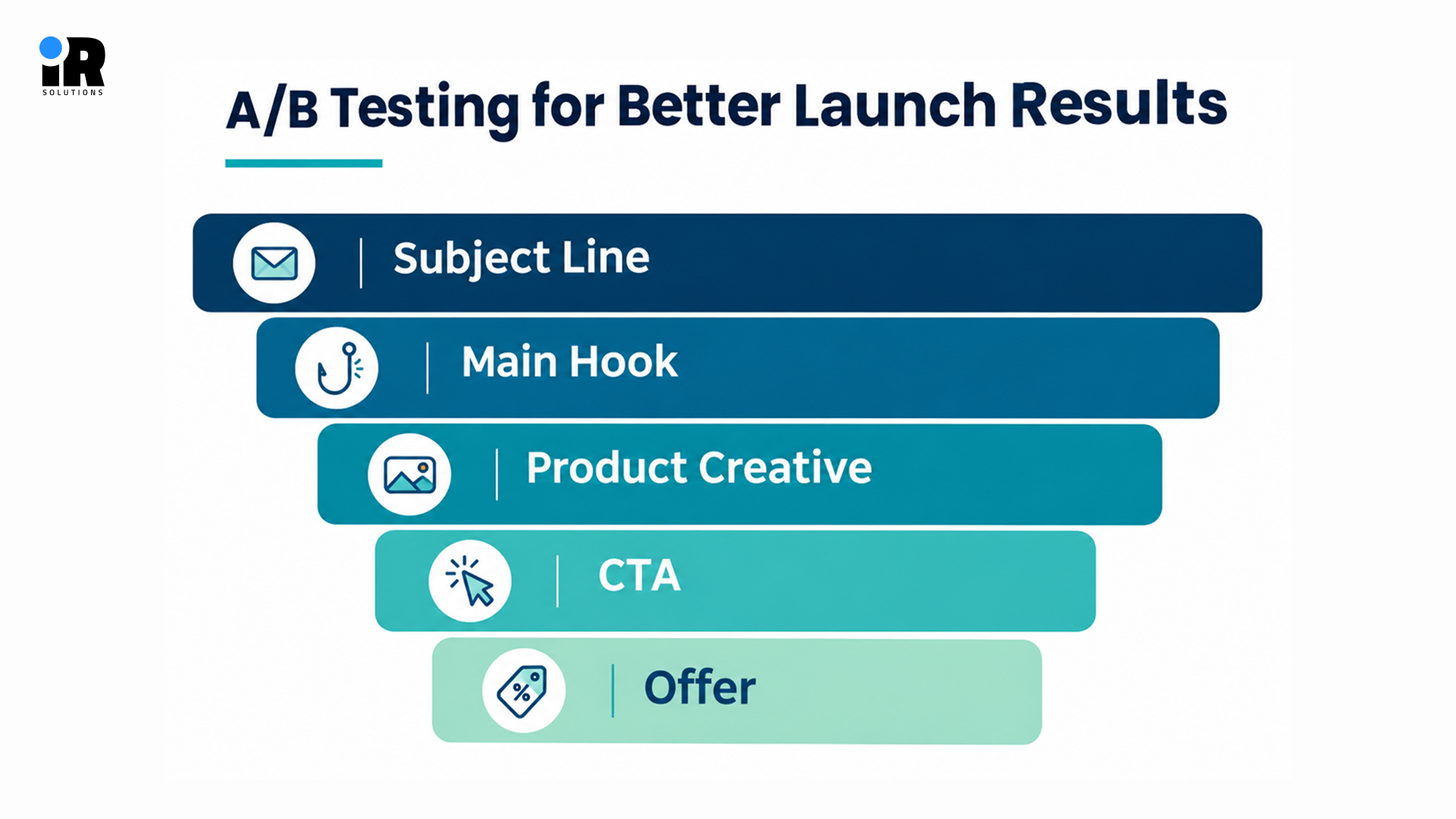
Subject Line
Compare benefit against newness, a direct line against a curious one, and a product name against an outcome. The winner tells you what makes your audience open, which guides your next launch as well.
Main Hook
Test a problem-led opening against a benefit-led one, a use case, or a line about product innovation. The hook decides whether readers keep scrolling, so it often teaches you the most about your audience.
Product Creative
Try a product-only image against a lifestyle photo or a short demo GIF to see which earns clicks. Visual choices can change how quickly readers understand the product, so they deserve a proper test.
CTA
Compare button text such as Shop Now, Shop the Launch, See the New Collection, and Get Early Access. Small wording changes can shift click rates, especially when the button matches the stage of the launch.
Offer
Where it makes sense, compare no incentive against a discount, free shipping, a bundle, or early access. This test shows whether an incentive truly lifts sales or just reduces your margin for no gain.
Not sure which subject line, image, or offer will get more sales? Testing different versions can help you find out what your customers prefer. Read our guide to ecommerce email A/B testing for practical examples and tips on running your own tests.
What to Do After Launch Day
The work does not end when the main email goes out, because follow-up gives interested readers another chance.
Send Product Proof to Interested Non-Buyers
Share early customer feedback, a demo, real usage photos, or reviews once you have them. This gives hesitant readers new information instead of the same pitch they have already ignored once.
Answer the Questions Customers Are Actually Asking
Collect questions from customer service, product pages, email replies, and social comments to shape your follow-up. Real questions make your emails feel useful, and they point straight to the doubts that block sales.
Follow Up With High-Intent Non-Buyers
Focus your follow-up emails on subscribers who joined the waitlist, clicked a product link, or visited the product page. These actions can show interest in the product. Don't rely too much on email opens, since privacy features can make open-rate data less accurate.
Move Buyers Into Post-Purchase Communication
Start with a thank-you, then send setup tips, product education, and care information to help them succeed. Later, ask for a review and suggest a complementary product where it genuinely fits their needs.
Your emails shouldn't stop once someone places an order. A simple post-purchase email series can help customers use their products, leave reviews, and discover related items. Learn more about these follow-ups in our guide to ecommerce email marketing flows.
Record What Worked
Each product launch email campaign teaches you something, so treat the results as a learning tool. Write down your results while they are fresh, so the next launch starts from real knowledge.
- Audience: Note which segment responded best, because that group should hear from you first next time.
- Message: Record the main message, the creative, and the offer that produced the strongest clicks and orders.
- CTA: Keep the button text that earned the most action and drop the wording that fell flat.
- Results: Save your conversion, revenue, and customer feedback numbers so you can compare future launches fairly.
How to Measure Product Launch Email Performance
Good measurement connects every single send to real business results instead of relying on surface-level numbers.
Use the table below as a simple scorecard that you can reuse for every future launch.
Metric | What It Helps Measure |
Click rate | Product and CTA interest |
Product page visits | Launch traffic |
Conversion rate | Purchase efficiency |
Placed orders | Launch sales |
Revenue per recipient | Email efficiency |
Total launch revenue | Overall commercial contribution |
Waitlist conversion | Pre-launch demand |
Preorder conversion | Early demand |
Unsubscribe rate | Audience and message fit |
Post-launch repeat purchase | Longer-term customer value |
Don't Judge the Launch by Open Rate Alone
A strong subject line can create plenty of opens without producing a single purchase for your store. For a sales-focused launch, prioritize clicks, product views, conversion, orders, revenue per recipient, and total revenue.
Open rate still helps you spot subject line problems, but it should never be your final verdict.
Conclusion
A successful product launch email doesn't need fancy words or a complicated design. What matters is how clearly you explain your product and give customers a reason to buy it. Talk about the problems it solves, highlight the benefits, and make it easy for readers to take the next step.
It's also important to remember that one email may not be enough to turn subscribers into buyers. Some customers might be interested right away, while others need more information before making a decision. Sending teaser emails before launch day, sharing the main announcement, and following up with interested customers can help you reach more potential buyers.
Once your campaign ends, look at the results. Check which emails received clicks, which offers brought in sales, and where customers lost interest. Use what you learn to improve your next launch.
If you need help planning your campaigns, writing emails, or setting up automated follow-ups, explore our email marketing services.
Frequently Asked Questions
What is a product launch email?
It is a message that introduces something new, such as a product, feature, or collection. It always ends with one clear action, like joining a waitlist or placing an order.
How do you write a product launch email?
Define the customer outcome first, then open with a problem that the reader already recognizes clearly. Introduce the product, share the main benefit, add proof, and finish with one clear call to action.
What should a product launch email include?
Include a subject line, preview text, a hook, a short product introduction, and the main benefit. Add a visual, proof, offer details, and a single call to action to complete the message.
How many emails should be in a product launch sequence?
There is no fixed number, because the right count depends on your product, audience, and launch timeline. Plan around phases such as awareness, early access, launch, and follow-up instead of chasing a magic number.
Should you send a teaser before a product launch?
Often yes, since a teaser builds curiosity and helps you find the subscribers who care most. Just make sure it hints at the benefit and does not leave readers confused about the product.
What should a product launch email subject line say?
It should highlight one clear angle, such as the customer benefit, the newness, early access, or demand. Write it after the main message, and make sure the email delivers on whatever it promises.
Should a product launch email include a discount?
Not automatically, because an unneeded discount can reduce margin on customers who would have paid full price. Consider early access, bundles, free shipping, or loyalty benefits first, before you decide to lower the price.
Should product launch emails be sent to the entire list?
Usually not, because waitlist members, VIPs, past buyers, and brand new subscribers each need a different message. Always remove people who have already bought, so they stop receiving launch sales messages from you.
What CTA should a product launch email use?
Choose one that matches the goal, such as Join the Waitlist, Get Early Access, or Shop the Launch. Specific wording usually beats a vague Learn More button because it tells readers exactly what happens next.
What should you send after a product launch?
Send proof, answers to real questions, and follow-ups to high-intent non-buyers based on their behavior. Move buyers into post-purchase emails, and record what worked so your next launch starts stronger.
How do you measure whether a product launch email worked?
Look at clicks, conversions, orders, revenue per recipient, and total launch revenue rather than opens alone. Also watch waitlist conversion, preorder conversion, and unsubscribe rate to understand demand and audience fit.