


Email marketing remains one of the most reliable revenue channels an e-commerce business can build. Most store owners set up a basic newsletter and consider the job done, a costly assumption that quietly bleeds thousands in lost repeat sales and missed retention opportunities every month. A well-structured email system does far more than broadcast promotions; it guides customers from their very first visit through to repeat purchases, building loyalty at every touchpoint. The real advantage comes when this infrastructure is built into the foundation of your e-commerce store, not bolted on after the fact. That starts with having a Klaviyo email marketing setup engineered to support intelligent automation from day one. This guide breaks down every layer of a Klaviyo-driven strategy built to generate real, measurable ecommerce revenue.
Why Email Still Beats Most Ecommerce Channels
Social media algorithms shift overnight, and paid ads drain budgets without any guaranteed return on spend. Email is the one channel where you own the audience, the message, and the timing completely. A single well-timed email can generate more revenue than a full week of paid social media content. Industry benchmarks consistently show email delivering $36 or more for every dollar spent on the channel. No other digital marketing channel hits those performance numbers for e-commerce businesses at any real scale.
Brands that invest in a proper email infrastructure early grow faster and retain customers longer over time. The difference between stores that stop growing and those that scale is usually how well their email system is actually built. Getting this right is not complicated, but it does require a clear plan and intentional execution from the very start.
What makes email particularly strong for e-commerce is how well it integrates with every other part of your business. It connects your product catalog to your customer data, your support team, and your loyalty program simultaneously. You can trigger emails based on what someone bought, viewed, clicked, or ignored across your entire store. That kind of behavioral targeting is simply not possible with most other marketing channels at the same cost. Stores that treat email as a strategic asset rather than a broadcast tool consistently outperform those that do not.
Building a Welcome Flow That Sets the Right Tone
The welcome email is your first real conversation with a new subscriber, not just an automated greeting sent out. Most businesses send one generic email and move on, missing what this sequence can actually accomplish for the brand. A proper welcome flow runs three to five emails and does several specific things across that entire span.
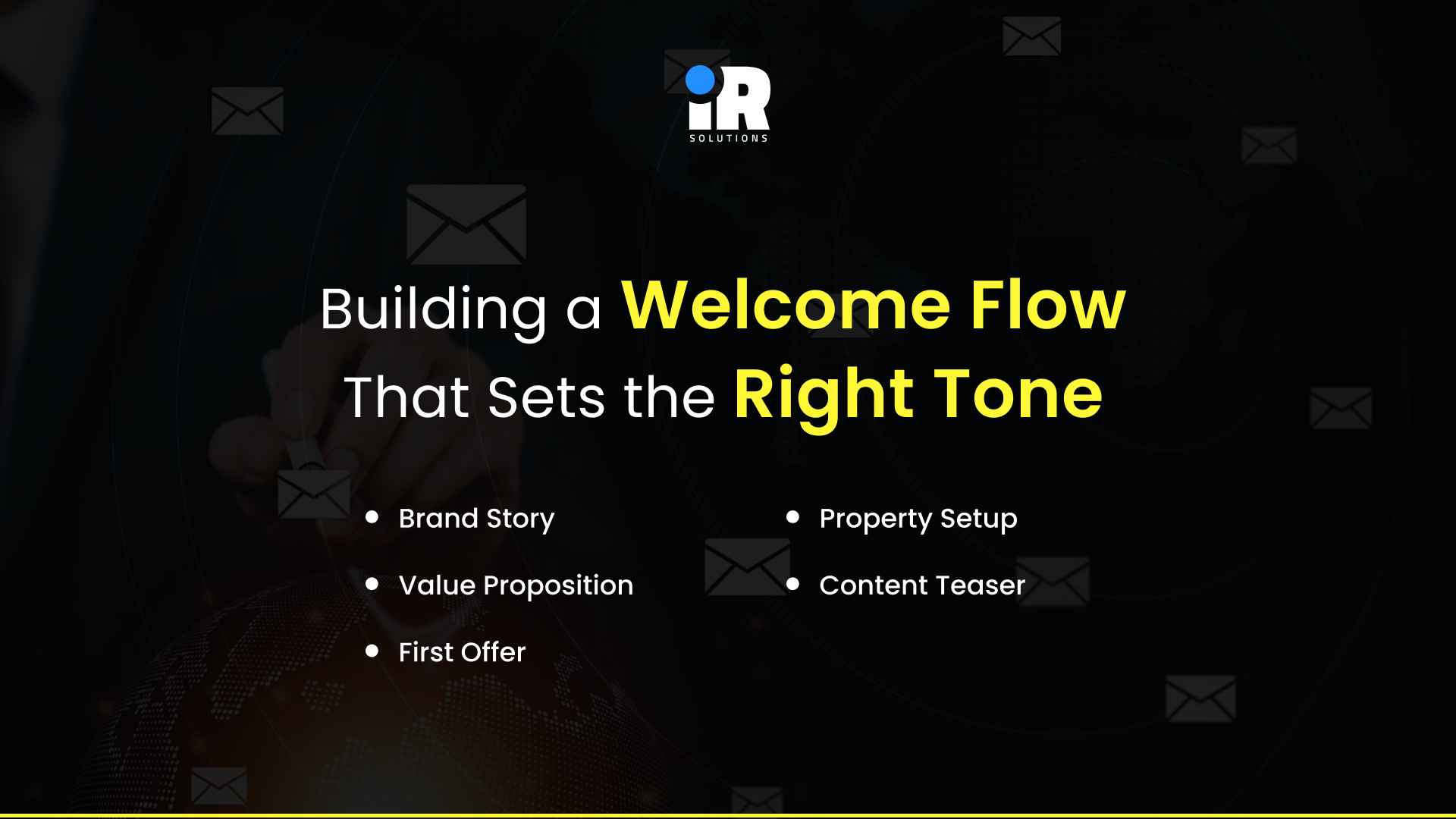 Here is what an effective welcome sequence should cover:
- Brand Story: Tell customers who you are in a way that feels personal and genuinely direct to them.
- Value Proposition: Show them clearly what problem you solve and why they should stay subscribed long-term.
- First Offer: A discount or exclusive deal gives subscribers a real reason to make their very first purchase.
- Social Proof: Share real reviews or customer results to build trust from the very first interaction they have.
- Content Teaser: Give them a clear reason to open the next email by hinting at what is coming.
Space emails two to three days apart so subscribers stay engaged without feeling overwhelmed, while keeping the tone aligned with your brand voice. Avoid leading with a discount in the first email, as it trains people to wait for deals and lowers long-term purchase value. Instead, build trust through your brand story first, then introduce an offer in the second or third email.
For proven Klaviyo flow strategies that improve ecommerce conversions, refer to Top 10 High-Converting Klaviyo Flows to Increase Ecommerce Revenue in 2026.
Post-Purchase Sequences That Turn Buyers Into Loyalists
Closing a sale is not the end of the customer relationship, it is actually the beginning of something far more valuable. Most e-commerce businesses send a receipt and nothing else, which is a missed opportunity at every single stage that follows. A well-built post-purchase sequence does more than confirm orders, it actively shapes long-term brand perception and future buying behavior.
- Order Confirmation: Send immediately with product details, shipping timeline, and support contact clearly included for the customer.
- Shipping Update: Proactive tracking updates reduce support tickets and keep customers feeling fully informed throughout the process.
- Delivery Check-In: Reach out one to two days after delivery to ask genuinely how the overall experience actually went.
- Review Request: Ask for a review five to seven days post-delivery when the product impression is still very fresh.
- Upsell/Cross-Sell: Recommend complementary products based on what they actually purchased from your store that day.
Each of these emails serves a distinct function and contributes to a higher customer lifetime value accumulated over time. Most brands miss the emotional window right after purchase, when excitement is highest. A simple check-in email after delivery can boost retention more than many loyalty programs. It shows customers you care beyond the transaction, and that feeling is what they remember most.
Segmentation - Stop Sending the Same Email to Everyone
Sending the same campaign to your entire list is one of the fastest ways to kill open rates and overall revenue numbers. Different customers have different behaviors, preferences, and purchase histories, and your emails need to reflect that real difference. Segmentation lets you send the right message to the right person at exactly the right time without any guesswork.
Most e-commerce platforms make it fairly straightforward to segment customers based on meaningful behavioral and purchase data:
- Purchase frequency (one-time buyers versus repeat customers who keep returning regularly to buy more)
- Average order value (budget-conscious shoppers versus those spending consistently at much higher price points)
- Product category interest (what they browsed or actually purchased during their prior sessions on your store)
- Geographic location (useful for regional shipping promotions or time-sensitive, locally relevant event campaigns)
- Email engagement level (active openers versus subscribers who have gone completely quiet for many weeks)
Segmented emails feel more personal than mass blasts and consistently perform better in clicks and revenue. Behavioral segmentation goes beyond basic signup data, tailoring messages based on purchase history and interests. It improves engagement, reduces unsubscribes, and increases revenue per send.
Digital marketing experts at IR Solutions help e-commerce businesses build segmentation frameworks that actually connect with the right audience at the right time. We set these systems up properly so they work from day one, not just as a theory sitting inside a planning spreadsheet.
Insights on email automation, flows, and ROI optimization are explained in Klaviyo Email Marketing Strategy 2026: Complete Guide to Automation, Flows, Open Rates & ROI.
Email Design and Layout: What Actually Converts
Most e-commerce emails get decent open rates but lose readers completely as soon as they start scrolling through the actual content. Design plays a bigger role in email conversions than most store owners fully realize, and it goes well beyond picking colors and fonts. The layout of your email decides how quickly a reader actually reaches the action you want them to take.
A single-column layout consistently outperforms multi-column designs on mobile devices, where most ecommerce emails are read today. Cluttering an email with three product grids, two banners, and sidebar navigation kills reader focus and reduces click-through rates dramatically. Your email should have one primary goal, and the layout should guide every element toward that goal without any competing distractions pulling attention elsewhere.
Image-to-text ratio matters more than most brands realize when it comes to getting emails properly delivered to real inboxes. Emails built mostly from images often land in spam or promotions folders because spam filters default to treating them as suspicious. A balanced mix of live text and images keeps your emails out of junk folders and in front of actual paying subscribers who want to hear from you. Alt text on every image also ensures your message still lands clearly when images are blocked by the reader's email client entirely.
Your call-to-action button deserves far more strategic attention than it typically gets in most standard email templates being used. A button that says "Shop Now" competes with every other retailer sending that same phrase to the same inboxes that day. A button that says "Grab Yours Before It Sells Out" gives readers a real and specific reason to click it right now. Specificity in your CTA copy is one of the easiest single changes you can make that immediately improves overall email conversion rates.
How to Measure the Real Performance of Your Email Flows
Running email flows without tracking the right numbers is the same as driving a car without ever looking at the road. These are the specific metrics that honestly tell you whether your strategy is working or quietly leaking revenue every week.
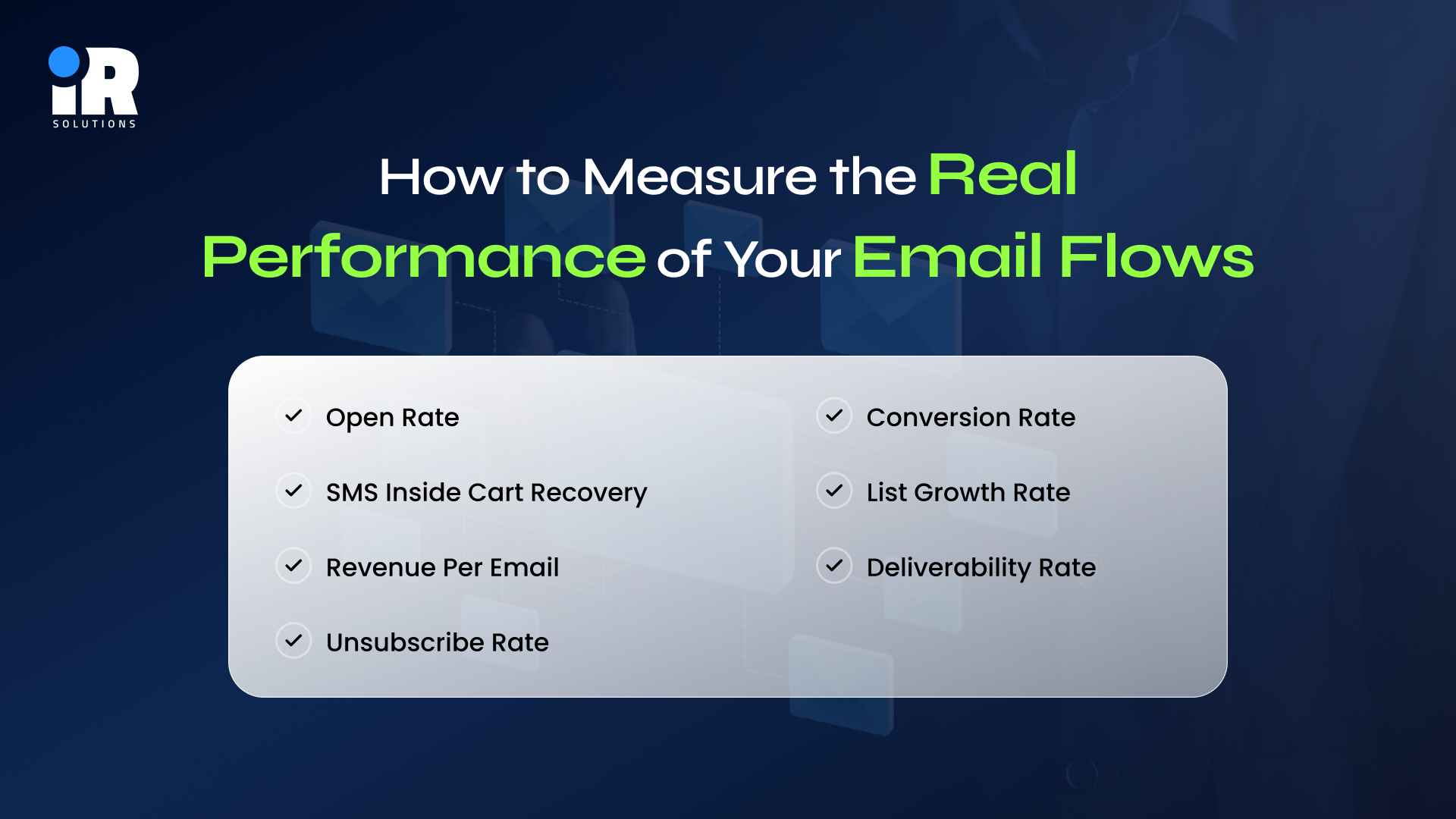
- Open Rate: Shows what percentage of recipients are actually opening your emails after they reach the real inbox.
- Click Rate: Measures how many readers clicked at least one link inside your email after fully opening and reading it.
- Revenue Per Email: Tells you exactly how much revenue each email sent generates for your business directly.
- Unsubscribe Rate: A sudden spike here usually signals your send frequency is too high, or the content is too irrelevant.
- Conversion Rate: Tracks how many email clicks actually result in a completed purchase on your e-commerce store today.
- List Growth Rate: Measures how fast your overall list is growing after accounting for all unsubscribes and cleaned addresses.
- Deliverability Rate: Shows how many emails actually reached real inboxes rather than bouncing or ending up in spam folders.
Revenue per email is the metric most businesses ignore and the most honest measure of whether your email program is actually working. Open rates feel encouraging, but they don't pay the bills. Tracking revenue per email weekly across your flows and campaigns ties every optimization decision directly to money coming into the business.
Writing Emails That People Actually Open
Subject lines carry most of the weight in email open rates, and most businesses underestimate how much this single line matters. A strong subject line creates curiosity, feels personal, or makes a direct promise. Test two or three variations using A/B splits to get real data on what your audience actually responds to. Treat preheader text as an extension of your subject line rather than an afterthought; it doubles its value with almost no extra effort.
Inside the email, your first sentence carries just as much responsibility as the subject line. Most emails lose readers in the opening two lines because the content fails to deliver on what the subject line promised. Send timing plays a supporting role too test morning versus evening sends over two weeks and stick to a consistent schedule so subscribers begin to expect and look forward to your emails.
Personalization beyond a first name makes a measurable difference across every segment. Referencing a recent purchase, browsing behavior, or location makes an email feel like a direct message rather than a mass blast. That shift from broadcast to personal is what separates email programs generating serious revenue from those that mostly generate unsubscribes.
Book a free strategy call with our team and get a complete, honest look at where your current email setup is losing real money Schedule Your Free Strategy Call
Conclusion
Email marketing is not a set-it-and-forget-it channel, it is a system that compounds in value the more intentionally you build it. Every flow covered in this guide, from your welcome sequence to post-purchase retention, works together to move customers through a journey that keeps them coming back. The stores that win long-term are those that treat email as infrastructure, not an afterthought. Start with the fundamentals, measure what matters, and refine consistently. If your current setup is missing key flows or leaving retention revenue on the table, the fix starts at the development level. A well-built e-commerce development foundation from an email marketing company is what makes every marketing layer above it actually perform.
Frequently Asked Questions
How often should I send marketing emails to my e-commerce customers?
Most ecommerce brands perform well, sending two to four campaign emails per week alongside their fully automated flows running in the background.
What email platform works best for e-commerce stores?
Klaviyo and Omnisend are both strong choices, with ecommerce-specific segmentation and automation features built directly into the platform.
How long should my welcome email sequence actually be?
A three to five email sequence spread over one to two weeks works well for the majority of e-commerce stores getting started.
When should I send the first abandoned cart email?
The first email should go out within 60 minutes of abandonment, while the product is still very fresh in their mind.
What is a good open rate for e-commerce email campaigns?
Industry averages sit around 20 to 25 percent, though well-segmented and personalized campaigns regularly exceed that benchmark considerably.
Do post-purchase emails significantly increase customer lifetime value?
Yes, consistent post-purchase communication is one of the most reliable and cost-effective drivers of long-term repeat purchase behavior.
Can IR Solutions handle the complete email setup for my e-commerce store?
Yes, we build and manage complete email flows from platform integration through copywriting, design, and ongoing performance optimization.
How does segmentation actually improve email revenue for e-commerce stores?
Segmentation ensures each subscriber receives content relevant to their specific behavior, which raises both click rates and purchase conversion rates measurably.