


The future of Web3 is being reshaped by a new era of blockchain innovation. Early blockchain networks introduced powerful ideas but faced scalability, cost, and flexibility challenges. As decentralized finance, NFTs, gaming, and enterprise solutions continue to expand, these limitations have become more noticeable. Modular blockchains have emerged as a strong solution by separating essential functions like execution, consensus, and data availability into different layers. This approach improves performance, reduces costs, and enhances customization. By offering greater scalability and efficiency, modular blockchains are positioning themselves as a fundamental base for the future growth and adoption of Web3 development platforms.
How Do Modular Blockchains Work and Why Are They Important
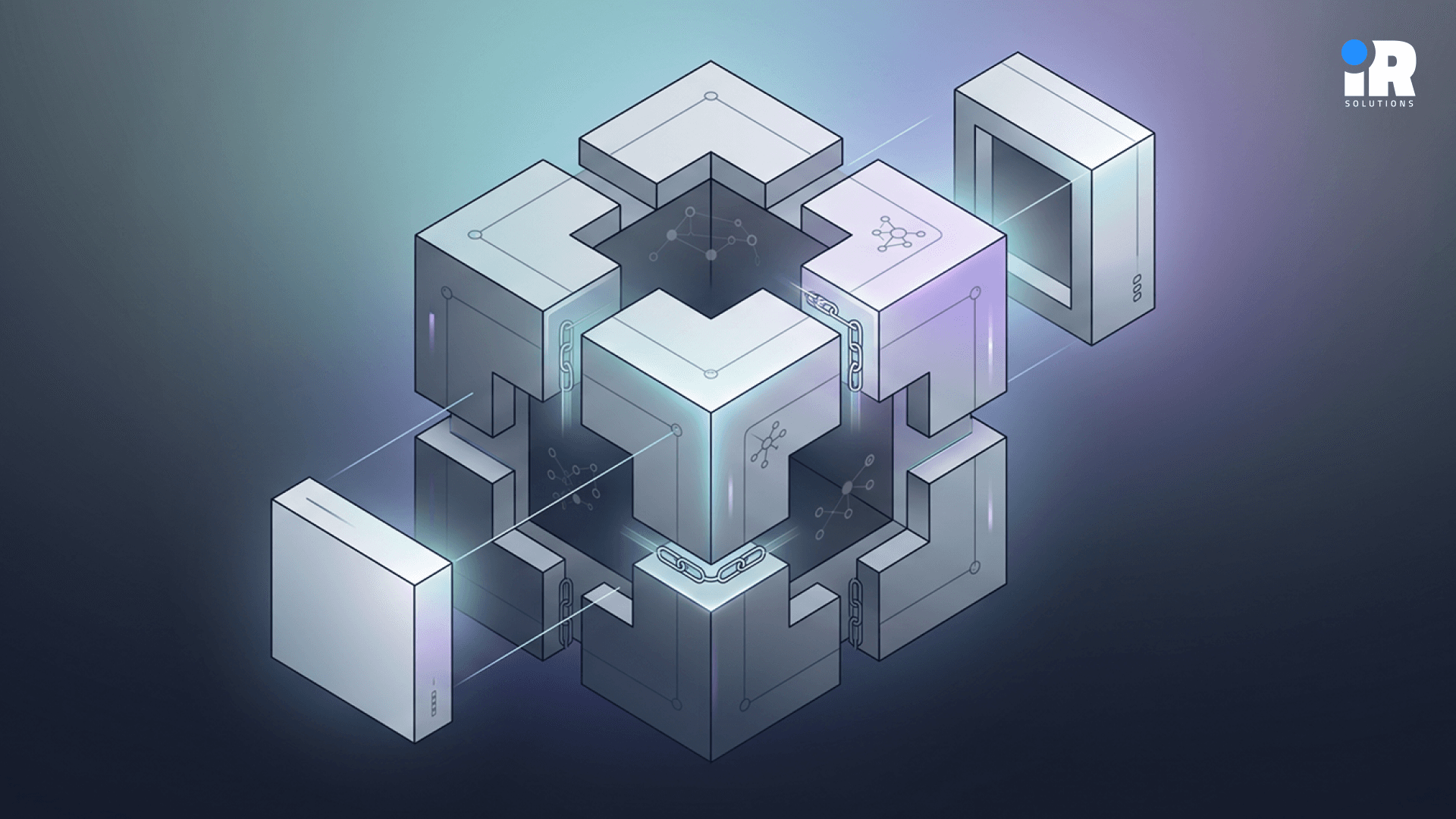
Modular blockchains represent a contemporary shift from the traditional all-in-one system to a layered, specialized architecture. This method does not rely on a single blockchain to perform all functions instead, it divides roles into separate layers from execution, consensus, data availability, and settlement. Each layer is supposed to do a specific job, which enables the whole system to operate more effectively and efficiently.
This architecture enables developers to create more flexible and easy-to-enhance over time blockchain solutions. Instead of having to rewrite an entire network to optimize its performance, developers can optimize individual layers. Such flexibility is necessary in the rapidly changing Web3 environment, where innovation can be fast, and user needs keep expanding.
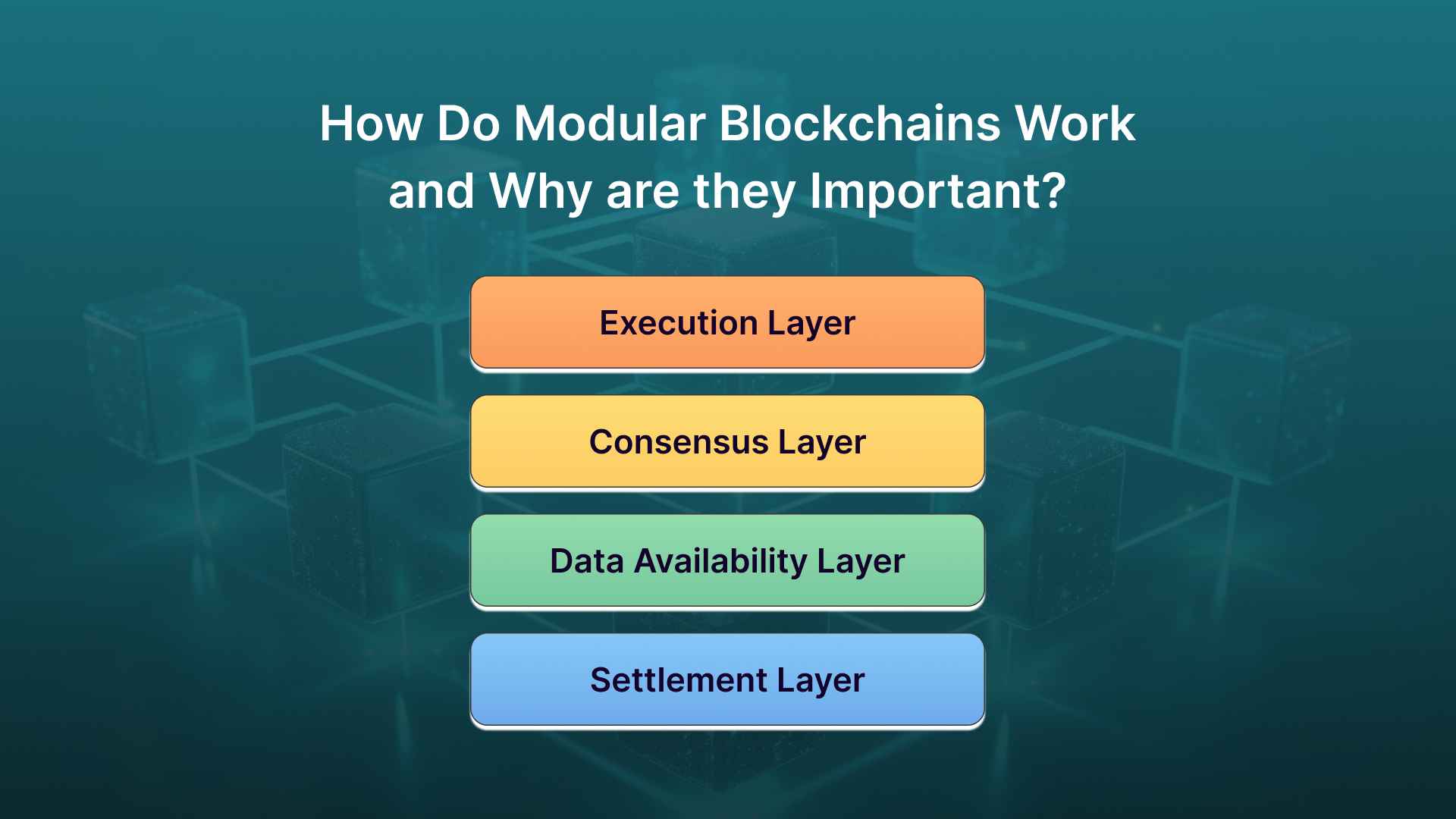
Execution Layer
This layer handles transaction processing and runs smart contracts. It is where user activity takes place and where decentralized applications function.
Consensus Layer
The consensus layer is used to make sure that all network participants can agree on the current state of the blockchain. It is very crucial in ensuring security and trust.
Data Availability Layer
It is the layer that renders data on all transactions accessible and verifiable throughout the network. It helps avoid manipulation of data and assists in transparency.
Settlement Layer
The settlement layer authenticates transactions and resolves conflicts. It offers the ultimate assurance that reinforces the entire system.
Want to explore more? Check out our blog on How Blockchain Technology Enhances Business Transparency, Security, and Trust to learn how it strengthens data security and trust.
How Do Modular Blockchains Revolutionize Web3?
The use of modular blockchains is transforming Web3 into more of a flexible, adaptable, and user-friendly structure. In contrast to monolithic blockchains, which combine all functions into one system, modular blockchains developement separate operations into specialized layers. This allows businesses to select and optimize components that fit their needs, improving efficiency, flexibility, and enabling a broader range of applications within the Web3 network.By removing structural limitations, modular blockchains make it easier to experiment, build customized solutions, and respond quickly to evolving demands.
This layered approach also improves cross-chain connectivity, security, and efficiency. Networks can connect with multiple blockchains, reduce single points of failure, and update individual layers without affecting the entire system. As a result, improvements can happen step by step rather than requiring complete overhauls, accelerating the growth of Web3 and unlocking its full potential across finance, gaming, NFTs, and enterprise applications.
How Modular Blockchains Solve Scalability Issues
The issue of scalability has been one of the primary problems with blockchain technology. With the expansion of networks, speed tends to slow down and the cost also increases which limits the usability. The modular blockchains can solve this issue by distributing the workloads among specialized layers, letting each system component to grow due to its own performance. Modular architectures allow parallel processing and managing resources effectively rather than having to depend on one chain, which reduces bottlenecks and ensures high performance even during heavy demands.
- Transactions can be processed simultaneously across multiple layers, increasing overall capacity.
- Moving certain tasks away from the main chain reduces network traffic and delays.
- Independent optimization of layers allows the workload to be increased without affecting the whole system.
- Rollups allow transactions to be handled externally and settled on the main layer, improving efficiency.
- Workloads are distributed to prevent any single layer from becoming a bottleneck.
It leads to quicker confirmations and a more user-friendly experience, as well as makes large-scale decentralized applications and enterprise solutions run efficiently.
Why Are Monolithic Blockchains No Longer Enough
Monolithic blockchains face major issues when addressing the requirements of the modern Web3 since they attempt to implement all their functions in one system. These blockchains become slow, expensive, inflexible, and inadequate to facilitate large-scale innovation as networks increase. The all-in-one design is just not able to handle the growing complexity of decentralized finance, NFTs, games and enterprise applications.
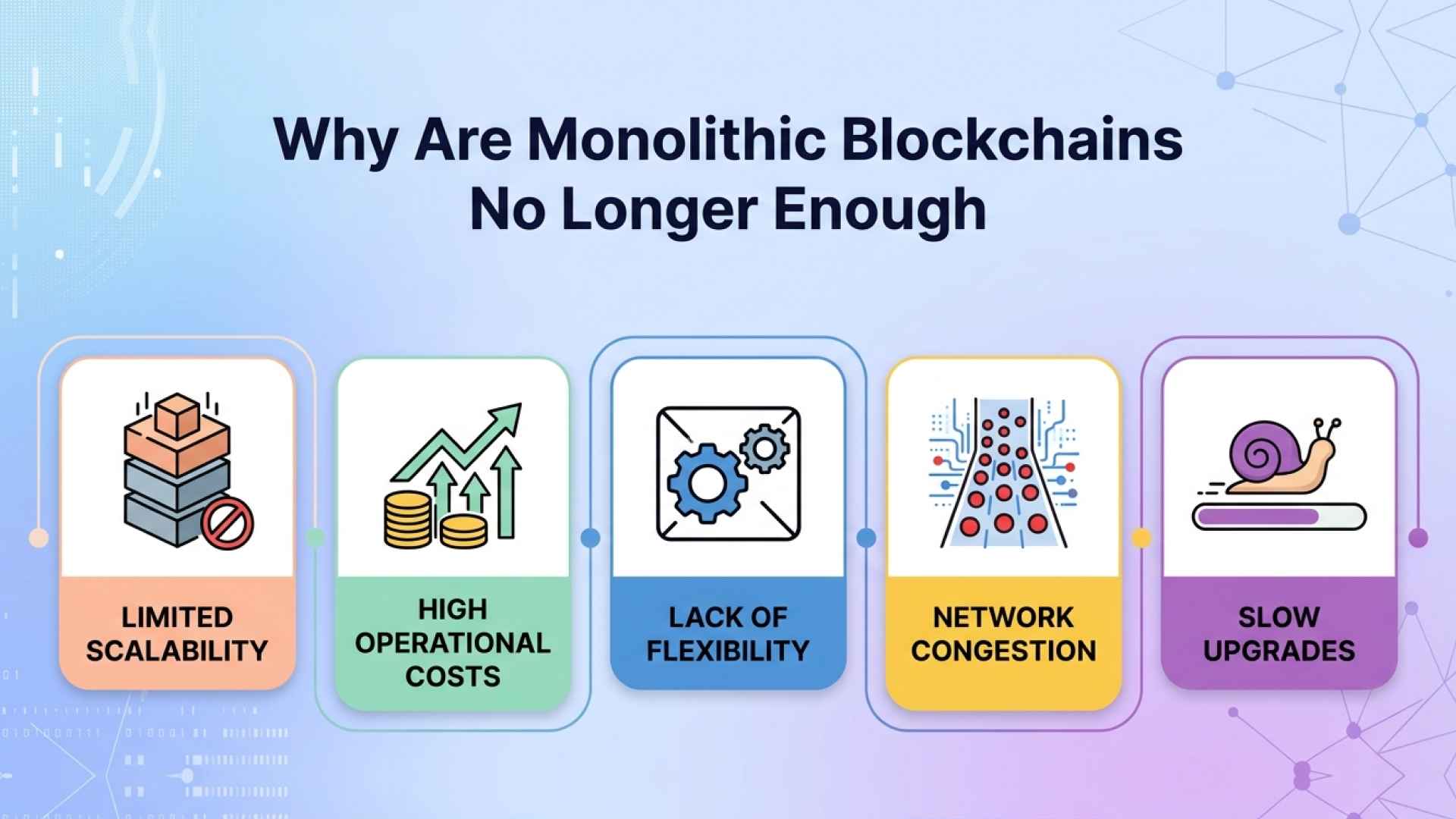
- Limited scalability: Processing all the tasks within a single chain causes slowdowns, and this lowers the transaction speed and network efficiency.
- High operational costs: With more usage, the transaction charges are higher, which reduces the accessibility of the system.
- Lack of flexibility: It is difficult and upsetting to upgrade or modify the system, which slows down innovation.
- Network congestion: All activities compete for the same resources, causing delays and transaction bottlenecks that impact user experience.
- Slow upgrades: Adding new features is difficult, slowing the rollout of innovative solutions for users and businesses.
How Modular Blockchain Improves Speed, Cost, and Flexibility
Modular Blockchian service improves overall network performance, where each element is able to perform any independent operation. Through task separation, networks are in a position to optimize every layer, eliminate redundant work, and run transactions more rapidly, which leads to lower cost, faster confirmations, and flexibility.
Speed Improvements
- Transactions are processed simultaneously
- Reduced network congestion
- Faster confirmation times
Cost Efficiency
- Lower processing load reduces fees
- More effective use of resources
- Transactions become more secure for users
Flexibility and Adaptability
- Seamless integration of new technologies
- Quick updates without affecting the entire system
Additionally, modular blockchain systems encourage innovation. Businesses can explore new strategies without structural limitations, unlocking innovative and high-impact solutions.
Conclusion
Modular blockchains are transforming Web3 by addressing the limitations of traditional monolithic systems, offering faster transactions, lower costs, and greater flexibility. By separating functions into execution, consensus, data availability, and settlement layers, these networks provide scalable and efficient solutions for NFTs, gaming, and enterprise applications. For businesses seeking expert support, IR Solutions provides modular blockchain, web3 development services, smart contract development, and decentralized application deployment. Leveraging modular blockchain technology with professional guidance ensures secure, high-performing, and future-ready networks, empowering Web3 platforms to grow efficiently and support a wide range of innovative decentralized solutions.
Frequently Asked Questions
What is a modular blockchain?
A modular blockchain divides the fundamental services such as execution, consensus, and data storage into layers to enhance the speed, scale and flexibility.
How is it different from a monolithic blockchain?
In monolithic blockchains, all are done in a single layer, but in modular blockchains, responsibilities are distributed, making transactions faster and easier to upgrade.
How do modular blockchains solve scalability issues?
Modular blockchains can smoothly process tasks in parallel and support high workloads by processing across multiple layers, avoiding congestion and enabling parallel transactions.
What are the main layers of a modular blockchain?
The main layers are execution for transactions, consensus for security, data availability for storing information, and settlement for final confirmations.
Can businesses use modular blockchains?
Yes, they support NFTs, gaming, and enterprise projects. Companies like IR Solutions help businesses integrate and deploy these systems effectively.