



Decentralized technology is rewriting how modern businesses compete, collaborate, and grow at a speed most industries have never seen before. Smart contracts stand at the center of this shift, powering automated and self-executing transactions across sectors without any human involvement, slowing things down. Every high-performing blockchain solution has an experienced developer behind it who understands architecture, security, and real business logic at a deep level. Companies that cut corners on development talent often set themselves up for compounding failures over time that become increasingly difficult to reverse. Hiring a smart contract developer today can be one of the most impactful strategic decisions for your business’s future.
What Makes Experienced Smart Contract Developers a Strategic Asset for Any Project?
Blockchain development is not just a technical process, it is a series of critical decisions that directly shape business outcomes. This knowledge covers smart contract architecture, tokenomics design, gas optimization, and managing deployed contracts across live production environments actively.
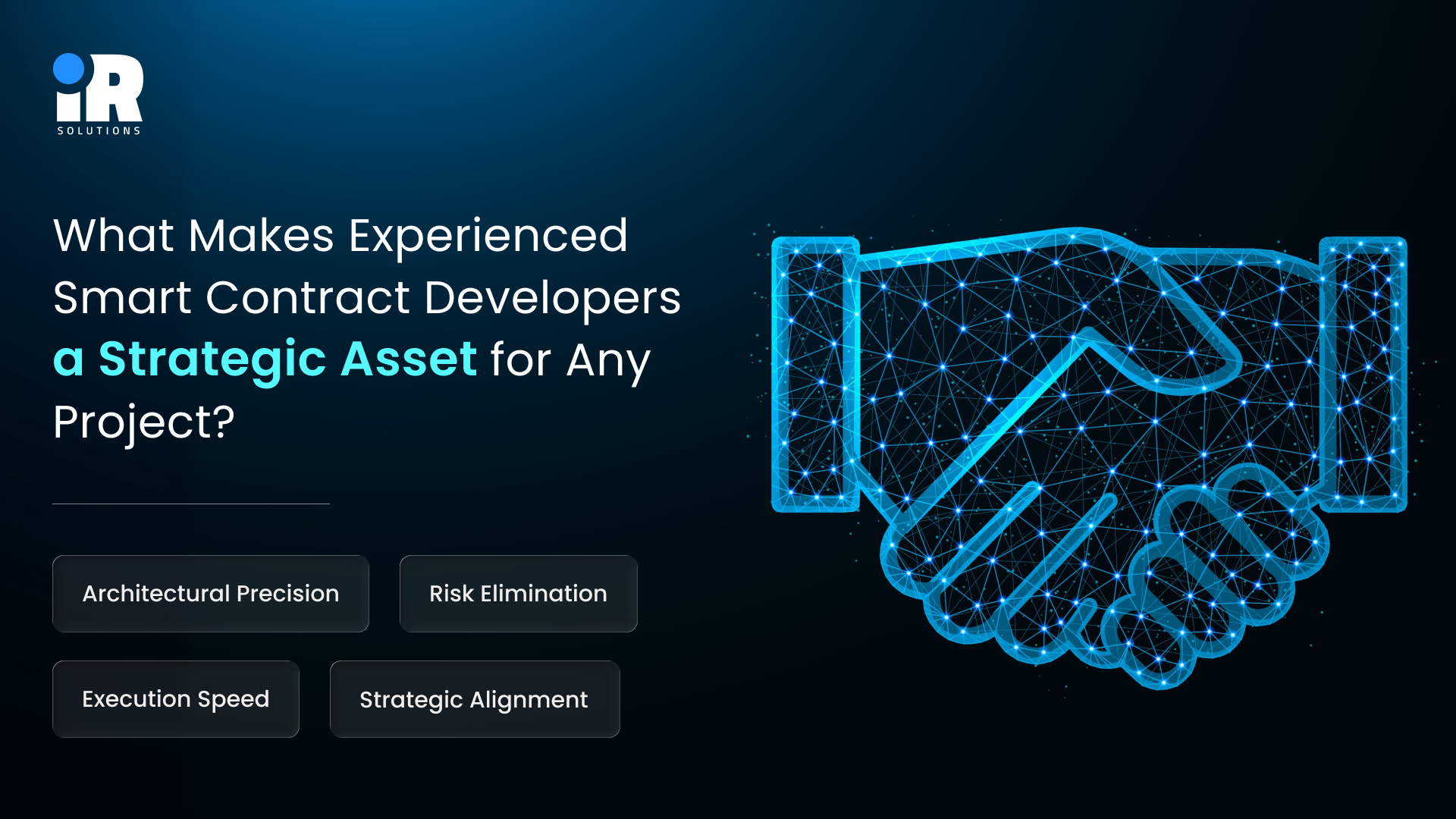
Architectural Precision: Smart contract systems are designed to scale without becoming unstable, overloaded, or too expensive to maintain over time.
Risk Elimination: Hidden vulnerabilities across multi-chain environments get caught and fixed before turning into serious business problems.
Execution Speed: Production-grade contracts across DeFi, NFTs, supply chains, and enterprise platforms get delivered without unnecessary delays or back-and-forth revisions.
Strategic Alignment: Every technical decision gets connected to business outcomes that leadership, boards, and investors actually care about.
Blockchain projects don’t fail because of poor execution, they fail when the technical foundation isn’t strong enough to support real growth. Cutting corners on developer quality is the kind of decision that looks fine early on but creates serious damage later.
Read our blog on How Outsourcing Smart Contract Development Drives Business Growth to learn how companies overcome development challenges and improve overall performance.
How Smart Contract Developers Enhance Security and Compliance
Security is where the gap between average and experienced developers becomes most visible, most consequential, and most costly for businesses. A single vulnerability in a deployed contract can expose millions in user funds or company assets without any warning or grace period.
Experienced developers follow proven, well-established security practices from the very first line of code they write on any project. They understand common attack risks such as repeated call attacks, value size errors, and transaction manipulation, and design contracts that prevent these problems before deployment.
Why Is Smart Contract Auditing Important?
Auditing is the single barrier between your deployed contract and an exploit that drains funds and destroys reputation overnight. Experienced developers run rigorous internal reviews and collaborate with security firms early, producing well-structured code that external auditors can assess clearly and efficiently.
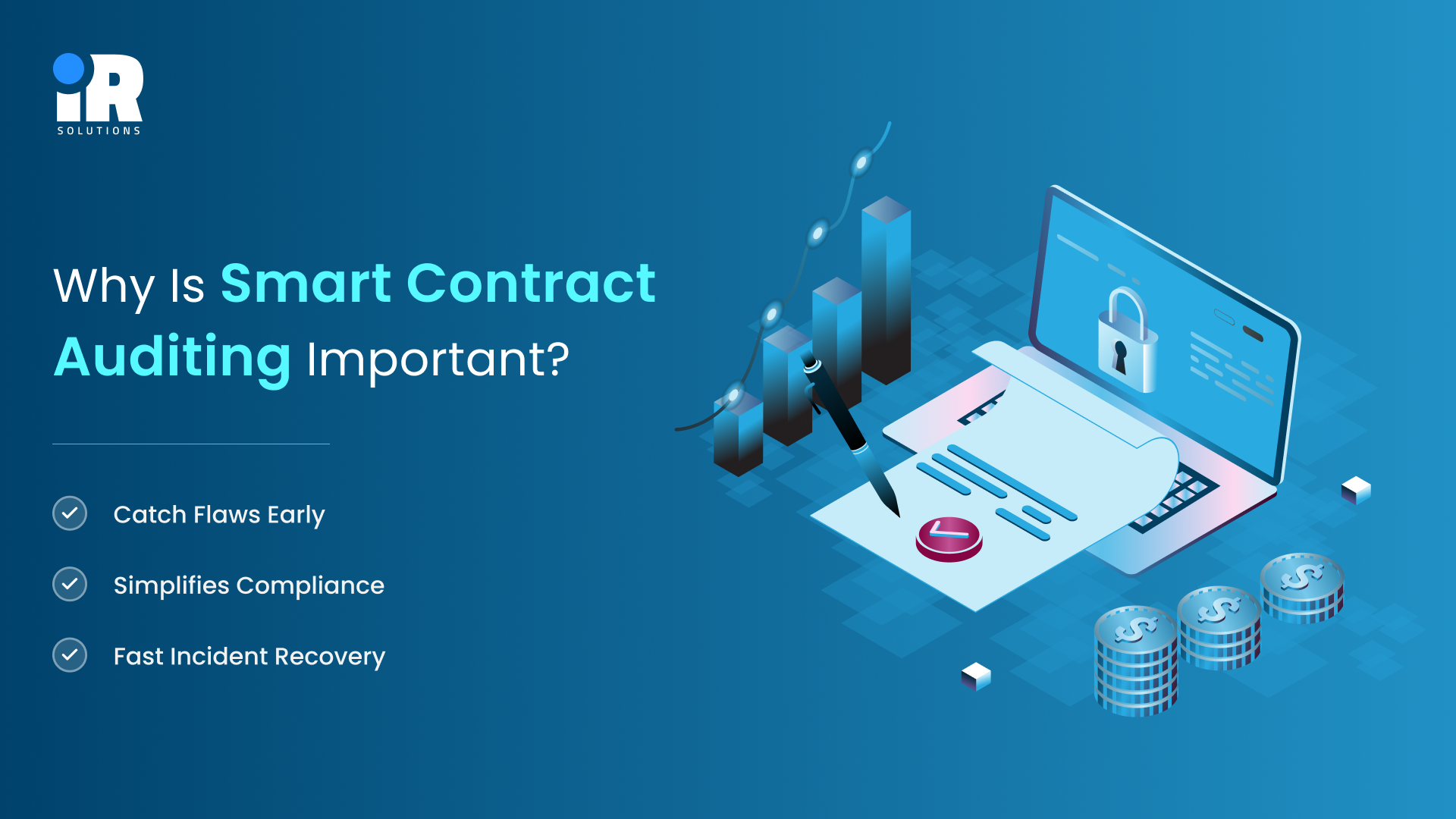
Catch Flaws Early: Logic errors and boundary-case vulnerabilities get identified and fixed before real money is ever at risk in production.
Simplifies Compliance: A clean audit report gives legal and regulatory conversations a credible, documented starting point across multiple regions.
Fast Incident Recovery: Experienced developers embed upgrade mechanisms and emergency pause controls so any post-launch issue gets contained quickly.
How Do Smart Contract Experts Handle Regulatory Challenges?
Blockchain regulation is moving fast and looks completely different depending on the country, region, and asset class a business operates within. Developers with hands-on experience in regulated environments know how to structure contracts that meet compliance requirements without breaking functionality or creating a poor user experience.
Impact of Smart Contract Development on Business Performance
Smart contracts eliminate the layers of manual processes, intermediaries, and unnecessary verification procedures that silently drain business operations of time and money. The breakdown below reflects exactly where that impact lands across five core business areas.
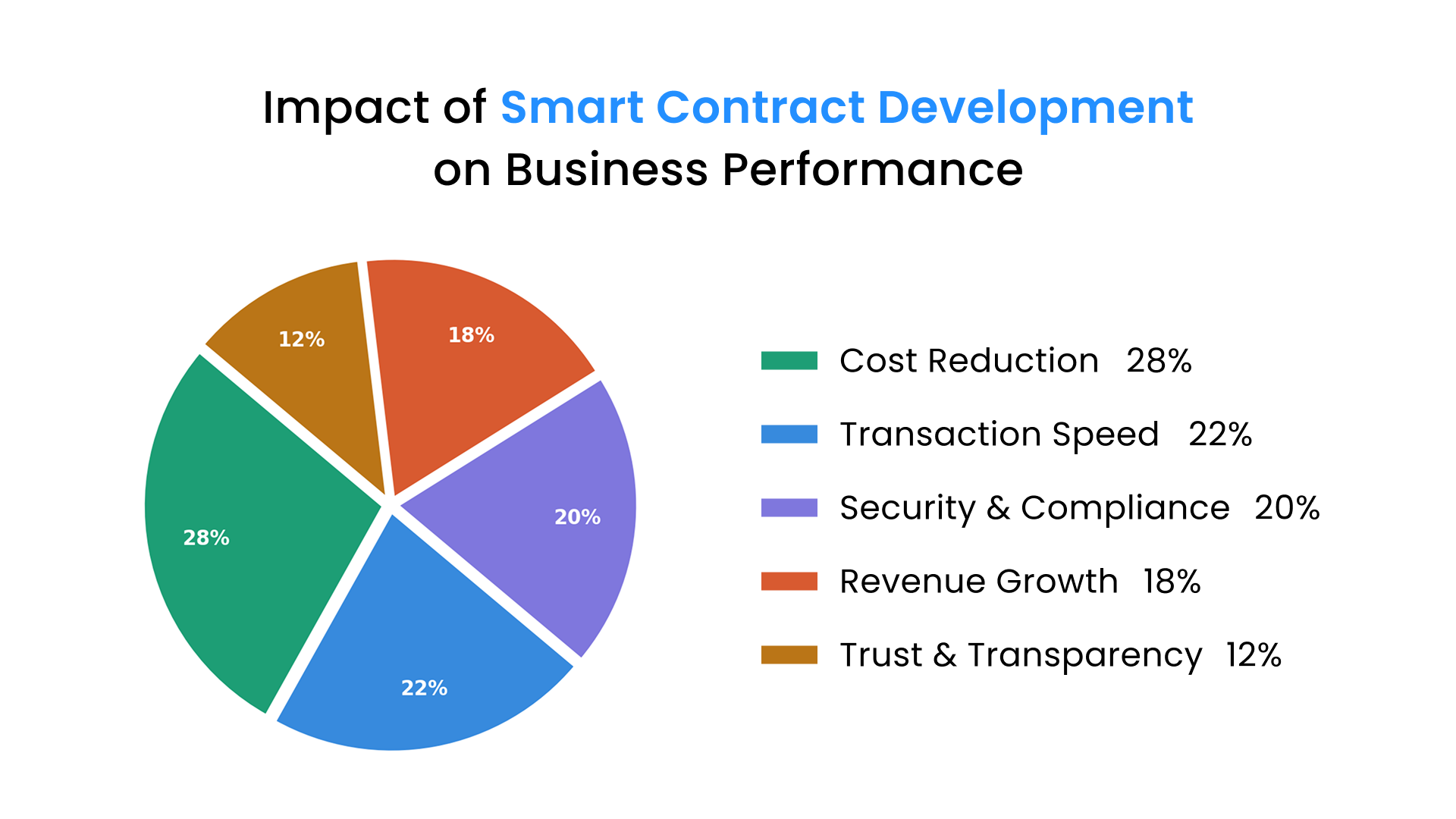
- Cost reduction leads at 28%, cutting operational spending by removing middlemen and automating approvals faster than most teams expect.
- Transaction speed follows at 22%, turning days of back and forth into seconds of automated execution without anyone chasing confirmations.
- Security and compliance contribute 20%, with protection baked in from the start rather than patched in after something goes wrong.
- Revenue growth adds 18% as new monetization models like tokenization and automated royalty payouts become fully accessible and deployable.
- Trust and transparency account for the remaining 12%, making deals close faster because both sides know exactly what to expect every time.
What Role Do Developers Play in Ensuring Blockchain Interoperability?
No business operating on blockchain today can afford to stay locked inside a single chain. Contracts that can communicate across multiple chains open doors to bigger audiences, deeper liquidity pools, and stronger market positioning without starting from scratch each time.
Developers who understand cross-chain bridge protocols, wrapped token standards, and messaging layers like LayerZero and Wormhole build contracts that work across ecosystems cleanly. The goal is a broader reach without adding security risks or unnecessary technical complexity to your existing stack.
Multi-Chain Deployment: Contracts get deployed and managed across Ethereum, BNB Chain, Polygon, Avalanche, and other major networks without friction.
Bridge Integration: Cross-chain infrastructure gets connected safely with proper validation built into every single transfer point.
Protocol Compatibility: Contracts follow recognized standards like ERC-20 and ERC-721 that wallets and ecosystems already support natively.
Liquidity Access: Interoperable contracts tap into liquidity pools across multiple chains without requiring separate product builds for each network.
Building across multiple chains means more users, more utility, and a product that does not get boxed into one ecosystem as the market grows and shifts.
How Can Expertise Unlock New Revenue Opportunities?
Smart contract expertise does more than improve how a business runs internally, it opens up entirely new ways to make money that traditional software simply cannot support. Tokenization, automated royalty payouts, on-chain subscriptions, and decentralized marketplace mechanics are no longer just theoretical concepts; they become fully functional revenue systems when built by the right development talent. Revenue models that once looked good only on paper turn into real, working products when experienced developers design and implement them correctly. Getting there, though, requires developers who actually know how to build these systems properly from the ground up.
These are not ideas that junior developers can simply pick up and ship without gaps appearing in logic, performance, or security. The right developer transforms these concepts from early-stage whiteboard ideas into production-ready systems that generate real income and sustain long-term user engagement.
What Innovative Features Can Experts Introduce into Smart Contracts?
Developers who have completed DeFi protocols, NFT projects, and enterprise blockchain projects offer a degree of technical complexity that is far beyond typical development projects.
Flash Loans: Complex DeFi mechanisms that create trading opportunities and instant liquidity within a single atomic transaction on-chain.
Dynamic NFTs: Tokens that evolve based on real-world data feeds or specific on-chain activity triggered by user behavior.
DAO Governance: Fully on-chain voting and proposal systems that let communities run protocols without any centralized control involved.
Revenue Splits: Contracts that distribute income to multiple stakeholders instantly without any manual processing or reconciliation required.
On-Chain Subscriptions: Recurring payment logic that handles renewals, upgrades, and cancellations programmatically without any human intervention needed.
How Smart Contract Products Are Built for Real-World Reliability?
Building a smart contract product is a deeply technical process that requires careful planning, structured execution, and sharp decision-making at every stage.
Logic Validation: Business assumptions get examined and challenged well before a single line of code gets written, catching fundamental flaws before they become expensive problems.
Structured Testing: Every contract goes through unit testing, testnet deployment, and thorough security testing to ensure it holds up under real-world conditions.
Staged Launches: Mainnet deployments occur in controlled phases, so any issues are caught and fixed before real user funds are at risk.
Code Decisions: Choosing between trusted code frameworks and writing custom logic from scratch is a technical call that directly impacts security, speed, and overall contract reliability.
Production Readiness: Every build phase is deliberate and focused on making sure the contract performs exactly as expected once it goes live.
Knowing when to use existing solutions and when to build something from scratch is a skill that only comes from working through real deployments multiple times. That judgment alone cuts development time significantly and keeps untested code away from contract functions where any mistake carries real financial consequences.
Ready to build your smart contract? We got you. Book a free call with our experts and get your project done right from day one.
Conclusion
Experienced smart contract developers are not just a technical resource but a long-term business investment that pays off across security, compliance, revenue, and scalability. Partnering with IR Solutions for your smart contract development gives your project the technical depth and strategic expertise. Professional Smart Contract developers protect your business from costly failures while unlocking opportunities that less experienced developers simply cannot access. Companies that prioritize blockchain talent as a core business asset consistently pull ahead of those that consider it an afterthought in today's competitive market.
Frequently Asked Questions
How do experienced developers reduce project risks?
They catch vulnerabilities and architectural flaws early in development before those issues grow into expensive, business-damaging problems. Early intervention always costs far less than emergency fixes after deployment.
Why does smart contract auditing matter for businesses?
An audit is the only reliable way to confirm your contract is safe before real user funds are ever involved. Skipping it is a gamble that rarely ends well for any project.
Can smart contracts be modified after going live?
Not by default, which is exactly why experienced developers build upgrade controls and pause functions into contracts from the very beginning. Without those features, fixing anything post-deployment becomes a serious ordeal.
How do developers keep contracts legally compliant over time?
They design flexible architecture that adapts to regulatory updates without needing a complete rebuild from scratch. Staying current on frameworks like MiCA and FATF is part of their standard working process.
What new revenue models do smart contracts make possible?
Tokenization, automated royalty payouts, and on-chain subscriptions all become viable with the right development talent. These are revenue streams that traditional software simply cannot replicate.
Which businesses benefit most from experienced contract developers?
Any business managing financial transactions or digital assets on-chain gains the most value. The higher the value flowing through your contracts, the more developer experience matters.