


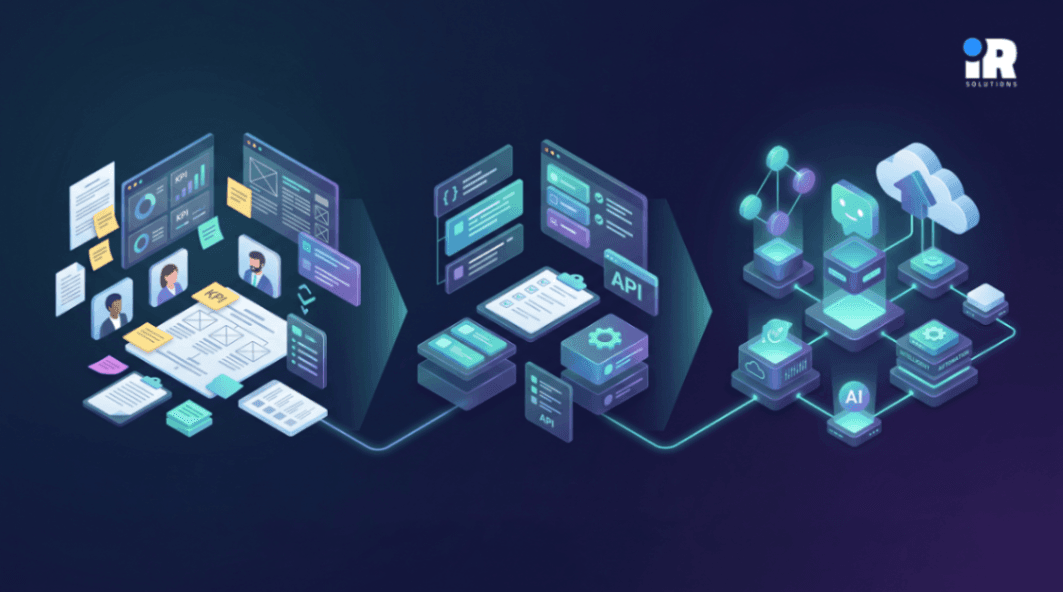

Many companies skip the planning stage and start building before anyone defines what the bot should actually do. Most people researching chatbots online today are still comparing options, not ready to buy yet. This habit is why so many chatbot projects fail within months of going live. The businesses that get this right start with clear requirements long before any code gets written. They map out stakeholders, study real customer problems, design conversations carefully, and set goals before development begins. That structured approach keeps the project focused and prevents costly changes later on. Whether the goal is customer support, lead generation, or process automation, aligning chatbot requirements with the right AI and ML services helps businesses avoid expensive mistakes during development.
Why AI Chatbot Projects Need Clear Requirements First
Most companies rush into building and end up with chatbots that answer the wrong questions completely.
- Most people researching chatbots are still comparing options and are nowhere close to making a purchase decision.
- Without clear requirements upfront, bots spit out generic responses or hand every single query to staff.
- Companies see stronger results when they hire AI/ML developers who turn real business problems into working technical solutions.
- A solid requirements process has four parts: stakeholder mapping, use case discovery, conversation design, and success metrics.
- Clear requirements give sales and marketing teams something real to reference during those early buyer conversations.
Starting development without a plan is exactly how chatbot projects fall apart before they even launch. Doing the groundwork properly is what turns a curious visitor into a lead your team can actually close.
A deeper execution approach is explained in the Custom AI Chatbot Development Guide, which connects planning with implementation.
Identify the Right Stakeholders Before Chatbot Development Begins
Many chatbot projects run into problems because key stakeholders were not involved early enough. Customer support, IT, security, compliance, and business leaders often have different priorities and requirements. Identifying these stakeholders before development begins helps ensure the chatbot solves the right problems, integrates smoothly with existing systems, and meets business objectives.
- Business owners: They define what success looks like and connect the chatbot to revenue or retention goals.
- Support teams: They know the real questions customers ask and where current support workflows tend to break.
- IT and security: They flag integration limits, data privacy rules, and what the chatbot can safely access.
- Compliance and legal: They review what the bot can promise customers, especially in regulated industries like finance.
Bringing support, legal, marketing, and IT teams together before development starts helps uncover blind spots early. In many cases, stakeholders reveal challenges that were not initially considered. For example, one retail business discovered that customers struggled more with sizing and returns than with order tracking after consulting its support team. When requirements are defined collaboratively, the resulting chatbot is far more likely to deliver real business value and a better customer experience.
How Do Businesses Identify Goals Before Developing an AI Chatbot?
The first real step is identifying what problem a chatbot is actually supposed to fix. Too many businesses skip this and jump straight into picking platforms or writing scripts instead. That shortcut almost always leads to a bot that confuses customers rather than helping them out. Getting this wrong early means spending months fixing something that should have worked from day one.
The clearest way to identify goals is to follow where your support team spends most of their time daily. If staff answer the same five questions every single day, that is your starting point right there. Note those repetitive tasks, then decide which ones a chatbot can genuinely handle without making things worse. Goals that come from real data are far easier to defend during budget and approval conversations later.
Once you have a short list of goals, test them against your actual customer journey before moving forward. Ask whether solving this problem will reduce friction or just shift the problem somewhere else entirely. Strong goals are specific, measurable, and tied directly to something the business already tracks every week. That kind of clarity is what separates a chatbot that earns its keep from one nobody uses.
How Do Businesses Choose Between Rule-Based and AI-Powered Chatbots?
Choosing the wrong chatbot type early can cost you months of rebuilding and frustrated customers. The decision really comes down to your use case, budget, and how complex your conversations actually get.
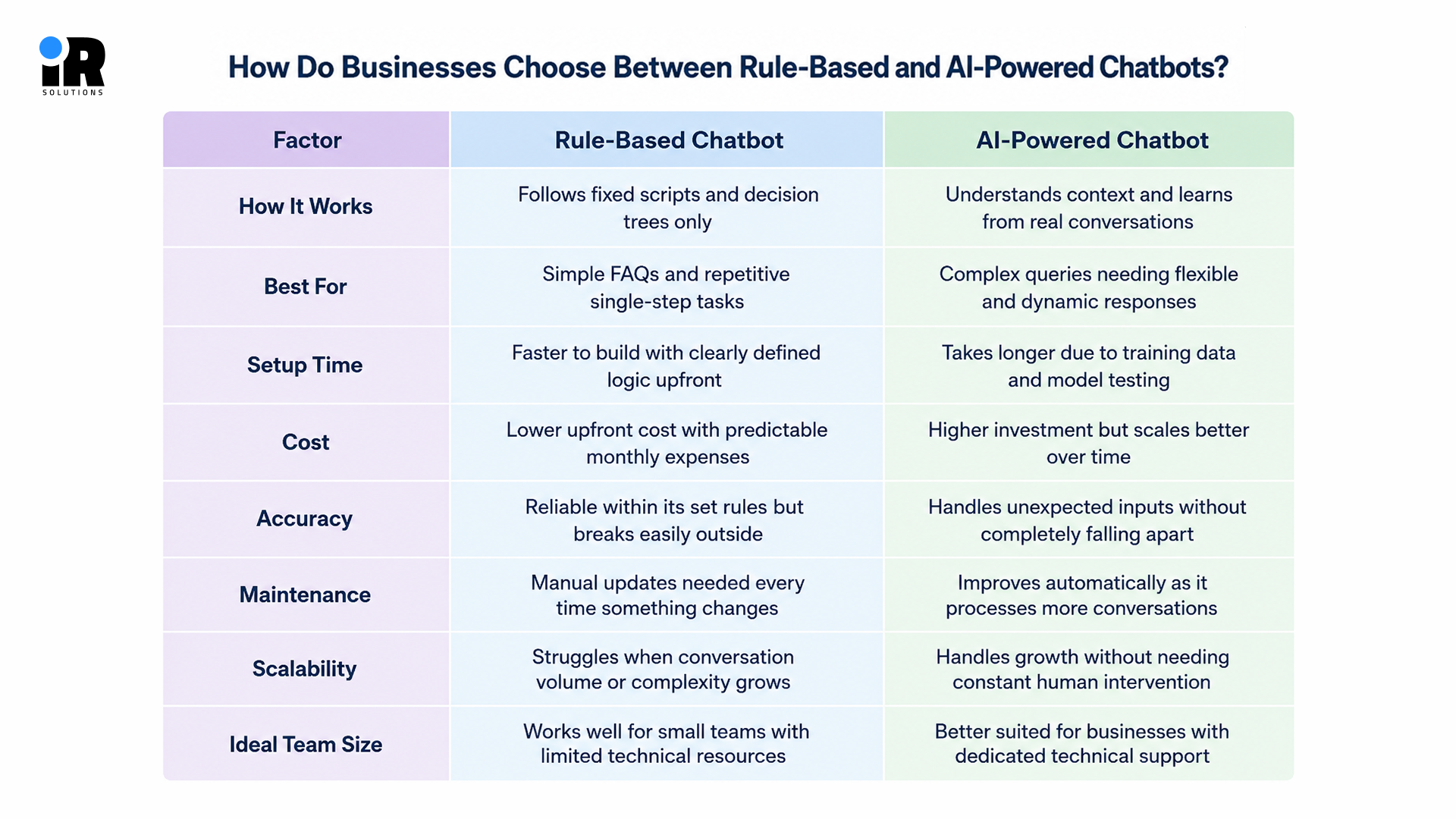
Rule-based bots work well when your needs are simple and your budget is tight right now. AI-powered bots make more sense when your customers ask unpredictable questions that a fixed script simply cannot handle.
Designing AI chatbot conversations that actually feel natural
Even a technically flawless AI chatbot will frustrate users if the conversation design feels stiff or robotic. Mapping out every possible dialogue path, including wrong turns, misunderstandings, and returning customers, is what transforms a functional bot into one people actually trust. When designing real conversation flows, many businesses also rely on an experienced AI chatbot developer to ensure the logic, tone, and fallback handling are properly structured.
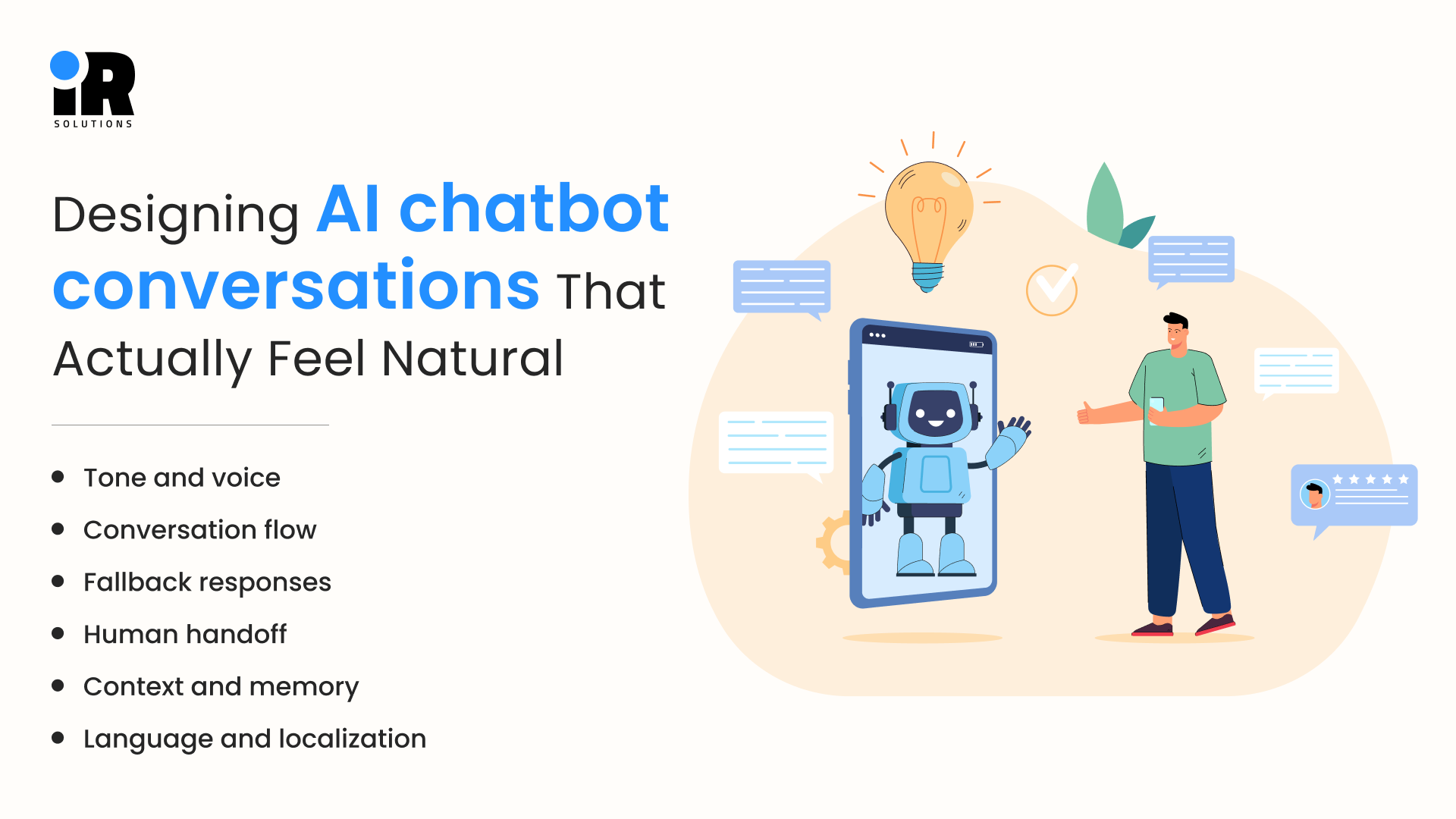
Here's what strong conversation design covers:
- Tone and voice: The chatbot should feel like a natural extension of your brand and not a copy-paste script from a generic template.
- Conversation flow: Each path needs to lead to something useful and the options need to be open to a clear path to move forward and not have dead ends so therefore the user is stuck.
- Fallback: If the bot hasn't understood, it should state this clearly and suggest a clear next step, like asking if the user needs another clarification.
- Human handoff: Every flow should have a well-timed and efficient way for a human agent to step in without a customer having to repeat themselves.
- Context and memory: A bot that forgets what a user said two messages ago feels broken, even if each reply is accurate, session memory is a design requirement, not a nice-to-have.
- Language and localization: Word-for-word translation rarely works; tone and phrasing shift across languages, so each supported language needs its own conversation review before launch.
How do you define success metrics before chatbot development starts
A chatbot without clearly measurable goals is nearly impossible to improve once it goes live. Businesses need to agree on what success looks like before a single screen gets designed. These metrics should tie back to business outcomes, not just technical performance numbers. Defining them early also keeps the development team focused on what actually matters most.
Key Metrics That Track Chatbot Performance Clearly
It helps to separate metrics that measure the bot's behavior from metrics that measure business impact. Both matter, but they answer different questions, and mixing them up leads to confusing reports later.
- Resolution rate: The percentage of conversations the bot handles fully without needing a human agent.
- Response time: How quickly the bot replies, measured from the first message to a useful answer.
- Customer satisfaction: Direct feedback scores are collected right after a chatbot conversation ends.
- Cost per conversation: The total expense of running the chatbot divided by the total conversations handled.
Defining these metrics and recording baseline performance before launch ensures chatbot results are measured in data, not opinion, making it easier to prove impact and justify future investment.
Ready to move forward? Schedule a free consultation call to discuss your chatbot requirements and identify the most suitable approach for your business.
What Integrations Should Be Planned for an AI Chatbot System?
Integrations decide whether your chatbot actually works or just sits there looking busy. Picking the right ones early saves weeks of painful rework during the development and testing phases.
- CRM Sync: Your chatbot needs customer history to give answers that actually feel personal and relevant.
- Payment Gateway: Handling transactions inside the chat keeps users from dropping off at checkout completely.
- Help Desk: Connecting your ticketing system means handoffs to human support happen cleanly without losing context.
- Analytics Tools: Tracking what users ask helps you spot gaps and improve responses over time consistently.
- Knowledge Base: Linking your existing content library gives the bot accurate answers without hardcoding everything manually.
Skipping integration planning is one of the fastest ways to end up with a chatbot that feels disconnected. Every system your team already relies on daily should at least be considered during the planning stage.
For a complete technical breakdown of chatbot development flow, see How to Build a Custom AI Chatbot for Your Business, which explains how requirements turn into working systems.
Common Mistakes That Must Be Avoided in Chatbot Planning
Even businesses that try to plan carefully fall into a few predictable traps during chatbot discovery. Knowing these patterns ahead of time makes it easier to avoid repeating them in your own project. Most of these mistakes come from rushing, not from a lack of skill or effort on the team's part. A short pause before development starts is usually enough to catch and fix every one of them.
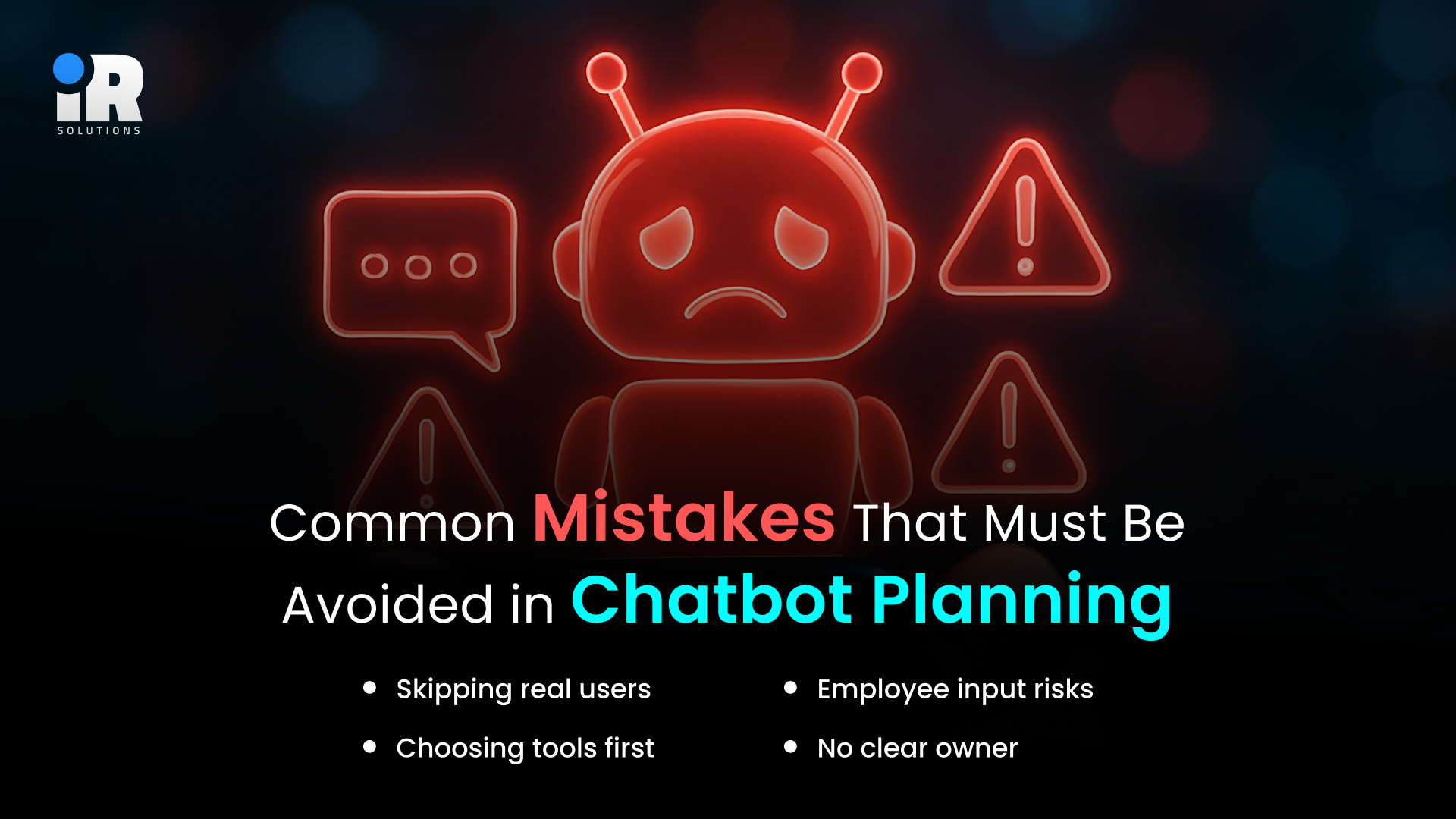
- Skipping real users: Teams design conversations based on assumptions instead of actual customer language and behavior.
- Ignoring edge cases: Plans cover the happy path but forget what happens when something goes wrong.
- Choosing tools first: Picking a chatbot platform before defining use cases locks in the wrong constraints early.
- No clear owner: Without one person accountable for requirements, decisions drift, and deadlines slip repeatedly.
Each of these mistakes is fixable, but only if someone catches it before development is already underway. Building in a short review checkpoint after discovery, before any code gets written, catches most of these issues. That single checkpoint often saves weeks of rework later in the project timeline. It costs almost nothing to schedule, yet it remains one of the most skipped steps in the entire process.
Conclusion
Building a chatbot that actually works starts long before a single line of code gets written. The businesses that get this right treat discovery as the real project, not a box to check before the fun part begins. Stakeholder mapping, use case research, conversation design, and clear success metrics each do a job that no amount of post-launch patching can replace. Skip any one of them, and the gaps show up fast, usually in the form of frustrated customers and a support team fielding the same questions the bot was supposed to handle. By investing time in requirements first, businesses reduce risk, control development costs, and create chatbot experiences that solve real customer problems. Partnering with an AI chatbot development company gives your business a structured path through every stage of this process, from the first stakeholder workshop to launch day metrics, so the final product solves the right problem from the start.
Frequently Asked Questions
What is the first step in chatbot planning?
Stakeholder mapping comes first, since it surfaces blind spots from every department and shapes every decision that follows it.
What is typically the duration of the requirements phase?
The lengths of discovery workshops vary from one to three weeks, depending on the number of departments and the complexity of use cases.
Who should be part of stakeholder mapping calls?
Everyone from support, IT, compliance, and business should be there, as each of these segments sees things differently.
How does a chatbot conversation sound realistic?
Fallback paths, session memory, and a consistent brand voice all help create a sense of a helpful assistant over a search box.
What are the key metrics to establish that a chatbot is effective?
Resolution rate, response time, and customer satisfaction scores together paint the clearest picture of whether the bot is genuinely helping or just deflecting
Does every business need a custom chatbot built?
Not necessarily, but every business needs a clearly defined use case first, since the wrong tool built for the right problem still fails in practice.
What happens after the requirements document is finished?
Businesses move into conversation design, prototyping, and then full development, using the requirements document as the reference point for every build decision.