



Most businesses that rush into blockchain hiring end up burning months on developers who simply cannot deliver production results. The market is competitive, rates are steep, and many candidates oversell their actual technical depth by a wide margin. Whether you are building a DeFi protocol, an NFT marketplace, or an enterprise supply chain tool, the developer you pick changes outcomes.
This guide covers the skills that genuinely matter, realistic cost ranges, and which hiring model fits your business goals. Before you post a job listing, take a moment to understand what you are actually paying for and why. If your project is already moving, you can hire blockchain developers through a vetted staffing partner and start within days. The wrong hire at this stage is expensive, and recovering from it rarely happens quickly or cheaply.
Core Technical Skills Every Blockchain Developer Must Have
Not every project needs the same technical stack, but several skills are non-negotiable across most serious production builds. These are the ones that separate a developer who can actually ship your product from one who cannot.
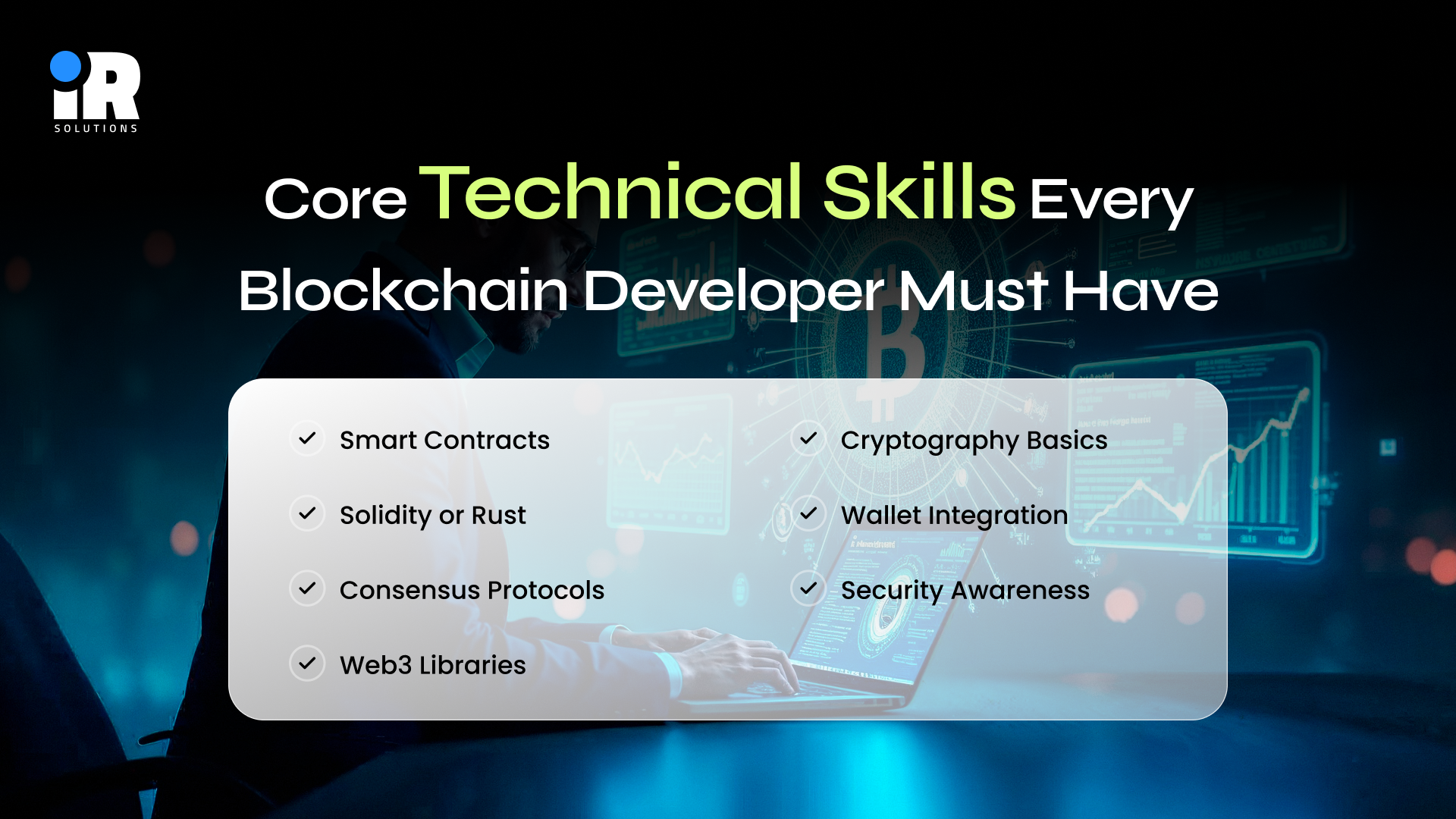
- Smart Contracts: Candidates must write, test, and audit smart contracts on their own without pulling templates or copying template code from GitHub. A developer who needs a framework to produce a basic contract is not yet ready for a production-level engagement.
- Solidity or Rust: Solidity is the primary language for Ethereum-based projects, while Rust is now critical for high-performance chains like Solana. A candidate fluent in both carries a clear advantage over someone locked into a single ecosystem or chain permanently.
- Consensus Protocols: A solid understanding of proof-of-work, proof-of-stake, and delegated consensus models shows they know blockchain systems at a foundational technical level. Without this, a developer is essentially building on infrastructure they do not fully understand or trust under pressure.
- Web3 Libraries: Hands-on work with ethers.js, Web3.js, or Wagmi separates developers who have actually shipped real products from those who have not. If they cannot navigate these libraries without guidance during a technical review, that is a reliable signal to keep looking elsewhere.
- Cryptography Basics: They must understand hashing, digital signatures, and public-private key pairs without needing to look these concepts up during any stage of the project. Any gap here will surface during your technical assessment or, worse, directly in your production environment later on.
- Wallet Integration: Any serious blockchain developer should already have connected MetaMask, WalletConnect, or similar wallets to live production applications on mainnet. If they are still figuring this out conceptually during your interview, that is a clear signal to move on without hesitation.
- Security Awareness: They must know common smart contract vulnerabilities like reentrancy attacks, integer overflows, and access control issues from direct working experience. A developer who cannot identify these risks will create expensive security problems once the contract goes live on a production network.
Blockchain Development Guide 2026: Use Cases, Costs, Technologies & How to Get Started, a complete breakdown of everything you need to build and understand blockchain systems.
Skills That Separate Average Developers from Exceptional Ones
The technical checklist above covers the baseline, but developers who genuinely move projects forward consistently bring a few more things to the table. These qualities are harder to assess on a resume and will not surface in a standard automated screening process at all.
They understand gas optimization deeply enough to write contracts that do not drain user wallets on every single transaction executed. They have worked across more than one chain, so their knowledge does not get locked into one technical ecosystem over time. They can integrate blockchain components into existing backend systems without breaking the parts your engineering team already depends on and trusts daily.
They have shipped at least one real product in production on mainnet, not just a polished demo prepared specifically for a job interview. They explain what they built in plain language without hiding behind technical jargon that nobody else in the room actually understands or needs. These qualities show up in portfolio conversations, reference calls, and paid technical assessments that test real work rather than theoretical answers to abstract questions.
A developer who meets all of the core criteria but also brings these additional qualities is rare, and they will cost more as a result. Building a process that surfaces this kind of candidate takes more effort but saves you far more money and time over the actual course of the project.
Three Hiring Models and Which One Fits Your Business
Choosing the wrong hiring model wastes nearly as much time as choosing the wrong developer, so this decision deserves genuine attention upfront.
Full-Time Hire: Best when blockchain is central to your product, and you need someone embedded in your team's daily operations for the long term. The process takes longer and costs more upfront, but you get a developer who understands your codebase and your business deeply over time. This model only makes financial sense when blockchain is a permanent and ongoing part of your product's core architecture rather than a one-time feature addition.
Contract Developer: Works well for a clearly defined project scope where you need specific expertise for three to six months and no longer than that. You pay only for the work you need and avoid the full overhead of employment benefits, equity conversations, and ongoing payroll management. The tradeoff is that a contractor may not be as invested in your product's long-term outcome as a full-time team member would naturally be.
Dedicated Team: Best when your blockchain roadmap is larger than one developer can handle, and you need full-stack technical coverage from the very start. A staff augmentation partner builds and manages the entire team structure so you can focus on the product without handling people management yourself. This model typically comes with project management and QA built in, which reduces the coordination burden on your internal team considerably and keeps the build moving.
How to Avoid Hiring Mistakes by Evaluating Candidates Correctly
Resumes in this space are notoriously unreliable, so how you evaluate candidates matters more than where you first find them. Checking real work, calling actual references, and running a paid test task will tell you far more than any resume or LinkedIn profile ever could.

- GitHub Activity: Look for recent commits, open-source contributions, and repositories showing real and ongoing work rather than just forked starter projects from others.
- Portfolio Review: Ask to see smart contracts actually deployed to mainnet, not testnet demos built specifically to impress during a hiring interview.
- Technical Assessment: Give candidates a realistic task that mirrors your actual project scope and compensate them fairly for the time they spend completing it.
- Reference Checks: Talk to previous clients or engineering leads who can speak specifically to how the developer handles production pressure and missed deadlines.
- Cultural Fit: A technically strong developer who communicates poorly or consistently misses deadlines will cost your project more than a slightly less experienced one who communicates well.
Skipping any part of this evaluation process because someone carries impressive credentials on paper is a hiring risk that rarely ends the way businesses expect it to. The evaluation process is where you earn the right to make a confident offer rather than a hopeful one.
Common Mistakes Businesses Make When Hiring Blockchain Talent
Hiring someone without a blockchain-specific technical assessment is the most common mistake companies make when building these teams for the first time. Assuming a traditional software engineer can pick up blockchain development reliably on the job is a pattern that consistently delays projects by months. Skipping the portfolio review because someone carries impressive credentials on paper is a hiring gamble that rarely ends the way the business expects.
Hiring one developer when your product clearly needs a team is another pattern that sets timelines back in ways that are very hard to recover from. Prioritizing hourly rate over verified experience almost always costs more in rework and project delays further down the road. Evaluating blockchain candidates with standard software engineering interview templates designed for web or mobile development is also a reliable way to hire the wrong person.
These mistakes all share a common thread, they come from not knowing what good blockchain talent looks like when you encounter it in practice. A structured vetting process and a willingness to pay properly for the right candidate will fix most of them before they become expensive problems. The cost of getting this decision right upfront is always lower than the cost of reversing a bad hire three months into active development.
Why You Should Hire Blockchain Developer for DeFi Startup Today understand how the right developer can accelerate product growth, security, and scalability.
How a Specialist Partner Helps Your Business Grow Faster
Building a blockchain product through a specialist development partner changes the risk profile of the entire technical engagement from day one. A good partner does not just provide developers; they bring oversight, process structure, and accountability that freelance arrangements rarely include on their own.
Faster Start: Pre-vetted developers with solid production track records can be onboarded and actively contributing to your project in days rather than months. You skip weeks of screening, shortlisting, and offer negotiations that come with running an open recruitment process entirely on your own.
Reduced Risk: A partner has multiple developers with overlapping skills, so your project keeps moving if one person becomes unavailable at any point during the build. This built-in redundancy is something you rarely get when hiring independent developers one at a time through a standard job posting.
Cost Efficiency: You pay for the output without absorbing the full overhead of salaries, hardware, employment benefits, and operational costs that come with direct team building. For most businesses, this model ends up 30 to 50 percent more affordable than building an equivalent internal team through traditional direct hiring processes.
Full Coverage: Expert blockchain development services typically include smart contract development, security auditing, backend integration, and QA all under one coordinated and managed engagement. This means you do not have to stitch together multiple separate vendors or manage different specialists for each component of the build at the same time.
When the technical team underneath your product is genuinely strong, the product itself has a much better chance of shipping on time and within scope.
To skip the long hiring cycle and get matched with pre-vetted blockchain developers ready to move, book a free call today.
Conclusion
Hiring the right blockchain developer is one of the most consequential technical decisions a business makes, and getting it wrong costs far more than the time spent getting it right. The skills, the hiring model, and the evaluation process all matter equally cutting corners on any one of them creates problems that compound quickly once development is underway. Whether you need a single specialist or a full dedicated team, the quality of the people building your product determines everything that follows. If you are ready to move, you can be connected with pre-vetted blockchain developers who can start delivering from day one.
Frequently Asked Questions
What technical skills should a blockchain developer have?
They need smart contract development, cryptography knowledge, Web3 integration experience, and real production work on at least one major chain.
What hiring model works best for a blockchain project?
Contract developers work well for defined scopes, while dedicated teams suit longer roadmaps that need consistent full-stack blockchain coverage throughout.
How long does it take to hire a qualified blockchain developer?
Open recruitment typically takes six to twelve weeks, while a vetted staffing partner can place the right developer within days of initial contact.
What is the difference between a blockchain developer and a Web3 developer?
Blockchain developers work on protocol and contract logic while Web3 developers focus primarily on wallet integration and the frontend user experience.
Should my business hire a freelancer or work with a blockchain development agency?
Freelancers suit small, well-defined tasks while an agency provides team coverage, faster onboarding, accountability, and lower overall project risk.
Is it better to hire a blockchain developer full-time or on a contract basis?
Full-time makes sense for ongoing core products, while contracts work best for specific features with a clear start and defined end date.