


Every counterfeit drug, delayed shipment, or botched food recall costs businesses millions. The root problem is almost always the same, nobody can see what actually happened. Global supply chains run on dozens of handoffs, vendors, and paper trails that fall apart under pressure. Blockchain changes that equation completely. It creates a single, tamper-proof record that every authorised party can trust and verify.
Businesses using blockchain for supply chain management report faster audits, fewer costly disputes, and measurably stronger customer confidence. If your company moves goods across borders, warehouses, or suppliers, blockchain development company could be the most practical investment your business makes this year.
Why Global Supply Chains Are Losing the Transparency Challenge
Most supply chains were built before digital infrastructure existed at scale. They run on spreadsheets, email threads, PDFs, and informal agreements between vendors spread across multiple countries. That works until something goes wrong.
When a shipment disappears, or a product gets recalled, tracing it back through the chain is slow and punishingly expensive. Each party holds its own records. Those records rarely talk to each other. Nobody has a single agreed version of what actually happened. Investigators piece together a story from conflicting data, and by the time they have an answer, the damage is already done.
The real-world numbers are hard to ignore, food fraud alone costs the global economy roughly $40 billion every year. Counterfeit pharmaceuticals kill hundreds of thousands of people annually in markets with weak oversight. These aren't rare outlier events. They're the predictable consequence of supply chains that cannot reliably verify what happened, who touched what, and when.
Businesses absorb this pain in ways that don't always make headlines, retailers get blamed for supplier failures they had no visibility into. Manufacturers carry liability for problems that started two tiers up their supply chain. Logistics providers lose long-term contracts because a single shipment couldn't be traced accurately or quickly enough to satisfy a client's audit.
More context is available in our Blockchain in Supply Chain Management: Benefits, Use Cases & Implementation Guide.
What Blockchain Actually Does Without Complexity
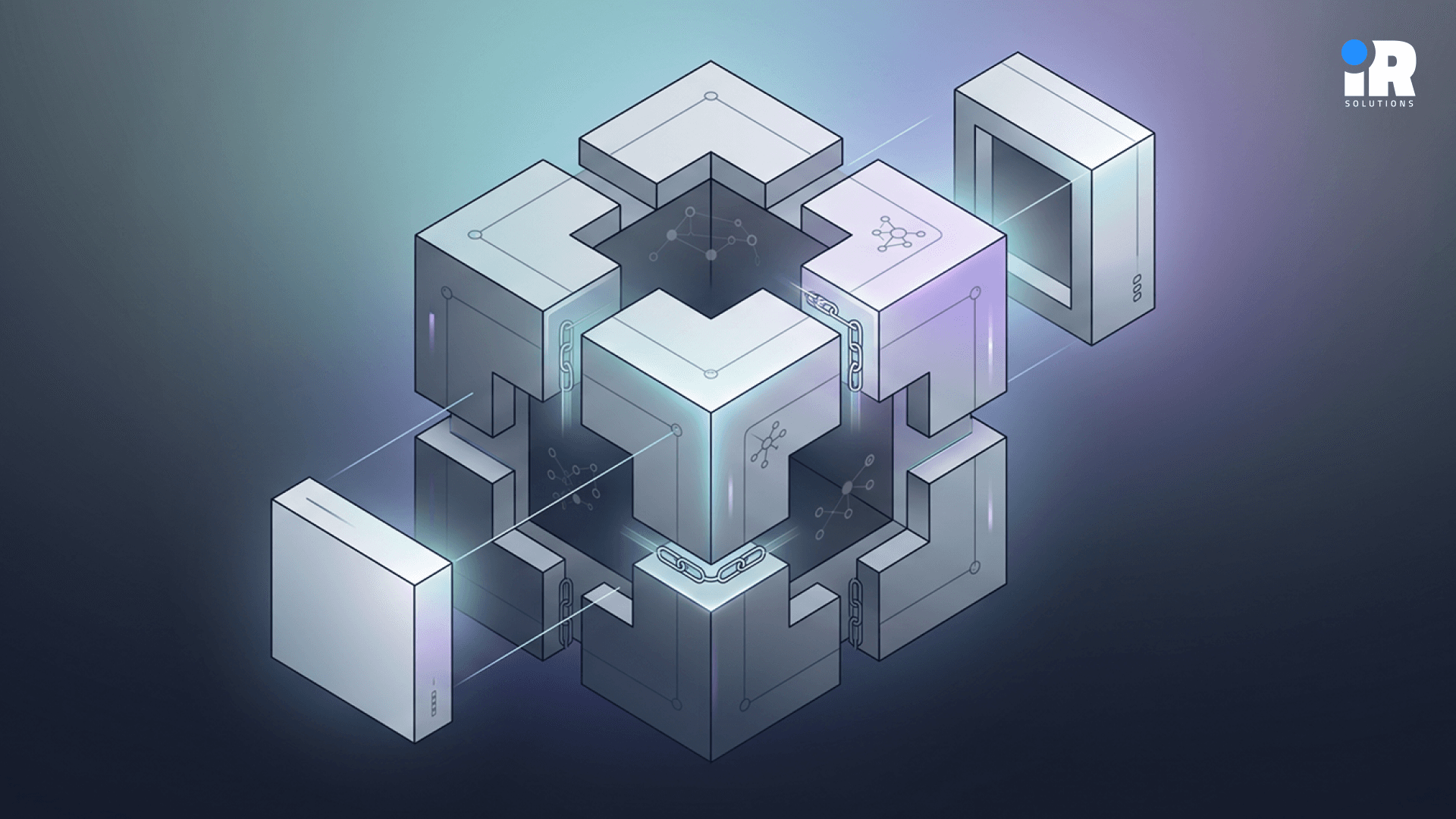
Blockchain is a distributed ledger, every transaction gets recorded in a block, chained to the one before it, and replicated across a network of participants. Nobody can alter a record without changing every subsequent block, which would require controlling the majority of the network simultaneously. That's what makes it tamper-resistant in a way that a central database simply isn't.
In supply chain terms, this means three things happen differently:
- Every product movement gets logged at the moment it occurs, not reconstructed from memory or paper days later.
- Every participant supplier, manufacturer, freight carrier, customs broker, and warehouse operator writes to the same shared ledger.
- Every record is visible to authorised parties in real time, without waiting for someone to compile and send a report.
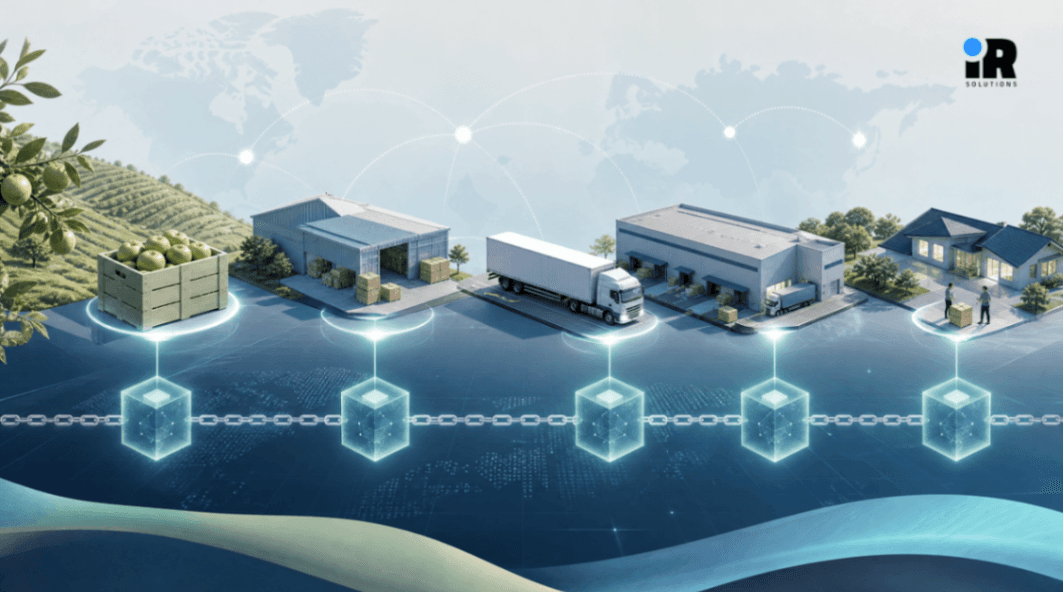
This isn't a theoretical improvement. Walmart deployed blockchain to trace leafy greens from farm to store shelf. What previously took seven days now takes under two seconds. Maersk built an entire shipping documentation platform on Hyperledger Fabric to coordinate container tracking globally. Both companies chose blockchain because nothing else solved the transparency problem cleanly at their scale.
Strategic Benefits of Blockchain for Supply Chain Optimization
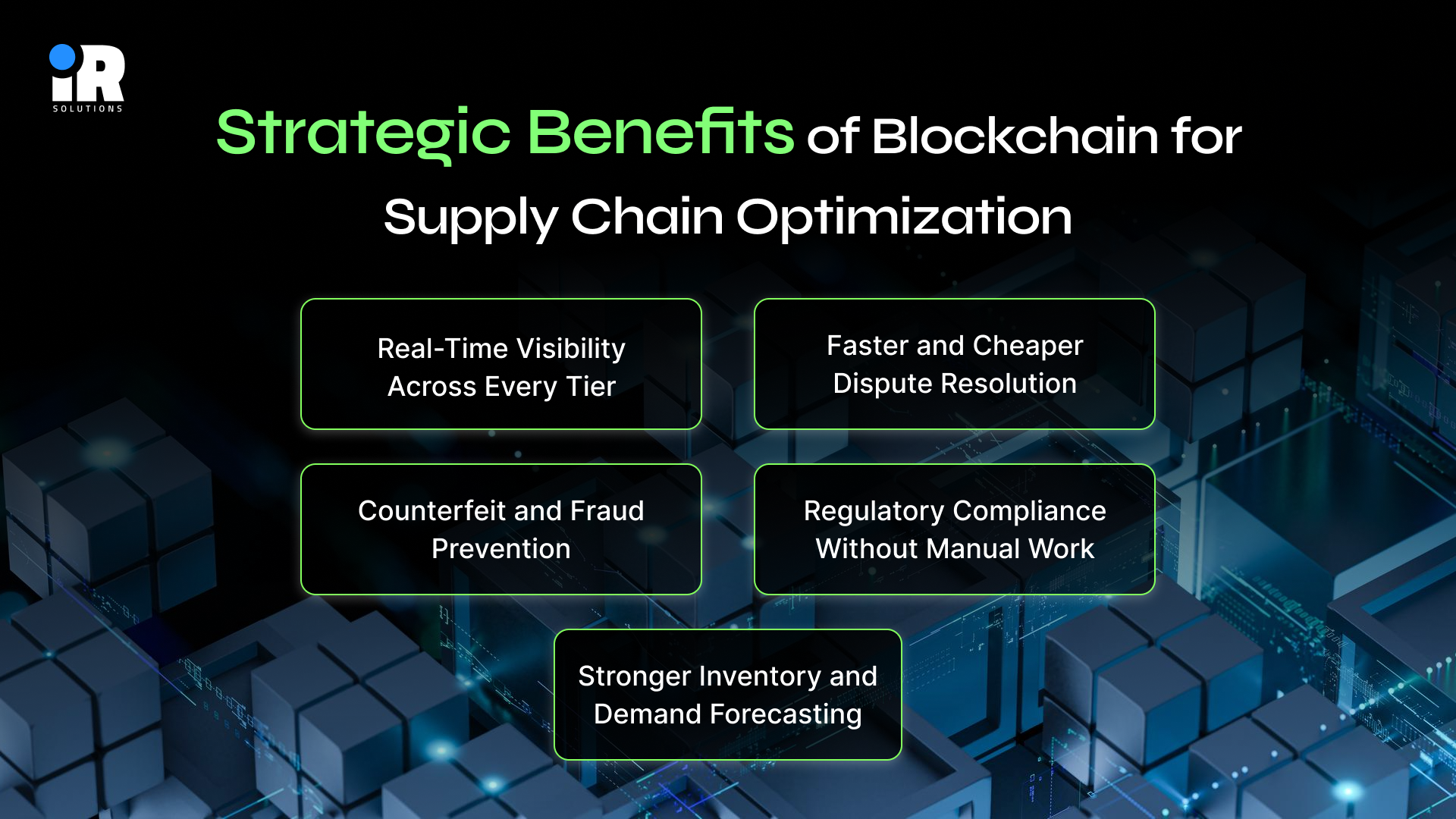
1. Real-Time Visibility Across Every Tier
Traditional supply chains have blind spots at every handoff point. A product leaves a warehouse and enters a third-party logistics provider's network for several days. Nobody knows precisely where it is, what condition it's in, or whether the temperature-sensitive cargo stayed within the required range during transit.
Blockchain closes those blind spots by requiring each participant to log events as they happen. You can see exactly when a shipment left the factory floor, when it cleared customs at the port, when it arrived at a regional distribution centre, and when it was signed over to the final carrier. That real-time visibility cuts the time your team spends chasing status updates and lets operations managers react quickly when something deviates from plan.
For businesses in supply chain and logistics, this level of visibility transforms day-to-day decision-making. You stop operating on yesterday's information and start working with what's actually happening now.
2. Faster and Cheaper Dispute Resolution
Disputes between buyers and suppliers drain time, money, and goodwill. Both parties pull their own system records and argue over conflicting data. Legal teams get involved. Relationships deteriorate while the paperwork stacks up.
With blockchain, both parties read from the same immutable ledger. If a shipment was delayed at a specific checkpoint, the record shows it, timestamped, and signed by the party who logged the event. There's no room for "our system shows something different" because there is only one system. Disputes that previously stretched over weeks get resolved in hours. The legal costs never materialise.
3. Counterfeit and Fraud Prevention
Counterfeit goods cause serious harm in pharmaceuticals, electronics, and luxury goods. A fake component in an industrial machine can cause catastrophic failure. A counterfeit medicine can kill a patient and a fake luxury bag damages a brand's hard-built reputation.
Blockchain assigns a verifiable digital identity to each physical item or batch. Every movement from manufacturer to end customer gets recorded and linked to that identity. By the time a product reaches the buyer, a simple QR code scan reveals the complete, verified journey. If a product cannot produce a full and unbroken chain of custody, it raises an immediate flag, the fraud has nowhere to hide.
4. Regulatory Compliance Without the Manual Work
Governments across the EU, the US, and Asia are tightening supply chain disclosure requirements. The EU's Corporate Sustainability Due Diligence Directive requires companies to document ethical sourcing across multiple tiers. The US DSCSA mandates drug traceability at the unit level by 2026. These obligations don't get lighter as time passes they expand.
Blockchain makes compliance documentation automatic, every sourcing decision, certification check, and transaction is recorded at the time it happens. When an auditor requests evidence, companies generate a verified report from the ledger rather than scrambling to assemble documents from multiple departments. The audit trail exists whether you planned for an audit or not.
This is particularly valuable for businesses in fintech and banking that handle supply chain finance, where traceability of underlying assets directly affects credit risk assessment.
5. Stronger Inventory and Demand Forecasting
When you can see live data from every point in your supply chain, your planning function improves across the board. You're not working off consolidated reports that are two weeks old by the time they reach a decision-maker. You're looking at data that reflects actual inventory positions, transit times, and supplier output in close to real time.
That visibility feeds directly into better purchasing decisions, fewer stock-outs, less capital tied up in unnecessary buffer stock, and more accurate demand forecasting for production planning. For operations teams running lean inventory models, this is a concrete competitive advantage.
Smart Contracts - Where Blockchain Goes From Visible to Automatic
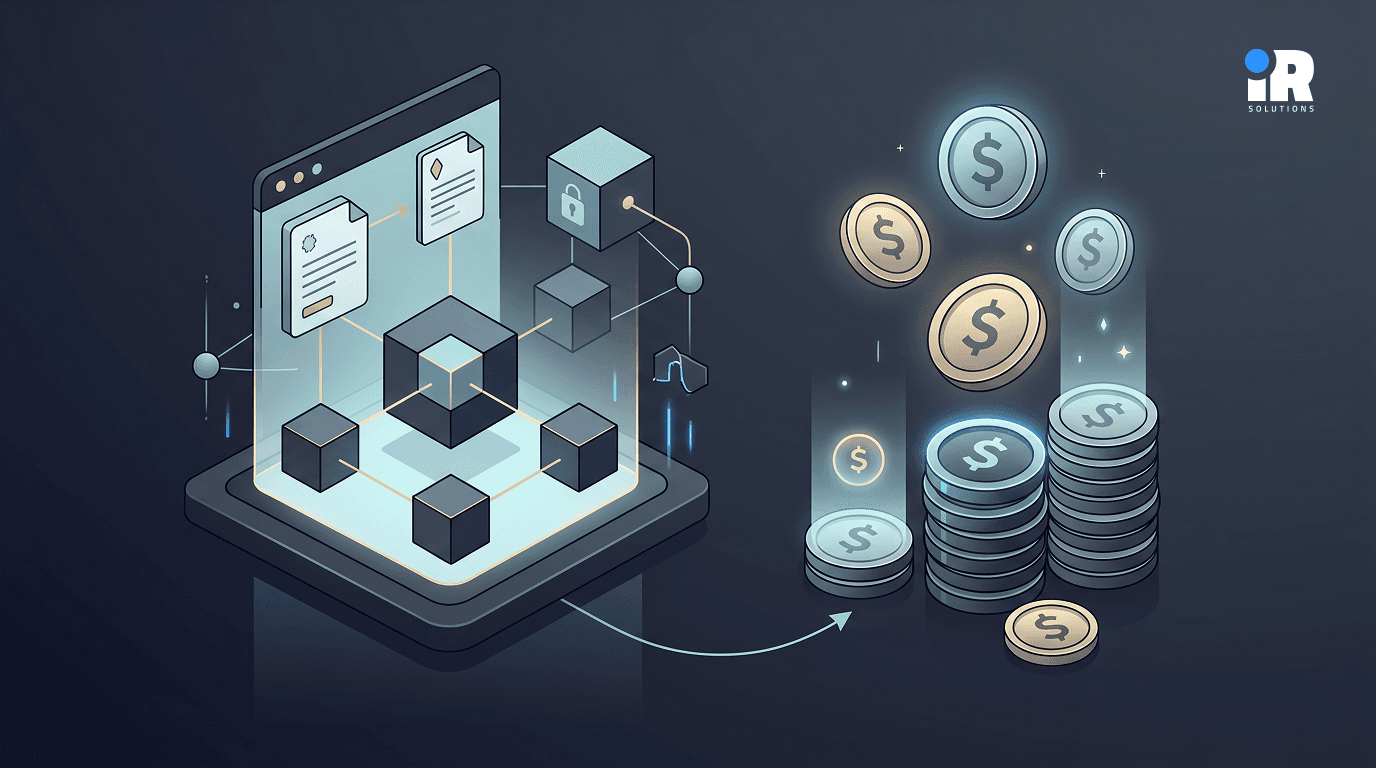
Blockchain improves visibility on its own, paired with smart contracts, it starts improving how operations actually run. A smart contract is code that executes automatically when pre-defined conditions are met. No manual approval required, no email to chase, no form to fill. In supply chains, that translates to a set of genuinely useful automations:
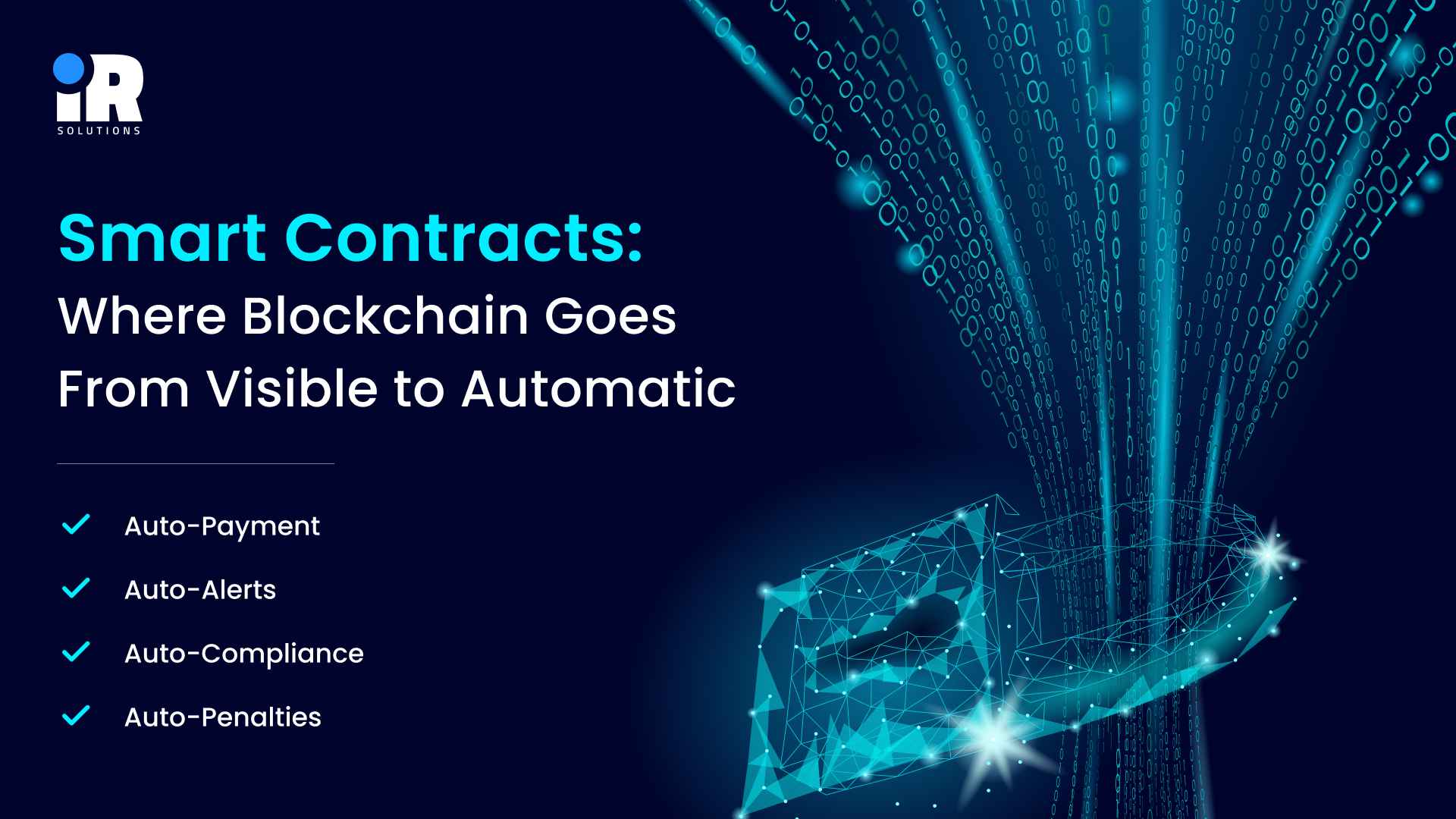
- Auto-payment: Confirmed delivery triggers payment release without waiting for someone to approve an invoice manually.
- Auto-alerts: A temperature sensor in a refrigerated container exceeds the threshold, and the system immediately notifies the relevant carrier, insurer, and customer without any human spotting it first.
- Auto-compliance: A shipment approaching a border triggers an automatic certification check. Missing documents get flagged before customs does, not after.
- Auto-penalties: Agreed SLA terms coded into the contract activate penalty clauses automatically when breaches are confirmed by the ledger.
This removes human bottlenecks from logistics processes that run around the clock. It also cuts errors that come from manual processing, delayed communication, and data re-entry across multiple systems. For businesses running high-volume operations, the reduction in processing overhead alone often builds a strong enough business case.
Our team builds smart contract logic as part of end-to-end blockchain development services, designed specifically to match your existing operational workflows rather than forcing you to rebuild around the technology.
Industries Putting Blockchain Traceability to Work
Food Safety and Agriculture
Food contamination events move faster than traditional tracing methods can keep up with. By the time investigators identify the source farm or processing facility, the contaminated product has spread across hundreds of retail locations. Blockchain enables tracing within minutes, not days. The recall scope narrows dramatically, fewer healthy products get pulled unnecessarily. Consumer confidence recovers faster.
Pharmaceutical Supply Chains
The WHO estimates that one in ten medical products in lower-income markets is substandard or falsified. Blockchain creates an unbroken chain of custody for each unit from manufacturing through distribution to dispensing. Several national drug regulators are actively piloting blockchain-based track-and-trace systems ahead of upcoming serialisation mandates.
Retail and E-Commerce Operations
Consumers increasingly want to verify ethical sourcing claims rather than simply read them on packaging. Blockchain lets retailers publish a verifiable product journey that customers can check independently. That level of transparency builds trust in ways that marketing language alone cannot.
For businesses in retail and e-commerce, blockchain traceability also reduces return fraud, improves warranty claim processing, and provides defensible evidence in consumer protection disputes.
Logistics and Cross-Border Freight
Freight documentation, bills of lading, certificates of origin, packing lists, and customs declarations are still heavily paper-based across many trade corridors. Digitising that documentation on a shared blockchain cuts processing time at ports, reduces transcription errors, and makes document fraud significantly harder to execute. Businesses operating in supply chain and logistics are seeing measurable reductions in clearance delays when blockchain-based documentation replaces paper-based processes.
Oil, Gas, and Energy Sector
Asset tracking, equipment certification, and regulatory compliance documentation in energy operations carry enormous consequences when they fail. Blockchain provides immutable records for equipment maintenance histories, inspection certifications, and chain of custody for extracted materials. Companies in the oil, gas, and energy sector are using blockchain to reduce audit preparation time and strengthen compliance documentation across complex multi-site operations.
Healthcare Supply Chains
Medical devices, diagnostic equipment, and clinical supplies require verified sourcing and documented handling conditions. Blockchain gives healthcare and wellness organisations a reliable audit trail for every item in their supply chain, from manufacturer through distributor to clinical use, meeting the traceability requirements that regulators are tightening globally.
For a complete breakdown, see our Blockchain Development Guide 2026: Use Cases, Costs, Technologies & How to Get Started.
What a Realistic Implementation Looks Like
Blockchain implementation in supply chains is a phased process, anyone selling it as a simple switch-on is oversimplifying the challenge. Here's what an honest implementation timeline looks like:
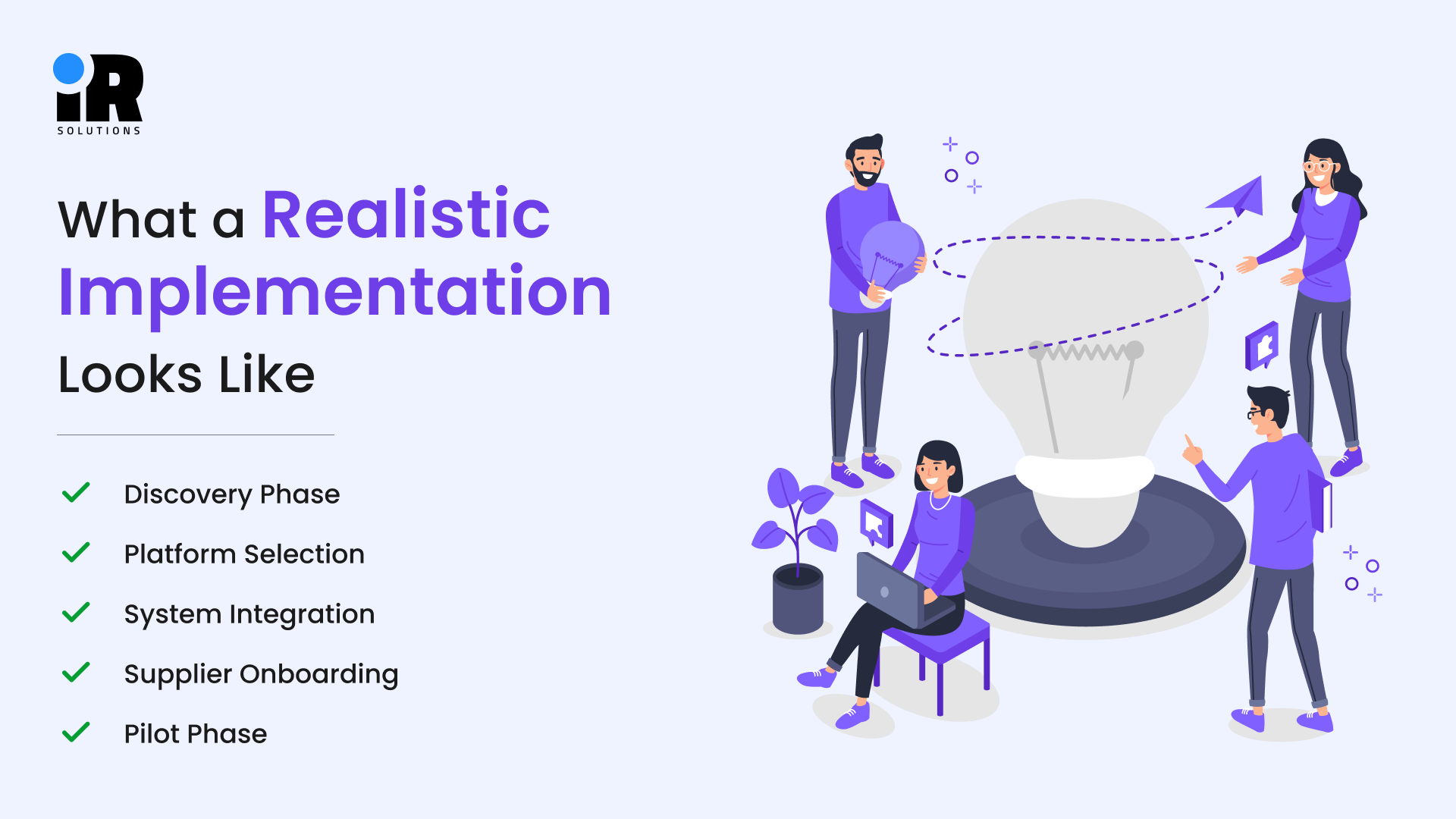
Discovery Phase: Map your current supply chain data flows. Find where the transparency gaps actually cost you money or create compliance risk. This defines where to start.
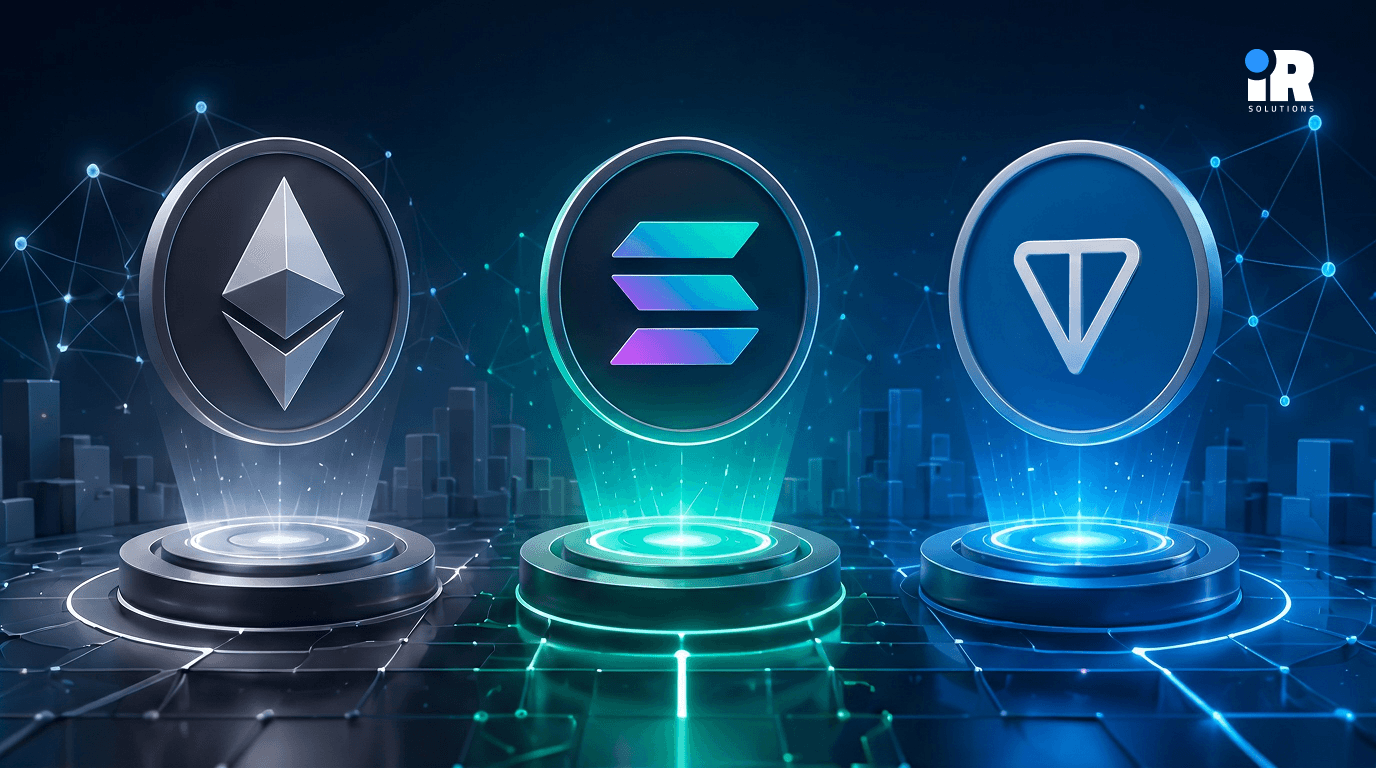
Platform Selection: Choose the right blockchain framework for your use case, hyperledger Fabric is the standard for enterprise supply chains requiring permissioned access. Ethereum suits public-facing traceability use cases, the right choice depends on who needs read and write access and how sensitive the data is. Partnering with a blockchain development company at this stage helps you avoid costly framework mismatches before development begins.
System Integration: Connect existing ERP systems, warehouse management platforms, IoT sensors, and logistics tools to the blockchain layer. This is usually where most of the technical complexity lives.
Supplier Onboarding: Blockchain only delivers value when every relevant participant uses it. Supplier training and onboarding consistently take longer than the technical build. Plan for it.
Pilot Phase: Start with one product line or one trade lane. Prove the value, document the results. Then expand with a business case that's based on real data rather than projections.
A well-run pilot typically reaches a usable state within three to six months. Full multi-tier deployment takes longer, but the value compounds as more participants join the network and more processes move onto the shared ledger.
For businesses that also want to explore tokenising physical supply chain assets, RWA tokenisation services can layer asset-backed digital tokens directly onto blockchain supply chain infrastructure.
Getting Started Without Getting Overwhelmed
The practical first step is mapping where your supply chain actually breaks down. Most businesses have a handful of high-risk areas, a specific product category prone to fraud, a supplier tier with poor documentation practices, or a geographic corridor with customs and compliance friction. Starting there gives you a defined scope, a clear problem to solve, and a measurable outcome to evaluate.
From there, working with a development partner who understands both blockchain architecture and real supply chain operations makes a decisive difference. The technical implementation is one part of the challenge, designing the data model, defining permission structures, structuring smart contracts around real business processes, and integrating with existing platforms all require domain knowledge alongside engineering skill.
If you'd like to explore what a practical implementation would look like for your specific business, book a free consultation call and we'll map it out together.
Conclusion
Supply chain disruptions are costly, difficult to trace, and increasingly challenging to manage in a world driven by compliance, transparency, and customer expectations. While blockchain is not a cure-all for every operational issue, it provides a shared, tamper-resistant record that improves visibility, accountability, and trust across the entire supply chain.
Organizations adopting blockchain-based solutions today are positioning themselves to reduce inefficiencies, strengthen traceability, and respond faster to risks and regulatory demands. As global supply networks continue to grow more complex, investing in the right technology becomes a competitive necessity rather than an option. Businesses looking to accelerate adoption should hire blockchain developers with proven expertise to build secure, scalable solutions tailored to real-world supply chain challenges.
Frequently Asked Questions
Can blockchain prevent counterfeit products in supply chains?
Yes, by assigning each product a unique verifiable digital identity that records every step of its journey from point of origin to the end customer.
Is blockchain suitable for small and mid-sized businesses?
Modern platforms are designed to be accessible for businesses of varying sizes, though the right fit depends on supply chain complexity and volume.
What is a smart contract, and how does it help supply chains?
It is automated code on the blockchain that executes predefined actions such as releasing payment or triggering alerts when specific pre-agreed conditions are confirmed.
How long does blockchain implementation take for supply chains?
A pilot typically takes three to six months to reach a usable state, with full multi-tier deployment taking longer depending on supplier onboarding complexity.
Does blockchain replace existing ERP or logistics systems?
No, it integrates alongside existing platforms and adds a shared verification layer that no single internal system can provide on its own.
What industries benefit most from blockchain-based traceability?
Food and agriculture, pharmaceuticals, retail, logistics, energy, and healthcare are among the sectors with the clearest and fastest returns on blockchain traceability.
How does blockchain help businesses meet compliance requirements?
It automatically generates immutable, timestamped records of sourcing decisions, certifications, and transactions, making compliance reporting faster and far more reliable.
What blockchain platform is best suited to supply chain use cases?
Hyperledger Fabric is the most widely used for enterprise supply chains requiring controlled access, while Ethereum is better suited to public-facing traceability applications.