


Email marketing remains one of the highest-ROI channels available to businesses competing in 2026. Most emails, however, never make it past the inbox preview without getting ignored or deleted outright. Your subject line, send time, list hygiene, and personalization all decide whether your campaign succeeds or quietly dies. At IR Solutions, we help businesses turn underperforming email campaigns into consistent, measurable revenue drivers. This guide covers the exact practices you need to improve open rates, click-through rates, and real audience engagement, and if you're looking to put the right people behind your campaigns, our email marketing experts are ready to help. Apply these consistently, and your email channel will start performing like the asset it should always have been.
Why Most Email Campaigns Fail Before They Start
The problem usually is not the email itself. It is everything that happens before someone even opens it. Businesses send emails to cold, unverified lists with generic subject lines and wonder why nothing moves. There are a few core reasons campaigns fall flat right from the beginning.
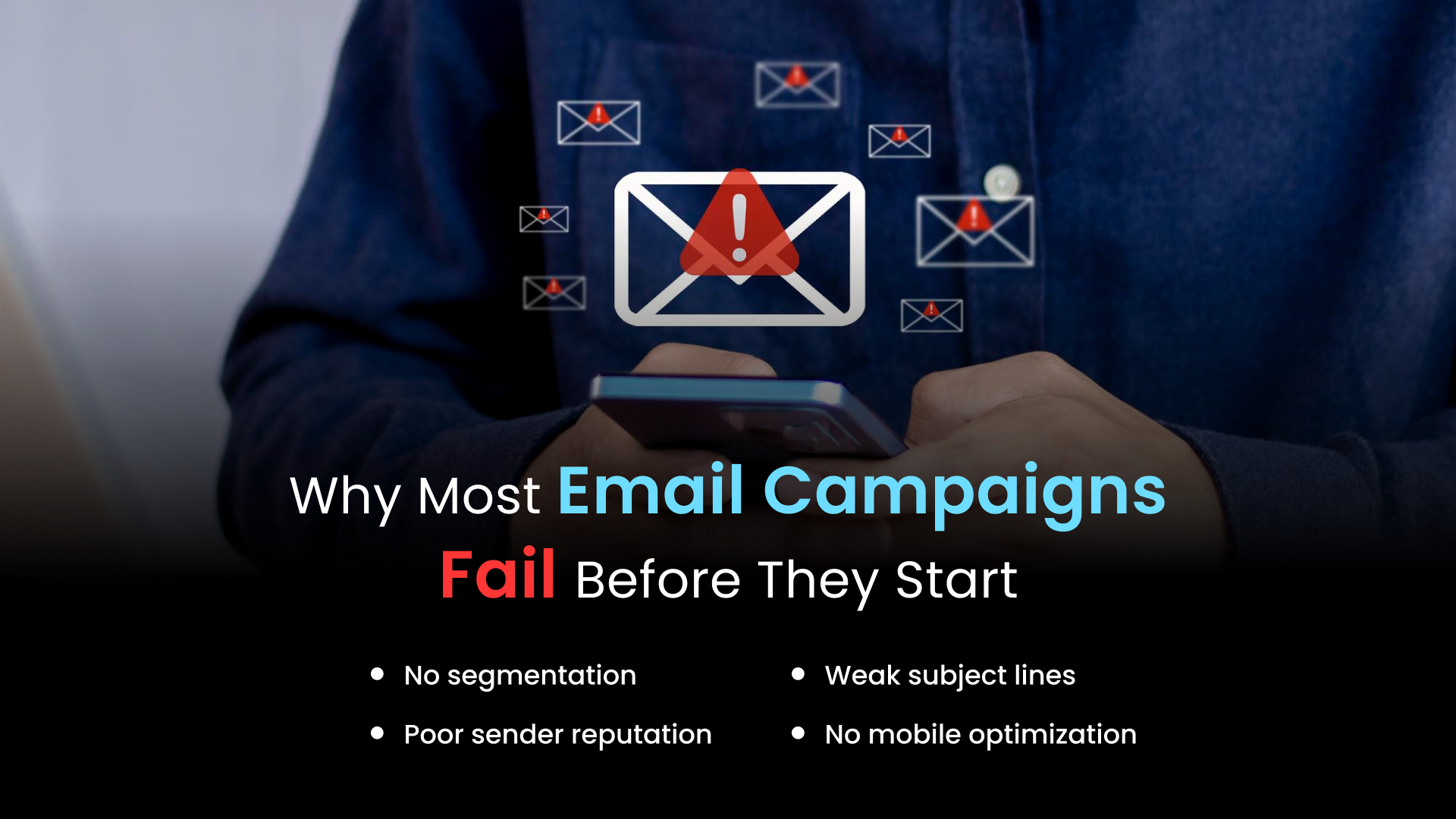
- No segmentation: One email goes to everyone on the list, regardless of interest or behavior.
- Weak subject lines: Generic or promotional phrasing kills curiosity before it ever starts.
- Poor sender reputation: Emails land in spam because the domain has not been warmed up properly.
- No mobile optimization: Over 60% of emails are read on mobile, and broken layouts lose readers immediately.
Build a Clean, Permission-Based Email List
A bloated list with bad data is genuinely worse than a small, engaged one. Sending to unverified or purchased contacts damages your sender's reputation and pushes your emails straight into spam folders. Your list is only as strong as the quality of contacts actually inside it.
How to build it right:
- Use double opt-in so subscribers confirm their intent to receive your emails.
- Remove hard bounces immediately after every single campaign you send.
- Re-engage or remove contacts who have not opened emails in the last 90 days.
- Never buy email lists ever, it is a fast track to spam classification.
List quality is not a one-time task you check off and forget about completely. Set a monthly schedule to audit and clean your subscriber database on a consistent, recurring basis throughout the year.
Digital Marketing Experts can manage your list health and campaign infrastructure end to end, so your team focuses on growth instead of cleanup.
Write Subject Line That Actually Get Opened
Your subject line is the first thing and sometimes the only thing a subscriber will ever see from you. It decides whether your email gets opened or completely ignored within a few seconds. Most businesses treat subject lines as a final afterthought, and that single mistake costs them thousands in lost engagement every month.
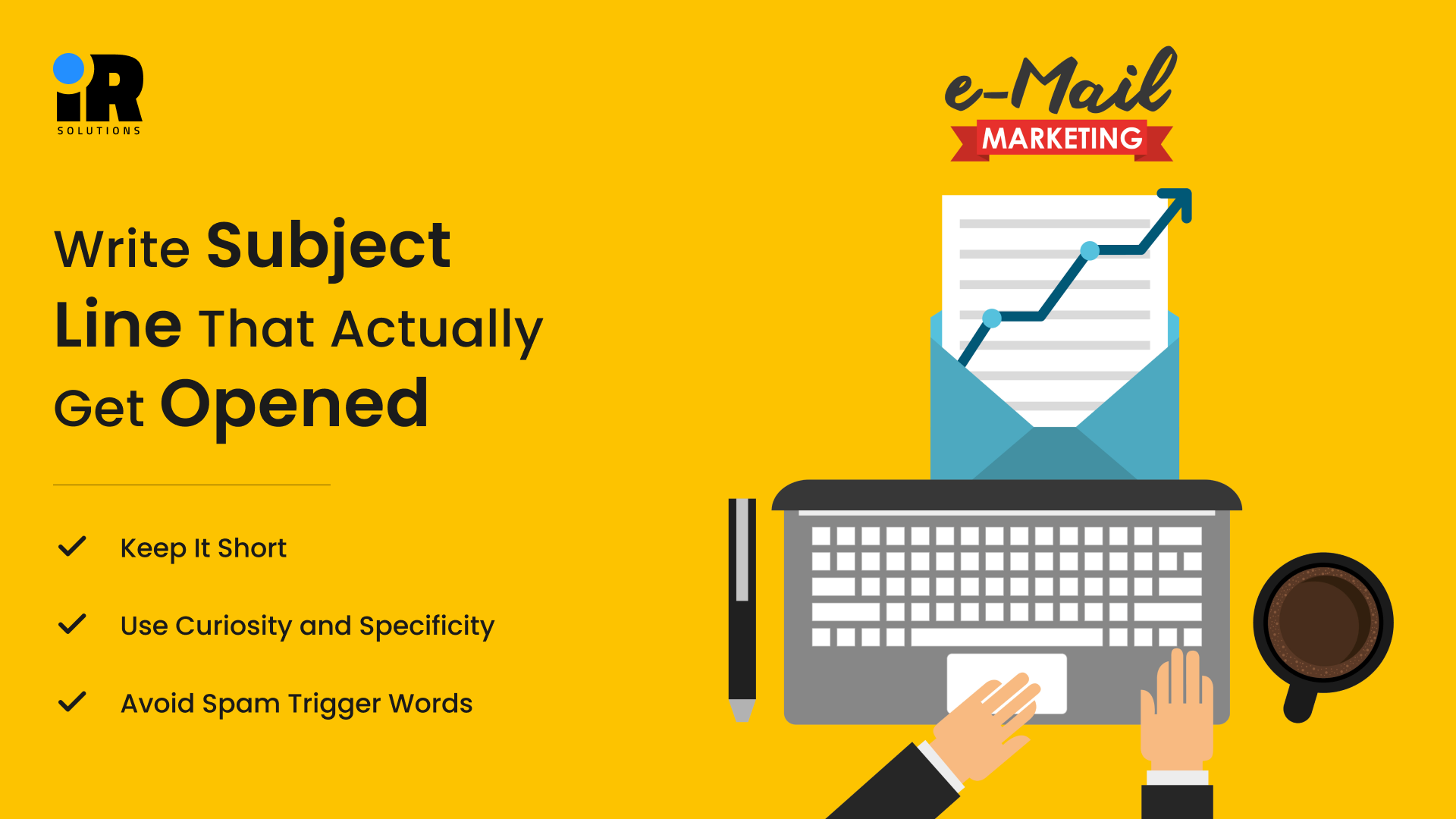
Keep It Short
Subject lines between 30 and 50 characters perform consistently better on mobile devices across all major inbox providers. Anything longer gets cut off, and the entire message impact is lost before the reader even considers opening your email.
Use Curiosity and Specificity
Vague subject lines like "Check out our latest update" get ignored without a second thought from most subscribers. Specific, curious lines like "3 things slowing your email ROI this month" genuinely pull people into opening the email immediately. Give them a reason to open without giving away every detail up front.
Avoid Spam Trigger Words
Words like "free," "guaranteed," "act now," and excessive caps or exclamation marks push emails directly into spam folders. Keep the language natural, direct, and conversational so the subject line reads as if a real person wrote it specifically for them.
Segment Your List for Higher Relevance
Sending the same email to your entire list is like giving the same sales pitch to a room full of people with completely different problems and goals. Segmentation fixes this costly gap. When your message genuinely matches the reader's current situation, open rates and clicks improve consistently and measurably with every campaign. Even basic audience segmentation improves performance in a meaningful way for most businesses.
- New subscribers: Welcome sequence, education-focused content, no hard selling just yet.
- Active buyers: Upsell opportunities, loyalty rewards, and recommendations based on past purchases.
- Inactive contacts: Re-engagement campaigns built around a clear, specific value offer they cannot ignore.
- Industry or role: Different messaging for a startup founder versus a large enterprise IT manager requires separate approaches.
Even basic segmentation improves performance in a meaningful way for most businesses. You do not need a complex technical setup to get started with segmentation today. Begin with two or three clear segments and build your strategy from there over the next several months.
If you serve a specific vertical, our Retail & E-Commerce and Fintech & Banking industry solutions include tailored marketing strategies built around segment-specific buyer behavior.
Personalization Goes Beyond First Names
"Hi [First Name]" is not real personalization in 2026 anymore. Readers see through it immediately, and it signals a broadcast blast rather than a real conversation between people. Real personalization means your email content reflects what that specific subscriber has actually done, looked at, clicked on, or expressed genuine interest in during past interactions.
- Behavior-based automations: Send a follow-up email when someone visits your pricing page or downloads a resource from your site.
- Purchase history: Recommend products or services based on what subscribers have already bought from your business.
- Location-based timing: Send at the correct local time for each subscriber instead of one single global blast time for everyone.
- Dynamic content blocks: Show different content sections inside the same email based on specific subscriber data and attributes.
Optimize Send Time for Your Audience
There is no single universal "best time" that works for sending every email to every audience. The right time depends entirely on your audience, your industry, and the specific action you want subscribers to take after reading. That said, there are well-documented patterns worth using as your starting benchmark.
For B2B audiences, Tuesday through Thursday between 8 AM and 10 AM tends to perform consistently well across most industries. Avoid Monday mornings when inboxes are at their most overwhelming, and people are focused primarily on catching up from the weekend.
For B2C audiences, evenings between 6 PM and 9 PM usually work better when people are off work, relaxed, and browsing without time pressure or competing priorities pulling their attention away. Weekends can also perform well for retail and e-commerce-focused campaigns targeting everyday consumers directly.
Test your send times using A/B splits across your actual subscriber base over real campaigns. After four to six campaigns with proper tracking, your own data will tell you exactly when your specific audience is most likely to open and click through your emails.
Use Deliverability Best Practices to Reach the Inbox
You can write the best email in your entire industry, but it means absolutely nothing if it never makes it into the inbox. Email deliverability is the technical foundation on which every other email marketing tactic you use depends completely. Without strong deliverability, your open rates and CTR will always look worse than your actual content quality deserves to perform.
Authenticate Your Domain
Set up SPF, DKIM, and DMARC records for your sending domain before you send a single campaign to any subscriber on your list. These three technical standards tell inbox providers that your emails are genuinely coming from your brand and not from a spammer spoofing your domain name to deceive people.
Warm Up New Domains Gradually
Never send large volumes from a brand-new domain immediately without proper warm-up preparation. Start with small batches of 50 to 100 emails per day and increase volume steadily over four to six weeks of consistent sending. Inbox providers monitor new senders very closely, and a sudden volume spike triggers spam filters almost instantly.
Monitor Your Sender Score Regularly
Your sender score is a reputation metric that inbox providers use to decide where your emails land each time you send. Use free tools like Mail-Tester or Google Postmaster Tools to check your domain reputation weekly throughout the year. A dropping sender score means something in your sending behavior needs immediate adjustment before it becomes a serious, hard-to-reverse deliverability problem.
Avoid Sending to Inactive Contacts
Sending to contacts who consistently never open your emails signals to inbox providers that your messages are unwanted by real people. This behavior directly hurts your sender reputation and gradually pushes all future campaigns toward spam folders across your entire list. Suppress or remove inactive contacts before they quietly drag your entire sending domain's deliverability down over time.
Design Emails That Drive Clicks and Boost Conversions
Getting the open is only step one of a two-step process that determines campaign success. Getting the click is step two, and it requires focused, intentional design that removes every unnecessary point of friction. Cluttered emails packed with too many links, too many images, and walls of dense text kill CTR every single time without exception. Simplicity consistently wins in email design.
One Email, One Goal
Every email you send should have exactly one primary call-to-action with nothing else competing for the reader's attention. If you are promoting a service, that service link is the only destination in the email. If you are sharing a blog post, that post is the only click you are asking subscribers to make. Multiple CTAs create decision paralysis and reduce clicks across everything simultaneously.
CTA Button Design
Make your CTA button visually obvious and impossible to miss on the very first screen view. Use strong color contrast, clear action-oriented language like "Book a Free Call" or "Get the Guide," and place it above the fold wherever your layout allows. Do not make readers scroll down searching for what you want them to do next in the email.
Mobile-First Layout
Use a single-column layout that stacks cleanly and readably on any screen size from phone to desktop. Keep body text above 14px and headlines above 20px for comfortable reading on smaller phone screens. Buttons should be at least 44px tall, so they are easy to tap accurately on a touchscreen without frustration. Test every single email on a real mobile device before clicking send on any campaign.
Image-to-Text Balance
Heavy image emails trigger spam filters and fail when the recipient's email client settings block images. Maintain a 60/40 ratio of text to images across your overall email layout for best results. Always add descriptive alt text to every image so the core message still comes through even when visuals do not load properly for the subscriber.
A complete look at Klaviyo-powered email marketing performance is covered in Klaviyo Email Marketing Strategy 2026: Complete Guide to Automation, Flows, Open Rates & ROI.
How to Write Clear and High-Converting Email Copy
Good email copy is not about sounding clever or creative with your phrasing and word choices. It is about being unmistakably clear so the reader instantly knows what is in it for them personally. The reader should understand within three seconds exactly what the email is about and why they should care about reading further.
Write in a direct, conversational tone that genuinely feels like one person talking to another person they know. Short paragraphs work far better than long, unbroken blocks of dense text. Address the reader directly as "you" throughout the entire email body to maintain a connection. Focus on what they gain from acting rather than what your business offers as a product or service. "We provide email marketing services" is forgettable. "Your campaigns can convert 40% better with the right structure in place" is something people actually stop and read carefully.
Lead every email with the clearest, most specific benefit you can state without vague generalities. Support that benefit immediately with a specific, credible detail or number that builds trust. End every email with one direct, confident action that the reader knows exactly how to take. That three-part structure works reliably across every audience and industry you will ever write for.
Content Marketing specialists write high-converting email copy built around your audience's real objections and motivations, not generic templates.
Build Smart Email Sequences That Save Time and Increase Sales
One-off campaigns have their place, but automated sequences triggered by real subscriber behavior are where compounding, long-term engagement actually happens. A well-built automation system runs in the background and delivers consistent results without daily manual effort from your team.
- Welcome series: Introduce your brand story and key value over 3 to 5 emails when someone first subscribes to your list.
- Lead nurture: Educate and build trust with prospects who are not ready to buy yet, keeping your brand consistently top of mind throughout their decision process.
- Post-purchase: Follow up after a completed purchase with onboarding guidance, complementary product recommendations, or a review request to build social proof.
- Cart abandonment: Recover lost sales with a timely, relevant, and personalized reminder sequence sent within hours of the abandoned cart event.
- Re-engagement: Bring inactive subscribers back to life with a compelling reason to re-engage before you permanently remove them from your active list.
Automation takes real upfront planning to build correctly, but once it is running, it works around the clock without interruption. If your current platform cannot support that level of automation, it is time to reassess the tools you are relying on. Klaviyo Email Marketing Expert helps you to design, build, and manage these sequences for you.
Track the Metrics That Actually Matter
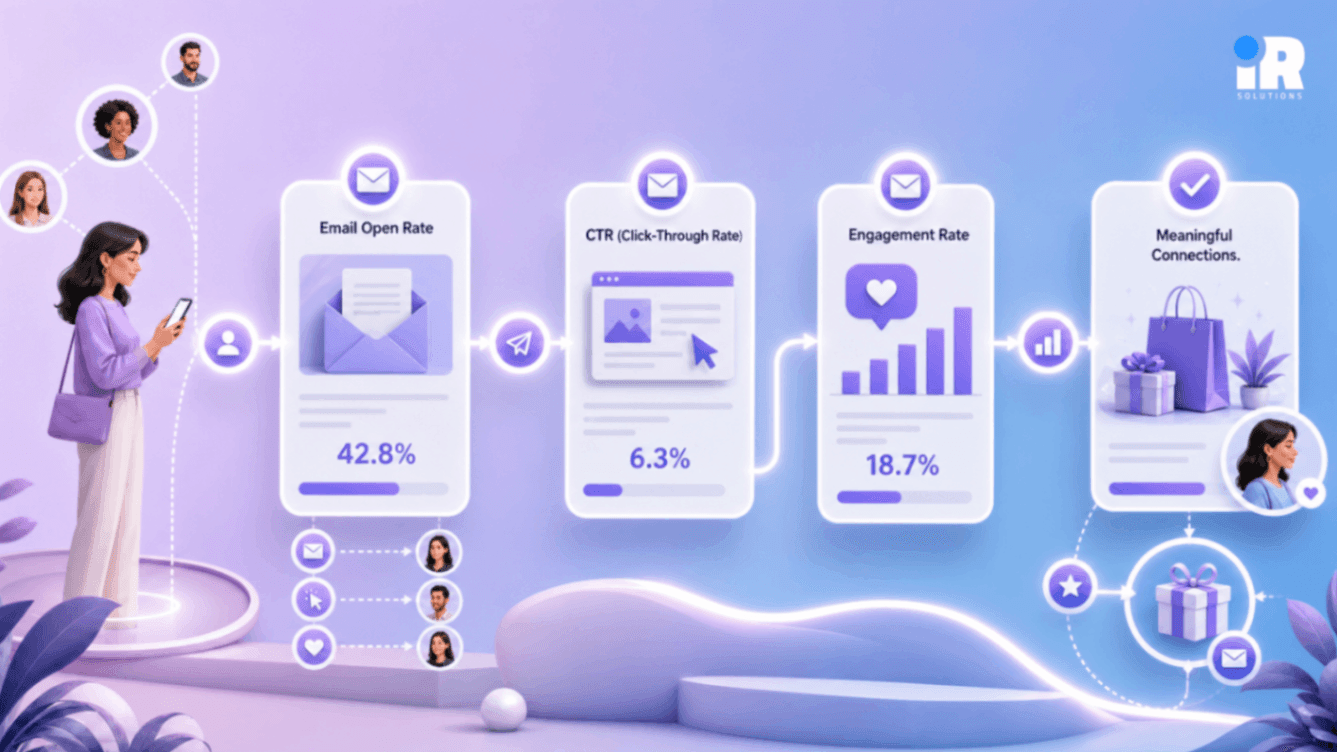
You cannot meaningfully improve what you are not consistently measuring and reviewing after every single campaign you send. Most businesses glance at the open rate, feel good or bad about the number they see, and then move on to the next send without drawing any real conclusions. That single number tells you only a small fraction of the actual story behind how your campaign performed for your business.
- Open rate: Are your subject lines and sender name doing their job of earning attention in the inbox?
- Click-through rate (CTR): Is your content and CTA compelling enough that people actively take the action you want?
- Click-to-open rate (CTOR): Of the people who opened, how many actually clicked something? This measures your content quality directly.
- Conversion rate: How many people who clicked through your email actually completed the specific action you wanted them to take?
Review all four of these metrics after every campaign you send without exception. Look for clear, consistent patterns across your best and worst-performing emails over time. Apply what you learn deliberately and specifically to the next campaign you plan and write.
Schedule a free strategy call to review your current email setup, identify the gaps, and map out a clear path forward.
Conclusion
Email marketing consistently rewards businesses that execute with real intention and discipline across every campaign they send. Open rates, CTR, and engagement never improve by chance; they improve through clean lists, relevant messaging, strong deliverability, smart segmentation, and consistent testing that compounds over time. Apply the practices in this guide one section at a time and track how your performance numbers shift with each deliberate improvement you make. Your audience will respond when the message respects their time and speaks directly to their actual situation. If you want an experienced team to help you build and manage this entire process from start to finish, partnering with an email marketing company is the fastest way to get there.
Frequently Asked Questions
How many email marketing campaigns can be sent per month?
For the majority of businesses, 1–2 emails weekly is optimal, but it's actually entirely dependent on your audience's preferences and expectations.
Do the number of characters in the subject line impact open rates?
Yes, subject lines that are 30–50 characters long are more likely to perform well on all devices, particularly on mobile screens.
What is the difference between CTR and CTOR?
The CTR is calculated as the ratio of clicks to total number of emails sent, while the CTOR is calculated as the ratio of clicks to the number of emails that were opened by your subscribers.
What is causing my emails to end up in Spam for a good list?
Spam placement is usually caused by a poor sender reputation, spam trigger words, or missing domain authentication records like SPF, DKIM, and DMARC.
How can the deliverability of your email be improved the quickest?
Get domain authentication right, delete inactive domain contacts from your list, and start with a small volume of emails and then scale up gradually.
Is email automation the replacement for email campaigns?
For sequences that are repetitive and driven by behavior, the automation feature is great, and for time-sensitive announcements and real-time promotional offers, manual campaigns are better.