

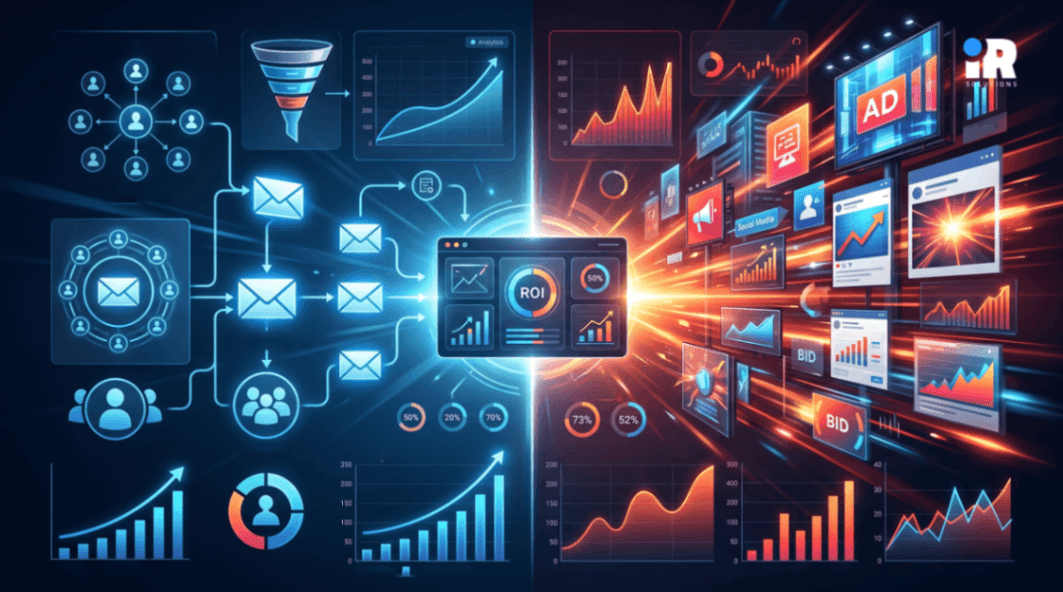

Businesses that pick the wrong marketing channel do not just lose money, they lose time they cannot recover. In 2026, the pressure to show returns on every marketing decision has made the email marketing versus paid ads question more relevant than ever. Both channels are being used by businesses across every industry, yet the gap between what they actually deliver continues to be misunderstood.
If your campaigns are running but your revenue is not moving in the right direction, the problem usually comes down to channel fit, not execution. Businesses that want a proper strategy built around real data can speak with digital marketing experts who work from numbers, not assumptions.
Email vs Paid Ads - How They Actually Work
Before comparing returns, it is worth understanding what each channel is actually built to do, because they are not competing tools in the way the debate usually frames them.
Email marketing is a permission-based channel where a prospect or customer actively opts in and gives you direct, repeatable access to their inbox. Every message builds on the previous one, costs very little once the list is established, and creates a relationship that compounds in value over months and years. Nobody can take that list away from you, not a platform update, not an algorithm change, not a policy revision on someone else's app.
Paid advertising, whether through Google Search, Meta, LinkedIn, programmatic display, or YouTube, operates on a rental model where every single impression you receive comes at a price. The moment the budget runs dry, the visibility disappears entirely. Paid channels can generate results fast, and for businesses in the right stage with the right offer, that speed justifies the spend. But the traffic you buy through paid ads does not stay with your business the way a well-maintained email list does.
Neither channel is wrong, they just do different jobs, and recognising which job your business actually needs done right now is what makes the difference between a channel decision that pays off and one that drains resources for months before anyone admits it is not working.
For a broader view of how marketing now drives entire ecommerce operations, see Why Digital Marketing Is No Longer a Channel but a Full Ecommerce Business Growth System.
What Email Marketing ROI Actually Looks Like in 2026
Email has been called a dying channel so many times and for so long that the prediction has become something of a running joke in digital marketing. The reality is that email continues to outperform most other channels on a cost-to-return basis, and the data in 2026 backs that up.
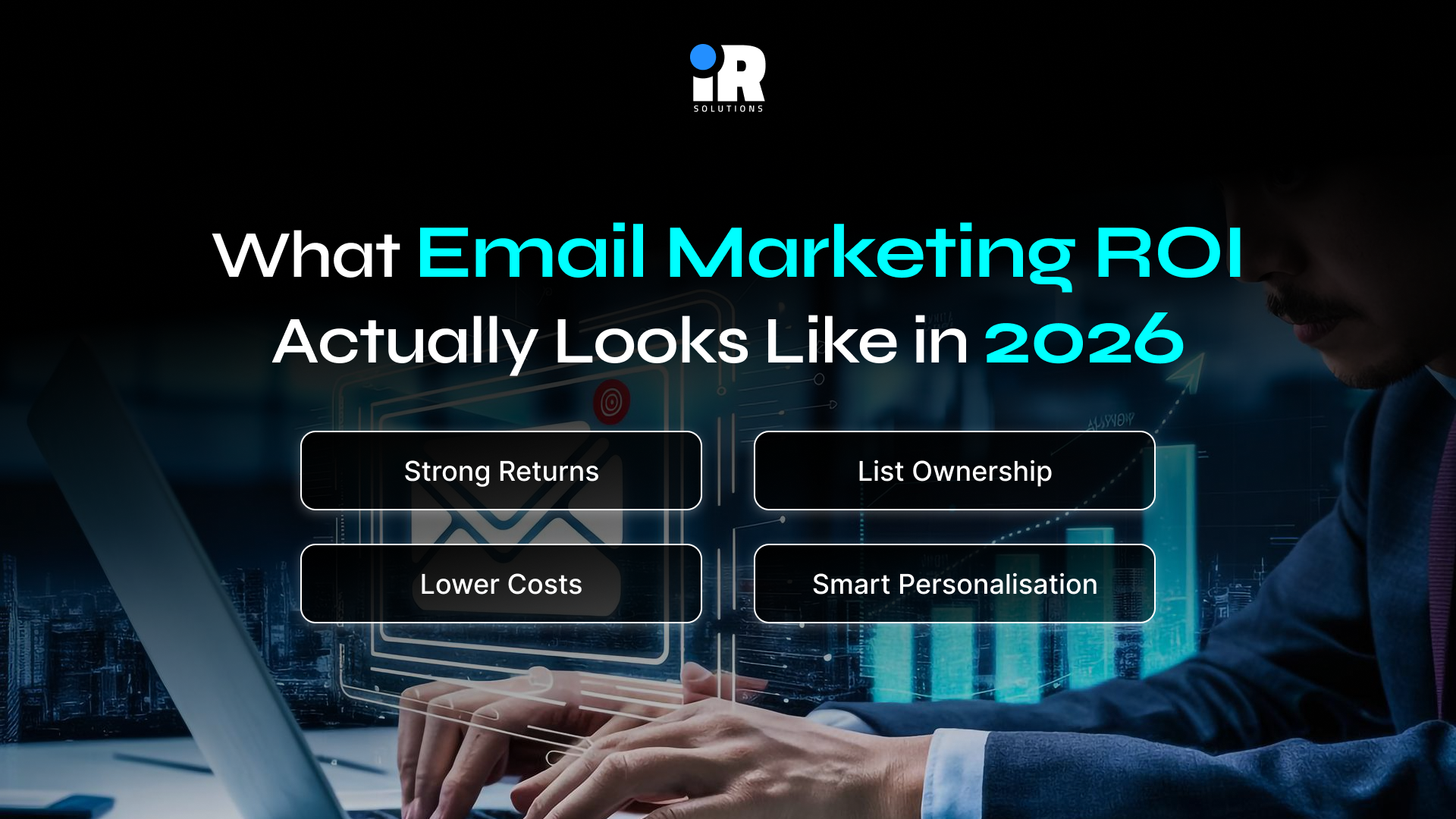
- Strong Returns: Email marketing can generate around 36 to 42 times return on investment depending on industry, list quality, and strategy.
- List Ownership: Your email list is a fully owned business asset that no platform can take away or restrict access to.
- Lower Costs: Once the infrastructure is set up, automations and sequences reduce the cost of converting each subscriber over time.
- Smart Personalisation: AI-driven segmentation and behavioural triggers in 2026 allow emails to respond to user actions in a highly relevant, personalised way.
Building a quality email list takes time and intentional effort, which many businesses underestimate at the start. Poorly maintained lists with cold contacts, bounced emails, and inactive subscribers hurt deliverability and take months to recover, whereas quality matters far more than size.
What Paid Advertising ROI Looks Like in Reality
Paid advertising carries real advantages that email simply cannot match in certain situations, but it also comes with costs and constraints that businesses often underestimate when building their marketing plans.
- Speed to market: A properly built paid campaign can drive qualified traffic to a landing page within hours of launching, making it the fastest available tool when time is a constraint.
- Precise audience targeting: Platforms like Google and Meta give businesses the ability to reach highly specific audiences based on search intent, browsing behaviour, interests, location, and detailed demographic data.
- Budget scalability: When a campaign structure is generating profitable returns, increasing spend can scale results in a relatively predictable way without having to rebuild the underlying strategy from scratch.
- Cold audience access: Paid advertising lets businesses reach people who have never heard of them before, which is something email simply cannot do without a list already in place.
What Costs You More Than Expected
- Climbing cost-per-click has increased across most paid platforms in nearly every industry, with no meaningful reversal in sight.
- Ad creative fatigue means audiences stop responding quickly, forcing constant production cycles that add significant time and cost.
- Shrinking targeting precision due to iOS updates, cookie changes, and platform algorithm shifts has reduced the accuracy of audience targeting.
- Paid advertising does not build lasting assets, so when spending stops, the traffic and pipeline disappear almost immediately.
Paid advertising works well for businesses at specific growth stages where fast data and cold audience reach are the priorities. At scale, without a strong funnel behind the campaigns, it becomes an expensive habit that keeps the lights on without building anything durable. Businesses running PPC campaigns alongside organic efforts tend to manage this balance more effectively than those relying on paid spend alone.
To avoid wasting budget on the wrong channel early on, read Should you spend money on Google Ads or SEO first? An honest breakdown.
Email Marketing vs Paid Advertising - When Each Performs Better
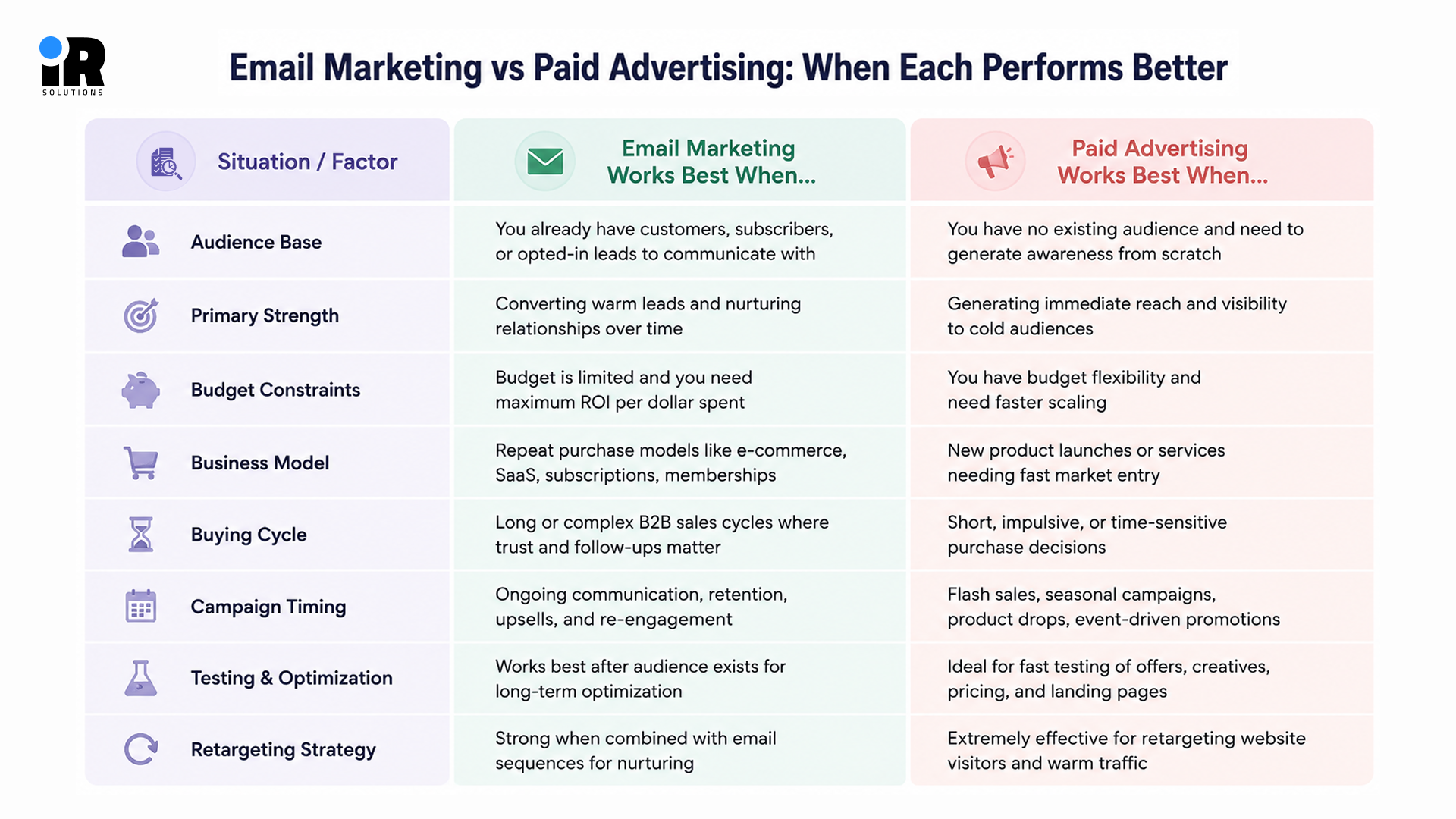
Key Takeaway
- Email marketing performs best when you are working with an existing audience and focusing on long-term revenue, retention, and relationship building.
- Paid advertising performs best when speed, reach, and cold audience acquisition are the priority.
Why the Smartest Businesses Are Running Both Together
Businesses that integrate email and paid advertising in a structured, connected funnel consistently outperform those running either channel independently, and the performance gap is not marginal.
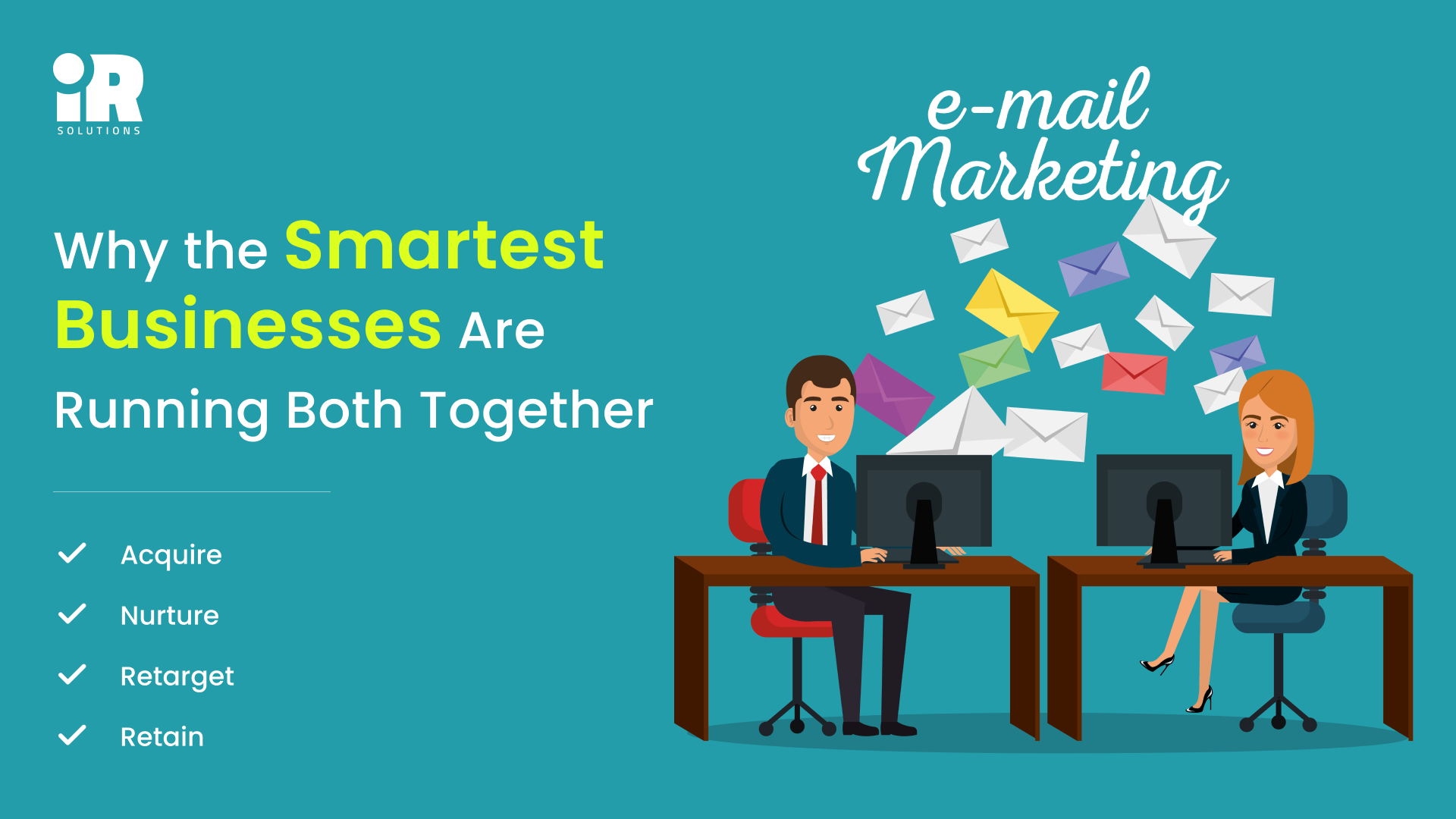
Here is what that combined approach looks like when the pieces are actually working together.
Acquire
Run paid ads to drive targeted cold traffic toward a lead magnet, free tool, or low-commitment first offer. The goal at this step is not the sale, it is the email address, because that address carries long-term value that a single paid click can never replicate on its own.
Nurture
Once a prospect enters the list, automated email sequences take over the relationship entirely. Well-designed workflows build trust, handle common objections, surface the right content at the right time, and move the lead toward a purchase decision without requiring any additional ad spend on your end.
Retarget
Sync your active email list with your paid ad accounts and run custom audience campaigns specifically targeting subscribers who have opened emails but have not yet converted. The combination of consistent email exposure and social media marketing visibility at the same time increases conversion rates in ways that neither channel achieves when running independently.
Retain
After the first purchase, email takes full ownership of the customer relationship, managing onboarding sequences, upsell offers, renewal reminders, satisfaction check-ins, and referral programmes at a fraction of what the same outcomes would cost through paid advertising. This phase is where email's return advantage is most visible and most compounding.
This integrated funnel is not technically complicated to build, but it requires a clear strategy, the right automation platform, and consistent creative to function properly at every stage.
How Both Channels Have Shifted Heading Into 2026
The tactics and tools producing results on both channels today look substantially different from what was considered best practice just two years ago, and keeping up with those shifts is directly tied to campaign performance.
On the email side:
- Send-time optimisation via machine learning is now standard across most platforms and directly impacts campaign performance.
- Predictive segmentation identifies high-intent subscribers so businesses can prioritise outreach around real buying signals.
- Interactive formats like polls, carousels, and in-email checkout are lifting engagement well beyond static email designs.
On the paid side:
- Automated bidding now outperforms manual bidding in most account structures with sufficient conversion data.
- First-party data has replaced third-party cookies, giving businesses with strong email lists a clear targeting advantage.
- Performance Max and Advantage+ shift decisions to platform algorithms, improving efficiency for well-optimised accounts.
Using these tools correctly separates businesses that see results from those that just spend budget. A team skilled in AI and ML development ensures your infrastructure runs at full capability.
Building a Marketing Strategy That Scales With Your Business
Matching channel investment to the actual stage a business is in produces consistently better outcomes than copying a competitor's approach or defaulting to whatever the previous team was running.
Phase 1 - Discovery: The primary goal at this stage is to build brand awareness and generate initial market data. Paid advertising carries most of the weight here, and every campaign should treat email list growth as the measurable secondary outcome worth tracking alongside traffic and reach metrics.
Phase 2 - Conversion: A list exists, and traffic is coming in, the focus shifts entirely to converting that warm audience through email nurture sequences, paid retargeting, and landing page improvements that are built to work together rather than as disconnected campaign elements that happen to share a brand.
Phase 3 - Retention and Growth: Customers are in the business, and email takes the primary role in keeping them engaged, increasing purchase frequency, building loyalty, and generating referrals. Paid advertising plays a supporting role at this stage, focused on re-engagement campaigns for churned customers and lookalike audience acquisition built from the strongest buyer data in the existing list. Businesses serious about scaling this phase without guesswork work with performance-driven marketing companies that turn retention data into compounding, predictable revenue growth.
If you are ready to build a marketing strategy where every channel decision ties back to measurable revenue, book a strategy call with our team.
For a complete breakdown of modern email marketing strategy, read Klaviyo Email Marketing Strategy 2026: Complete Guide to Automation, Flows, Open Rates & ROI.
Conclusion
Choosing between email marketing and paid ads is less about picking a winner and more about understanding what your business actually needs right now. Both channels deliver strong returns when the strategy behind them is sound, and the funnel connecting them is built properly. Email wins on ownership, cost efficiency, and long-term value. Paid wins on speed, reach, and cold audience access.
The businesses growing consistently in 2026 are using both in a coordinated way, not debating which one deserves the budget. If your current marketing is spending without building, the fix starts with strategy. Hire an email marketing expert who understands both channels and knows how to make them perform together, tying every decision directly back to revenue. Hire an email marketing expert who understands both channels and knows how to make them perform together, tying every decision directly back to revenue.
Frequently Asked Questions
What is the ROI difference between email and paid ads?
Email marketing consistently returns between 36 and 42 times per unit invested, while paid ads returns vary widely based on industry, targeting quality, and whether the funnel behind the campaign is actually converting traffic.
Is email marketing still worth investing in during 2026?
Yes, it remains one of the highest-return digital marketing channels available, particularly for businesses with established lists, repeat-purchase models, and budgets where cost efficiency is a real constraint.
Can email marketing fully replace paid advertising for a business?
No, email requires an existing audience to function at all, while paid advertising is the primary tool for cold audience reach and initial market entry where no list exists yet.
What is the most common paid advertising mistake businesses make?
Sending paid traffic directly to a homepage or product page rather than a dedicated landing page built specifically to convert cold visitors who have no prior relationship with the brand.
How should businesses measure ROI accurately across both channels?
Multi-touch attribution models that track the complete customer journey produce far more accurate results than last-click models, which consistently undercount the contribution email makes to conversions that close through other touchpoints.
When should a business prioritise email over paid advertising?
When customers or opted-in leads already exist, when the product has a repeat-purchase cycle, or when the available budget requires each unit of spend to generate reliable and consistent measurable returns.
Does paid advertising work well for B2B businesses specifically?
Yes, particularly through LinkedIn and Google Search, though longer sales cycles and higher cost-per-lead compared to B2C campaigns mean the attribution window and measurement approach need to reflect those differences accurately.
How long does it take for email marketing to show real results?
A properly built welcome and nurture sequence typically delivers measurable conversion impact within thirty to sixty days of deployment when the list has active, engaged subscribers receiving the right messages.