


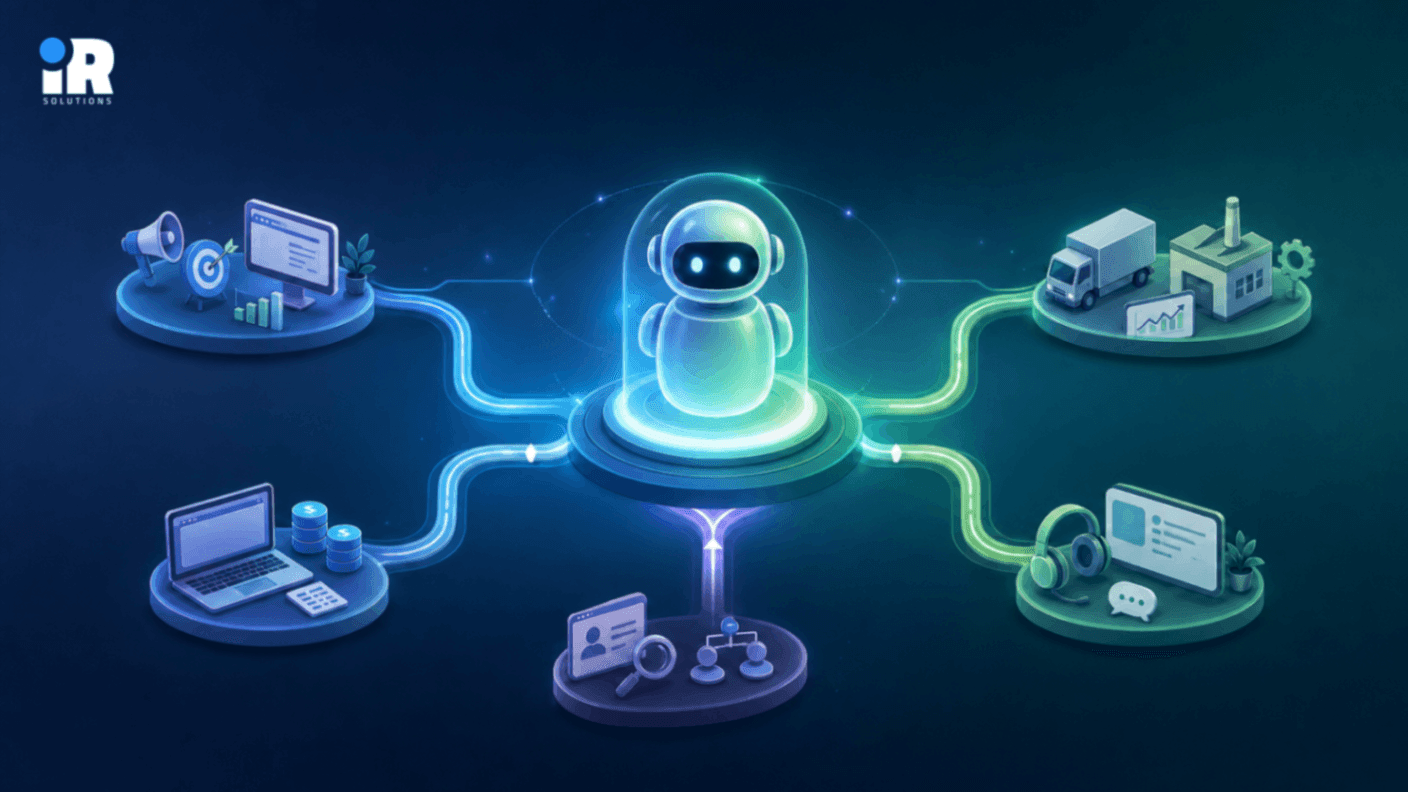

Businesses are no longer just testing AI tools on the side while running operations the same old way. The technology has moved well past the chatbot phase, and a far more capable class of AI is now doing real work inside organizations. Agentic AI systems do not just answer questions they plan, execute, and follow through on tasks without waiting for a human at every step. If your business still bleeds time on manual workflows, slow handoffs, and repetitive decisions that eat up your team's day, this shift is directly relevant to you. Companies that invest in AI Agent now are building an operational lead that compounds every single quarter, and the gap between early movers and everyone else is growing fast.
What Agentic AI Actually Means
The word “agentic” comes from the idea of agency, the ability to act independently toward a goal. Unlike traditional AI systems that wait for prompts and instructions, agentic AI works with a goal-oriented, self-directed approach. Instead of requiring step-by-step guidance, it determines the actions needed, executes tasks, handles errors along the way, and delivers results autonomously. This shifts AI from being just a response tool to becoming an active participant in business operations.
The three defining characteristics of any agentic AI system are:
- Goal-driven behavior: The agent works backward from the desired outcome rather than responding to one isolated instruction at a time.
- Multi-step execution: It chains a series of actions together and adapts its approach as each step returns a result.
- Tool and system access: It connects to real software, APIs, and databases to take actions that produce real-world effects inside your business.
How Agentic AI Differs From the AI You Already Know
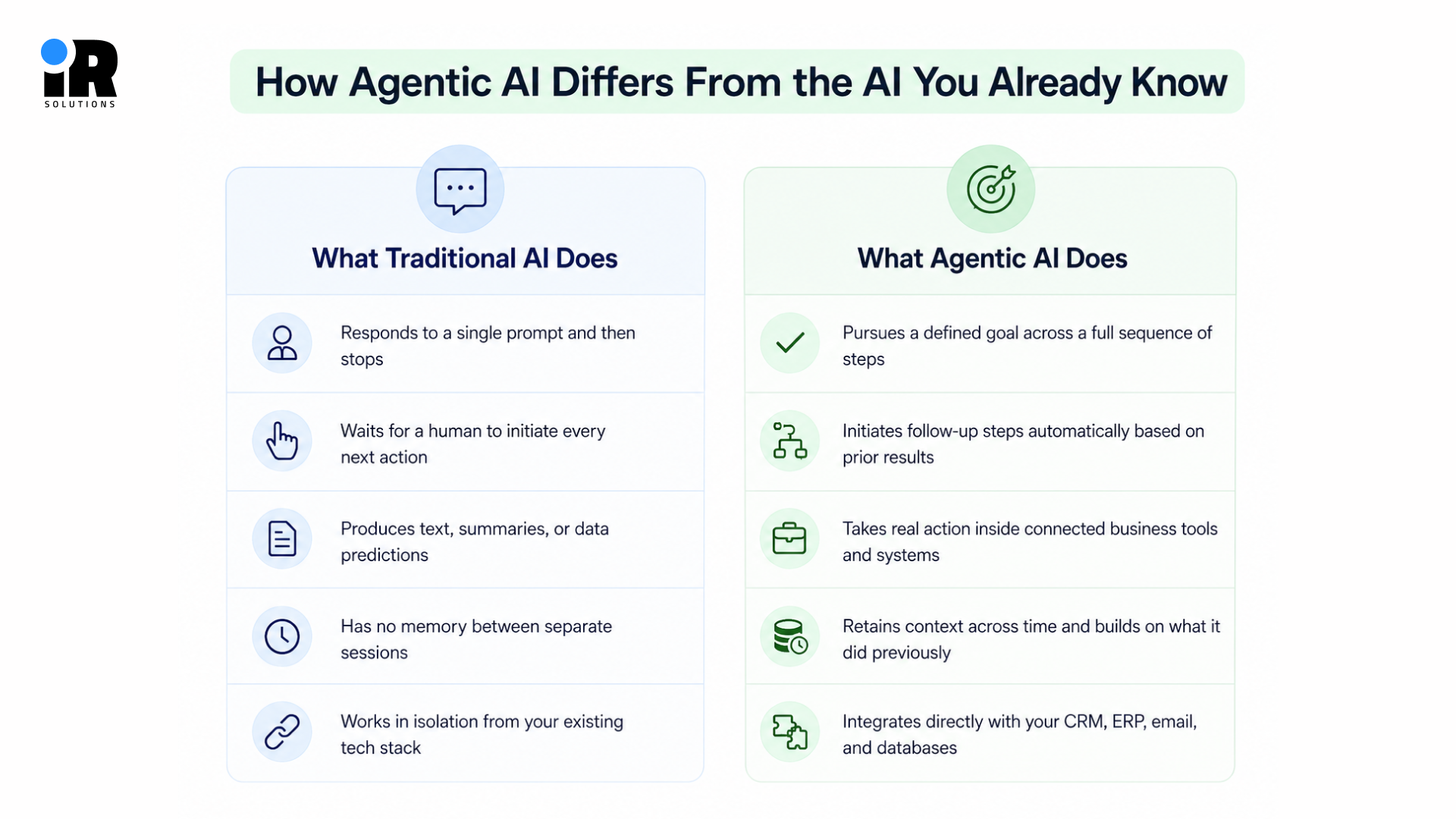
For a deeper breakdown of practical AI adoption across industries, check AI for Business in 2026: Use Cases, Automation, Tools & Implementation Guide.
How Agentic AI Works Inside a Business Environment
The Planning Layer
The planning layer in agentic AI converts a high-level goal into a step-by-step execution plan. Instead of asking for instructions at every stage, it uses available context, configurations, and tools to carry out the task autonomously. Unlike fixed automation scripts, it can adapt when conditions change, such as switching data sources or flagging issues, making it more reliable in real-world business environments where workflows rarely go as expected.
Memory and Persistent Context
Memory and persistent context allow agentic AI systems to retain meaningful information across sessions, unlike standard chatbots that reset after each conversation. They can remember past actions, store intermediate results, and continue multi-step workflows over days without losing progress. This enables complex processes like contract renewals or multi-stage supplier evaluations to be automated reliably, since the system maintains continuity throughout the entire workflow.
Tool Use and System Integration
Agentic AI can take real actions because it connects directly to the tools and systems your business already uses every day.
- CRM Platforms: Read customer records, update deal stages, log interaction notes, and trigger follow-up sequences
- ERP & Finance: Pull invoices, verify budget availability, or trigger multi-step approval workflows
- Email & Calendar: Send messages, schedule meetings, and follow up automatically on pending items
- Internal Data: Retrieve information on demand or write structured records after task completion
- External APIs: Pull real-time data from third-party services like payments, logistics, analytics, and market data to support accurate, up-to-date task execution
Human Oversight and Escalation Design
Human Oversight and Escalation Design ensures agentic systems are not black boxes and remain transparent, accountable, and controlled through clear guardrails. These define when the system must pause for human input, what it can do autonomously, and how every action is logged in a retrievable audit trail. In regulated industries, this is a core requirement, ensuring actions are traceable, reversible where possible, and reviewable at any time. The goal is not to remove humans entirely, but to keep them only where their judgment adds real value instead of unnecessary delay or cost.
Where Businesses Are Already Deploying Agentic AI
Customer Operations
Customer-facing teams consistently deal with enormous volumes of repetitive, rule-driven interactions that consume hours without requiring meaningful human judgment to resolve. Agentic AI is a natural fit for absorbing this operational load at scale. Businesses are currently deploying agents to:
- Handle support ticket resolution from the moment a ticket arrives all the way through to the customer confirmation, without any escalation to a human agent for standard cases.
- Route complex or sensitive cases to the most appropriate team member, with the full relevant context already pulled and attached to the ticket before the human picks it up.
- Follow up automatically with customers after a case is marked resolved, collecting satisfaction feedback and surfacing any unresolved concerns before they become complaints.
- Monitor customer accounts continuously for early signals that a problem is developing, then trigger proactive outreach before the customer has to call or submit a complaint themselves.
To understand how intelligent automation is improving support operations, read: AI in Customer Service - How Intelligent Automation is Transforming Support Teams
Why Agentic AI Changes How Your Teams Actually Work
The most persistent concern around agentic AI is job displacement, but in practice, it more often removes the least valuable parts of work routine tasks, manual data handling, and repetitive decisions that consume time without requiring real expertise. This is where businesses are using AI to improve performance across operations without replacing the human judgment that still matters most.
For example, finance analysts gain time for interpretation and strategic recommendations instead of spending hours building spreadsheets. Sales reps can focus on more conversations and better preparation instead of constantly updating CRM records. Customer service agents are freed from predictable tickets so they can focus on complex, high-stakes interactions that require empathy and judgment.
The strongest results from agentic AI come not from broad, aggressive rollout, but from targeted use cases. The most successful organizations start with a single high-volume process, measure impact carefully, and scale only what proves to deliver real value.
AI & ML development team works through exactly that scoping and sequencing process with clients before any architecture gets designed, because the discipline you apply at the beginning of a deployment determines almost everything about the value you get at the end of it.
What Your Business Needs to Have in Place Before You Deploy
Most businesses that encounter trouble with agentic AI deployments do not fail because the technology itself does not work. They run into problems because the foundations were not properly established before the build began. The gaps that come up most consistently across industries look like this:
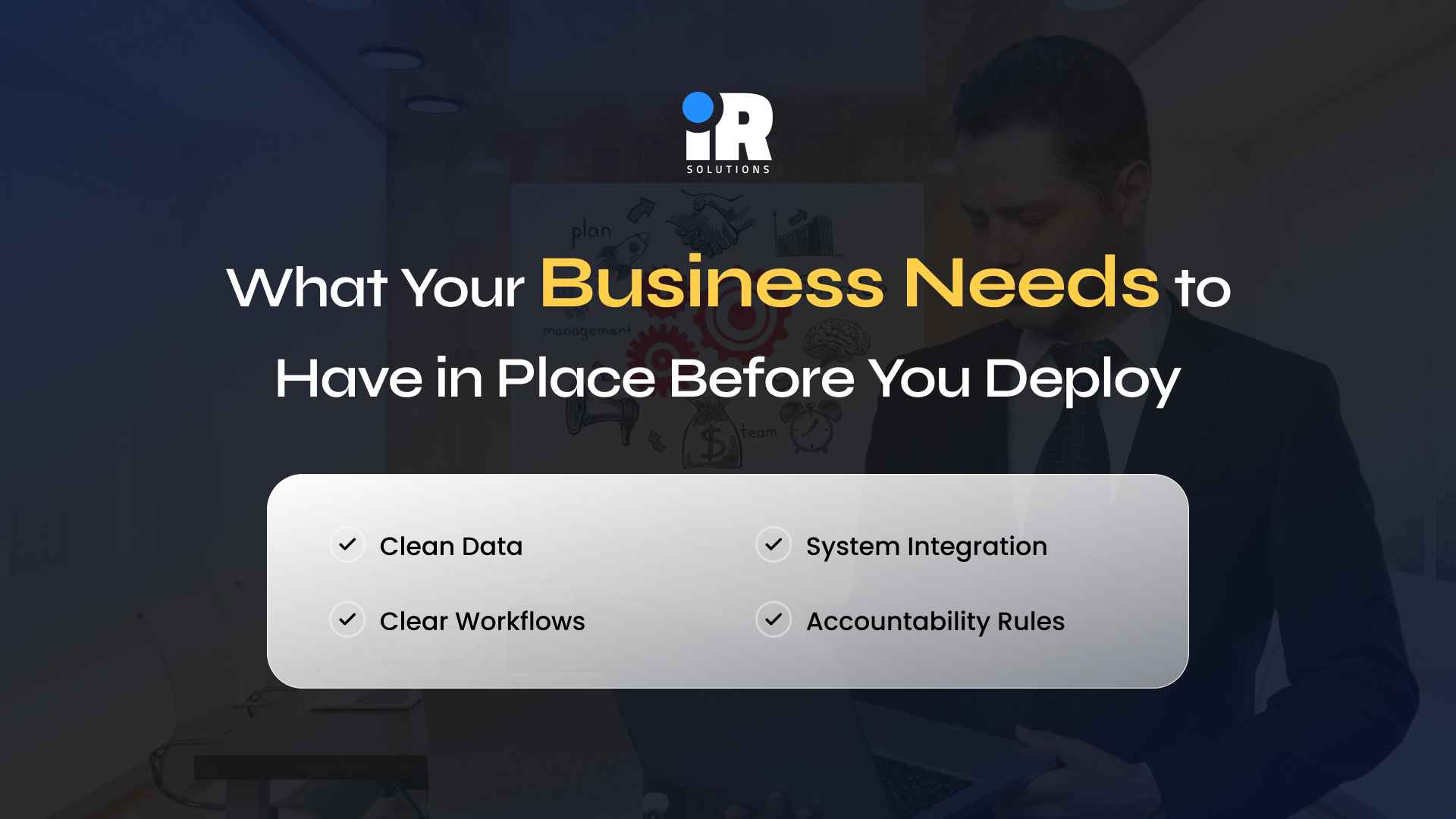
- Clean Data: Agents rely on accurate, consistent, and accessible data to function reliably.
- Clear Workflows: Automation requires well-defined processes that include how exceptions are handled.
- System Integration: Successful deployment depends on proper APIs, secure access, and legacy system connectivity.
- Accountability Rules: Organizations need clear ownership, oversight, and rollback paths for every agent action.
Sectors Seeing Real Results from Agentic AI
Agentic AI is not restricted to a single sector or company size, but the industries that have moved fastest share a common trait: they contain high volumes of structured, rule-driven processes where the cost of manual execution is easy to identify and measure.
- Fintech and Banking: Compliance monitoring, fraud signal detection, customer onboarding verification, and loan documentation review are all running with substantially less human involvement than they required just two years ago. We work closely with businesses in this sector, and you can read more about our approach to Fintech and Banking solutions here.
- Healthcare: Prior authorization workflows, patient intake processing, appointment coordination, and clinical documentation support are being handled by agentic systems that work faster, more consistently, and with fewer errors than manual teams handling the same volume.
- Retail and E-Commerce: Returns processing, inventory management, customer reactivation campaigns, and personalized recommendation workflows are areas where agentic deployments are delivering results that connect directly to revenue. Our experience in Retail and Ecommerce covers exactly these high-impact use cases.
- Supply Chain and Logistics: Agents that monitor shipment data, trigger rerouting decisions when disruptions occur, and manage supplier communications are cutting the cost of exceptions that previously required dedicated human attention around the clock.
- Startups: Early-stage companies are using agentic AI to build lean, scalable operations from day one, automating the administrative and operational overhead that would otherwise require headcount additions they cannot yet support.
- Education and E-Learning: Student support workflows, learning path personalization, enrollment processing, and administrative coordination are areas where education platforms are using agents to extend their reach without proportionally scaling their operational teams.
The Risks Worth Taking Seriously Before You Deploy
Agentic AI is genuinely valuable technology, but it deserves an honest accounting of the risks that come with it rather than a purely promotional picture of what it can do: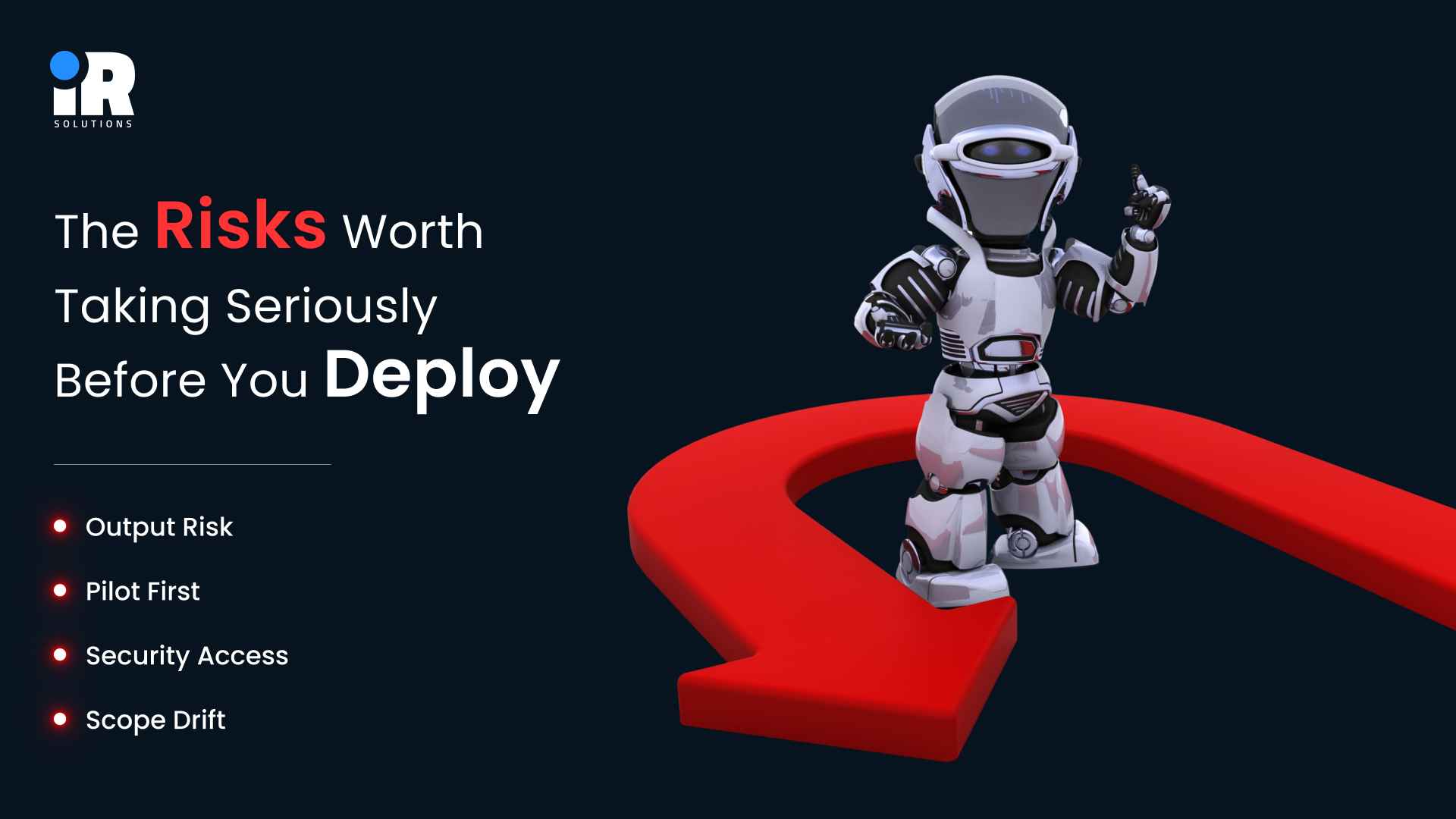
- Output Risk: Agents can produce plausible but incorrect outputs, especially dangerous in high-stakes actions like payments or client communication. Human checkpoints are essential where consequences matter.
- Pilot First: Skipping controlled pilots and jumping into full rollout is a common failure pattern. Start small, measure results, and scale only when performance is proven.
- Security Access: Agent access to core systems increases security risk if authentication and permissions are not tightly controlled. Strong access design is critical from the start.
- Scope Drift: Agents may complete tasks in unintended ways if constraints are unclear. Clear boundaries and strict permissions are needed to prevent unsafe or unexpected behavior.
How We Build Agentic AI That Actually Delivers Business Value
Every project we take on starts with a clear picture of what the business is actually trying to achieve and what it would mean for the outcome to be successful, not just a discussion of which technology to apply. Many teams arrive with a tool or framework already in mind. We work backward from the business outcome and build the architecture that fits the reality of the organization, not a template designed for a different context. Our process consistently moves through five stages that are designed to reduce risk at each transition point:
- Discovery: We map the target process in genuine detail, every input, every decision point, every exception case, every handoff, and every downstream system that depends on the workflow completing correctly.
- Architecture design: We define the agent's memory model, the tools it needs to connect to, its escalation logic, and the full audit trail before writing any production code at all.
- Build and integration: We connect the agent to your actual existing systems, whether that is a modern cloud-based platform or an older on-premise deployment, and make sure data flows cleanly in both directions throughout the entire process.
- Pilot and iteration: We run the agent on a deliberately contained slice of the real workflow, measure its accuracy and reliability carefully, and iterate based on what we actually observe before expanding the deployment scope.
- Monitoring and ongoing refinement: After a successful launch, we track the key performance metrics, surface anomalies before they compound, and continue refining the agent's behavior as your business processes naturally evolve.
If you want an honest conversation about where agentic AI genuinely fits your operation and what it would realistically take to get there, schedule a call with our AI expert team.
Conclusion
Agentic AI marks a clear shift from passive tools to autonomous systems that actively execute work, streamline operations, and reduce the burden of repetitive tasks across the enterprise. It is not a replacement for human judgment but a force multiplier that frees teams to focus on higher-value thinking, decision-making, and customer impact. However, its success depends on strong foundations such as clean data, clear workflows, secure integrations, and well-defined governance. Businesses that take a structured approach to adoption, starting small and scaling based on results, tend to achieve the most sustainable gains. Partnering with an AI/ML development company can further help organizations implement these systems effectively and scale them with confidence. As this technology continues to evolve, it is becoming a core driver of operational efficiency and long-term competitive advantage.
Frequently Asked Questions
What is the difference between agentic AI and a standard AI chatbot?
A chatbot responds to one prompt at a time, while an agentic AI system pursues a goal across multiple connected steps using real tools and live systems.
How to deploy agentic AI without replacing the current software stack?
No, agentic systems do not require a complete platform replacement, they connect on top of your current systems via APIs and middleware.
What's the average timeframe for an agentic AI deployment?
A focused pilot is usually only deployed on a single workflow, and the scope and complexity of integration vary accordingly. A focused pilot can be scoped, built, and deployed in 8 to 12 weeks.
Is agentic AI safe to use in regulated industries like banking or healthcare?
Yes, when built with proper audit logging, human escalation checkpoints, and role-based access controls designed into the architecture from the beginning.
How do we identify which business process to target with agentic AI first?
Start with a high-volume, rule-based workflow that has a clear, measurable cost today and produces a well-defined, verifiable output when completed correctly.
Can agentic AI work for a company that does not have an internal AI engineering team?
Yes, partnering with an experienced development team means you do not need internal AI expertise to deploy a well-built, well-governed system.
How should a business build the financial case for an agentic AI investment?
Measure the full loaded cost of the manual process being replaced and compare it against deployment and ongoing operational costs across a twelve-month horizon.