




Somewhere in the last eighteen months, automation quietly stopped following orders and started making calls of its own accord. It happened in a quiet way rather than some dramatic, headline-grabbing announcement everyone expected. It feels more like a colleague who used to ask "what should I do next?" and now simply handles things without asking. That shift has a name, and people in the industry are now calling it agentic AI. Businesses adopting AI/ML development services can now build systems that not only automate repetitive work but also make context-aware decisions across departments. It isn't just another industry trend tacked onto the same old chatbots and rigid scripts we've gotten used to. It plans, decides, and adjusts the moment a situation changes, without someone hovering nearby the entire time.
What Makes Agentic AI Different From Simple Bots
Instead of following fixed steps like simple bots, agentic AI interprets context, makes decisions on the fly, and self-corrects to stay aligned with the intended outcome.
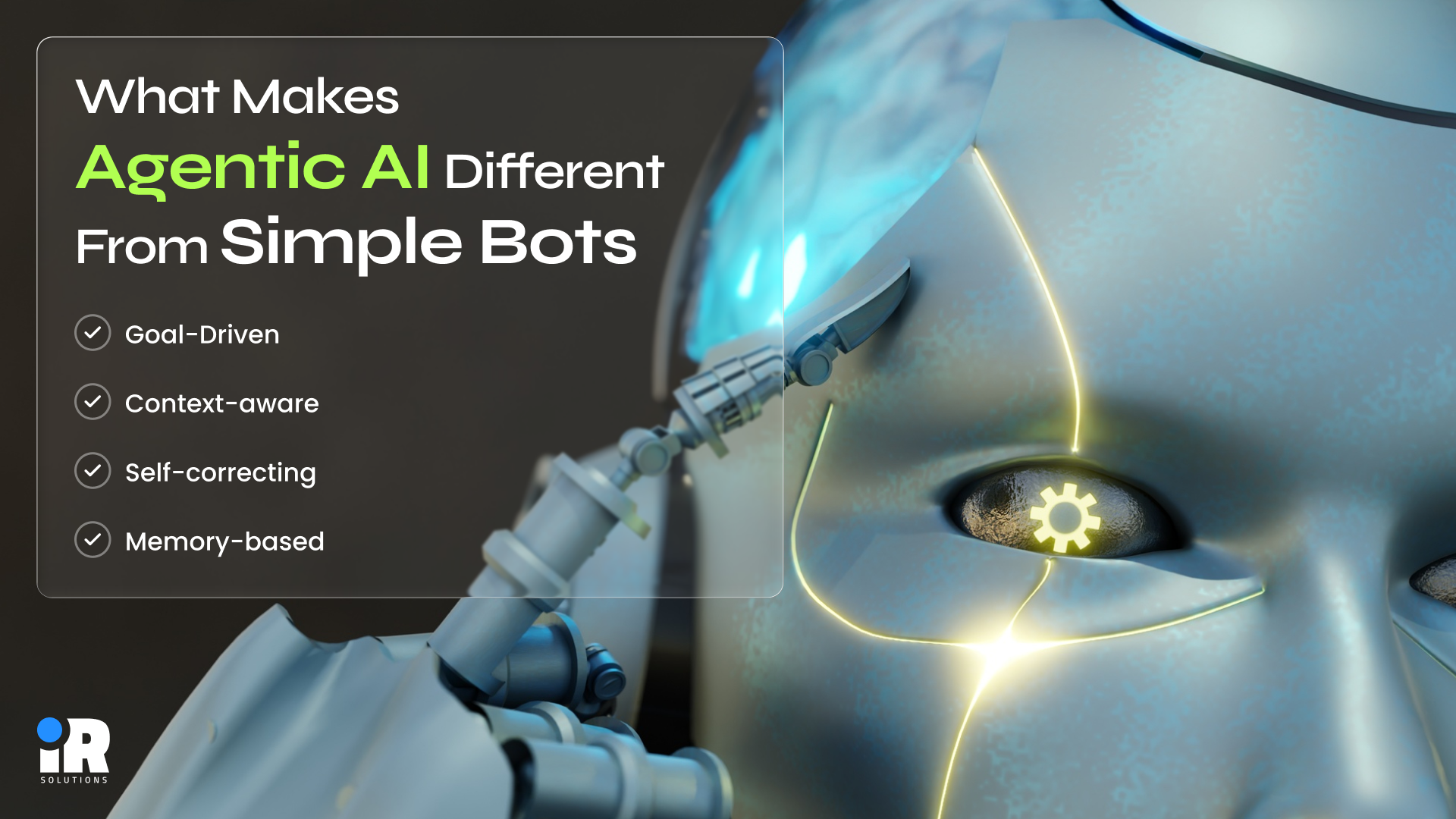
- Goal-driven: It works steadily toward an outcome instead of simply ticking off steps in a fixed, predictable order.
- Context-aware: It actually reads the surrounding situation carefully before deciding what should happen next.
- Self-correcting: It notices the moment something looks off and adjusts course without anyone tapping it on the shoulder.
- Memory-based: It remembers what happened during similar tasks before and uses that history to perform a little better.
As AI continues to evolve, autonomous agents are taking on more complex business tasks. Our blog: What is Agentic AI? How Autonomous AI Agents Are Changing Business Operations explains what this shift means for organizations.
Why Autonomous Workflows Are Gaining Ground Fast
Instead of a person clicking "start" on every step inside a process, an agent now runs the entire chain on its own, end to end. That removes the old delay of waiting for someone to approve a step that could have happened hours earlier, overnight.
- Customer support: Tickets get triaged, answered, or escalated automatically without a human babysitting the queue throughout the entire day.
- Procurement: Vendors get compared, contract terms get negotiated, and orders go out without anyone chasing down approvals manually.
- Finance: Invoices get processed quickly, mismatches get flagged early, and books stay reconciled without anyone working through the weekend.
- HR onboarding: Paperwork, system access, and training schedules get organized the moment a new hire signs their offer letter.
How AI Decision Making Actually Works Today
This is honestly the part that tends to make most people a little nervous, and that reaction is genuinely fair given the stakes involved. Letting software make real, consequential decisions sounds risky right up until you actually understand how the entire process works underneath the surface. Agentic AI does not simply guess randomly and hope everything turns out fine in the end. It weighs the available options carefully, predicts likely outcomes for each one, and chooses based on goals that were already defined for it in advance.
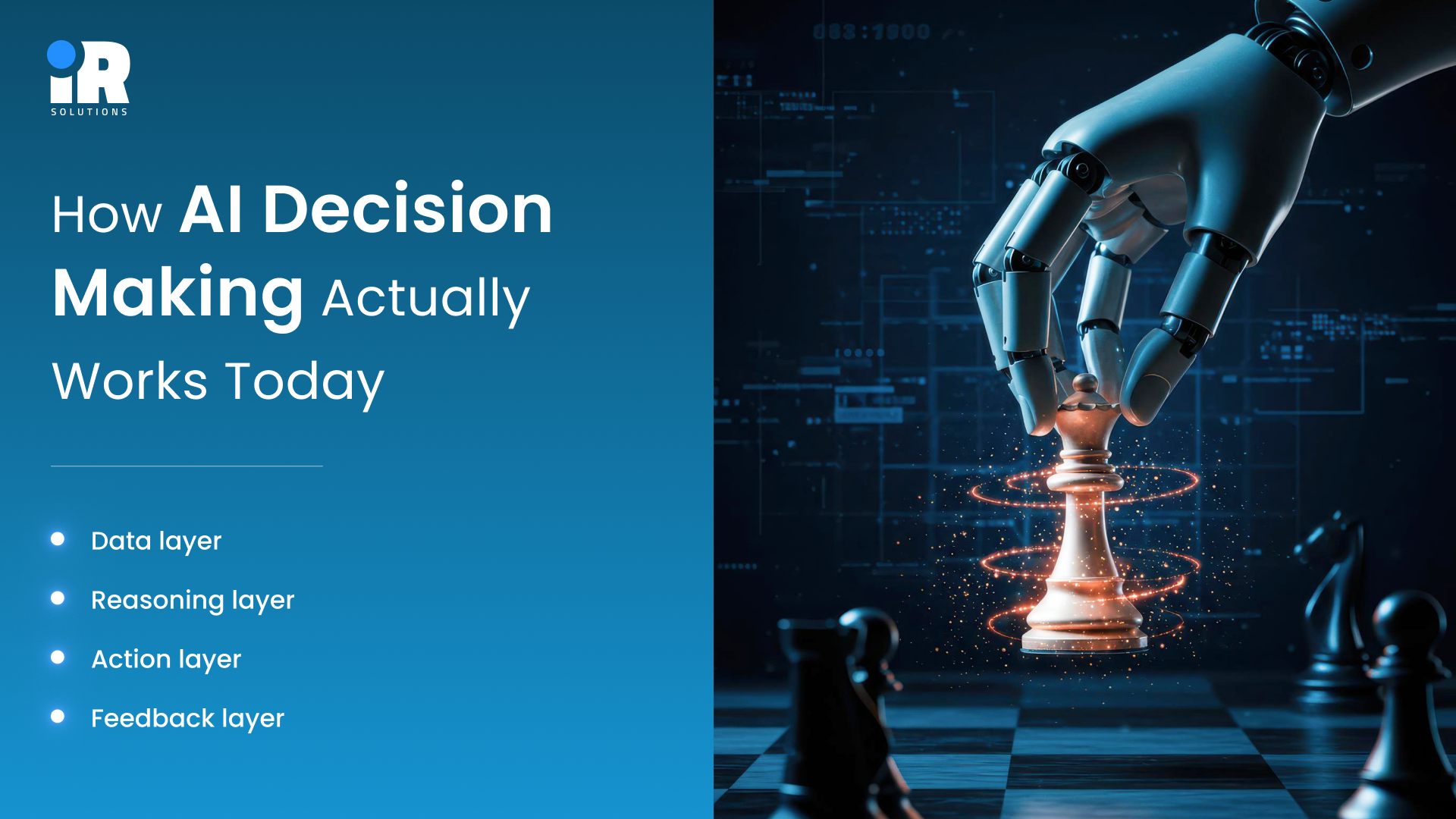
- Data layer: Pulls relevant information from wherever it actually lives, whether that means internal systems or outside data sources.
- Reasoning layer: Compares the possible actions against existing goals, known limits, and identified risks before committing to anything specific.
- Action layer: Executes whichever decision ultimately wins out and carefully logs exactly what happened for later review purposes.
- Feedback layer: Uses that recorded outcome to make a slightly smarter, more informed decision the very next time around.
This layered approach is precisely what allows agentic AI to handle genuinely gray areas instead of simply shutting down whenever things get unclear. A pricing agent, for example, can adjust rates based on current demand, competitor pricing data, and existing stock levels, all simultaneously, without waiting around for someone to approve every single tiny adjustment along the way.
Building an AI assistant that truly fits your business starts with the right development approach. Read: Custom AI Chatbot Development: Complete Guide to Building Business-Specific AI Assistants to understand the complete process.
If you are ready to see what this could look like for your business, book a free consultation with our team.
Why Enterprise Adoption Is Accelerating So Fast
A couple of years ago, agentic AI felt like something only the biggest tech companies would bother touching. That has changed fast, and enterprises everywhere are now treating it as a real strategic priority.
- Cost pressure: Operating budgets are tighter than before, and leadership teams want more output without spending significantly more money.
- Talent shortages: Genuinely good people remain hard to find these days, and they are even harder to retain long term.
- Customer expectations: Clients increasingly want fast answers around the clock now, with virtually no exceptions tolerated anymore.
- Competitive risk: Falling behind a faster-moving rival represents a real, financially expensive threat to long-term company growth.
Most companies start small, often in customer service or finance, run a quiet pilot first, and let the results convince everyone else. As adoption grows, many organizations choose to hire agentic AI developers to design autonomous workflows, integrate enterprise systems, and ensure AI agents can operate reliably at scale.
Common Adoption Challenges
- Data quality: Agents are only ever as genuinely good as the underlying data they actually have to work from.
- Integration gaps: Older legacy systems frequently do not play nicely with shiny new AI tools right out of the box.
- Change resistance: Employees worry, understandably so, about exactly what this transition actually means for their own job security.
- Governance gaps: A surprising number of companies still lack clear, documented rules around AI accountability and decision oversight.
None of these particular challenges represents an absolute dealbreaker on its own, but ignoring them tends to get genuinely expensive further down the road. Companies that plan carefully ahead of time generally experience smoother rollouts and noticeably fewer unpleasant surprises along the way. Working alongside experienced AI/ML developers helps businesses avoid costly implementation mistakes while ensuring models, integrations, and governance are built correctly from day one.
Industries Leading This Shift Right Now
- Banking and finance: Fraud detection systems and risk scoring models increasingly run on autonomous agents operating around the clock.
- Healthcare: Patient scheduling, billing processes, and routine communication are now handled with far less manual administrative effort required overall.
- Retail: Pricing and inventory agents react to shifting demand patterns almost instantly, regardless of whether it is day or night.
- Logistics: Route planning and fleet coordination now happen with remarkably little human input required throughout the entire process.
Every single industry is shaping agentic AI around its own unique priorities, yet the underlying pattern remains essentially the same everywhere you actually look closely. There is consistently less manual grunt work, noticeably more accuracy, and a steady ongoing push to accomplish more using the same headcount already on staff.
How to Prepare Your Business for Agentic AI
Buying a fancy AI tool and hoping for the best is not a strategy, it's a gamble. Businesses that actually succeed treat it as a real initiative with clear goals from the start.
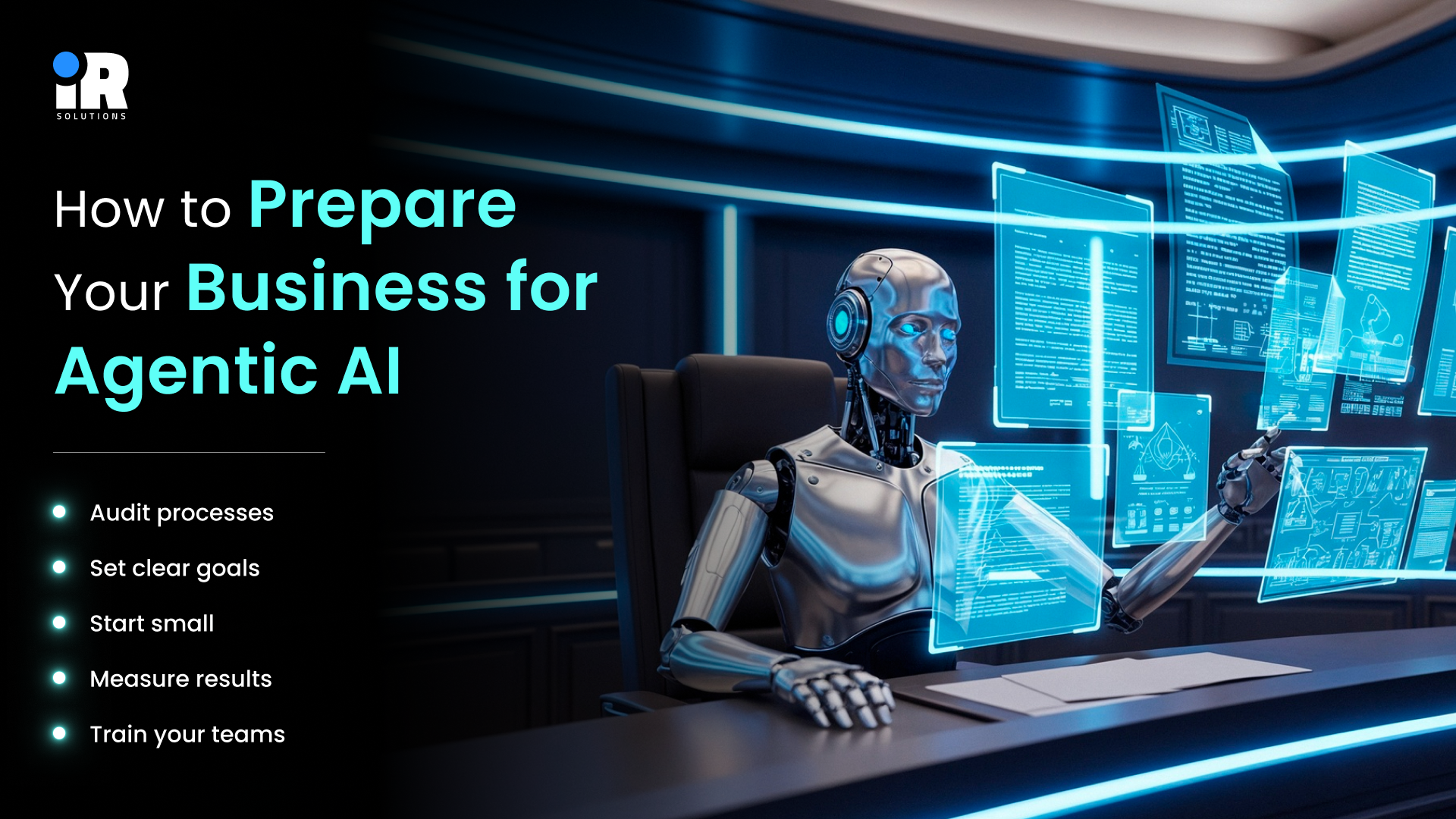
- Audit processes: Identify the repetitive, rule-heavy tasks that are quietly consuming large amounts of your team's valuable time.
- Set clear goals: Decide exactly what success genuinely looks like for your organization before launching anything into actual production.
- Start small: Pilot a single, well-defined workflow rather than attempting to automate absolutely everything all at once immediately.
- Measure results: Track real, concrete numbers consistently so you actually know for certain whether the rollout is working.
- Train your teams: Help employees genuinely see these new agents as helpful teammates rather than as threats to their own jobs.
A measured rollout keeps risk low and builds confidence, while rushing usually backfires through messy integrations or employees quietly refusing to adopt the system.
Conclusion
Agentic AI is not some distant technology still being figured out in a lab somewhere. It is running inside real businesses right now, handling real decisions, and quietly closing the gap between companies that move fast and those that keep waiting for the perfect moment. The businesses seeing results are not always the biggest ones with the deepest pockets. They are the ones who picked a starting point, ran a small pilot, learned from it, and kept building from there with the support of IR Solutions. Automation done right does not replace the people on your team, it gives them back the time they were losing to work that never needed a human in the first place. That shift alone changes everything about how a business grows.
Frequently Asked Questions
How is agentic AI different from RPA?
RPA just follows the rules it was given, step by step, and breaks when reality doesn't match the script. Agentic AI actually reasons through the situation in front of it and adjusts on the fly instead of freezing up.
Can multi-agent systems work together safely?
Yes, as long as each agent has a clearly defined role and there's a solid communication protocol tying them together. Without that structure, things get chaotic fast, but with it, agents hand off work and coordinate pretty reliably.
Is agentic AI safe for sensitive decisions?
It can be, but only if guardrails and human checkpoints are baked in from day one rather than bolted on later. Left completely unsupervised, even a well-built system can make calls nobody signed off on.
Which industries benefit most from agentic AI?
Right now, finance, healthcare, retail, and logistics are showing the clearest, most measurable payoffs. That's mostly because these industries deal with huge volumes of repetitive, data-heavy work that agents are built to handle.
How long does enterprise adoption typically take?
Most companies don't jump in headfirst, they run a small pilot first to see what actually works. From there, scaling up across the business usually takes somewhere around six to twelve months.
Does agentic AI replace human employees entirely?
No, it mainly takes the repetitive, time-consuming tasks off people's plates. That frees employees up to focus on the judgment calls and bigger decisions that actually need a human touch.
Where should a business start with automation?
The smartest first move is auditing which tasks are repetitive and eating up the most time. Once you've spotted one, pilot it as a single workflow before trying to scale anything further.