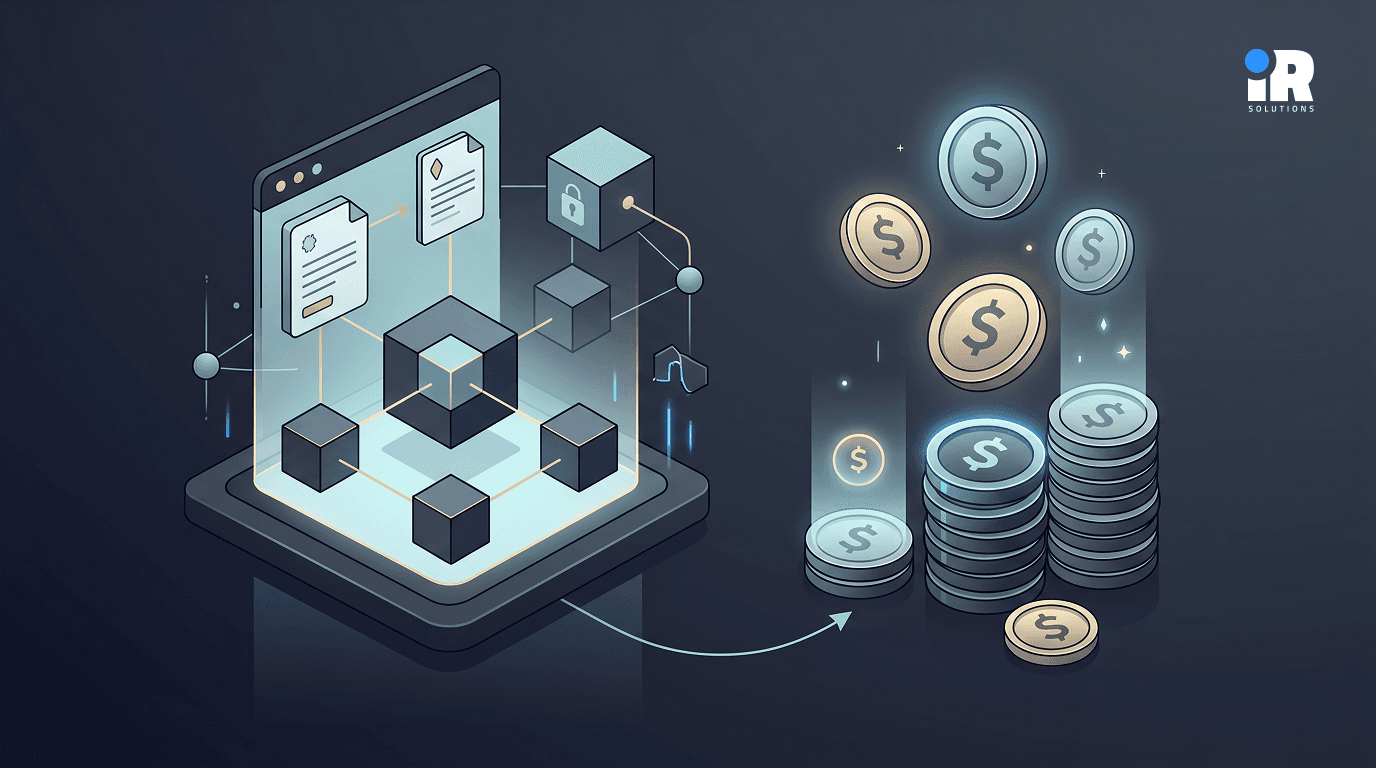


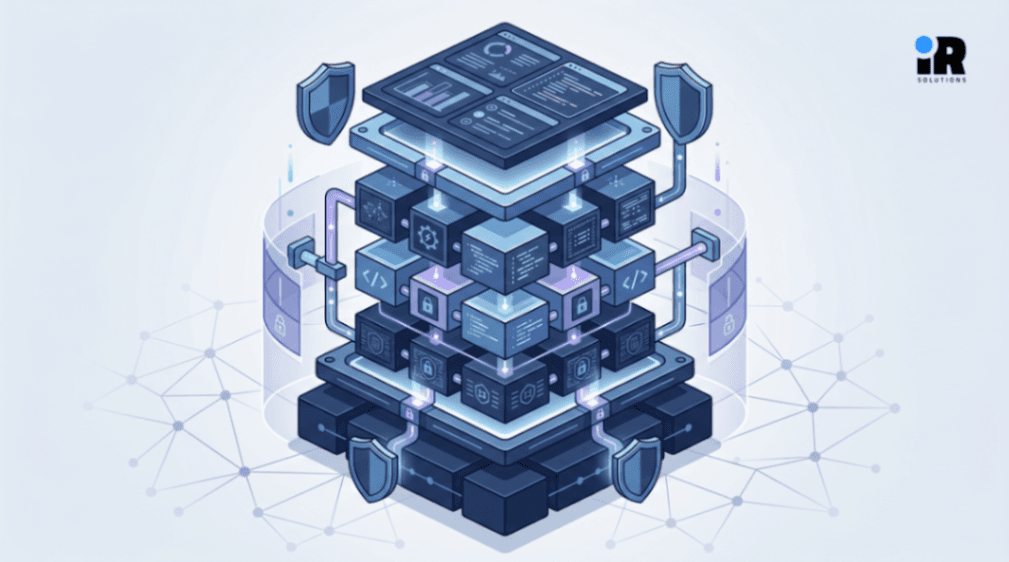

Most enterprise workflows are slower than they should be, approvals sit in inboxes, data gets re-entered across systems, and multi-party transactions stall because no single party has a complete view of what is happening. A blockchain development company solves this by building smart contract infrastructure that executes business logic automatically, records everything permanently, and removes the manual handoffs where delays and errors accumulate. The build process for an enterprise-grade system looks nothing like a basic smart contract deployment the access requirements, compliance obligations, and integration demands are in a different category entirely.
What Makes a Smart Contract System Enterprise-Grade?
A smart contract that works fine for a token launch would fall apart under real enterprise conditions. Transaction volumes are higher, access rules are tighter, and when something goes wrong, it is not a bug to patch, it is a financial event with no undo button.
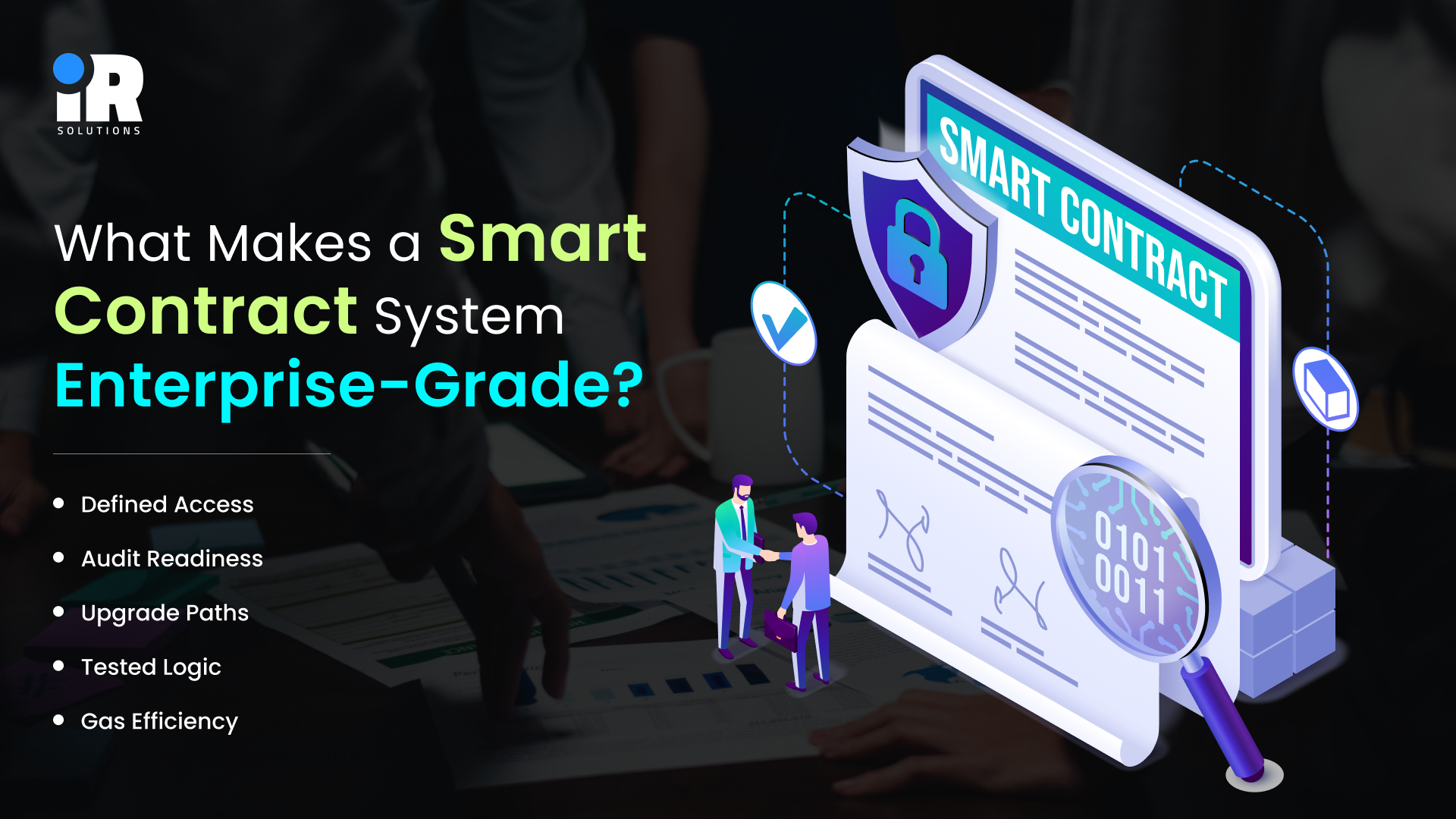
Defined Access: Role-based permissions control exactly who can read, write, or trigger specific functions, leaving no open access points in the system.
Audit Readiness: Every transaction is recorded on-chain permanently, giving compliance and legal teams an audit trail that requires no manual assembly.
Upgrade Paths: Proxy contract patterns allow the system to be updated post-deployment without a full redeployment or forcing users through a fund migration.
Tested Logic: Business rules get tested against every edge case before the system touches a live network, because finding a flaw after launch costs far more than finding it before.
Gas Efficiency: At enterprise transaction volumes, unoptimised contracts turn gas costs into a real operational problem that compounds quickly at scale.
How Architecture Decisions Shape the Entire Smart Contract Build
What gets decided before development starts determines whether the system holds up under real enterprise pressure or falls apart six months in. The wrong network layer, a poorly structured access model, or a contract architecture that cannot be upgraded, each of these creates problems that are genuinely hard to fix without stopping and rebuilding.
Certified blockchain developer begins with a dedicated architecture phase before any code gets written. That means choosing between public, private, or permissioned networks based on your actual data control and compliance situation, not a default assumption. It also means mapping transaction flow, defining node structure, planning upgrade mechanisms, and identifying every integration point with your existing systems up front. Teams that skip straight to writing contracts almost always end up rebuilding something significant later in the project. The architecture phase is what gives the finished system a realistic operational life as the business changes.
If your business is planning a smart contract deployment, book a consultation with our team before the build starts, not after the first round of problems surfaces.
Private and Permissioned Blockchain Networks for Enterprise Control
Public blockchain networks let anyone participate and observe. For most enterprise use cases where contracts touch sensitive commercial data, regulated financial activity, or confidential multi-party agreements, that is not a workable starting point. We build private and permissioned blockchain networks where participation is gated, and access is governed by defined rules from the start. What that looks like in practice:
Node Permissions: Each node is assigned specific roles defining what it can read, validate, or write to the shared ledger, with no permissions beyond what the role requires.
Identity Management: Cleared digital identities are required to call contract functions or retrieve sensitive records, so access is tied to verified users rather than open wallet addresses.
Governance Rules: The framework for handling network updates, disputes, and new participant onboarding is set in advance, not decided informally when a situation arises.
Data Visibility: Businesses decide which participants can see which records, giving each party in a multi-organisation network access only to what is relevant to them.
Smart Contract Development That Automates Real Business Processes
The value of a smart contract is in what it replaces, blockchain smart contract development services start by identifying the specific manual processes, approval chains, and intermediary dependencies your organisation currently relies on, then build contracts that handle those automatically.
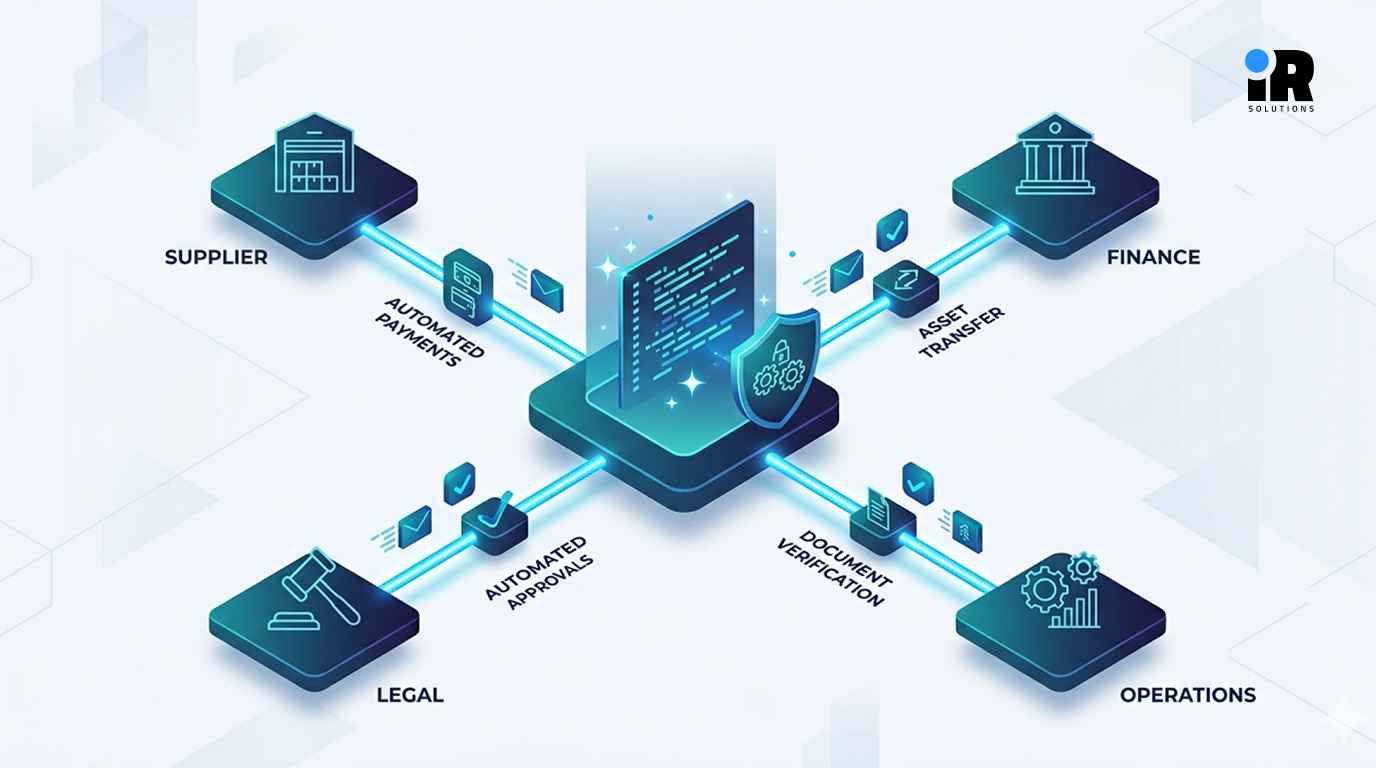
Supplier payment automation, multi-party document approval, on-chain compliance enforcement, and asset transfer management are the most common enterprise applications we build. Every contract is fully documented, so your internal team can read and audit the logic independently they should not need to call a developer to understand what a contract does. Access controls are embedded at the function level, which means restricted operations stay restricted regardless of how someone tries to call them. For fintech, supply chain, and real estate businesses, this kind of contract-level automation tends to produce measurable cost reductions faster than most other technology investments.
See how these systems perform across real business contexts in our breakdown of How Blockchain Technology Enhances Business Transparency, Security, and Trust?
Integrating Blockchain With Existing Enterprise Infrastructure
No enterprise replaces its ERP, CRM, and internal databases to accommodate a new blockchain system. The new system has to connect with what is already running, or it adds complexity without removing any.
We integrate smart contract systems with existing enterprise software through APIs and middleware built to handle live data exchange without touching current workflows. What each integration layer covers:
- Contract events trigger updates directly inside your ERP, so payment records, inventory changes, and approval statuses stay current without manual entry.
- On-chain data is translated into formats your existing applications already understand, so nothing requires custom workarounds on the software side.
- Blockchain state and internal system records stay aligned through live pipelines rather than periodic batch jobs that always create some lag.
- Integration is designed to work with older enterprise software, so a full infrastructure migration is not a prerequisite for getting the system operational.
Security and Access Control in Enterprise Smart Contract Systems
Security built in at the architecture stage and security added at the end of development are not the same thing. Enterprise systems handle transactions and records that are worth attacking, so the security posture has to reflect that from the first design decision. Smart contract developers treat security as a hard constraint on the design, not a checklist item before shipping.
Security measures across every enterprise system we build:
- Full encryption of sensitive data in transit and at rest across all nodes and storage layers.
- Role-based access control tied to verified user identity rather than wallet addresses or session tokens alone.
- Private key management protocols that keep transaction signing credentials from being accessed by anyone outside their assigned scope.
- On-chain records that cannot be altered retroactively without network-wide consensus, which is what makes them worth trusting for audit and legal purposes.
- Pre-deployment security audits run by independent reviewers specifically looking for reentrancy vulnerabilities, integer overflow risks, and access control gaps.
- A system audited this way does not just satisfy a compliance checkbox. It holds up when someone with technical skill and bad intent actually tests it.
Scalability Planning for Growing Enterprise Networks
A contract system performing well at the current load is not the same as one that will perform well at twice the load. Systems that were not built for scale tend to degrade at exactly the wrong moment when the business is growing, and the last thing anyone needs is infrastructure problems.
We plan for scalability at the architecture stage, before it becomes a performance incident. Transaction batching strategies, off-chain data handling, and Layer 2 integration paths are designed into the system structure rather than retrofitted when problems surface. Load testing under high-volume conditions is a standard part of every pre-deployment process for this reason. When growth means adding new regions, departments, or partner organisations, the architecture accommodates that without requiring core system components to be rebuilt. Startups scaling into enterprise operations get particular value from this early it is significantly cheaper to design for scale than to re-engineer for it.
Compliance and Governance Built Into the System
Retrofitting compliance into a live smart contract system is expensive, disruptive, and often incomplete. The organisations that end up doing it are the ones that treated compliance as an afterthought during the build. Regulated industries simply cannot afford that approach.
Compliance and governance capabilities embedded directly into every enterprise system we build:
- On-chain transfer restrictions enforce identity verification requirements so only cleared participants can interact with regulated contract functions.
- Every transaction and state change is logged permanently on-chain, which gives compliance teams reliable records without any manual collection process.
- Dashboards and data exports let compliance teams generate regulatory reports directly from on-chain transaction history on demand.
- The framework for who can propose, review, and approve changes to the live system is defined before deployment, not improvised when a change is needed.
For businesses building tokenised asset systems, RWA tokenisation services put compliance requirements directly into the contract architecture.
The technical side of how tokenisation works is covered in our blog on How Blockchain Enables Real-World Asset Tokenization.
Testing, Deployment, and Ongoing Enterprise Support
The gap between a smart contract that works in testing and one that holds up in production is where most enterprise projects either earn or lose confidence. We run functional testing, security auditing, and load testing before anything goes near a production environment — because the cost of catching a problem post-deployment is an order of magnitude higher than catching it before. What the delivery process covers end-to-end:
Functional Testing: Contract logic is verified against every defined business rule and edge case before the deployment sequence begins.
Security Auditing: Independent auditors specifically look for reentrancy vulnerabilities, overflow risks, and access control gaps that internal teams stop noticing because they are too close to the code.
Network Setup: Node configuration, network validation, and monitoring tool deployment are handled by our team as part of the launch, not handed off as client tasks.
Live Monitoring: After launch, contract performance and transaction activity are tracked continuously, so problems get identified before they affect users or operations.
Ongoing Maintenance: Updates, patches, and feature additions come through a structured support arrangement rather than informal requests with unpredictable turnaround times.
Enterprise Use Cases Our Blockchain Team Delivers
The blockchain development team has built and shipped enterprise smart contract systems across a range of industries with different regulatory environments and operational requirements:
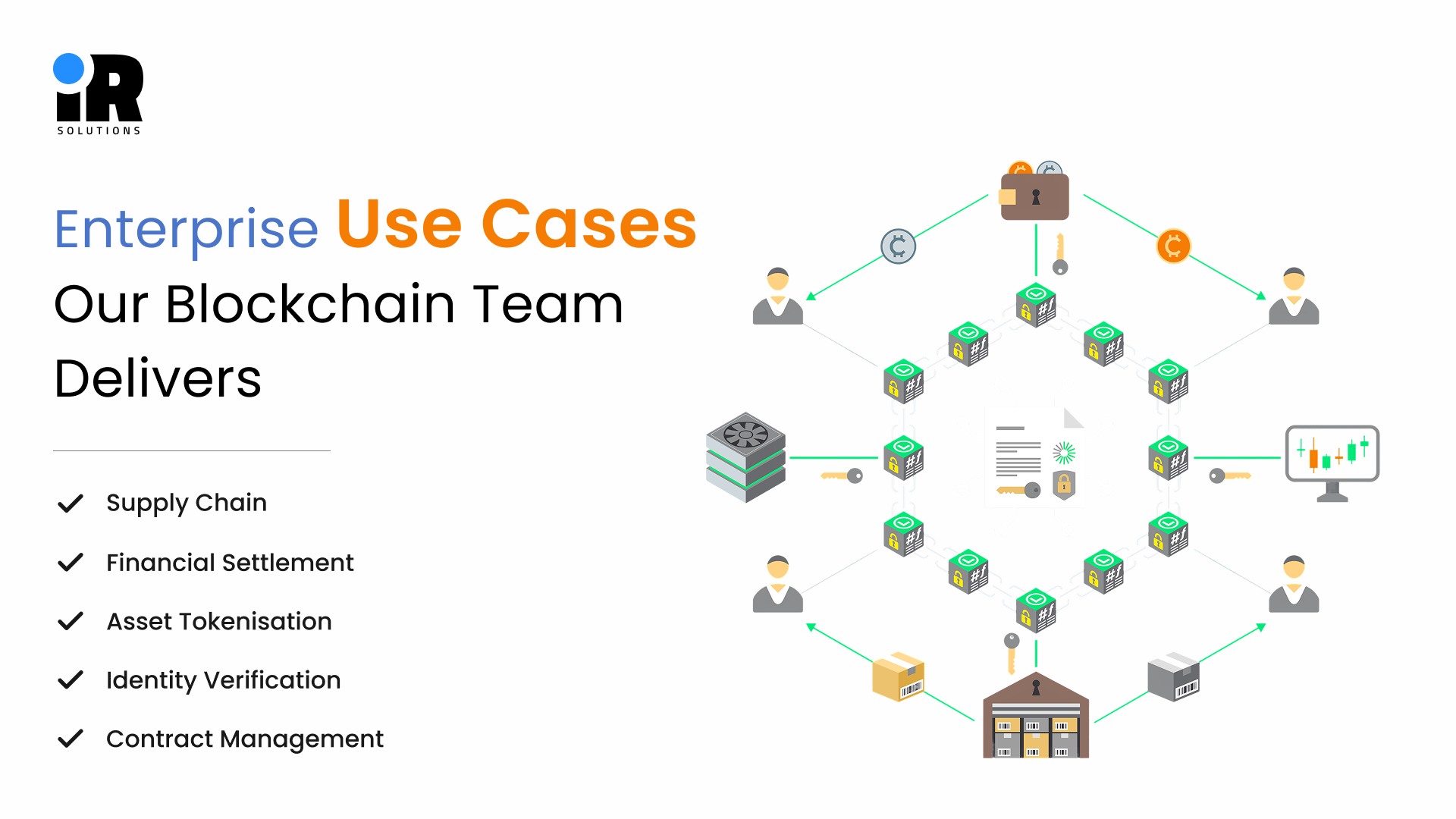
Supply Chain: Payment automation, shipment verification, and provenance tracking across logistics networks where multiple organisations share a ledger.
Financial Settlement: On-chain settlement infrastructure for fintech and banking clients that reduces counterparty risk and removes manual reconciliation from the settlement process.
Asset Tokenisation: Digital representations of real estate, private equity, and commodities on regulated networks, with settlement available around the clock.
Identity Verification: Decentralised credential systems that give organisations direct control over identity data without depending on centralised databases that become single points of failure.
Contract Management: On-chain document approval, agreement execution, and audit records that replace manual contract workflows that tend to be slow, inconsistent, and hard to audit after the fact.
Conclusion
Enterprise-grade smart contract systems are not defined by code alone, they are the result of precise architecture, controlled access, and seamless integration with existing business operations. When built correctly, they eliminate delays, reduce human error, and create a transparent, secure environment where processes execute exactly as intended. IR Solutions connects blockchain capability with real business outcomes, ensuring that every system is built with compliance, scalability, and long-term performance in mind. From governance to integration and ongoing support, each decision directly impacts how the system performs under real enterprise pressure. Businesses that invest in doing this right from the start don’t just adopt blockchain, they build infrastructure that delivers efficiency, trust, and a lasting competitive edge.
Frequently Asked Questions
What separates an enterprise smart contract from a standard one?
Enterprise contracts are built with role-based access, on-chain audit logs, upgrade mechanisms, and compliance logic from the architecture stage, not added later.
Which blockchain networks do you build enterprise systems on?
IR Solutions works with Ethereum, permissioned networks, and Layer 2 solutions, chosen based on your transaction volumes, data sensitivity, and compliance requirements.
Can smart contracts connect with our existing ERP or CRM systems?
Yes, integration is handled through APIs and middleware built to exchange data with your current software without changing how it operates.
How long does building an enterprise smart contract system typically take?
Scope and integration complexity determine the timeline, but most enterprise systems run between twelve and twenty weeks from architecture to production.
Is security auditing part of your development process?
Every enterprise contract goes through independent auditing before mainnet deployment to surface vulnerabilities that internal reviews tend to miss.
Which industries get the most out of enterprise smart contract systems?
Fintech, supply chain, real estate, healthcare, and logistics see the strongest returns, especially where multi-party workflows and regulatory compliance requirements intersect.