



Key Takeaways
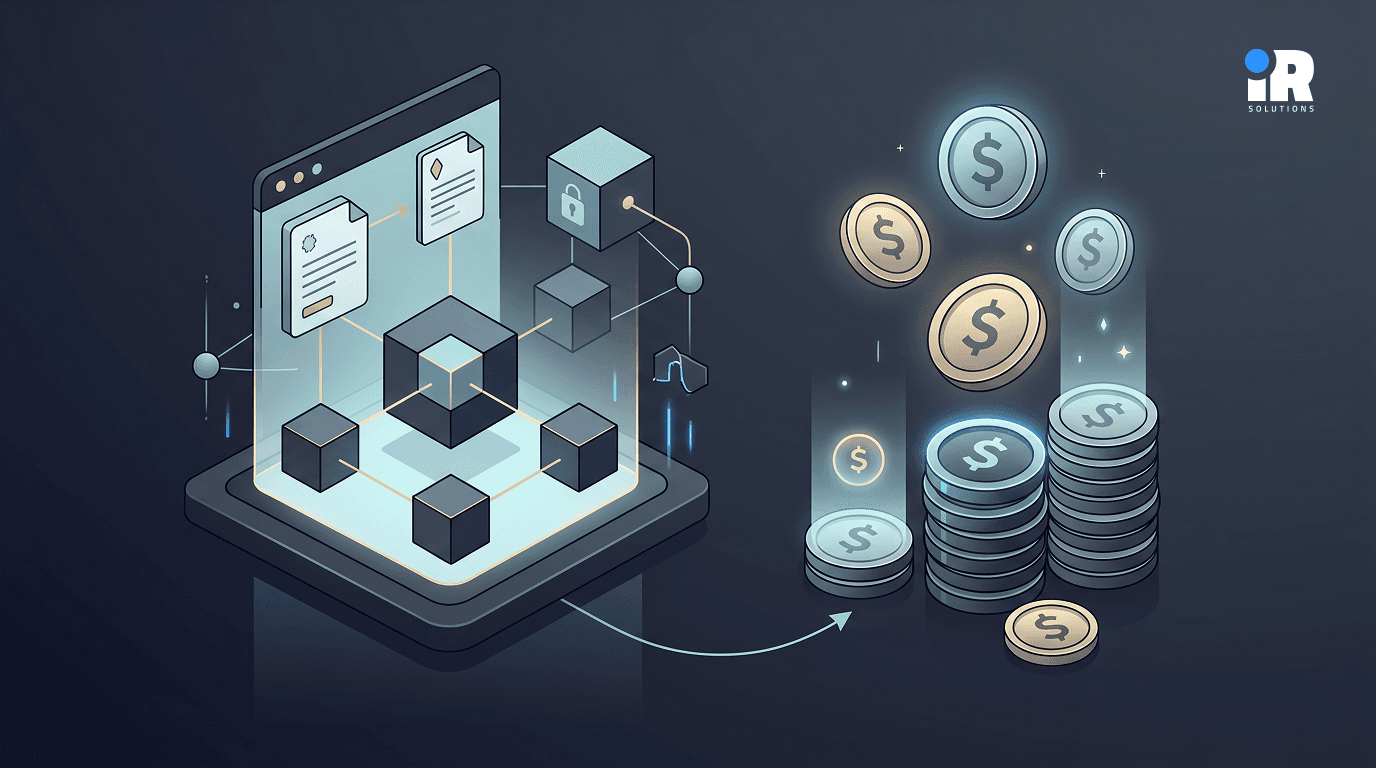
- Real-world asset tokenization converts physical and financial assets, like real estate, commodities, and securities, into digital tokens on a blockchain, replacing slow, centralized ownership systems with faster, more transparent ones.
- Blockchain makes tokenization possible through an immutable, decentralized ledger combined with smart contracts that automate ownership transfers, compliance, and income distribution.
- A legal wrapper, typically an SPV or trust, connects the digital token to a real, enforceable claim on the underlying asset before any token is issued.
- Tokenization delivers three core benefits: increased liquidity, fractional ownership, and lower transaction costs by removing intermediaries.
- The market is growing quickly, RWA.xyz tracks roughly $38.3 billion in distributed tokenized value as of August 2026, up sharply from about $14 billion at the start of the year.
- Regulatory uncertainty, security risks, and a lack of universal standards remain the biggest barriers to wider adoption, making the choice of an experienced tokenization partner important.
Blockchain is transforming how real-world assets are owned, transferred, and traded by enabling secure digital tokenization. This guide explains how blockchain powers real-world asset tokenization, the technology behind it, its benefits, practical applications, and the future of blockchain-enabled asset markets.
Representing real-world assets like mutual funds or real estate as digital tokens on a blockchain helps bridge the gap between the physical and digital worlds, accessing value that has historically been locked in place. But what does RWA tokenization actually involve, and why is it considered such a significant opportunity, one BCG and Ripple project could reach $18.9 trillion by 2033. Let's break it down.
For years, global asset ownership has relied on slow, centralized systems that make access difficult and reduce efficiency. The assets are frequently constrained by legal regulations, complex paperwork, and multiple middlemen, which create additional costs and reduce transparency. With the increasing digital nature of the economy, these old systems are incapable of addressing the modern requirements of speed, access, and international involvement. This has created a strong demand for a better way to manage and exchange value. Blockchain technology offers that solution.
The scale of this shift is no longer theoretical. RWA.xyz tracks approximately $38.3 billion in distributed tokenized value as of July 2026, up sharply from roughly $14 billion at the start of the year, with institutions like BlackRock and Franklin Templeton actively issuing tokenized products. Blockchain is the infrastructure making that growth possible.
Why Blockchain Is Essential for Real-World Asset Tokenization
Real-world asset tokenization relies on blockchain to create a secure, transparent, and programmable system for managing ownership. While tokenization converts physical or financial assets into digital tokens, blockchain provides the infrastructure that makes those tokens trustworthy, transferable, and verifiable.
Without blockchain, digital asset records would remain in centralized databases that depend on manual verification and trusted intermediaries. Blockchain replaces these fragmented processes with a shared ledger where every transaction is recorded, validated, and permanently stored.
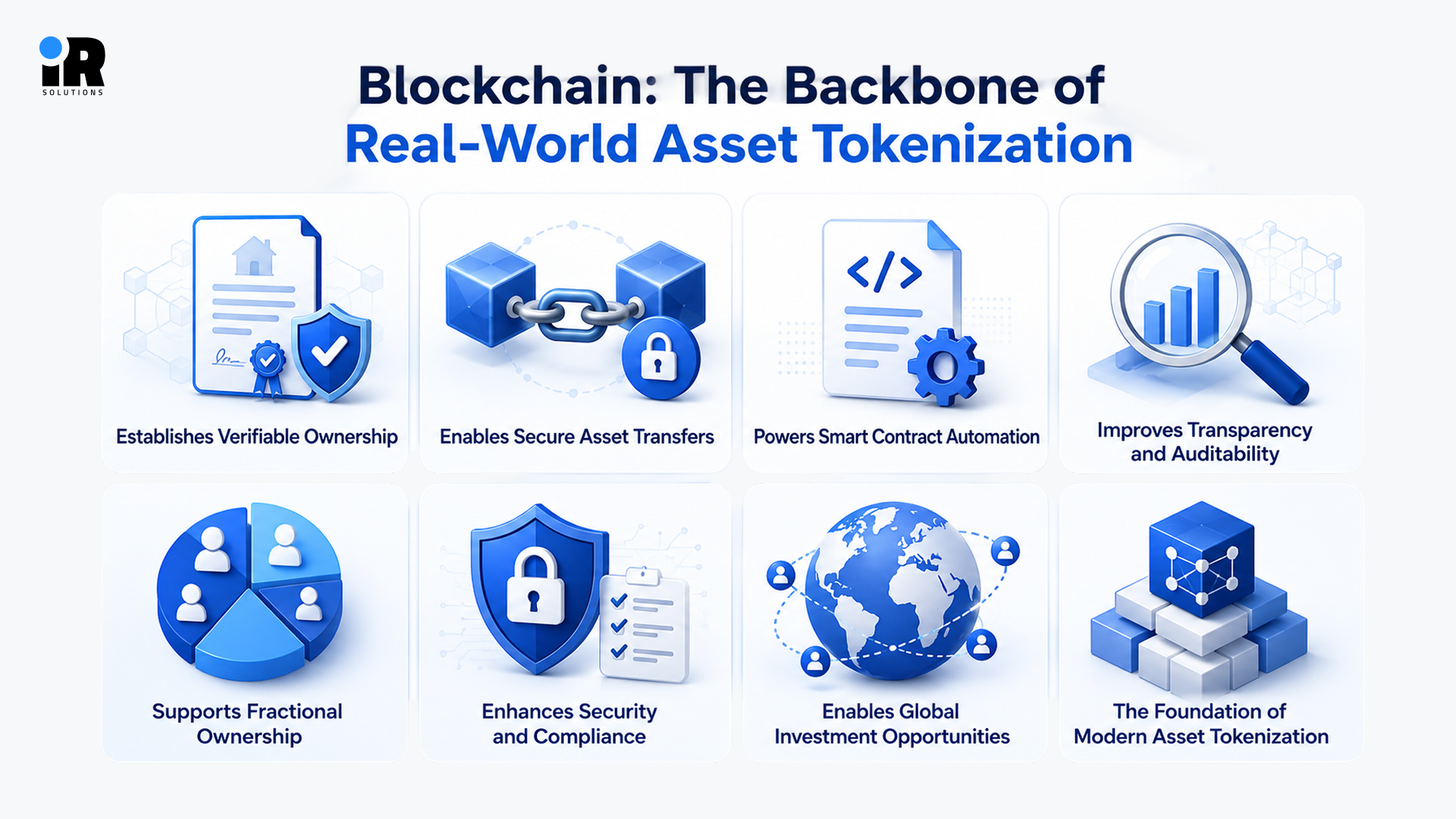
Establishes Verifiable Ownership
Blockchain creates an immutable record of ownership that cannot be altered without network consensus. Every transfer is timestamped and traceable, giving investors, issuers, and regulators confidence in the authenticity of ownership records.
Enables Secure Asset Transfers
Traditional asset transfers often involve multiple intermediaries, manual paperwork, and lengthy settlement periods. Blockchain enables direct peer-to-peer transfers while maintaining a transparent record of every transaction, reducing delays and operational complexity.
Powers Smart Contract Automation
Smart contracts automate critical processes such as token issuance, ownership transfers, dividend distribution, compliance checks, and investor restrictions. This reduces manual intervention while improving efficiency across the entire asset lifecycle.
Improves Transparency and Auditability
Every transaction is permanently recorded on the blockchain, creating a complete audit trail that authorized stakeholders can verify at any time. This level of transparency helps reduce fraud, simplifies reporting, and strengthens regulatory oversight.
Supports Fractional Ownership
Blockchain allows assets to be divided into digital tokens that represent fractional ownership. This enables businesses to unlock liquidity while giving investors access to high-value assets that were previously difficult to purchase.
Enhances Security and Compliance
Modern tokenization platforms integrate blockchain with identity verification, KYC, AML, and permission controls. Together, these features help organizations meet regulatory requirements while ensuring that only authorized participants can hold or transfer tokenized assets.
Enables Global Investment Opportunities
Blockchain connects investors and asset issuers through a digital infrastructure that operates across borders. Subject to local regulations, tokenized assets can reach a broader investor base, improving capital formation and market accessibility.
The Foundation of Modern Asset Tokenization
Blockchain is more than the technology behind tokenization. It is the foundation that enables secure ownership, automated compliance, transparent transactions, and efficient asset management. By combining distributed ledger technology with smart contracts and regulatory controls, businesses can build scalable tokenization platforms that support the future of digital asset ownership.
For a detailed explanation of the tokenization process, read the RWA Tokenization Explained guide.
Which Assets Benefit Most from Blockchain Tokenization?
Blockchain tokenization can be applied to almost any asset with identifiable ownership and measurable value. However, the greatest benefits are seen in assets that are traditionally illiquid, expensive to transfer, or difficult to divide into smaller ownership shares. By converting these assets into digital tokens, businesses can improve liquidity, simplify ownership transfers, and automate asset management through blockchain technology.
Real Estate
Residential, commercial, and industrial properties are among the most common assets being tokenized. Blockchain enables fractional ownership, making real estate investments more accessible while simplifying property transfers, rental income distribution, and ownership records.
Private Equity and Company Shares
Private companies can tokenize equity to raise capital from a broader group of investors. Smart contracts help manage ownership records, dividend distributions, and transfer restrictions while supporting regulatory compliance.
Commodities
Physical assets such as gold, silver, oil, and agricultural products can be represented as digital tokens backed by real-world reserves. Tokenization improves transparency, simplifies trading, and allows investors to own fractional interests in high-value commodities.
Bonds and Fixed Income Securities
Governments and financial institutions are increasingly exploring tokenized bonds to improve settlement speed, reduce administrative costs, and increase market efficiency through blockchain-based issuance and trading.
Investment Funds
Asset managers can tokenize mutual funds, private funds, and money market funds to streamline fund administration, improve investor accessibility, and enable faster subscriptions and redemptions.
Intellectual Property
Patents, copyrights, music royalties, and other intellectual property rights can be tokenized to create new investment opportunities while automating royalty payments and ownership transfers through smart contracts.
Alternative Assets
Luxury goods, fine art, collectibles, carbon credits, renewable energy projects, and infrastructure assets can also benefit from tokenization by increasing market accessibility, improving liquidity, and creating transparent ownership records.
For a detailed look at the transformation of real-world assets into digital tokens, check out RWA Tokenization Explained - From Physical Assets to Digital Tokens.
The Role of Smart Contracts in Blockchain-Based Tokenization
Smart contracts work alongside blockchain to automate the rules governing tokenized assets. While blockchain securely records ownership and transactions, smart contracts automatically execute predefined actions such as compliance checks, ownership transfers, income distribution, and settlement when specific conditions are met. Together, blockchain and smart contracts eliminate many manual processes traditionally handled by intermediaries, making tokenized assets more efficient, transparent, and secure throughout their lifecycle.
Smart contracts also make sure that transactions are completed as per the agreement without the use of third parties and that the transactions are executed clearly and reliably, so all interested parties may be confident. Combined with blockchain's transparency and security, they make tokenized assets easier to trade, more accessible globally, and fully functional across markets.
For a full breakdown of exactly what smart contracts do at each stage of an RWA transaction, from issuance to compliance to settlement, see our guide on the role smart contracts play in RWA transactions.
How Assets Are Tokenized on a Blockchain
Turning a physical or financial asset into a tradable token isn't a single step, it happens in stages, each one handling a different part of the transformation.
Asset Selection
The process begins by identifying a real-world asset suitable for tokenization. This may include real estate, commodities, bonds, private funds, intellectual property, or other valuable assets.
Legal Structuring
Before token creation, the asset is placed within an appropriate legal framework such as a Special Purpose Vehicle (SPV), trust, or regulated entity. This ensures each token represents a legally enforceable claim on the underlying asset.
Token Creation
Digital tokens representing ownership are created on a blockchain network. Each token may represent full ownership or fractional shares depending on the asset structure.
Recording Ownership on Blockchain
Once issued, token ownership is permanently recorded on the blockchain. Every ownership transfer becomes transparent, secure, and easily verifiable.
Investor Onboarding
Eligible investors complete identity verification and regulatory compliance requirements before purchasing tokenized assets.
Trading
After issuance, tokens can be traded on supported digital marketplaces, allowing investors to buy and sell ownership interests more efficiently than traditional markets.
Real-World Applications of Blockchain-Based Tokenization
RWA tokenization has already moved well beyond the concept stage, with blockchain being adopted across multiple financial products and asset classes. From tokenized treasury funds to real estate and precious metals, blockchain is improving transparency, settlement efficiency, and investor accessibility.
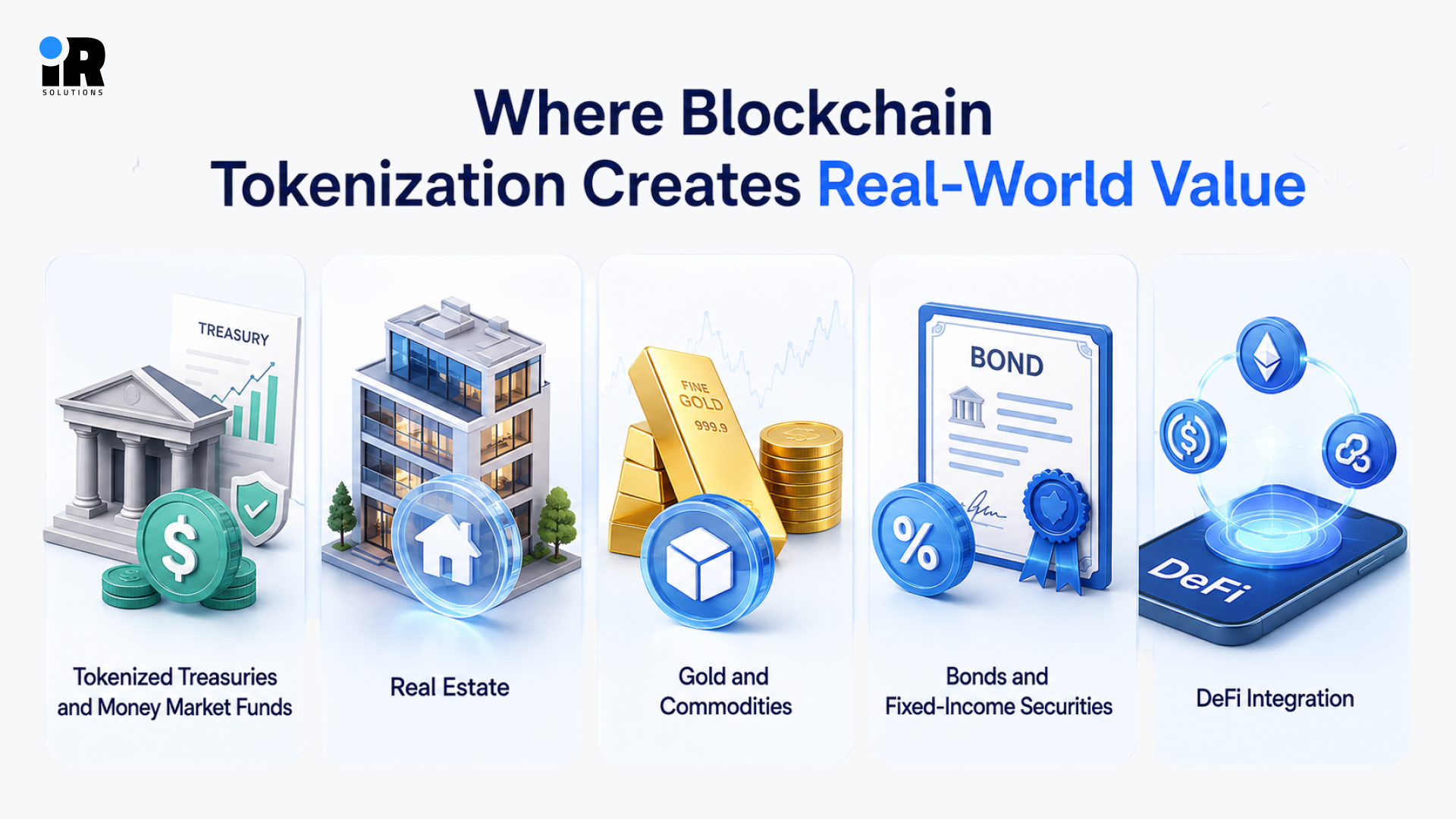
Tokenized Treasuries and Money Market Funds
Institutional adoption is accelerating rapidly. BlackRock's BUIDL fund demonstrates how blockchain can modernize traditional investment products by providing on-chain access to U.S. Treasury assets. Franklin Templeton has similarly launched blockchain-based money market funds, showcasing how established financial institutions are embracing tokenization to improve operational efficiency, transparency, and settlement. Another notable example is Archax's work tokenizing a portion of abrdn's £3.8 billion US Dollar Liquidity Fund on the XRP Ledger, showing how established asset managers are bringing real capital onto blockchain infrastructure. These products appeal to investors seeking yield while benefiting from faster settlement and greater transparency.
Real Estate
Real estate is another category where blockchain is changing how people participate in the market. Fractional ownership enables investors to gain exposure without purchasing an entire property, while blockchain simplifies ownership transfers and reduces administrative overhead. Platforms like HouseBit and RealT have built their models around providing retail investors access to fractional real estate investments that were previously available only to those with significantly larger capital.
Gold and Commodities
Blockchain has also transformed precious metals through tokenized gold products, allowing investors to own digitally represented physical gold backed by audited reserves. This approach improves accessibility, enhances transparency, and provides verifiable proof of ownership while eliminating many of the challenges associated with storing and transferring physical gold.
Bonds and Fixed-Income Securities
Bonds are also benefiting from blockchain-powered tokenization. Tokenized debt instruments reduce the friction and costs involved in issuing and trading fixed-income products, while on-chain credit markets are opening tokenized securities to a broader base of institutional and global investors.
DeFi Integration
As more real-world assets move on-chain, they are also strengthening decentralized finance (DeFi). Tokenized assets introduce more stable collateral, predictable cash flows, and deeper liquidity into DeFi protocols, creating yield opportunities that are generally more stable than those tied solely to crypto-native assets. However, continued growth depends on regulated on- and off-ramps that meet the transparency and compliance standards expected by institutional investors.
Benefits of Blockchain-Powered Asset Tokenization
Blockchain-powered asset tokenization combines secure digital ownership with decentralized infrastructure to make investing, trading, and managing real-world assets more efficient. By reducing reliance on intermediaries and improving transparency, blockchain delivers significant advantages for businesses, investors, and financial institutions.
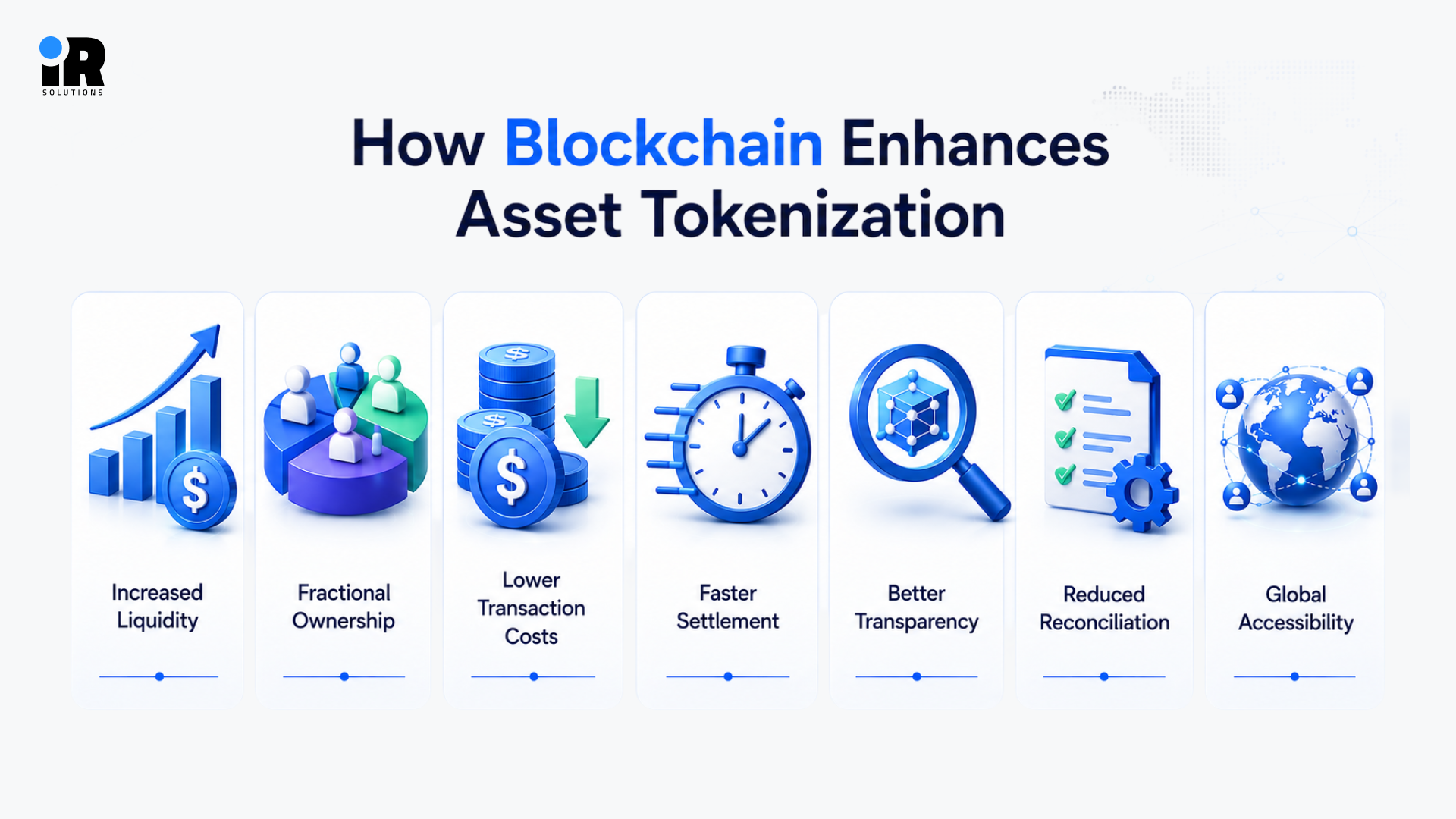
Increased Liquidity
- Enables trading of assets in smaller digital units.
- Makes previously hard-to-sell assets more accessible.
- Unlocks value for asset owners and faster entry/exit for investors.
- Supports transparent and healthy price discovery.
Fractional Ownership
- Divides assets into smaller, tradable tokens.
- Lowers the barrier to entry for investors.
- Allows portfolio diversification across multiple assets.
- Attracts a larger pool of participants for asset owners.
Lower Transaction Costs
- Reduces reliance on intermediaries.
- Automates processes via smart contracts.
- Cuts manual and administrative expenses.
- Improves efficiency and increases potential returns.
Faster Settlement
- Enables near real-time ownership transfers.
- Reduces settlement times from days to minutes.
- Minimizes delays caused by manual verification processes.
- Improves capital efficiency for buyers and sellers.
Better Transparency
- Records every transaction on an immutable blockchain ledger.
- Allows investors and regulators to verify ownership history.
- Improves trust through transparent and auditable records.
- Reduces the risk of disputes over ownership.
Reduced Reconciliation
- Maintains a single shared source of ownership records.
- Eliminates discrepancies between multiple databases.
- Reduces manual reconciliation efforts.
- Lowers operational risks and administrative costs.
Global Accessibility
- Allows investors to participate across geographical boundaries.
- Expands access to global investment opportunities.
- Supports 24/7 digital asset trading on blockchain networks.
- Broadens market participation for businesses and investors alike.
What are the Challenges and Risks in RWA Tokenization?
The possibilities of tokenizing real-world assets (RWAs) are exciting, but there are also specific challenges and risks associated with it. From regulatory uncertainty to security issues and market adoption challenges, the defining factors of this emerging space are important to understand for investors, institutions, and developers trying to navigate this space.
Regulatory and Legal Considerations
One of the largest barriers to RWA tokenization is regulatory uncertainty. Asset ownership, securities and taxation laws vary greatly across jurisdictions and are therefore difficult to comply with. Clear legal recognition of tokenized assets is essential for institutional adoption. Frameworks like MiCA in the EU and SEC exemptions such as Reg D and Reg A+ in the US are beginning to provide structure, but there is still no global uniformity, which is slowing the adoption of the market.
Security and Fraud Concerns
Even though blockchain networks are inherently secure, risks remain. Weaknesses in smart contracts, failures in custody, or wrong details about the assets can threaten the integrity of tokens. It is important to make sure that all tokens are supported by a real-life asset. Frequent audits, transparent governance, and strong security infrastructure will help to establish trust and reduce the chances.
Market Adoption and Standardization
The absence of universal standards limits interoperability between tokenization platforms, creating friction for users and investors. Additionally, many stakeholders still require education to understand how tokenized assets function. As technical standards evolve and infrastructure matures, adoption is expected to accelerate. Increased awareness and standardization will be key to reaching the full potential of RWA tokenization.
Interoperability Challenges
Many blockchain platforms currently operate independently, making it difficult for tokenized assets to move seamlessly across different networks. Developing common technical standards and cross-chain infrastructure will be essential for achieving widespread adoption and enabling efficient global digital asset markets.
Future of Blockchain in Asset Tokenization
Blockchain-based asset tokenization is moving beyond pilot projects and becoming an important part of institutional financial infrastructure. Major asset managers, banks, and investment firms are increasingly investing in tokenization platforms to improve operational efficiency, reduce settlement times, and expand investor access to traditionally illiquid assets.
As regulatory frameworks continue to mature across major financial markets, institutional confidence is expected to increase. Clearer compliance requirements will encourage broader participation while helping establish consistent standards for issuing and managing tokenized assets.
Another significant trend is the development of tokenized capital markets. Stocks, bonds, investment funds, and private market assets are increasingly being explored for blockchain-based issuance and trading. These digital markets have the potential to operate more efficiently than traditional financial infrastructure by reducing intermediaries and enabling faster settlement.
The continued growth of blockchain interoperability, digital identity solutions, and smart contract technology will further strengthen tokenized asset ecosystems. Together, these innovations will improve cross-border investment, automate compliance, and simplify asset management for institutions and investors alike.
As adoption accelerates, blockchain is expected to become a foundational technology for global capital markets, enabling more transparent, efficient, and accessible investment ecosystems while unlocking trillions of dollars in previously illiquid assets.
Conclusion
Real-world asset tokenization is redefining how we invest, own, and trade assets. By converting physical and financial assets into secure, digital tokens, it offers increased liquidity, fractional ownership, and operational efficiency. Yet, the path to widespread adoption requires addressing regulatory uncertainty, security risks, and standardization challenges. For organizations seeking to navigate this transformative landscape, partnering with a trusted RWA tokenization company is crucial. IR Solutions provides expert RWA tokenization services, guiding businesses through secure, compliant, and streamlined tokenization processes, creating new opportunities in digital asset markets.
Frequently Asked Questions
What are the advantages of tokenizing assets?
Tokenization enhances liquidity, enables fractional ownership, reduces transaction costs, and allows faster settlements. It also opens previously illiquid or high-barrier assets, like commercial real estate or private credit, to a much broader investor base.
What risks should investors be aware of?
Risks include regulatory uncertainty, security vulnerabilities, custody issues, and slower market adoption. Investors should also confirm that a token is genuinely backed by the underlying asset through independent audits rather than relying on issuer claims alone.
How can organizations implement tokenization safely?
Organizations should partner with experts, ensure regulatory compliance, conduct audits, and leverage secure blockchain platforms, such as those offered by IR Solutions. A phased approach, starting with a single asset class and jurisdiction before expanding, also reduces execution risk.
Why should a business work with an RWA tokenization company?
A specialized asset tokenization company provides the technical, legal, and operational guidance needed to execute secure and compliant tokenization, minimizing risks and enabling digital asset opportunities. This matters most for businesses without in-house blockchain or securities law expertise.
Do smart contracts play a role in RWA tokenization?
Yes. Smart contracts automate issuance, compliance checks, income distribution, and settlement across the tokenized asset's lifecycle, removing the need for manual intermediaries at each step.
How is real-world asset tokenization regulated?
Regulation varies by jurisdiction and asset type. Frameworks like MiCA in the EU and securities exemptions like Reg D or Reg A+ in the US are among the clearest paths currently available, though global standardization is still developing.