



Financial markets are undergoing a significant transformation with the growing adoption of blockchain technology. Originally linked to cryptocurrency, blockchain has evolved into a robust platform that is reshaping transaction processing, asset tracking, and business operations worldwide. By 2026, blockchain has become an essential part of modern finance, enabling faster settlements, improving security, reducing fraud, and opening new investment opportunities. Investors, institutions, and enterprises are using the technology and advanced blockchain software development to create a more efficient, transparent, and reliable financial environment. It is changing the nature of global finance, and it is establishing new standards of trust and innovation.
How Blockchain Improves Transparency in Financial Transactions
Financial markets cannot operate without transparency. Conventional systems, which use intermediaries and central databases, tend to restrict visibility and slow down the verification, which brings inefficiencies. The blockchain brings a decentralized registry, where anyone can access the same data at the same time and it provides a higher level of accountability and transparency.
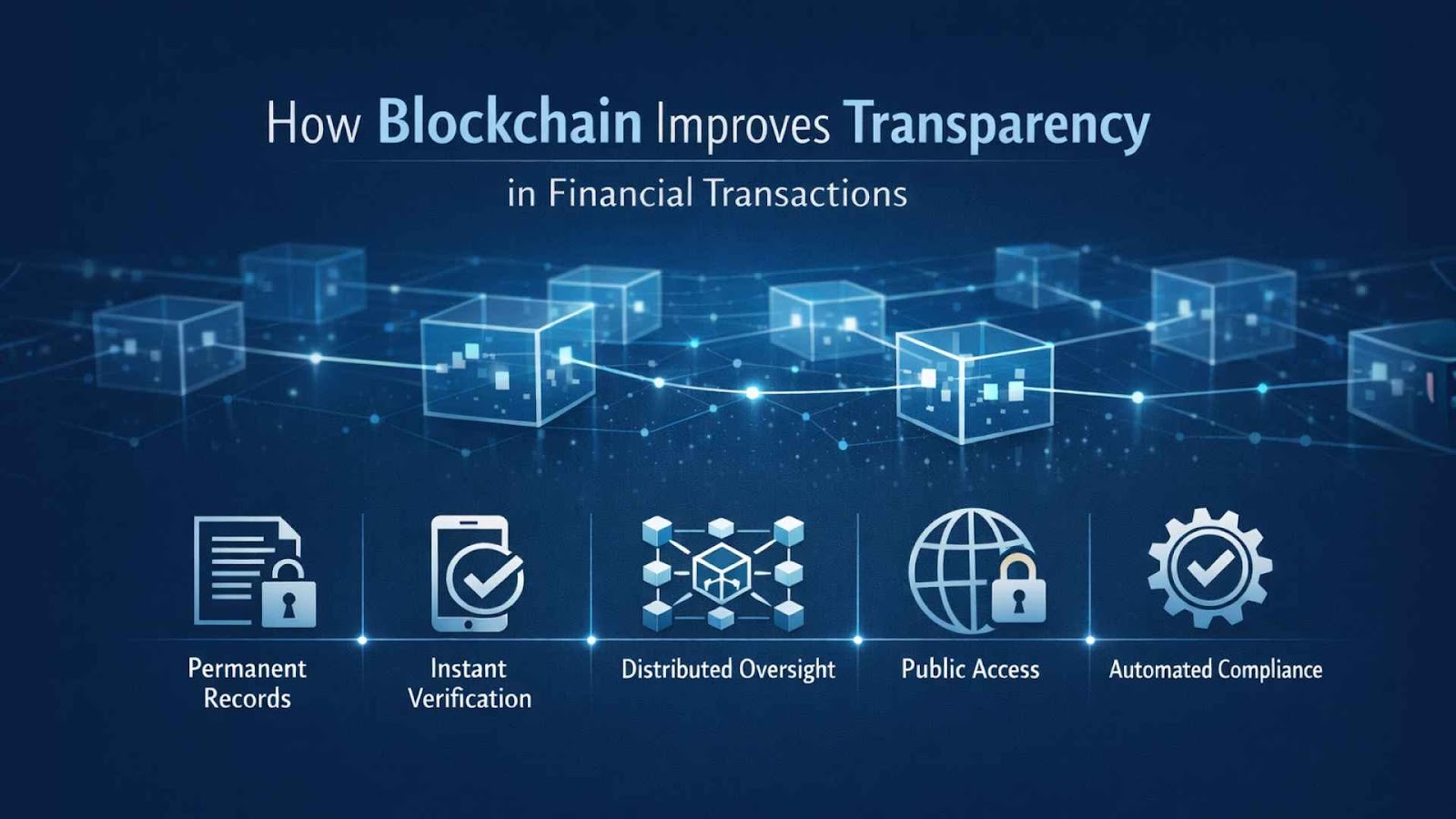
- Permanent Records: Each blockchain entry is immutable and permanent, and it offers a veritable audit trail.
- Instant Verification: Regulators, auditors, and financial institutions can confirm transactions immediately rather than waiting for end-of-day reports.
- Distributed Oversight: Networks reduce reliance on single authorities, lowering the risk of manipulation.
- Public Access: Some blockchain systems are publicly accessible or semi-publicly accessible, where the stakeholders can directly monitor funds or assets.
- Automated Compliance: Reporting capabilities allow accurate and regular data to be delivered to all stakeholders, which simplifies compliance with regulatory requirements.
Can Blockchain Reduce Fraud in Financial Transactions?
Global markets still face major challenges where identity theft, false invoices, and unauthorized transfer are set as the most common forms of financial fraud. Traditional banking systems often rely on central databases and intermediaries, which can create opportunities for scammers. Blockchain manages to address these vulnerabilities by integrating high-level cryptography security, decentralized verification, and an automated compliance engine. This creates a system whereby transactions are safe, transparent, traceable and nearly impossible to alter unnoticed.
- All transactions are encrypted using the latest encryption systems, and the encryption is so advanced that third parties will find it very hard to alter or access data.
- The validation of transactions is done by several participants on the network meaning that no one participant can add fraudulent entries to the network without detection.
- The legal and procedural requirements can be directly integrated into blockchain systems via smart contracts, automatically enforced.
- The data can only be accessed and updated by verified participants, and the risk of unauthorized intrusion is reduced.
- Real-time monitoring and validation of suspicious or unusual activity raises a red flag immediately and the institutions can react before it is too late
What Opportunities Does Blockchain Create for Investors and Businesses?
The blockchain technology is revolutionizing the financial and business environment by making it incredibly efficient and transparent with access to new opportunities. As an investor, it gives access to new classes of assets and portfolio management intelligence. To the businesses, it makes it easier to operate and improves the cash flow and accessibility to markets and financial tools that were not easy to access before.
Opportunities for Investors
- Access fractional ownership and tokenized assets to spread risk and explore new digital financial classes.
- Fewer intermediaries and automation help to cut costs and simplify the process of investment.
- Gain opportunities in programmable money, tokenized bonds, and other cutting-edge digital assets.
Opportunities for Businesses
- Faster settlements and transparent workflows improve cash flow and operational efficiency.
- Explore innovative financial products and reach underserved markets via micro-financing and peer-to-peer lending.
- Low-cost cross-border transactions and real-time insights help manage financial risks and enable international growth.
The Increasing Role of Smart Contracts in Financial Operations
Smart contracts are transforming financial operations by automating agreements directly on blockchain networks. These self-executing contracts remove the need for intermediaries, reduce manual errors, and ensure that transactions are executed precisely according to predefined rules. By embedding compliance and operational logic into smart contracts, businesses and investors can achieve faster settlements, improved accuracy, and greater transparency. These systems often rely on custom blockchain development services for implementation.
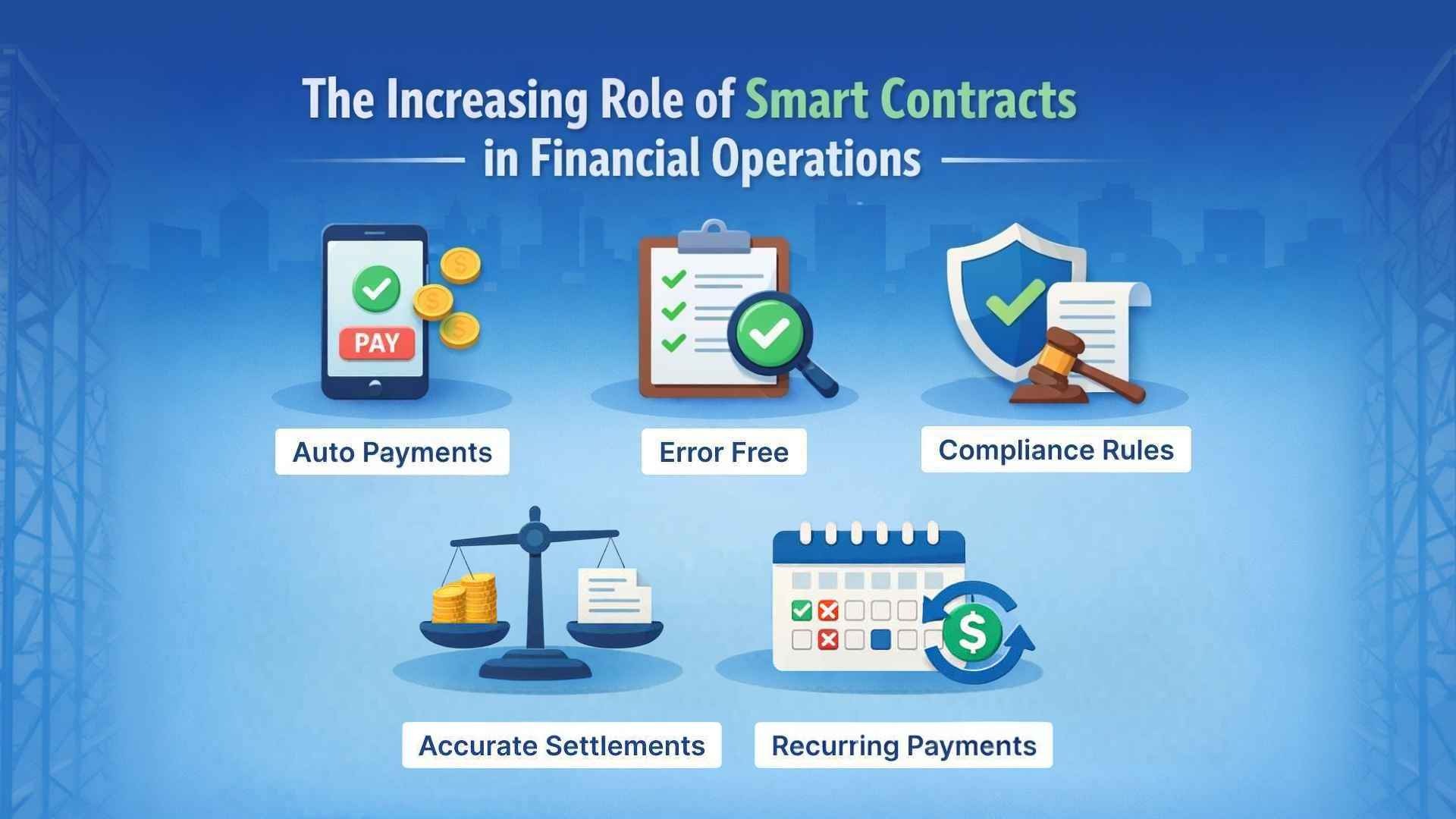
- Auto Payments: Payments are executed automatically once contract conditions are satisfied, eliminating delays and manual processing.
- Error-Free: Contracts operate without manual intervention, saving time and reducing the risk of human error.
- Compliance Rules: Regulatory and compliance rules can be embedded directly into smart contracts, ensuring automatic adherence to legal requirements.
- Accurate Settlements: Blockchain ensures financial transactions and complex contracts are completed correctly, reducing the chance of mistakes.
- Recurring Payments: Recurring payments, such as subscriptions or service fees, are processed seamlessly without delays.
Smart contracts are also being used in trade finance, insurance, syndicated loans, and decentralized finance, where they provide greater efficiency, transparency, and reliability in the context of contemporary financial services.
How Is Blockchain Changing Investment and Trading in 2026?
Blockchain removes the limitations of traditional systems by digitizing assets and enabling secure peer-to-peer trading, creating a more efficient, accessible, and transparent marketplace for investors around the world.
Blockchain can be used to tokenize such traditional assets as real estate, bonds, and commodities, allowing ownership of the asset through a small fraction, as well as expanding investment access to a wider group of people.
Decentralized exchanges (DEXs) facilitate peer-to-peer trading without relying on central intermediaries, while real-time portfolio management tools give investors instant visibility into holdings, risk, and liquidity.
For insights on how enterprises are digitizing assets in 2026, read our blog: What Is RWA Tokenization and Why Enterprises Are Adopting It in 2026.
Conclusion
Blockchain is transforming the financial market by making transactions faster, more secure, and transparent. Smart contracts, tokenized assets, and decentralized trading are assisting investors and businesses to become more efficient and open up new opportunities. It is promoting innovation and linking markets in the world. IR Solutions offers such services as blockchain integration, smart contract development, and managing digital assets so that organizations can use these innovations and survive in the changing financial environment.
Frequently Asked Questions
What is the primary impact of blockchain on financial transparency?
Blockchain provides real-time, immutable records of transactions that can be accessed by a variety of parties, bypassing the need for intermediaries and enhancing accountability.
How does blockchain help prevent financial fraud?
Through cryptographic security, decentralized validation, and automated compliance with smart contracts, blockchain makes transactions safe, traceable, and virtually tamper-proof.
What are tokenized assets, and how do they benefit investors?
Tokenized assets are digital representations of real-world assets like real estate or stocks. They let investors buy fractions, access global markets, and trade more efficiently.
How do smart contracts improve financial operations?
Smart contracts are the automation of agreements, rules of compliance, minimizing human error, and accelerating and increasing reliable settlements without an intermediary.
How can businesses leverage blockchain for growth?
Businesses can streamline tech operations, create innovative financial products, enhance liquidity through faster settlements, and reach emerging markets through decentralized finance solutions.