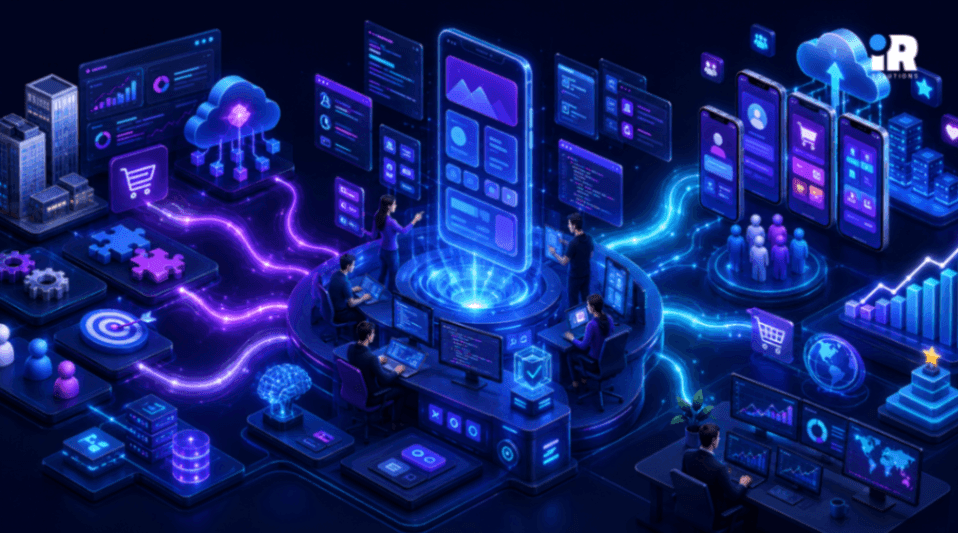



As technology continues to evolve rapidly, choosing the right technical stack can make or break your mobile app. Whether you are building in-house or working with a mobile app development company, the technology you select directly affects your app performance, market speed, scalability and long-term costs. A clear and simple approach to understanding the technical stack can make the decision-making process easier without unnecessary jargon, so you can move forward with confidence.
What is a Mobile App Tech Stack?
A technical stack consists of all the programming languages, frameworks, databases and tools you will use to create and run your application. It also includes the front end which is the total components that the users view and use to create the general look, sensation and experience. It also comprises the back end, in which business logic, APIs, authentication, and data management occur, and in which your app is running efficiently, securely, and smoothly behind the scenes.
Besides these base layers, the stack is also constructed with other development tools that contain CI/CD pipelines, testing devices, and version management systems and other support libraries. The tools assist developers in working together, testing features, ensuring the quality of the code, and releasing updates in a short time. All these aspects come together to provide a solid foundation upon which your application is built, its functionality and its ability to increase with the rise in your demands.
Why the Right Tech Stack Matters
An appropriate tech stack will guarantee quicker releases, faultless integrations, robust security, scalable development, and economic effectiveness even as your application stays ahead of the competition.
1. Faster Launch
The correct tech stack enables you to create and deploy apps at a faster rate. It will keep the development process uninterrupted and less time-consuming, allowing your company to stay ahead of its competitors. By making the correct decisions, the teams can focus on creating features rather than combating technical challenges.
2. Easy Integration
A stack today enables you to easily integrate your application with APIs, cloud services and tools. This will not be a pain when it comes to adding new features or connecting systems. An app that is compatible with API, Cloud services, or tools becomes more valuable and helpful for the users.
3. Stronger Security
The tech stack is designed to support security, ensuring that the information of the users and businesses is saved. Reliability is an aspect that must be considered when choosing technologies to avoid vulnerabilities and to be sure that your app meets industry standards. This earns the respect of your users and secures your business.
4. Scalable Growth
The correct technologies enable easier growth when your business is scaling. You are able to support more users, introduce new features, and scale up without ripping your app open. This will enable your business to expand at a steady rate without any big headaches.
5. Lower Costs
A proper technology stack saves time and money by minimizing maintenance and fixes. So that you will have more time to concentrate on innovation and expanding your business, because sophisticated technology decisions today ensure a costly issue tomorrow.
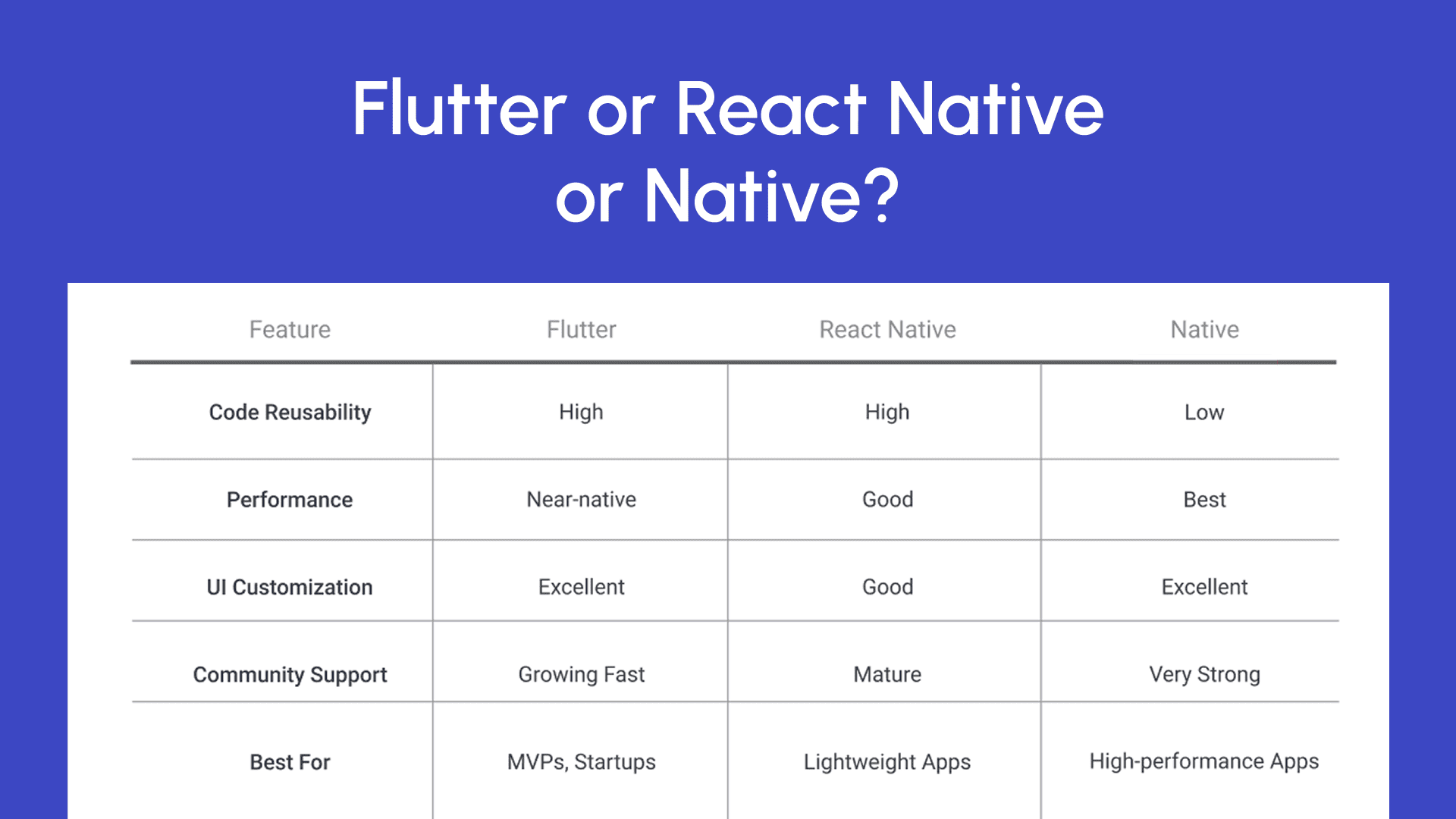
What is the difference between Flutter, React Native, and Native apps?
Flutter, React Native, and Native applications each have their advantages. Flutter has the advantage of code reuse and flexible UI, which makes it perfect in startups. React Native helps build mobile apps quickly and efficiently, making it a good choice for projects that are not too complex. Native apps provide the best performance but cannot be used to develop a platform; thus they are suitable for complicated projects. Select the best method that aligns with your application, schedule, and long-term objectives.
Can Right Tech Stack Help Reduce Long-Term Costs?
The right tech stack can save your business significant time and money by reducing costly issues and ongoing maintenance. A stack with proper planning means that your app remains stable, secure and easily updated as your business expands. It also enables your team to focus on developing new features rather than addressing technical issues. It also helps to integrate easily with other systems and ensure that an app will be able to process an increased number of users in the long run. Investing in proper technology initially avoids future pains and keeps the long-term objectives on track.
- Reduces time wastage in troubleshooting and correcting errors.
- Fewer resources are required for maintenance and support.
- Reduces the chances of costly rewrites or redesigns of the code.
- Maintains the app in anticipation of its expansion and updates.
View our related blog: Is React Native Still the Best Choice for Modern App Development?
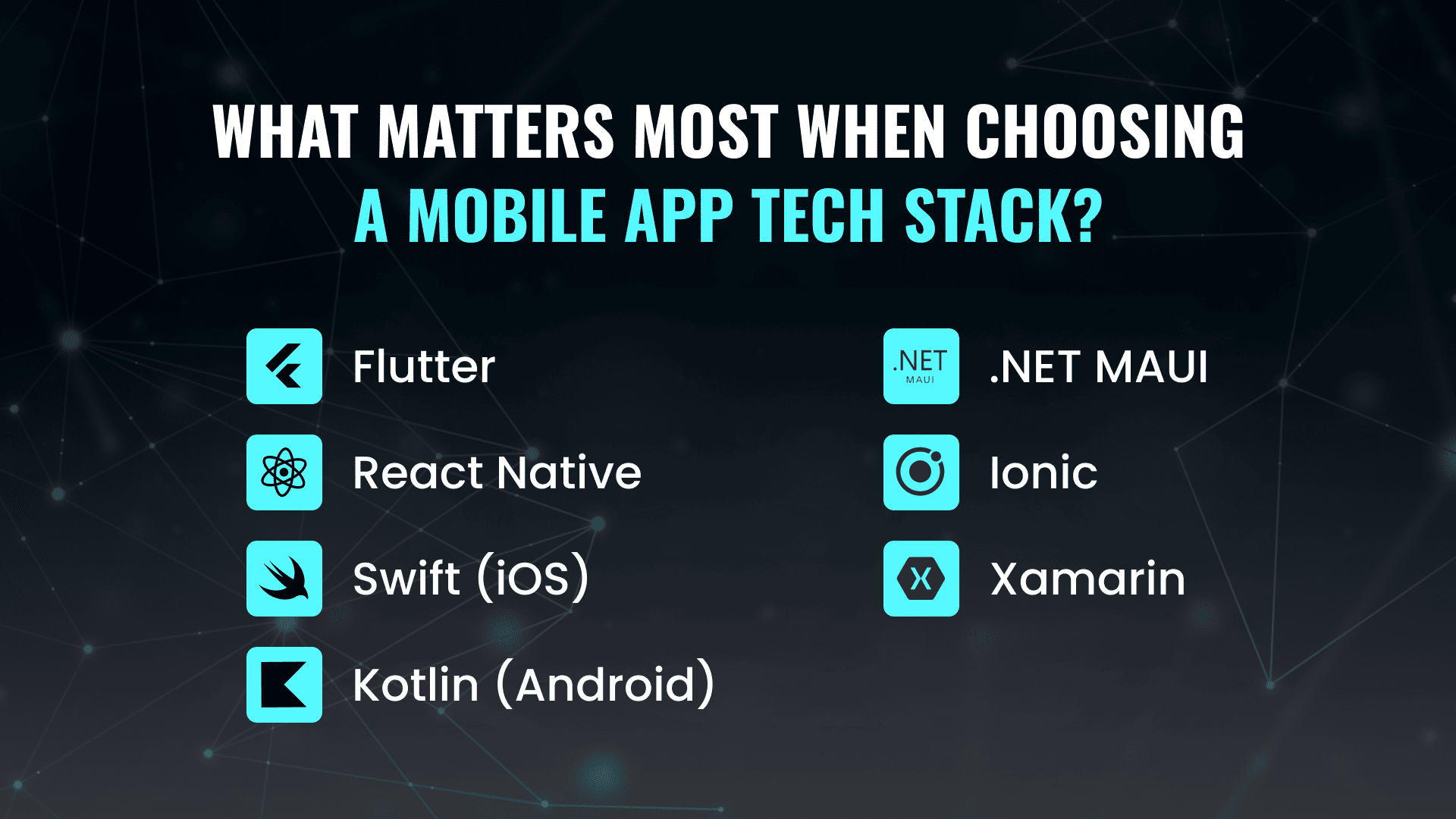
What Matters Most When Choosing a Mobile App Tech Stack?
Mobile app tech stacks are designed to deliver reliable, efficient, and feature-rich applications across platforms.
Flutter
Flutter is an app that has a single codebase between iOS and Android, so it is faster and more consistent to develop. It provides a seamless execution and clean interface, which is appropriate when startups and minimal viable products require a fast launch.
React Native
React Native is based on JavaScript and can create applications on both big platforms. It has a huge developer base and is supported on apps that do not require full native development.
Swift (iOS)
iOS apps are built using Swift. It is very powerful, well-written and has all the access of the Apple tools and is a great choice as far as it goes when it comes to feature-rich or secure applications.
Kotlin (Android)
The language of choice is Kotlin to develop Android. It also maintains code as simple, stable and easy to maintain, and is therefore suited to applications that require running smoothly and have solid Android support.
.NET MAUI
NET MAUI is a framework that assists in the development of apps on iOS, Android, Windows, and macOS with a single codebase. It is effective with the firms that use Microsoft products or require a single development strategy.
Ionic
Ionic is based on web technologies and is written in HTML and CSS, which means that it can be developed and updated quickly. It works with simple apps, prototypes, or internal tools that do not necessarily need a lot of native functionality.
Xamarin
Xamarin is used to develop C#-based apps that have almost native performance. It can be used by companies in the Microsoft ecosystem as well as those that would like to share platform-independent code.
Security Considerations in Mobile App Development
Choosing the right tech stack in mobile app development is a crucial consideration that can ensure the security of data. Various frameworks, programming languages, and libraries have different degrees of built-in security functionality, which affects the storage, transmission, and access of user data. Certain sets of technologies have strong encryption protocols, secure authentication, and secure storage solutions, which make it simpler to secure confidential data, including personal information, payment data, and user logins.
In addition, the tech stack is also relevant to regulatory compliance, which is essential in apps that deal with personal information or financial information. Some frameworks make it easy to comply with standards such as GDPR, HIPAA, or PCI-DSS and allow businesses to escape legal issues and create confidence in their users. When selecting a stack with a security and compliance focus, one can incorporate the attributes of end-to-end encryption, secure APIs, and periodic security patches, and be certain that both the application and the information of the users are secure.
Conclusion
Choosing the right tech stack is a strategic decision that shapes the success of a mobile app. The technologies selected influence performance, security, scalability, and long-term costs. Understanding the strengths and limitations of options like Flutter, React Native, or native development helps make informed choices that align with business goals. A well-chosen tech stack enables faster development, seamless integration, strong security, and steady growth, creating a reliable and user-friendly app. Investing time in selecting the right stack today avoids challenges and expenses in the future. With IR Solutions, strategic tech choices become seamless, high-performing mobile applications.
Frequently Asked Questions
What does a tech stack include?
It includes all the tools, programming languages, and frameworks needed to build and run an app.
How does the tech stack affect app performance?
It determines speed, stability, and how smoothly the app runs for users.
Can the right tech stack support future growth?
Yes. A good stack makes it easy to add new features and handle more users over time.
What problems can arise from choosing the wrong tech stack?
It can slow development, increase costs, cause security risks, and make maintenance harder.
How is the best tech stack selected for an app?
Decisions should consider the app’s purpose, target platforms, development timeline, and long-term goals.