




Key Takeaways
- Foundry is a strong choice for Solidity-focused development, while Hardhat 3 works well for teams already using TypeScript.
- OpenZeppelin Contracts provides reusable implementations for common standards, access control, and upgrade patterns, reducing the need to write sensitive logic from scratch.
- Unit tests are only one layer of testing. Fork, fuzz, and invariant testing help uncover integration issues and unexpected contract behaviour.
- Security tools such as Slither, Aderyn, Echidna, and Medusa provide different levels of automated testing and analysis, while formal verification tools add stronger assurance for critical contracts.
- Deployment is not the end of the development process. Contract verification, monitoring, alerts, and a clear incident response plan are important once a contract is live.
- Production contracts should use stronger ownership controls, such as Safe multisig and timelocks, instead of relying on a single private key.
Smart contract development depends on more than writing Solidity code. Developers need frameworks for building, testing tools for finding edge cases, security tools for detecting vulnerabilities, and reliable systems for deployment and monitoring. The right combination can improve development speed while reducing costly mistakes.
Foundry and Hardhat 3 are strong choices for EVM development, while Remix works well for learning and quick prototypes. OpenZeppelin provides reusable contract components, while Slither, Aderyn, Echidna, Medusa, Halmos, and Certora offer different levels of security testing and verification.
After deployment, tools such as Tenderly, Etherscan, Blockscout, Sourcify, and OpenZeppelin Monitor support debugging, verification, and monitoring. Projects built on Solana, Move, Vyper, or Starknet require different toolchains, so the right choice ultimately depends on the project, team, security needs, and target blockchain.
What Are Smart Contract Development Tools?
Smart contract development tools are the frameworks, libraries, testers, and services used to ship blockchain code safely.
They cover every stage of the job, from the first line of Solidity to production alerts. A framework compiles and tests your contracts, while a library provides audited building blocks you can reuse. Analysis tools hunt for bugs, and monitoring tools tell you when something strange happens on-chain.
Before choosing the right development and testing tools, it also helps to understand how a smart contract moves from written code to executed transactions. This step-by-step guide to how smart contracts work explains that process in more detail.
Why the Right Tools Matter
Contract code is public, permanent, and often holds money, which raises the cost of every small mistake. You cannot patch a deployed contract the way you patch a web server on a Friday night.
That single fact explains why this ecosystem leans so heavily on testing, static analysis, and formal verification. Good tooling does not make you a better engineer, but it does catch problems while fixes are still cheap.
Best Smart Contract Development Tools
The best tool depends on what you need to build, test, and maintain. This comparison highlights where each option fits, from Solidity development and security testing to deployment and production monitoring.
Tool | Category | Best For | Cost |
Foundry | Development framework | Solidity-first development, testing, fuzzing, audit work | Free, open source |
Hardhat 3 | Development framework | TypeScript workflows, application integration, configurable networks | Free, open source |
Remix | IDE | Learning, prototypes, quick contract work | Free |
OpenZeppelin Contracts | Contract library | Token standards, access control, upgrades | Free, open source |
Slither | Static analysis | Broad vulnerability detection and CI | Free, open source |
Aderyn | Static analysis | Fast feedback and pull request review | Free, open source |
Echidna | Fuzz testing | Property-based and invariant testing | Free, open source |
Medusa | Fuzz testing | Stateful and parallelized fuzzing | Free, open source |
Halmos | Formal verification | Bounded symbolic execution | Free, open source |
Kontrol | Formal verification | Formal reasoning about Solidity systems | Free, open source |
Certora | Formal verification | High-value contract verification | Commercial |
Tenderly | Debugging and monitoring | Simulation, tracing, debugging, alerts | Free tier, paid plans |
OpenZeppelin Monitor / Relayer | Operations | Monitoring and transaction automation | Check current pricing |
Etherscan | Explorer and verification | Contract verification and transaction analysis | Free |
Blockscout | Explorer and verification | Open-source contract and chain analysis | Free |
Sourcify | Contract verification | Decentralized source verification | Free |
Safe | Multisig | Production ownership and admin control | Free, gas costs |
Tools by Development Stage
A practical toolchain usually combines several tools rather than relying on one platform. The table below shows which tools fit each stage, from writing and testing contracts to deployment, verification, and ongoing monitoring.
Development Stage | Recommended Tools |
Write | VS Code with Solidity tooling, Remix for quick work |
Build | Foundry, Hardhat 3 |
Standard contracts | OpenZeppelin Contracts, Contracts Wizard |
Unit testing | Foundry, Hardhat 3 |
Fuzz and invariant testing | Foundry, Echidna, Medusa |
Formal verification | Halmos, Kontrol, Certora |
Static analysis | Slither, Aderyn, Solhint |
Gas profiling | forge snapshot, Hardhat gas tools, Tenderly |
Debugging | Tenderly, Foundry traces, Hardhat stack traces |
CI | GitHub Actions with tests and security checks |
Deployment | Foundry scripts, Hardhat Ignition |
Verification | Etherscan, Blockscout, Sourcify |
Monitoring | Tenderly, OpenZeppelin Monitor, The Graph |
Core Smart Contract Development Tools
These tools form the base layer that most professional EVM teams reach for today.
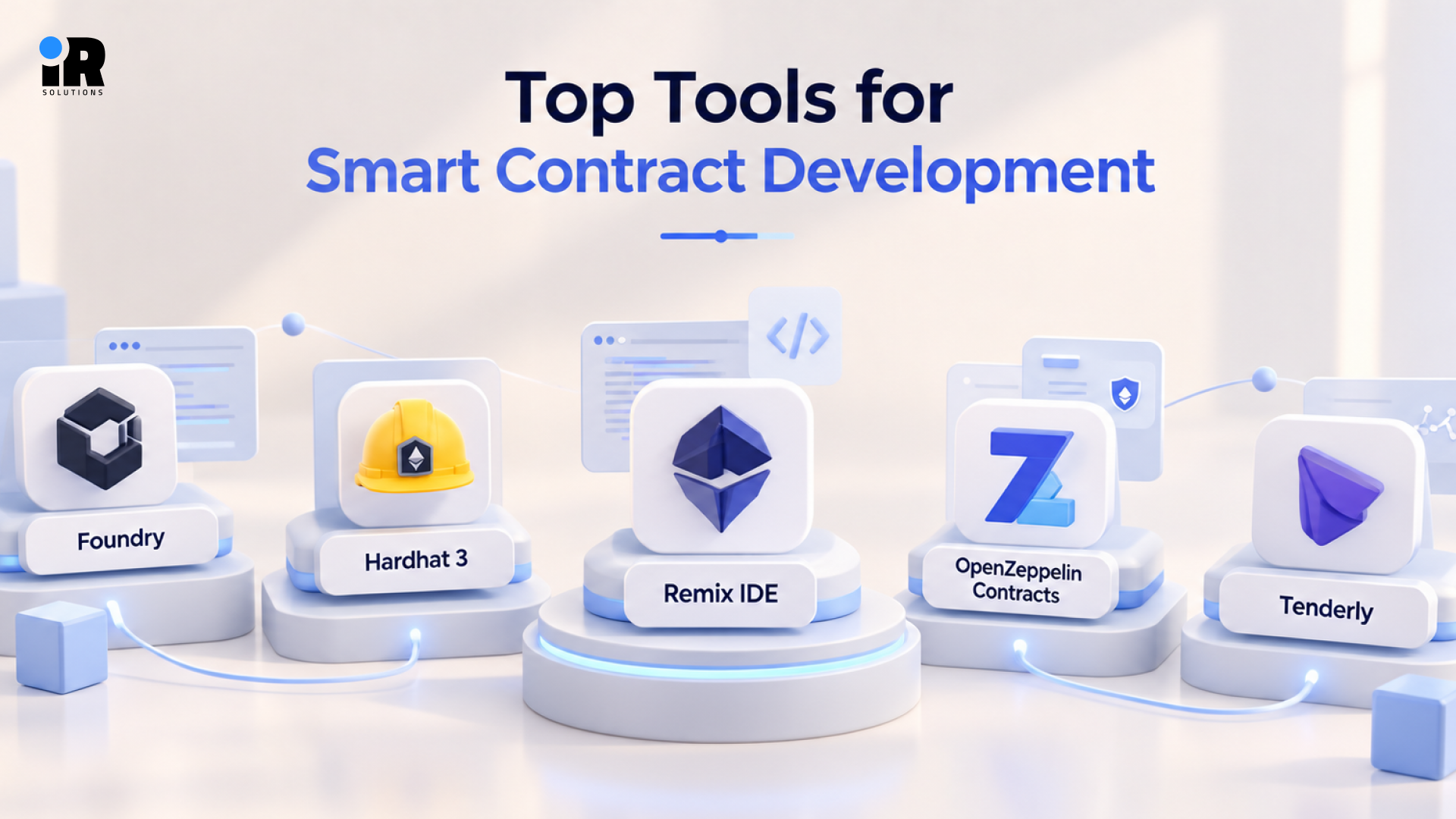
Foundry
Foundry is a fast Solidity-focused toolkit that lets you write contracts and tests in one language. Its test runner is quick enough that you can run the full suite on every save. Built-in fuzzing, invariant testing, and call traces make it a favourite among auditors and security teams.
The trade-off is that scripting and application glue code feel less natural than they do in JavaScript. Pick Foundry when your team writes Solidity daily and cares about deep testing and gas detail.
Hardhat 3
Hardhat 3 suits teams building full applications where contracts sit beside frontends, indexers, and backend services. You get a large plugin ecosystem, flexible network configuration, and TypeScript tests that read well. Hardhat Ignition also handles complex multi-step deployments in a way that is easy to review.
Compared with Foundry, test runs can feel slower, though the developer experience for integration work is stronger. Choose Hardhat 3 when JavaScript and TypeScript already run through the rest of your product stack.
Foundry vs Hardhat: Which Should You Choose?
Foundry and Hardhat 3 are both strong options for EVM smart contract development, but they suit different workflows. Foundry is ideal for Solidity-focused teams that prioritize fast testing, fuzzing, and detailed traces. Hardhat 3 is a better fit for TypeScript teams building applications where smart contracts need to connect closely with frontend and backend services.
Factor | Foundry | Hardhat 3 |
Best for | Solidity-focused development and protocols | TypeScript teams and full-stack DApps |
Testing | Solidity tests, fuzzing, invariants, traces | TypeScript/Solidity testing |
Speed | Very fast builds and tests | Flexible development workflow |
Deployment | Foundry scripts | Hardhat Ignition |
Language | Solidity-focused | TypeScript/JavaScript + Solidity |
Debugging | Detailed execution traces | Stack traces and plugins |
Choose Foundry if your team works mainly in Solidity and needs fast testing, fuzzing, invariant testing, or detailed execution traces. It is particularly useful for DeFi, protocol, and security-focused projects.
Choose Hardhat 3 if your project relies heavily on TypeScript or JavaScript and requires close integration with frontend, backend, or deployment workflows.
Remix IDE
Remix is a browser-based IDE that removes setup work completely and runs a contract in seconds. It is the fastest way to learn Solidity, test a small idea, or debug something on a testnet. You get a compiler, a debugger, plugins, and direct wallet connection without installing anything locally.
The limits show up on bigger projects, where version control, CI, and repeatable builds really matter. Use Remix for teaching, demos, and quick checks, then move serious work into Foundry or Hardhat.
OpenZeppelin Contracts
OpenZeppelin Contracts is one of the most widely used Solidity libraries for reusable, security-focused contract components.
- Token standards: Ready implementations of ERC 20, ERC 721, and ERC 1155 with sensible default behaviour.
- Access control: Ownable and role-based patterns that keep privileged functions organised and easy to audit.
- Governance modules: Voting, timelocks, and proposal logic for projects that hand control to token holders.
- Security utilities: Reentrancy guards, pausable logic, and safe math helpers that prevent well-known failures.
- Contracts Wizard: A web generator that produces a starting contract from the same library in one click.
- Upgrades plugin: Proxy patterns and storage checks for teams that plan to upgrade contracts later.
Writing your own token logic from scratch adds risk without adding value for almost every project. Reused code that thousands of teams have already attacked is simply safer than fresh code.
Tenderly
Tenderly gives you simulation, tracing, and monitoring in one place, which shortens painful debugging sessions. You can replay a failed transaction, see exactly which line reverted, and test a fix before deploying.
Alerts and dashboards then carry that visibility into production, where guesswork gets expensive. Reach for Tenderly when a transaction fails on a live network and local tests refuse to reproduce it.
Smart Contract Testing Tools
Contracts that hold user funds need far more than a handful of happy path unit tests.
Unit and Fork Testing
Unit tests check single functions, while fork tests run your code against real state from a live chain.
Forking matters because your contract will interact with protocols you did not write or control. Testing against real balances, oracles, and pool states catches integration bugs that mocks quietly hide.
Fuzz and Invariant Testing
Fuzzing throws random inputs at your functions, hunting for the cases no human would ever type.
Invariant testing goes further by checking rules that must always hold, no matter the sequence. A good invariant might state that total user deposits always equal the contract balance. These tests find the strange multi-step attacks that unit tests rarely uncover on their own.
Integration and Coverage
Integration tests confirm that your contracts, scripts, and deployment setup actually work together as one system.
Coverage reports then show which branches your tests never touched, which is where bugs usually hide. Treat coverage as a map of blind spots rather than a score you need to maximise.
Smart Contract Security and Auditing Tools
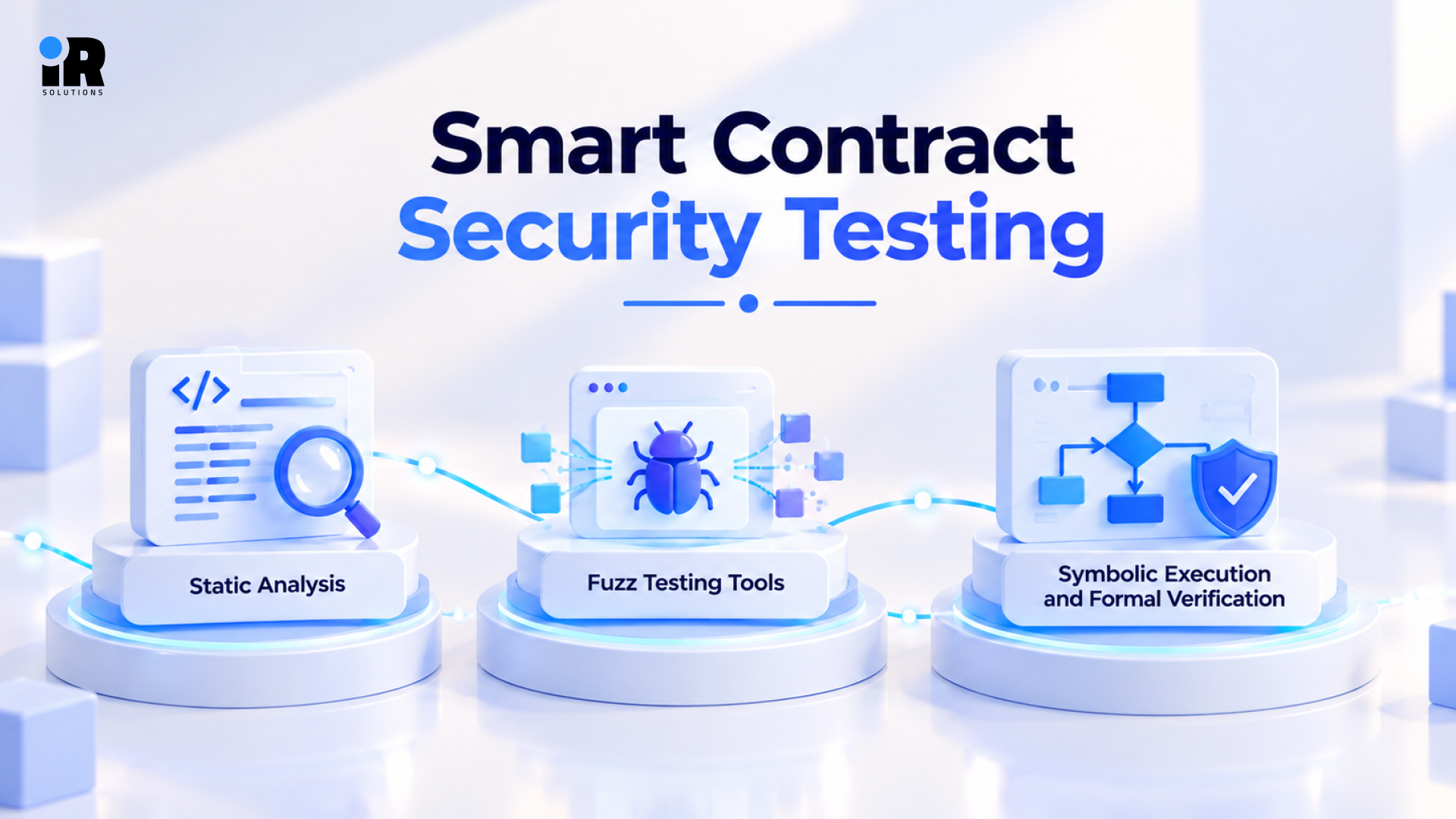
Security tooling works in layers, and each layer catches a different class of problem.
Even with automated security tools, some critical issues require careful review before deployment. To understand the problems that can still slip through testing, see this guide on critical mistakes in smart contract development.
Static Analysis
Static analysers read your code without running it and flag patterns known to cause trouble. Slither offers the widest detector set and fits neatly into continuous integration for every commit.
Aderyn is built for speed, which makes it useful for quick pull request feedback. Solhint handles style and best practice rules that keep a codebase consistent across many contributors.
Fuzz Testing Tools
Dedicated fuzzers push much harder than a standard test suite and often run for hours. Echidna focuses on property-based testing and has a long track record in professional audits.
Medusa adds stateful and parallel fuzzing, so it explores deeper sequences in less time. Chimera helps teams structure and share fuzzing setups across different engines without rewriting harnesses.
Symbolic Execution and Formal Verification
These tools try to prove that a property holds for every possible input, not just sampled ones. Mythril uses symbolic execution to explore many paths through bytecode and report reachable issues. Halmos runs bounded symbolic execution directly on your existing Solidity tests, which lowers the entry cost.
Kontrol supports formal reasoning about complete Solidity systems for teams that need stronger guarantees. Certora is commercial and typically appears on high-value protocols where a single bug is unacceptable.
Gas Optimization and Profiling
Gas costs shape user experience, so profiling belongs in your workflow rather than a final cleanup phase. Foundry provides forge snapshot, which records gas usage per test and shows changes between commits. Hardhat gas reporters do similar work and print a per-function table after every run.
Tenderly adds visual gas analysis on real transactions, which helps when the expensive step is not obvious. Measure first, because assumptions about what costs the most are wrong more often than not.
Smart Contract Security in CI
Running security checks automatically as part of the development pipeline helps catch vulnerabilities, unexpected gas increases, and build issues before code reaches production.
- Security gates: Run Slither and Aderyn on every pull request and block merges on new findings.
- Gas checks: Compare gas snapshots automatically and comment on the pull request when costs jump.
- Scheduled runs: Long fuzzing and invariant campaigns run nightly, because they take too long inline.
- Build matrix: Test against several Solidity versions to catch compiler-specific behaviour before deployment.
- Verification step: Add contract verification to your release workflow so published code always matches source.
GitHub Actions handles all of this well, and most tools ship an official action or container.
Smart Contract Deployment and Key Management
Deployment is the moment when a mistake becomes permanent, so the process deserves real discipline.
Deployment Tools
Foundry scripts give you deployment logic written in Solidity and tested like any other code. Hardhat Ignition handles multi-contract deployments with dependency ordering and safe resumption after a failure.
Both approaches beat manual deployment, which is hard to repeat and impossible to review properly.
Production Key Management
A single private key controlling a live protocol creates a significant avoidable risk. Safe multisig spreads control across several signers, so no one person can move funds alone.
Adding a timelock gives users warning before admin changes take effect, which builds real trust. Hardware wallets should hold every signer key, and deployment keys should never live in environment files.
Blockchain Explorers and Contract Verification
Verification publishes your source code so anyone can confirm the deployed bytecode matches what you wrote. Etherscan is the default explorer for Ethereum and handles verification, transaction analysis, and read-write interfaces. Blockscout is open source, supports many chains, and often serves as the explorer for newer networks.
Sourcify takes a decentralized approach and stores verified metadata that other tools can consume automatically. Unverified contracts look suspicious to users, and most integrations will simply skip them without asking. Verify every contract as part of deployment rather than treating it as an optional extra step.
Smart Contract Monitoring and Incident Response
Once a smart contract goes live, continuous monitoring helps detect unusual activity, unexpected state changes, and privileged actions before they develop into larger incidents.
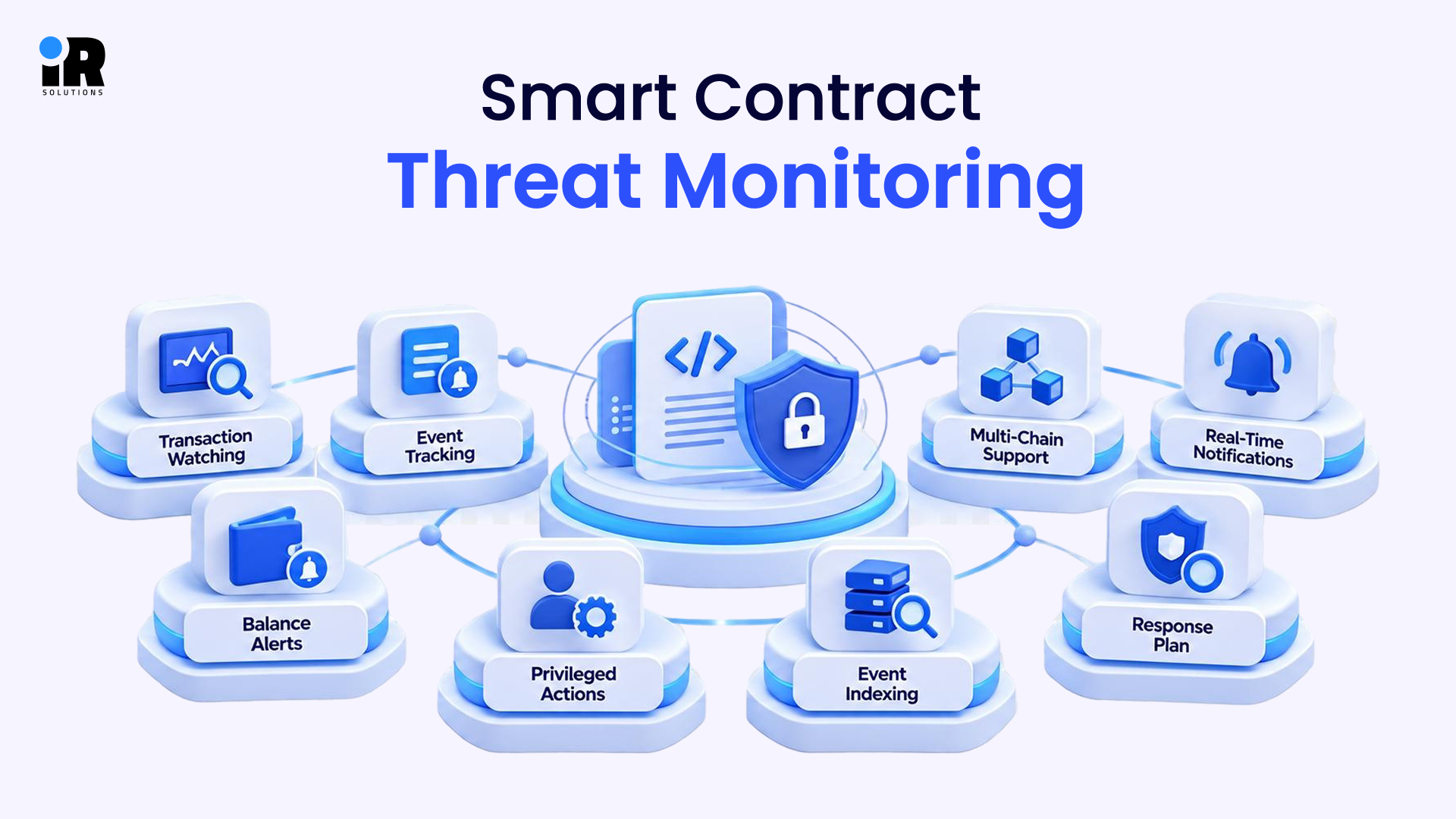
- Transaction watching: Track calls to your contracts and flag anything with unusual size or frequency.
- Event tracking: Subscribe to key events so state changes reach your team before users notice them.
- Balance alerts: Watch contract balances and trigger alerts when funds move outside expected ranges.
- Privileged actions: Alert immediately whenever an owner or admin function runs on a live contract.
- Event indexing: The Graph turns raw chain events into queryable data for dashboards and analytics.
- Response plan: Document who pauses the protocol, who signs, and how you communicate during an incident.
Tenderly and OpenZeppelin Monitor both cover the alerting side, and Relayer can automate defensive transactions.
Beyond EVM: Other Smart Contract Ecosystems
Not every project targets Ethereum, and other chains have their own mature toolchains worth knowing.
Solana
Solana programs are usually written in Rust, with Anchor providing structure and reducing boilerplate significantly.
The account model differs sharply from the EVM, so most Solidity habits do not transfer cleanly.
Move Ecosystems
Aptos and Sui use the Move language, which was designed with digital asset safety in mind.
Move treats assets as resources that cannot be copied or lost accidentally, which prevents whole classes of bugs.
Vyper and Starknet
Vyper runs on the EVM and offers a simpler, more readable alternative to Solidity for some teams.
Starknet uses Cairo and targets validity proofs, which changes both the tooling and the mental model. Both options carry smaller ecosystems, so weigh library availability and hiring before you commit.
How to Choose the Right Smart Contract Development Tools
Your stack should follow your constraints rather than whatever the loudest developers recommend online. If you are building a production-grade protocol and need experienced engineers to handle development, testing, and deployment, working with dedicated smart contract developers can help you choose and implement the right toolchain.
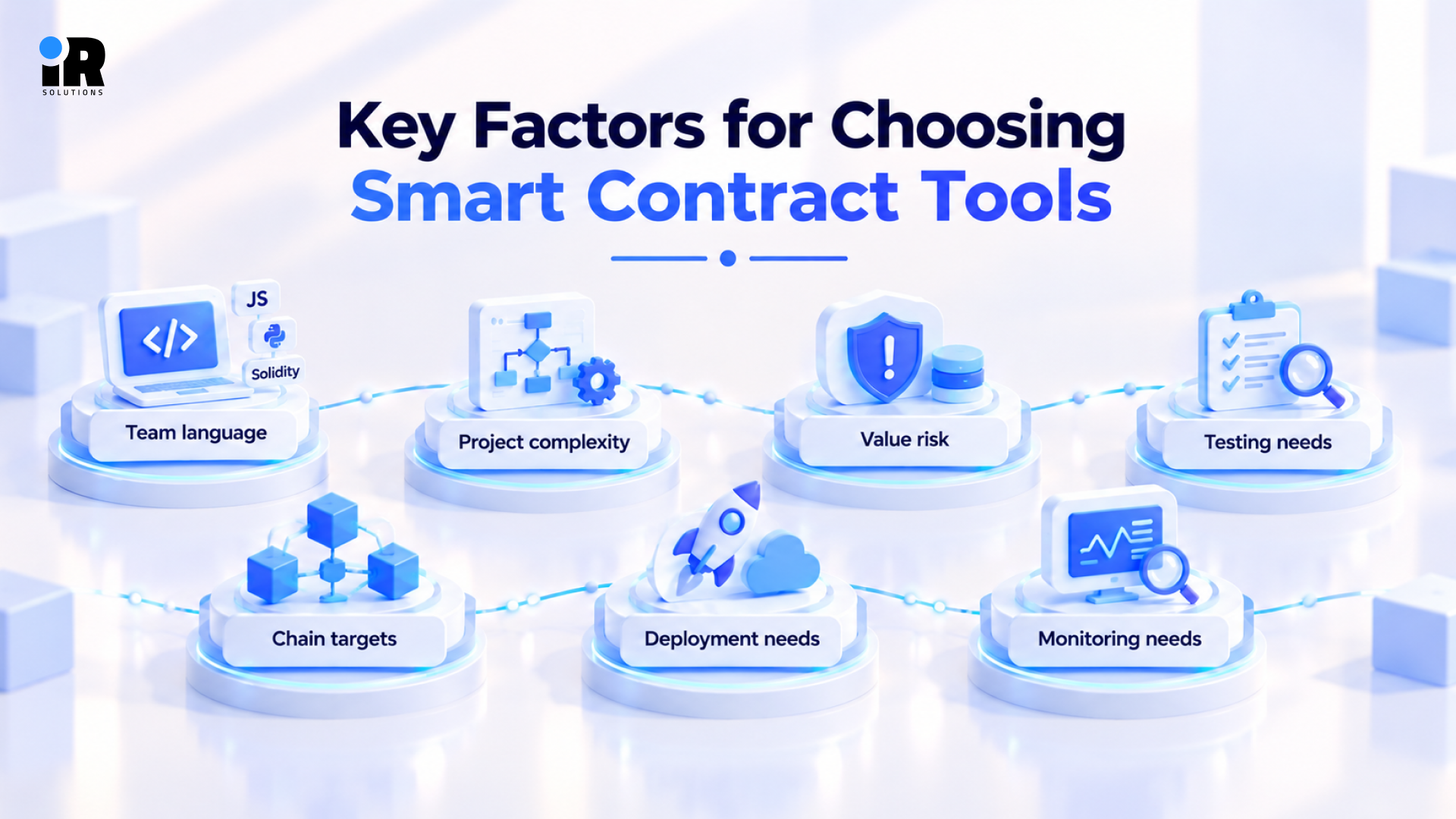
- Team language: Rust and Solidity backgrounds lean toward Foundry, while JavaScript teams often prefer Hardhat.
- Project complexity: Simple tokens need little tooling, while lending or derivatives protocols need layered testing.
- Value risk: The more money your contracts hold, the more verification and monitoring you should fund.
- Testing needs: Decide early whether fuzzing and invariants are required, since they shape your architecture.
- Chain targets: Multichain plans favour tools with wide network support and consistent deployment scripts.
- Deployment needs: Frequent releases justify investing in scripted, reviewable deployment pipelines from the start.
- Monitoring needs: Public protocols need alerts and an incident plan, while internal tools may not.
Recommended Smart Contract Development Stack
These four stacks cover most situations, so pick the closest match and adjust from there. Choosing the right tools is only part of the process. The developers using them also need experience with testing, security, deployment, and the target blockchain. If you are planning to build a production smart contract system, this guide to hiring smart contract developers explains what skills and experience to look for.
Learning and Prototype Stack
Remix with the OpenZeppelin Contracts Wizard and a testnet is enough to learn and demonstrate ideas.
Standard EVM Stack
Foundry or Hardhat 3, plus OpenZeppelin, Slither, and verified deployment, covers most production applications well.
Security-Focused Stack
Add Aderyn, Medusa, or Echidna, Tenderly, and a Safe multisig to the standard stack above. This combination adds deeper vulnerability detection, transaction debugging, and stronger controls over production contracts.
Enterprise Stack
Layered testing, formal verification for critical invariants, and CI security gates sit on top of everything already listed. Add Tenderly or OpenZeppelin Monitor, a Safe multisig, timelocked administration, and at least one external audit.
Conclusion
Choosing the right smart contract development tools depends on the project’s complexity, security requirements, team skills, and target blockchain. Foundry and Hardhat 3 provide strong foundations for EVM development, while OpenZeppelin reduces the need to build common contract components from scratch. Testing should go beyond basic unit tests by including fork, fuzz, and invariant testing where appropriate.
Security analysis, formal verification, contract verification, and independent audits add further protection for high-value applications. After deployment, monitoring and strong key management remain essential. A well-planned toolchain does not eliminate every risk, but it helps teams identify problems earlier, deploy with greater confidence, and manage live contracts more safely.
Frequently Asked Questions
Is Hardhat or Foundry better for smart contract development?
Neither is universally better, since they solve slightly different problems for different kinds of teams. Foundry wins on speed, testing depth, and Solidity focus, which auditors and protocol engineers value. Hardhat 3 wins on TypeScript integration, plugins, and deployment orchestration for full application development.
Is Remix good enough for real smart contract projects?
Remix is excellent for learning, prototypes, and quick debugging, but it lacks proper version control workflows. Production projects need repeatable builds, automated tests, and CI, which local frameworks handle far better.
What tools are used to test smart contracts?
Foundry and Hardhat 3 cover unit and fork testing for almost every EVM project today. Echidna and Medusa handle fuzzing, while Halmos, Kontrol, and Certora provide formal verification options.
What tools do smart contract auditors use?
Auditors usually combine Foundry, Slither, Aderyn, Echidna, and Medusa with careful manual code review. High-value engagements often add symbolic execution or formal verification through Halmos, Kontrol, or Certora.
What replaced Truffle?
Foundry and Hardhat absorbed most Truffle users after its sunset, and both offer far richer tooling. Hardhat feels closer to the old Truffle workflow, while Foundry represents a cleaner Solidity-first approach.
What tools can monitor smart contracts after deployment?
Tenderly and OpenZeppelin Monitor watch transactions, events, balances, and privileged calls on deployed contracts. The Graph indexes events for dashboards, and OpenZeppelin Relayer can automate protective responses during incidents.


