



The way financial services operate today is changing faster than ever, and fintech businesses are right at the center of this shift. What once depended on slow banking systems, multiple intermediaries, and high transaction costs is now being replaced by faster, more transparent digital solutions. Crypto wallet apps are leading this transformation by giving users direct control over their money while simplifying how transactions happen across borders. For fintech companies, adopting this technology is no longer just about innovation, it is about staying competitive in a market that is rapidly moving forward.
How Crypto Wallets Simplify Digital Transactions
Traditional banking infrastructure was designed for a world that no longer exists around us today. The old system was built on paperwork-heavy approvals and slow-moving processes that made sense decades ago but feel completely out of place now. For anyone paying a freelancer overseas or moving funds across markets, this friction is exhaustingly familiar and entirely avoidable in today's environment.
- Transactions settle in minutes without routing everything through a slow and costly central institution that operates on its own schedule.
- Costs are predictable and often a fraction of what traditional banks quietly charge users for doing the same thing.
- Crypto wallets operate around the clock every single day, including weekends and public holidays, when traditional banks simply shut down.
- Every step of a transaction is recorded openly on the blockchain, giving users full visibility without depending on any third party for confirmation.
- Money moves directly from one user to another without unnecessary intermediaries adding delays, costs and unnecessary complexity along the way.
Why Is Scalability Important in Crypto Wallet Development
A wallet app that performs well for 10,000 users but collapses at 500,000 is dangerous. Scalability is not something you incorporate after launch when problems start appearing across the platform. It has to be part of the architecture from day one without any compromise whatsoever. Fintech growth rarely follows a neat straight line and infrastructure must always be ready for sudden increases.
Here is what scalability actually looks like in practice for crypto wallet development:
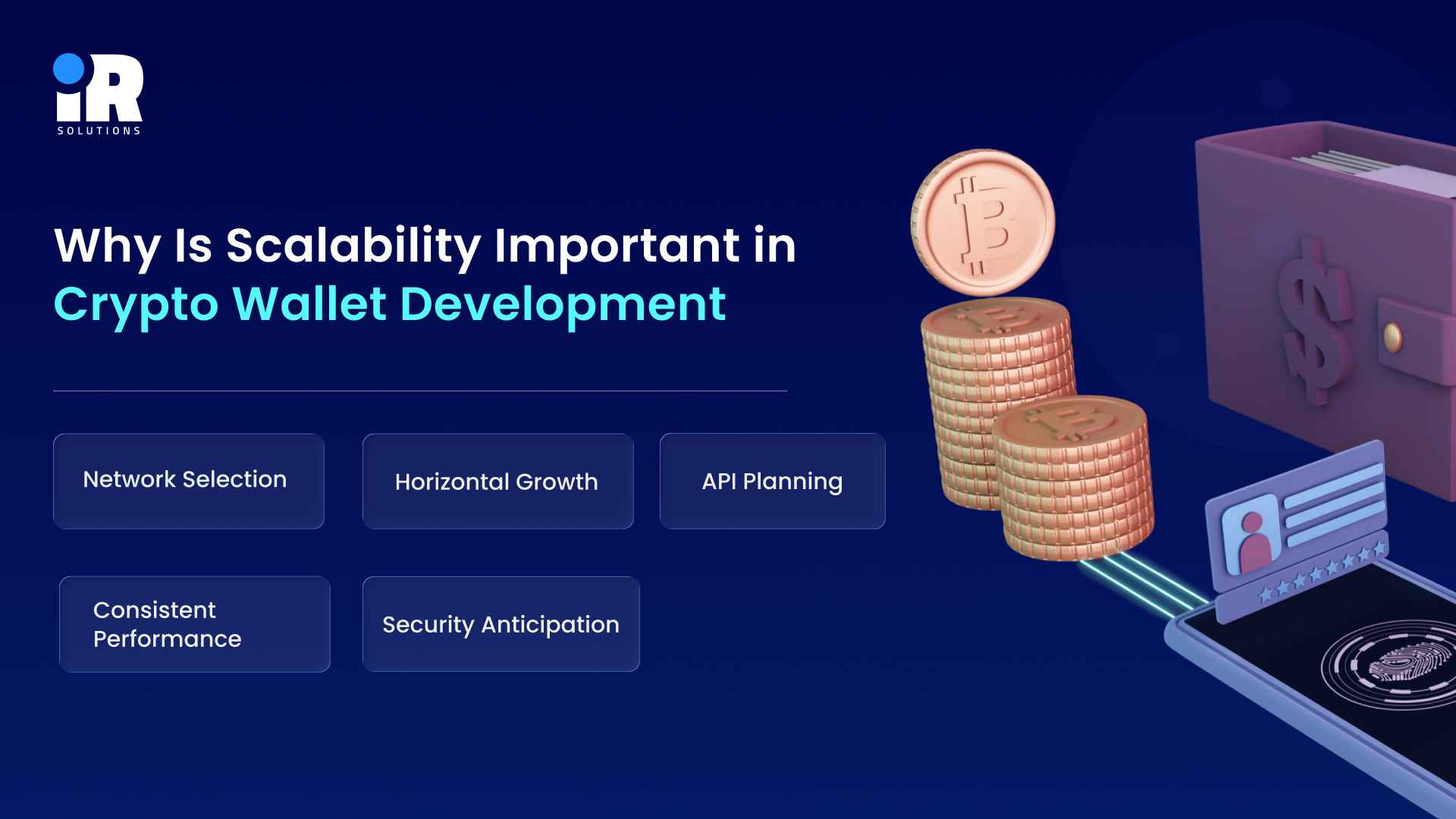
- Network Selection. Choosing a blockchain that handles high transaction volumes without bottlenecks is a foundational decision that shapes everything downstream for years to come.
- Horizontal Growth. As user numbers grow, the infrastructure supporting the wallet needs to expand without requiring a complete expensive rebuild later down the line.
- API Planning. Unoptimized API calls become serious problems at scale and catching them early saves a vast amount of time and money for the business.
- Consistent Performance. A scalable wallet stays intuitive and responsive even as new features are layered in consistently over time without disrupting existing users.
- Security Anticipation. As the platform grows, the attack surface grows with it, and reactive security is never good enough for any fintech product.
Transforming Fintech with Blockchain Integration
When fintech meets blockchain, the result is an entirely different and more powerful way of managing money. The underlying technology is quietly reshaping how financial services operate at a level most businesses have not fully appreciated yet. It is a distributed tamper-resistant record that no single party owns or fully controls at any point. For the fintech industry, independence from central authority matters significantly in building lasting and meaningful user trust.
Fraud Prevention
Traditional financial systems run entirely on centralized databases that remain constant targets for highly-skilled attackers. A single successful breach can expose millions of sensitive records in one devastating and costly event. Blockchain changes the equation because there is no single server left to compromise or corrupt from the outside. Every transaction is cryptographically signed and once confirmed, it cannot be quietly altered by anyone involved.
New Products
Blockchain integration is not just a security upgrade for existing fintech products and services offered today. It opens up a product territory that was simply inaccessible to fintech companies in earlier years, before blockchain. Decentralized lending lets users borrow against crypto holdings without any traditional credit check being required. A strong crypto exchange development company helps the fintech industry enter the crypto market smoothly, without wasting time or resources.
International Payments
International payments have historically been slow, expensive and filled with unnecessary intermediaries, slowing everything down considerably. Blockchain-powered wallets allow fintech companies to offer cross-border transfers at a fraction of traditional costs. Tokenized assets, including real estate and commodities, can now be traded in fractional amounts with ease. Users in emerging markets gain access to financial tools that were never previously available to them.
The Shift Toward Decentralized Financial Systems
Something has genuinely changed in how people relate to financial institutions around the world today. After watching banks fail and savings devalued by inflation, users are actively looking for real alternatives. Watching payment accounts get frozen without satisfying explanations has accelerated the search for financial independence significantly. A growing segment of users now wants control placed firmly and permanently back in their own hands.
That doubt is driving real and measurable behavior changes across global financial markets today. Decentralized finance has grown from a niche experiment into an ecosystem handling billions of dollars every single day. Users are lending, borrowing, earning profit, and trading assets entirely outside the traditional banking system without hesitation. They are doing all of it through crypto wallets built by forward-thinking and innovative fintech companies worldwide.
Want more insights? Check out our blog on How is blockchain technology reshaping financial markets in 2026
Conclusion
Crypto wallet apps have taken a central place in what modern fintech looks like across the industry right now. Eliminating delays, simplifying transactions and unlocking entirely new financial products are now setting expectations from users that every serious fintech business must meet. Blockchain integration has moved from being a technical experiment to becoming the driving force behind how financial services are built and delivered today. The shift toward decentralized systems is not slowing down and fintech companies that position themselves ahead of this curve will be the ones users trust and return to consistently.
Frequently Asked Questions
What is a crypto wallet app, and why does a fintech business need one?
A crypto wallet lets users store, send and receive digital assets securely without relying on traditional banking infrastructure. Fintech businesses need one to deliver faster, cheaper and more transparent financial services to modern users.
How do crypto wallets help fintech companies reduce transaction costs for their users?
Crypto wallets eliminate the intermediaries that traditional payment systems rely on which directly reduces the fees passed on to users. Transactions happen peer to peer on the blockchain making the entire process significantly cheaper and more efficient for everyone involved.
Is a crypto wallet app safe enough for handling large financial transactions?
Yes, when built with proper encryption, multi-factor authentication and smart contract audits crypto wallets are highly secure. The decentralized structure also eliminates the single point of failure that plagues centralized systems.
Can a crypto wallet app integrate with existing fintech platforms and banking systems?
Modern crypto wallets use API compatibility that allows smooth integration with existing fintech platforms and payment gateways. Businesses can add crypto capabilities without rebuilding their entire product from scratch.
How does decentralized finance connect to the growing demand for crypto wallet apps?
As more users move toward decentralized financial services they need a reliable and intuitive gateway to access and manage those services daily. Crypto wallets serve as that gateway making them an essential product for any fintech company looking to stay relevant in this space.