




The real measure of an AI assistant isn't how quickly it responds, but how accurately it answers. That single truth explains why AI accuracy now shapes customer trust, daily efficiency, and long-term growth. An AI assistant only performs as well as the data feeding it, whether it's answering product questions or checking account details. Wrong answers create confusion, drive up support costs, and chip away at brand confidence over time. Clean, connected, well-managed data, though, gives an AI assistant the foundation to answer quickly, consistently, and correctly every single time. Partnering with an experienced AI development company gives businesses the data foundation their AI assistants need to stay accurate and context-aware.
The Core Data Sources Every AI Assistant Relies On
An AI assistant pulls from several distinct data sources to form a complete and accurate response picture. Missing even one of these sources creates blind spots that show up in every conversation the assistant handles.
Structured Knowledge
This covers FAQs, product specifications, and policy documents organized in a clear and searchable format. Structured knowledge gives the assistant quick, reliable facts to reference without ambiguity or confusion.
Unstructured Content
Emails, call transcripts, support chat logs, and written notes hold context that structured documents often overlook. AI models need this raw, human-written language to genuinely understand what customers are really asking.
Live Business Data
Pricing tables, inventory levels, and real-time order status must stay current for the assistant to stay useful. Stale numbers create frustrated customers, unnecessary escalations, and missed revenue opportunities for your team.
Historical Interaction Data
Past customer conversations reveal recurring questions, confusion points, and gaps in existing content. Mining this data helps businesses identify exactly where the assistant needs better information to improve.
When all four of these sources work together, the AI assistant stops guessing and starts delivering genuinely reliable answers. The goal is not just one good source, it is a connected, well-maintained data ecosystem across the entire business.
Once your data foundation is in place, the next step is building an assistant designed around your business. Learn how in our Custom AI Chatbot Development: Complete Guide to Building Business-Specific AI Assistants.
Why Your AI Assistant Needs a Well-Organized Knowledge Base
Think of a knowledge base as the long-term memory your AI assistant pulls from during every single conversation. That's why companies hire NLP engineers to build knowledge bases that help AI assistants pick up on context, intent, and the way customers actually talk.
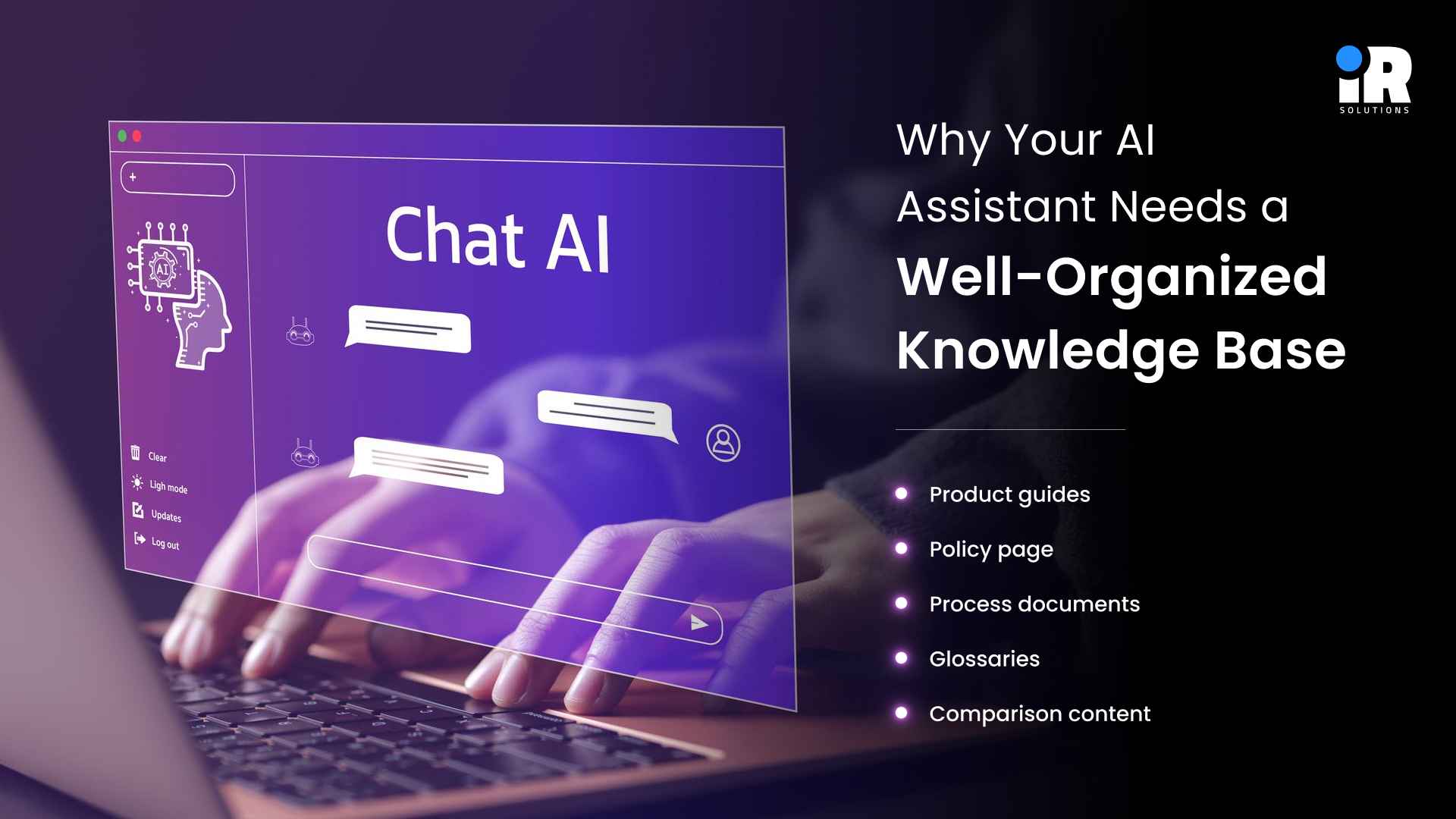
A solid, well-organized knowledge base usually covers:
- Product guides: Detailed specs, real-world use cases, and troubleshooting steps for every single offering.
- Policy pages: Refund rules, shipping timelines, and service-level agreements written in plain, simple language.
- Process documents: Step-by-step internal procedures that explain exactly how your business handles common scenarios.
- Glossaries: Industry terms and acronyms are explained simply so the assistant never confuses customers with unnecessary jargon.
- Comparison content: Side-by-side breakdowns of similar products or service tiers that customers ask about all the time.
A messy, outdated knowledge base always leads to messy, inaccurate answers, no matter how advanced the AI model is. Getting this content organized properly is the real first step toward genuine AI accuracy.
Building Layers of Depth
Surface-level knowledge bases handle basic questions but crumble once customers ask for specifics. Real depth comes from secondary articles that expand on primary topics with extra detail.
A product overview, for instance, should link out to setup guides, compatibility notes, and common error fixes. This layered structure gives the assistant a clear path as customer questions get more specific and complicated.
Keeping It Consistently Updated
Knowledge bases fall apart fast when no one actually owns the update and review process. Assigning a dedicated owner to audit and refresh content monthly stops that decay before it starts.
The AI assistant is going to take answers from outdated articles without worrying, and these are going to mislead customers. But with ongoing audits, you can ensure your knowledge base remains relevant, reliable, and valuable over time as your offerings change.
Why Accurate AI Responses Drive Real Business Growth
Customers expect instant, correct answers today, not vague responses or outdated information from last quarter. A single wrong answer from your AI assistant can shake confidence faster than almost anything else.
Search engines and answer engines now pull information directly from brand content across the web. This shift means your data quality affects not just chatbot performance but also your overall brand visibility online.
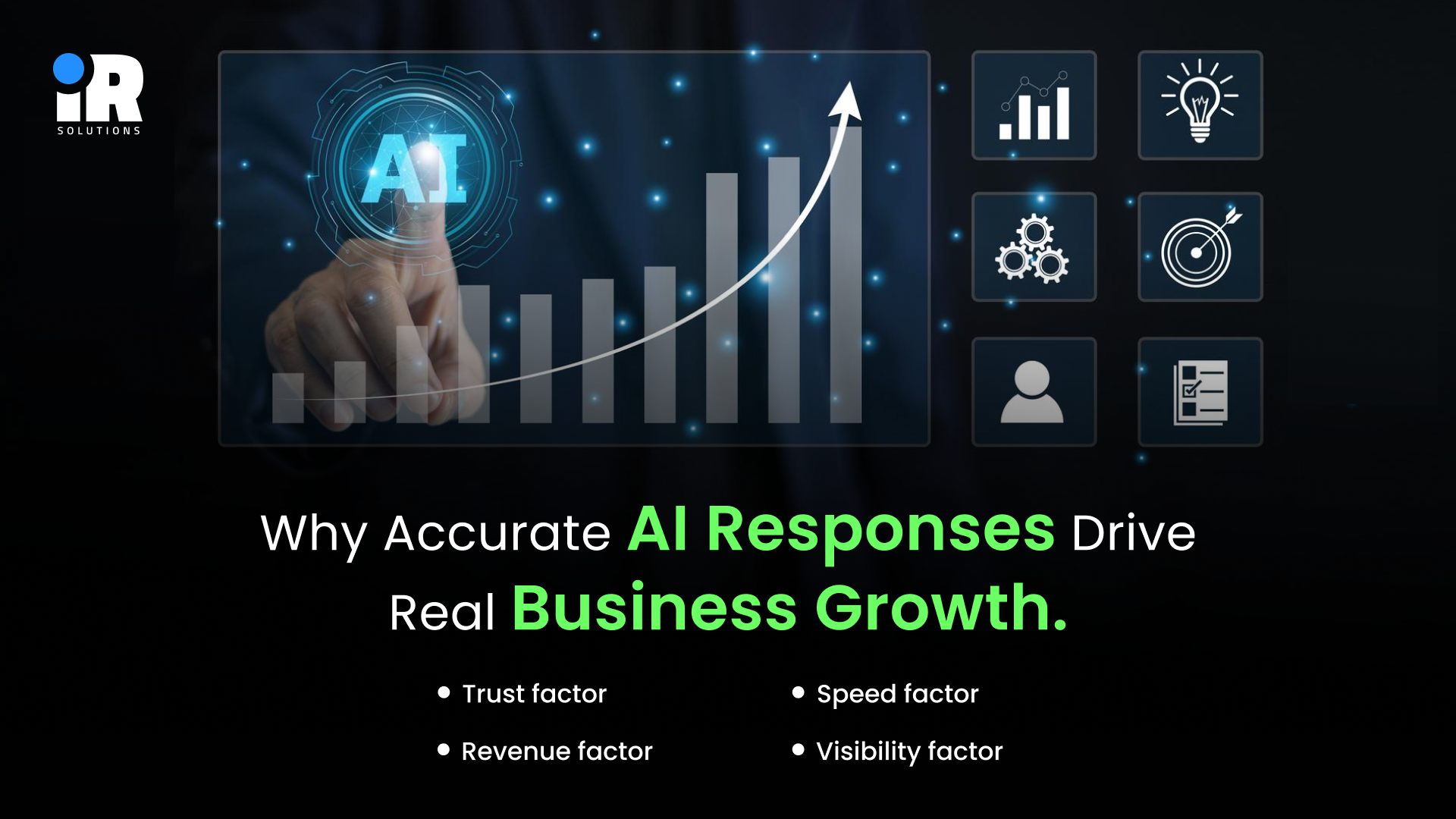
- Trust factor: Customers return to brands that deliver consistent, correct answers in every single interaction.
- Speed factor: Accurate AI responses reduce incoming support tickets and save your team meaningful hours each week.
- Revenue factor: Assistants who answer confidently close more conversations with a positive outcome for your business.
- Visibility factor: Well-structured data helps AI engines like ChatGPT and Gemini cite your brand more often.
Businesses investing in clean data today will outpace competitors still relying on scattered files and guesswork. Accuracy is no longer optional, it is the minimum expectation every customer carries into every conversation.
How Does CRM Data Help AI Deliver Personalized Responses?
CRM data tells your AI assistant who the recipient is and what they're in need of at this very moment. If not, every response comes across as a copy-and-paste job, even if it's on-topic.
There are a few data points of the CRM that make a huge difference:
- Purchase history: Past orders help the assistant recommend things customers don't already own.
- Support ticket history: Old issues show recurring problems that the assistant should flag before customers ask again.
- Communication preferences: Preferred channels and tone make replies feel tailored instead of scripted.
- Account status: Subscription tier or contract type decides which policies and offers even apply.
- Renewal and billing dates: Answering billing questions with the right context saves customers a headache.
- Engagement history: Knowing what a customer has browsed helps the assistant suggest a sensible next step.
Connect CRM data directly to your AI assistant, and responses stop sounding like scripts. That's the difference between a basic chatbot and a real sales and support tool people actually want to use.
As businesses expand into new markets, Building Multilingual AI Assistants for Global Customer Engagement explains how AI assistants can provide consistent experiences across multiple languages.
Data Preparation Strategies That Actually Move the Needle
Pulling raw data straight from your systems and dropping it into an AI assistant rarely produces reliable results. So here, AI/ML services help businesses prepare, organize, and optimize data before it is used to power AI assistants. The businesses that see real AI performance gains are the ones that take preparation seriously before anything goes live.
Clean and Deduplicate First
Duplicate entries, broken links, and conflicting facts confuse the AI model and lead to inconsistent answers across similar questions. Removing these problems before training begins saves you from troubleshooting accuracy issues that trace directly back to dirty source data.
Standardize Your File Formats
Mixed file types scattered across your data sources slow down indexing and increase the chance of content being skipped entirely. Converting everything into consistent formats makes retrieval faster, more reliable, and far easier to maintain as new content keeps getting added.
Chunk Content Into Logical Pieces
Large documents dropped into a retrieval system return too much information at once, so break them into smaller self-contained sections. Each chunk should cover one topic or answer one question without spilling into unrelated areas nearby at all. Well-chunked content gives the assistant a precise target to retrieve instead of returning an entire document at once.
Tag Everything With Consistency
Untagged content gets lost inside a retrieval system the same way an unorganized filing cabinet loses critical documents over time. Build a tagging taxonomy once covering topic, product, audience, date, and department, then apply it to every new piece added. Consistency here compounds over time and pays off significantly as your knowledge base keeps growing larger.
Test Before You Go Live
Run structured test scenarios before launch to find data gaps that only appear when a real question meets missing content. Cover common questions, unusual phrasings, and edge cases your team has seen come up in actual conversations before. Document every failure and trace it back to its source so your fixes stick instead of resurfacing later.
Validate on a Fixed Schedule
A monthly review cycle for your highest-traffic articles catches outdated facts before customers ever run into them in a conversation. Pricing changes, discontinued products, and policy updates all need to reflect immediately across every connected data source.
Why AEO Focus Matters for Your Brand Visibility
Answer Engine Optimization differs from traditional SEO because it gets your brand cited directly inside AI-generated answers, not just ranked on a results page. When someone asks ChatGPT or Perplexity a question in your industry, those engines scan for organized, clearly written content to pull from. Brands with clean and well-structured data get cited far more often than those that haven't prepared for this shift yet.
To build real AEO strength, your business needs to be doing these things consistently:
- Lead with the answer: Open every article or document section with a direct response before adding supporting detail below it.
- Use structured data markup: Schema tags enable AI engines to understand the content's topic and extract it precisely for users.
- Keep all facts current: Old data and old policy terms decrease the chances of people choosing your content over the next person.
- Write in plain language: Artificial intelligence systems remember and reproduce simple text more effectively than complex or technical texts.
- Build genuine topic depth: Having multiple articles related to a topic that are comprehensive in content provides a sense of authenticity to AI retrieval systems.
- Format for easy extraction: Including bullets summarizing the content, clear headings, and short paragraphs will help the AI engines process the content and cite it.
AEO and AI assistant accuracy share the same underlying need for clean, well-organized, and consistently maintained data throughout. When you invest in getting your data right, you improve both your assistant's performance and your brand's discoverability at the same time.
Connecting All Data Sources Into One Unified View
Each data source alone tells only part of the story your AI assistant genuinely needs to respond accurately. Businesses hire AI developers to integrate multiple data sources into a unified system that improves response quality and long-term scalability. Real, lasting accuracy comes from connecting knowledge bases, internal documents, and CRM data into one coherent system.
A unified data strategy typically involves three core components working closely together:
Central Repository
Every data source your assistant uses should connect to one central location your whole team can access and trust. Update one place and the assistant picks it up immediately, no manual syncing, no stale copies sitting somewhere unnoticed.
API Integrations
Connecting your CRM, support platform, and content systems through APIs means the assistant always runs on live data without anyone manually pushing updates. A pricing change made at noon shows up in customer conversations that same afternoon without anyone lifting a finger.
Access and Governance
Someone on your team needs to own each data source, decide who can edit it, and set when reviews happen. Without that structure, one wrong update to a policy doc quietly produces bad answers across every conversation until someone eventually catches it.
Building an AI assistant that delivers accurate, reliable responses starts with the right data strategy. Schedule a free consultation to discuss how your business can prepare its data for AI success.
How Your Data Quality Shapes Every Customer Interaction
Customers interacting with your AI assistant are forming real opinions about your brand, whether your team is watching or not. A confident and accurate response builds trust within seconds, while a wrong answer can unravel months of solid service work.
Real data quality shows up in customer experience in these specific and measurable ways:
- Faster resolution: Correct assistants end conversations in a single turn, rather than several confusing follow-ups, which irritate all parties.
- Fewer escalations: If the assistant is doing things correctly, then fewer customers will have to talk to a live agent for a simple and basic request.
- Higher satisfaction scores: Customers who have been given the right answer leave that interaction feeling valued and assisted.
- More self-service adoption: Confident and accurate responses encourage customers to keep using the assistant rather than avoiding it out of frustration.
Companies that treat AI accuracy as a data problem rather than a software problem solve it far more effectively and sustainably. The assistant is only as good as what you've given it, and that is entirely a business decision, not a technical one.
Conclusion
Every accurate response your AI assistant delivers traces back to one thing, the quality of data sitting behind it. Knowledge bases keep your assistant grounded in facts that actually reflect how your business works today. CRM data makes every interaction feel personal instead of scripted and cold. Internal documents fill in the operational gaps that public content will never fully cover on its own. Solid data preparation strategies make sure none of that information reaches your assistant in a broken or outdated state. AEO Focus then takes all of that clean, organized content and puts your brand in front of the AI-driven audiences actively searching for what you offer. Building that level of accuracy starts with the right strategy, data, and implementation, which is why many businesses choose to hire AI chatbot experts who can develop AI assistants tailored to their operations and customer needs.
Frequently Asked Questions
What data improves AI assistant accuracy the most?
Clean knowledge bases, current CRM records, and structured internal documents make the biggest difference. Without these three working together, even the best AI model ends up guessing.
How often should a knowledge base be updated?
Review and refresh your knowledge base at least once a month. Anything longer than that, and outdated info starts slipping into customer conversations.
What does AEO Focus mean for businesses?
AEO Focus is about structuring your content so AI engines actually cite your brand in their answers. It's less about ranking and more about being the source AI pulls from.
Can CRM data personalize AI assistant responses effectively?
Yes, CRM data lets the assistant tailor answers to a customer's actual history rather than guessing. That's the difference between a reply that feels relevant and one that feels like a form letter.
Why do internal documents matter for AI accuracy?
Internal documents carry the operational context that public-facing pages just don't have. Things like edge cases, exceptions, and how your team actually handles situations live there, not on your website.
What is the biggest risk of poor data preparation?
Poor preparation leads the assistant to hand out wrong, outdated, or flat-out conflicting information. Once that happens a few times, customers stop trusting the assistant altogether.
How does IR Solutions support AI data readiness?
IR Solutions audits, cleans, structures, and integrates your data so it's actually ready for AI to use. It's less of a one-time fix and more of building a foundation that keeps holding up.
How long does a full data preparation process typically take?
Timelines shift depending on how much data you have and how messy it is. That said, most businesses start seeing real, measurable improvement within four to six weeks of doing it properly.