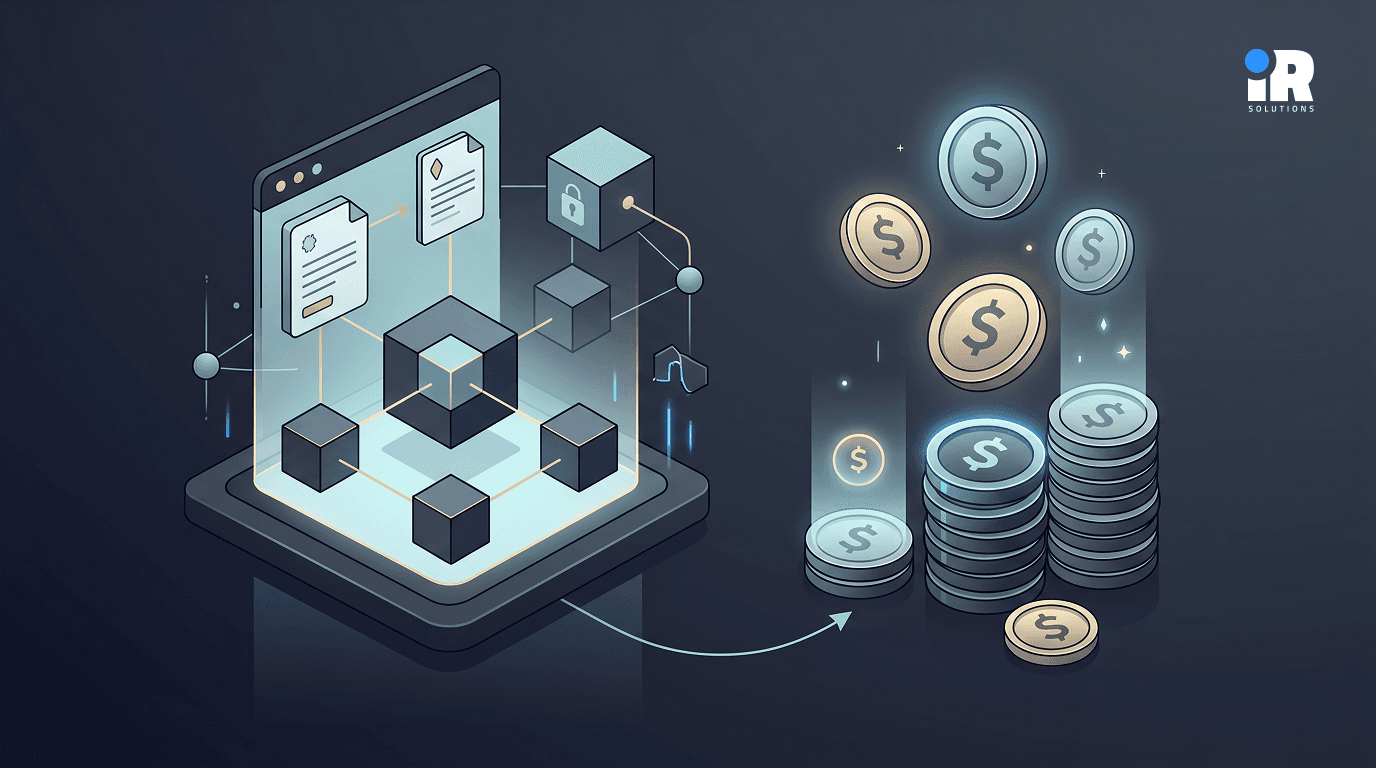


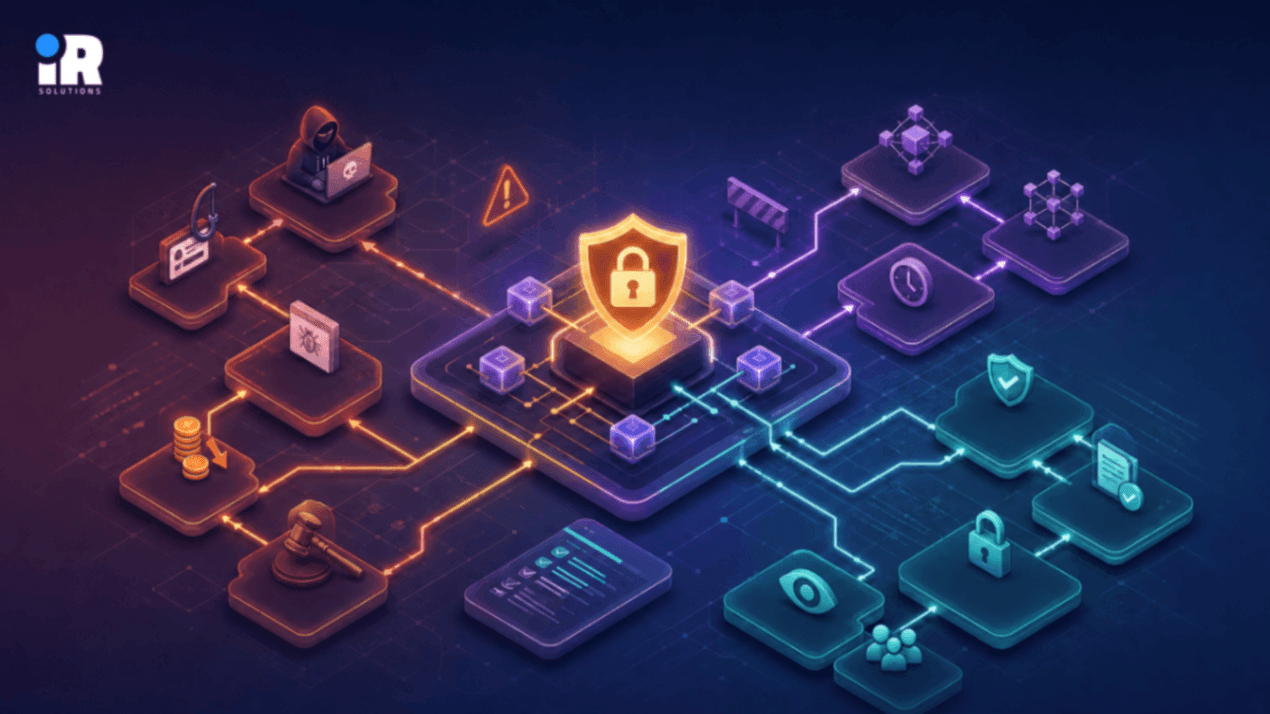

Blockchain now runs real payments, real supply chains, and real enterprise records across every major industry. More businesses are moving on-chain every quarter, and the attack surface grows faster than most security teams can realistically track. A breach does not just cost money, it breaks user trust in ways that take years to rebuild from scratch. Most teams assume blockchain is secure by design, and that assumption is exactly where attackers consistently find their opening. Security must be built into every blockchain project from day one, not added reactively once visible problems have already emerged publicly. Professional blockchain development solutions are designed around this principle, where security comes first, at every layer, before anything ships.
The Security Layer Most Blockchain Projects Get Wrong
The base protocol is genuinely solid, no single party controls the ledger, and altering records means overcoming an entire distributed network. That structural strength convinces most business leaders that deploying blockchain automatically means deploying something secure. It doesn't, and that assumption is one of the most financially damaging a business can carry into this space.
Nearly every major breach traces back not to the protocol but to the layers above it. Smart contracts, DApp front ends, bridge protocols, and API integrations are where attackers find their openings. The chain runs perfectly while all the real damage happens in the application layer your team builds.
What makes this dangerous is the confidence blockchain's reputation creates during early planning. Teams move fast, skip audits, and assume decentralization handles their security for them. That mindset is exactly why technically sophisticated platforms still lose user funds through entirely preventable vulnerabilities every year.
If you want to understand how a secure build actually works in practice, Blockchain Development Guide 2026: Use Cases, Costs, Technologies & How to Get Started walks through each phase with the specificity that general advice rarely provides.
Why Blockchain Security Directly Affects Business Growth
Blockchain security is not just a technical issue because breaches directly impact revenue, partnerships, and long-term business credibility. Clients, partners, and regulators evaluate how securely companies handle blockchain systems before making major commitments. Weak security can lead to financial loss, reputational damage, and growth setbacks that are difficult to recover from.
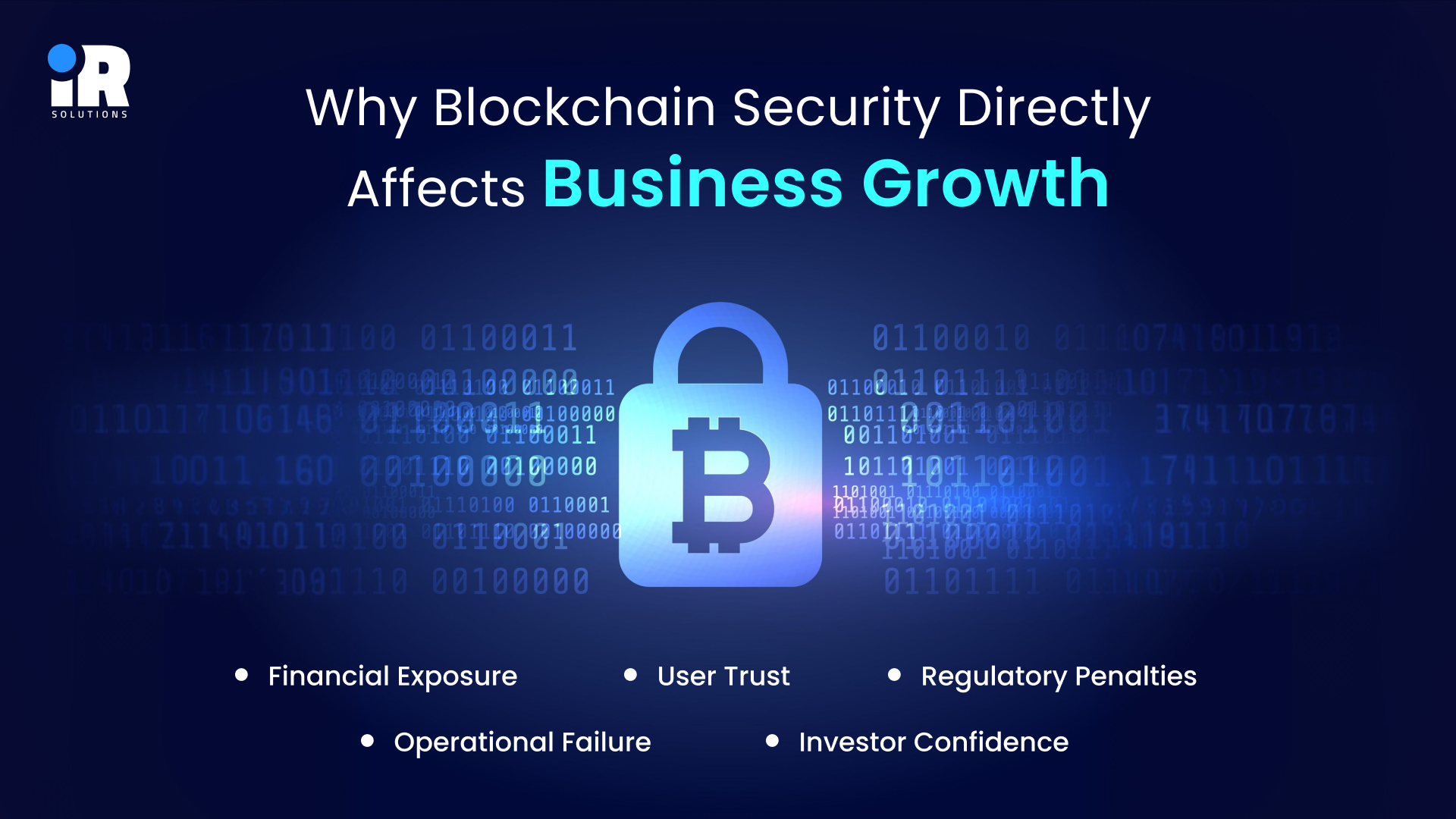
- Financial Exposure: Unaudited contracts have cost businesses hundreds of millions that an early security review would have caught and prevented entirely.
- User Trust: A single publicized breach pushes users toward competitors and poisons every future product launch with lasting doubt and skepticism.
- Regulatory Penalties: Compliance bodies across the EU, US, and Asia-Pacific are expanding oversight, and weak security creates compounding legal exposure over time.
- Operational Failure: Blockchain-dependent workflows like payments and supply chain tracking collapse the moment the underlying system gets compromised and disrupted.
- Investor Confidence: Institutional backers run security due diligence before committing capital, and a weak security posture closes doors that rarely reopen afterward.
This is especially relevant for industries like fintech and banking, supply chain and logistics, where a security failure does not just cost money, it disrupts operations that people and businesses depend on every day.
The Real Blockchain Security Risks in 2026
Threat actors in 2026 are more organized, better funded, and technically sharper than they were two years ago. These are the threats most actively targeting blockchain businesses across every major vertical right now.
- 51% Attacks: One entity gains majority validation power and rewrites transaction history, enabling large-scale double-spending. This is more feasible on smaller chains than most teams want to admit.
- Smart Contract Exploits: A single logic flaw gives attackers a clear path to drain funds or bypass access controls entirely. Some of the most expensive exploits in blockchain history were embarrassingly simple coding errors nobody caught before deployment.
- Phishing Campaigns: Fake platforms and social engineering steal private keys and admin credentials from users who miss the warning signs. Most security conversations skip this because it sounds basic, but the loss numbers say otherwise.
- Bridge Exploits: Cross-chain bridges are the most targeted layer in Web3, with the Ronin Bridge breach alone reaching nearly $625 million. Every bridge you operate is a concentrated risk surface that deserves dedicated scrutiny.
- Rug Pulls: Development teams exit projects after collecting investor capital, leaving token holders with no recourse. The financial consequences for victims are identical to a breach.
- Oracle Manipulation: Attackers feed false data through compromised Oracle feeds, causing contracts to execute on fabricated conditions. The oracle layer deserves as much scrutiny as the contract logic itself.
- Flash Loan Attacks: Exploiters borrow massive capital within a single transaction block to manipulate DeFi pricing and exit before the block closes. No collateral required, the damage potential from one unprotected vulnerability is enormous.
- Insider Threats: Team members with admin key access can cause irreversible damage without any external attack vector. Single points of admin access are single points of failure, regardless of where the threat originates.
- Front-Running: Malicious validators watch unconfirmed transactions in the mempool and insert their own orders ahead to extract profit. If your users are making on-chain moves, front-running affects them whether your team monitors for it or not.
Key Challenges Behind Blockchain Security Failures
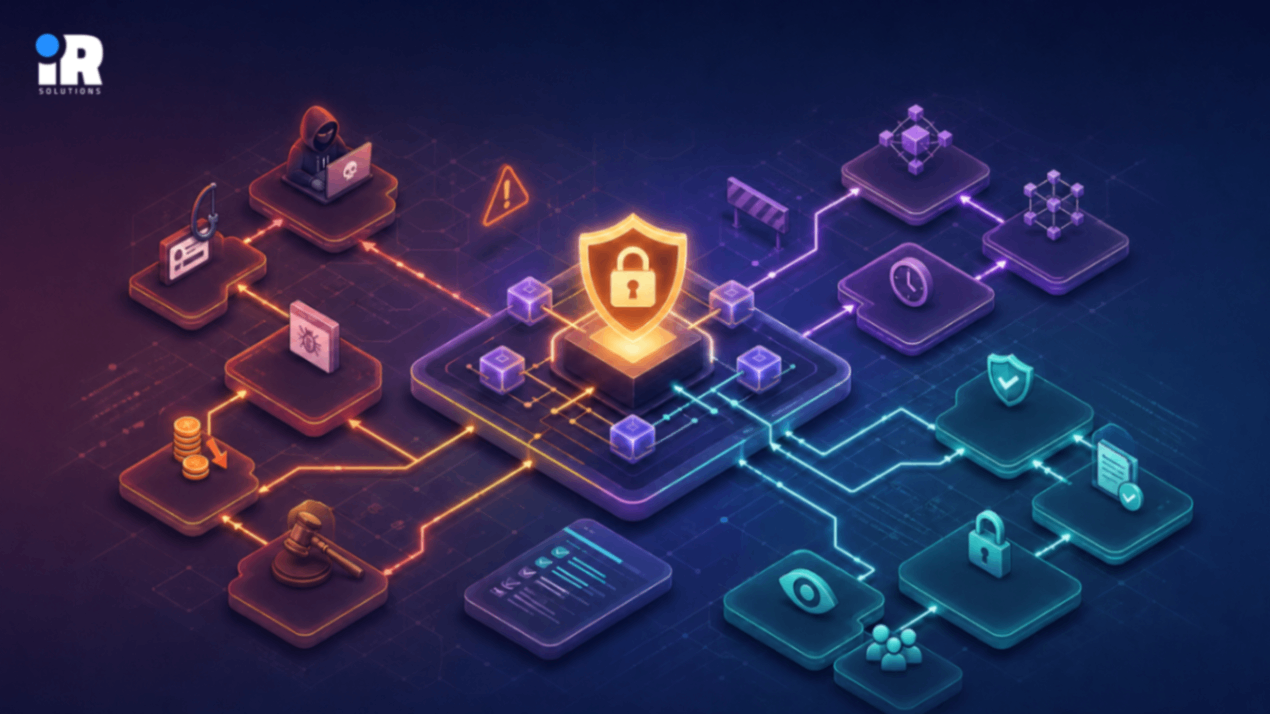
Individual risks alone do not explain most breaches, the deeper structural issues are what make organizations consistently soft targets. These are the patterns that shape real security outcomes in 2026.
Speed vs. Safety
- Faster chains trade security overhead for throughput, making malicious activity harder to detect before real damage accumulates.
- At high transaction volumes, suspicious patterns that would be obvious on a slower chain slip through completely unnoticed.
- Protocol-level protection is not enough, compensating security controls must be built on top of the chain, not assumed to come from it.
Cross-Chain Complexity
- Multi-chain systems increase risk at every connection point, with each additional chain introducing vulnerability classes that teams frequently miss during development.
- The Ronin Bridge exploit proved that bridges must be treated as high-stakes security surfaces, not routine infrastructure.
- Operating across multiple chains means thinking about the entire system as one connected attack surface, not isolated environments that happen to share data.
Regulatory Ambiguity
- Blockchain regulation remains inconsistent across jurisdictions, and many businesses use that inconsistency as a reason to underinvest in internal security standards.
- Weak standards tend to stay weak until a breach or regulatory penalty forces change, by which point the damage is already done.
- As regulations tighten across the EU, US, and Asia-Pacific, businesses that wait for enforcement before acting face serious compliance exposure and potential loss of market access.
The Developer Talent Gap
- Generalist developers building on blockchain routinely miss vulnerability classes specific to this environment that are not obvious from general programming experience.
- Trying to train your way out of this gap on a live deployment timeline is one of the more reliable ways to ship vulnerable code.
- Hiring blockchain developers with hands-on security experience, not just general coding skills, makes a measurable difference in what actually gets shipped.
Immutable Code Constraints
- Smart contracts cannot be changed after deployment, making pre-launch accuracy more critical than in almost any other software environment.
- Any mistake in production can create a permanent vulnerability or force a costly migration of user data and balances.
- Strong pre-deployment review processes are the only reliable defense against long-term damage from code that simply cannot be taken back.
Wallet and Key Management
- A compromised private key gives complete and irreversible access to all associated assets, making key security one of the highest-stakes areas in any blockchain system.
- Single-signature wallets and weak access controls turn a single point of failure into a total loss event.
- Multi-signature setups, rotation policies, and strict access governance must be maintained as ongoing operational disciplines, not one-time configurations that get set and forgotten.
To get expert guidance on blockchain security risks and solutions, book a call with our team.
Blockchain Security Best Practices for 2026
A secure blockchain system does not come from one well-placed fix or a single pre-launch audit. It takes consistent, layered decisions made across every phase of development and ongoing operations afterward.
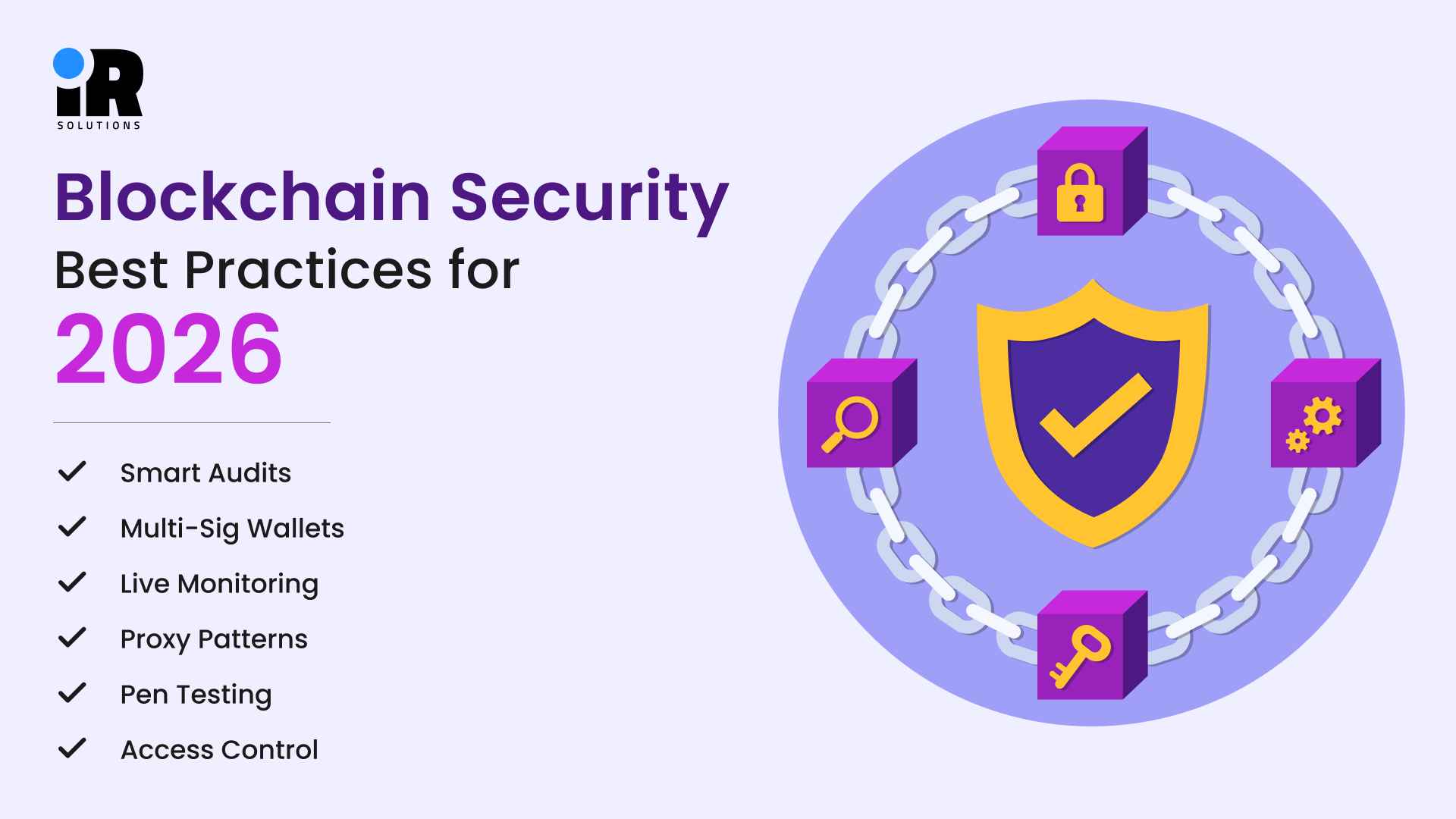
Smart Audits
Get an independent third-party audit before every deployment, not someone who helped write the code. External reviewers catch what internal teams miss, not because internal teams are incompetent, but because familiarity creates blind spots that fresh eyes don't have.
Multi-Sig Wallets
Apply multi-signature controls to every treasury account and admin panel, if one key is compromised, the attacker still cannot move funds without additional approvals. It is one of the highest-impact, lowest-friction security improvements available to any blockchain operation.
Live Monitoring
Deploy continuous on-chain monitoring with automated anomaly detection. Waiting for someone to notice something is wrong is too slow. You need systems that flag unusual transaction patterns in real time, before damage has a chance to accumulate.
Proxy Patterns
Use upgradeable proxy contract patterns so your team can patch live contracts without forcing full migrations. This does not replace rigorous pre-deployment review, it adds recovery options when vulnerabilities slip through despite a strong process.
Pen Testing
Run regular penetration testing across DApp interfaces, node infrastructure, and API layers. Automated tools catch known patterns. Security testing finds the gaps they miss, the ones requiring creative attack paths that no existing signature covers. This matters for healthcare, real estate, and every sector handling sensitive user data on-chain.
Access Control
Enforce role-based access controls and rotate admin keys after every personnel change or documented security event. The moment someone with admin access leaves, that key rotates. Access governance is a continuous discipline, not a one-time setup that gets filed away and forgotten.
For a closer look at blockchain hiring costs, expertise, and team structures, read How to Hire Blockchain Developers - Skills, Cost & Hiring Models Explained
Building Secure Blockchain Systems from Day One
Security built in from day one is the only approach that consistently produces secure blockchain systems. Reactive fixes after problems surface are slower, more expensive, and far less effective than getting foundations right.
IR Solutions has delivered multiple enterprise blockchain deployments and knows exactly where businesses unknowingly create risk. Many blockchain development companies still focus on speed over security, which is where long-term failures begin. Blockchain development services cover smart contract auditing, DApp security architecture, multi-chain deployment, and post-launch monitoring. Every security review comes with a prioritized remediation plan mapped to business risk, regulatory exposure, and development cost.
Specialized talent is available across Ethereum, Solana, TON, and smart contract development for teams that need security-experienced engineers rather than generalists. Hands-on experience across fintech, supply chain, healthcare, and real estate means the team understands where failures hit hardest in each sector.
Engagements start with a discovery session that maps your architecture and identifies your highest-risk surfaces first. From there, a security plan is built around your existing roadmap without delaying planned releases. Ongoing monitoring, quarterly reviews, and dedicated support are available for teams that need continuous protection rather than a one-time assessment.
If you are exploring what a secure blockchain build actually looks like in practice, the RWA tokenization services page shows how we apply these principles to one of the most security-sensitive areas in the current market.
Conclusion
Blockchain security in 2026 cannot be solved by choosing the right chain or framework and hoping for the best. Threats are more advanced this year than last, and breach costs continue rising across every industry that depends on on-chain systems. Most vulnerabilities are not in blockchain itself but in the contracts, bridges, and applications built on top of it — and each of those layers needs the same security focus as the protocol below it. The businesses that embed security from day one consistently outperform those that respond only after damage has already occurred. If you are ready to stop guessing and start building with real security discipline, a blockchain development company is the right place to begin.
Frequently Asked Questions
What is the most common blockchain security failure businesses face in 2026?
Smart contract vulnerabilities and phishing attacks targeting private key accounts account for the majority of real-world blockchain losses. Neither is exotic, and both are largely preventable with proper review processes and access controls in place.
How frequently should businesses audit their smart contracts?
Before every significant deployment and after any meaningful change to contract logic, access controls, or integrations with live user-facing systems. An audit from two years ago is not a current security posture.
Why are cross-chain bridges such a concentrated security risk?
They connect multiple networks through complex, high-value code that is difficult to monitor, update, or fully secure. The Ronin Bridge breach made the stakes extremely clear. Every bridge is a concentrated attack surface that deserves dedicated and ongoing attention.
Which industries face the highest exposure to blockchain security failures in 2026?
Fintech, healthcare, supply chain logistics, tokenized real estate, and the public sector consistently face the most severe operational consequences when blockchain security fails. In each of these sectors, a breach extends beyond financial loss into operational disruption and regulatory exposure.
What does a professional blockchain security audit cost compared to breach recovery?
Audits cost a fraction of what breach recovery demands, most businesses spend more on incident response in the first week following a breach than a comprehensive pre-deployment audit would have cost in total.
How does IR Solutions help businesses that are already live but have never had a security review?
We conduct a full architecture assessment, map your current risk surfaces, and deliver a prioritized remediation plan for your existing system without requiring you to take the platform down or restart from scratch.