


Sending the same email to everyone on your list is one of the most expensive habits in Ecommerce marketing today. It looks efficient from the outside because one campaign goes to ten thousand people simultaneously without anyone having to think too hard about who receives what message. But the customer receiving a first-purchase welcome offer who bought six times last year does not feel understood. The lapsed customer getting a new arrivals announcement has no context for why they should care right now. Segmentation fixes this at the root. It is not a tactic layered on top of email marketing. It is the structural decision that determines whether email marketing actually works.
What Is Email Segmentation and Why Does It Change Everything?
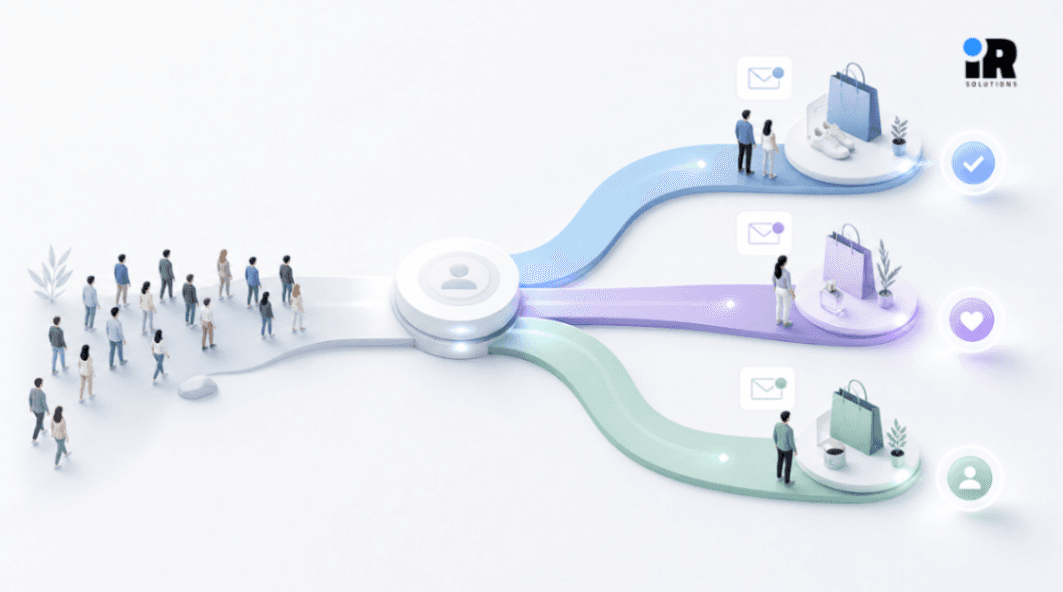
Email segmentation is the practice of dividing a contact list into smaller groups based on shared characteristics, behaviours, or attributes, and then communicating with each group in a way that reflects what actually matters to them at that specific moment in their relationship with the brand.
The logic is straightforward, a customer who bought three times in the past six months is in a very different position from someone who signed up for a discount code and never purchased. They have different needs, different levels of trust in the brand, and different reasons for engaging with an email when it arrives in their inbox.
Most brands understand this conceptually, but the gap appears in implementation because building genuinely useful segments requires knowing which data points matter, how to structure logic inside an email platform, and what to send once segments are created, and this is where most email programmes either execute segmentation properly or settle for something that only looks like segmentation without producing real results.
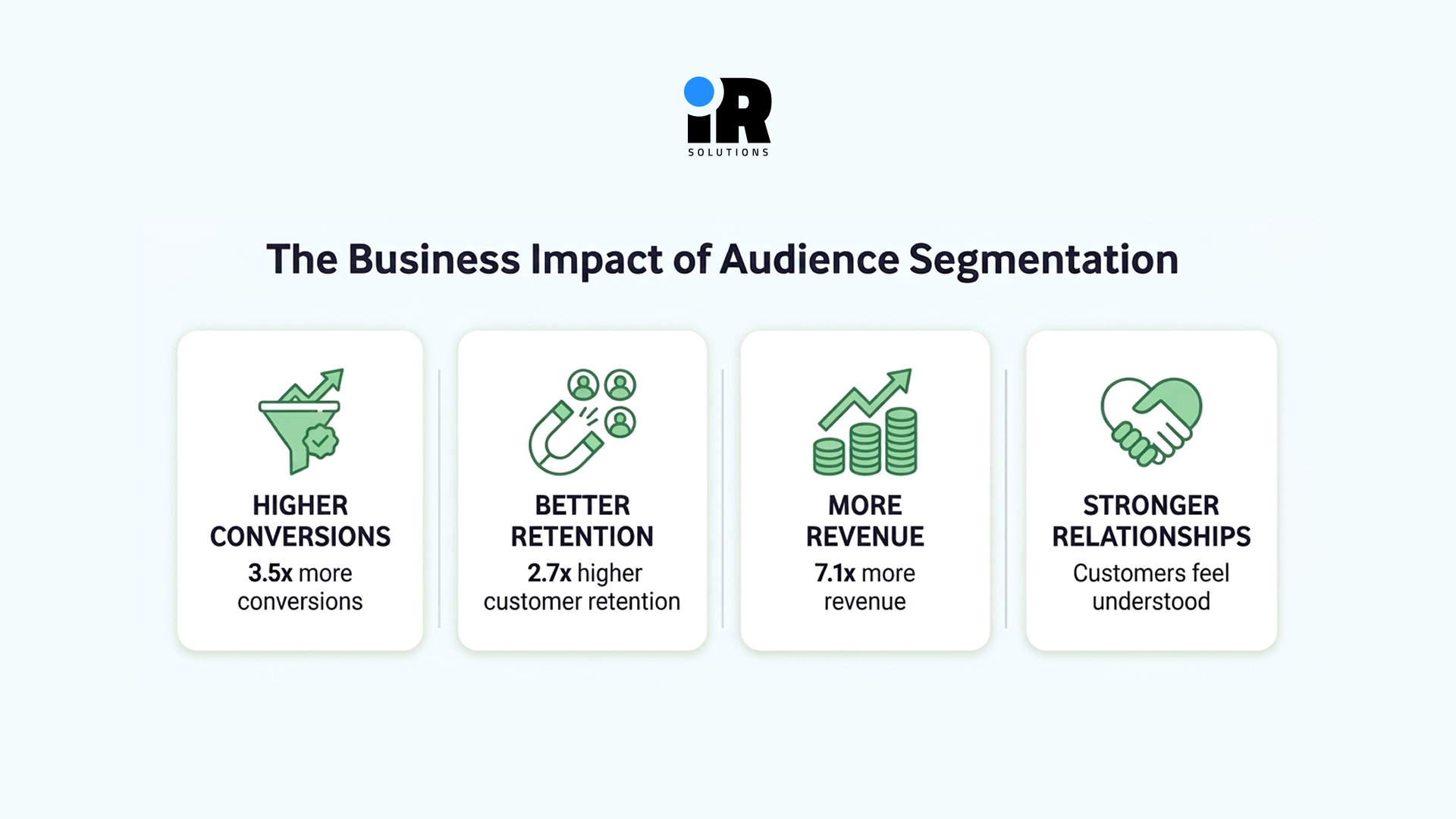
Why Does Unsegmented Email Underperform Over Time?
The performance decline of unsegmented email is not immediate. A brand can send the same campaign to its entire list for months before the damage becomes visible in the numbers. When it does appear, it shows up in several places at once.
Open rates decline because customers learn that emails from the brand are rarely relevant to them specifically. Unsubscribe rates increase because customers who never find what they are looking for eventually stop looking. Deliverability suffers because inbox providers read engagement signals at the domain level and reduce inbox placement for senders whose contacts consistently ignore their emails without opening or clicking anything.
The cost of that damage is not just lower campaign performance on the day it becomes visible. It is a degraded list that takes months of careful re-engagement to rebuild to the health it had before the unsegmented sending eroded it steadily from the inside.
If you want to understand how automation and segmentation work together to increase retention and email revenue, this detailed Klaviyo email automation strategy guide breaks down the full process step by step.
Which Data Points Build the Most Useful Segments?
Not all data is equally useful for segmentation. Some data points produce segments that send more targeted emails without actually improving relevance or outcomes in any measurable way. The data points that consistently build segments worth sending fall into a few clear categories.
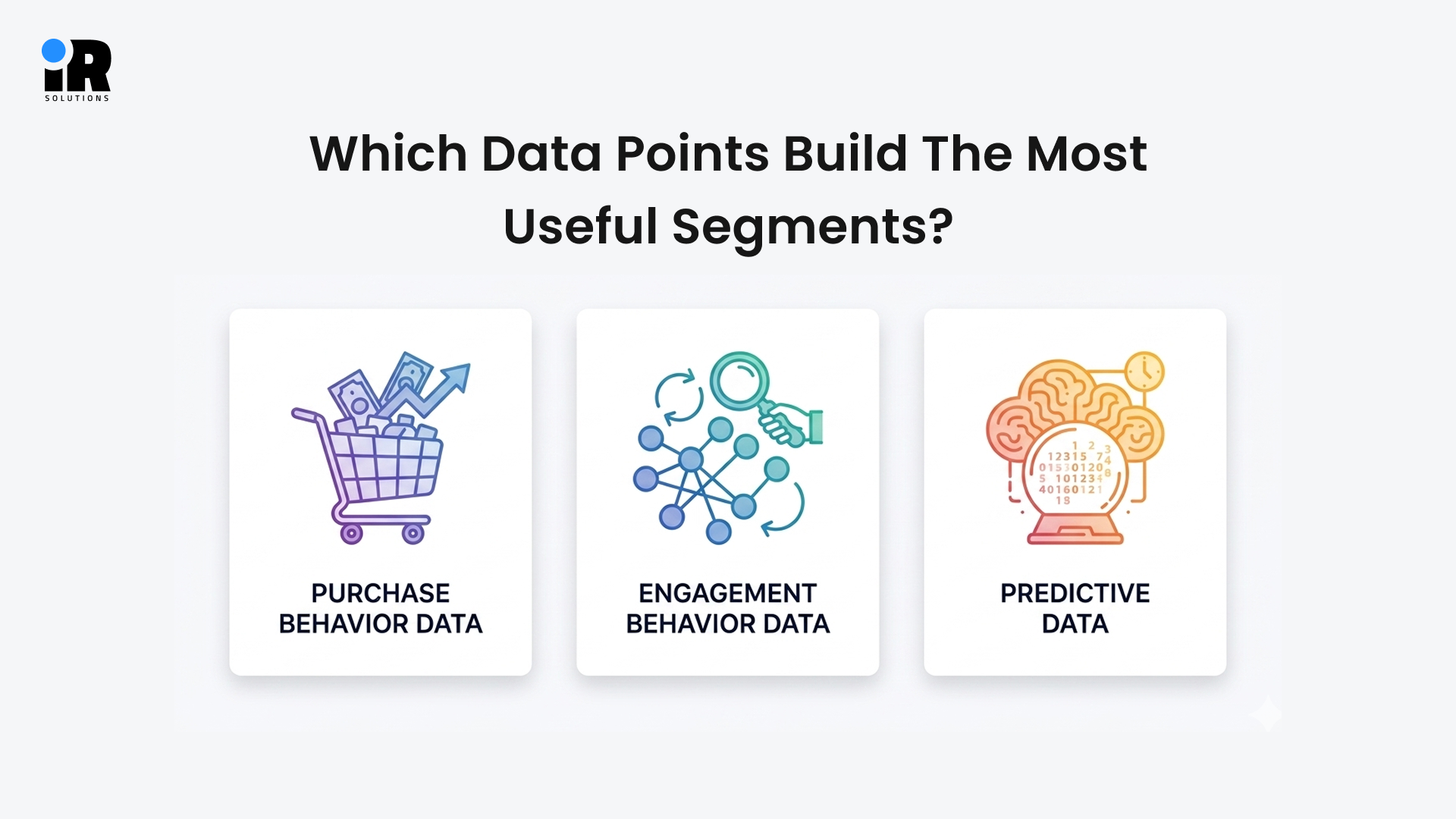
1- Purchase Behaviour Data
Purchase behaviour is the most commercially useful data available in most Ecommerce email accounts. It tells a brand not just who bought but what they bought, how often they bought, how much they spent, and how recently their last transaction was completed.
- Purchase frequency: Customers who buy once behave differently from customers who buy repeatedly. Treating them identically in email communication misses the most important distinction in the entire list for retention strategy purposes.
- Average order value: High-value customers and low-value customers respond to different types of offers and content. A customer who spends two hundred pounds per order is not the same audience as one who spends thirty pounds, even if they bought in the same week.
- Product category: A customer who exclusively buys from one category wants relevance to that category, not a broadcast covering everything the brand sells across all departments simultaneously.
- Recency: How recently a customer purchased is one of the strongest predictors of whether they will purchase again. A customer who bought last week is more likely to buy again soon than one who bought eleven months ago and has not returned.
2- Engagement Behaviour Data
Engagement data tells a brand how a customer interacts with emails, regardless of whether that interaction leads to a purchase. It includes open history, click behaviour, device preferences, and which types of content generate the most interaction from specific groups of contacts.
- Active openers: Contacts who open emails regularly but rarely click through are telling the brand something specific about what the emails are delivering versus what would actually motivate them to take action.
- Click patterns: Which links a customer clicks across multiple campaigns reveals their interests more accurately than any demographic data the brand holds about them from the sign-up process.
- Inactive contacts: Contacts who have not opened or clicked in ninety or more days represent a segment that needs different treatment from active contacts, both to protect deliverability and to give the relationship a genuine chance of recovery.
3- Predictive Data
Platforms like Klaviyo calculate predictive metrics for each contact profile automatically from the behavioural data collected through the store connection. These metrics include predicted lifetime value, predicted next purchase date, and churn probability score.
Predictive data allows a brand to act before a customer's behaviour changes rather than reacting after the change has already happened. A customer whose churn probability has increased in the last thirty days can be targeted with a retention campaign before they lapse rather than after, which produces meaningfully better reactivation outcomes than a win-back campaign sent to contacts who have already been gone for three months.
To see how segmentation improves recovery campaigns in practice, abandoned cart email flow strategies explain how brands turn lost checkouts into completed sales.
What Are the Core Segments Every Ecommerce Brand Should Build?
There is no universal segmentation structure that works identically for every Ecommerce brand in every product category. But some segments produce reliable commercial results across most contexts, and any brand with a functional email platform and connected store can build without advanced technical resources.
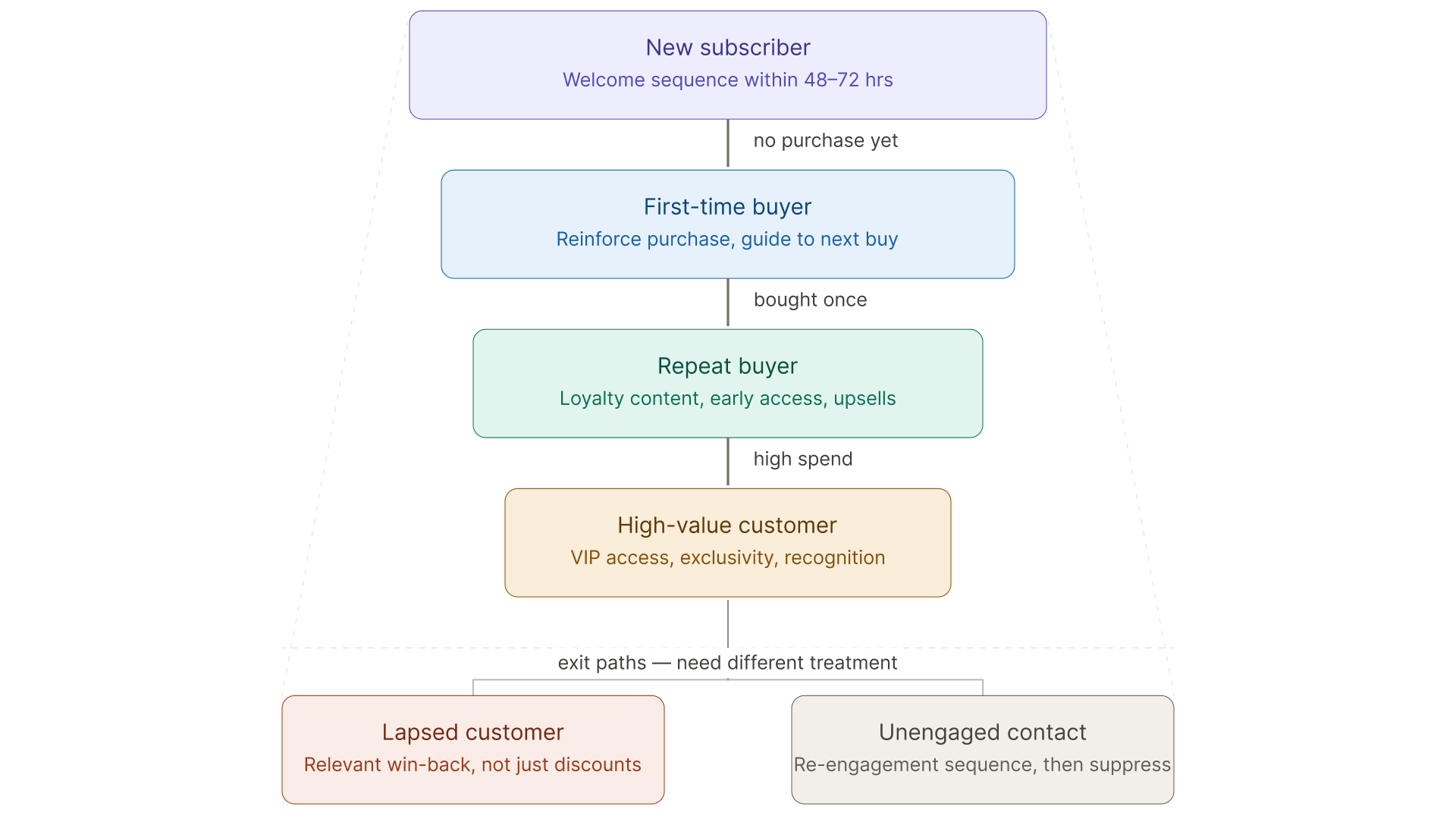
New Subscribers
This is the most time-sensitive segment in most Ecommerce email accounts. A new subscriber who signs up and does not receive communication within the first forty-eight to seventy-two hours is significantly less likely to convert than one who enters a well-structured welcome sequence immediately after sign-up.
The welcome sequence for this segment should introduce the brand properly, communicate what makes it worth buying from, and create a path to first purchase without leading immediately with a hard promotional push that undermines the brand perception before it has been established.
First-Time Buyers
A customer who has made one purchase is in the most precarious position in the entire customer lifecycle. They have demonstrated enough trust to buy once but have not yet formed the habit or loyalty that makes repeat purchasing feel natural rather than considered.
Communication with this segment should focus on reinforcing the purchase decision, delivering value through product guidance or editorial content relevant to what was bought, and introducing the next purchase opportunity at the right moment rather than immediately after the first transaction closes.
Repeat Buyers
Repeat buyers are the commercial backbone of most Ecommerce businesses. They cost less to retain than new customers cost to acquire, and their lifetime value compounds over time in ways that single-transaction customers never produce at the same level.
This segment deserves communication that acknowledges their loyalty without making that acknowledgement feel formulaic or automated. Early access to new products, category-specific recommendations based on their actual purchase history, and loyalty programme updates all serve this segment better than generic promotional campaigns that treat them identically to first-time buyers with no brand history.
High-Value Customers
High-value customers need to be identified and treated separately from the general repeat buyer segment because their commercial contribution is disproportionate to their volume in the list. In most Ecommerce businesses, a small percentage of customers generate a large percentage of total revenue.
These customers respond well to exclusivity and recognition rather than discounts that reduce the perceived value of the brand they have already chosen to spend significantly with. VIP access, personalised recommendations from a real person rather than an automated system, and content that treats them as insiders rather than recipients all serve this segment more effectively than promotional campaigns designed for the broader list.
Lapsed Customers
A lapsed customer is not a lost customer. They are a customer who stopped receiving communication that felt relevant enough to maintain their engagement over time. The definition of lapsed varies by category. A brand with a thirty-day purchase cycle considers someone lapsed at sixty days. A brand with a quarterly purchase cycle may not consider someone lapsed until they have been absent for nine months.
Win-back communication for this segment should not open with a discount. It should open with something genuinely relevant to what the customer bought previously, acknowledge the gap in a way that feels human rather than automated, and give the customer a specific reason to return that connects to their actual history with the brand rather than a generic promotional offer that any contact would receive.
Unengaged Contacts
Unengaged contacts are the segment most brands are reluctant to address because reducing the size of an active send list feels counterintuitive when the goal is revenue growth. The reality is that sending to contacts who consistently ignore emails costs the brand in deliverability terms without producing any commercial return at all.
This segment should receive a structured re-engagement sequence before being suppressed from regular campaigns. The sequence should be short, direct, and give the contact a genuine reason to confirm they want to keep hearing from the brand. Those who do not respond can be suppressed without damaging the relationship further. Those who do respond have self-selected back into the active audience and can be treated accordingly from that point forward.
How Should Segmentation Logic Be Structured Inside an Email Platform?
The technical structure of segments inside a platform like Klaviyo determines how useful they are in practice. A segment built on a single condition is often too broad to produce meaningful results, while overly specific segments can become too small to be commercially useful. This is why many brands hire Klaviyo experts to build balanced, high-performing segmentation strategies.
Layering Conditions Effectively
Useful segments layer two to four conditions that together define a group of customers with genuinely similar needs and behaviours. A segment of customers who purchased in the last sixty days, have a lifetime value above a specific threshold, and have opened at least two emails in the last thirty days is specific enough to justify different communication from the broader list, while containing enough contacts to produce measurable results from the campaigns sent to it.
Dynamic Versus Static Segments
Dynamic segments update automatically as customer behaviour changes. A contact who makes their second purchase moves from the first-time buyer segment to the repeat buyer segment without any manual update required. Static segments are fixed at a point in time and do not update unless manually refreshed. Most retention-focused segmentation should use dynamic logic so the segments reflect current customer behaviour rather than a historical snapshot that becomes less accurate over time.
Avoiding Over-Segmentation
Over-segmentation is as problematic as no segmentation at all. Brands that build thirty segments and struggle to maintain relevant communication for each of them often end up sending less frequently to all of them rather than more strategically. Starting with five to seven well-built segments and adding complexity as the programme matures produces better results than attempting to build a complete segmentation architecture before the team has the capacity to execute consistently against it.
How Does Segmentation Directly Improve Customer Retention?
Retention is where segmentation produces its most compounding commercial results over time. A customer who receives communication that consistently feels relevant to their actual relationship with the brand stays engaged longer, purchases more frequently, and is significantly harder for a competitor to displace than a customer who receives generic campaigns that could have come from any brand in the same category.
Reducing Churn Through Predictive Targeting
Predictive churn scores in platforms like Klaviyo identify customers who are showing early signs of disengagement before they have technically lapsed. Acting on those signals with targeted retention communication before the customer leaves produces better outcomes than win-back campaigns sent after the customer has already developed a habit of ignoring the brand's emails entirely.
Increasing Purchase Frequency Through Timely Communication
Segmentation by predicted next purchase date allows a brand to send communication when a specific customer is most likely to be ready to buy again, rather than sending everyone the same campaign on the same day, regardless of where they are in their individual purchase cycle. That timing improvement alone produces measurable lifts in conversion rate without any change to the email content itself.
Building Loyalty Through Relevant Recognition
Customers who feel known by a brand stay loyal to it in ways that discount programmes alone cannot sustain. Segmentation enables the kind of relevant, personalised communication that creates that feeling at scale without requiring a team to manually craft individual messages for each customer relationship. The segment does the targeting work. The communication does the relationship work. Together, they produce retention outcomes that neither achieves independently at the same level.
Brands focused on long-term retention often rely on structured, Learn how Ecommerce email marketing flows to increase repeat purchases and customer lifetime value more consistently.
How Does Segmentation Work Alongside Automation?
Segmentation and automation work best when they are built together rather than as separate systems that operate independently of each other inside the same email account. A segment identifies who should receive a specific type of communication. An automated flow delivers that communication at the right moment without requiring a campaign to be manually built and sent each time the trigger condition is met.
The most effective Ecommerce email programmes use segmentation to define the audience for each automated flow and then let the automation handle the timing and delivery. The abandoned cart flow sends to customers who abandoned, but the version of that flow each customer receives varies based on their segment. A high-value loyalist receives a different message from a first-time visitor. A price-sensitive first-timer receives a different offer from a repeat buyer who abandoned because of distraction rather than hesitation.
That combination of segmentation logic and automation delivery is what separates email programmes that generate consistent, compounding revenue from those that generate one-off campaign results that reset to zero each time a new send goes out to the full list.
What Metrics Should Brands Track to Measure Segmentation Performance?
Measuring the performance of a segmented email programme requires tracking different metrics for different segments rather than applying the same benchmarks across the entire list uniformly. A win-back segment with a five percent conversion rate is performing well, given the context. A repeat buyer segment with the same five percent conversion rate may be significantly underperforming relative to what the data would suggest is achievable for that group.
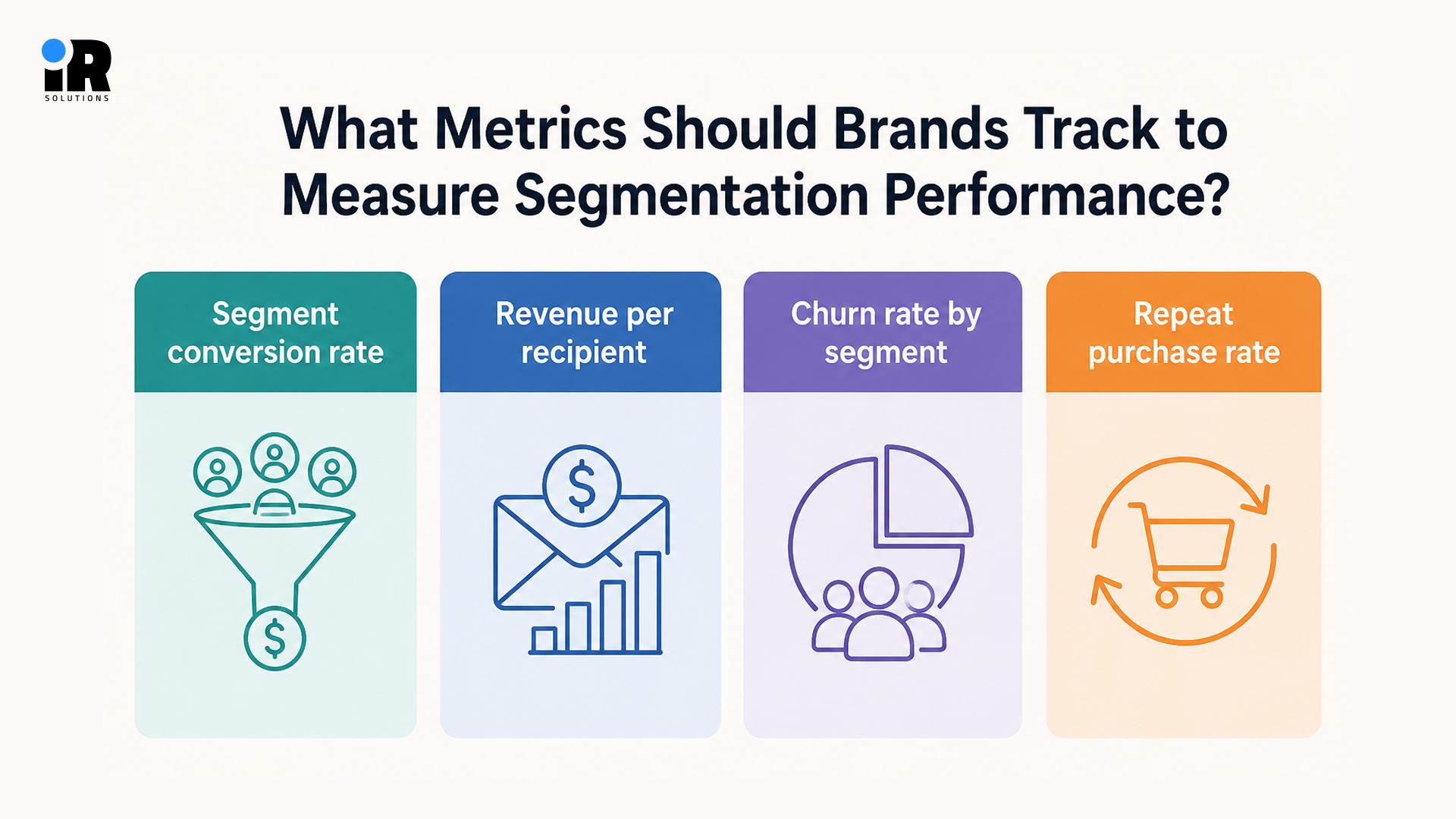
- Segment conversion rate: The percentage of contacts in a specific segment who complete a purchase within the attribution window of the campaign or flow sent to them specifically.
- Revenue per recipient: Attributed revenue from a segment campaign divided by the number of contacts who received it. This normalises for segment size and makes different campaigns directly comparable regardless of how many contacts each segment contains.
- Churn rate by segment: Tracking how many contacts move from active to lapsed status within each segment over a defined period reveals which segments the current communication strategy is retaining effectively and which it is not.
- Repeat purchase rate: The percentage of first-time buyers who make a second purchase within a defined window. This is the single most important retention metric for most Ecommerce brands and the one most directly influenced by how well the post-purchase segmentation and communication strategy performs in practice.
Conclusion
Email segmentation is not simply an advanced feature inside an email platform. It is the foundation that determines whether an email marketing strategy can produce meaningful long-term results. Customers expect communication that reflects their behaviour, purchase history, and level of engagement with a brand, rather than generic campaigns sent to everyone equally. Brands that use segmentation effectively build stronger retention, improve conversion rates, and increase customer lifetime value over time. Companies looking to scale these strategies often partner with ecommerce email marketing company to create advanced segmentation systems, optimise automated flows, and deliver more personalised customer experiences across the entire lifecycle.
Frequently Asked Questions
How does email segmentation actually work in ecommerce marketing?
Email segmentation works by grouping customers using behavioral and transactional data like purchase history, engagement patterns, and lifecycle stage, so each audience receives tailored messaging aligned with intent and conversion potential.
Why is email segmentation important for ecommerce brands?
It improves conversions, increases customer retention, reduces unsubscribe rates, and drives higher email revenue by ensuring messages are relevant, timely, and aligned with customer needs and buying behavior.
What are the most important types of email segmentation?
The most effective segmentation types include purchase behavior segmentation, engagement-based segmentation, predictive segmentation, and lifecycle-based segmentation, all designed to improve targeting accuracy and performance.
How does segmentation improve customer retention?
Segmentation improves retention by delivering relevant messages at each stage of the customer journey, encouraging repeat purchases, reducing churn risk, and strengthening long-term brand engagement and loyalty.
What data is needed for effective segmentation?
Effective segmentation relies on purchase frequency, order value, product category, engagement history, and predictive metrics such as churn probability and lifetime value to build accurate and actionable customer groups.
What is the difference between dynamic and static segments?
Dynamic segments automatically update based on real-time customer behavior, while static segments remain fixed until manually changed, making dynamic segmentation more effective for ongoing ecommerce automation.
Can over-segmentation hurt email performance?
Yes, over-segmentation can reduce efficiency by creating too many small audiences, making campaigns harder to manage, lowering consistency, and ultimately weakening overall email marketing performance.
How does Klaviyo help with email segmentation?
Klaviyo enables advanced segmentation using real-time behavioral and predictive data, allowing brands to automate highly targeted email flows that adapt continuously to customer actions and lifecycle changes.