


Key Takeaways
- AI improves RWA tokenization by automating asset valuation, compliance monitoring, risk detection, and portfolio management across the full asset lifecycle.
- Machine learning, NLP, predictive analytics, computer vision, and generative AI are the five core technologies powering AI-driven tokenization platforms in 2026.
- AI and blockchain work together by combining immutable ownership records with intelligent data analysis, risk detection, and automated decision support.
- Integrating AI with RWA tokenization reduces manual work, improves accuracy, speeds up compliance, and makes asset management scalable without proportional increases in operational headcount.
- The cost of building an AI-powered RWA tokenization platform typically ranges from $100,000 to $500,000 depending on asset types, AI functionality, and compliance scope.
Real-world asset (RWA) tokenization is changing how businesses issue and manage assets such as real estate, bonds, funds, commodities, and private equity on blockchain networks. But managing these assets at scale means handling large volumes of market, financial, investor, and compliance data and that's where AI comes in, processing this data faster and supporting more efficient decision-making across the full asset lifecycle.
This shift isn't theoretical, tokenized money-market funds and institutional pilots through 2024 and 2025 have already pushed tokenization from proof-of-concept into live production, while regulators have started setting clearer expectations for AI's role in that infrastructure.
BlackRock's BUIDL and Franklin Templeton's on-chain fund are among the clearest signs of institutional traction, and Singapore's MAS Project Guardian has laid out fund-lifecycle patterns regulators elsewhere are now watching. As real capital moves on-chain and frameworks mature, AI shifts from experimental add-on to core operational layer.
What Is AI-Powered RWA Tokenization?
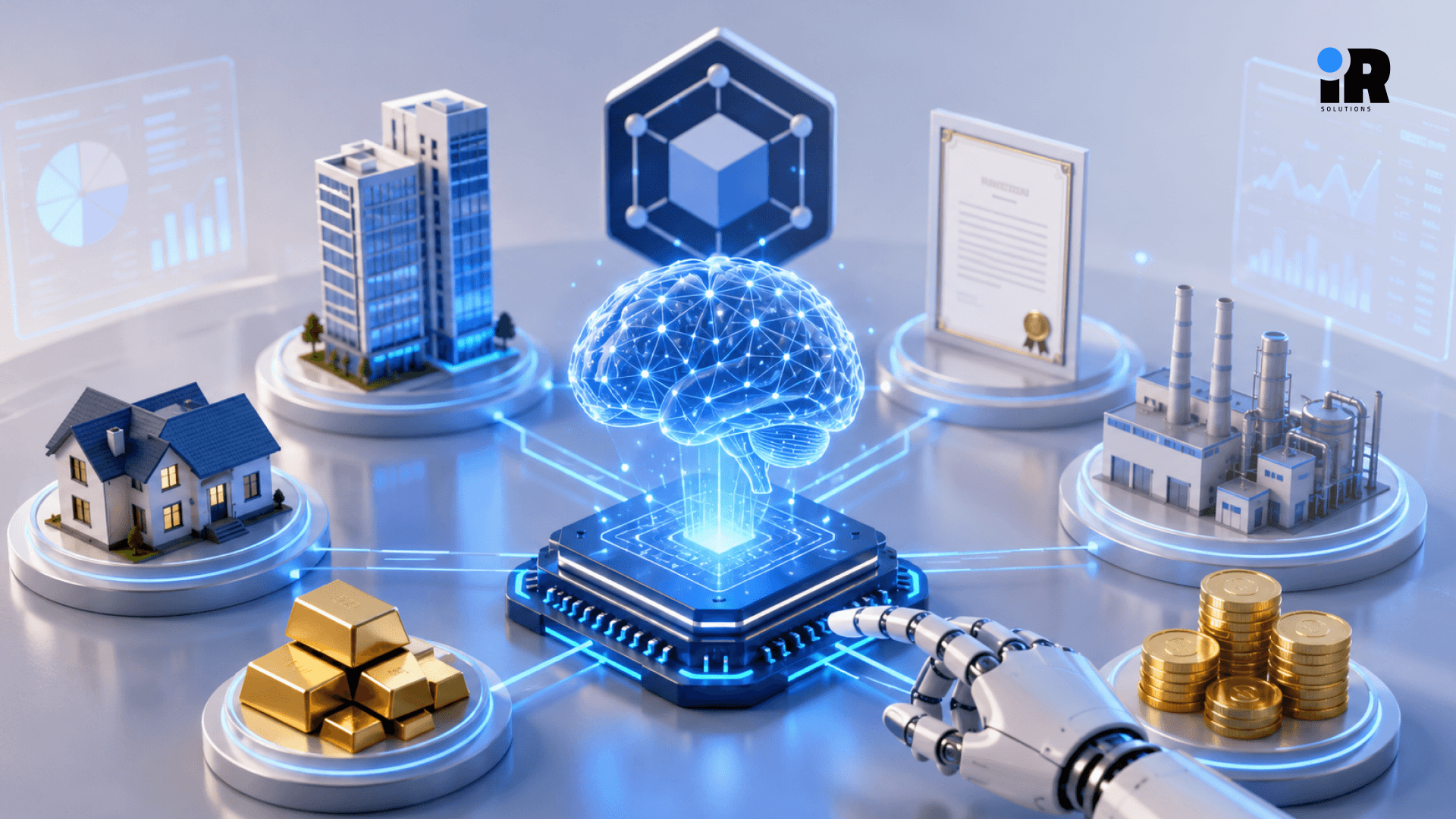
AI-powered RWA tokenization combines blockchain technology with AI to tokenize and manage real-world assets more efficiently. Blockchain records ownership and transactions, while AI analyzes asset data, supports valuation, monitors compliance, detects risks, and helps manage tokenized portfolios.
By processing large amounts of asset, market, and investor data, AI can reduce manual work and provide faster insights throughout the asset lifecycle from asset evaluation and token issuance to compliance and ongoing management.
How Does AI Improve RWA Tokenization?
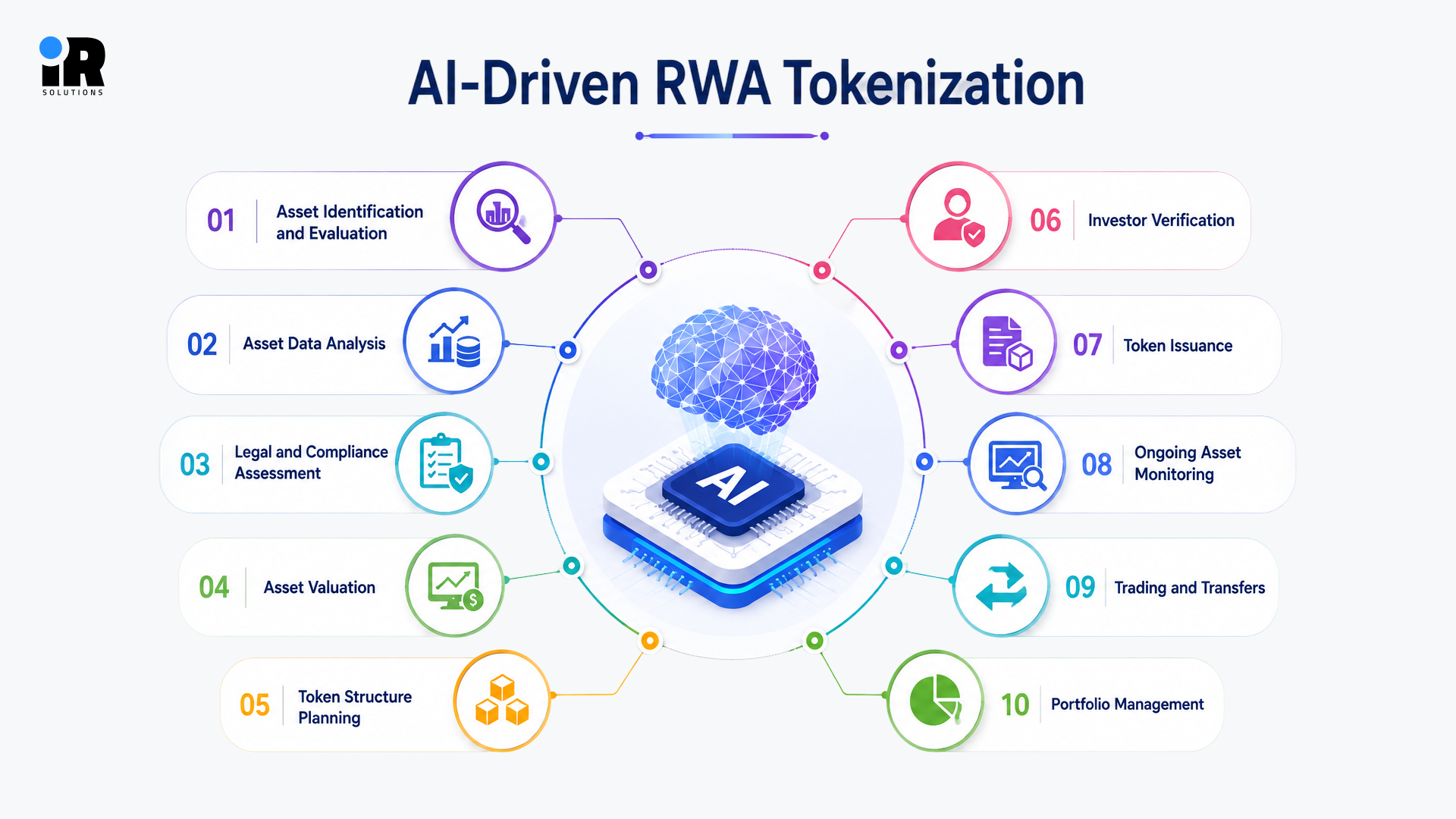
AI contributes to every stage of the RWA tokenization process rather than only the post-issuance management phase, where most platforms currently apply limited automation.
Asset Identification and Evaluation
AI analyses market data, ownership records, and income history to identify which assets within a portfolio are suitable candidates for tokenization based on defined criteria rather than relying on manual assessment that is slower and more prone to inconsistency across large asset sets.
If you're weighing which assets are worth tokenizing, our complete guide to tokenizing assets walks through exactly how to evaluate candidates.
Asset Data Analysis
Machine learning models process structured financial data, unstructured legal documents, and external market signals simultaneously to produce a complete data picture of each asset before any tokenization decision is made or any investor is approached with an offering.
Legal and Compliance Assessment
NLP systems read legal documentation, regulatory filings, and jurisdiction-specific compliance requirements to flag issues that would affect the tokenization structure before the legal preparation phase begins rather than discovering them after development is already underway.
Asset Valuation
AI valuation models pull real-time market data, comparable transaction records, and macroeconomic signals to produce continuous valuations that are more current and more consistent than periodic independent assessments conducted on a quarterly or annual cycle.
Token Structure Planning
AI analyses investor demand data, comparable tokenization structures, and regulatory constraints across target jurisdictions to recommend token economics, distribution schedules, and compliance parameters that reflect current market conditions rather than generic templates.
Investor Verification
AI-powered KYC systems process identity documents, cross-reference watchlists, and assess investor risk profiles faster than manual review while maintaining the accuracy that regulated onboarding requires across all eligible investor categories.
Token Issuance
AI monitors the issuance process in real time, flagging anomalies in subscription patterns, payment confirmations, and wallet verification that could indicate fraud or compliance issues before tokens are distributed to investor wallets.
Ongoing Asset Monitoring
AI systems track asset performance continuously after issuance, comparing actual performance against projected benchmarks and alerting the asset manager when deviations exceed defined thresholds that warrant investigation or action.
Trading and Transfers
AI monitors secondary market activity for patterns that indicate market manipulation, unusual concentration of ownership, or compliance violations in transfer behaviour that automated rule enforcement alone would not detect without intelligent pattern recognition.
Portfolio Management
AI optimises portfolio composition across multiple tokenized assets, balancing risk, yield, and liquidity based on investor objectives and market conditions that change more frequently than any manual rebalancing process can track and respond to effectively.
Key AI Technologies Used in RWA Tokenization
The specific AI and machine learning capabilities deployed in a tokenization platform determine what the system can actually do rather than what it is theoretically capable of given sufficient data and configuration.
Machine Learning
Machine learning models analyse historical transaction data, asset performance records, and market signals to identify patterns that inform valuation, risk assessment, and portfolio management decisions without requiring explicit programming for each new scenario the system encounters.
Natural Language Processing
NLP systems read legal documents, regulatory filings, news sources, and investor communications to extract relevant information, flag compliance issues, and summarise complex documents in ways that reduce the time legal and compliance teams spend on routine document review.
Predictive Analytics
Predictive models forecast asset performance, investor behaviour, market trends, and compliance risk based on historical data and current signals, giving asset managers actionable insights before events occur rather than analytical summaries after the fact.
Computer Vision
Computer vision systems process physical asset documentation, property inspection reports, and visual evidence of asset condition to support valuation and due diligence processes for asset classes where physical characteristics affect financial performance significantly.
Generative AI
Generative AI produces investor reports, compliance summaries, asset descriptions, and regulatory filings from structured platform data, reducing the manual writing and formatting work that documentation obligations currently require from operational teams across the platform.
How AI Improves RWA Asset Valuation
Accurate, current valuation is one of the most operationally significant challenges in tokenized asset management, and AI addresses it more reliably than periodic manual assessment at any meaningful scale.
AI systems analyse real-time market data continuously, pulling price signals from comparable transactions, market indices, and macroeconomic indicators to maintain a current valuation model for each tokenized asset without waiting for a scheduled independent assessment. Historical pricing analysis identifies long-term trends and cyclical patterns that inform forward-looking valuation models rather than relying solely on current market conditions that may not reflect the asset's full performance cycle.
Comparable asset analysis matches each tokenized asset against a database of similar assets in the same category and geography, producing valuation benchmarks that are more granular than broad market indices and more current than annual third-party appraisals. Anomaly detection flags sudden valuation movements that fall outside expected ranges, alerting asset managers to investigate whether the movement reflects genuine market conditions or data quality issues that could mislead investor reporting.
AI for RWA Compliance and Regulatory Management
Compliance is the function that most benefits from AI assistance in tokenized asset platforms because the volume, complexity, and pace of regulatory requirements exceed what manual processes can monitor consistently across large platforms.
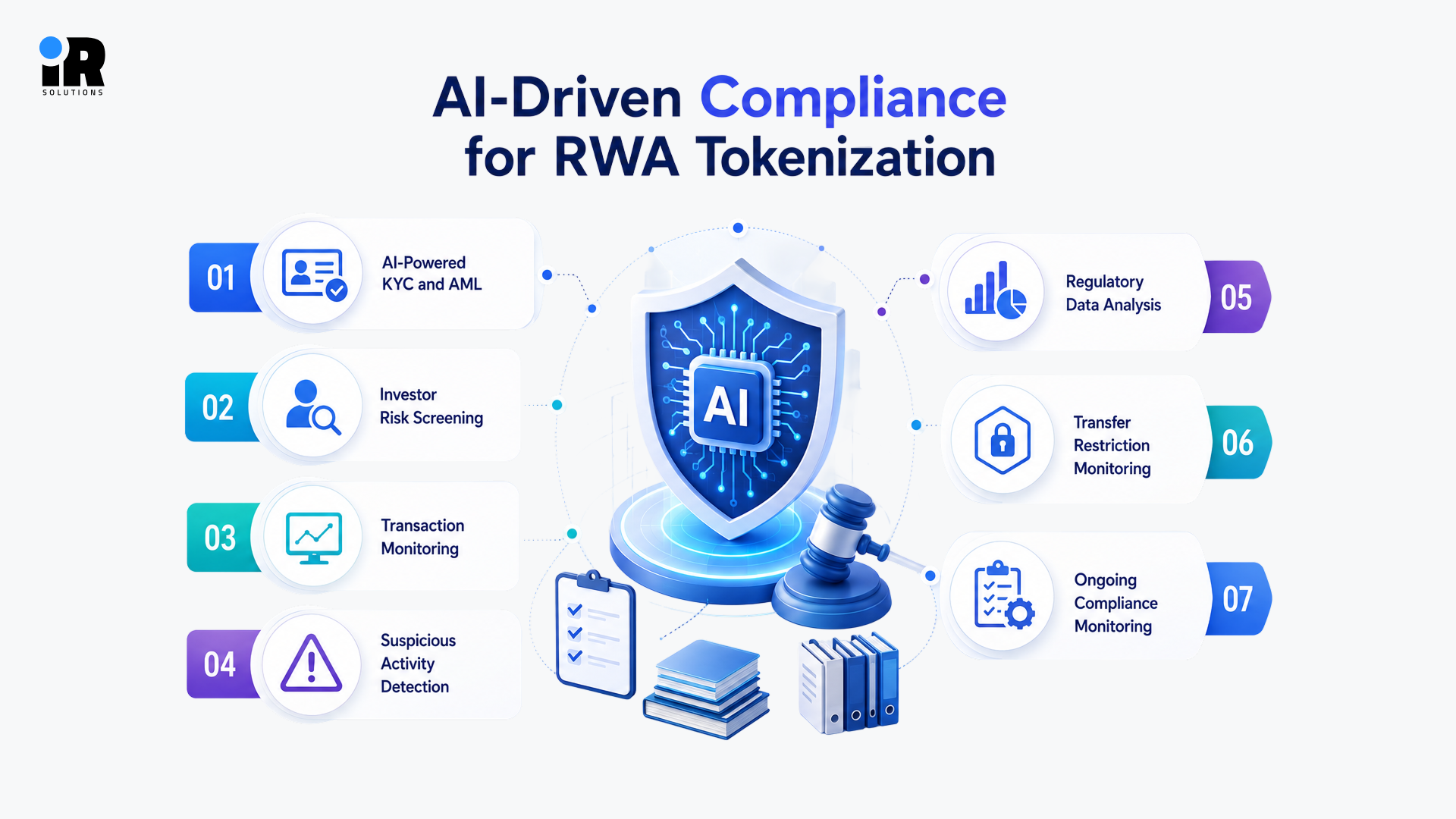
AI-Powered KYC and AML
AI systems process identity documents, cross-reference global watchlists, and assess investor risk profiles in minutes rather than days, maintaining the accuracy that regulated onboarding requires while processing volumes that manual review teams cannot match.
Investor Risk Screening
Machine learning models assess each investor's risk profile based on transaction history, geographic exposure, and behavioural patterns, flagging higher-risk relationships for enhanced due diligence before any token issuance or transfer is approved.
Transaction Monitoring
AI monitors every transaction on the platform in real time, comparing each event against baseline patterns and regulatory thresholds to identify activity that warrants investigation before it develops into a compliance incident.
Suspicious Activity Detection
Anomaly detection models identify unusual transaction patterns, unexpected concentration of ownership, and behavioural signals that indicate potential market manipulation or regulatory violations that rule-based systems would not detect without intelligent pattern recognition.
Regulatory Data Analysis
NLP systems monitor regulatory publications, jurisdiction-specific guidance, and compliance updates across all markets where the platform operates, alerting compliance teams to changes that require platform or smart contract updates before enforcement deadlines.
Transfer Restriction Monitoring
AI continuously validates that transfer restriction logic in the smart contract reflects current regulatory requirements in each jurisdiction and flags discrepancies between the encoded rules and updated regulatory guidance that require contract or compliance layer updates.
Ongoing Compliance Monitoring
AI maintains a continuous compliance monitoring function that runs across all platform activity rather than conducting periodic reviews, which means compliance issues surface in real time rather than during scheduled audits that discover problems after they have already occurred.
AI-Powered RWA Asset Management
AI makes asset management more proactive by continuously tracking portfolio performance and identifying changes before they become major issues. Instead of waiting for periodic reviews, asset managers can receive real-time alerts when assets move outside expected performance levels.
AI can also bring together asset performance and market data to provide a broader view of portfolio conditions. It can track income, occupancy, yield, and asset values while identifying concentration risks, correlated exposures, and emerging market trends across the entire portfolio.
Reporting and cash flow management can also be automated. AI can generate investor reports, regulatory filings, and performance summaries using live platform data, while forecasting models can estimate future income, distributions, and liquidity needs based on current market conditions.
AI for Tokenized Real Estate Management
Real estate is the most active category for RWA tokenization, and AI contributes specific capabilities that address the asset class's particular management challenges more effectively than generic asset management tools.
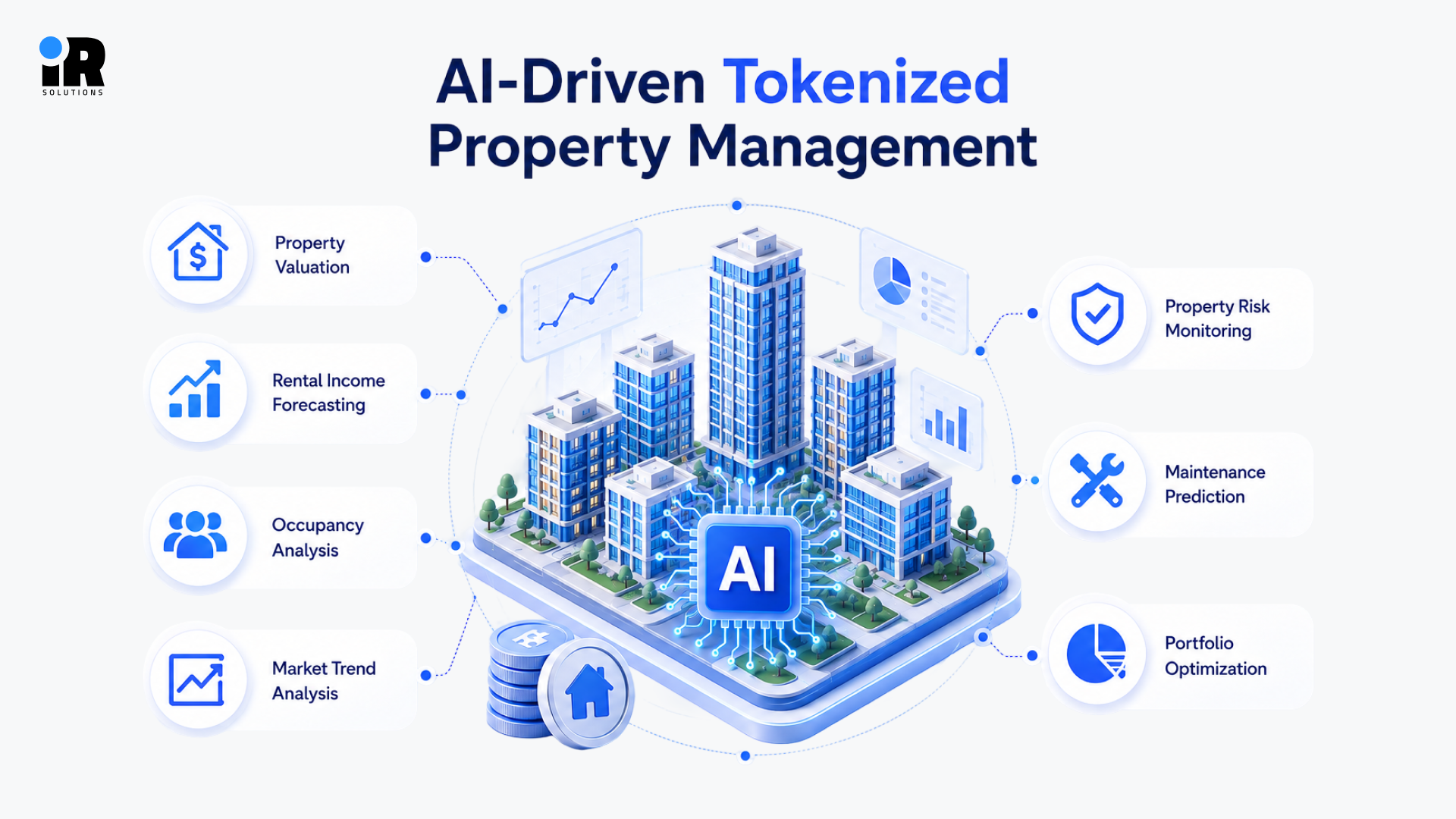
Property Valuation
AI valuation models analyse transaction data, rental yields, location signals, and macroeconomic factors to maintain current property valuations without waiting for scheduled independent assessments that produce valuations that may already be outdated when they are delivered.
Rental Income Forecasting
Machine learning models forecast rental income based on current tenancy data, market rental trends, lease expiry patterns, and comparable property performance to give asset managers a reliable forward view of income rather than historical averages that do not reflect current conditions.
Occupancy Analysis
AI analyses occupancy patterns across property portfolios to identify underperforming assets, seasonal demand variations, and tenant retention risks before they affect income distributions to token holders in ways that damage investor confidence.
Market Trend Analysis
AI monitors local and regional property market trends continuously, identifying emerging opportunities and risks across geographies and property types faster than manual market research processes that operate on quarterly reporting cycles.
Property Risk Monitoring
AI models assess physical asset risks including maintenance requirements, regulatory compliance status, and environmental exposure, flagging assets that require intervention before performance deterioration affects token holder returns.
Maintenance Prediction
Predictive maintenance models analyse property condition data, historical maintenance records, and asset age profiles to forecast maintenance requirements and costs before they become urgent, which allows more cost-effective scheduling than reactive maintenance management.
Portfolio Optimization
AI recommends portfolio composition adjustments based on risk-adjusted return analysis across all tokenized properties, helping asset managers allocate capital more efficiently than static allocation models that do not respond to changing market conditions.
Not sure where to start with real estate? Our step-by-step guide to tokenizing real estate breaks down the entire process from asset selection to token issuance.
AI for Tokenized Financial Assets
Financial asset tokenization generates large volumes of structured data that AI can analyse quickly to support asset management and decision-making. AI models can process bond yields, credit spreads, macroeconomic indicators, and historical performance to assess tokenized debt instruments and forecast potential income streams.
AI can also assess credit risk by analysing issuer financial data, market signals, and behavioural patterns to identify potential changes in credit quality. Portfolio monitoring helps identify concentration risks and correlated exposures across multiple tokenized financial instruments.
Liquidity analysis can track trading volumes, market depth, and bid-ask spreads to provide a clearer view of potential exit options. AI can also automate performance reporting, regulatory filings, and investor communications using live platform data, reducing manual work for operations teams.
AI for Risk Management in RWA Tokenization
Risk management in a tokenized asset portfolio can become difficult to handle manually because there are many data points, frequent market changes, and interconnected risks. AI can help monitor these factors continuously and highlight potential issues before they become serious problems.
AI-powered systems can assess market, credit, and liquidity risks by tracking price movements, issuer health, market depth, and investor redemption activity. This helps asset managers identify changing conditions early and make better decisions about hedging, reallocation, or liquidity management.
AI can also monitor operational, fraud, and compliance risks across the platform. It can detect unusual transactions, smart contract issues, system problems, and potential regulatory gaps, allowing teams to investigate and respond before these issues affect investors or the platform's operations.
How AI and Blockchain Work Together in RWA Tokenization
AI and blockchain solve different but complementary problems in RWA tokenization. Blockchain provides secure ownership records, transparent transaction history, and smart contract automation, while AI analyzes blockchain and market data to identify patterns, detect risks, and generate useful insights.
AI can analyze on-chain transaction data in real time to detect unusual activity, fraud risks, and compliance issues. By combining verified blockchain records with market and performance data, AI can also help asset managers make better decisions based on current information.
AI can also support automated actions through smart contracts. For example, it can help trigger dividend payments, release escrowed funds, or adjust tokenized portfolios when predefined conditions are met, reducing the need for manual intervention in routine processes.
AI-Powered RWA Tokenization Platform Architecture
The platform architecture for an AI-powered tokenization system spans six distinct layers that each handle specific functions and interact with each other through defined interfaces.
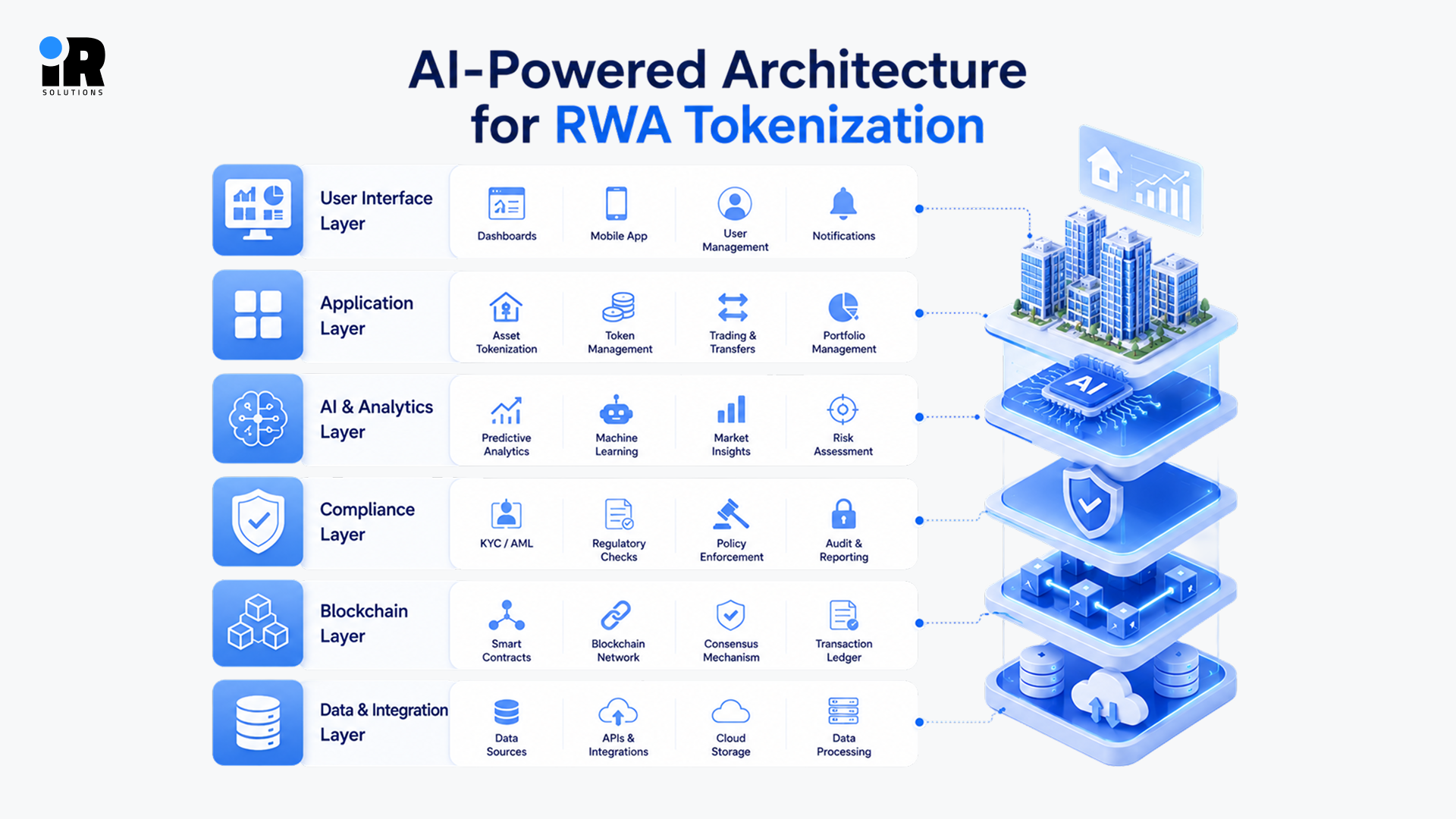
User Interface Layer
Investor, issuer, and admin interfaces provide each participant category with real-time access to AI-generated insights, portfolio performance data, compliance status, and asset management tools without requiring direct interaction with the underlying AI models or blockchain infrastructure.
Application Layer
The application layer manages user interactions, portfolio tracking, transaction processing, reporting generation, and the coordination logic that connects the user interface to the AI analytics and blockchain layers beneath it.
AI and Analytics Layer
Machine learning models, NLP systems, predictive analytics, and anomaly detection algorithms operate in this layer, processing data from the blockchain and external sources to produce valuations, risk assessments, compliance alerts, and portfolio recommendations that feed back into the application layer.
Compliance Layer
KYC systems, AML screening, investor eligibility verification, and transfer restriction monitoring operate in this layer, with AI models enhancing the speed and accuracy of compliance functions that rule-based systems alone cannot perform at production scale.
Blockchain Layer
Smart contracts, token contracts, wallet infrastructure, and on-chain transaction processing operate in this layer, providing the immutable record foundation that the AI analytics layer reads and interprets to produce actionable intelligence for asset managers and compliance teams.
Data and Integration Layer
APIs, databases, external data feeds, custody connections, and third-party integrations sit in this layer, providing the AI models with the external data they need to produce accurate valuations, risk assessments, and market analyses from sources beyond the platform's own transaction history.
AI Use Cases Across the RWA Tokenization Lifecycle
AI contributes different capabilities at each stage of the tokenization lifecycle rather than applying a single function uniformly across all phases of the asset's operational life.
Before Tokenization
AI analyses asset suitability, produces preliminary valuations, assesses legal and compliance requirements across target jurisdictions, and evaluates investor demand signals before any development or legal preparation investment is committed to a specific asset or offering structure.
During Tokenization
AI monitors the issuance process for anomalies, verifies investor identities at scale, validates compliance across all target jurisdictions in real time, and tracks subscription patterns to identify potential issues before the token offering closes and capital is committed.
After Tokenization
AI manages ongoing asset monitoring, portfolio optimisation, compliance surveillance, income distribution calculations, risk detection, and investor reporting continuously throughout the asset's operational life without requiring manual intervention at each monitoring or reporting event.
Benefits of Using AI in RWA Tokenization and Asset Management
AI can make tokenization operations faster and more efficient. It can analyze potential assets quickly, provide more current valuations, and continuously monitor compliance instead of relying on slower manual reviews.
AI also improves risk detection by identifying market, credit, liquidity, and operational risks earlier. This gives asset managers more time to respond before issues affect investors or platform performance.
Finally, AI reduces manual work by automating monitoring, reporting, compliance, and other routine tasks. This allows platforms to manage more assets and investors without requiring a proportional increase in operational staff.
Challenges of Integrating AI With RWA Tokenization
Data quality and availability directly affect AI performance. RWA platforms may have limited historical data for newer asset classes, making it harder to train models for reliable and accurate results.
AI accuracy, bias, and explainability also require ongoing monitoring. Models can perform poorly when market conditions change, while regulated platforms may need human-readable explanations for AI-driven compliance and risk decisions.
Data privacy, smart contract security, and AI security add further complexity. GDPR and similar regulations require careful handling of investor data, while both smart contracts and AI models need regular audits. Integrating AI with traditional financial systems can also increase development time, maintenance requirements, and overall costs.
AI-Powered RWA Tokenization vs Traditional Asset Management
The main difference between AI-powered tokenization and traditional asset management is how quickly data can be analysed and how frequently portfolio, risk, and compliance activities can be monitored.
Function | Traditional Asset Management | AI-Powered Tokenization |
Asset Valuation | Periodic assessments | More frequent data-driven estimates |
Compliance | Scheduled reviews | Continuous monitoring and alerts |
Risk Detection | Manual analysis | Automated pattern and anomaly detection |
Reporting | Manual data collection | Automated reporting from platform data |
Portfolio Monitoring | Periodic reviews | Continuous monitoring |
Market Analysis | Analyst-driven | AI-assisted analysis of multiple data sources |
Response Time | Hours, days, or weeks | Faster alerts and decision support |
AI does not eliminate the need for asset managers or compliance professionals. Instead, it can reduce repetitive analytical work and give teams more timely information for decision-making.
Real-World Applications of AI in RWA Tokenization
Each asset class below represents a current production deployment where AI is contributing specific capabilities rather than a theoretical future application of the technology.
Tokenized Real Estate
AI valuation models maintain continuous property valuations for tokenized real estate portfolios, with rental income forecasting and occupancy analysis providing asset managers with forward-looking performance data that quarterly independent valuations cannot deliver at comparable frequency or currency.
Tokenized Bonds and Treasuries
AI yield forecasting and credit risk assessment models monitor tokenized bond portfolios for performance deviations, credit quality changes, and market risk signals that affect the income distributions investors receive and the secondary market valuations of their token positions.
Tokenized Funds
AI portfolio optimisation and performance prediction models help tokenized fund managers allocate capital across underlying assets more efficiently than manual portfolio construction processes operating on quarterly rebalancing cycles with limited real-time market data.
Tokenized Private Equity
AI analyses private company financial data, market comparables, and transaction precedents to produce more current and more granular private equity valuations than the periodic NAV calculations that traditional private equity fund administration relies on for investor reporting.
Tokenized Commodities
AI monitors supply chain data, futures market signals, and physical inventory records to maintain current valuations for tokenized commodity holdings while detecting anomalies in custody confirmations or supply chain data that could affect the integrity of the reserve backing each token.
Tokenized Credit and Debt
AI credit risk models analyse borrower financial data, payment history, and macroeconomic signals to monitor the credit quality of tokenized loan portfolios continuously, flagging deteriorating positions before they affect distribution flows to token holders.
Tokenized Infrastructure
AI analyses usage data, maintenance records, regulatory compliance status, and macroeconomic signals for tokenized infrastructure assets, producing performance forecasts and risk assessments that help asset managers make informed capital allocation decisions across long-duration infrastructure investments.
Want to see who's already doing this at scale? Check out the top 7 platforms leading real-world asset tokenization right now.
Future of AI-Powered RWA Tokenization
AI-powered RWA tokenization is expected to become more autonomous as AI capabilities and tokenization infrastructure mature. Asset valuation models will increasingly use live market data to update valuations continuously, while AI-driven monitoring will oversee portfolios with minimal human intervention.
Predictive risk management will identify potential risks before they develop into major losses, giving asset managers more time to respond. AI-powered portfolio optimization will also enable dynamic rebalancing based on changing market conditions rather than fixed review cycles.
Compliance and financial integration will become more intelligent and automated. AI systems could track regulatory changes across jurisdictions, help update platform rules and smart contracts, and connect tokenization platforms more seamlessly with banking, accounting, and regulatory reporting systems.
How to Build an AI-Powered RWA Tokenization Platform
Building an AI-powered RWA tokenization platform follows a defined sequence where each stage builds on decisions made in the stages before it rather than proceeding in parallel without coordination between the technical and compliance workstreams.
Requirement Analysis
Defining the specific asset classes, AI functions, compliance requirements, and investor categories the platform needs to support before any design work begins prevents the scope changes that consistently extend timelines and budgets beyond initial estimates on complex multi-layer platform builds.
Asset and Use Case Selection
Identifying which asset classes the platform will support at launch and which AI functions are most critical for those specific assets determines the data infrastructure, model development scope, and compliance integration depth required before development begins.
Legal and Compliance Planning
Legal counsel with specific digital securities and AI governance experience reviews the offering structure, confirms compliance requirements in each target jurisdiction, and defines the transfer restriction and compliance monitoring logic before the blockchain and AI development teams begin their respective workstreams.
AI Strategy and Data Planning
Defining which AI models the platform needs, what training data each requires, and how AI outputs will connect to platform functions and user interfaces before development begins prevents the data infrastructure gaps that consistently delay AI integration in production environments.
Blockchain Selection
The network is selected based on security, scalability, compliance compatibility, smart contract capabilities, and ecosystem support requirements confirmed during requirement analysis and legal planning, a decision best made with experienced blockchain development partners rather than on developer familiarity with any particular network.
Platform Architecture Design
The six-layer architecture is designed to define how the user interface, application, AI analytics, compliance, blockchain, and data integration layers will interact with each other and with the external systems the platform depends on for data, custody, and regulatory reporting functions.
AI Model Development
Machine learning models, NLP systems, predictive analytics, and anomaly detection algorithms are developed, trained on appropriate datasets, and validated against performance benchmarks before integration with the platform's application and compliance layers begins.
Smart Contract Development
Equity token contracts, compliance enforcement logic, distribution contracts, governance contracts, and upgrade proxy patterns are written, tested, and prepared for independent security audit before any investor capital is exposed to them in a production environment.
Backend and API Development
The application layer is built to handle user management, portfolio tracking, transaction processing, AI output consumption, and the API connections to external systems that the platform's compliance, data integration, and AI analytics layers require for reliable operation.
Frontend Development
Investor, issuer, and admin interfaces are built to surface AI-generated insights, portfolio performance data, compliance alerts, and asset management recommendations in formats that each participant category can act on without requiring technical knowledge of the underlying AI or blockchain systems.
Compliance Integration
KYC providers, AML screening services, investor eligibility verification systems, and transfer restriction enforcement infrastructure are integrated and tested against all investor types and jurisdictions the platform supports before any live investor onboarding begins.
AI and Blockchain Integration
The connections between AI analytics outputs and blockchain transaction data are built and tested to confirm that AI models receive the on-chain data they need and that AI-generated recommendations connect correctly to the smart contract and application layer functions that act on them.
Security Testing
Independent security testing of the platform infrastructure identifies vulnerabilities across all six architectural layers before any deployment to a production environment with real investor capital exposed to the platform's operational systems.
Smart Contract Audit
A third-party smart contract audit from a firm with specific RWA tokenization experience validates that the contract code functions as the legal documentation and compliance requirements specify across all scenarios the contract is likely to encounter in production.
AI Model Testing
AI models are tested against out-of-sample data and edge case scenarios to confirm that they perform reliably outside the conditions represented in their training data before they are deployed to production environments where their outputs affect investor capital or compliance decisions.
Deployment
Contracts are deployed to the chosen blockchain network, AI models are deployed to production infrastructure, and final validation confirms that all compliance, AI analytics, distribution, and governance functions operate correctly under realistic production load conditions.
Monitoring and Maintenance
Post-launch monitoring covers smart contract behaviour, AI model performance, compliance status, and platform security continuously, with maintenance covering model retraining as new data accumulates, regulatory updates as compliance requirements evolve, and platform feature additions as operational experience identifies gaps.
How Much Does It Cost to Build an AI-Powered RWA Tokenization Platform?
Platform complexity, AI functionality, supported asset types, and blockchain selection are the main factors influencing development cost. More AI features and asset classes require greater data infrastructure, compliance integrations, smart contract development, and ongoing maintenance.
AI model development can also represent a significant portion of the budget because building and integrating production-ready models requires specialized expertise. Multi-jurisdiction compliance, smart contract audits, AI testing, and security monitoring further increase costs as platform complexity grows.
Most AI-powered RWA tokenization platforms cost around 100,000–500,000 for the initial development, a premium over standard tokenization builds due to the added data infrastructure, model training, and compliance-layer integration AI functionality requires. Enterprise platforms supporting multiple asset classes, jurisdictions, and advanced AI capabilities can reach or exceed the higher end of this range.
Key cost drivers include:
- Blockchain and smart contract development
- AI model development and integration
- KYC and AML infrastructure
- Regulatory and compliance requirements
- Backend and frontend development
- Third-party data and financial integrations
- Security testing and smart contract audits
- Ongoing AI model maintenance and platform monitoring
Why Choose IR Solutions for AI-Powered RWA Tokenization Development
IR Solutions combines blockchain, AI, compliance, and security expertise to build production-ready RWA tokenization platforms tailored to each business's specific requirements.
The company provides custom platform development, supporting different asset classes, investor types, AI capabilities, and regulatory requirements. Its blockchain expertise helps select suitable enterprise networks, while smart contract development covers issuance, compliance, distribution, governance, vesting, and upgradeable contract functionality.
IR Solutions also integrates AI-powered capabilities such as predictive analytics, NLP, machine learning, and anomaly detection into asset management and compliance workflows. KYC, AML, security audits, AI validation, penetration testing, and continuous monitoring help create a platform designed for secure, compliant, and scalable tokenization operations.
Conclusion
AI makes RWA tokenization platforms more capable, more accurate, and more scalable than the blockchain infrastructure alone can deliver without intelligent data analysis applied to every function from asset valuation through to portfolio management and compliance monitoring. The combination of immutable blockchain records and AI-powered analysis produces a tokenization platform that improves continuously as more data accumulates rather than requiring constant manual reconfiguration to reflect changing market conditions. Building this infrastructure correctly requires getting the AI strategy, data planning, blockchain selection, compliance integration, and security architecture right before development begins, which is the sequence that produces platforms worth operating rather than those that require expensive remediation after the first production issues surface.
Frequently Asked Questions
What is AI-powered RWA tokenization?
AI-powered RWA tokenization combines blockchain-based ownership infrastructure with machine learning systems that analyse, monitor, and manage tokenized assets continuously, improving valuation accuracy, compliance monitoring, risk detection, and portfolio management across the full asset lifecycle.
How does AI improve RWA tokenization?
AI improves RWA tokenization by automating asset valuation, investor verification, compliance monitoring, risk assessment, and portfolio management at a speed and scale that manual processes cannot match, reducing operational costs while improving accuracy and response time across every platform function.
How is AI used in real-world asset management?
AI monitors asset performance continuously, forecasts income streams, detects emerging risks, optimises portfolio composition, and generates investor reports from live data without requiring manual data collection or analysis at each monitoring and reporting cycle.
Can AI help with RWA asset valuation?
Yes. AI valuation models analyse real-time market data, historical pricing, comparable transactions, and macroeconomic signals to produce continuous valuations that are more current and more consistent than periodic independent assessments conducted on quarterly or annual cycles.
How does AI improve compliance in RWA tokenization?
AI processes KYC documents, screens AML watchlists, monitors transaction patterns, detects suspicious activity, analyses regulatory updates, and maintains continuous compliance surveillance across all platform activity in real time rather than during scheduled review cycles.
Can AI detect risks in tokenized assets?
Yes. AI risk models monitor market risk, credit risk, liquidity risk, operational risk, fraud risk, and compliance risk continuously across all tokenized assets and portfolio positions, flagging emerging risks before they affect investor capital or platform performance.
How do AI and blockchain work together in RWA tokenization?
Blockchain provides immutable ownership records and smart contract automation while AI analyses the data generated by blockchain activity to identify patterns, detect anomalies, and produce management insights that raw on-chain data alone cannot surface without intelligent processing.
What types of real-world assets can use AI-powered tokenization?
Real estate, bonds, treasuries, private equity, funds, commodities, credit instruments, and infrastructure assets all benefit from AI-powered tokenization, with AI contributing specific capabilities that address each asset class's particular valuation, management, and compliance challenges.
How much does it cost to build an AI-powered RWA tokenization platform?
Most AI-powered RWA tokenization platforms cost between $100,000 and $500,000 for the initial build depending on asset types, AI functionality, compliance scope, blockchain selection, and the number of jurisdictions the platform needs to support at launch.
What are the challenges of using AI in RWA tokenization?
Key challenges include data quality and availability for model training, AI model accuracy and bias, explainability requirements in regulated markets, data privacy obligations, smart contract and AI model security, integration complexity with traditional financial systems, and ongoing maintenance costs.
Is AI necessary for RWA tokenization?
AI is not strictly necessary for basic tokenization but becomes practically essential for platforms managing multiple asset classes, large investor bases, and complex compliance requirements across multiple jurisdictions where manual processes cannot maintain the accuracy and speed that production operations require.
Can AI automate RWA asset management?
Yes. AI can automate portfolio monitoring, performance tracking, risk assessment, income distribution calculations, compliance surveillance, investor reporting, and portfolio optimisation, reducing the manual operational overhead that traditional asset management requires while improving the accuracy and timeliness of every function it handles.