


Key Takeaways
- Physical gold ownership still involves high upfront costs, storage risk, and limited liquidity for everyday investors.
- Gold tokenization converts physical bullion into blockchain-based digital tokens backed by independently audited vault reserves.
- Fractional ownership lets investors buy small amounts of gold instead of full bars or coins.
- Tokenized gold typically settles in minutes and trades continuously across borders without banking delays or fees.
- Blockchain records make ownership more transparent, verifiable, and considerably easier to audit than paper-based claims.
- Regulatory uncertainty and custodian risk remain the biggest challenges facing wider tokenized gold adoption today.
Gold has remained one of the world's most trusted stores of value for centuries, but owning it has not always been simple. Physical gold requires buyers to consider high purchase costs, secure storage, insurance, authenticity verification, and the process of selling when liquidity is needed. These challenges can make direct ownership less accessible and flexible, especially for investors who want to start with smaller amounts or manage their holdings more easily.
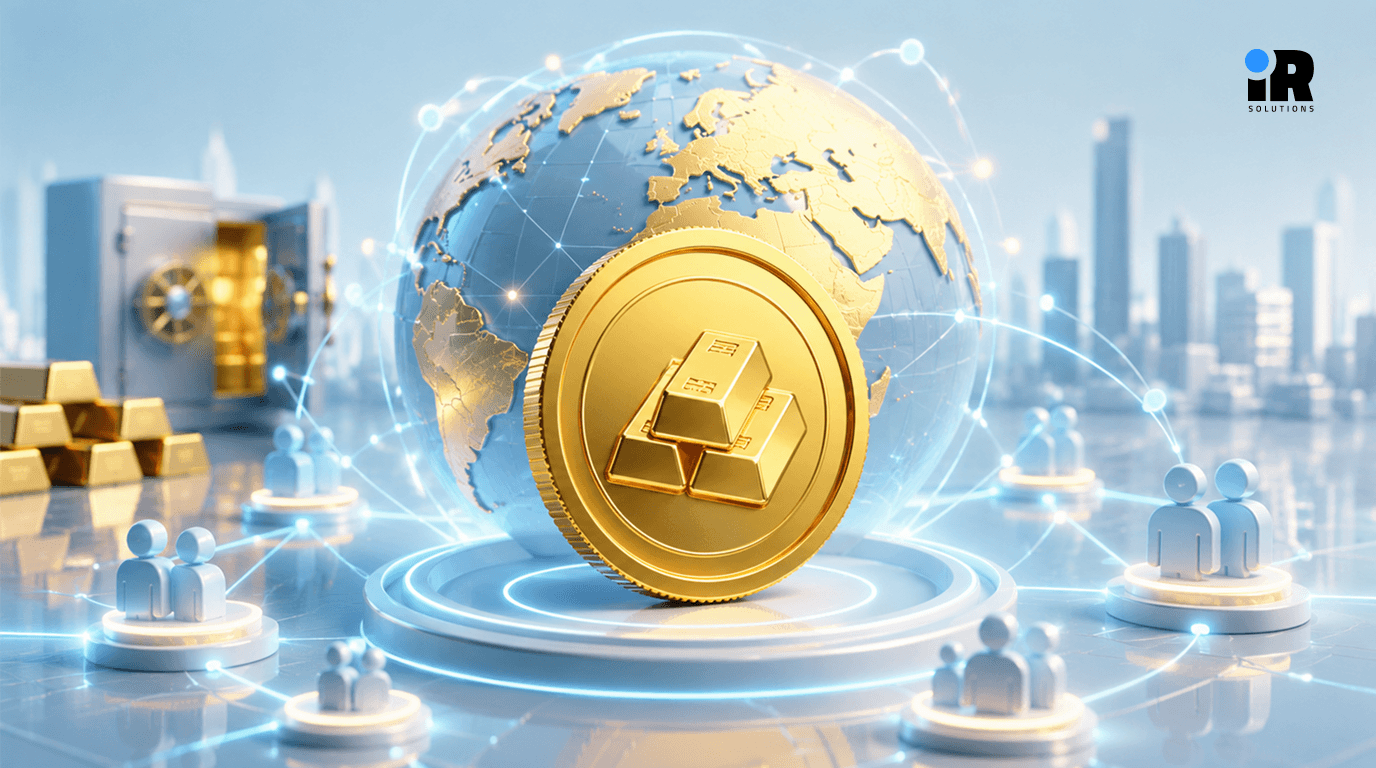
Gold tokenization introduces a new way to access this traditional asset. Through blockchain technology, physical gold can be represented by digital tokens, with each token linked to a specific amount of gold held in custody. Depending on the product structure, tokenization can support fractional ownership, digital transfers, and easier access to gold without requiring investors to store or handle the metal themselves physically.
As interest in digital assets and tokenized financial products continues to grow, the future of digital gold could change how this centuries-old asset fits into modern finance. Instead of remaining a largely physical store of wealth, gold could become more accessible, transferable, and connected to digital financial systems, potentially reshaping how individuals and institutions own and use it.
Why Traditional Gold Ownership Has Limitations
Physical gold carries real value, but owning it directly comes with practical drawbacks most promotional material never honestly addresses upfront.

High Barriers to Entry
Buying a full gold bar or coin requires significant upfront capital that many everyday investors simply do not have available. This pricing structure excludes casual buyers who only want small, manageable exposure to gold as a reliable asset. The entry point alone has historically made gold a wealthy person's holding rather than a broadly accessible one.
Storage and Custody Challenges
Physical gold needs secure vaults, specialised insurance, and ongoing verification to protect it against theft or accidental damage over time. These recurring costs add up quickly and often erode the net returns an investor originally hoped to achieve through gold. Most retail investors have no practical access to professional vaulting and end up making compromises that introduce genuine risk into their holdings.
Limited Liquidity and Accessibility
Selling physical gold usually means finding a trusted dealer, verifying authenticity, and accepting a price below the current spot market value. This process can take days or longer, which limits gold's usefulness during urgent financial situations where fast capital access genuinely matters. Liquidity is the one characteristic that physical gold has never reliably delivered to retail investors in any satisfactory way.
Cross-Border Ownership Constraints
Moving physical gold across international borders involves customs declarations, transport risk, and sometimes restrictive import or export regulations that vary significantly between countries. These constraints make gold difficult to use as a flexible, globally transferable store of value for investors who operate across multiple jurisdictions simultaneously. This friction has kept gold firmly within local markets rather than functioning as the global asset it actually represents by nature.
How Gold Tokenization Changes Ownership
Blockchain technology addresses these limitations by converting physical gold into a programmable, easily transferable digital asset that retains its full physical backing throughout.
Fractional Ownership
Investors can purchase tiny fractions of gold, sometimes as little as a fraction of a gram, without committing to a full unit at current market prices. This divisibility lowers the entry cost considerably and lets far more people participate in gold ownership than the physical market has ever practically allowed before. Building a gold position gradually over time becomes genuinely possible for investors at any income level.
Digital Representation of Physical Gold
Depending on the product structure, a tokenized gold asset can represent a specific quantity of physical gold held in custody. The issuer records the token's issuance and transfers through digital infrastructure, while custodians, audits, or other verification processes help confirm that the physical reserves support the circulating supply. However, transparency, legal ownership, and reserve verification can vary across tokenized gold products.
Ownership Rights and Redemption
The rights attached to tokenized gold depend on how the product is legally structured. Some tokens may provide ownership or beneficial rights connected to physical gold, while others may represent a contractual claim or provide exposure to the asset's value. Redemption terms can also vary depending on the issuer, including minimum redemption amounts, fees, delivery locations, and eligibility requirements. Investors should therefore review the product's legal and custody structure before assuming that a token provides direct ownership or unrestricted access to physical bullion.
Faster Transfers
Blockchain transactions typically settle within minutes, compared to the days required for physical gold transfers through conventional financial channels involving multiple intermediaries. This structure removes the need for banks or brokers to clear and settle each individual trade, which reduces both cost and delay simultaneously for everyone involved. Capital moves more efficiently when the settlement infrastructure works in minutes rather than business days.
Global Accessibility
Tokenized gold markets operate continuously, unlike traditional exchanges that close on weekends and public holidays when markets are often most unpredictable. Anyone with an internet connection and a compatible digital wallet can access and hold tokenized gold without needing a local dealer or established banking relationship to participate. This accessibility fundamentally changes who can own gold and from where they can manage their position.
How Gold Tokenization Could Reshape Global Gold Ownership
Beyond individual convenience, tokenization has genuine potential to reshape how gold ownership functions structurally across the entire global market over time. As gold becomes part of the broader shift toward tokenized real-world assets, the underlying infrastructure for issuing, managing, and transferring these assets will play an increasingly important role.
To understand how gold fits into the broader movement of bringing physical assets onto blockchain networks, see our guide to what RWA tokenization is and why enterprises are adopting it.

Expanding Access to Gold
Tokenization opens gold ownership to people who previously found the asset class financially or logistically out of reach, regardless of their genuine interest in owning it. Small investors in emerging markets can now gain real exposure to gold without needing local dealers, minimum purchase requirements, or large capital reserves sitting idle before participating.
Lowering Barriers to Participation
Minimum investment amounts drop dramatically when gold exists as a divisible digital token rather than a physical bar with a fixed weight and price tied to it. This shift allows students, young professionals, and first-time investors to build gold exposure gradually over time rather than waiting until they can afford a full standard unit.
Enabling Cross-Border Ownership
Tokenized gold moves across countries almost instantly, without the customs paperwork or shipping risk that has always made international gold transfer operationally complex and expensive. Investors in different regions can hold and trade the exact same underlying asset without any of the logistical friction that physical transfer introduces at every border crossing.
Making Gold More Transferable
Digital tokens can be sent, sold, or used as collateral almost immediately, unlike physical gold that requires in-person exchange and manual verification at each stage of the transaction. This transferability turns a traditionally static asset into something far more flexible and usable on a daily basis for investors who need their capital to stay responsive.
Connecting Gold With Digital Finance
Tokenized gold integrates directly with digital wallets, exchanges, and lending platforms that physical bullion simply cannot access without extensive conversion processes and significant delays. This connection lets gold participate actively in modern financial activity rather than sitting idle in a vault generating no additional utility beyond its passive store-of-value function.
How Blockchain Supports Tokenized Gold Ownership
Blockchain provides the infrastructure for issuing, recording, and transferring the digital representation of gold. Depending on the platform and token structure, transactions can be recorded on a distributed ledger, creating a traceable record of token issuance and ownership transfers.
However, blockchain records alone do not prove that the underlying physical gold exists. Trust in a tokenized gold product also depends on secure custody, reserve reconciliation, independent verification, and clearly defined legal ownership and redemption rights. These elements work alongside blockchain infrastructure to connect the digital token with the physical gold it represents.
For a deeper look at how blockchain infrastructure supports the tokenization of real-world assets, explore how blockchain for RWA tokenization works and why it matters.
Transparent Ownership Records
Ownership records update in real time with every transfer, giving all authorised parties a current and accurate picture of who holds what without waiting for reconciliation cycles. This continuous updating is what makes blockchain genuinely superior to paper registries or centralised databases that can fall behind actual transaction activity.
Programmable Ownership
Smart contracts automate redemption, transfer rules, and compliance checks without requiring manual processing from a bank or transfer agent at each step. Developing this type of infrastructure requires blockchain solutions that can support smart contracts, secure transactions, and the rules governing how tokenized assets are issued and transferred. This programmability allows tokenized gold to function smoothly within automated financial systems that could not accommodate physical gold regardless of its underlying value or global reputation.
Faster Settlement
Transactions settle within minutes rather than the days typically needed for traditional physical gold trade settlement through conventional banking and clearing infrastructure. This speed reduces counterparty risk and allows capital to move more efficiently across global markets where timing often determines the quality of the outcome for both parties.
Transaction Traceability
Blockchain-based records can provide a traceable history of token transfers, depending on the network and product structure. This can improve transaction monitoring and support audit and compliance processes when combined with appropriate identity verification, reporting systems, and regulatory controls. However, blockchain records alone do not eliminate the need for issuers and platforms to meet anti-money laundering and other compliance requirements.
Integration With Digital Financial Systems
Tokenized gold connects directly with digital wallets, decentralised exchanges, and lending platforms without needing the conversion steps that physical bullion always requires before interacting with modern financial infrastructure. This integration lets gold function as active collateral rather than sitting as a passive stored commodity that generates no additional financial utility between purchase and eventual sale.
Tokenized Gold vs Traditional Gold Ownership
Comparing tokenized gold with traditional ownership methods highlights exactly where the newer approach offers real advantages. The table below breaks down key differences across cost, liquidity, accessibility, and transfer speed for quick reference.
Factor | Physical Gold | Gold ETFs | Tokenized Gold |
Minimum investment | High, usually a full bar or coin | Moderate, roughly one share | Very low, fractional grams possible |
Storage responsibility | Buyer arranges vault and insurance | Fund manages storage internally | Issuer manages vault and audits |
Trading hours | Limited to dealer availability | Restricted to stock exchange hours | Continuous, available 24/7 |
Redemption for metal | Direct and immediate | Rare or often unavailable | Available, minimums usually apply |
Transfer speed | Days, requires physical handling | Standard market settlement cycle | Minutes, via blockchain network |
Cross-border movement | Restricted by customs rules | Limited to listed markets only | Instant, generally borderless |
How Tokenized Gold Fits Into the Global Financial System
Tokenized gold is finding a meaningful and growing role inside broader digital and institutional financial infrastructure that traditional gold formats could not previously access at comparable speed or scale.
Digital Collateral
Investors can use tokenized gold as collateral to secure loans without needing to sell holdings and lose the price exposure they specifically wanted to maintain through the borrowing period. Gold's relative price stability makes it a more reliable collateral choice compared to volatile assets that lenders view as carrying significantly higher liquidation risk during market stress periods.
Cross-Border Payments
Tokenized gold could support future cross-border payment and settlement models by allowing value linked to physical gold to move through digital infrastructure. Instead of physically transporting bullion, participants could transfer digital representations of gold between compatible systems. However, broader adoption for payments will depend on regulatory frameworks, liquidity, interoperability, and the ability of digital gold products to integrate with existing financial infrastructure.
Collateralized Lending
Decentralised lending platforms increasingly accept tokenized gold as collateral for issuing stablecoin-based loans to users who want liquidity without selling their gold position and losing its long-term value appreciation. Smart contracts automatically enforce loan terms, reducing the need for slow, manual underwriting processes that add cost and delay to traditional collateralized lending arrangements significantly.
DeFi Applications
Some platforms let holders earn passive yield by lending tokenized gold within decentralised finance protocols that match borrowers and lenders without requiring a central intermediary to manage the relationship. Tokenized gold can also be paired with stablecoins inside liquidity pools built specifically for active trading by participants who want gold-denominated market exposure with modern settlement infrastructure.
Institutional Finance
Companies and funds add tokenized gold to treasuries seeking a reliable hedge against currency risk that does not carry the operational burden of physical bullion management across multiple custodian relationships. Institutional-grade issuers provide compliance frameworks and audit standards that meet the strict corporate risk requirements financial institutions must satisfy before adding any new asset category to their balance sheet.
Settlement and Treasury Management
Blockchain records greatly simplify treasury reconciliation compared to tracking physical gold certificates and paper documentation across multiple custodian relationships simultaneously maintained in separate systems. Treasury teams gain real-time visibility into gold holdings instead of relying on periodic audit reports that arrive days or weeks after the period they are supposed to describe accurately.
Risks and Challenges of Tokenized Gold
Despite its clear advantages, tokenized gold still carries specific risks that investors should understand carefully before committing capital to any particular product or issuer operating in this market.

Regulatory and Jurisdictional Uncertainty
Different countries classify tokenized gold differently, sometimes as a commodity, a security, or a separate digital asset category that existing frameworks were not designed to accommodate cleanly. This inconsistency creates compliance challenges for issuers and genuine uncertainty for investors who hold tokens that could be reclassified at any point without advance notice or a transition period provided.
Custodian and Counterparty Risk
The blockchain ledger may be decentralised, but the physical gold backing each token still depends entirely on a centralised custodian for ongoing safekeeping and management. If that custodian fails, mismanages the reserves, or acts dishonestly, token holders could find their backing significantly compromised regardless of how well the blockchain infrastructure performed throughout the same period.
Proof of Reserves and Asset Verification
Investors must trust that circulating tokens genuinely match audited gold reserves held inside secure vault facilities that are inspected with sufficient regularity and genuine independence. Without frequent, credible, third-party verification, the connection between the digital tokens investors hold and the physical metal they represent can weaken gradually without anyone noticing until a problem surfaces publicly.
Liquidity and Redemption Risk
Not every tokenized gold product allows straightforward redemption for physical metal, and minimum thresholds can be genuinely restrictive for smaller investors holding fractional positions below the required level. During periods of market stress, liquidity for smaller token holders may also become considerably harder to find precisely when they most urgently need to access it.
Smart Contract Risk
Tokenized gold relies on smart contract code that, if written incorrectly or not adequately audited by independent specialists, can contain vulnerabilities that undermine redemption or ownership tracking. A flaw discovered after significant capital has been committed could cause serious operational disruption that is difficult and expensive to resolve without materially affecting existing holders in a negative way.
The Future of Global Wealth Ownership Through Tokenized Gold
Central banks have been steadily increasing gold reserves as confidence in traditional currencies faces growing pressure across multiple major economies simultaneously. This sustained institutional demand signals clearly that gold's role as a neutral, politically independent reserve asset is strengthening rather than fading as the global financial system continues its structural evolution.
Tokenization does not change what gold fundamentally is as an asset. It changes how people can practically access, move, and use it without the operational limitations that physical ownership has always imposed on anyone trying to hold it actively. As infrastructure supporting tokenized products matures and regulatory frameworks clarify in key jurisdictions, tokenized gold could become a standard component of digital portfolios for a genuinely broad range of investors.
Younger investors already comfortable with digital assets are likely to find tokenized gold a natural and intuitive entry point into commodity exposure that requires no specialist knowledge or dealer relationship to begin. Over time, this generational shift in how people relate to gold could gradually normalise it as an everyday transferable digital holding rather than a locked-away store of value that requires a specialist intermediary to access or move.
Conclusion
Gold tokenization has the potential to make one of the world's oldest assets easier to access, transfer, and integrate into modern financial systems. However, blockchain technology alone will not determine its success. Wider adoption will depend on whether issuers and the broader market can establish trusted custody, reliable proof of backing, clear ownership rights, practical redemption options, and consistent regulatory standards.
As these foundations develop, tokenized gold could move beyond being simply a digital representation of bullion and become a more functional financial asset. The long-term opportunity lies in combining gold's established role as a store of value with infrastructure that makes ownership and movement more compatible with an increasingly digital financial system.
Frequently Asked Questions
How does gold tokenization change traditional ownership?
Gold tokenization converts physical bullion into digital tokens, allowing fractional ownership, near-instant transfers, and continuous global market access without the storage, insurance, and logistics that physical gold requires from every owner.
Can tokenized gold make gold investment more accessible?
Yes. Tokenized gold lowers minimum investment amounts significantly, letting investors buy small fractions of a gram instead of full bars or coins that most retail investors cannot comfortably afford as a single purchase in current markets.
Can tokenized gold be owned across borders?
Yes. Tokenized gold can be held and transferred internationally without customs paperwork, shipping logistics, or the physical handling delays that cross-border movement of bullion has always involved, regardless of the destination country or regulatory environment.
Is tokenized gold backed by physical gold?
Reputable tokenized gold products are backed one-to-one by physical bullion stored in independently audited, secure vault facilities that publish regular reports confirming the reserve matches the circulating token supply at all times.
How is tokenized gold different from physical gold and gold ETFs?
Unlike physical gold or ETFs, tokenized gold offers direct digital ownership of a specific quantity of metal, fractional access at any investment size, and near-instant settlement without the operational overhead of physical possession or ongoing fund management fees.
What challenges could affect the future adoption of tokenized gold?
Regulatory uncertainty across different jurisdictions, custodian counterparty risk, and inconsistent proof-of-reserve standards remain the most significant challenges currently limiting wider adoption of tokenized gold products among mainstream investors and institutions.
What happens if a tokenized gold issuer fails?
If an issuer fails, token holders may face delayed or partial redemption depending on the custodial protections and legal structures put in place to separate the physical gold from the issuer's own balance sheet and general liabilities at the time of failure.