




Blockchain development costs are rising, and businesses feel that pressure at every stage of the build. Most teams overspend not because the technology is inherently expensive, but because decisions about scope, architecture, and team structure get made too late or not at all. A poorly planned blockchain project will drain budget fast, often without delivering the features that actually drive business value.
If cutting development costs without compromising on quality is the goal, the answer starts with smarter planning. This guide covers actionable strategies that blockchain development companies use to help businesses build faster, spend less, and ship products that hold up.
Why Blockchain Projects Always Go Over Budget
Most blockchain projects don't blow up budgets at launch; they do it slowly, through poor planning and avoidable decisions made too early.
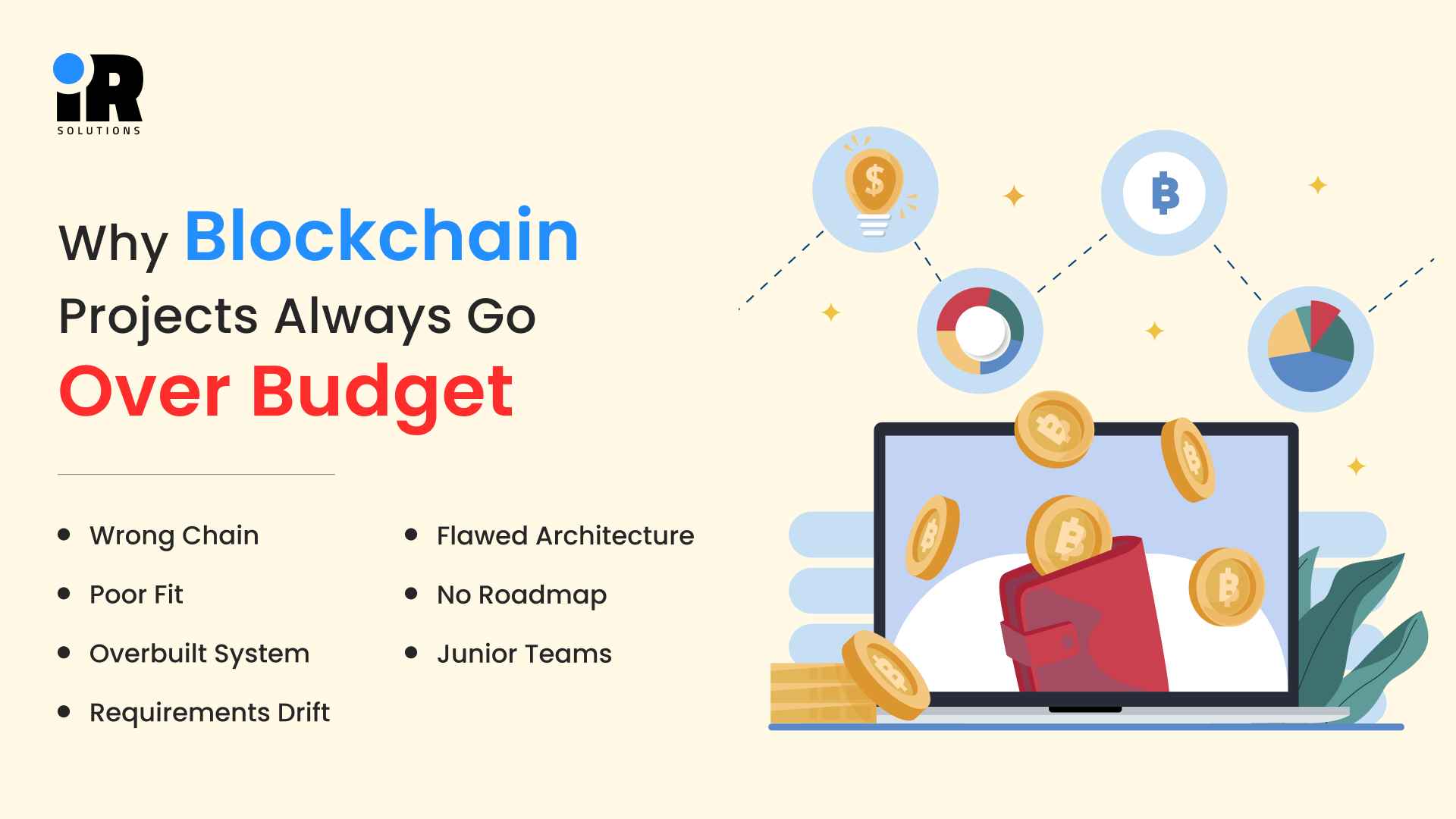
Here's what typically drives costs beyond reason:
- Wrong Chain: Picking a premium blockchain network when a cheaper or more suitable option would deliver the same results for your use case.
- Poor Fit: Choosing a blockchain solution that doesn’t match the actual business requirements or technical needs.
- Overbuilt System: Designing for massive scale too early, before you even have users or real demand.
- Feature Creep: Adding extra features during development that were never part of the original agreed-upon scope.
- Flawed Architecture: Making early structural decisions that seem fine at first but become extremely expensive and complex to fix later.
- No Roadmap: Trying to build and launch everything at once instead of following a phased, structured development plan.
- Junior Teams: Relying on inexperienced developers who are still learning blockchain fundamentals while working on your project.
The fix isn't cutting corners or stripping your app of the features that make it valuable. The fix is making better decisions earlier, before the budget is already committed, that's where most of the savings actually live.
If you want a broader breakdown of building blockchain products, see our Blockchain Development Guide 2026: Use Cases, Costs, Technologies & How to Get Started for a complete overview.
Start With a Lean Scope, Not a Full Feature List
Scope is where most blockchain budgets get decided before a developer writes a single line of code. The more features you try to include in round one, the longer the project runs and the more costly it becomes to fix priorities mid-build.
Build What Proves Your Idea First
One of the most expensive mistakes in blockchain development is treating the MVP like a finished product from day one. Teams try to build everything simultaneously, and the project drags on for months before anything ships.
Your first version doesn't need every feature on your list. It needs the features that prove your core idea works and that real users find valuable. Start with the minimum set of functions that make your app usable, everything else can come after you've validated what your users actually need.
If a feature isn’t expected to be actively used within the first 90 days after launch, remove it from V1 and move it into the backlog. Reassess it once real user behavior is clear. This discipline alone can reduce initial development costs by 30–40%, depending on the size and complexity of the original scope.
The other benefit nobody talks about is speed, a leaner scope ships faster, and a faster ship means earlier feedback. Earlier feedback means you build the right things in V2 instead of guessing. That cycle compounds over time and makes every subsequent phase cheaper than the one before it.
Choose the Right Blockchain for Your Business Needs
The chain you build on shapes everything, from gas costs, transaction throughput, developer availability, and long-term maintenance spend. This is one decision that's very cheap to get right and very expensive to undo later. Not every project needs the Ethereum mainnet, and committing to the wrong network before doing the math can quietly inflate your operating costs for years.
Network Cost Affects Every Transaction You Process
Different blockchains serve different business needs at very different price points. Before picking a network, map your actual transaction volume, security requirements, and user expectations.
- Ethereum: The right choice for high-security financial applications, but expensive for apps that process frequent transactions at scale.
- Polygon: A strong cost-performance balance for applications needing speed, volume, and EVM compatibility.
- Solana: Excellent for high-throughput apps where transaction cost per operation is a core business concern, Hire Solana developers who understand these trade-offs deeply.
- BNB Chain: Solid for DeFi applications and consumer-facing apps that need lower fees without sacrificing reach.
- Private or permissioned chains: The correct pick when your use case doesn't require a public ledger at all.
Run Smart Contract Audits Early in the Process
Security audits are non-negotiable in blockchain development, but when you schedule those changes, the cost and impact are dramatic. Most teams treat audits as a final step, something you do right before launch, that's the most expensive time to discover problems.
A bug caught during active development costs a fraction of what it costs to fix after deployment. On a blockchain, once a contract is live, fixing a critical issue might mean deploying an entirely new contract, migrating user funds, updating all integrations, and communicating changes to your user base. That's not just expensive, it's a trust problem.
What an Early Audit Strategy Looks Like
Building audit checkpoints into your development cycle rather than bolting them on at the end is how experienced teams keep security costs manageable without skipping coverage.
- Run internal code reviews after each smart contract module is completed, not at the end.
- Integrate automated audit tools like Slither, MythX, or Echidna into your development pipeline from day one.
- Schedule a professional third-party audit before testnet deployment, not as the last thing before mainnet.
- Address audit findings in focused sprints rather than one large remediation push at the end.
- Re-audit any contract that undergoes significant changes after the initial review.
This approach doesn't just cut costs, it prevents the kind of security incident that can permanently end a blockchain project. A single exploit that drains user funds doesn't just cost the money it costs the project's reputation, and that's not recoverable.
Reuse Audited Open-Source Code and Libraries
You don't need to write every component from scratch, the blockchain development ecosystem has years of production-grade, community-audited open-source code that is free to build on. Using it isn't cutting corners, it's engineering judgment that experienced teams apply on every project.
What Your Team Can Safely Build On
The libraries below cover the most common smart contract requirements and have been stress-tested across thousands of production deployments.
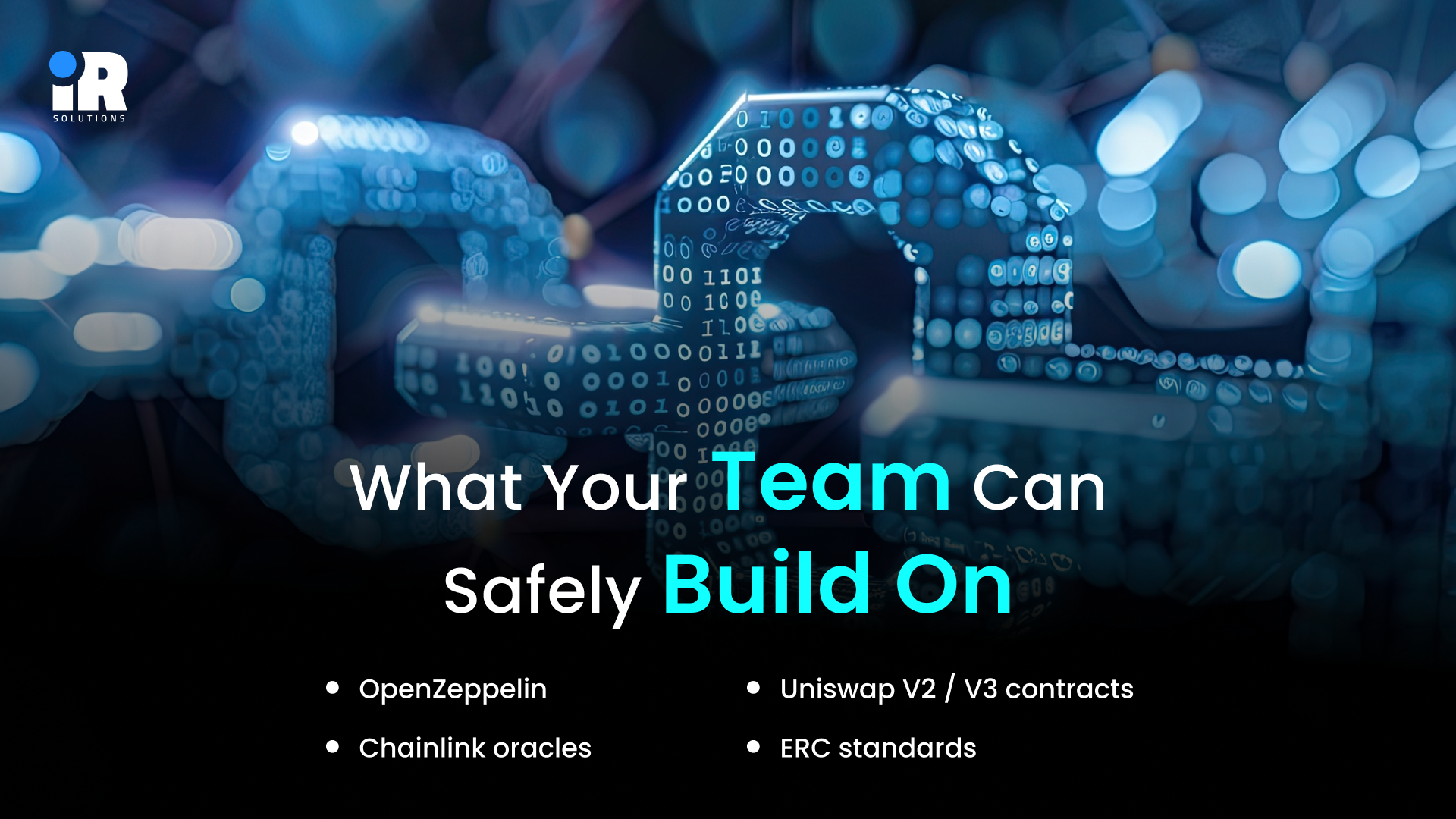
- OpenZeppelin: The industry standard for smart contract components covering tokens, access control, governance, and upgradability patterns
- Uniswap V2 / V3 contracts: For any project requiring decentralized exchange mechanics or liquidity pool functionality
- Chainlink oracles: Pre-built, decentralized price feeds and external data connectors that would cost weeks to build reliably from scratch
- ERC standards: ERC-20 for fungible tokens, ERC-721 for NFTs, and ERC-1155 for multi-token systems all have production-ready reference implementations
Building on proven libraries cuts development time by weeks in most projects. It also shrinks the attack surface because these libraries have already been reviewed and tested across thousands of deployments. The only requirement is that your team actually understands what the code does, copy-pasting without reading is how vulnerabilities get introduced even into audited code.
Hire Offshore Specialists Without Losing Output Quality
Offshore development gets a bad reputation mostly because companies hire on price alone and get what they pay for. The right offshore team doesn't just save money, it delivers faster than an in-house team you'd spend six months trying to build. For businesses that need to move quickly without the overhead of full-time hiring, staff augmentation is often the most cost-efficient path forward.
What Really Determines Developer Value for You
Developer rates vary significantly by geography, but the cheapest hourly rate is rarely the most cost-efficient choice over the course of a full project. The real question is cost per delivered, working feature, not cost per hour. Here's what actually matters when evaluating an offshore blockchain development team:
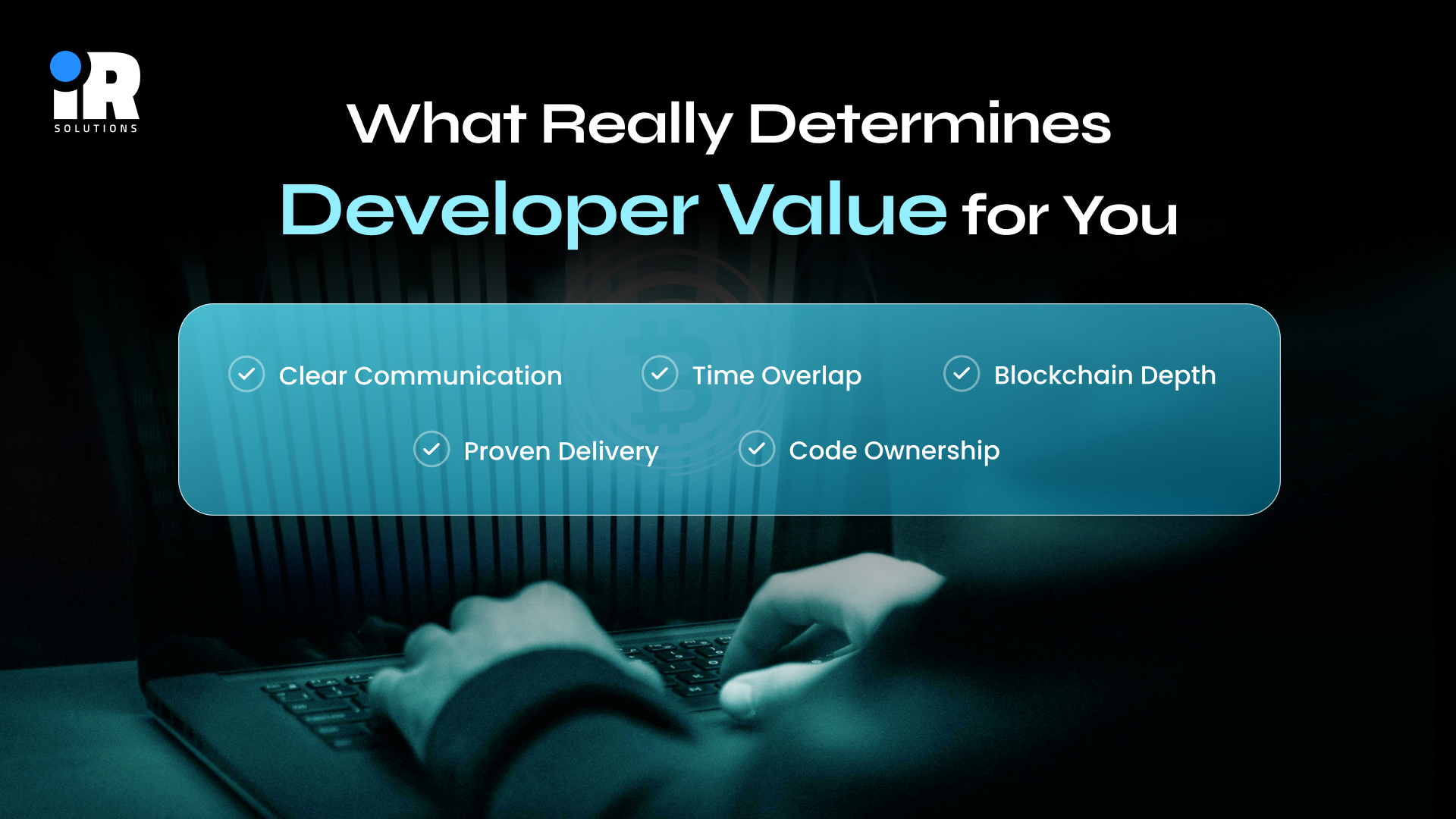
- Clear Communication: Misunderstood requirements often lead to incorrect builds, and fixing them costs far more than getting it right the first time.
- Time Overlap: At least 3 to 4 hours of shared working time enables real-time feedback and avoids 24-hour delays on simple clarifications.
- Blockchain Depth: A developer still learning smart contract patterns on your project is effectively billing you for their learning curve.
- Proven Delivery: The team should have verified experience shipping production blockchain applications that real users actively rely on.
- Code Ownership: Clean, well-documented code ensures your team can fully own, maintain, and scale the system after handover.
Blockchain developers with hands-on experience across Ethereum, Solana, Polygon, BNB Chain, and more can help businesses build production-ready applications without the overhead of creating an in-house team from scratch. Experience working with both early-stage startups and established enterprises also brings a stronger understanding of scalability, security, and long-term product growth.
For insights on skills, costs, and hiring models, refer to How to Hire Blockchain Developers – Skills, Cost & Hiring Models Explained.
Design Modular Architecture Before Writing Any Code
Modular architecture means structuring your application as a collection of independent, loosely coupled components. Each module handles one clearly defined function and can be updated, replaced, or scaled without touching the rest of the system. This design principle matters for your budget in several concrete ways:
- You can build, test, and ship individual modules incrementally instead of waiting for the full system to be ready.
- Defects stay contained, a bug in the payment module doesn't risk breaking the authentication module.
- Future upgrades are cheaper because you're modifying one isolated piece rather than rearchitecting the whole system.
- New developers onboard faster when the codebase follows clear module boundaries with documented interfaces.
Teams that skip modular blockchain architecture often face expensive refactoring, added audit costs, and launch delays later. Investing in proper architecture planning upfront can prevent costly rework and save significant development time.
Test Everything on Testnets Before Going Live
Every transaction on a live blockchain costs real money, even small amounts per transaction add up fast during active testing cycles. Running quality assurance on mainnet is something no experienced team does, but it still happens on projects where no one sets the ground rules early. Use testnets for every single phase of testing:
- Functional testing for all smart contract logic during active development.
- Load and stress testing before making any launch commitments.
- Integration testing with all third-party services, wallets, and external protocols.
- Full QA cycles before each production deployment, including hotfixes.
Why This Matters Beyond Gas Fees
Testnet environments do more than eliminate transaction costs during development; they change how your team works. Testing on testnets gives your team a sandbox where mistakes carry no financial or reputational weight. That environment encourages more thorough testing, more edge case exploration, and more honest debugging conversations. Teams that know errors are free to find tend to find more of them before they become production incidents.
A disciplined testnet strategy can realistically save several thousand dollars in unnecessary gas fees across a mid-sized project. More importantly, it protects against the kind of production bugs that cost far more to fix after users have encountered them. The QA habits built on testnet become the safety culture your team carries into every future release.
Skip Full Decentralization Until Your Product Is Ready
Most blockchain teams try to make everything fully decentralized from day one, but that isn’t always necessary. Pushing for full decentralization too early can slow development and lead to expensive architecture decisions that may need to be changed once the product matures.
When Decentralization Becomes a Cost Problem
Fully decentralized systems are harder to build, harder to test, harder to change, and harder to support. For a product that hasn't yet found its users or validated its core assumptions, those properties work against you. A hybrid model where some components are centralized temporarily and decentralized progressively as the product matures is the smarter path for most businesses.
What you can centralize in V1 without compromising your core blockchain value proposition:
- User onboarding flows and initial authentication mechanisms.
- Off-chain storage for non-critical metadata that doesn't need immutability.
- Admin controls and manual dispute resolution processes.
- Reporting dashboards and analytics interfaces.
- Notification and communication systems.
Integrate With What Your Business Already Has
One of the fastest ways to inflate a blockchain development budget is to rebuild infrastructure that already exists inside your business. Before finalizing your project scope, take stock of what systems are already running. If the business already operates a CRM, payment processor, authentication system, identity verification provider, or analytics stack, don't rebuild any of it inside the blockchain project. Connect to it instead.
A few practical examples of smart integration over unnecessary rebuilding:
- Use existing OAuth or SSO setup instead of forcing every user through a wallet-based authentication flow, they may not be ready for it.
- Connect to a current database for off-chain data storage rather than putting every piece of information on-chain where it doesn't need to be.
- Use established third-party KYC and AML services rather than building compliance logic from scratch inside the application.
- Integrate existing payment rails for fiat on and off-ramp flows instead of building custom gateway logic.
Smart integration means the blockchain layer does what blockchain is genuinely good at immutable record-keeping, transparent execution, and trustless settlement. Everything else can stay where it already lives and already works. A focused blockchain layer is also easier to audit, maintain, and upgrade without touching the rest of the system every time a business requirement changes.
Ready to walk through your blockchain project with a team that has built this kind of work before? Book a free consultation and get a clear picture of what your build actually requires, without any obligation.
Conclusion
Reducing blockchain development costs is not about building less it is about building smarter. Every strategy covered in this guide points to the same truth: the decisions made before development begins determine the budget more than anything that happens during it. Choosing the right chain, keeping scope tight, auditing early, and integrating what already exists all add up to a product that ships on time without bleeding budget on rework. Businesses that treat planning as part of the build, not something separate from it consistently deliver better blockchain products at lower cost. The goal was never to spend less it was always to spend right, and that starts with knowing exactly what you are building and why. If you are ready to take that first step, a software development company makes all the difference before a single line of code gets written.
Frequently Asked Questions
What is the biggest cost driver in blockchain app development?
Poor architecture decisions and over-scoping the MVP are responsible for most blockchain project budget overruns.
Is it cheaper to build on Ethereum or Polygon for a new project?
Polygon is significantly cheaper for most applications, especially those processing high transaction volumes daily.
Can I reuse existing open-source code for my blockchain project?
Yes, audited libraries like OpenZeppelin reduce development time and attack surface at the same time.
When is the right time to get a smart contract security audit?
During development, not after audits, catch vulnerabilities when they cost the least to fix.
Do I need to fully decentralize my blockchain app from day one?
No. A hybrid model that decentralizes progressively is more cost-effective for most early-stage products.
How does working with an offshore blockchain team reduce project costs?
Specialized offshore teams lower hourly rates without sacrificing delivery quality when properly vetted.
What is modular architecture and why does it save money in blockchain projects?
It means building independent components that can be updated separately, making future changes significantly cheaper.
How long does a typical blockchain MVP take to build and launch?
With a focused scope and an experienced team, most blockchain MVPs ship in eight to sixteen weeks.