


Key Takeaways
- Klaviyo SMS flows account for 7.6% of SMS sends but generate 45.2% of SMS revenue, highlighting the value of automated, behavior-triggered messages.
- Segmentation and personalization help brands send more relevant messages and reduce unnecessary unsubscribes.
- Sending SMS at the right time and frequency helps maintain engagement without overwhelming subscribers.
- Combining email and SMS creates a more coordinated customer experience and gives each channel a clear role.
- Tracking click rate, conversion rate, revenue per recipient, and unsubscribe rate helps identify what is working and what needs improvement.
- Clear opt-out options and permission-based list growth help protect subscriber trust and support long-term SMS performance.
Most brands are quietly burning through their SMS lists and blaming the channel for it.
They send the same message to every subscriber, ignore timing, and keep sending even when engagement starts to drop. Unsubscribes increase, clicks decline, and SMS gets blamed for the problem. In reality, the issue is usually the strategy behind the channel.
SMS can be a powerful revenue channel for ecommerce brands when it is used with the right strategy. Dagne Dover, for example, reported a 12,000% ROI in its first year using Klaviyo SMS and grew its SMS list to more than 100,000 subscribers. The brand also attributed 25% of its quarterly revenue to email and SMS combined. These results came from building a structured SMS strategy rather than simply sending more messages.
The difference between a healthy SMS list and a shrinking one often comes down to how you use the channel. Successful brands focus on relevance, timing, segmentation, personalization, and customer preferences. They send messages when they have something useful to offer rather than treating SMS as another broadcast channel.
This guide covers the key Klaviyo SMS marketing practices that can help you increase engagement, reduce unsubscribes, and generate more revenue. You will learn how to build effective SMS campaigns, use automated flows, segment subscribers, coordinate SMS with email, measure performance, and avoid the mistakes that can damage your SMS program.
What Is Klaviyo SMS Marketing?
Klaviyo SMS marketing means sending targeted text messages to your customers directly through the Klaviyo platform. Instead of juggling a separate SMS tool, you manage your texts, emails, and customer data all in one place. When a shopper adds an item to their cart and leaves without buying, Klaviyo can automatically send a text reminder to bring them back. You set the rules once, and the platform handles everything else quietly in the background.
What makes it different from basic bulk SMS is the intelligence sitting underneath it. Klaviyo connects every text message to real customer behaviour, purchase history, and browsing activity, so your messages arrive at the right moment for the right person. It segments your audience automatically, tracks every click and purchase, combines email and SMS in coordinated sequences, and handles compliance so you never accidentally text someone who opted out. The result is a marketing channel that feels personal to the customer and runs almost entirely on autopilot for you.
For brands with more complex stores or larger customer lists, getting the setup right can require additional technical expertise. Klaviyo expert can help configure your flows, segmentation, tracking, and SMS strategy correctly.
Why Klaviyo SMS Marketing Works Better Than Traditional SMS Campaigns
Klaviyo is not just another bulk SMS tool that blasts texts to a contact list. It connects your SMS campaigns directly to customer behaviour, purchase history, and email activity. That connection changes everything about how your messages perform.
Traditional SMS platforms treat every subscriber the same way, but Klaviyo does not. It gives you data-driven personalisation, deep audience segmentation, and native integration with email, all inside one platform. The result is a marketing channel that feels less like advertising and more like a useful conversation with your customers.
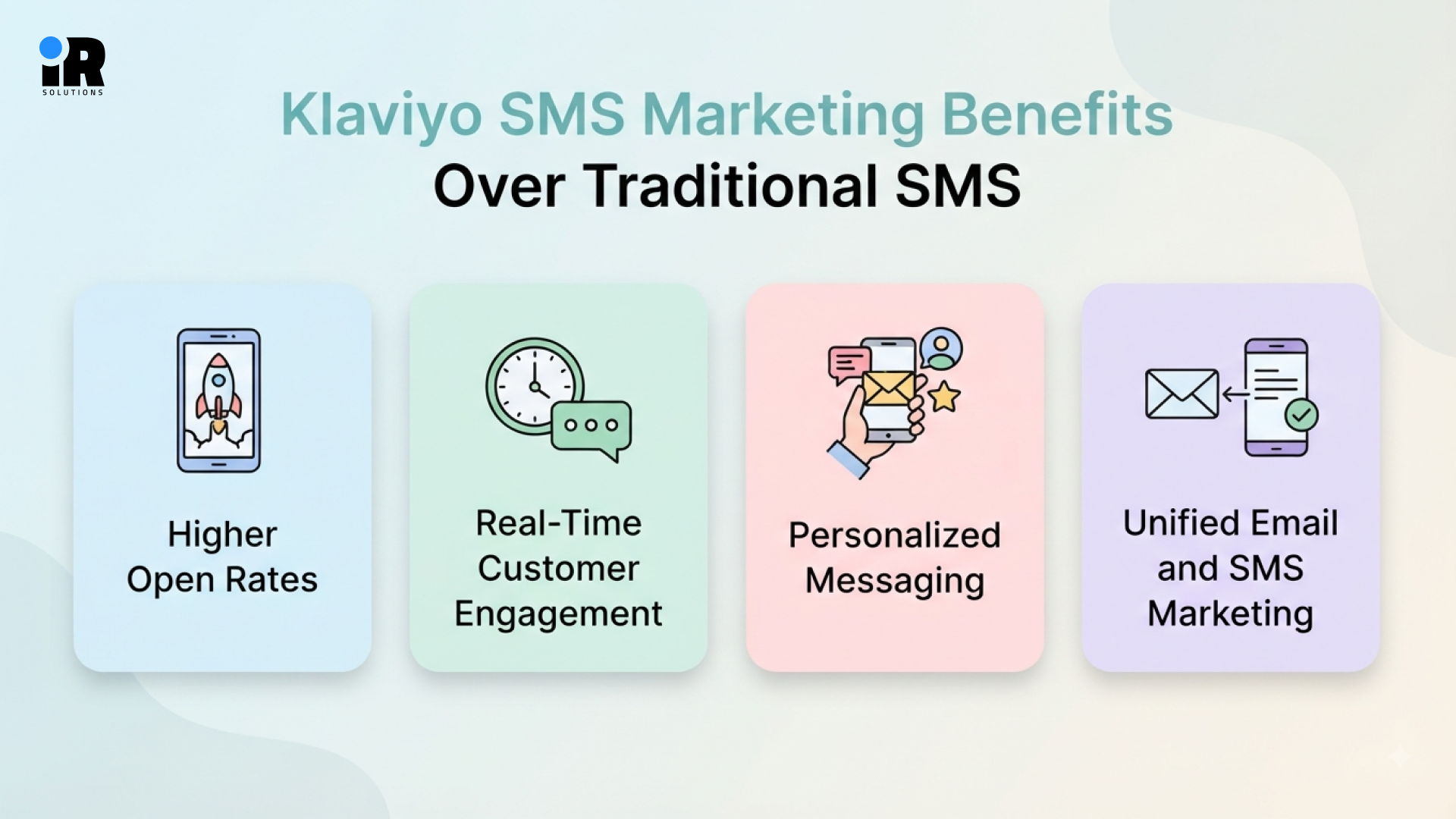
Higher Open Rates
Text messages get seen in a way that emails simply do not, and the purchase data backs that up. According to Klaviyo's SMS marketing statistics, 72% of people have purchased after receiving a brand text, and 65% of those buyers said the message made them buy something earlier than they had planned. That kind of influence over the buying decision is rare to find in any other marketing channel.
Real-Time Customer Engagement
When someone browses a product or abandons a cart, Klaviyo can send a relevant text within minutes. That kind of timing is something a scheduled email simply cannot replicate. Customers get a message that feels connected to what they just did, not something that was queued up hours ago.
Personalized Messaging
Klaviyo pulls from your store data, customer profiles, and email history to personalise every text you send. You can reference a customer's first name, the exact product they viewed, or their last order date without touching anything manually. That specificity is what keeps people on your list instead of opting out.
Unified Email and SMS Marketing
Most brands run email and SMS through separate tools, which creates inconsistent messaging and messy data. Klaviyo keeps both channels in one place, so your flows, segments, and customer behaviour all connect. If someone converts through email, you suppress the SMS. If they ignore the email, you follow up by text. It works together rather than against itself.
Why Do Customers Opt Out of SMS Marketing?
Customers usually unsubscribe when SMS stops feeling relevant, useful, or respectful of their attention. Understanding the main causes helps you prevent problems before they affect your list.
Sending Too Many Messages
Frequent texts can quickly make subscribers feel overwhelmed. SMS should be reserved for messages that offer clear value rather than sending simply to maintain activity.
Irrelevant Messages
A promotion that does not match someone's interests or purchase history gives them little reason to stay subscribed. Relevant content makes each message feel more useful.
Poor Timing
Messages sent at inconvenient times can feel intrusive, even when the offer itself is relevant. Use recipient local time, appropriate sending windows, and audience behavior when scheduling campaigns.
Weak Value
Subscribers expect something useful when they give a brand access to their phone. Discounts, early access, important updates, and personalized recommendations give people a reason to keep receiving messages.
Ignoring Engagement
When subscribers consistently stop clicking or responding, continuing to send them the same volume of messages can increase the risk of unsubscribes. Monitor engagement and adjust your targeting when performance starts to decline.
10 Klaviyo SMS Marketing Best Practices That Actually Work
SMS marketing gives brands a direct way to reach their customers, but sending messages without a clear strategy can quickly lead to unsubscribes. These ten best practices will help you send more relevant messages, keep subscribers engaged, and get better results from your SMS campaigns.
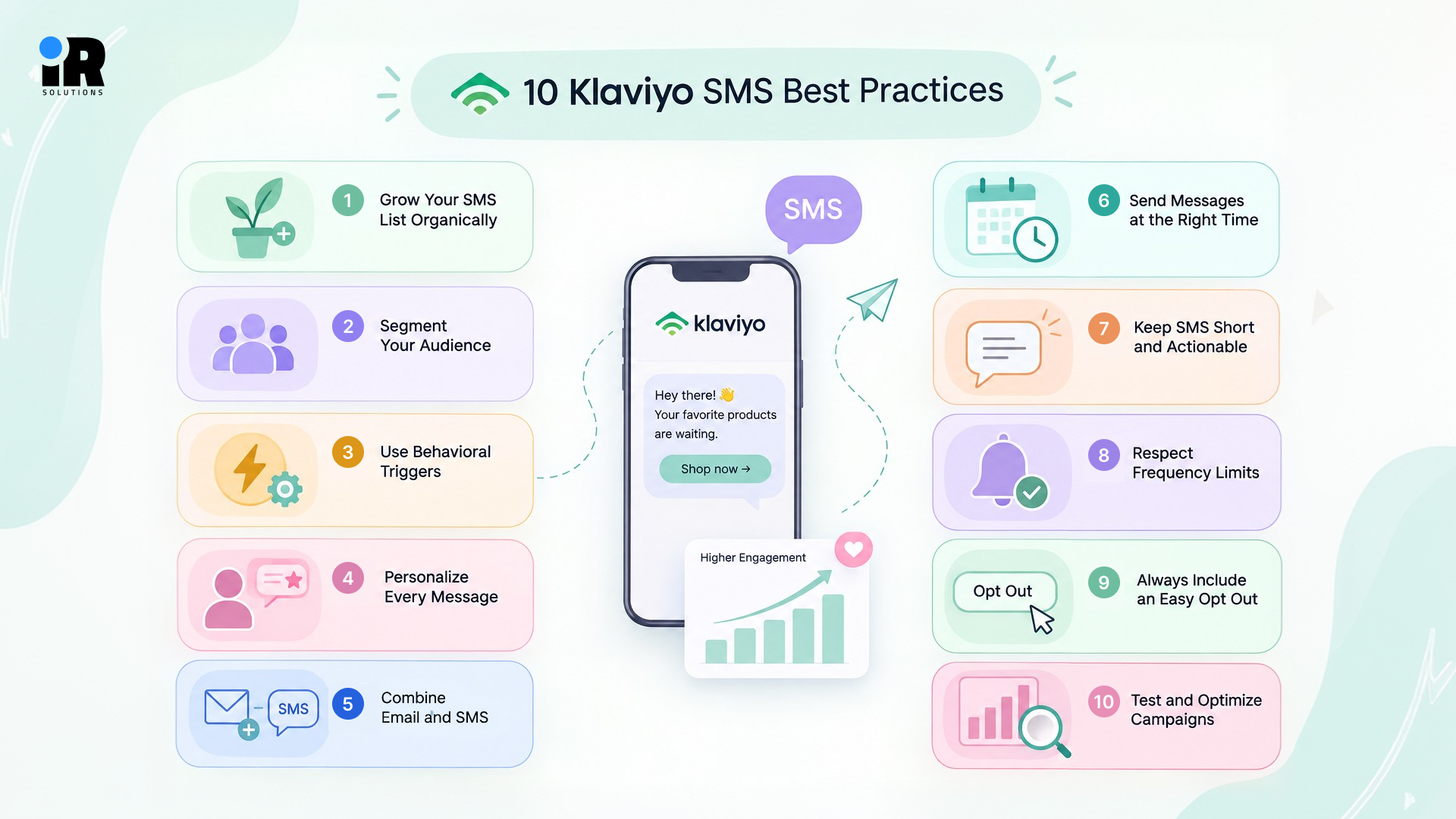
Grow Your SMS List Organically
Never buy a contact list, the people on it never asked to hear from you, and texting them is both ineffective and illegal under TCPA rules. Build your list through pop-ups, checkout opt-ins, and email campaigns instead. A welcome discount or early access offer gives people a real reason to hand over their number.
Segment Your Audience
Not everyone on your list wants the same thing, a new subscriber and a customer who has bought five times are completely different people and should not be getting the same message. Klaviyo lets you segment by purchase history, browsing behaviour, location, and more. The tighter your segments, the more relevant every message feels.
Use Behavioral Triggers
Automated messages that respond to what a customer just did will almost always outperform a scheduled broadcast. Set up triggers for cart abandonment, product views, and post-purchase moments. These messages arrive when the customer is already thinking about your brand, which is exactly when they are most likely to act.
You can also learn more about recovering abandoned carts with Klaviyo flows and turning customer actions into timely follow-ups.
Personalize Every Message
Using someone's first name is a start, but Klaviyo lets you go further. You can reference the exact product they browsed, the last thing they bought, or their loyalty points balance. When a message speaks to what someone actually did, it stops feeling like marketing and starts feeling like a useful nudge.
Combine Email and SMS
These two channels work best when they are coordinated, not competing. Use SMS to follow up when someone ignores an email. Use email when you need more space to explain something. Klaviyo's conditional logic lets you decide which channel to use based on how each subscriber behaves, so nothing important slips through.
Send Messages at the Right Time
Most people are not going to act on a text at 7 am or 10 pm. Late morning and early evening tend to work best for ecommerce audiences. Klaviyo's smart send time feature takes the guesswork away by learning when each subscriber is most likely to engage and scheduling messages accordingly.
There is no single best time to send every Klaviyo SMS campaign. Klaviyo recommends testing 1 to 5 p.m. and 6 to 8 p.m. in the recipient’s local time, while considering audience behaviour, campaign type, quiet hours, compliance requirements, and Smart Sending. Test different times within compliant sending windows to find what works best for your audience.
Keep SMS Short and Actionable
For better readability and fewer message segments, follow SMS best practices by keeping your messages around 155 characters or fewer. Standard SMS has a 160-character limit, while messages containing emojis or special characters may be limited to 70 characters.
Respect Frequency Limits
Two messages a week is usually the ceiling before subscribers start to feel annoyed. One per week is often the better choice. Klaviyo lets you set frequency caps inside flows and campaigns so no single subscriber gets too many messages in a short window, which protects both your list and your sender reputation.
Always Include an Easy Opt Out
Every message needs a clear unsubscribe option, and it should take one reply to action. Klaviyo adds opt-out instructions automatically, but the spirit behind it matters too. Making it easy to leave actually builds more trust with the people who choose to stay.
Test and Optimize Campaigns
The first version of any campaign is rarely the best one. Run A/B tests on timing, copy, and offer structure. Check your results after every send and use what you learn to make the next one better. Small improvements across many sends add up to a noticeably stronger program over time.
For brands managing multiple acquisition and retention channels, SMS performance also needs to work alongside the broader marketing strategy. Experienced digital marketing experts can help align SMS with email, paid campaigns, SEO, and other customer acquisition efforts
How to Combine Email and SMS for Better Results
Email and SMS are not rivals fighting for your customer's attention. They work best as a team, each doing what it does well. Klaviyo lets you manage both inside one unified strategy without the chaos.
Email handles longer content, detailed product pages, visual campaigns, and educational material naturally. Your ecommerce store also needs to support these customer journeys, which is why working with experienced ecommerce developers can help ensure your store, product data, and Klaviyo integrations work together smoothly.
SMS is built for urgency, short reminders, time-sensitive alerts, and quick one-tap actions. Assigning the right channel to the right moment stops redundancy and builds a better experience.
Cut the Noise
Add a conditional split in your Klaviyo flows to check if someone already opened your email. If they did, skip the SMS entirely for that same message. Sending both channels for the same offer annoys customers fast and spikes opt-outs across both lists.
Back It Up
For your biggest campaigns product launches, major sales send the email first. Follow it with an SMS only to subscribers who did not open within your set window. This keeps SMS as a rescue tool for important moments, not a default for everything you send.
Let Klaviyo Decide
Build flows where Klaviyo picks the channel based on each subscriber's actual engagement history. Consistent email openers get the email. People who ignore email but respond to texts get the SMS instead. This logic lifts campaign performance without you needing to send more messages overall.
Stay Consistent
Keep the tone, offer, and call to action aligned across email and SMS even when the format differs. A customer receiving both channels for one promotion should feel a single campaign, not two disconnected messages.
For more ways to improve your ecommerce email strategy, see our guide on Klaviyo email marketing.
Common Klaviyo SMS Marketing Mistakes to Avoid
Even a well planned SMS strategy can underperform when brands overlook consent, measurement, or message quality. Avoid these common mistakes when managing your Klaviyo SMS program.
Buying Contact Lists
Texting people who never asked to hear from you creates compliance risks and usually produces poor engagement. Build your list through legitimate consent based methods instead.
Writing Generic Copy
Messages such as "Shop our sale now" give subscribers little reason to click. Include specific details about the product, offer, or customer benefit to make the message more useful.
Ignoring Campaign Data
Klaviyo provides performance data that can show whether your campaigns are generating clicks, conversions, revenue, and unsubscribes. Review these results regularly instead of relying on assumptions.
Using SMS for Everything
Not every marketing message needs to reach someone's phone. Save SMS for situations where its immediacy adds value, and use email when the message requires more detail.
For email campaigns, you can also follow these Klaviyo deliverability best practices to protect your sender reputation and improve inbox placement.
Key Metrics to Measure Klaviyo SMS Performance
Tracking the right metrics tells you what is working, what is failing, and where to focus your optimisation efforts. Review these six numbers after every campaign and build a habit of comparing them across time periods.
Metric | Why It Matters |
Click Rate | Measures how many recipients tapped your link, which shows whether your message copy and offer are compelling enough to drive action beyond just reading the text. |
Conversion Rate | Tracks the percentage of recipients who completed a purchase, sign-up, or other goal after clicking, which directly connects your SMS activity to actual revenue outcomes. |
Revenue per Recipient | Shows the average revenue generated for every subscriber who received the message, making it easy to compare the financial efficiency of different campaigns or flows. |
Unsubscribe Rate | Indicates how many people opted out after receiving your message, which is the clearest signal that something about the timing, frequency, or content is not working for your audience. |
ROI | Calculates total revenue generated from a campaign relative to what it cost to send, giving you the clearest picture of whether your SMS investment is actually profitable. |
SMS List Growth | Tracks how quickly your subscriber base is expanding, which determines the future scale of your campaigns and whether your acquisition tactics are producing sustainable results. |
A strong Klaviyo SMS program can achieve click rates of 8.9% or higher, conversion rates of 2.1% or higher, and unsubscribe rates below 0.5%, according to Klaviyo’s SMS and MMS campaign benchmarks. If your numbers fall below these benchmarks, review your segmentation, timing, and message content before your next send.
Conclusion
Klaviyo SMS marketing works when you treat it as a privilege, not a default broadcast channel. Customers give you their phone number because they expect something valuable in return, and the brands that honour that expectation build lists that generate consistent revenue month after month.
Start with the fundamentals. Grow your list organically, segment your audience carefully, automate your most important flows, and send messages only when they offer genuine value. Avoid the shortcuts, like buying lists and sending too frequently, that produce short-term activity but long-term damage.
Combine SMS with email inside Klaviyo to create a unified customer experience that uses the right channel at the right moment. Review your metrics after every campaign and treat each send as a learning opportunity that makes the next one smarter.
Done right, Klaviyo SMS is one of the highest-ROI channels available to ecommerce brands. Done carelessly, it costs you customers you will never win back. The difference comes down to strategy, respect for your subscribers, and a genuine commitment to delivering value every time you hit send.
Frequently Asked Questions
Is Klaviyo SMS worth it?
Yes, Klaviyo SMS can be valuable for ecommerce brands when used with a clear strategy. Instead of relying on a generic open rate statistic, evaluate performance using click rate, conversion rate, revenue per recipient, and unsubscribe rate. Klaviyo’s latest SMS benchmarks provide these metrics across industries, making them more useful for comparing your performance and identifying areas for improvement.
What is the ideal SMS length?
The ideal SMS message is under 160 characters, which keeps it as a single-segment message and avoids extra carrier costs. Focus on one clear offer, one direct link, and one call to action. If your message requires more context, consider whether email is a better channel for that particular piece of content.
Can Klaviyo automate SMS?
Yes, Klaviyo has a full suite of SMS automation tools. You can build triggered flows for cart abandonment, welcome sequences, post-purchase follow-ups, back-in-stock alerts, and more. These flows run automatically based on customer behaviour, so your SMS program generates revenue around the clock without manual campaign management.
Can I combine email and SMS in one flow?
Yes, and this is one of Klaviyo's strongest features. You can build flows that use conditional logic to decide which channel to use based on a subscriber's behaviour. For example, if a customer does not open your cart abandonment email within one hour, Klaviyo can automatically send an SMS version of the same message without any manual intervention.
What industries benefit most from Klaviyo SMS?
Ecommerce brands across fashion, beauty, health and wellness, food and beverage, and home goods consistently see the strongest results from Klaviyo SMS. Any business with a direct-to-consumer model and a product catalogue that benefits from timely, personalised promotions is a strong candidate. Service-based businesses can also benefit, particularly for appointment reminders and time-sensitive offers, though the primary use case is ecommerce.