

Key Takeaways
- Personalize skincare emails based on customer preferences, skin concerns, and purchase history.
- Use educational emails to explain product ingredients, benefits, and application methods.
- Send automated refill reminders to encourage repeat purchases and increase customer retention.
- Share genuine customer reviews to build trust and address common skincare concerns.
- Create mobile-friendly emails with clear product images, simple layouts, and shopping buttons.
- Test email content and sending frequency to improve clicks, conversions, and sales.
Are customers opening your skincare emails but leaving without buying? Before sending another offer, think about what might be holding them back, such as which moisturizer suits their skin.
Use your emails to answer those questions and make the next step easy. A welcome email can explain how two formulas differ, while a back-in-stock alert can take customers straight to the product they were waiting for. If you’re still growing your subscriber base, our guide to building an ecommerce email list shows how to turn store visits into signups.
This guide looks at ten real skincare email campaigns, including product quizzes, launch announcements, and reorder reminders. You’ll see what each brand did and which ideas you can use in your next email.
Why Email Marketing Matters for Skincare Brands
Customers often compare ingredients, read reviews, and check how a product might fit into their routine before buying. If people keep asking which moisturizer feels lighter under makeup, use your next email to explain the difference. Look through customer replies and reviews to find the questions that come up most often before an order. Then link to the relevant product pages so readers can check the details and choose what suits them.
After delivery, an email gives customers a place to find product directions without digging through the packaging or searching online. When buyers usually run low, send a reminder that links to the exact product and size they ordered. If you recommend a second product, explain where it fits alongside the one they already use at home. Those follow-ups give customers a reason to return when they need something, even between sales and product launches.
Types of Emails Every Skincare Brand Should Send
The best mix of emails answers questions before checkout, helps customers after delivery, and gives them reasons to return. Use the message types below to decide what belongs on your campaign calendar and what should run automatically.
Email type | Purpose |
Welcome emails | Introduce the brand, deliver any promised signup benefit, and direct new subscribers to a useful starting point. |
Educational emails | Answer common questions about ingredients, product directions, or routine order so customers can choose with more confidence. |
Product launch emails | Explain what is new, who might use it, and where the product fits alongside familiar items. |
Abandoned cart emails | Return eligible shoppers to their saved products and answer common questions about delivery, sizes, or product choice. |
Post-purchase emails | Share product directions after delivery and help customers find support while trying their purchases at home. |
Refill reminders | Remind past buyers around the time a product typically runs low and link directly to the correct item. |
Promotional emails | Explain who qualifies for an offer, which products are included, and when the price or benefit changes. |
Win-back emails | Give customers who have stopped ordering a relevant reason to revisit the store or update their preferences. |
Schedule campaigns for launches and sales, and use automated emails to follow up after signups, orders, or restock requests. If two emails are due together, send the one the customer needs first, such as a delivery update. Our ecommerce email marketing flows guide explains how to time these messages around the actions customers take.
10 Skincare Email Marketing Examples and What You Can Learn From Them
These skincare email examples answer ten different questions, from where to begin to when to buy again. As you read the examples, consider the decision each message helps a customer make and what your team could test.
1. Bubble — Welcome New Subscribers
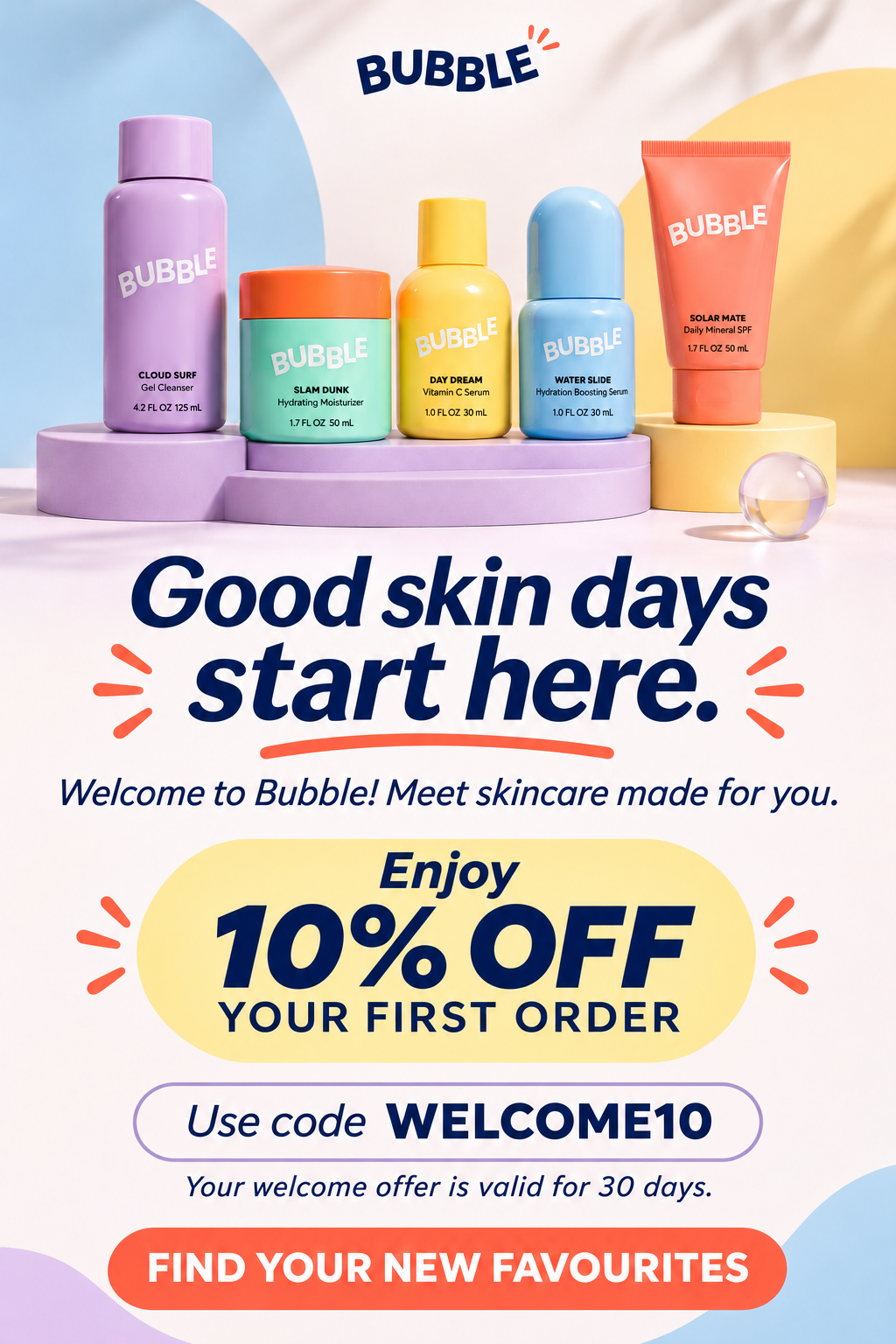
Bubble’s welcome email uses bright colours and playful copy to introduce new subscribers to its skincare range.
The email offers 10% off a first order and tells readers they have 30 days to use the code.
2. Harry's — Personalized Skincare Quiz
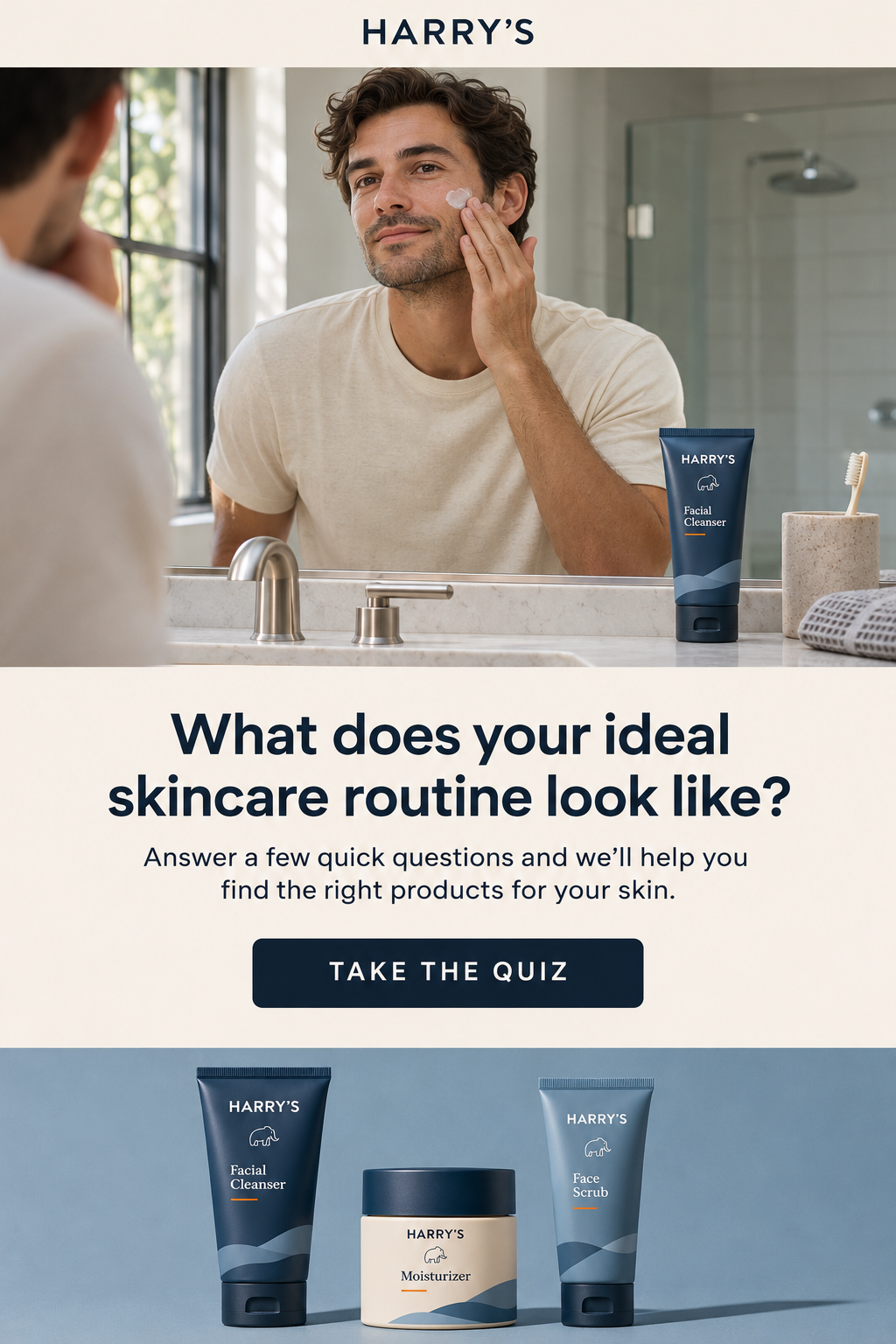
Harry’s asks readers what their ideal skincare setup looks like and invites them to find out through a short quiz.
The quiz uses their preferences to narrow the product choices and suggest where to start.
3. Aesop — Product-Focused Educational Emails
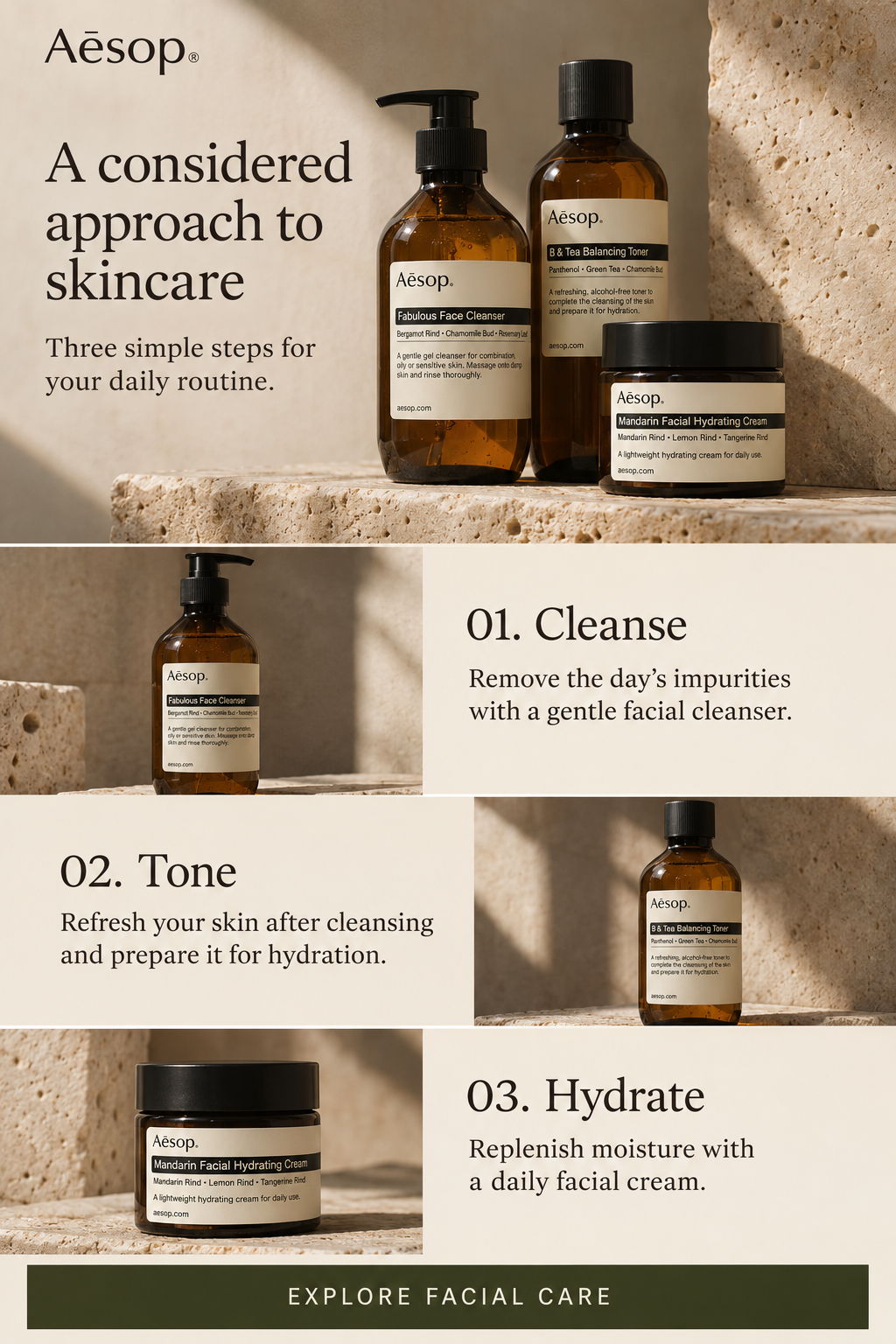
Aesop’s email explains the basics of skincare in plain language, with the products at the centre of the design.
The copy explains what each product is for, helping readers see where it might fit into their routine.
4. Heyday — Step-by-Step Skincare Routines
Heyday’s “Sick Day” email gives readers a skincare routine in numbered steps, with a product pictured beside each one.
Each step has its own shopping button, so readers can go straight to the product they want to explore.
5. PoolBar — New Product Launch Campaigns
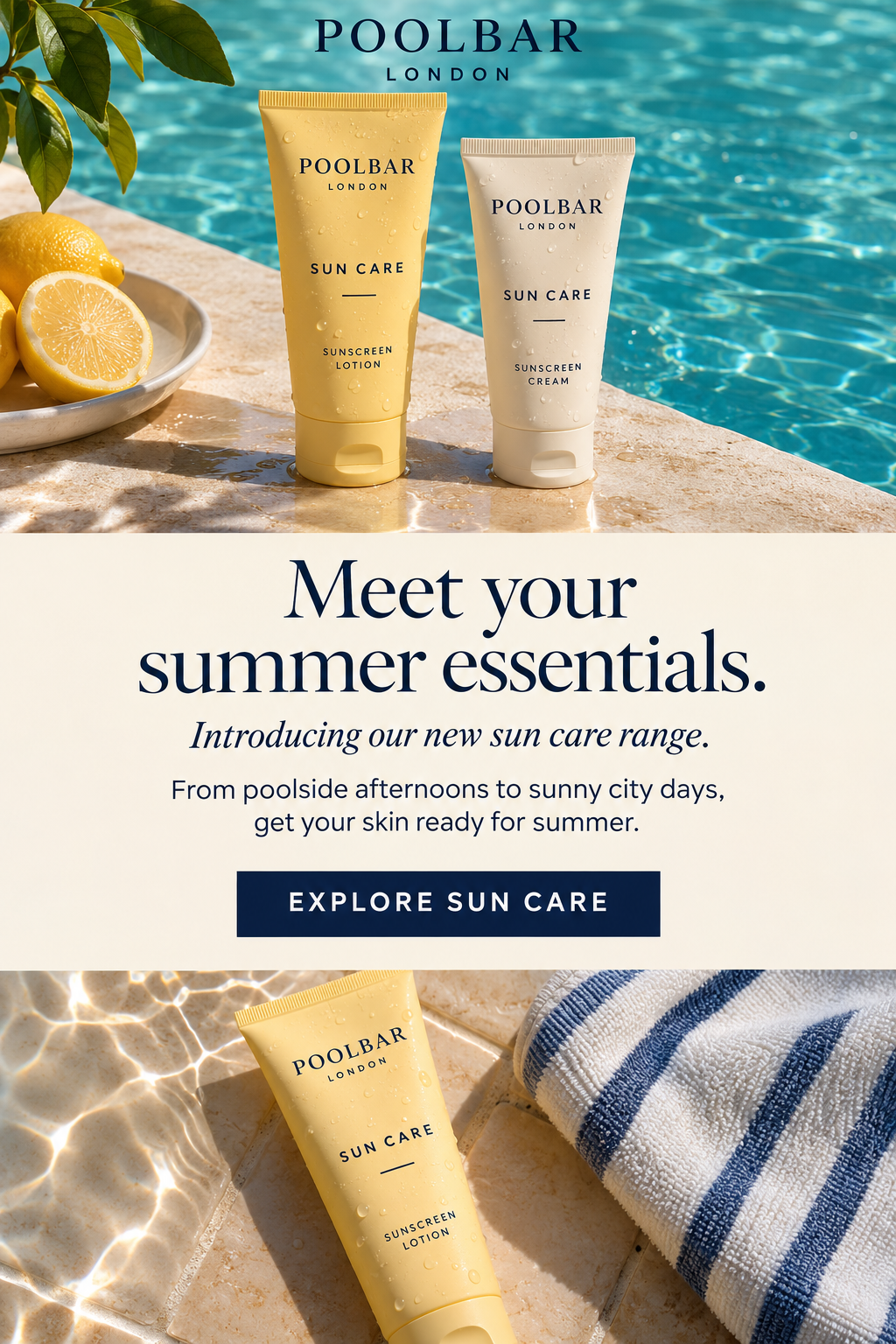
PoolBar London introduced its sun care range in late May, when customers were starting to get ready for summer.
The subject line names sun care directly, so readers know what the brand is launching before they open the email.
6. Supergoop — Customer Experiences and Social Proof
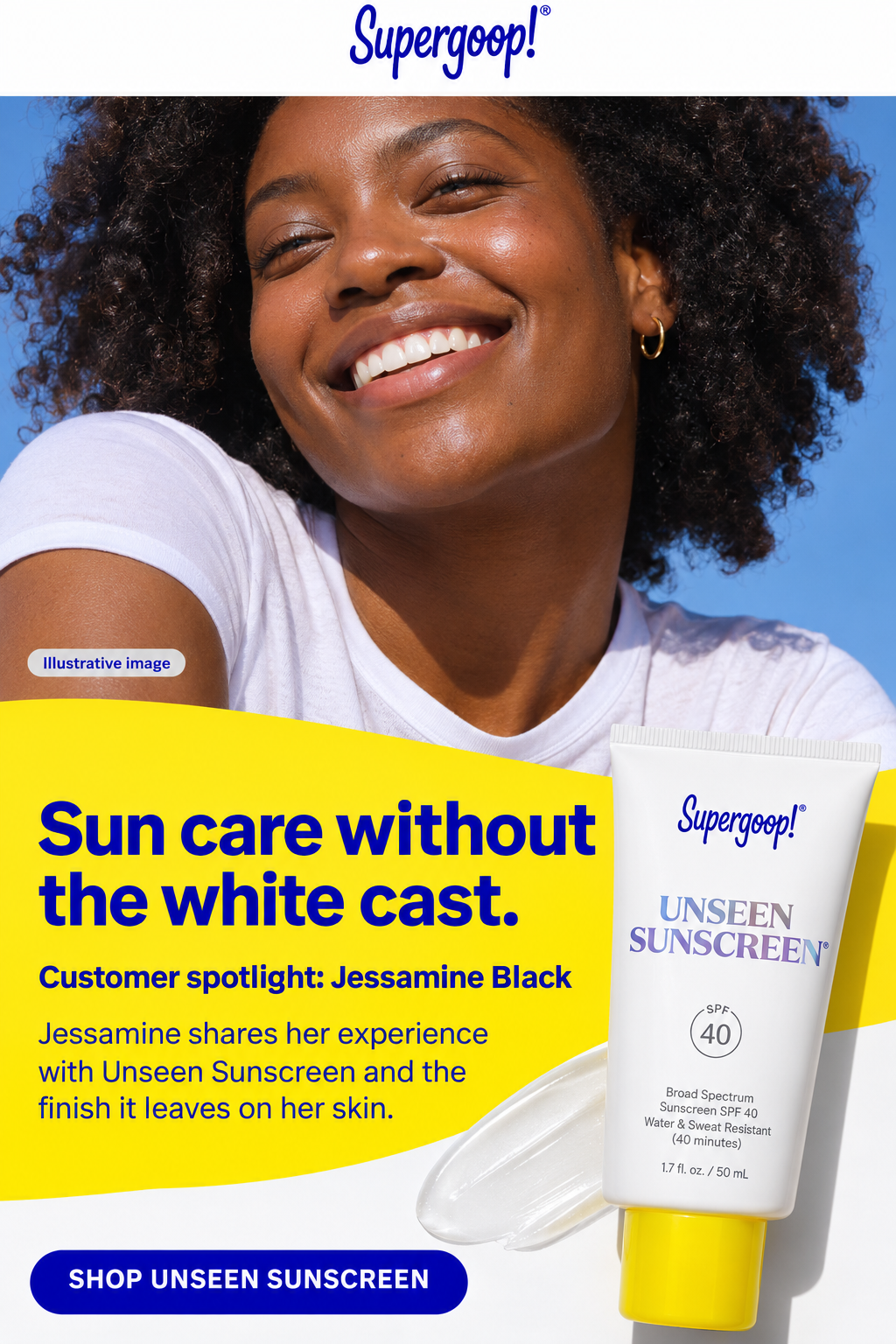
Supergoop features Jessamine Black in an email about Unseen Sunscreen. Her experience addresses a common buying concern about whether sunscreen leaves a white cast.
The email names the exact product she used, giving readers a clear idea of which sunscreen she’s talking about.
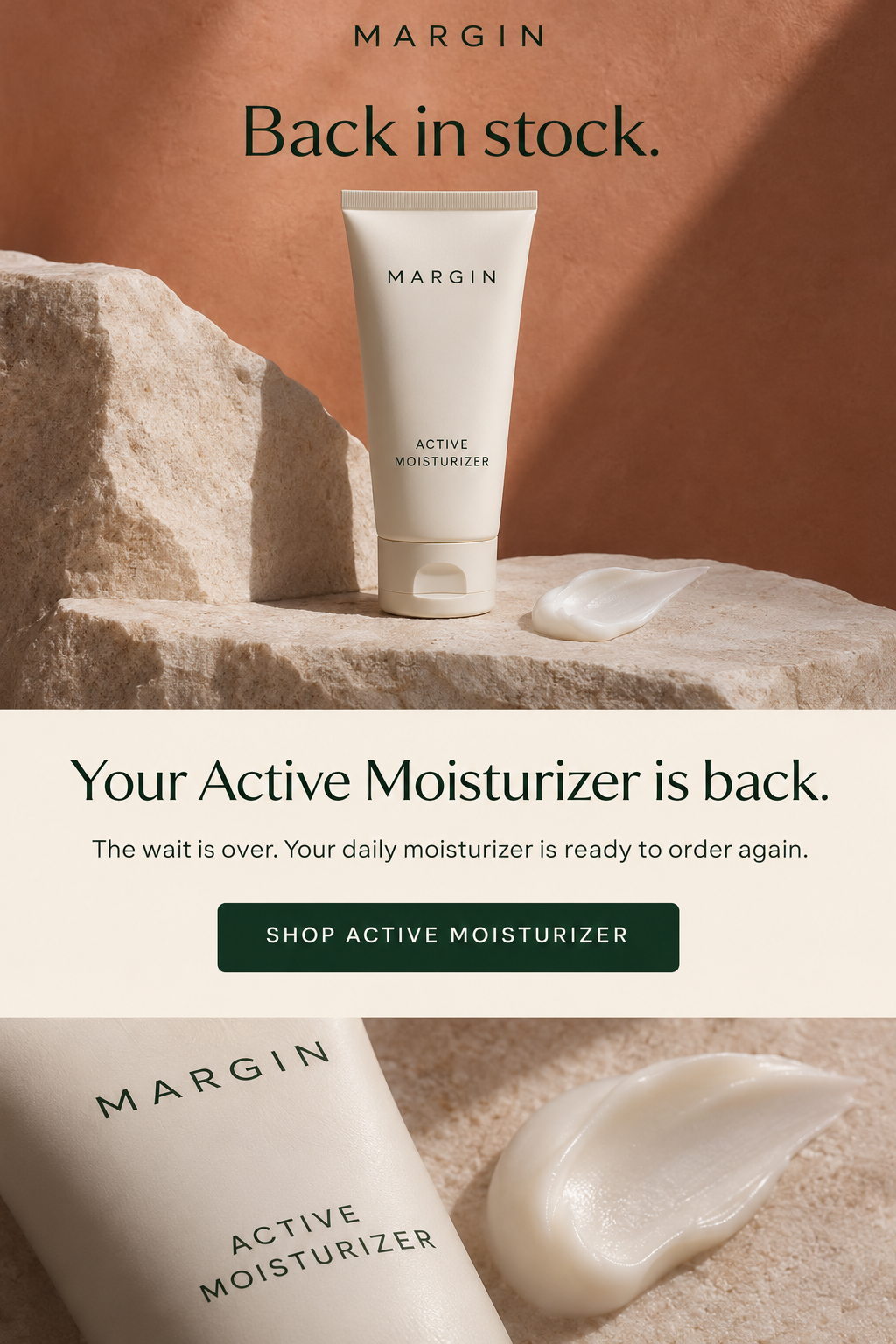
7. Margin — Back-in-Stock Notifications
Margin puts the product name in the subject line, so readers immediately know the Active Moisturizer is back in stock.
The email takes customers straight to the moisturizer, making it easy to order the item they were waiting for.
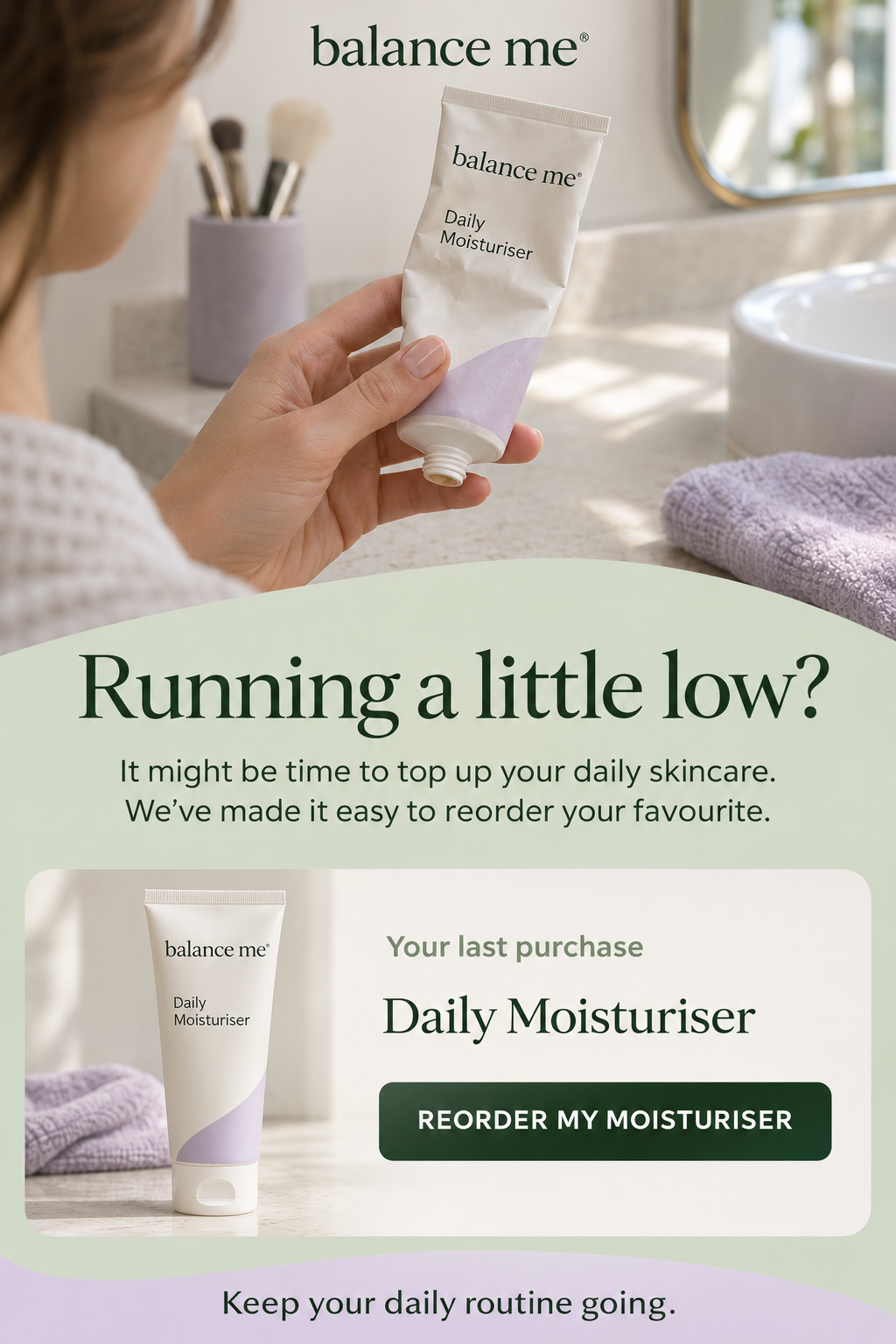
8. Balance Me — Personalized Replenishment Emails
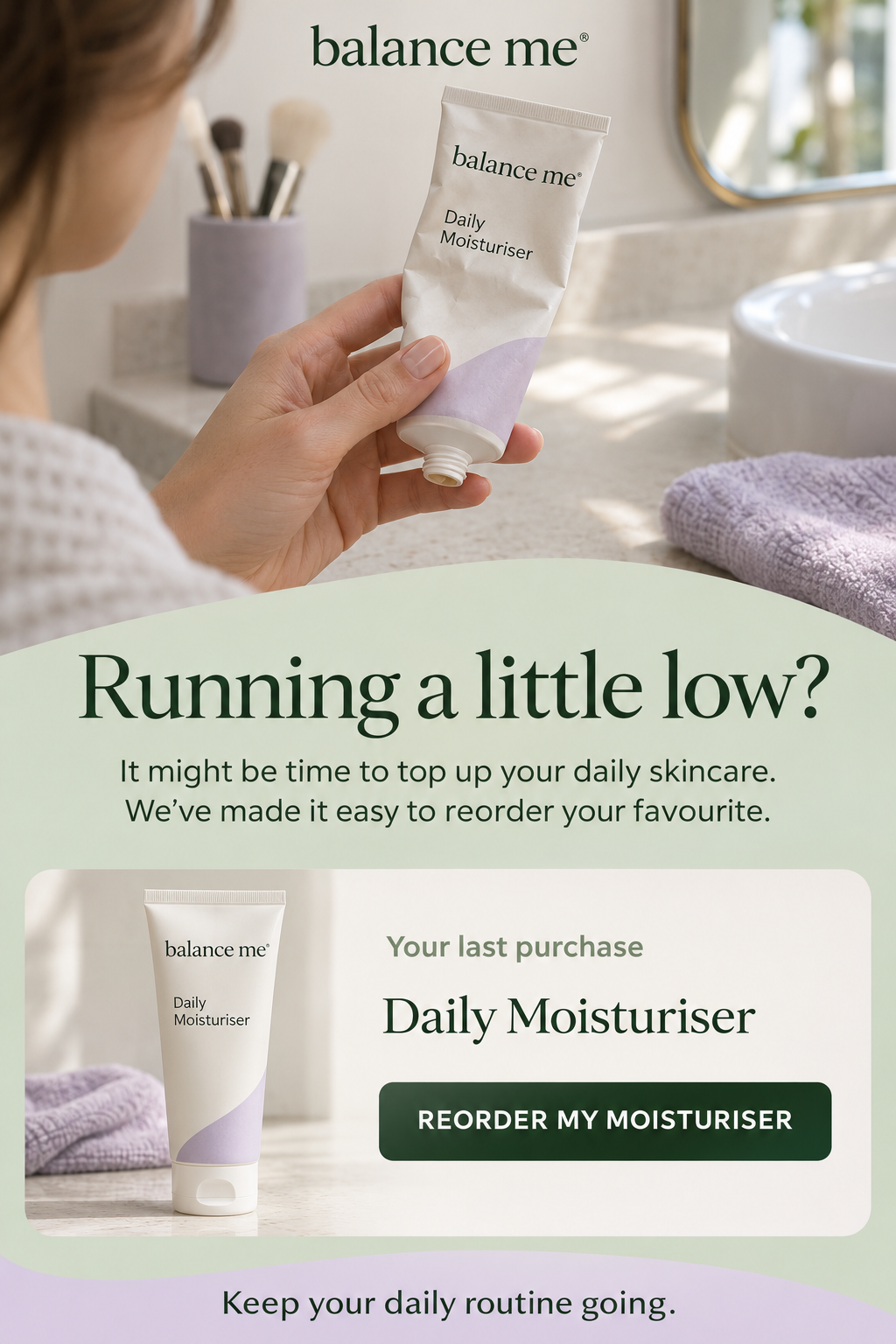
Balance Me looks at past orders to see when customers usually buy a product again and times its reminders accordingly.
Klaviyo’s case study reports that repeat purchases increased by 83% after Balance Me introduced its replenishment emails.
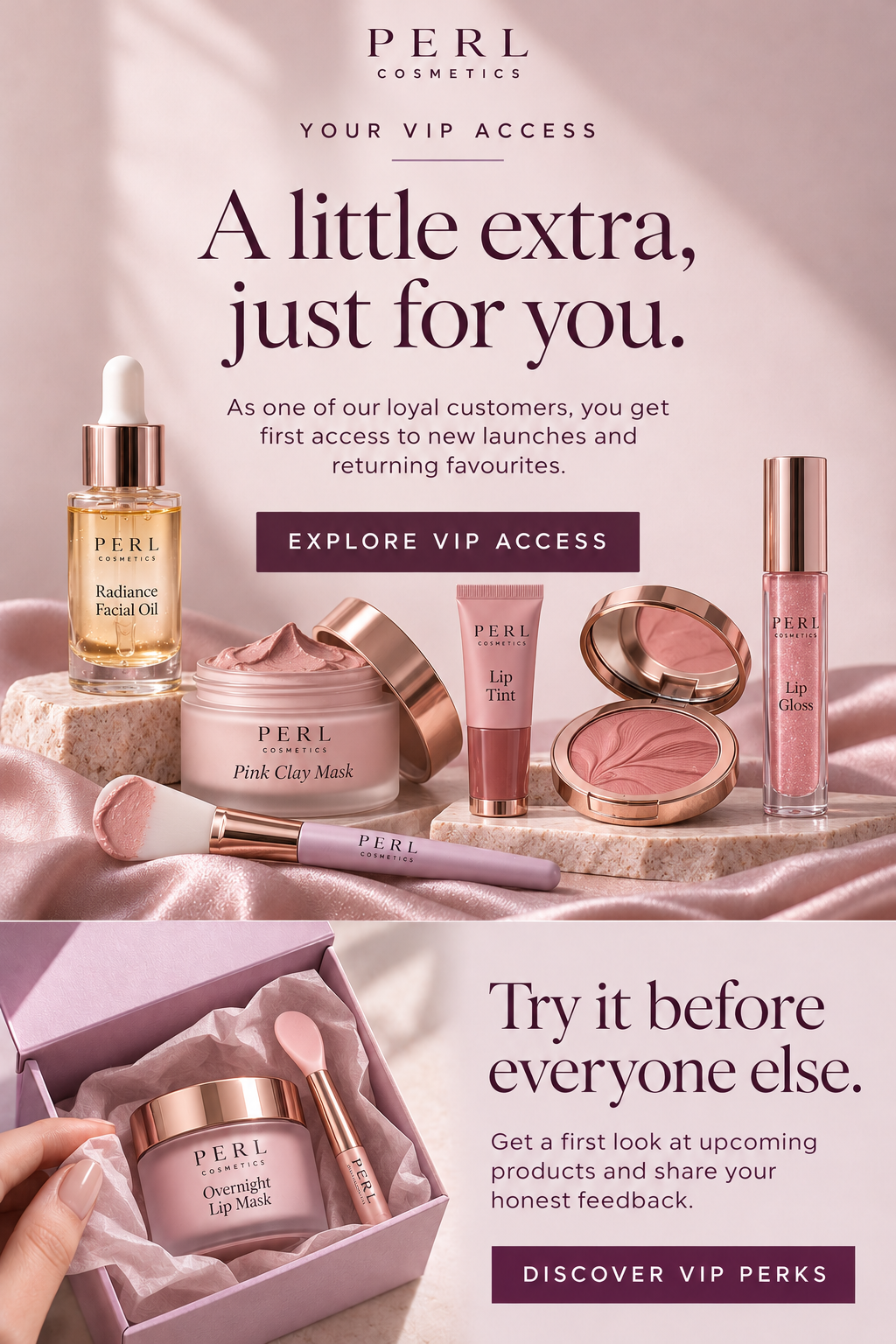
9. PERL Cosmetics — Exclusive VIP Emails
PERL Cosmetics gives repeat customers early access to launches and tells them when products are back in stock before notifying the wider list.
VIP members can also try upcoming products and share their feedback before those products go on general sale.
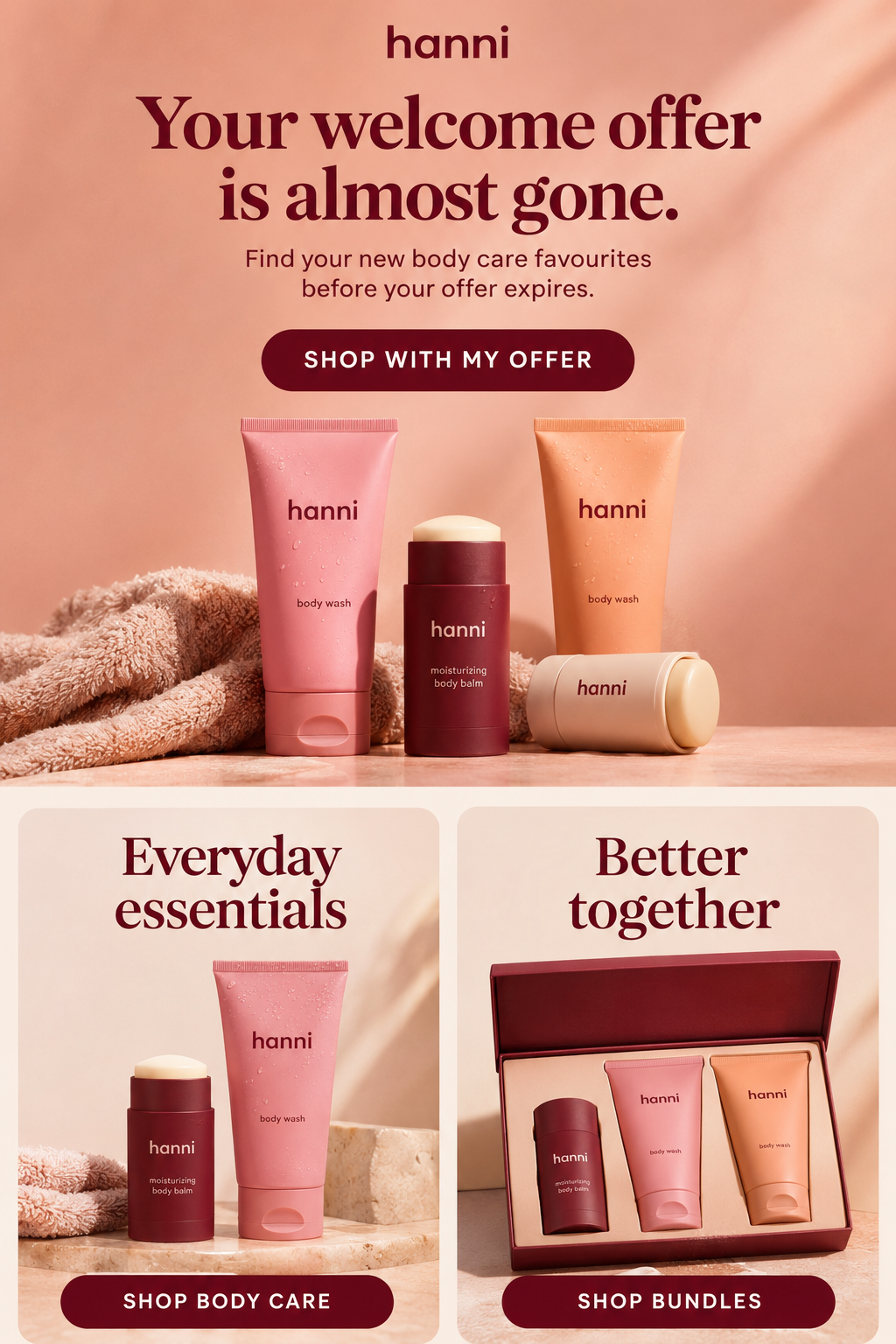
10. Hanni — Limited-Time Promotional Emails
Hanni reminds subscribers that their welcome offer is about to expire and shows what they can buy with it.
The email groups individual products and bundles by category, so readers can compare their options before the offer ends.
Best Email Marketing Practices for Skincare Brands
Use customer questions and order history to decide what to send and when. Then check how each email reads on a phone and whether it helps customers choose, buy, or reorder.
Personalize Emails Based on Skin Concerns
Start with what customers tell you about fragrance, texture, or how many steps they want in their routine. Check what they’ve already bought before recommending another product.
- Store preferences: Save the answers that help you make better product recommendations.
- Update groups: Let customers change their preferences from a page that works on mobile.
- Check history: Review recent orders before promoting products customers may already own.
- Guide readers: Share a simple product guide with customers who skip the quiz.
In email marketing for beauty brands, a simple preference like fragrance-free can be enough to guide a recommendation. Use our Klaviyo segmentation guide to set up your groups, then preview the email for each one.
Balance Educational and Promotional Content
Give each email a clear purpose and make it obvious in the subject line. If you’re planning a bundle offer, send a guide beforehand that explains how the products work together.
- Ingredient guide: Explain why an ingredient is included and link to the full list.
- Routine guidance: Show where each product fits and which steps customers can skip.
- Offer details: Put the terms and deadline next to the main button.
Build your skincare email marketing strategies around real customer questions. Ask your support team for one common question each month, answer it in an email, and use the replies to plan what comes next.
Create Clean and Mobile-Friendly Email Designs
Use a single column, readable text, and one main button that opens the page readers expect. Preview the email on a phone in both light and dark mode.
- Product photos: Show the packaging and use close-ups to clarify size or texture.
- Readable copy: Keep names, prices, and instructions visible while product images load.
- Clear buttons: Leave space around each button and label it with the next step.
- Short GIFs: Show useful detail in the first frame before the clip plays.
Read the email with images turned off to check that the offer still makes sense. Tap the main button and confirm that the advertised product and size are selected.
Automate Product Replenishment Reminders
Start by offering a product that customers buy frequently and see how many times they tend to buy it in between. Try sending a reminder soon after week six if most buyers are changing out a full-size cleansing product between weeks six and eight. Have a separate delay for the travel size, as it can be used less often or be completed quicker than the other sizes.
Follow Klaviyo's replenishment flow guide to determine how long to wait and who to send each reminder to. Connect directly to the size the customer purchased and ignore those that have already reordered or have a sub delivery coming up. Check if the email caused customers to return sooner than a group who didn't get the reminder.
Build Trust With Authentic Customer Reviews
Choose reviews that answer real buying questions, such as how a cream feels or how its packaging works. Name the exact product and version the customer used.
- Verified buyers: Choose reviews you can trace to orders your store received.
- Clear permission: Ask customers before sharing their words or photos in emails.
- Fair context: Keep the meaning intact when shortening a review for an email.
- Sound claims: Check that both the quote and photos support what you say.
Pair the review with product details readers can check before ordering, such as size or texture. After sending, ask your support team whether customers still have the same questions.
Test Email Content and Sending Frequency
Change one thing at a time so you can tell what made the difference. For a moisturizer launch, try a packaging photo in one version and a close-up of the texture in the other. Keep the subject line, offer, and send time the same. See our ecommerce email A/B testing guide for help setting up the comparison.
To test frequency, send one group your usual weekly email and give a similar group one extra email. Compare revenue per recipient, orders, and unsubscribes over several weeks. If the extra email gets more clicks but brings in few additional orders, check whether it also leads more people to unsubscribe before making it part of your schedule.
Conclusion
Start with an email your customers would be glad to find when they need an answer or a replacement. Pair practical product directions with specific recommendations, and schedule reminders near the time shoppers usually come back to reorder. As you learn which messages help people choose and purchase, use that information to plan the next campaign.
If your team needs help putting these pieces together, explore our email marketing services for skincare brands at IR Solutions. We can manage campaigns, build customer groups, design emails, set up automated messages, and review their performance against store goals. Bring a current campaign or a product you want customers to reorder, and we can start with that goal.
Frequently Asked Questions
What Should a Skincare Welcome Email Include?
A skincare welcome email should introduce your brand, deliver the promised signup benefit, and show subscribers where to begin. Link to a starter range or a short routine guide, and explain any terms if you offer a discount.
How Often Should Skincare Brands Send Emails?
Send one email a week at first, then adjust based on clicks, orders, and unsubscribe rates for a few sends. Ensure that campaigns are scheduled to allow automated messages after sign-up, purchase, or following a stock alert request.
What Are the Best Email Campaigns for Skincare Brands?
Send welcome emails, product guides, cart reminders, and refill reminders for the most common purchases. Give them launch announcements, restock alerts, and offers when they solve a particular problem for your customers.
How Can Skincare Brands Increase Repeat Purchases Through Email?
Make it easy for customers to know when the product should be in their routine and send a reminder to reorder around the typical replacement time. Provide a link to the correct product and size; if the customer has re-ordered, skip the reminder.
Can Skincare Emails Be Personalized by Skin Type?
Yes, by including preferences that customers fill out in a quiz or signup form to recommend products that match their needs. Share with them how they are using their answers, and ask customers to revise their preferences when their routine changes.
Is Klaviyo Good for Skincare Brands?
Klaviyo is ideal for skin care brands looking to create personalized emails based on product purchases, browsing, or customer preferences. Before setting reminders, verify that your store passes the order and product information you require.