


Key Takeaways
- Sending the same email to every customer reduces relevance and wastes your list.
- Segments update automatically as customer behavior changes, so no manual work is needed.
- First-time buyers and repeat customers need different messages to keep them engaged.
- High-value customers need retention focus because losing one costs more than you think.
- Combine purchase history, engagement, and recency to build segments that actually mean something.
- Every segment you build should connect directly to a campaign, flow, or goal.
Sending the same email to 10,000 customers sounds easy, but it rarely makes sense. Your customers are not all at the same stage. One person may have just placed their first order, another may have added a product to their cart and disappeared, while someone else has not opened an email from you in months.
They should not all get the same message.
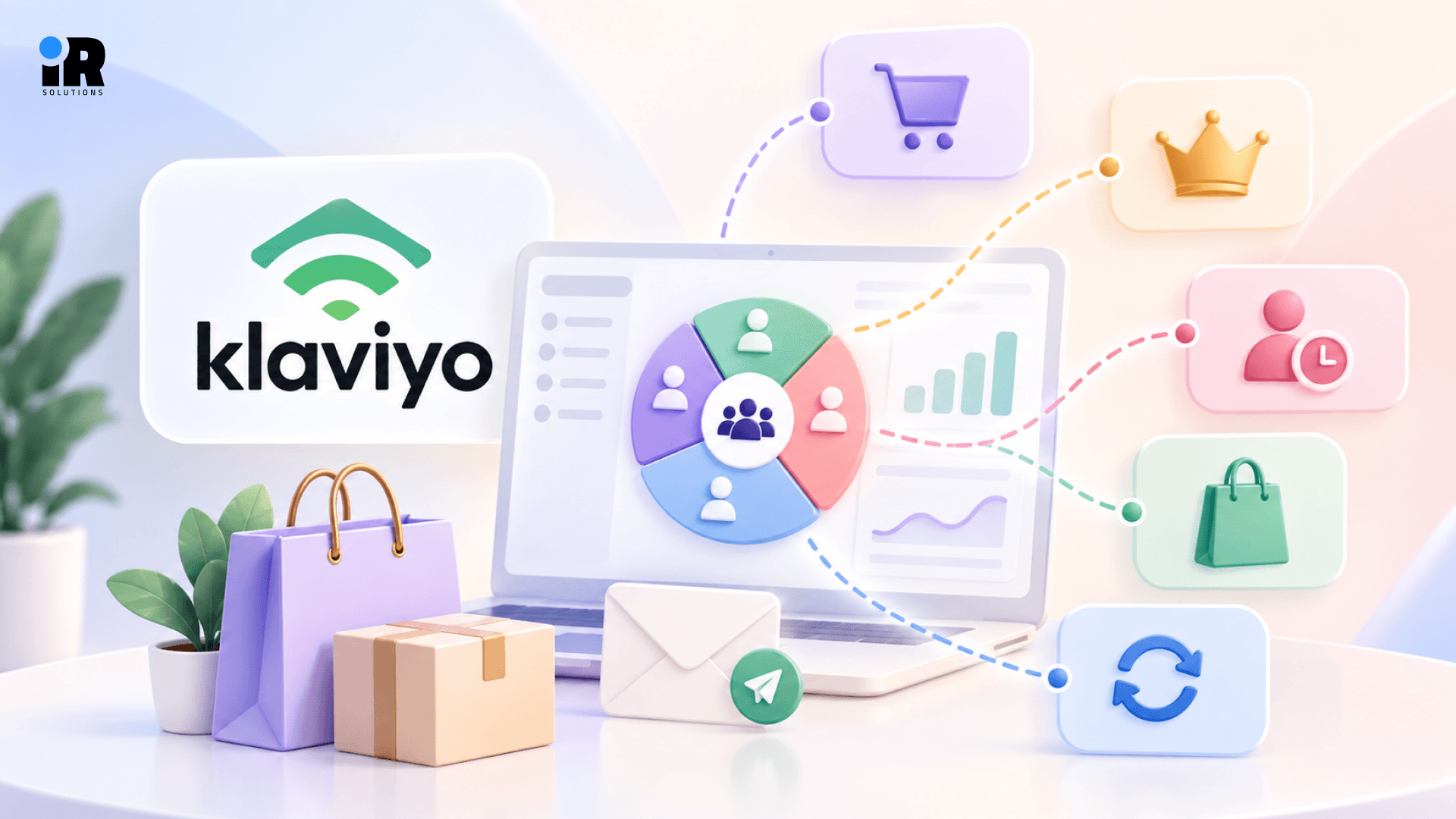
Klaviyo segmentation helps you separate those customers based on their actions, purchases, interests, and engagement. You can create groups for recent buyers, repeat customers, high-value shoppers, inactive subscribers, abandoned carts, and much more. Each group can then receive emails that actually fit their situation.
That matters because the right message at the right time is far more useful than another generic promotion. A new customer might need product recommendations, while a loyal buyer could respond better to an early-access offer. Someone who has stopped buying may need a completely different reason to come back.
In this guide, we’ll cover the most useful Klaviyo segments for ecommerce brands, what each one is for, and how to set them up.
What Is Klaviyo Segmentation?
Klaviyo segmentation means grouping your customers based on what they do and what they buy. Instead of one big list, you build smaller audiences that share something real. For example, a product they purchased, how recently they ordered, or whether they have never bought at all.
Different customers need different messages. Someone on their first order has nothing in common with someone who has bought ten times. Segmentation lets you speak to each group in a way that actually makes sense for where they are. To understand how Klaviyo works and what the platform offers, read this guide on what is Klaviyo.
How Klaviyo Segments Work
Klaviyo segments group customers based on rules you set, such as purchases, products viewed, cart activity, email engagement, location, or other customer data. The groups update automatically as people’s behavior changes. For example, if your win-back segment includes customers who have not purchased in 180 days, someone who places an order will automatically leave that segment.
Klaviyo Segments vs Lists
Lists are fixed groups of contacts, usually created through signup forms, imports, or other sources, while segments change based on customer behavior. Someone can join your newsletter list when they subscribe, then appear in a first-time customer segment after placing an order and later move into a repeat customer segment after buying again. Klaviyo handles these changes automatically, so you do not have to manage each group yourself.
What Data Can Klaviyo Use for Segmentation?
Klaviyo can use profile details, purchase history, website activity, email engagement, and location data to create segments. You can filter customers by things like signup date, total orders, products purchased, amount spent, pages or products viewed, cart activity, email clicks, or location. This gives you plenty of ways to group customers based on what they actually do.
Essential Klaviyo Segments for Ecommerce
Every ecommerce store is different, so there is no single list of segments that works for everyone. Still, some customer groups are useful for almost every store, and these are a good place to start.
Engaged Email Subscribers
These are people on your email list who regularly click your emails. They are usually more interested in what you send, so campaigns to this group often perform better than campaigns sent to your entire list.
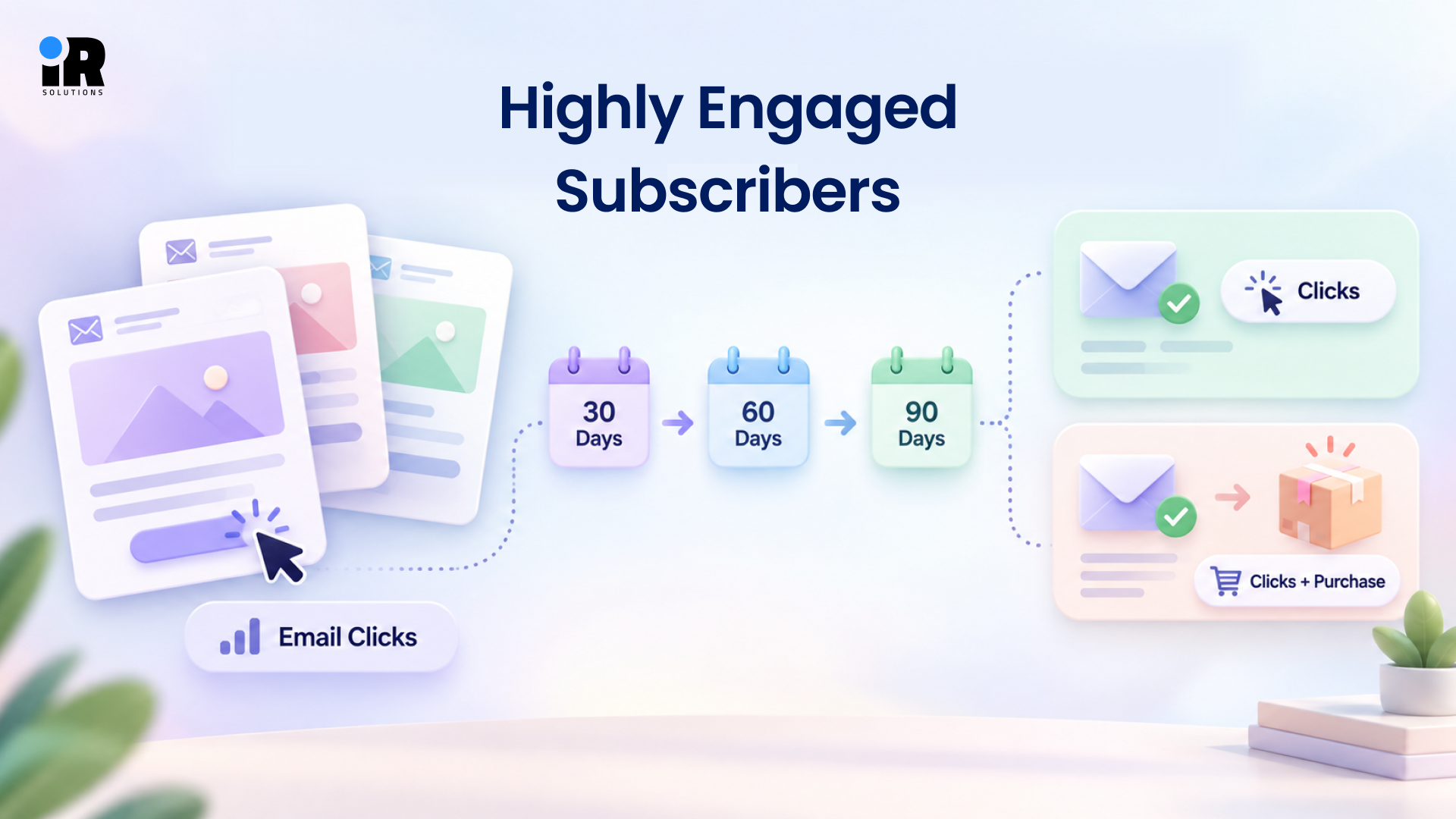
Clicks are a better sign of interest than opens because some email apps now open images automatically. You can create engagement windows of 30, 60, or 90 days. It is also useful to combine email activity with purchase history. Someone who clicks every email but never buys needs a different message from someone who clicks and regularly places orders.
Subscribers Who Have Not Purchased
These people signed up for your emails but have never bought anything. Something may be stopping them from making that first purchase, so your focus should be on making that decision easier.
Do not send them loyalty rewards or messages about buying again. They have not bought yet. Instead, send welcome emails, first-order offers, popular products, and customer reviews that help build trust. The main goal for this group is getting that first order.
First Time Customers
A first-time customer has placed one order, but you do not know much about their future buying habits yet. What you send after their first purchase can help decide whether they come back.
You could send product tips, related product suggestions, a review request, or an offer for their next purchase. The timing should match what you sell. A coffee brand might follow up after two weeks, while a skincare brand may need more time.
Repeat Customers
Repeat customers have already bought from you more than once, so there is no need to introduce your brand all over again. They have already shown that they are willing to buy from you.
Instead, focus on new products, related products, early access to sales, and loyalty offers. These customers already know your brand, so the goal is to give them a good reason to keep coming back.
High Value Customers
These customers spend more than the average customer. They might place larger orders, buy more often, or do both. The right definition depends on your store and your normal customer spending.
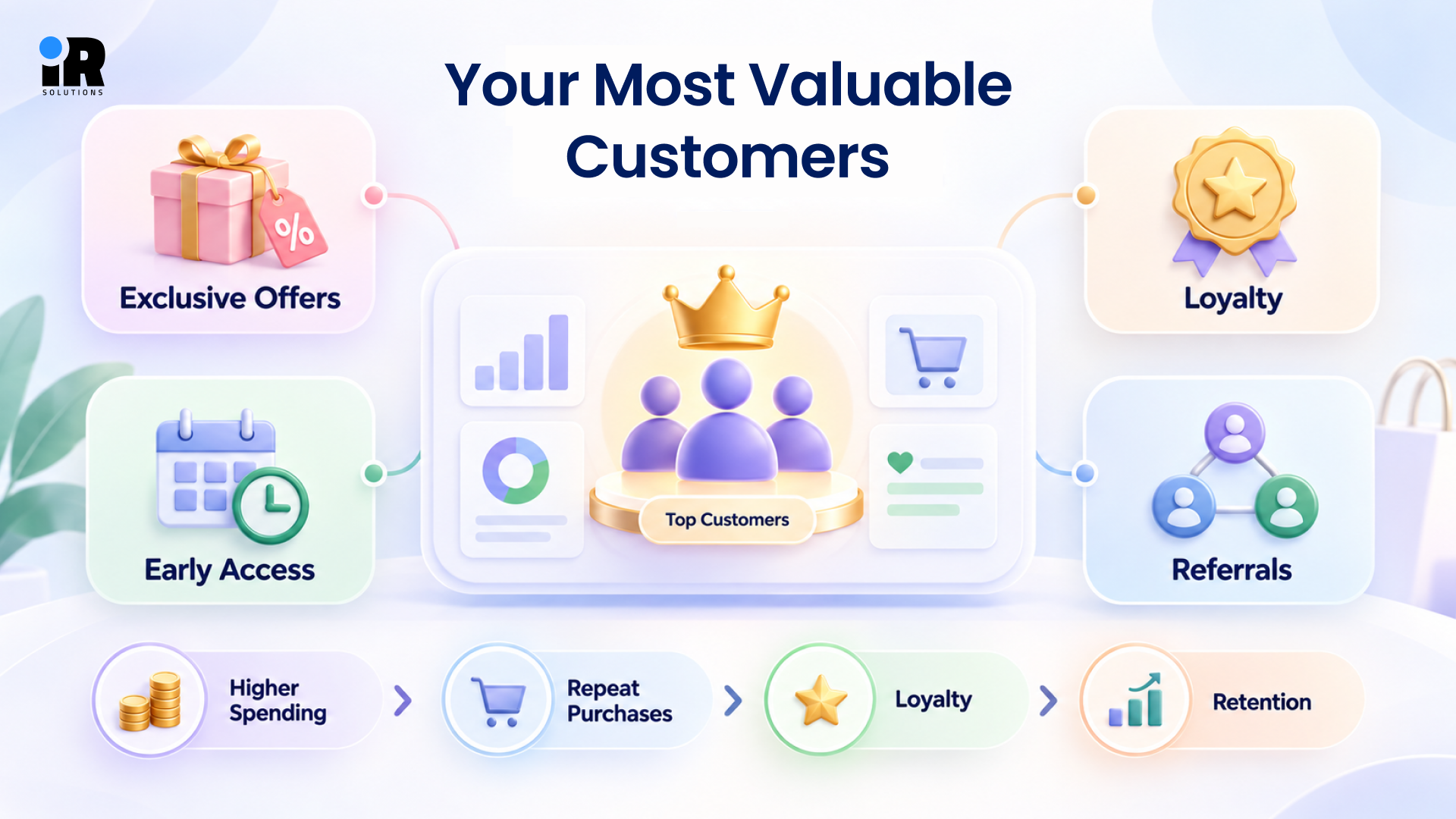
- Exclusive offers that are not available to everyone
- Early access to new products or sales
- Loyalty recognition that rewards their continued spending
- Referral opportunities that encourage them to recommend your brand
Losing a high-value customer can have a bigger impact than losing someone who has only ordered once. That makes retention campaigns for this group worth your attention.
Inactive Customers
An inactive customer hasn't purchased in a while, but the right time period depends on what you sell. Ninety days may be a long gap for a coffee brand but completely normal for a furniture store.
Look at your usual buying cycle before setting the inactive period. Win-back emails, new product suggestions, and offers based on previous purchases can help bring these customers back. If they have also stopped opening or clicking emails, you may want to stop sending to them to protect your email deliverability. Inactive subscribers can affect your email list and sender reputation over time. This email deliverability guide explains how to keep both in good shape.
Product-Specific Customers
This segment groups customers based on the products they have bought. Knowing what someone purchased gives you a better idea of what they may want next.
You can use this group for related products, cross-sells, replenishment reminders, and promotions for a specific product category. The closer the recommendation is to what they already bought, the more useful the email is likely to be.
Product Viewers Who Did Not Purchase
Someone who looked at a product showed some interest, but they were not ready to buy. This is a weaker signal than adding something to a cart, but it can still be useful for people you can identify in Klaviyo.
You cannot segment anonymous visitors, but you can target known contacts who viewed a product. A browse abandonment email can remind them about the product and include reviews or useful details. Keep in mind that viewing a product is not the same as abandoning a cart, so the message should be less direct.
Cart and Checkout Abandoners
Someone who added a product to their cart showed clear buying interest. Someone who started checkout was even closer to placing an order. Because their intent is different, these two groups should not always get the same email.
Checkout abandoners can receive more direct reminders, while cart abandoners may need a little more information or reassurance. Show the products they left behind, add reviews and trust signals, and answer common questions that may have stopped them from buying.
Customers Due for Replenishment
If you sell products that customers use up and need to buy again, replenishment segments can be very useful. This works especially well for products such as skincare, coffee, pet food, and supplements.
Use your actual order data to decide when to send the reminder. If customers usually reorder after 28 days, sending a reminder around day 24 could make sense. You can also suggest subscriptions to regular buyers or recommend related products to increase the next order's value.
Advanced Klaviyo Segmentation Strategies
Basic segments answer one question at a time. Advanced segmentation combines multiple signals purchase history, engagement, spend, and recency to find customer groups that a single condition would never surface. The more you know about your customers, the more precise these segments become.
VIP Customer Segments
Do not build a VIP segment on revenue alone. A customer who spent a lot once may be less valuable than someone who spends moderately but orders every month.
A better VIP segment combines total spend, purchase frequency, recency, and email engagement. Set the thresholds based on your own data. Then give these customers something the rest of your list does not get early access, exclusive offers, or loyalty recognition that actually means something.
At-Risk Customer Segments
An at-risk customer still buys, just less often than they used to. That is different from someone who has gone completely quiet, and it needs different messaging.
A customer who normally orders every 60 days but has now gone 120 days is drifting. A timely win-back offer or a recommendation based on their previous purchases can bring them back before the gap grows too wide.
RFM Customer Segmentation
RFM scores customers on three things: how recently they bought, how often they buy, and how much they spend. Looking at all three together reveals clear groups champions who buy often and spend a lot, loyal customers with steady behavior, at-risk customers whose recency is slipping, and lost customers who have not bought in a long time. It gives you a practical way to decide which groups need attention and what to send them.
Purchase Frequency Segmentation
Not every customer buys at the same pace, and splitting them by frequency gives you cleaner groups to work with.
One-time buyers need a reason to come back. Occasional buyers know the brand but have not built a habit new launches and seasonal campaigns tend to work here. Frequent buyers do not need convincing. They need early access and recognition.
Location-Based Segmentation
Where your customers are changes what you should send and when. A January winter campaign works for customers in the UK but makes no sense for customers in Australia.
- Country - currency, shipping, seasonal timing
- Region or state - local promotions and relevant products
- City - events for brands with physical locations
- Shipping region - excluding areas you cannot deliver to
Cross Sell Opportunity Segments
Someone who adds a product to their cart is already interested. Someone who starts checkout is even closer to buying. For example, a customer who adds a pair of shoes to their cart but leaves before paying may only need a reminder to finish the order.
Keep cart and checkout abandoners in separate segments because their buying intent is different. Show them the product they left behind, add reviews or trust signals, and answer common questions that may be holding them back.
Behavioral Segmentation in Klaviyo
Behavioral segmentation is built on what customers actually do. Knowing someone's age or location is useful, but knowing they viewed a product three times and never bought tells you something far more actionable.
Segment Customers by Website Behavior
Different on-site actions indicate different levels of purchase intent. A category view suggests someone is browsing. A product view shows more specific interest. Adding to cart means they chose something. Starting checkout means they were close. Each behavior points to a different follow-up, and treating them all the same wastes the signal.
Segment Customers by Email Engagement
Engagement data tells you who is still paying attention. Customers who clicked in the last 30 days are your most active audience. Those who have not clicked in 180 days may need a re-engagement campaign or suppression to protect deliverability. The data becomes more useful when combined with purchase history. A customer who clicks every email but has never bought needs different messaging than one who clicks and orders regularly.
Segment Customers by Purchase Behavior
Purchase data is the most commercially useful information in your Klaviyo account. Order count, total spend, specific products bought, time since last purchase, and average gap between orders can all be used as conditions. Combining a few of these lets you separate new customers from loyal ones, spot customers who are starting to drift, and find natural cross-sell opportunities.
Combine Multiple Conditions
A single condition can give you a large audience, but combining conditions helps you narrow it down. AND makes the segment more specific because every condition must match. OR makes it broader because only one of the conditions needs to match.
For example:
- Purchased in the last 60 days AND clicked an email in the last 30 days: customers who are both recent buyers and actively engaged.
- Bought Category A AND have not bought Category B: customers who may be good candidates for a cross-sell.
- Viewed a product AND did not purchase: shoppers who showed interest but left without buying.
Before adding another condition, ask what you plan to do with that group. If you cannot think of a specific campaign or message for the people in it, you probably do not need that segment yet. If you need help turning customer segments into targeted campaigns, email marketing experts can help you build a strategy around your audience and goals.
How to Create a Klaviyo Segment
A good segment starts with a clear purpose. If you know exactly what you want the segment to do, the conditions almost write themselves.
Define the Goal
Before touching any conditions, know what you are trying to achieve.
Good starting goals:
- Increase the number of first purchases from email subscribers
- Recover customers who have not bought in 90 days
- Promote a complementary product to relevant buyers
- Reward customers who have placed five or more orders
- Re-engage subscribers who have stopped clicking
The clearer your goal, the more useful your segment will be. Start with a specific purpose.
Choose the Customer Data
Once you know the goal, choose the data that supports it.
Profile properties work for subscription date, location, or custom fields. Purchase history works for identifying what someone bought, when they last bought, and how many times. Website activity works for product viewers and cart abandoners. Email engagement works for identifying active or inactive subscribers. Event data works for any custom actions tracked through integrations.
Match the data to the goal. If the goal is to target first-time buyers, purchase count is the right condition. If the goal is to re-engage inactive subscribers, last click date is more relevant. For more advanced segmentation and Klaviyo setup, a Klaviyo expert can help you build segments that support your campaigns and customer journeys.
Add Segment Conditions
Inside the Klaviyo segment builder, you choose a property or event, set the logic, and define the value. Conditions can be based on purchase history, website events, email activity, timeframes, or profile data. Negative conditions are just as useful as positive ones. "Has not purchased" is how you find non-buyers and cross-sell gaps
Use the Segment in Campaigns
Segments can be used in several ways once built.
- Targeted campaigns sent only to the defined audience.
- Exclusions to prevent a segment from receiving a campaign not built for them.
- Personalization where segment membership determines content variations.
- Customer-specific messaging where the copy reflects what you know about the group.
Klaviyo Segments vs Flows
Segments and flows are easy to mix up, but they do different jobs. A segment is a group of customers who meet certain conditions, such as people who bought recently or have not purchased in a while.
A flow is a series of automated emails that starts when someone takes a specific action. In simple terms, a segment tells you who the customer is, while a flow decides what happens next.
Segments and Flow Triggers
A flow needs a trigger, an action that sets it off. A customer places an order and a post-purchase flow starts. A customer abandons checkout, and an abandoned cart flow kicks in. The action is what starts everything.
A segment does not trigger anything on its own. It describes a group. A customer might belong to your first-time buyer segment, and that same purchase event triggers the post-purchase flow. Both are true at the same time. The segment tells you who they are. The event starts the automation.
Segmentation becomes even more useful when combined with automated customer journeys. Learn more about Klaviyo email automation flows and how different customer actions can trigger relevant messages.
Using Segments With Flows
Segments become useful inside flows when you want different customers to have different experiences. A post-purchase flow can check whether someone is in your VIP segment. If they are, they get one email. If they are not, they follow the standard path. You can also use segments as flow filters to control who enters a flow, or as exclusions to keep certain customers out of steps that are not relevant to them. Read more in our guides on Klaviyo flows and Klaviyo email automation.
Segment-Based Flow Examples
Here are a few simple ways to use customer segments to trigger more relevant flows:
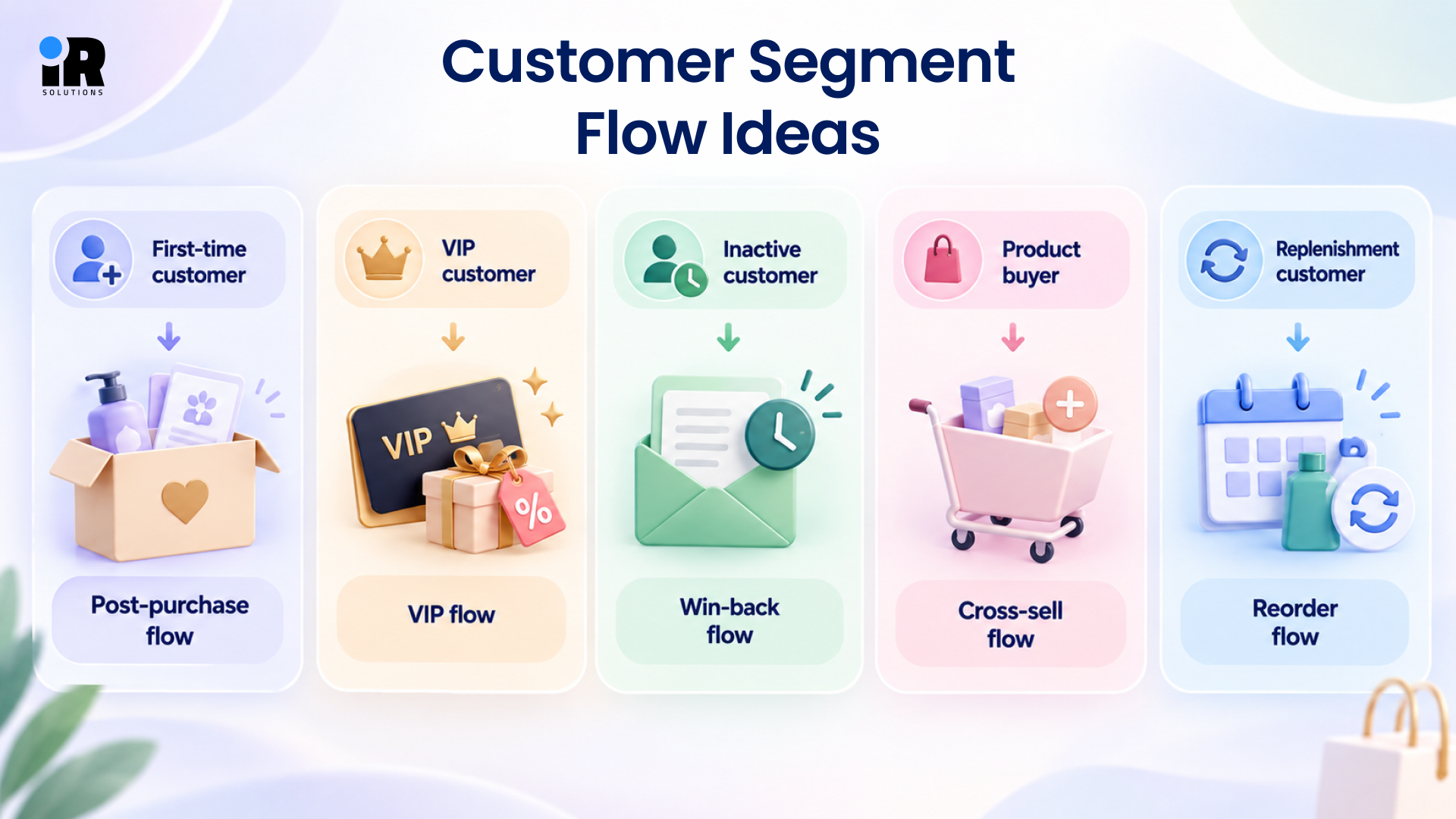
First-time customer → post-purchase flow focused on product education and earning the second purchase
VIP customer → VIP flow with exclusive offers and loyalty messaging
Inactive customer → win-back flow timed to days since last purchase
Product buyer → cross-sell flow recommending complementary products
Replenishment customer → reorder flow timed to the expected run-out date
Klaviyo Segment Examples by Ecommerce Goal
The right segment depends on what you want to achieve, so start with your ecommerce goal and target the customers who are most likely to help you reach it.
Ecommerce Goal | Recommended Segment |
Increase first purchases | Subscribers who have never purchased |
Increase repeat purchases | First-time customers |
Increase average order value | Recent customers with cross-sell opportunities |
Recover inactive customers | Customers who have not purchased recently |
Reward loyal customers | VIP or high-value customers |
Recover abandoned purchases | Cart and checkout abandoners |
Promote complementary products | Customers who purchased a related product |
Increase replenishment | Customers due for reorder |
How Many Klaviyo Segments Does an Ecommerce Brand Need?
There is no right answer. It depends on your business model, how long customers stay active, your product range, and how many campaigns and flows you are actually running. More campaigns generally means more segments, but only if each one has a real purpose.
Start With Core Customer Journeys
Start with the groups that show up in almost every ecommerce business before adding anything else:
- Engaged subscribers
- Subscribers who have not purchased
- First-time customers
- Repeat customers
- High-value customers
- Inactive customers
- Product-based customers
- Cart and checkout abandoners
These eight cover the main stages of the customer lifecycle and give most stores enough to work with for a good while. Add more segments as your campaigns grow, and your data gets richer.
Keep Segments Useful and Manageable
Two hundred segments that nobody uses are worthless. Ten segments tied to active campaigns are not. Before building a new segment, ask yourself what campaign it supports, what flow it feeds into, and what customer experience it improves. If you cannot answer at least one of those, it probably does not need to exist yet
Conclusion
Segmentation is not about having the most advanced setup in Klaviyo. It is about sending the right message to the right person at the right time. That becomes possible when you stop treating your entire list the same way.
Start with the basics. Build segments around your core customer groups, the people who have never bought, those who just placed their first order, loyal repeat buyers, high-value customers, and people who have gone quiet. Get those working first before adding anything more complex.
From there, layer in behavioral data, purchase frequency, product-based targeting, and replenishment timing as your campaigns grow. Each segment you add should have a clear job. If it does not feed a campaign, support a flow, or improve a customer experience, it can wait.
The brands that get the most out of Klaviyo are not necessarily the ones with the most segments. They are the ones who understand their customers well enough to know which groups matter and what those groups actually need to hear.
Good segmentation is not a one-time task. Your customers keep changing, and your segments should keep up. Review them regularly, keep them tied to real campaigns, and they will continue to do useful work.
Frequently Asked Questions
What Is a Segment in Klaviyo?
A segment in Klaviyo is a dynamic group of customer profiles that share common characteristics or behaviors. Conditions such as purchase history, email engagement, website activity, and location determine who belongs to it. Segments update automatically as customer behavior changes, so you do not need to manage them manually after setup.
What Are the Most Important Klaviyo Segments for Ecommerce?
The most commonly useful segments across ecommerce businesses are engaged subscribers, subscribers who have never purchased, first-time customers, repeat customers, high-value customers, inactive customers, cart and checkout abandoners, and product-specific buyers. These groups cover the main stages of the customer lifecycle and give brands a foundation to build targeted campaigns on.
What Is the Difference Between a Klaviyo Segment and a List?
A list is static and manually managed. Profiles are added through a signup form or import and stay on the list until removed. A segment is dynamic and updates automatically based on conditions. Profiles enter and exit the segment as their behavior changes. For most ecommerce targeting, segments are more useful because customer data changes constantly.
How Many Segments Should an Ecommerce Store Have in Klaviyo?
There is no fixed number. The right amount depends on how many distinct customer groups you actively market to. Start with the core lifecycle segments and expand as you build more targeted campaigns. Segments should have a clear purpose and a corresponding campaign or flow. Unused segments add no value.
Can Klaviyo Segments Update Automatically?
Yes. Klaviyo segments are dynamic by default. When a customer's behavior changes, their segment membership updates automatically. A customer who makes their first purchase moves from the non-purchaser segment into the first-time customer segment without any manual action from you.
How Can Klaviyo Segmentation Improve Email Marketing?
Segmentation means each customer group receives messaging relevant to where they are in their journey. A first-time buyer gets content focused on getting the most out of their purchase. A loyal customer gets early access and exclusive offers. A lapsed customer gets a reason to return. Relevant messaging leads to better engagement and more purchases over time.
Can Klaviyo Segments Be Used in Flows?
Yes. Segments can be used as flow filters, which determine whether a customer continues through an automation. They can also be used to create conditional splits inside a flow, where customers follow different paths based on segment membership. Segments do not trigger flows on their own. A customer action or event triggers the flow, and the segment shapes what happens inside it.
What Is the Best Klaviyo Segment for Abandoned Carts?
The most effective abandoned cart segment targets customers who added items to their cart or started checkout but did not complete the purchase. Checkout abandoners have shown stronger buying intent than cart abandoners, so messaging for each group can differ. Combining this segment with recent email engagement data can help prioritize follow-up.