

Key Takeaways
- Klaviyo is built for ecommerce brands that want deep email and SMS automation in one platform.
- The free plan supports up to 250 active profiles and 500 emails sent per month.
- Paid Email plans start at $20 per month, with pricing increasing as your active profile count grows.
- Klaviyo earns its cost when you actively use segmentation, flows, and revenue attribution.
- Small businesses with simple needs may find cheaper alternatives work just as well.
- Shopify store owners get the most out of Klaviyo due to its native, deep integration.
If you run an ecommerce store, you have probably heard about Klaviyo as a powerful marketing platform for growing online sales.
Klaviyo helps ecommerce businesses connect with customers through email, SMS, and push notifications. It also uses customer data to create targeted campaigns, automate messages, and track how marketing efforts contribute to sales.
But having plenty of features does not automatically make a platform worth the price. Klaviyo can be a great investment for businesses that use its automation, segmentation, and customer data tools effectively. For smaller stores with basic marketing needs, however, a simpler and cheaper platform may be enough.
So, is Klaviyo really worth it? In this guide, we'll cover Klaviyo’s pricing, key pros and cons, features, and overall value to help you decide whether it is the right choice for your ecommerce business.
Is Klaviyo Worth It?
Klaviyo can be worth the cost for ecommerce brands that actively use its automation, segmentation, personalization, and customer data. Klaviyo reports an average ROI of 63x across its customer base, but this is a company-reported figure rather than a guaranteed return for every business.
Klaviyo generally becomes more useful as your customer base, sales volume, and marketing needs grow. Once you have enough engaged customers to benefit from segmentation and enough sales activity to support automated flows, its advanced features become easier to justify.
How Much Does Klaviyo Cost?
Pricing is usually the first thing that makes people pause. Klaviyo's Email pricing is largely based on the number of active profiles in your account. Your plan also determines your included email sending capacity, while mobile messaging is priced separately. This change caught many brands off guard. Once you understand how the pricing works, it becomes much easier to decide whether Klaviyo fits your budget.
Klaviyo Free Plan
The free plan gives small businesses a way to test Klaviyo before moving to a paid subscription. Here is what you get:
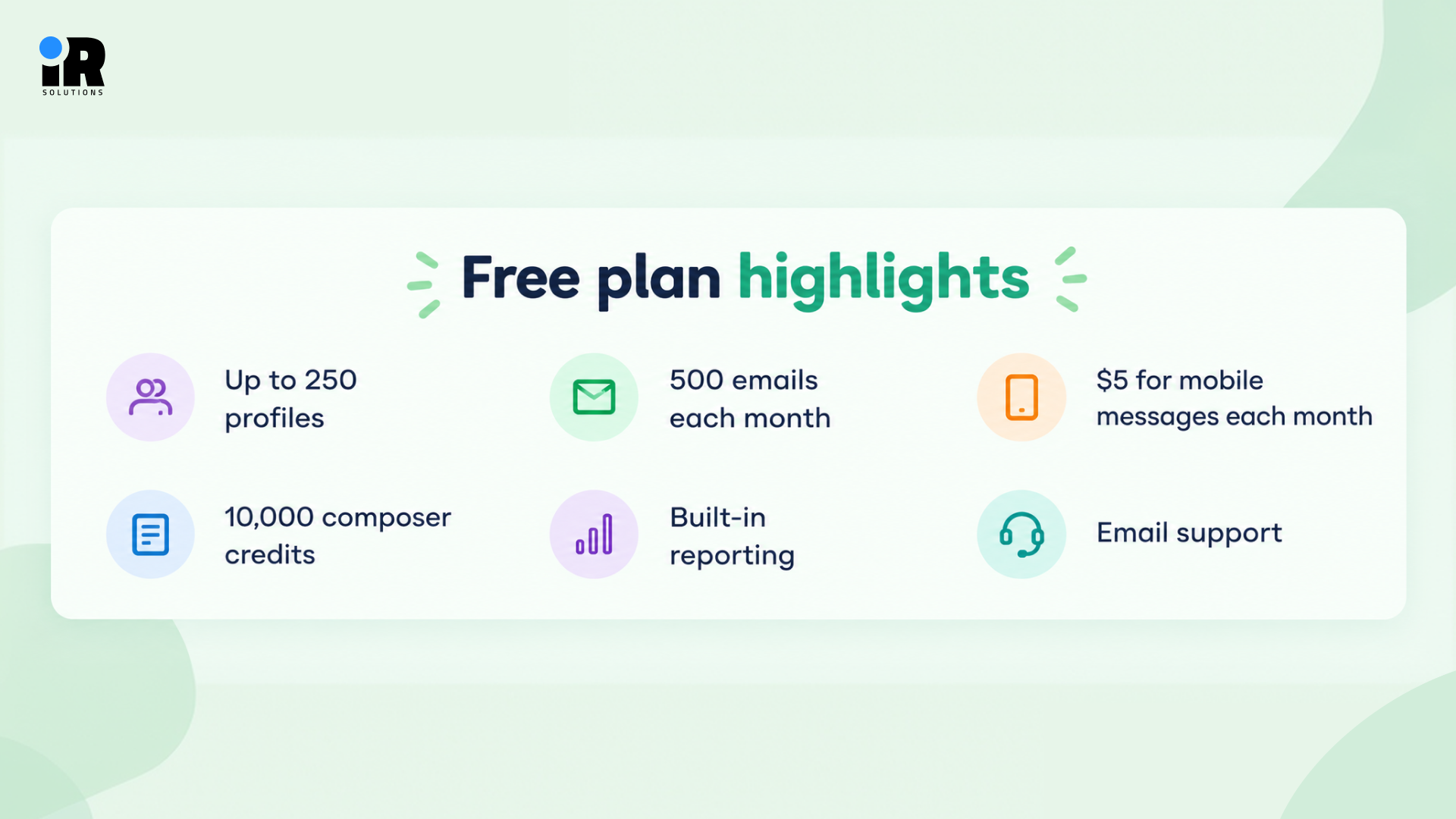
- Contact limit: Up to 250 active profiles
- Email sends: 500 emails per month
- SMS credits: $5 of mobile messages included per month
This is best for new stores testing Klaviyo before paying. You get real access to flows, segments, and forms. The 500-email monthly limit can become restrictive as your subscriber list and sending volume grow.
Klaviyo Paid Plans
Klaviyo's paid Email plans are based on the number of active profiles in your account. The more contacts you have, the higher your monthly plan cost and email sending limit will be.
Active Profiles | Email Plan | Monthly Email Sends |
Up to 250 | Free | 500 |
500 | $20/month | 5,000 |
1,000 | $30/month | 10,000 |
2,500 | $60/month | 25,000 |
5,000 | $100/month | 50,000 |
6,500 | $140/month | 65,000 |
10,000 | $150/month | 100,000 |
These are representative Email plan prices. Klaviyo has additional profile tiers, so your actual cost depends on your active profile count and selected plan.
Klaviyo also charges separately for Mobile Messaging. The cost depends on how many messages you send, the message type, and the country you are sending to.
You can also pay extra for products such as Reviews, Customer Hub, Helpdesk, Marketing Analytics, and Advanced Klaviyo Data Platform. If you use these products, they are added to your regular Email plan cost.
Since Klaviyo charges based on active profiles, it is also worth keeping your list clean. Removing or suppressing contacts you no longer need can help you avoid paying for unnecessary profiles.
If you want a better understanding of Klaviyo before getting started, see what Klaviyo is, how it works, and where it fits into ecommerce marketing.
Klaviyo Pros & Cons
Every platform has strengths and blind spots. Here is what Klaviyo does better than most platforms, and why those things matter for ecommerce.
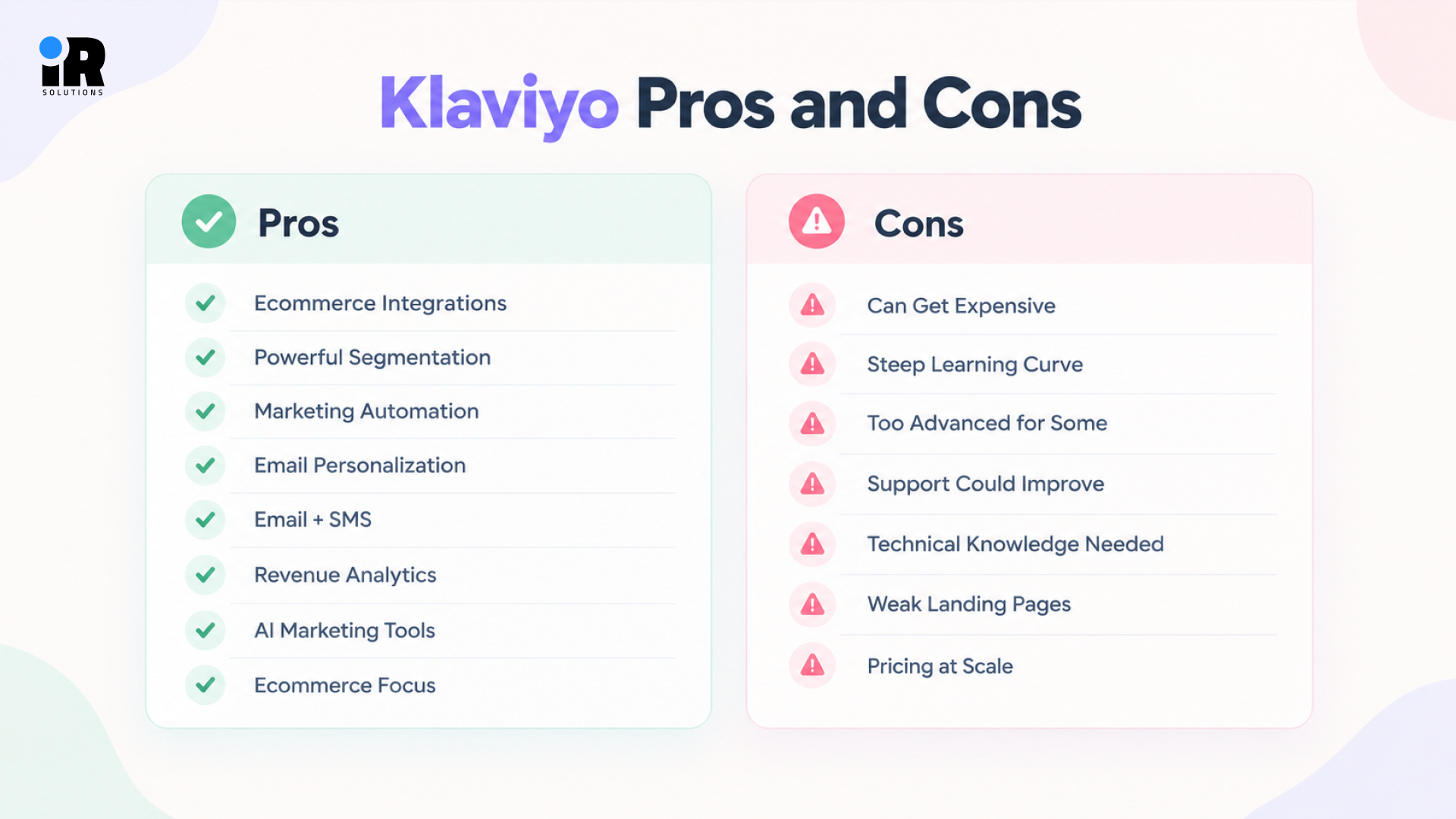
Pros
Advanced Ecommerce Integrations
Klaviyo connects natively with Shopify, WooCommerce, BigCommerce, Magento, and 350-plus other tools. The Shopify sync pulls in purchase history, cart data, and browsing behaviour in real time. You can trigger flows from specific product views, refund events, or repeat purchase patterns. These integrations can bring customer, product, order, and behavioral data into Klaviyo for segmentation and automation.
Powerful Segmentation
You can build segments based on purchase count, total spend, product type, email engagement, or predicted churn risk. These segments update automatically as customer behaviour changes. This allows you to send more relevant messages based on customer behavior instead of sending the same campaign to your entire list.
Advanced Marketing Automation
The flow builder covers everything from abandoned cart and browse abandonment to win-back campaigns and post-purchase sequences. Conditional splits let you send different messages based on what a customer has or has not done. A first-time buyer and a five-time buyer can receive completely different journeys from the same starting trigger.
Strong Email Personalization
Dynamic content blocks let you show different products or offers inside the same email based on who is reading it. A repeat customer sees a loyalty reward. A new subscriber sees a welcome offer. You build one email, and Klaviyo handles the rest based on each person's data.
Email and SMS in One Platform
Your email and SMS contacts share the same profile data, so actions in one channel are visible in the other. You can coordinate messaging without over-contacting the same person. No separate tools, no duplicate lists, no guessing which platform has the latest data.
Detailed Analytics and Revenue Attribution
Klaviyo shows revenue per campaign, per flow, and per segment. You can see which sequences are actually making money and which ones are not pulling their weight. Most platforms stop at open rates. Klaviyo tells you what converted and how much it was worth.
AI-Powered Marketing Features
Klaviyo's AI tools include predictive lifetime value, churn risk scoring, smart send time, and subject line suggestions. These are useful day-to-day features, not add-ons you set up once and forget. They save time on routine decisions and can push performance higher without extra manual work.
Strong Ecommerce Focus
Klaviyo is particularly focused on ecommerce and B2C marketing. Its integrations, customer profiles, segmentation, automation, and reporting are designed around customer behavior and purchase activity. That shows in the depth of its integrations, the logic behind its reporting, and how its flows are designed. As your store grows, the platform keeps up rather than becoming a bottleneck.
Cons
Klaviyo Can Get Expensive
At 25,000 active profiles, the Email plan costs $400 a month. Add SMS, Reviews, or the CDP and the bill goes higher. For stores with strong revenue per contact, it is easy to justify. For smaller or lower-margin businesses, the cost can outgrow the return.
Steep Learning Curve
There is a lot to take in when you first start. Building flows, setting up segments, and understanding how the two work together takes real time. Most users need a few weeks before they feel comfortable navigating the platform.
Too Advanced for Simple Email Marketing
If you are only sending a newsletter or the occasional promo, Klaviyo is more than you need. You end up paying for automation tools you never touch. A cheaper, simpler platform will do the same job at that level.
Customer Support Can Be Better
Free plan users get email support for 60 days only. Free users receive email support for the first 60 days. Paid users have access to additional support options, while all users can use Klaviyo's Help Center, Community, and educational resources. For the price Klaviyo charges, quicker and more reliable support should be standard.
Some Advanced Features Require Technical Knowledge
Things like custom Liquid logic, API connections, and webhooks need developer input. Basic flows are manageable without technical skills, but getting full value from the platform often means bringing in outside help.
Landing Pages Are Not a Major Strength
Klaviyo includes forms and landing page tools, but businesses that need highly customized landing pages or advanced website functionality may still prefer a dedicated landing page or website builder. If landing pages are a big part of how you capture leads, you will need a separate tool for that, which adds to your monthly costs.
Pricing Can Be Difficult to Predict at Scale
Your cost can increase as your active profile count grows. Regular audience management can therefore help you avoid paying for profiles that no longer need to remain active. Without regular list cleaning, costs can jump unexpectedly. Budgeting for Klaviyo gets harder as your store scales.
Klaviyo Features That Matter Most for Ecommerce
Email Campaigns
Klaviyo's campaign builder supports visual editing, HTML editing, and template libraries. A/B testing is available for subject lines, send times, and email content.
Campaigns can be targeted to specific segments, so only the right contacts receive each message. Sending a sale announcement only to customers who bought the relevant product category is straightforward.
Segmentation
Segmentation is where Klaviyo pulls ahead of most competitors. You can create dynamic segments that update automatically as customer behaviour changes.
A segment of "customers who purchased recently but not engaged with your emails. The segment can update as customer behavior changes.
Automation Flows
Flows are pre-built or custom automated sequences triggered by specific events or conditions. The most revenue-generating flows for ecommerce brands are typically abandoned cart, browse abandonment, welcome series, post-purchase follow-up, and win-back. Klaviyo's flow library includes pre-built templates for all of these. If you need help creating more advanced flows or setting up automation around your store's specific needs, a klaviyo expert for hire can help with the setup and customization.
Klaviyo's flow library includes pre-built templates for all of these. Klaviyo provides pre-built flow templates that can help you set up common ecommerce automations more quickly.
Signup Forms and Lead Capture
Klaviyo includes a form builder for popups, flyouts, embedded forms, and full-page forms. Forms can be triggered by exit intent, time on page, or scroll depth.
You can show different forms to different visitor segments. Form submissions automatically create profiles and trigger flows.
SMS Marketing
SMS campaigns and automated SMS flows run from the same dashboard as your email activity. You can send promotional texts, transactional messages, and two-way SMS conversations.
SMS contacts are managed separately from email subscribers, but the data is unified at the profile level.
Customer Profiles
Every contact in Klaviyo has a detailed profile showing purchase history, email engagement, SMS activity, predicted behaviour, and a full timeline of interactions.
This single-customer view is genuinely useful when you are troubleshooting a flow or investigating why a specific segment is underperforming.
Product Recommendations
Klaviyo can pull dynamic product recommendations into emails based on a customer's purchase history or browsing behaviour.
You can show recently viewed products, best sellers in a category, or cross-sell suggestions from related collections. These personalized blocks can make product recommendations more relevant by using each customer's browsing or purchase behavior.
Analytics and Reporting
Klaviyo's analytics dashboard shows revenue attributed to email, SMS, flows, and segments. Benchmark reports show how your metrics compare to similar brands.
The attribution model is click-based with a configurable lookback window. You can see which specific flows and campaigns are driving the most revenue and adjust accordingly.
AI Features
Klaviyo's built-in AI includes: predictive analytics for lifetime value and churn risk, smart send time personalisation, AI-generated copy suggestions, and subject line recommendations.
These tools speed up campaign creation and can improve performance without requiring deep expertise.
Integrations
Klaviyo connects with over 350 tools including Shopify, WooCommerce, Recharge, Yotpo, LoyaltyLion, Gorgias, and Postscript.
Shopify is one of Klaviyo's key ecommerce integrations. The connection can sync customer and order data, support onsite tracking and signup forms, and connect Shopify activity with Klaviyo's segmentation and automation tools.
Who Is Klaviyo Best For?
Klaviyo is a strong fit for product-based businesses that want their email marketing to do more than just send messages.
It works well for ecommerce brands doing consistent monthly revenue, Shopify stores that want customer data to flow automatically without developer work, and businesses with growing lists that need automation to handle what a small team cannot. If you are running email and SMS together and want everything in one place, Klaviyo is built for exactly that.
It is not the right tool for service businesses, bloggers, or SaaS companies. If your main use case is a simple newsletter or occasional promotional email, a cheaper platform will do the job without the extra complexity. Klaviyo rewards stores that use its depth. If you are not going to use that depth, you are paying for features that sit idle.
Is Klaviyo Worth It for Shopify Stores?
Klaviyo can be a strong choice for Shopify stores that want to connect customer data with email and SMS marketing. The Shopify integration is one of Klaviyo's strongest points. It syncs customer data, order history, product catalogues, and cart events in real time, with no manual setup needed.
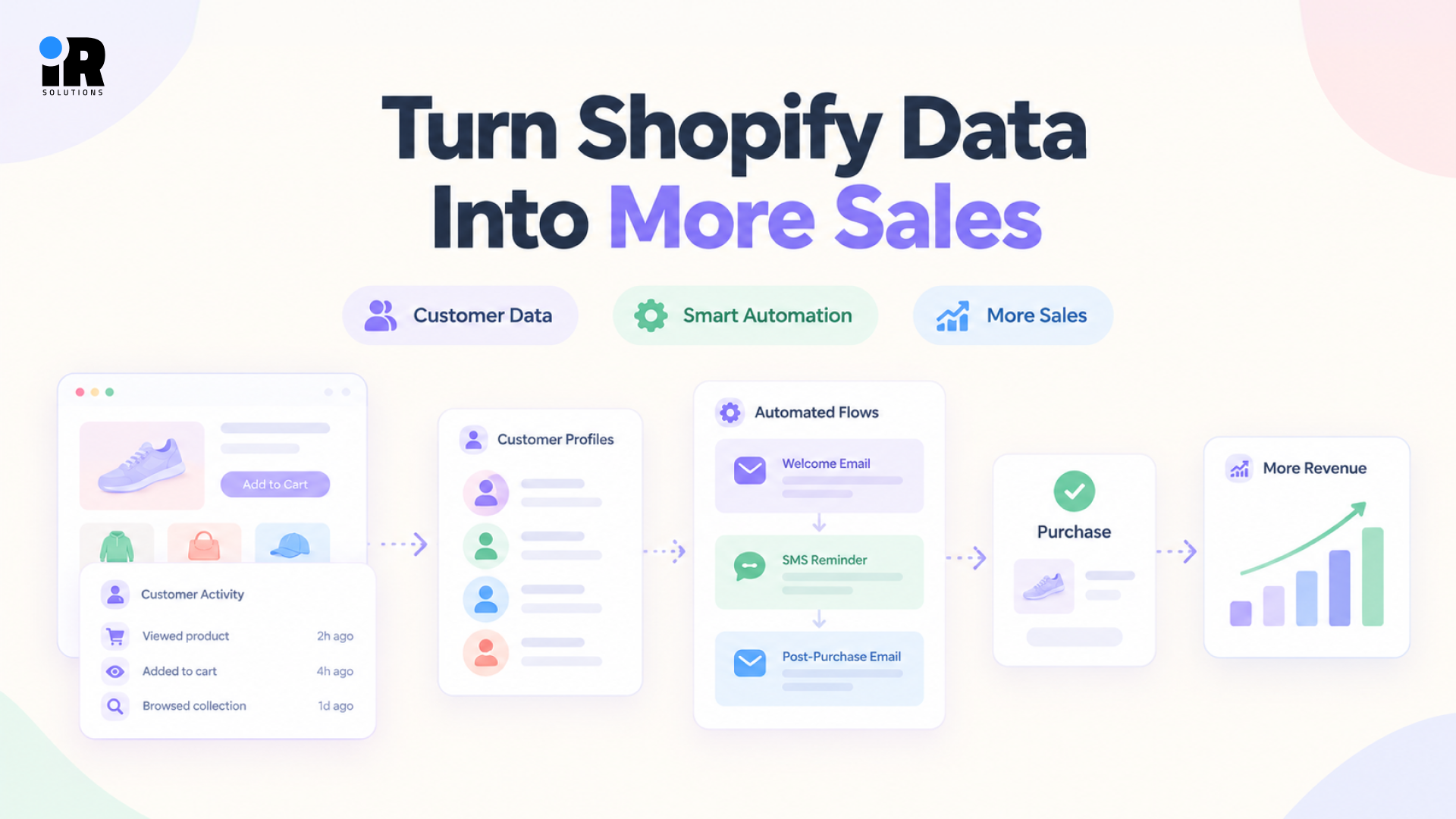
You can trigger flows from Shopify-specific actions like a first purchase, a repeat order, or a product review. Klaviyo's pre-built flow templates can make common ecommerce automations, such as abandoned cart and post-purchase flows, quicker to set up. If you need help with custom Shopify integrations or store functionality, a Shopify developer can help connect your store with Klaviyo and handle the technical setup.
Revenue attribution works well too, because Klaviyo tracks the full path from email click to completed order inside Shopify. For stores doing consistent sales and actively using email, whether it pays for itself depends on your sales volume, customer engagement, email strategy, and how effectively you use its automation and segmentation features.
Running a Shopify store? See how Klaviyo can help increase Shopify revenue through smarter email marketing, automation, and customer targeting.
Is Klaviyo Worth It for Small Businesses?
It depends on how you use it. The free plan supports up to 250 contacts and 500 emails a month, which is enough for very early-stage stores to test the platform without spending anything.
Once you outgrow the free plan, the cost should be compared with the revenue and time savings your email marketing generates. But the real question is whether you are actually using what you are paying for.
A small business sending one promo email a week and running two basic flows will likely get the same result from Mailchimp or MailerLite at a lower cost. Klaviyo makes sense when you are ready to use its depth. If you are not there yet, a simpler tool works fine until you are.
Klaviyo vs Other Email Marketing Platforms
Klaviyo is a strong choice for ecommerce, but it is not the right fit for every business. The best option depends on your budget, business type, and how much automation and customer data you need.
Klaviyo vs Mailchimp
Mailchimp is easier to use and cheaper for small lists. Klaviyo is more powerful for ecommerce segmentation and revenue tracking.
Mailchimp suits businesses that need simple campaigns and basic automation. Klaviyo suits brands that need deep ecommerce data, advanced flows, and revenue attribution.
Want to see how the two platforms compare? Our detailed Klaviyo vs Mailchimp comparison breaks down their features, pricing, automation, and ecommerce capabilities.
Klaviyo vs Omnisend
Omnisend is a strong Klaviyo alternative for ecommerce brands on tighter budgets. It offers email and SMS together at a lower price point.
Omnisend's automation and segmentation are not quite as deep as Klaviyo's, but for many small to mid-size stores, the difference is not material. Omnisend pricing is more predictable and grows more gently with list size.
Klaviyo vs ActiveCampaign
ActiveCampaign is stronger for B2B and service businesses that need CRM features alongside email automation. Klaviyo is stronger for product-based ecommerce.
If you sell physical or digital products and run a Shopify store, Klaviyo wins. If you run a service business with a long sales cycle and need lead scoring and deal tracking, ActiveCampaign is the better choice.
Klaviyo vs Listrak
Listrak is an enterprise-focused platform with deep ecommerce capabilities. It competes with Klaviyo at the upper end of the market. Listrak typically requires custom pricing and is aimed at larger retailers with complex needs.
Klaviyo is more accessible for mid-market brands. Listrak may offer more enterprise-level support and customisation, but at a significantly higher price.
If you are considering Listrak for a larger ecommerce operation, see our detailed comparison of Listrak vs Klaviyo.
Platform Comparison Table
Platform | Best For | Automation | Ecommerce | Pricing | Ease of Use |
Klaviyo | Ecommerce brands | Advanced | Excellent | Scales with contacts | Moderate |
Mailchimp | Small businesses | Basic | Good | Budget-friendly | Easy |
Omnisend | Budget ecommerce | Good | Very good | Affordable | Easy–Moderate |
ActiveCampaign | B2B / services | Advanced | Moderate | Mid-range | Moderate |
Listrak | Enterprise retail | Advanced | Excellent | Custom / Enterprise | Complex |
Choose Klaviyo if you are an ecommerce brand that uses Shopify, has a growing list, and wants deep automation tied to revenue data.
Choose Mailchimp if you are just starting, need simplicity, and are not running a product-based store.
Choose Omnisend if you want ecommerce email and SMS functionality at a lower monthly cost than Klaviyo.
Choose ActiveCampaign if you are a B2B business or service provider that needs CRM features with your email marketing.
Choose Listrak if you are an enterprise retailer with custom requirements and a budget to match.
How to Decide if Klaviyo Is Worth the Cost
Not sure if Klaviyo is worth paying for? Look at these seven areas before making a decision. They will help you judge the cost based on how you actually use email and SMS marketing.
1. Check Your Email and SMS Revenue
Start by looking at how much revenue your email and SMS channels generate each month. Check which campaigns and flows bring in the most sales. If these channels already contribute well to your revenue, paying for Klaviyo may make sense.
2. Consider Your Contact List
Your contact list plays a big part in what you pay for Klaviyo. A large list doesn't always justify the cost if most contacts rarely open or click your emails. Look at both your list size and engagement before deciding.
3. Look at Your Automation Needs
Think about how much of your marketing needs to run automatically. Welcome emails, abandoned cart reminders, post-purchase messages, and win-back flows can save your team a lot of manual work. If you only send occasional campaigns, you may not need that level of automation.
4. Check Your Ecommerce Integration
Your ecommerce platform needs to work well with Klaviyo for its features to be useful. Shopify has a deep integration, while WooCommerce and BigCommerce also support important customer and order data. Make sure your setup can support the flows and tracking you need.
5. Compare the Cost With Your Marketing Results
Do not judge Klaviyo only by its monthly price. Look at the revenue, conversions, and other results coming from your email and SMS marketing. If the return is strong enough to cover the cost and still leave a healthy margin, the subscription is easier to justify.
6. Consider Your Team's Skills
Klaviyo is fairly easy to use for basic campaigns, templates, and flows. More advanced personalisation, segmentation, and custom setups can take more time and technical knowledge. Consider whether your team can manage these tasks without adding high costs.
7. Think About Your Future Growth
Your current needs are not the only thing to consider when choosing an email platform. If your list, sales volume, or automation needs are likely to grow, think about whether the platform can keep up. Switching platforms later can take time and create unnecessary work.
Conclusion
Klaviyo is a solid platform, but it is not the right fit for every business. If you run an ecommerce store, have a growing contact list, and use email to drive real sales, it is one of the better tools available. Its automation, segmentation, personalization, and ecommerce integrations can provide strong value when you actively use them to support sales and customer retention.
That said, the price adds up fast. If your list is small, your flows are basic, or you are not seeing strong email revenue yet, you are likely paying for more than you need. Starting with something simpler and moving to Klaviyo when your store is ready is a perfectly sensible approach.
The free plan is a good way to test things without committing. Use it to build one or two flows, set up a signup form, and see how the platform actually feels for your business. That will tell you more than any review can.
At the end of the day, Klaviyo earns its cost when you use it fully. If you are ready to do that, it is worth it. If you are not there yet, wait until you are. The platform will still be here.
Frequently Asked Questions
Is Klaviyo worth it for small businesses?
It depends on how you use it. For small ecommerce brands running active automation flows and seeing measurable revenue from email, Klaviyo is worth it even at smaller list sizes. For small businesses with simple newsletter needs, cheaper tools like Mailchimp or MailerLite will do the job at lower cost. The free plan gives you a real chance to test the platform before committing.
Is Klaviyo worth it for Shopify?
Yes, for most Shopify stores doing consistent revenue. The native Shopify integration is one of Klaviyo's biggest strengths. Real-time data sync, revenue attribution, and product-level segmentation work better with Shopify than on most other platforms. Abandoned cart and post-purchase flows are fast to set up and typically deliver strong returns.
Is Klaviyo better than Mailchimp?
For ecommerce, Klaviyo is generally stronger. It offers deeper segmentation, better revenue attribution, and more powerful automation for product-based businesses. Mailchimp is easier to use and cheaper for simple campaigns. If your goal is growing a product-based store, Klaviyo gives you more tools to do it. If you just need simple campaigns and a clean interface, Mailchimp still delivers.
Is Klaviyo difficult to learn?
There is a real learning curve. Basic campaigns and standard flows are manageable for most users within a few days. Advanced features like custom conditional logic, Liquid personalisation, and API integrations take more time and sometimes technical help. Klaviyo's documentation and community resources are solid. Expect to invest a few weeks before you feel fully comfortable.
Why is Klaviyo so expensive?
Klaviyo prices are based on active profiles, which means your bill grows as your audience grows. The platform also packs in features that more basic tools charge separately for, including SMS, AI tools, advanced segmentation, and attribution reporting. The cost feels high when you compare it to simpler tools. It feels reasonable when you compare it to the revenue it tracks and influences.
Does Klaviyo have a free plan?
Yes. The free plan supports up to 250 active profiles and 500 emails per month. It includes 150 free SMS credits monthly, unlimited push notifications, and access to core features including flows, forms, and segmentation. Klaviyo branding appears on emails, and support is limited to email-only for the first 60 days. It is a genuine starting point for small stores testing the platform.