


Key Takeaways
- Klaviyo, Omnisend, Mailchimp, and other platforms offer different features for ecommerce email marketing.
- Integration depth matters far more than simply having a platform connection available.
- The right platform depends on your store size, team, and actual marketing needs.
- Klaviyo and Omnisend suit most growing stores, but neither fits every situation perfectly.
- Always calculate platform pricing at your future list size, not just today's.
- Persistent automation, integration, reporting, or scalability problems can be signs that it is time to consider switching platforms.
Email is still one of the best ways for ecommerce stores to drive sales. But sending the same promotion to your entire list is no longer enough. Customers receive too many emails, and irrelevant messages are easy to ignore or unsubscribe from.
The better approach is to use customer data such as past purchases, product views, and buying habits to send more relevant emails. The right email platform makes this easier by giving you the tools to manage campaigns, automation, segmentation, and customer data.
There are many options to choose from. Klaviyo and Omnisend are popular with ecommerce brands, while Mailchimp and MailerLite are simpler options for smaller stores. Drip, ActiveCampaign, Brevo, Shopify Messaging, HubSpot, and Listrak each suit different needs.
This guide compares all ten platforms to help you find the one that fits your store, team, and email marketing goals.
Ecommerce Email Marketing Platforms Compared
Before going into detail on each platform, here is a quick side-by-side view to help you orient yourself.
Platform | Best For | Automation | Segmentation | SMS | Ecommerce Integrations | Pricing Approach |
Klaviyo | Growing ecommerce brands | Advanced | Advanced | Yes | Strong | Profiles/usage |
Omnisend | Email + SMS ecommerce | Advanced | Advanced | Yes | Strong | Contacts/sends |
Shopify Messaging | Shopify stores | Moderate | Moderate | Yes | Shopify-native | Usage based |
Mailchimp | Beginners | Moderate | Moderate | Yes | Good | Contacts |
ActiveCampaign | Complex automation | Advanced | Advanced | Available | Good | Contacts |
Brevo | Budget-conscious brands | Moderate | Good | Yes | Good | Send volume |
Drip | DTC ecommerce | Advanced | Advanced | Limited | Strong | Contacts |
MailerLite | Small stores | Moderate | Moderate | Limited | Good | Subscribers |
HubSpot | CRM-led businesses | Advanced | Advanced | Available | Good | Marketing contacts |
Listrak | Enterprise retail | Advanced | Advanced | Yes | Enterprise-focused | Custom |
The right platform depends on your ecommerce platform, list size, automation requirements, customer data needs, and marketing budget. Those five factors should guide every decision you make from here.
What to Look for in an Ecommerce Email Marketing Platform
Picking an email platform based on price or popularity alone is how stores end up switching tools every two years. The right platform earns its place by fitting how your store actually operates, your ecommerce setup, your team size, and the kind of marketing you want to run. These are the criteria that matter most when making that call.
Ecommerce Integrations
Having an integration listed on a pricing page means very little on its own. What matters is what that integration actually pulls in order history, product catalog, cart events, browse behavior, and live customer profiles. Shopify, WooCommerce, BigCommerce, Magento, and custom stores all have different levels of support across platforms, and that depth is what determines whether your automation actually fires when it should.
Email Automation
The core flows every ecommerce store needs are welcome sequences, abandoned cart, browse abandonment, post-purchase, win-back, replenishment, back-in-stock, and cross-sell. Looking for more details on these workflows? This ecommerce email automation guide breaks down the main flows and how they fit into an ecommerce strategy.
A platform that can build and trigger all of those reliably with a visual builder and pre-built starting points saves your team a lot of time. One that requires workarounds for basic flows will frustrate you within three months.
Segmentation and Personalization
Sending the same email to 40,000 people is a fast way to train them to ignore you. Good segmentation lets you filter by purchase behavior, customer lifetime value, engagement history, product interest, order frequency, location, and lifecycle stage. The more precisely you can define who gets what message, the better your results will be across every campaign and flow. Shopify’s email segmentation case study shows how ecommerce brands can use purchase and engagement data to create more targeted campaigns.
Ecommerce Analytics and Revenue Attribution
A 40% open rate on a campaign that generated zero orders is not a win. Ecommerce brands need to see which emails and flows are actually driving purchases, what the revenue per recipient looks like, and which segments convert at the highest rate. Without that data, you are optimizing for the wrong things and making budget decisions without any real evidence.
Email, SMS and Multichannel Marketing
Managing email in one tool and SMS in another creates gaps in your customer data that are hard to fix later. When both channels run from the same customer profile, you can coordinate timing, avoid over-messaging, and report on the full picture. For most growing ecommerce brands, having email and SMS under one roof is worth paying slightly more to achieve.
Deliverability
The best email in the world does nothing if it lands in spam. Deliverability comes down to proper authentication setup SPF, DKIM, and DMARC combined with consistent list hygiene, fast suppression of unsubscribes and complainers, and sending patterns that keep engagement rates healthy. A platform that makes those things easy to manage is worth more than one that buries them. Inbox placement depends on several factors, including authentication and list quality. This Klaviyo deliverability guide explains them in more detail.
Ease of Use
A platform with 200 features is only useful if your team can actually use them. Smaller stores and lean marketing teams do better on tools that are intuitive and fast to navigate. Larger teams with dedicated specialists can extract more from platforms that require more configuration. Mismatching the platform complexity with the team running it is a very common and expensive mistake.
Pricing and Scalability
Most platforms charge based on contacts, active profiles, subscribers, or emails sent, and SMS is usually priced separately on top. The model that looks cheapest today may not look that way when your list doubles. Always run the numbers at your expected size in 12 months. A platform that costs $150 a month now could cost $800 a month at scale, and that gap changes the decision entirely.
10 Best Email Marketing Platforms for Ecommerce
There are plenty of email marketing tools out there, but the right one depends on your business, team, and marketing goals. The ten platforms below cover everything from simple tools for small businesses to advanced options for larger companies. Each one is reviewed using the same points, so you can easily compare their features, pricing, and limitations.
1. Klaviyo
Best for: Growing ecommerce and DTC brands that want deeper customer data, segmentation, and lifecycle automation.
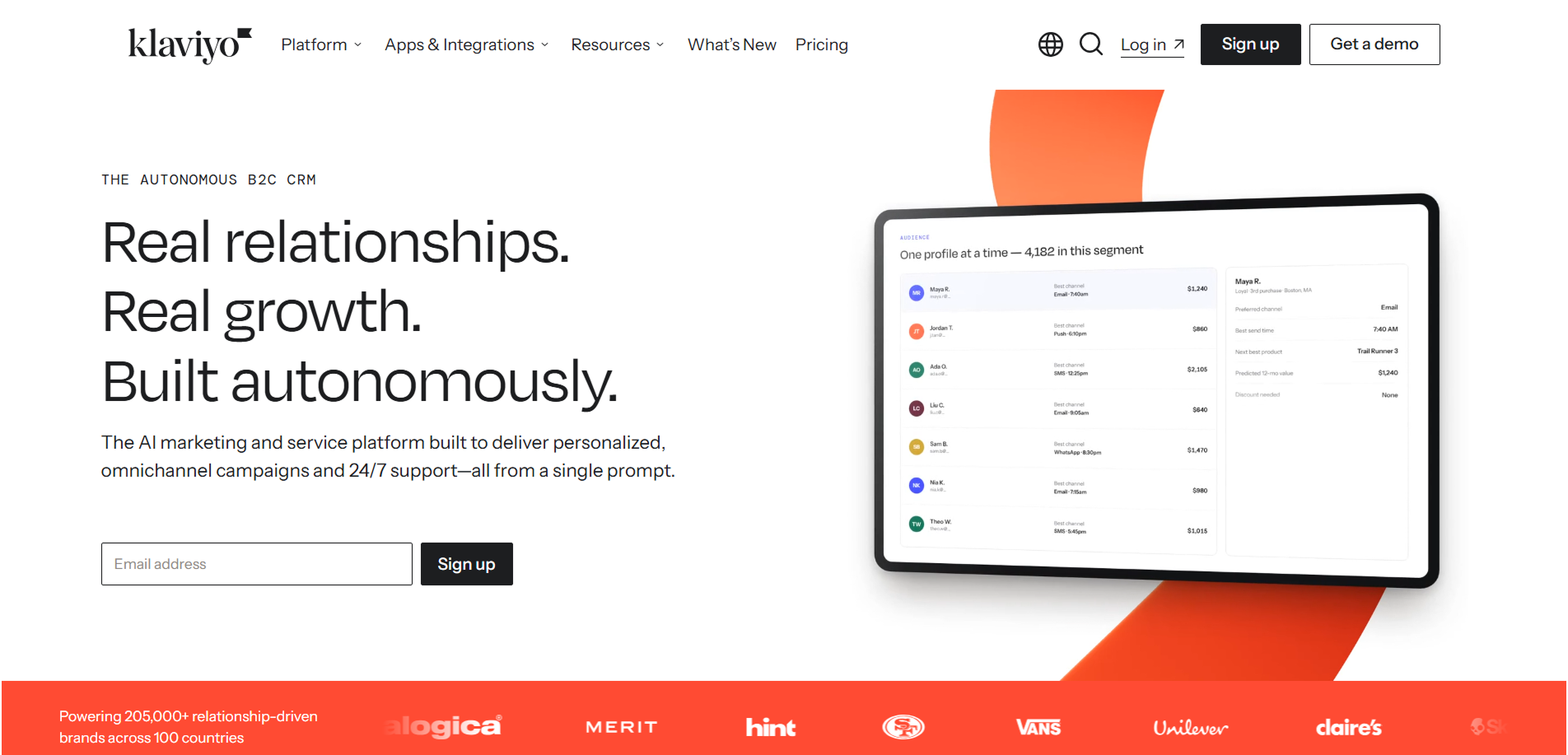
Klaviyo was purpose-built for ecommerce. It pulls real purchase, browse, and cart data from your store and puts all of it to work inside flows, segments, and campaigns. For brands serious about lifecycle marketing, it tends to become one of the most reliable revenue channels they run.
Key ecommerce features:
- Flows trigger based on specific actions like browsing a category or abandoning a cart.
- Predictive analytics estimates each customer's next purchase date and lifetime value.
- Revenue attribution shows exactly which emails and flows are generating orders.
- Segments update automatically as customer behavior and purchase activity change.
- Email and SMS both run from the same customer profile without switching platforms.
- Product blocks pull live images and pricing directly from your store catalog.
Ecommerce integrations: Shopify, Shopify Plus, WooCommerce, BigCommerce, and Magento are all supported, with Shopify being the deepest. Cart events, order history, browse activity, and customer profiles sync without manual exports. You can also read more about Klaviyo and Shopify integration and the customer data that can sync between the two platforms.
Automation and segmentation: The flow builder handles multi-step sequences with branching logic and covers all core ecommerce flows out of the box. Segmentation goes deep predicted lifetime value, purchase frequency, and product interest are all available as filters.
Potential limitations: Pricing climbs as profile count and SMS volume grow, which catches some stores off guard at scale. The platform is more than most new or very small stores actually need.
Who should consider Klaviyo? Stores running or planning serious lifecycle marketing programs where email is expected to generate measurable revenue on a consistent basis.
2. Omnisend
Best for: Ecommerce businesses that want solid email and SMS automation without a steep learning curve.
Omnisend was built for ecommerce from the start, and it shows in how the platform is laid out. Most teams can set up their core flows and get campaigns running within a day or two, without needing a specialist or spending weeks in setup.
Key ecommerce features:
- Email, SMS, and push notifications all run together inside a single automation workflow.
- Product recommendation blocks pull personalized suggestions directly into email content.
- Pre-built sequences cover cart abandonment, welcome, and post-purchase without starting from scratch.
- Segmentation filters by purchase behavior, engagement level, and customer value.
- A solid template library covers the most common ecommerce campaign formats.
Ecommerce integrations: Native connections for Shopify, WooCommerce, BigCommerce, and Magento sync orders, products, and customer data cleanly. Most stores are up and running without much manual configuration.
Automation and segmentation: The automation builder is straightforward and covers common ecommerce scenarios without unnecessary complexity.
For a closer look at how Omnisend compares with Klaviyo in automation, segmentation, pricing, and other areas, see our detailed Klaviyo vs Omnisend comparison.
Potential limitations: Teams running very advanced lifecycle programs may eventually want more depth in customer data modeling and predictive capabilities than Omnisend currently offers.
Who should consider Omnisend? Small-to-mid-sized ecommerce stores that want reliable ecommerce automation and multichannel messaging without the complexity of a more enterprise-level tool.
3. Shopify Messaging
Best for: Smaller Shopify stores that want email marketing built directly into their store dashboard.
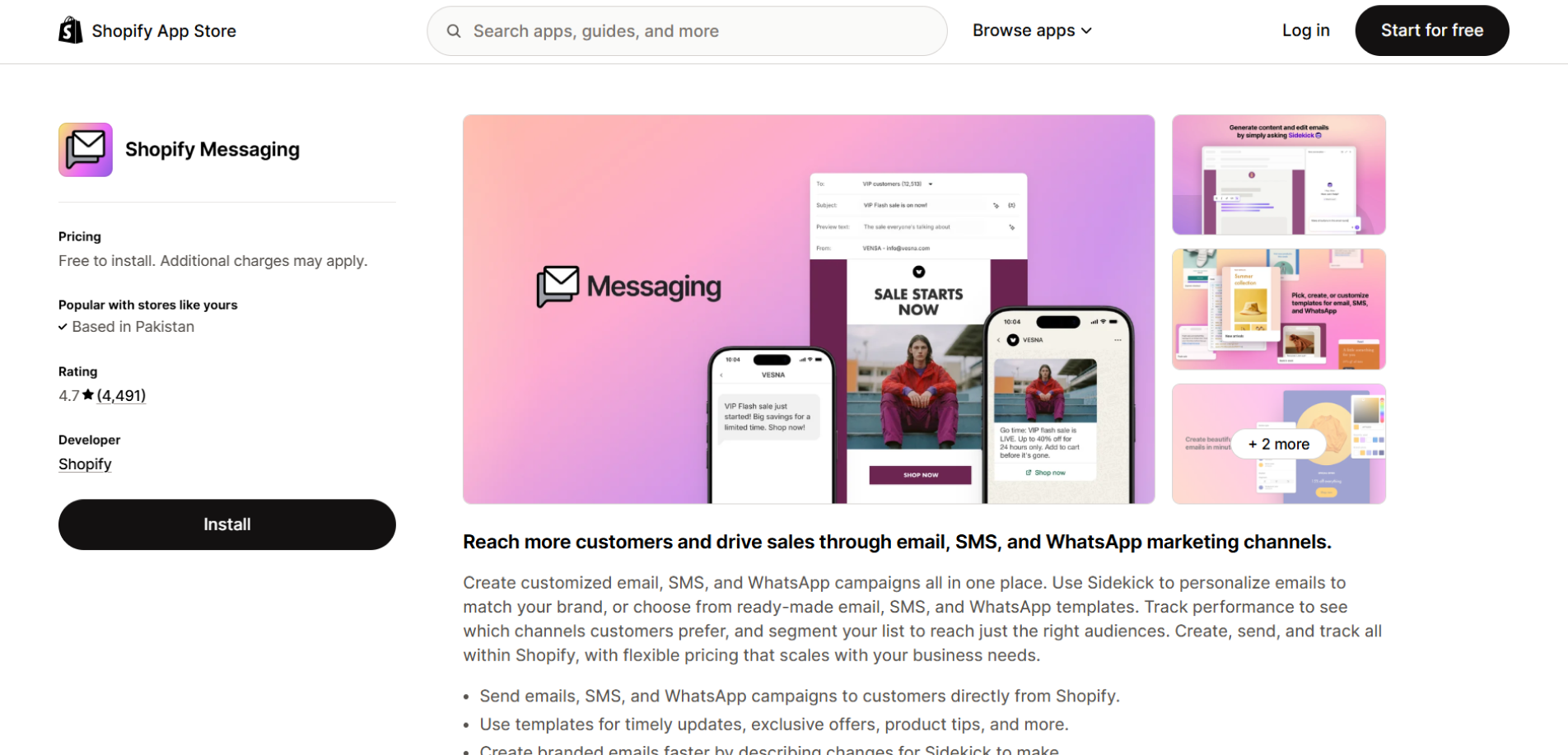
If your whole operation runs inside Shopify and your marketing needs are straightforward, the native messaging tools remove the need for a third-party platform entirely. Everything sits in the same place you already manage orders, products, and customers.
Key ecommerce features:
- No API connections or third-party sync needed everything is native to your store.
- Customer profiles from Shopify feed directly into your contact lists and segments.
- Products from your catalog can be added to emails without any extra setup.
- The drag-and-drop campaign builder is simple enough for anyone to use immediately.
- Templates are pre-designed for ecommerce promotions and basic transactional messages.
- Abandoned checkout, order confirmation, and welcome emails are available out of the box.
Ecommerce integrations: Fully native to Shopify there is nothing to connect or sync because it is already part of the same platform.
Automation and segmentation: Covers the basics well but does not support the kind of multi-step behavioral sequences that dedicated platforms handle. Filters and triggers are more limited.
Potential limitations: Automation logic and segmentation depth fall well short of Klaviyo, Omnisend, or Drip. Revenue attribution is also more basic than most growing stores eventually need.
Who should consider Shopify Messaging? Stores operating entirely inside Shopify with simple, campaign-led marketing needs and no requirement for advanced flows or behavioral segmentation.
4. Mailchimp
Best for: New stores and small businesses getting started with email marketing for the first time.
Mailchimp is the most widely recognized email tool for a reason it is accessible, works reasonably well at small list sizes, and has a broad library of integrations. Most people can get a campaign out the door without any prior experience or training.
Key ecommerce features:
- A solid email builder with one of the largest template libraries available anywhere.
- Abandoned cart, welcome, and post-purchase automation are available on paid plans.
- Purchase-based and engagement-based segmentation filters cover the basics.
- Reporting shows open rates, clicks, and estimated revenue from campaigns.
- Connects with WooCommerce, BigCommerce, and many other platforms directly.
Ecommerce integrations: Mailchimp connects with Shopify through its Mailchimp for Shopify integration, which syncs customer and order data for campaigns, segmentation, product recommendations, and ecommerce marketing.
Automation and segmentation: Enough for simple ecommerce flows, but building complex multi-step journeys with behavioral branching takes real effort and workarounds on Mailchimp.
Potential limitations: As an ecommerce store grows, Mailchimp may feel limited for advanced lifecycle marketing and behavior-based targeting.
If you're deciding between Mailchimp and Klaviyo, this detailed Klaviyo vs Mailchimp comparison breaks down the differences in automation, segmentation, integrations, pricing, and ecommerce capabilities.
Who should consider Mailchimp? Smaller stores running newsletters, basic promotions, and simple automated sequences who do not yet need advanced behavioral targeting or lifecycle automation.
5. ActiveCampaign
Best for: Businesses that need sophisticated workflow automation connecting marketing, CRM, and sales activity.
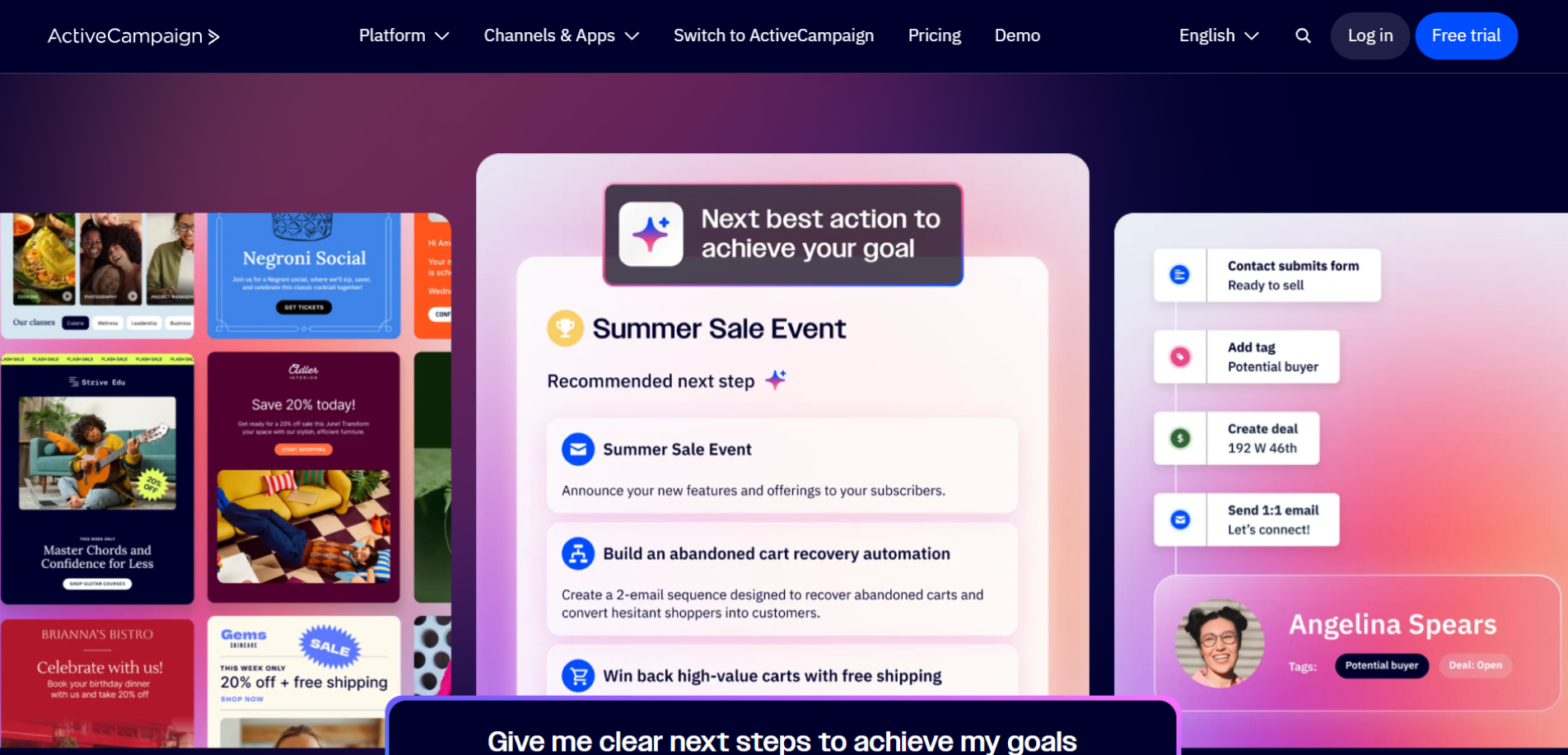
ActiveCampaign's automation builder is one of the most flexible available. It handles complex multi-step journeys, branching logic, and CRM-level tracking in ways that most ecommerce-first platforms do not support. Stores with sales teams or service touchpoints alongside their online channel get a lot from that flexibility.
Key ecommerce features:
- Workflow automation handles branching, conditional logic, and multi-entry journeys cleanly.
- A built-in CRM tracks customer relationships and deal activity alongside marketing data.
- Segmentation uses behavior, tags, and custom field values for detailed audience filtering.
- Lead scoring assigns values based on purchase activity and engagement patterns.
- Customer journey mapping supports long-term lifecycle paths with multiple triggers.
- Shopify, WooCommerce, and BigCommerce connect via native or third-party integrations.
Ecommerce integrations: Major platforms are supported, though the ecommerce-specific data sync is not quite as seamless as Klaviyo or Omnisend for stores focused purely on online retail.
Automation and segmentation: Where ActiveCampaign stands apart from most. If your logic needs to factor in sales interactions and service history alongside marketing behavior, it handles that well.
Potential limitations: The depth of the platform can feel like overkill for stores that only need standard ecommerce flows. It rewards people who already understand automation logic.
Who should consider ActiveCampaign? Businesses where ecommerce is one part of a broader customer relationship subscription services, brands with sales teams, or stores with both online and offline touchpoints.
6. Brevo
Best for: Budget-conscious ecommerce brands or stores with large contact lists and selective sending patterns.
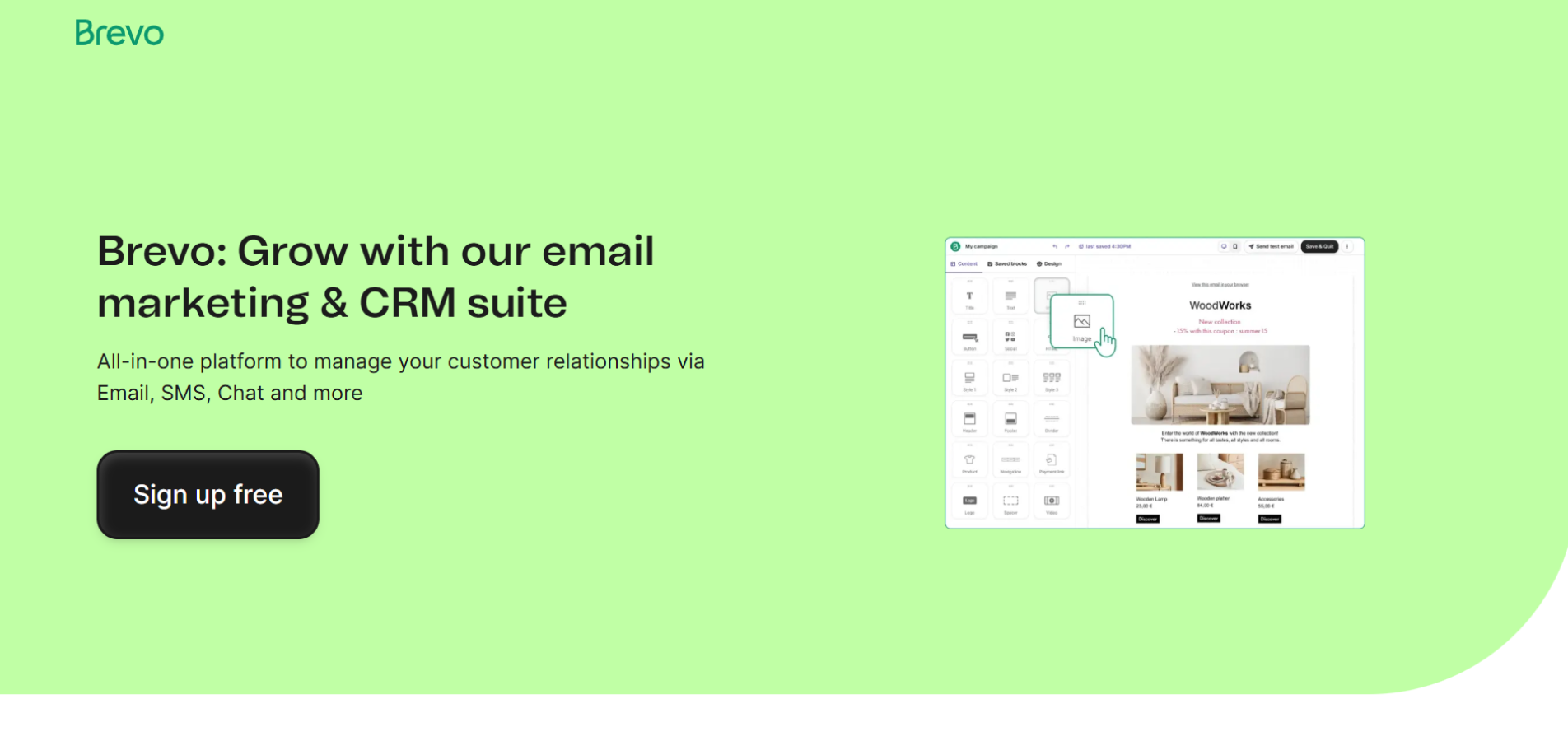
Brevo prices by emails sent rather than contacts stored. That makes a real difference for brands with big lists who only message a portion of them at any given time. You can store 100,000 contacts and only pay for the sends you actually make.
Key ecommerce features:
- A solid email campaign builder with a decent range of templates for ecommerce sends.
- Marketing and transactional SMS are both available from the same platform account.
- Trigger-based automation covers the most common ecommerce event sequences.
- A basic CRM handles contact management and deal tracking without extra cost.
- Transactional emails like order confirmations run through the same sending infrastructure.
- Behavioral and list-based segmentation filters cover the standard use cases.
Ecommerce integrations: Shopify, WooCommerce, and others connect via plugin or API. The integration works but does not pull in the same depth of behavioral data as ecommerce-first platforms.
Automation and segmentation: Handles standard ecommerce flows without issue. The segmentation filters are practical and cover most common behavioral criteria for growing stores.
Potential limitations: The ecommerce-specific feature set is not as deep as platforms built exclusively for retail. Advanced lifecycle marketing teams tend to hit its limits fairly quickly.
Who should consider Brevo? Stores watching their budget carefully, brands with high contact counts and selective sending habits, or businesses that need transactional email alongside marketing campaigns.
7. Drip
Best for: DTC brands that want their email marketing driven by real customer behavior and purchase data.
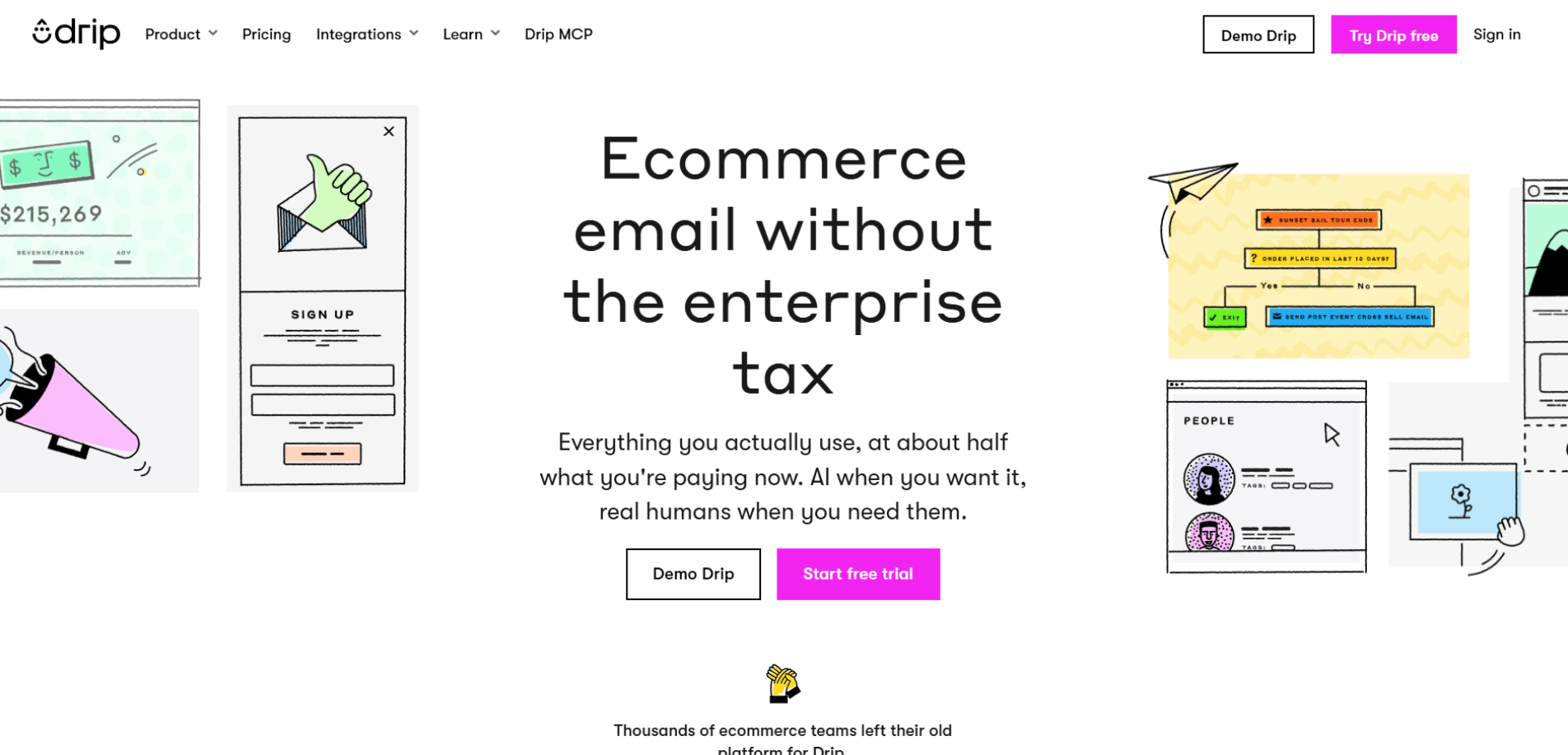
Drip was built for ecommerce from day one. It tracks what customers buy, what they browse, and how they engage, and then lets you use all of that to build automated sequences that feel relevant rather than mass-produced.
Key ecommerce features:
- Behavioral segmentation filters by the specific actions customers take in your store.
- A visual workflow builder designs multi-step sequences the way DTC brands actually run them.
- Product information pulls dynamically into emails so content stays current and relevant.
- Revenue attribution ties every email send back to actual orders placed in your store.
- The Shopify integration syncs customer data, orders, and store events in real time.
- WooCommerce stores connect directly with strong order and behavioral data sync.
Ecommerce integrations: Shopify and WooCommerce integrations are both strong and accurate. Customer data, order history, and behavioral events sync consistently without manual maintenance.
Automation and segmentation: The segmentation lets you filter by very specific behaviors, and the workflow builder handles the kind of multi-step sequences that DTC brands run as standard practice.
Potential limitations: Drip has a smaller community and ecosystem than Klaviyo or Mailchimp. SMS capabilities are more limited, which matters if cross-channel messaging is a priority for your store.
Who should consider Drip? DTC businesses that prioritize customer behavior data, automated lifecycle marketing, and clear revenue attribution as the core of their email program.
8. MailerLite
Best for: New and smaller ecommerce stores that want a clean, affordable, and easy-to-use email tool.
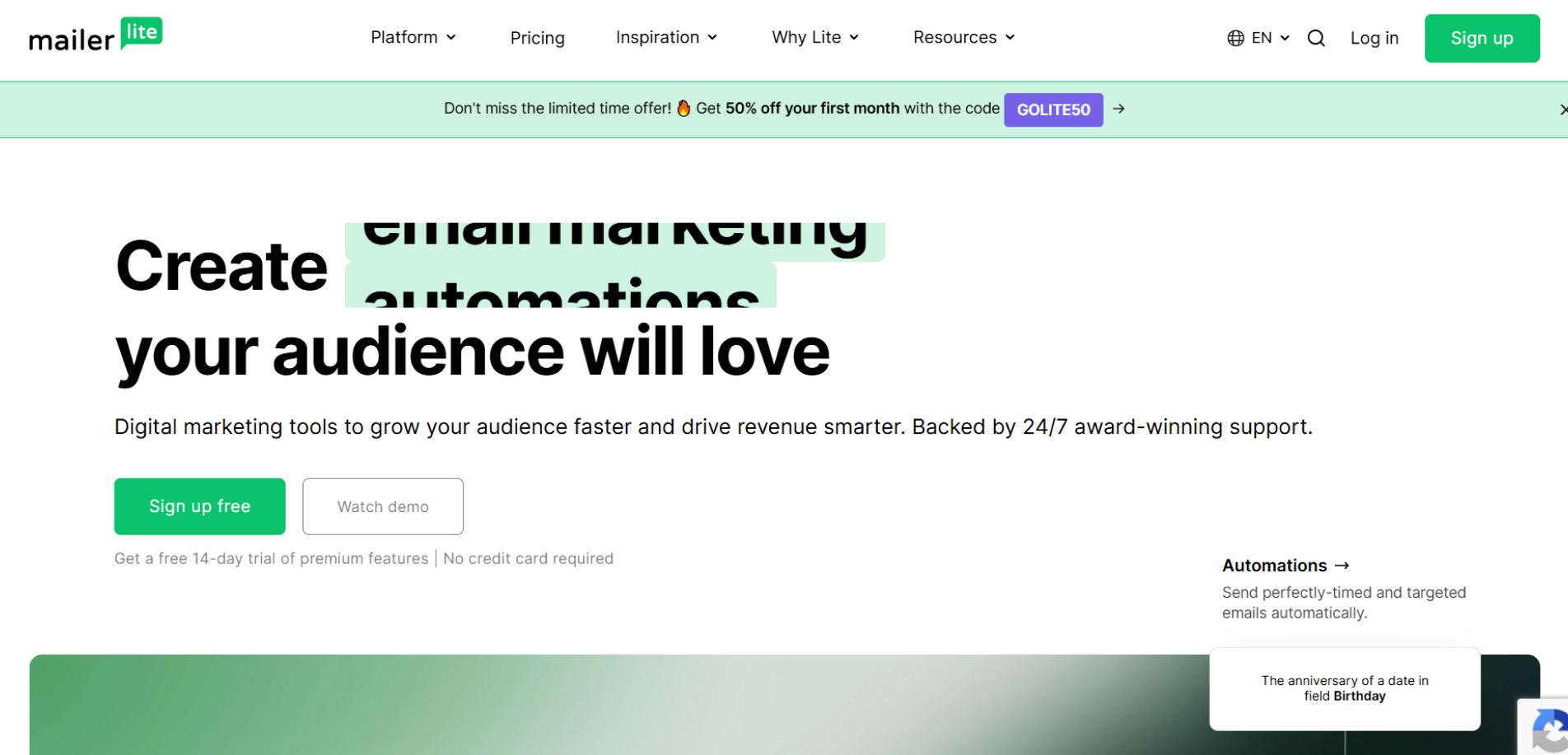
MailerLite does not try to do everything, and that is part of what makes it appealing for smaller stores. The editor is clean, campaigns are fast to build, and pricing stays competitive at lower list sizes without a lot of pressure to upgrade.
Key ecommerce features:
- A clean drag-and-drop campaign editor that most people can use without any training.
- Abandoned cart, welcome, and post-purchase sequences are available on paid plans.
- A solid template library covers standard ecommerce promotions and product announcements.
- Built-in landing pages help grow your list without needing a separate tool.
- Shopify integration syncs orders and customer data for basic audience segmentation.
- WooCommerce connects via a plugin with enough data sync for standard ecommerce use.
Ecommerce integrations: Shopify and WooCommerce are both supported. The sync covers orders and customer data well enough for basic segmentation and automation triggers.
Automation and segmentation: Covers the standard ecommerce flows without issue. Segmentation options are solid for the price point but offer fewer behavioral filters than Klaviyo or Drip.
Potential limitations: Ecommerce analytics and segmentation depth are more limited for stores doing advanced lifecycle work. Revenue attribution is also more basic than most growing brands eventually want.
Who should consider MailerLite? New stores, lean operations with tight budgets, and brands whose primary need is reliable campaign execution rather than complex behavioral automation.
9. HubSpot
Best for: Businesses where email connects to a broader CRM, sales pipeline, and customer service operation.
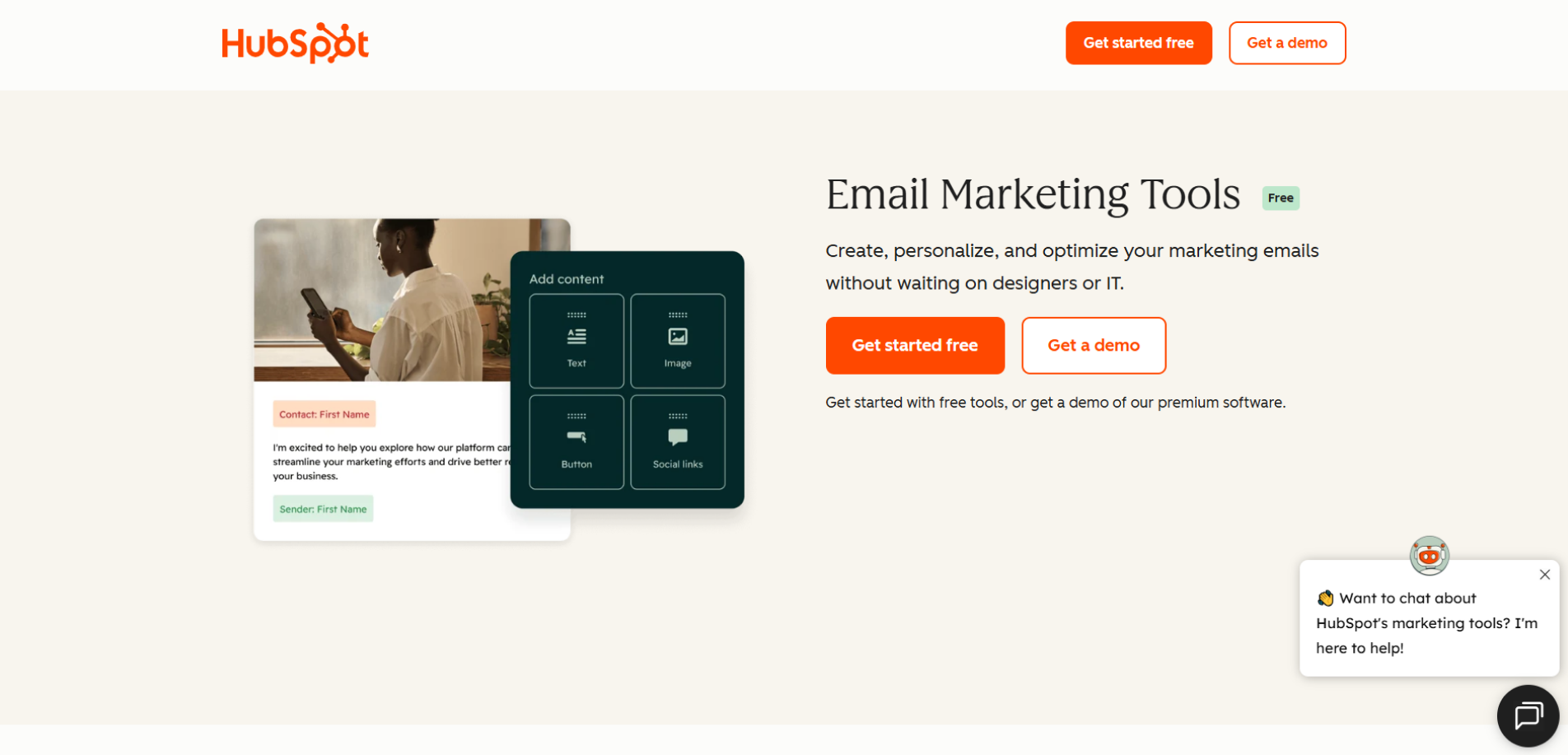
HubSpot treats email as one channel inside a much larger customer platform. For companies where marketing, sales, and service all share the same customer record, that structure has real advantages. For stores that primarily want ecommerce email, it tends to feel more expensive and more complex than the use case requires.
Key ecommerce features:
- All customer activity sits inside one unified CRM record shared across teams.
- Marketing automation handles campaigns, workflows, and sequences across multiple channels.
- Segmentation filters by CRM properties, deal stage, and engagement history together.
- Marketing and sales teams work from the same customer data without duplication.
- Attribution reporting spans marketing and sales touchpoints across the full customer journey.
- Lifecycle stage tracking ties marketing activity to revenue and sales outcomes directly.
Ecommerce integrations: Shopify and WooCommerce connect via native connectors and third-party apps. The integration covers the main data points but is not optimized for deep ecommerce behavioral data.
Automation and segmentation: Very strong across the full customer lifecycle, especially when marketing automation needs to hand off to a sales team or trigger a service response.
Potential limitations: Pricing grows fast as marketing contact counts increase. Stores that only need ecommerce email and SMS often find themselves paying for a lot of features they never use.
Who should consider HubSpot? Companies where ecommerce sits alongside a sales team, a service operation, or a subscription business, not stores that only need a dedicated email and SMS channel.
10. Listrak
Best for: Established retailers and enterprise ecommerce brands with large databases and complex multichannel needs.
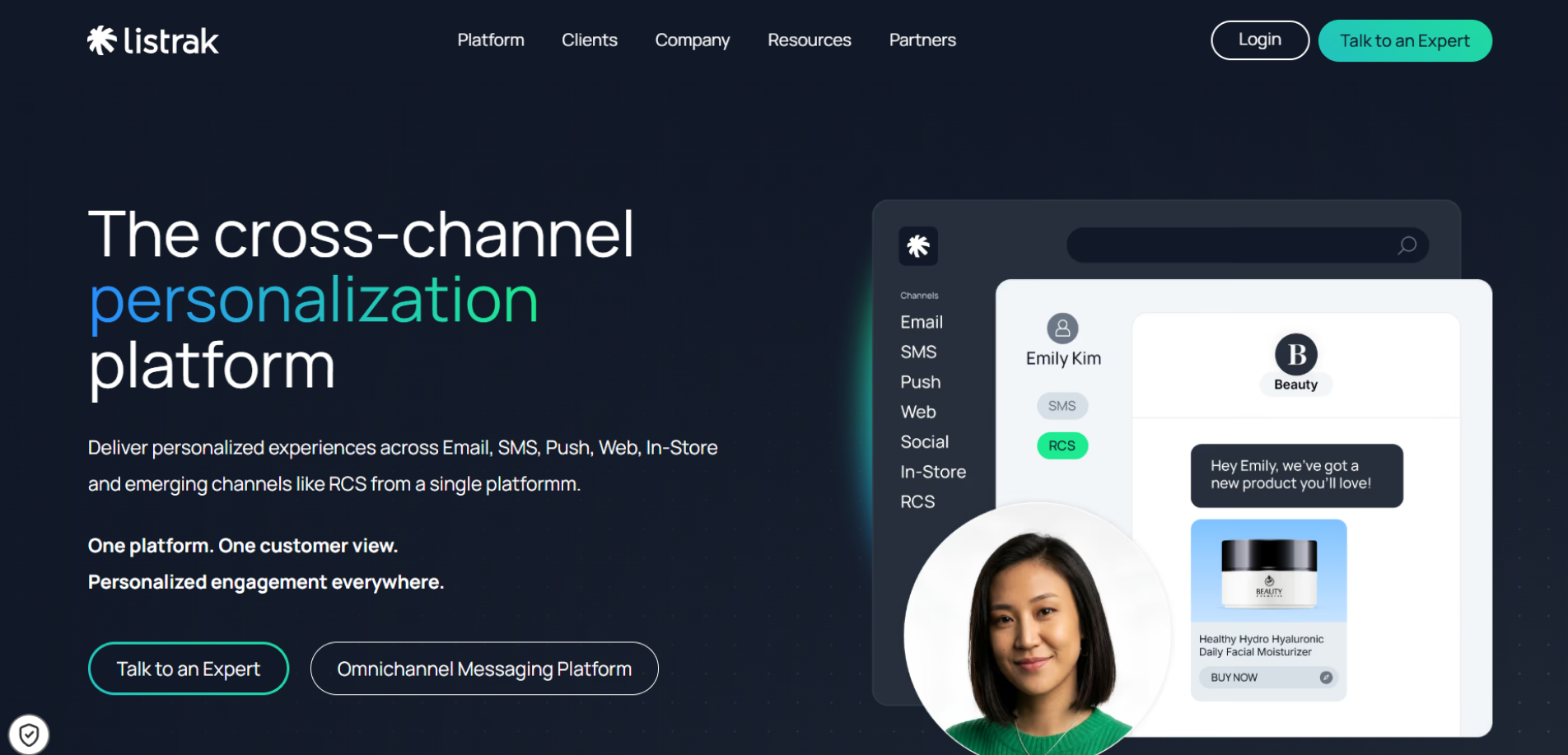
Listrak is built for retail at scale. Email, SMS, cross-channel automation, and advanced personalization all work from a single customer profile, making it a strong fit for businesses with complex marketing programs. If you’re weighing Listrak against Klaviyo, this detailed Listrak vs Klaviyo comparison looks at how the two platforms differ in pricing, automation, segmentation, integrations, and other key areas. Setup takes longer, but the platform is designed to support the needs of larger retailers.
Key ecommerce features:
- Email and SMS run from the same customer profile inside a single unified workflow.
- Cross-channel automation coordinates messaging across email, SMS, and other channels together.
- Dynamic content personalizes emails based on customer behavior and purchase history.
- Deep customer profile building supports advanced segmentation across large databases.
- Built-in loyalty, replenishment, and product recommendation logic designed specifically for retail.
- Long-term lifecycle marketing support covers multiple campaigns, seasons, and customer stages.
Ecommerce integrations: Built specifically for retail and enterprise ecommerce. Integration depth for large catalogs, custom store setups, and enterprise platforms goes further than most tools on this list.
Automation and segmentation: Handles large-scale personalization, sophisticated branching flows, and multichannel coordination without performance issues. Designed for teams that run complex programs at volume.
Potential limitations: Enterprise pricing and a longer implementation process put it out of reach for smaller stores. It is not a plug-and-play tool and requires real team capacity to run properly.
Who should consider Listrak? Established retailers with large customer databases, sophisticated multichannel programs, and dedicated marketing teams with the experience to manage an enterprise platform.
Ecommerce Email Marketing Platforms Compared by Use Case
Different businesses need different email tools. A small Shopify store may only need basic email features, while a growing brand may need stronger automation, segmentation, or SMS. This table gives you a quick idea of which platforms may fit different needs.
Business Need | Platforms to Consider |
Small Shopify store | Shopify Messaging, MailerLite |
Growing Shopify brand | Klaviyo, Omnisend |
DTC ecommerce brand | Klaviyo, Drip, Omnisend |
WooCommerce store | Klaviyo, Omnisend, ActiveCampaign |
Email + SMS strategy | Klaviyo, Omnisend, Listrak |
Advanced automation | Klaviyo, ActiveCampaign, Drip |
Limited budget | Brevo, MailerLite |
CRM + ecommerce | HubSpot, ActiveCampaign |
Enterprise retailer | Listrak, Klaviyo |
No single platform wins across every category. The right choice depends on where your store is today, where it is headed in the next 12 months, and what your team is actually able to use well.
Klaviyo vs Omnisend vs Mailchimp for Ecommerce
Klaviyo, Omnisend, and Mailchimp are three popular options for ecommerce email marketing. They overlap in many areas, but their features, automation, and ecommerce tools are not the same. The table below compares them on the features that matter most when choosing an email platform.
Criteria | Klaviyo | Omnisend | Mailchimp |
Ecommerce focus | Very high | High | Moderate |
Automation | Advanced | Advanced | Moderate |
Segmentation | Advanced | Advanced | Moderate |
Shopify integration | Native, deep | Native, strong | Third-party required |
SMS | Yes | Yes | Yes |
Revenue reporting | Strong | Good | Basic |
Ease of use | Moderate | Easy | Easy |
Pricing structure | Profiles/usage | Contacts/sends | Contacts |
Best suited size | Growing to enterprise | Small to mid | Small to beginning |
Klaviyo focuses heavily on customer data, segmentation, and detailed ecommerce automation. Omnisend covers similar ecommerce needs with a simpler setup. Mailchimp is easier to get started with and can work well for businesses with basic email needs. The right option depends on your store size, marketing needs, and how complex your email strategy is.
What Is the Best Email Marketing Platform for Shopify?
Shopify connects with a lot of email platforms, but connection and compatibility aren't the same thing. What actually matters is how much store data a platform can use your product catalog, order history, cart activity, and browse behavior. Without that, you're back to sending the same email to everyone.
Klaviyo is the most popular choice here, and for good reason. The Shopify integration is deep, and you can build segments and flows around exactly what customers did in your store what they viewed, what they abandoned, what they bought before.
Omnisend is the other one worth looking at. It works well with Shopify and is noticeably easier to get up and running. If your team doesn't want to spend weeks in setup, that matters.
Shopify's own email tools are fine for smaller stores with basic needs. Just know you'll likely outgrow them.
For most growing stores, the real decision is between Klaviyo and Omnisend. Klaviyo gives you more control over data and segmentation. Omnisend is faster to manage day-to-day. Which one fits depends on your team's bandwidth and how complex your email program actually needs to be.
What Is the Best Email Marketing Platform for WooCommerce?
WooCommerce stores usually connect to email platforms through WordPress plugins. The quality of these integrations can vary, so it is important to check what store and customer data actually syncs before choosing a platform.
A good WooCommerce email integration should cover:
- Automatic order and customer data syncing
- Product names, images, and prices pulled from your store
- Customer segments based on purchases and activity
- Abandoned cart emails
- Automations for first purchases, repeat orders, and other customer actions
- A reliable WordPress plugin that is easy to manage
Klaviyo is a strong option if you need detailed customer data, segmentation, and more advanced automations. Drip also works well for ecommerce brands running on WooCommerce, especially those that rely heavily on customer behavior.
Omnisend offers solid order syncing and useful ecommerce automations. Mailchimp and Brevo can also work well for stores with simpler email campaigns and basic automation needs.
The right choice depends on how much customer data you want to use and how advanced your email marketing needs to be.
Free vs Paid Email Marketing Platforms for Ecommerce
A free plan is often enough when your store is small, and your email list is still growing. As your business grows, those limits can start to get in the way. Paid plans usually give you more contacts, better automation, deeper reporting, and features such as SMS. The right time to upgrade is when these extra features can help you generate more sales or manage your customers more effectively.
When Free Works
A free plan is enough when your store is new, your list is small, and you are mostly sending the occasional campaign or a basic welcome email. You do not need advanced segmentation or SMS yet, and email is not yet a serious revenue channel. Mailchimp, MailerLite, Brevo, and Omnisend all have free tiers that handle these situations well.
When Paid Makes Sense
Once your list grows, you need more than free plans offer. Running multiple flows, segmenting by purchase behavior, adding SMS, and tracking revenue all require a paid account. At that point, a capable platform tends to pay for itself fairly quickly if you use it properly.
How to Choose an Email Marketing Platform for Your Ecommerce Store
This is where most brands make mistakes. They pick a platform based on a recommendation from another brand in a completely different situation. Here is a cleaner process.
Start With Your Ecommerce Platform
Your email platform needs to integrate well with whatever powers your store. Shopify stores have more native options. WooCommerce stores should check plugin quality and data sync depth before committing. Custom or headless stores may need to evaluate API capabilities more carefully.
Identify the Automations You Need
Make a list of the flows you want to run welcome, cart abandonment, post-purchase, win-back, replenishment, browse abandonment. For example, abandoned cart automation can be tested separately to make sure the trigger, timing, filters, and follow-up sequence work correctly. Then confirm the platform can build those flows without major workarounds or missing trigger types.
Evaluate Your Customer Data Requirements
Basic stores can get by with name, email, and order history. More advanced stores need behavioral events, browse data, predictive values, and lifecycle stages. Know what data you need before you start comparing platforms.
Compare Segmentation Capabilities
Effective segmentation helps you send the right message to the right customers. Check if the platform lets you group people by purchase frequency, customer value, product interest, engagement, and lifecycle stage. Without these options, it can be harder to create targeted campaigns that drive sales.
Decide Whether You Need SMS
If SMS is part of your strategy or you want it to be, pick a platform that handles both from one customer profile. Managing email and SMS in separate tools is workable but creates data gaps and more manual work for your team.
Review Revenue Attribution
Pick a platform that connects email sends, opens, and clicks to actual orders in your store. Without that connection, you cannot tell which campaigns and flows are generating revenue and which are just getting opens.
Calculate Pricing at Your Future List Size
Look at what the platform costs today and at two or three times your current list size. Pricing that seems reasonable at 5,000 contacts can look very different at 30,000. Factor in SMS costs and any add-ons you would actually use.
Consider Your Team's Experience
A platform that requires advanced marketing automation knowledge to use well is not the right choice for a team of one or two people who also run every other part of the business. Match the platform's complexity to your team's actual capacity.
Test the Platform Before Fully Migrating
Most platforms offer free trials. Use the trial period to actually build something not just explore the interface. Try setting up a welcome flow, an abandoned cart sequence, a basic segment, and a campaign. Connect your store and check that the data syncs correctly. Test the revenue reporting. If the trial frustrates you, the full experience probably will too.
When Should You Switch Ecommerce Email Marketing Platforms?
Switching platforms takes time, and migration carries real risk. But staying on the wrong platform costs more over time.
Here are the signs it is time to move:
- Your current platform cannot build the automation flows your store actually needs.
- Customer data, orders, and cart events do not sync reliably with your store.
- You cannot filter customers by purchase behavior or where they are in the lifecycle.
- Pricing keeps rising, but the value you are getting from the platform has not grown.
- You have no clear view of which campaigns and flows are generating real revenue.
- You want to add SMS, but the platform does not support it in any clean way.
- Campaigns take too long to build, and most things require messy workarounds.
- Dynamic product content and behavioral triggers are not available or hard to set up.
- The platform slows down, hits list size limits, or becomes unreliable as you grow.
- You are making email decisions without any real data on what is working.
If several of these problems are affecting campaign performance, revenue visibility, or your team's efficiency, it may be time to evaluate a different platform. The harder part is planning the migration properly so you do not lose data, break your flows, or go dark on subscribers while you move. That is where getting the right support makes a real difference.
Conclusion
There is no single best email marketing platform for ecommerce. The right one is the one that fits your store, your team, and the kind of marketing you actually want to run. A small Shopify store getting started has very different needs from a DTC brand building out a full lifecycle program or a retailer managing a database of hundreds of thousands of customers.
What matters most is that you are honest about where your store is right now, not where you hope it will be in two years. Pick a platform you can use well today and grow into over time. Get your core flows running, build your segments, and track your revenue. Once email is working properly, everything else gets easier.
If you are not sure where to start or want help setting up your email strategy, email marketing experts can help review your platform, automation, segmentation, and campaign setup.
Frequently Asked Questions
What is the best email marketing platform for ecommerce?
There is no single answer. The best platform depends on your ecommerce platform, list size, automation needs, customer data requirements, budget, and team size. Klaviyo and Omnisend are strong choices for most growing stores, but the right fit depends on your specific situation.
What is the best email marketing platform for Shopify?
Klaviyo has the deepest native Shopify integration and is widely used by growing Shopify brands. Omnisend is a strong alternative with a simpler interface. Shopify Messaging works well for stores that want basic email marketing without a third-party tool.
What email marketing platforms integrate with WooCommerce?
Klaviyo, Omnisend, Mailchimp, Drip, ActiveCampaign, and Brevo all connect with WooCommerce. Klaviyo and Drip offer the most depth in behavioral data sync and ecommerce-specific automation for WooCommerce stores.
Is Klaviyo better than Mailchimp for ecommerce?
Klaviyo generally provides deeper ecommerce automation, behavioral segmentation, and customer-data capabilities, making it better suited to stores with advanced lifecycle marketing needs. Mailchimp can still be a practical option for smaller businesses running simpler campaigns and automations.
What is the difference between Klaviyo and Omnisend?
Both are built for ecommerce, and both handle email and SMS. Klaviyo offers deeper customer data modeling, more advanced predictive analytics, and more granular segmentation. Omnisend is more approachable for teams that want strong ecommerce automation without a steeper learning curve.
Can ecommerce businesses use Mailchimp?
Yes. Mailchimp works well for smaller stores running campaigns and basic flows. It becomes limiting when you need advanced behavioral segmentation, deep ecommerce integrations, or sophisticated lifecycle automation.
What is the best free email marketing platform for ecommerce?
Mailchimp, MailerLite, Brevo, and Omnisend all offer free tiers. For ecommerce specifically, Omnisend's free plan includes more ecommerce-focused features than most alternatives. All free plans have limits on contacts, sends, or features that matter as your store grows.
How much does ecommerce email marketing software cost?
Ecommerce email marketing software pricing varies by platform, contact count, active profiles, send volume, and whether you use additional channels such as SMS. Compare pricing at both your current list size and your expected size over the next 12 months rather than choosing a platform based only on its entry-level price.
What features should ecommerce email marketing software have?
At minimum: ecommerce platform integration, abandoned cart automation, welcome flows, post-purchase sequences, behavioral segmentation, revenue attribution, and an easy campaign builder. More advanced needs include browse abandonment, predictive analytics, SMS, personalized product recommendations, and win-back automation.
Do ecommerce businesses need email and SMS in the same platform?
Not always, but it helps. Managing both channels from one customer profile makes coordination easier, attribution cleaner, and reporting more complete. If you are sending both email and SMS, running them in separate tools creates data gaps that are hard to resolve.