



Key Takeaways
- Klaviyo works best for ecommerce brands that rely heavily on customer behavior data.
- Constant Contact suits smaller teams that want simpler campaigns and easier daily management.
- Klaviyo offers deeper automation when customer actions need to trigger different marketing paths.
- Constant Contact stands out for businesses that also manage events and social campaigns.
- Pricing depends on list size, sending volume, features, and how each platform bills.
- The better choice depends on what your team will actually use every week.
Email marketing platforms can look very similar when you compare their feature lists. Klaviyo and Constant Contact both offer email campaigns, automations, audience segmentation, and ecommerce integrations. Both also support marketing across multiple channels, but the way they handle customer data, automation, and everyday marketing work is quite different.
Klaviyo puts customer behavior, ecommerce activity, and detailed customer data at the center of its platform. Constant Contact takes a simpler approach, with tools designed for small businesses and teams that want to create and manage campaigns without dealing with a complex setup.
This comparison looks at the differences that matter most, including customer data, automation, segmentation, ecommerce features, pricing, support, and daily use. If you're comparing other options, our guide to the best ecommerce email marketing platforms covers more platforms worth considering.
Klaviyo vs Constant Contact: What Is the Main Difference?
The short answer is that one tool starts from customer data and the other starts from campaigns.
Klaviyo is built around customer profiles, ecommerce events, behavioral data, and lifecycle flows that react to what shoppers actually do. Constant Contact is built around email campaigns, list building, social channels, ecommerce, and events for small businesses. Klaviyo generally offers deeper behavioral segmentation and lifecycle automation, while Constant Contact focuses more on straightforward campaign management for small businesses.
The table below gives you a quick side-by-side view before we go deeper into each area.
Area | Klaviyo | Constant Contact |
Core focus | Data-driven lifecycle and ecommerce marketing | Broad small-business digital marketing |
Ecommerce depth | Strong | Practical but less specialized |
Automation | Advanced behavioral flows | General marketing automation |
Segmentation | Deep behavioral and predictive | Contact, engagement and campaign-focused |
Email editor | Flexible | Simpler learning curve |
SMS | Integrated with customer profiles | Available, plan and region dependent |
Events | Not a core platform strength | Native emphasis |
Social marketing | Instagram engagement tied to customer profiles and flows | Social publishing and small-business campaign management |
Analytics | Revenue and customer-focused | Campaign and marketing focused |
Learning curve | More setup and data knowledge | Generally easier to begin with |
Pricing model | Active profiles plus sends and products | Plan plus contact tier and send limits |
Neither platform is simply better; the right fit depends on how your business uses email marketing. Klaviyo suits data-heavy ecommerce teams, while Constant Contact fits smaller teams with simpler marketing needs.
What Customer Data Can Klaviyo and Constant Contact Actually Use?
Segmentation alone does not tell you how useful a platform’s customer data really is. What matters is what data each platform collects, how quickly it updates, and where you can use it. Fresh data helps you reach customers while their interest is still strong, while outdated data can make your messages less relevant.
Ecommerce and Behavioral Data in Klaviyo
Klaviyo treats every shopper action as a signal that can change who gets which message.
Each customer profile holds properties, order value, products bought, and email or SMS engagement history. Cart, checkout, and browsing events feed straight into flows, so a shopper's last action can trigger the next message.
Klaviyo says Shopify metrics and profile properties sync in real time, so store events can feed segments quickly. Predictive values like customer lifetime value need enough order history, so new stores may not see them yet.
You can learn more in our guide on what Klaviyo is and how it works.
Customer and Ecommerce Data in Constant Contact
Constant Contact keeps its data model closer to contacts, lists, and campaign engagement than to store events.
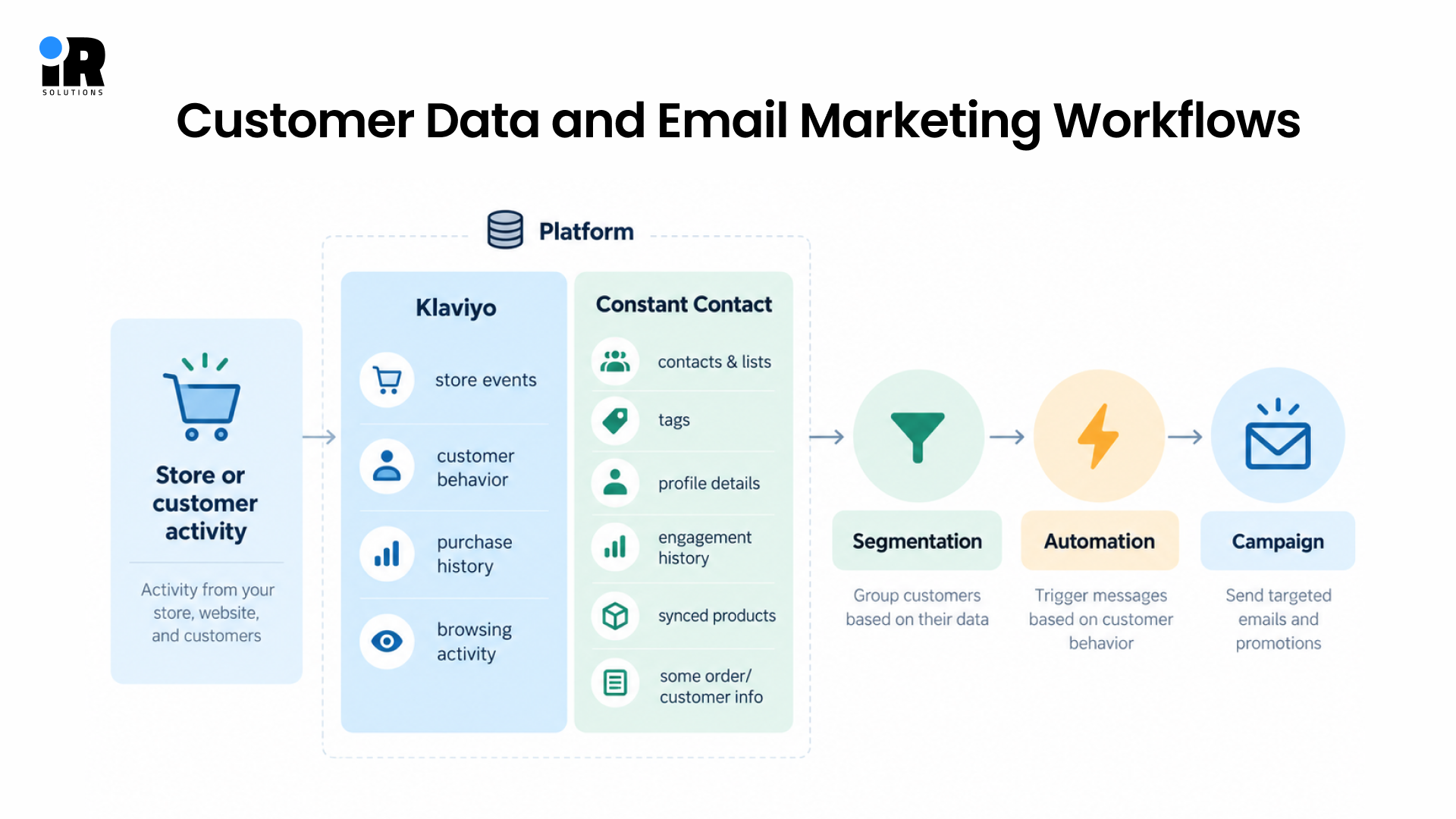
You can store contacts, tags, profile details, and engagement history, then group people into lists for campaigns. Connected stores can add ecommerce contacts, products, and some order or customer information through integrations.
For Shopify, Constant Contact currently supports synced contacts and products, segmented contact lists, product blocks, and abandoned-cart reminders. Event data is also available where relevant, which suits organizations that run webinars, fundraisers, or local gatherings.
Klaviyo vs Constant Contact for Email Automation
Automation is one of the clearest differences between the two platforms. The key is to look at how much control each one gives you when building customer journeys.
Klaviyo Flows
Klaviyo flows react to events, filters, and profile data, which lets one journey branch many ways.
- Welcome Series: A new subscriber gets a short sequence that can change based on the signup source or first click.
- Cart Recovery: Browse and cart abandonment flows follow shoppers who looked at products but left before they paid.
- Post-Purchase: After an order, you can send care tips, cross-sell offers, and replenishment reminders based on the product bought.
- Cross-Sell: Product and category follow-ups suggest items that pair well with what each customer already bought.
- Win-Back: Lapsed buyers and VIP customers can each follow their own path using spend, recency, and engagement.
Conditional splits make this work, since a purchase can send someone down a different branch or out of the flow.
Constant Contact Automations
Constant Contact covers the follow-ups that most small teams send again and again without much fuss.
You can set up welcome emails, drip sequences, engagement-based automations, and abandoned-cart reminders without much training. Behavioral triggers are included too, and the company says it keeps expanding behavior-based automation in its 2026 changes. For many practical follow-ups, such as thanking a new customer or nudging a quiet contact, this is plenty.
Where Does the Difference Matter?
Automation depth only matters when your marketing needs it. A local service company may only need a welcome email and one follow-up, while an online store may need flows based on product views, cart activity, purchases, and customer spending.
See how drip sequences work, from triggers to timing, in our email drip campaigns guide.
Segmentation and Personalization
Both tools let you split your audience, but the data behind each group decides how precise it can get.
Klaviyo Segmentation
Klaviyo builds groups from what people buy, browse, and click, so segments follow real behavior. You can combine purchases, products, spend, engagement, and lifecycle stage inside a single group when needed. Picture shoppers who bought from Category A twice, show high predicted CLV, and have not ordered in 60 days.
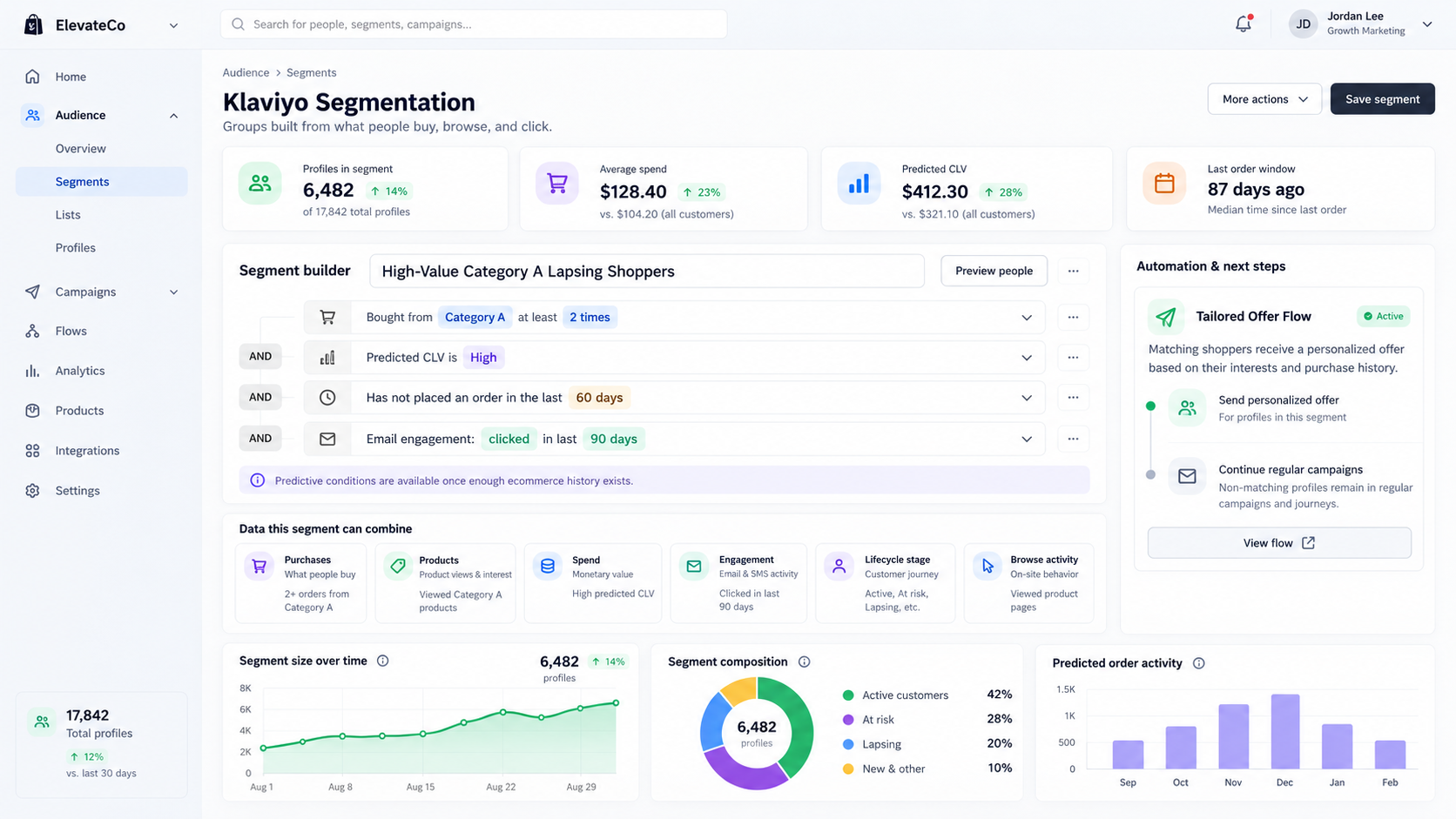
A group like that gets a tailored offer, while everyone else keeps receiving your regular campaigns. Klaviyo's documentation says predictive conditions like CLV and predicted order activity work once enough ecommerce history exists.
Constant Contact Segmentation
Constant Contact keeps segmentation simple, which works well when you do not need deep purchase histories. Lists and tags let you group people by interest, event signup, or source with very little setup. You can also target contacts who opened, clicked, or ignored recent campaigns, then adjust your follow-up.
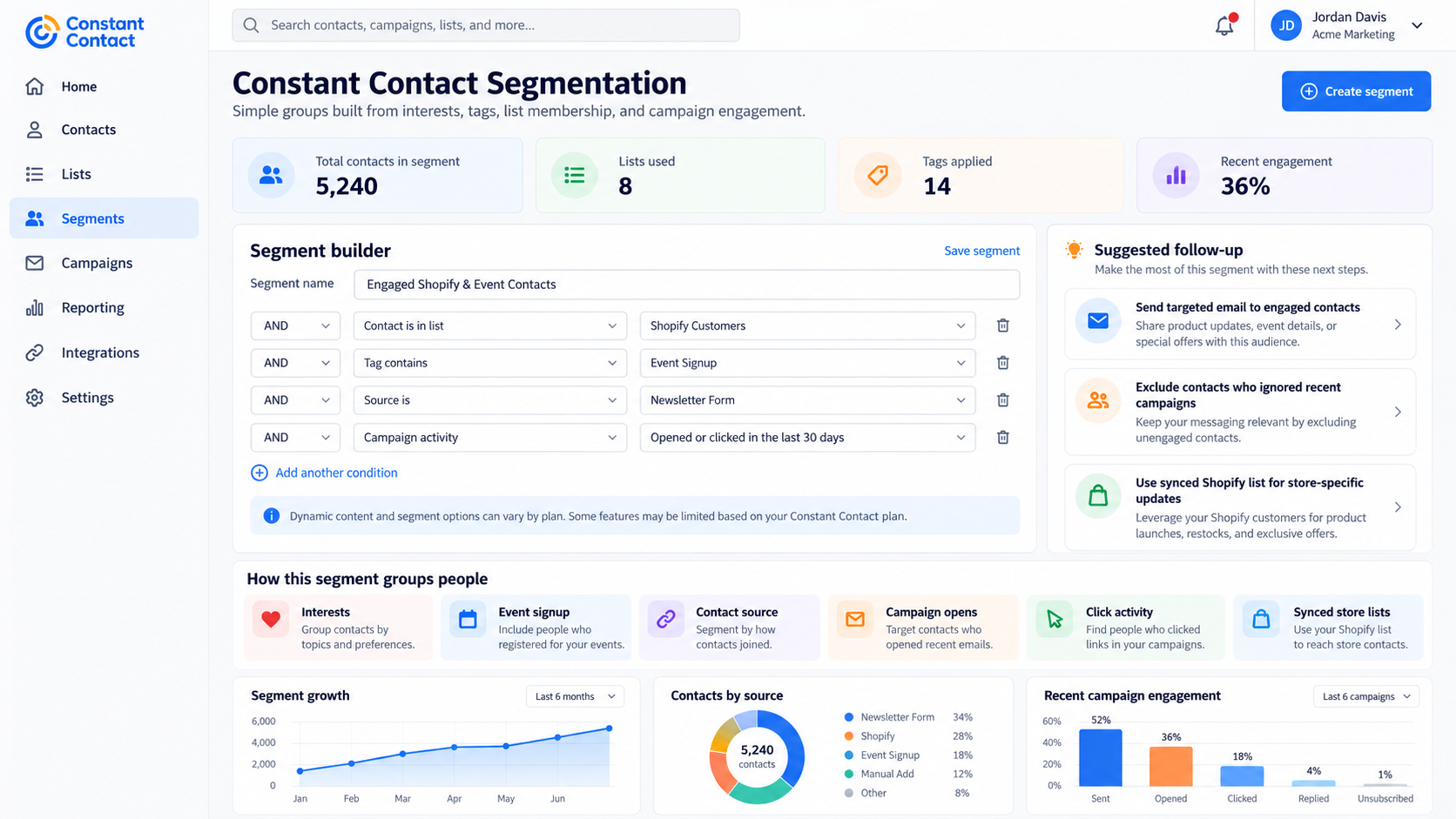
Connected stores can form their own lists, such as everyone synced from your Shopify store. Dynamic content and segment options can depend on your plan, so check what your tier includes first.
Personalization: What Changes in the Actual Email?
Personalization shows up in the inbox, so judge each tool by what the reader actually sees.
Both tools can insert names and contact fields, which covers the basic greeting most readers expect. Klaviyo goes further when product data, purchase context, and lifecycle stage shape the message itself, including product recommendations where supported. Constant Contact offers product blocks and dynamic content on suitable plans, which works well for promotions and newsletters. A thank-you email that names the exact product bought feels very different from a generic receipt.
Klaviyo vs Constant Contact for Ecommerce
Store owners care most about this part, so we will look closely at how each tool connects.
Ecommerce marketing lives on timing, so the speed and depth of store data shape almost every result. A cart reminder sent two days late rarely helps, and a cross-sell for a product already returned annoys people.
Shopify
Both tools connect to Shopify, but the depth of that connection matters more than the logo.
Klaviyo syncs real-time events and profile data, which powers behavioral segments and revenue-focused lifecycle flows. Constant Contact syncs contacts and products, adds product blocks, builds ecommerce segments, and sends abandoned-cart reminders. This table compares the two on common Shopify needs, so confirm details in each vendor's current documentation.
Shopify Requirement | Klaviyo | Constant Contact |
Customer sync | Yes | Yes |
Product sync | Yes | Yes |
Abandoned cart | Yes | Yes |
Behavioral event depth | Deeper | More focused |
Advanced lifecycle segmentation | Strong | More straightforward |
Revenue-oriented flows | Core strength | Available for common use cases |
WooCommerce and Other Ecommerce Platforms
Shopify is only one option, so check how your own store platform connects before you decide.
- Integration Type: Confirm whether the connection is native, and whether it needs a plugin or a paid connector.
- Historical Orders: Ask whether past orders import, because old purchase data shapes your first segments and reports.
- Sync Scope: Check that customers, products, carts, and orders all sync, since gaps here limit later automations.
- Setup Effort: Plan for developer or specialist time if your store needs custom events or unusual tracking.
Store owners on WooCommerce can follow our Klaviyo WooCommerce integration guide for the full setup steps.
What Ecommerce Teams Should Test Before Choosing
A short trial test will tell you more than any feature page, so try these checks.
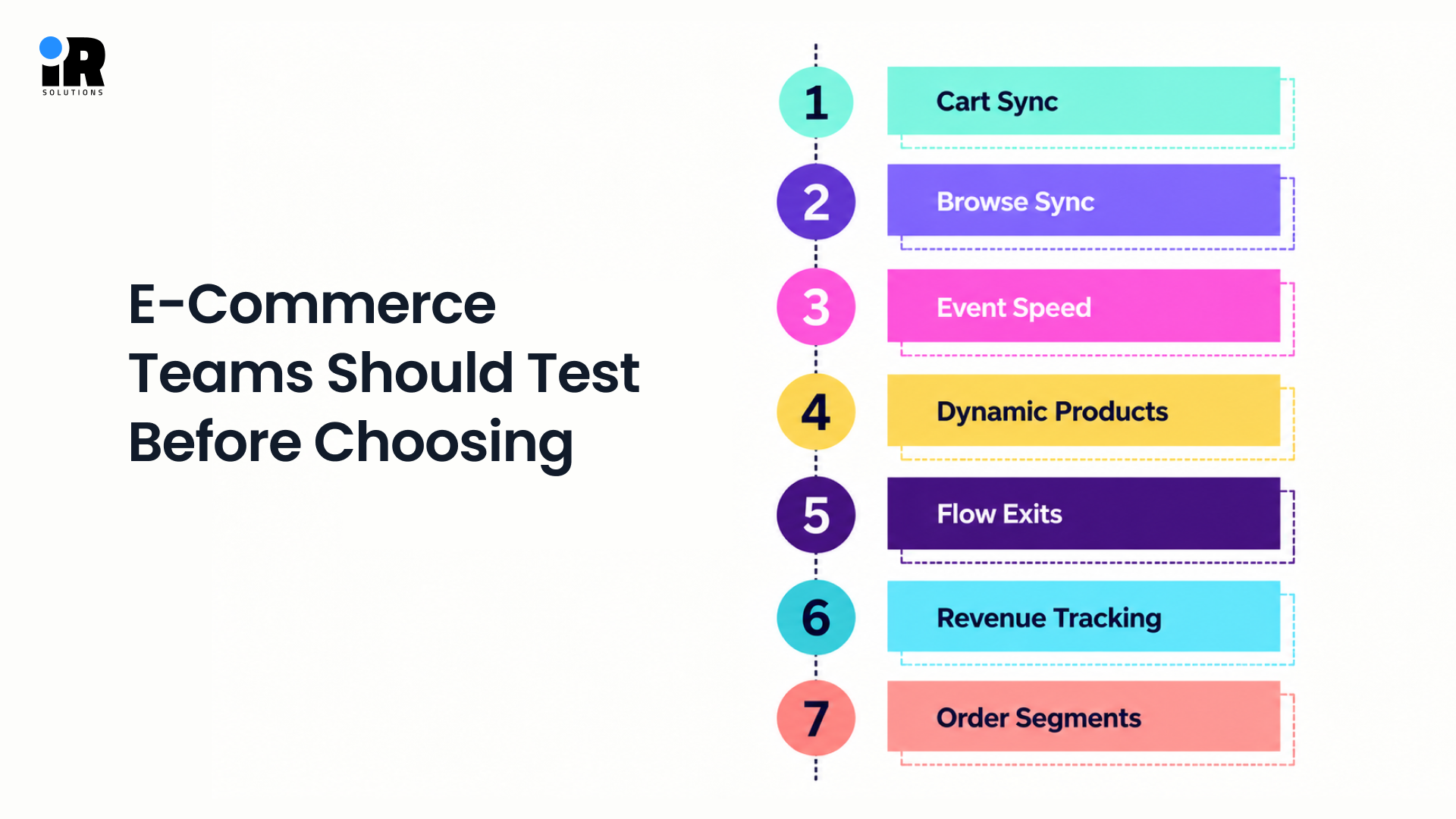
- Cart Sync: Add an item to a cart and see whether the platform records it and starts a reminder.
- Browse Sync: Look at a product page and check whether that browsing activity shows up on your profile.
- Event Speed: Time how long events take to appear, since slow data can send reminders after a purchase.
- Dynamic Products: Insert products into an email and confirm names, prices, images, and links all fill in correctly.
- Flow Exits: Place a test order and check whether the buyer leaves the cart flow right away.
- Revenue Tracking: Confirm that sales are credited to the right campaign or automation, and that history imports cleanly.
- Order Segments: Build a segment from past orders and check that it matches what your store dashboard shows.
Email Creation, Templates and Campaign Management
Creating and sending emails is something you will do often, so a simple editor can save your team a lot of time. The right platform should make it easy to build, edit, and send campaigns without slowing you down.
Email Editor and Templates
Both tools use drag-and-drop, but Klaviyo gives you more design control, including custom HTML. Constant Contact is easier for beginners, with ready-made templates. Pick the one you can edit fastest, not the one with more templates.
Ecommerce Content
Klaviyo pulls in your catalog and updates product blocks and recommendations as your store changes. Constant Contact lets you drop store items into emails, which works fine for simple promotions. Test both with your real products, since variants and sale prices can act oddly.
Forms and List Growth
Both tools offer signup forms and landing pages that feed your contact lists. Klaviyo can trigger a welcome flow and add new people to segments right away. Constant Contact adds them to the lists you pick. Always check forms on your phone before launch.
Email, SMS and Other Marketing Channels
Both platforms offer more than email, but they handle these channels differently. Look at how each one fits into your day-to-day marketing before deciding which is the better match.
Email and SMS
Texting works best when it shares data with email, so check how each tool joins them.
- Shared Profiles: Klaviyo positions email alongside text, WhatsApp, mobile push, and web channels, all tied to one customer profile.
- Plan Dependence: Constant Contact offers SMS, but allowances and availability can depend on your plan and your location.
- Billing: Text messages usually have separate costs, so estimate message volume before assuming the price is covered.
- Consent Rules: Whichever tool you choose, collect clear SMS consent and keep records, because rules differ by country.
Many shoppers prefer one channel over another, so coordinated messaging avoids sending the same offer twice.
Social Media and Event Marketing
This is where Constant Contact becomes more interesting for some businesses, especially those outside online retail.
Constant Contact combines social publishing and event promotion with its broader small-business marketing toolkit. Klaviyo takes a different approach: its Social Marketing product connects Instagram engagement, including comments, DMs, mentions, and user-generated content, with customer profiles, segments, and flows. Constant Contact may still suit organizations that want email, social publishing, and event promotion in one simpler workflow, while Klaviyo is more useful when social engagement needs to feed customer data and automation.
Analytics, Reporting and Revenue Attribution
A good report helps you decide what to do next, so compare the questions each tool answers. Klaviyo reporting leans toward revenue and customer value, so it helps answer sales questions directly.
- Revenue Source: You can see which campaign or flow generated revenue and which segment buys most often.
- Customer Value: Customer value and likely repeat purchases show which shoppers deserve extra attention or a special offer.
Klaviyo focuses more on segmentation, revenue, and customer behavior, while Constant Contact focuses on campaign and engagement results. The better option depends on the numbers your team checks most often.
Ease of Use, Support and Day-to-Day Management
A tool's real cost isn't only the monthly price. It's also the hours your team spends learning it, fixing small problems, and running it every week. Setup, daily routines, the learning curve, and support all decide whether a platform feels easy or exhausting a few months in. Look at all four before you commit, not just the feature list.
Initial Setup
Both tools ask you to import contacts, connect your store, verify your sending domain, and build forms. Constant Contact is lighter, since its templates get you sending fast. Klaviyo needs more care, and a bad import can quietly throw off every segment you build later.
Day-to-Day Campaign Management
Time one normal newsletter on each platform, from first draft to send. Count the screens and approvals along the way. Klaviyo rewards data skills, because its segments and flows depend on clean events, so check whether anyone on your team can handle that. If your team lacks the time or expertise, you can hire email marketing experts to help manage campaigns, automation, and segmentation.
Learning Curve
Klaviyo isn't just harder. It gets more useful as you use data, segments, flows, and attribution together. If you'll never use those, you may pay for extra complexity. Constant Contact is easier to start, but a growing store may outgrow it sooner.
Customer Support
Klaviyo offers email and live chat on paid plans, and free accounts get 60 days of email support before moving to help articles. Constant Contact highlights human support, but confirm the phone and chat options for your plan. Skip old third-party support-hour lists, since they go out of date fast.
Klaviyo vs Constant Contact Pricing
Pricing needs a closer look because Constant Contact recently changed its pricing, and some older comparison pages still show outdated plans. Its current U.S. site lists Email from $23 per month and Email Plus from $56, with the final cost depending on your contact count and email volume. Check Constant Contact's pricing page for the latest rates.
How Klaviyo Billing Works
Klaviyo bills mainly by active profiles, so the number of active people drives your monthly cost.
- Active Profiles: Suppressed contacts do not count as active profiles, which can keep your bill lower after list cleaning.
- Free Tier: The current free tier includes up to 250 profiles and 500 email sends each month.
- Send Allowance: Email capacity is tied to your tier, so heavy senders should check limits before choosing a size.
- Extra Costs: SMS and mobile messaging carry separate costs, and optional analytics or service products add to the total.
Costs also rise as your list grows, so read our guide on whether Klaviyo is worth the cost.
How Constant Contact Billing Works
Constant Contact prices by plan level, contact tier, and email send limits, so three numbers matter.
- Plan Level: Higher plans unlock more automation and segmentation options, so match the tier to your real needs.
- Contact Tier: Your price steps up each time your contact list crosses into the next larger tier of contacts.
- Send Limits: Sending above your allowance can add overage fees, which matters for stores that email often.
- Add-Ons: SMS and other add-ons may cost extra, and the recent pricing changes make older reviews unreliable.
Compare Cost at Realistic List Sizes
A fair pricing comparison should use your actual contact count, sending volume, and required features. Both platforms become more expensive as your audience grows, but they structure pricing differently, so fixed list-size comparisons can become outdated quickly.
Constant Contact currently lists its Email plan from $23 per month and Email Plus from $56 per month, with the final cost depending on your contact count and sending needs.
Klaviyo pricing is based mainly on active profiles and email sending limits. Its free plan supports up to 250 active profiles and 500 email sends per month, while paid pricing increases as your audience and sending requirements grow.
Instead of comparing fixed prices at 500, 1,000, or 10,000 contacts, enter your actual audience size into both platforms' pricing tools. Then compare the plans that include the automation, segmentation, SMS, and reporting features your team will actually use.
Pricing checked: October 2026.
Ignore temporary promotional discounts when comparing long-term costs. Introductory offers can make one platform look cheaper initially, even when the regular cost is higher after the promotion ends
Look Beyond the Subscription Price
The software fee is only one line in the true cost of running email marketing.
- Software Fee: Start with the monthly price, then add SMS usage and any extra products your team needs.
- Setup Time: Migration, setup, and integrations cost hours, and those hours often cost more than the subscription.
- Specialist Help: A tool that needs an expert to run may cost more than a cheaper tool anyone can use.
- Growth Costs: List growth pushes both prices up, so project your size twelve months ahead before you commit.
So skip the question of which is cheaper, and ask which one costs less for your own plan.
Deliverability: Does Either Platform Guarantee Better Inbox Placement?
No email platform can guarantee inbox placement because authentication, sender reputation, list quality, complaints, engagement, and message content all affect deliverability. Constant Contact reports a 98% inbox rate based on Validity Everest 2025 testing, but that does not mean every sender will achieve the same result. Rather than choosing a platform based on one deliverability percentage, compare its authentication tools and then focus on clean lists, consent, engagement, and consistent sending practices.
Three simple habits protect your sender reputation, whichever platform you choose.
- Authentication: Set up SPF, DKIM, and DMARC for your sending domain so mailbox providers can verify your messages.
- List Hygiene: Remove bounced addresses and long-inactive contacts regularly, because they drag down engagement and hurt your reputation.
- Consent First: Only email people who agreed to hear from you, since complaints damage inbox placement quickly.
Moving From Constant Contact to Klaviyo, or Back Again
Many readers compare these tools because they are thinking about a switch, so plan the move carefully.
- Contacts and Consent: Move contacts together with consent status, unsubscribes, and suppressions so no one receives mail they declined.
- Structure: Review lists, tags, custom fields, segments, templates, and forms, since each tool organizes them differently.
- Automations: Automations usually need rebuilding, not exporting, because each platform stores triggers and logic in its own way.
- Tracking: Reconnect your store, confirm SMS consent, set up domain authentication, and record a reporting baseline first.
Test the new platform fully, and keep the old account active until every flow and report checks out. Plan the move for a quiet sales period, because a rushed switch during peak season invites costly mistakes.
Klaviyo or Constant Contact: Which Fits Your Business?
Neither platform fits every business in the same way. Your business size, team, and marketing needs should guide the decision more than a long list of features. Here is how each one fits four common business types.
Growing Ecommerce Brands
Klaviyo fits better once your store needs deeper customer data and more control over automations. It offers detailed purchase behavior, advanced flows, revenue tracking, and predictions. Brands at this stage usually have enough order history to make those features worth using.
Small Businesses With Simple Needs
Constant Contact fits better when speed and simplicity matter more than data depth. It's good for quick newsletters and standard automations, and it's easy to learn. That helps a lot when one person handles all the marketing.
Local Businesses and Event Groups
Constant Contact makes more sense when events, local promotion, and social posts are the heart of your marketing. Klaviyo isn't built around those. A nonprofit selling event tickets and sharing news on social media is a good example.
Simple Ecommerce Stores
Selling online doesn't automatically mean you need Klaviyo. If you send newsletters, promotions, a welcome email, and basic cart reminders, extra depth may not help yet. Start with the simpler tool and switch later if your store outgrows it.
Alternatives Worth Comparing Before You Decide
Klaviyo and Constant Contact won't suit everyone. If neither feels quite right for your store, team size, or budget, it's worth a quick look at a few other tools before you commit. Each one below sits a little differently, and a short comparison can save you from switching platforms later.
Omnisend
Omnisend is a good pick if you want an ecommerce-focused tool like Klaviyo but with a different mix of features and cost. It covers the basics most online stores need, like automations, signup forms, and product emails, and it can feel simpler to run. That helps smaller teams who don't have a data person on staff.
If this matches your needs, our Klaviyo vs Omnisend comparison breaks down the key differences between the two platforms.
ActiveCampaign
ActiveCampaign suits businesses that need more than store emails. It combines automation with CRM tools, so it works well if you also track leads, follow up on sales conversations, and want everything in one place. It's less focused on online stores than Klaviyo, so it fits service or mixed businesses better.
Want to compare the two platforms side by side? Read our ActiveCampaign vs Klaviyo comparison.
Mailchimp
Mailchimp is a familiar, all-round email tool that many small businesses already know and use. It's worth a look if you want something general-purpose instead of a tool built deeply around ecommerce. It's easy to start with, though stores with bigger catalogs and more complex needs may outgrow it.
See how the two platforms compare in our detailed Klaviyo vs Mailchimp comparison.
Conclusion
Choosing between Klaviyo and Constant Contact is not about finding the platform with the longest feature list. It is about deciding how much customer data your marketing needs and what your team will actually do with it. Klaviyo rewards teams that use store behavior, segments, and flows, because every extra data point can drive a better message. Constant Contact rewards teams that want quick campaigns, steady newsletters, events, and social activity without a heavy learning curve.
Neither choice is permanent, and many businesses start simple before moving to deeper tools as their programs grow. So run a short trial, test your own store data, and compare real costs at your list size. Write down the three tasks you repeat most, then see which platform handles them with the least effort. The right answer is the tool your team will actually use well, month after month, long after the trial ends.
Frequently Asked Questions
Is Klaviyo better than Constant Contact?
Neither is better for everyone because each platform is built around different marketing needs. Klaviyo is generally the stronger fit for data-driven ecommerce and lifecycle marketing, while Constant Contact is often better suited to businesses that prioritize straightforward campaigns, events, and simpler day-to-day management.
Is Klaviyo or Constant Contact better for ecommerce?
Klaviyo is usually the stronger fit for stores that rely on behavior, segmentation, and revenue tracking. Constant Contact still works well for stores with simple newsletters, promotions, and basic cart reminders. Test cart sync, event speed, and revenue attribution before you decide, using your own store data.
Which is better for Shopify, Klaviyo or Constant Contact?
Both integrate with Shopify and sync contacts, products, and abandoned-cart activity, so the difference is depth. Klaviyo syncs real-time store events and profile data, which supports deeper behavioral segments and lifecycle flows. Constant Contact offers product blocks and ecommerce segments that suit straightforward Shopify marketing programs well.
Is Constant Contact easier to use than Klaviyo?
Constant Contact is generally easier to begin with, thanks to simpler templates and standard automations. Klaviyo takes longer to learn because its value grows with data, events, segments, and flows. If you will not use those features, the extra complexity may simply slow your team down.
Is Klaviyo more expensive than Constant Contact?
It depends on your list size, send volume, and add-ons, since each company bills very differently. Klaviyo bills mainly by active profiles, while Constant Contact uses plan level, contact tier, and send limits. Check both official pricing pages at your exact list size before comparing any monthly totals.
Does Constant Contact have a free plan?
Constant Contact is generally known for paid plans and trial offers rather than a permanent free plan. Trial terms and offers change over time, so confirm the current details on its official pricing page. If you need a free option to start, Klaviyo's free tier may be the closer match.
Does Klaviyo have a free plan?
Yes, Klaviyo currently offers a free tier with up to 250 profiles and 500 emails per month. That tier includes campaign reporting, segmentation, revenue attribution, and engagement metrics, which is useful for small stores testing the platform. Limits and features can change, so verify them on Klaviyo's current pricing page before you sign up.
Do Klaviyo and Constant Contact both offer SMS?
Yes, both platforms offer SMS, but they handle it differently and often bill it separately from email. Klaviyo ties text messages to shared customer profiles, while Constant Contact SMS depends on your plan and location. Always confirm regional availability and consent rules before you send promotional text messages to customers.
Can you migrate from Constant Contact to Klaviyo?
Yes, you can move contacts, consent status, suppressions, and basic list data between the two platforms. Automations, forms, and templates usually need rebuilding, because each platform stores triggers and design settings differently. Test the new setup fully before you switch off the old account, and check authentication and tracking.
Which platform is better for nonprofits?
Constant Contact often suits nonprofits that run newsletters, fundraising campaigns, events, and social posts from one place. Klaviyo can still work for nonprofits that sell products online and want deeper purchase-based segments and reporting. Ask each vendor about nonprofit discounts, since offers and eligibility rules change from time to time.